Major Internet Milestones That Changed Digital History
The internet didn’t arrive overnight as the sprawling digital universe it is today. It grew in fits and starts, through breakthrough moments that seemed impossibly technical at the time but now feel as natural as breathing.
Each milestone built on the last, creating the foundation for everything from your morning email check to the streaming service that knows your viewing habits better than you do. These weren’t just technological achievements — they were cultural shifts that changed how humans connect, work, and understand the world around them.
ARPANET Goes Live

ARPANET launched in 1969. Four universities. One network. The beginning of everything that followed.
Most people think the internet started with a bang — some grand announcement or ceremonial ribbon cutting. It didn’t.
A graduate student at UCLA typed “LO” into a computer, trying to send “LOGIN” to Stanford Research Institute 350 miles away. The system crashed after two letters.
That was it. The first message sent across what would become the internet was an accidental abbreviation that sounded like a greeting.
Email Takes Shape

Before Ray Tomlinson decided to use the @ symbol in 1971, electronic messages were trapped on single computers (no way to send them anywhere else, which defeated the point entirely). Tomlinson’s solution was so obvious it bordered on brilliant: use @ to separate the user from the host computer.
He sent the first network email to himself — a test message he later admitted he couldn’t remember and probably wasn’t worth remembering anyway.
But the real breakthrough wasn’t technical: it was the moment people realized they could send messages across vast distances instantly, and (more importantly) those messages would wait patiently for a response. No more playing phone tag.
No more wondering if your letter got lost in the mail. Email didn’t just speed up communication — it made it reliable in a way that felt almost magical, even though the magic was really just good engineering and the @ symbol doing exactly what Tomlinson designed it to do.
The ripple effects were immediate and irreversible. Business relationships that once required face-to-face meetings or lengthy phone calls could now unfold over days or weeks through carefully crafted messages.
And the written word regained a prominence it hadn’t enjoyed since the height of letter-writing, though with none of the formality — email encouraged a casual directness that split the difference between conversation and correspondence, creating something entirely new.
TCP/IP Becomes Standard
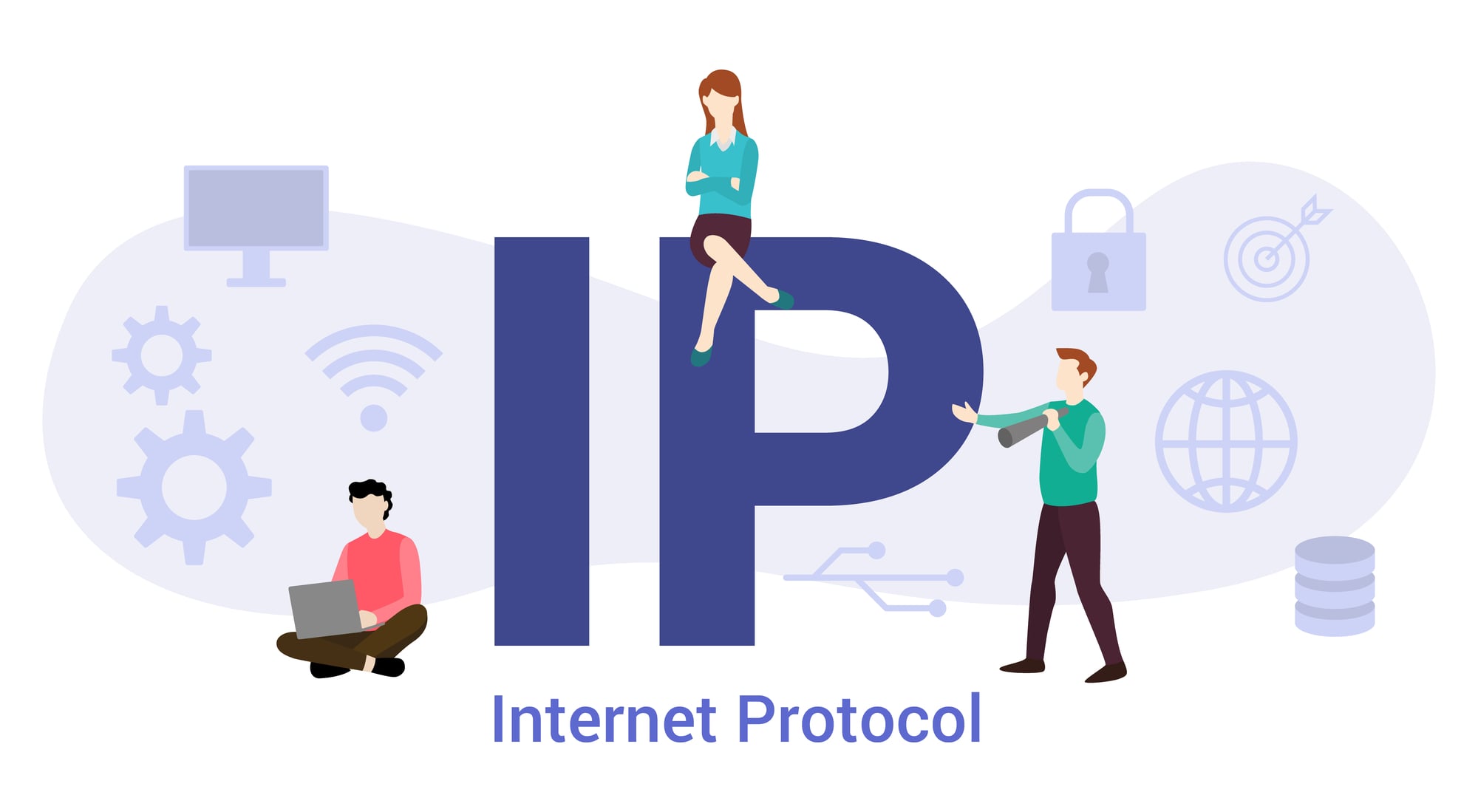
Think of early computer networks as neighborhoods where everyone spoke different languages. Each network had its own rules, its own vocabulary, its own way of handling information.
A computer on one network couldn’t talk to a computer on another network, which made about as much sense as having a telephone that could only call other phones made by the same manufacturer.
TCP/IP changed that. Introduced in 1983, it became the universal translator — a common language that any computer could learn.
The technical details matter less than the result: suddenly, networks could connect to other networks, creating a network of networks. The internet, in other words.
What makes TCP/IP particularly elegant is how it handles failure. Messages don’t travel as single units — they get broken into packets, sent along different routes, and reassembled at their destination.
If one route gets blocked, the packets find another way through. It’s a system that assumes things will go wrong and plans accordingly, which turns out to be exactly the kind of thinking you need when you’re trying to connect every computer in the world.
Domain Name System Launches

IP addresses are how computers actually find each other — strings of numbers like 192.168.1.1 that work perfectly for machines and terribly for humans. The Domain Name System, introduced in 1984, was essentially a massive phone book that translated human-readable names into computer-readable numbers.
Instead of memorizing, you could type google.com. The elegance was in the hierarchy: .com for commercial sites, .edu for educational institutions, .gov for government.
Everything organized and logical.
DNS didn’t just make the internet easier to navigate — it made it possible to navigate at all. Without it, the web would have remained the domain of computer scientists willing to memorize long strings of numbers.
With it, anyone could type a name and land exactly where they intended to go. Simple systems that solve complex problems tend to stick around.
DNS is still doing exactly what it was designed to do nearly 40 years later.
World Wide Web Goes Public

Tim Berners-Lee had a filing problem. Working at CERN in the late 1980s, he watched brilliant scientists struggle to share information across different computer systems — each with its own format, its own requirements, its own peculiar demands.
So he invented something better: a system where documents could link to other documents, regardless of where they lived or what computer created them.
The first website went live on August 6, 1991, and it was perfectly, almost comically practical: an explanation of what the World Wide Web was and how to use it. No flash, no graphics, just text and links doing exactly what Berners-Lee intended them to do.
Click on a link, jump to another document. Click again, jump somewhere else.
The web wasn’t just information — it was information that led to more information, creating paths through knowledge that no single person had planned.
What made the web revolutionary wasn’t the technology (hyperlinks had existed before) but the decision to make it free. Berners-Lee could have patented the whole thing, controlled access, built a fortune.
Instead, he gave it away. Every website, every link, every Google search exists because someone decided the web belonged to everyone.
First Web Browser for Everyone

Mosaic launched in 1993 and did something that sounds trivial now but changed everything then: it displayed images alongside text. Before Mosaic, the web was a collection of text documents linked together — functional but hardly compelling.
After Mosaic, web pages could look like magazines, with photos and graphics integrated seamlessly into the reading experience.
More importantly, Mosaic was free and relatively easy to install. You didn’t need a computer science degree to browse the web anymore.
Point, click, explore. The interface was intuitive enough that curiosity became the main requirement for web browsing, not technical expertise.
The team behind Mosaic understood something crucial: the web would only succeed if regular people could use it without thinking about how it worked. They were right.
Within two years, web traffic was growing exponentially, and the internet was transforming from a tool for academics and researchers into something that looked suspiciously like the future of human communication.
Amazon Sells Its First Book
Jeff Bezos started Amazon in his garage in 1994, and the first book he sold was “Fluid Concepts and Creative Analogies: Computer Models of the Fundamental Mechanisms of Thought” by Douglas Hofstadter. Not exactly a bestseller, but it proved something important: people would buy things over the internet if the experience was simple enough and trustworthy enough.
Books made perfect sense as the first product. They were standardized, relatively inexpensive, and didn’t require physical inspection before purchase.
You knew what you were getting when you ordered a specific title. The real innovation wasn’t selling books online — it was building a system that made online purchasing feel as reliable and straightforward as walking into a bookstore.
Amazon’s early success wasn’t about technology or inventory management or any of the complex systems that power it today. It was about trust.
People had to believe their credit card information was safe, their books would actually arrive, and the whole process wouldn’t somehow go wrong in ways they couldn’t predict or control. Amazon figured out how to build that trust, and e-commerce grew from there.
eBay Creates Online Auctions
Pierre Omidyar launched eBay in 1995 to help his girlfriend trade Pez dispensers with other collectors. The site was originally called AuctionWeb, and it solved a problem that most people didn’t know they had: how to find buyers for things that weren’t quite valuable enough for traditional auction houses but too valuable to throw away.
The genius of eBay wasn’t the auction format — auctions had existed for centuries. It was the feedback system that let buyers and sellers rate each other after every transaction.
This created accountability in a marketplace where strangers were sending money to other strangers based on photographs and descriptions. Trust became quantifiable: a seller with 500 positive ratings was clearly more reliable than someone with three ratings and a recent complaint about slow shipping.
eBay proved that people were sitting on valuable items they didn’t know how to sell, and other people were looking for exactly those items but didn’t know where to find them. The platform just connected supply with demand, taking a small percentage of each successful transaction.
Simple economics, but the scale was unprecedented — suddenly, your local market was anyone with internet access and a willingness to bid.
Google Launches
Google wasn’t the first search engine, but it was the first one that actually worked the way people hoped search engines would work. Before Google, finding specific information online often required multiple searches across different engines, with results that ranged from marginally useful to completely irrelevant.
Larry Page and Sergey Brin’s breakthrough was PageRank — an algorithm that judged web pages based on how many other pages linked to them, and how authoritative those linking pages were. Instead of just counting keywords, Google tried to understand which pages were actually valuable by looking at how other websites referenced them.
It was like asking the entire internet to vote on which pages were most useful for any given search.
The clean interface helped, too. While other search engines cluttered their homepages with news, weather, stock quotes, and advertising, Google offered a white page with a search box and two buttons.
The message was clear: they were in the search business, not the portal business. Type what you want to find, get results that actually match what you’re looking for.
Revolutionary concepts, apparently.
Netflix Begins Streaming
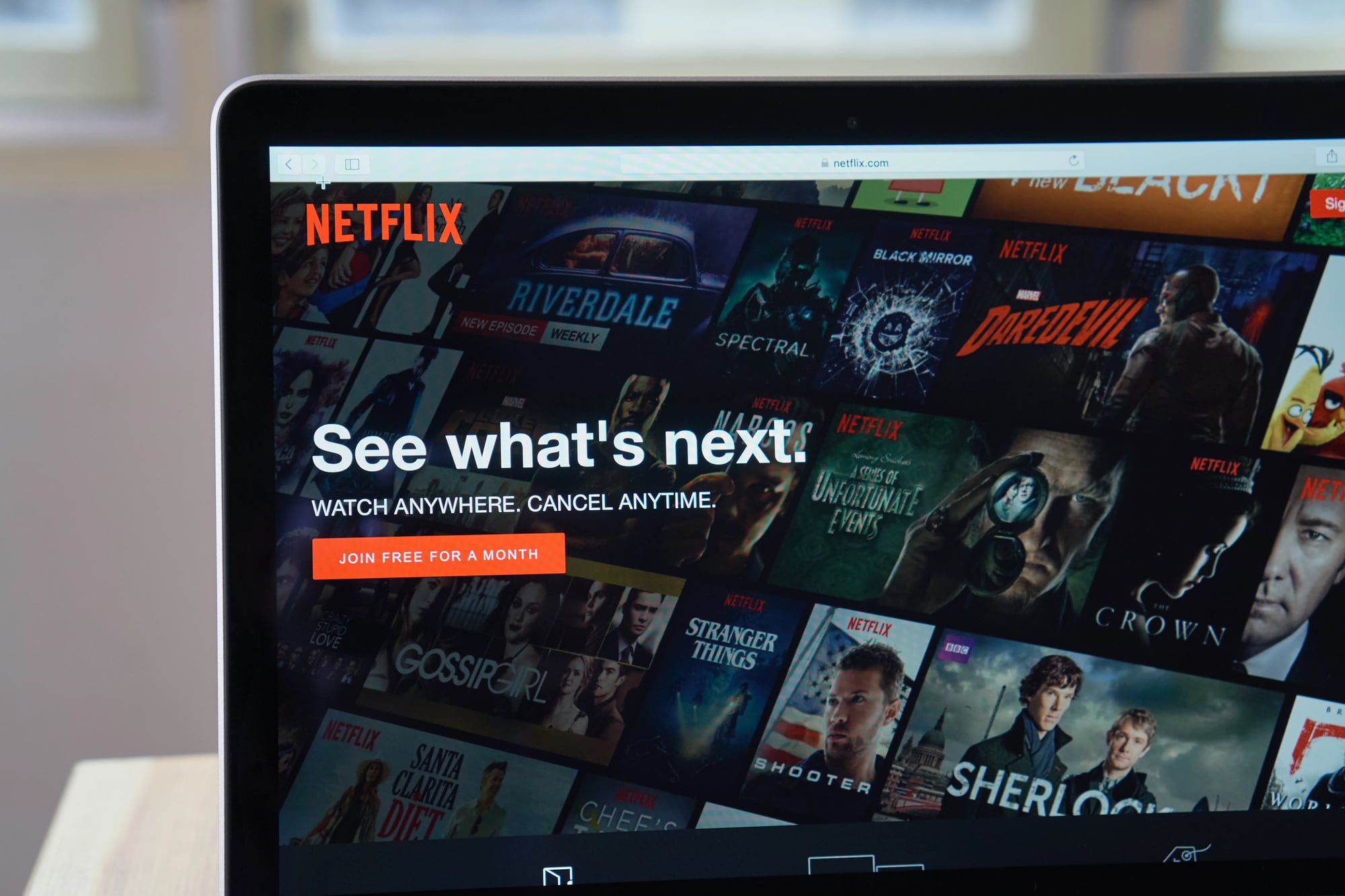
Netflix started mailing DVDs in red envelopes in 1997, but the real breakthrough came in 2007 when they launched streaming video. Suddenly, you didn’t have to plan your entertainment three days in advance or worry about returning discs on time.
Click on a movie, start watching immediately. The technology finally caught up to what people had wanted all along: instant access to whatever they felt like watching.
The shift from physical media to streaming wasn’t just convenient — it was behavioral. When your entertainment options were limited by what you owned or what the video store had in stock, you made deliberate choices about what to watch.
With streaming, browsing became entertainment itself. You could start a movie, decide it wasn’t what you wanted, and try something else without any real cost beyond time.
Netflix proved that people would pay for convenience, even when free alternatives existed. The value wasn’t in the content itself (much of which was available elsewhere) but in the experience of finding and watching it.
Remove enough friction from any process, and people will pay to keep it that way.
Social Media Goes Mainstream

Facebook opened to the general public in 2006 (after two years as a college-only platform), and social media shifted from a novelty to a utility almost overnight. The appeal wasn’t the technology — people had been connecting online through forums and chat rooms for years.
It was the real names and real identities that made Facebook feel different from the pseudonymous internet that came before it.
For the first time, your online presence was connected to your actual life in ways that felt permanent and consequential, which turned out to be both the platform’s greatest strength and its most persistent problem. You could reconnect with old friends, share photos with family, and stay updated on people you cared about but rarely saw in person — all of which felt genuinely valuable and socially meaningful, even if the execution often fell short of the promise.
And the implications stretched far beyond personal connections. Businesses suddenly had direct access to customers, politicians could speak directly to constituents, and movements could organize without traditional media or institutional support.
Social media democratized broadcasting, though it also democratized misinformation, harassment, and about a dozen other things that were probably better off centralized. Progress, as usual, proved complicated.
iPhone Puts Internet in Your Pocket
The iPhone launched in 2007 and made the internet portable in ways that actually mattered. Previous smartphones existed, but they treated internet access as a feature rather than the main point.
The iPhone flipped that relationship: it was an internet device that happened to make phone calls, not the other way around.
The real breakthrough was the interface. Instead of tiny keyboards and styluses, you had a screen that responded to touch in ways that felt natural and immediate.
Pinch to zoom, swipe to scroll, tap to select. The internet went from something you accessed at a desk to something you carried everywhere and consulted constantly.
Information became ambient — always available, never more than a few seconds away.
This changed behavior in ways that are still playing out. The internet stopped being a destination and became a layer of reality, woven into every moment that wasn’t quite interesting enough on its own.
Waiting in line, riding the bus, or sitting through a boring conversation all became opportunities to check email, read news, or scroll through social media. The iPhone didn’t just put the internet in your pocket — it made the internet inescapable, for better and worse.
YouTube Democratizes Video
YouTube launched in 2005 with a simple premise: anyone should be able to upload and share videos without needing technical expertise or expensive equipment. The first video, “Me at the zoo,” was 18 seconds of co-founder Jawed Karim standing in front of elephants and making observations about their trunks.
Not exactly cinematic, but it proved the concept worked.
What made YouTube revolutionary wasn’t the technology — video sharing sites had existed before. It was the combination of easy uploading, reliable streaming, and a recommendation algorithm that kept people watching.
You came for one video and stayed for five more, led along by suggestions that were often surprisingly accurate and occasionally completely bizarre.
YouTube created an entirely new category of celebrity: people who became famous for making videos in their bedrooms, garages, and kitchens. No agents, no studio executives, no gatekeepers — just creators making content and audiences deciding what deserved attention.
The platform proved that entertainment didn’t require professional production values, just authentic personalities and ideas that connected with people. Quality became democratized too, though so did everything else.
The Digital Foundation That Changed Everything
These milestones weren’t just technical achievements — they were moments when new possibilities became practical realities. Each breakthrough solved problems that seemed insurmountable at the time, often in ways that created entirely new problems nobody had thought to anticipate.
The internet didn’t develop according to any master plan; it grew organically, driven by curiosity, necessity, and the occasional happy accident.
What strikes you, looking back, is how many of these innovations succeeded by making complex things simple rather than adding complexity to simple things. The best ideas were often the most obvious ones — once someone had them.
Email uses @ to separate names from locations. Web browsers display images next to text.
Search engines rank results by relevance. Smartphones respond to touch.
Revolutionary concepts that now feel inevitable, though they weren’t inevitable at all.
More from Go2Tutors!

- The Romanov Crown Jewels and Their Tragic Fate
- 13 Historical Mysteries That Science Still Can’t Solve
- Famous Hoaxes That Fooled the World for Years
- 15 Child Stars with Tragic Adult Lives
- 16 Famous Jewelry Pieces in History
Like Go2Tutors’s content? Follow us on MSN.