Mascots That Were Based on Real People
You walk through grocery store aisles surrounded by friendly faces staring back from packages. That bearded chicken guy. The pigtailed girl with freckles. The cookie entrepreneur in a Panama hat. Most people assume these characters sprang from some advertising agency’s imagination, invented to sell products.
But many of the most recognizable brand mascots were actual human beings. Real people with real stories, some triumphant and others complicated. Their faces launched empires and became so embedded in American culture that we forgot they ever existed outside of packaging design.
Colonel Sanders Started Selling Chicken at 40

Before Harland Sanders became the white-suited symbol of fried chicken, he lived one of the most chaotic lives in American business history. Born in Indiana in 1890, he dropped out of school in seventh grade. He worked as a farmhand, streetcar conductor, railroad fireman, and insurance salesman. He practiced law briefly until a courtroom brawl with his own client ended that career.
Sanders didn’t find his calling until 1930, when he started cooking for travelers at his gas station in Corbin, Kentucky. The food critic Duncan Hines included Sanders’ Cafe in his 1935 road-food guide. Sanders perfected his pressure-fried chicken recipe in 1939, developed his famous blend of 11 herbs and spices, and earned his honorary “Kentucky Colonel” title from the state governor.
When a new interstate bypassed his restaurant in 1955, Sanders was 65 years old with nothing but a $105 monthly Social Security check. He hit the road in his 1946 Ford, cooking chicken at restaurants and signing franchise deals on handshakes. By the time he sold the company in 1964 for $2 million, there were over 600 KFC locations. Sanders remained the company’s spokesperson until his death in 1980, famously visiting restaurants unannounced and denouncing subpar food as unacceptable.
Wendy Thomas Never Asked to Be a Mascot

Melinda Lou Thomas was eight years old in 1969 when her father Dave asked her to put her hair in pigtails and pose for some photographs. Her siblings had called her “Wenda” as a toddler because they couldn’t pronounce her name, and it eventually became “Wendy.” That nickname and those photos became the foundation of America’s third-largest hamburger chain.
Dave Thomas had learned the value of mascots while working under Colonel Sanders at KFC. He wanted a family name for his new restaurant but couldn’t find one that fit until he landed on his fourth daughter’s nickname. Her mother sewed a blue-and-white-striped dress for the photo session that would turn Wendy into one of the most recognized faces in fast food.
The pressure of being a corporate mascot weighed on her. Before Dave Thomas died in 2002, he apologized to his daughter for the burden he had unknowingly placed on her shoulders. “I should’ve just named it after myself,” he told her. Wendy Thomas-Morse eventually became a franchisee and appeared in commercials in 2010 for the first time. She serves on the company’s board to this day.
Famous Amos Lost the Right to His Own Name

Wally Amos was already something of a celebrity before he started baking. In the 1960s, he became the first African-American talent agent at the William Morris Agency, where he signed Simon & Garfunkel and worked with Motown artists like Diana Ross and The Supremes. He brought homemade chocolate chip cookies to meetings, baked from his Aunt Della’s recipe.
In 1975, with $25,000 borrowed from friends including Marvin Gaye and Helen Reddy, Amos opened the first Famous Amos cookie store on Sunset Boulevard in Los Angeles. His personality was as much the product as the cookies. Wearing his signature Panama hat, he became “the face that launched a thousand chips.”
The company grew to $12 million in revenue by 1982. But financial troubles forced Amos to sell off pieces of the business throughout the 1980s. By 1988, he had lost ownership entirely and also the rights to use his own name and likeness on food products. He started new cookie ventures under names like “Uncle Noname” and “The Cookie Kahuna” but never recaptured that early success. He appeared on Shark Tank at age 80, pitching cookies one more time. Amos died in 2024 from complications of dementia, remembered as much for his literacy advocacy as his baking.
Mrs. Fields Was 20 Years Old with No Business Experience

Debbi Fields had been told her entire young life that opening a cookie store was a terrible idea. She was a housewife with no business experience, just a recipe and a passion for chocolate chip cookies. Banks rejected her repeatedly, eating her samples while declining her loan applications.
She finally found a banker willing to take a chance and opened Mrs. Fields Chocolate Chippery in Palo Alto, California, in 1977. She was 20 years old. On opening day, her husband bet she couldn’t make $50 in sales. By noon, she hadn’t sold a single cookie. So she went outside and gave them away. By closing time, she had earned $75.
Fields built her empire on a single principle: good enough never was. Cookies older than two hours were donated to Red Cross blood drives. Quality ingredients were non-negotiable. By the late 1980s, she had over 400 stores worldwide. She eventually sold the company but remains its spokesperson and has written multiple cookbooks. Unlike Wally Amos, she kept her name.
The Real Little Debbie Runs the Company Now

In 1960, O.D. McKee needed a name for his new family-pack cartons of snack cakes. A packaging supplier suggested using a family member. McKee chose his four-year-old granddaughter Debbie, commissioning a portrait based on a photograph of her wearing a straw hat. He didn’t bother telling her parents until the boxes were already in production.
Debbie McKee-Fowler is no longer four years old. She’s now the Executive Vice President of McKee Foods and serves on the company’s board of directors. The girl on the Oatmeal Creme Pie boxes has spent her entire adult life working for the company that bears her childhood face. She worked part-time at McKee Foods during high school and built a career there over decades.
The portrait has changed only twice since 1960. The company ships more than 900 million cartons of Little Debbie products each year. McKee-Fowler has largely avoided the spotlight, preferring to let her work speak for itself rather than trading on her status as a famous mascot.
Captain Morgan Was a Real 17th Century Privateer
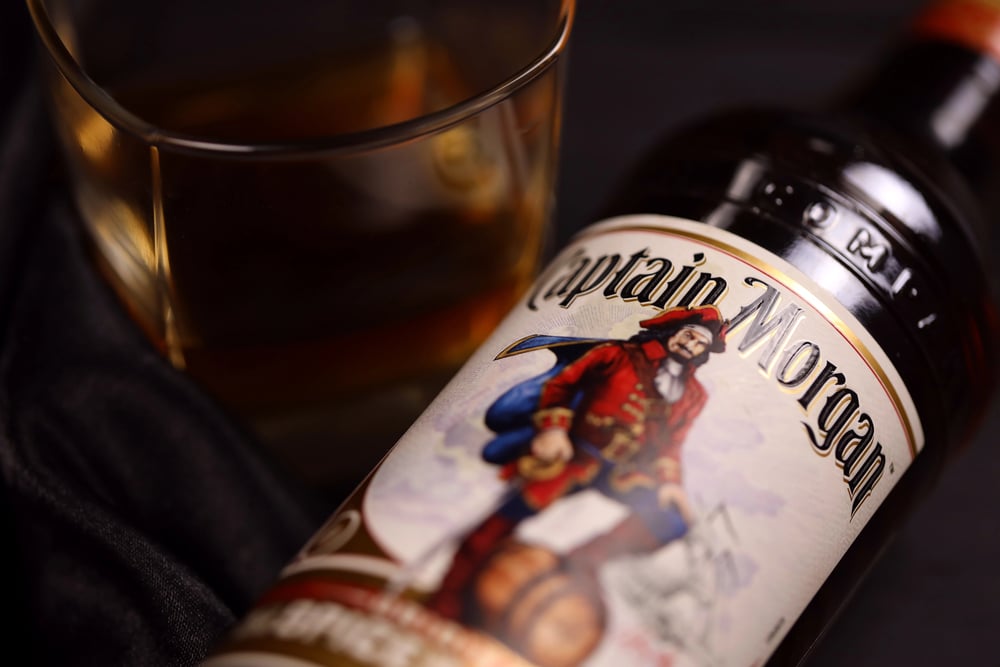
The pirate on your rum bottle wasn’t invented by marketers. Sir Henry Morgan was a Welsh privateer born around 1635 who became one of the most successful raiders in Caribbean history. Operating with the tacit approval of the English crown, he attacked Spanish colonial settlements throughout the 1660s and 1670s.
Morgan’s raids on Portobelo, Maracaibo, and Panama were legendary for their audacity and brutality. After sacking Panama in 1671, which technically violated a peace treaty between England and Spain, Morgan was arrested and shipped to London. Instead of punishment, King Charles II knighted him and sent him back to Jamaica as Lieutenant Governor.
Morgan died in 1688 at age 53, wealthy and respected despite his violent past. The rum company that bears his name was introduced in 1984, nearly 300 years after his death. The iconic pose with one foot on a barrel wasn’t something Morgan actually did in life. But the character’s swashbuckling spirit comes directly from historical accounts of a man who really did live a life of adventure on the high seas.
Nancy Green Became the First Living Trademark

The story of Nancy Green and the Aunt Jemima brand is complicated and troubling. Green was born into enslavement in Kentucky in 1834. After the Civil War, she worked as a cook and housekeeper for the Walker family in Chicago. In 1890, the R.T. Davis Milling Company hired her to portray “Aunt Jemima,” a character named after a song from minstrel shows.
Green debuted the character at the 1893 World’s Columbian Exposition in Chicago, cooking pancakes next to a 24-foot-tall flour barrel. She became what advertising historians consider the first living trademark in American marketing. She traveled the country making appearances for nearly 20 years, her arrival announced by billboards reading “I’se in town, honey.”
The pancake recipe wasn’t hers. The character relied on damaging stereotypes. But Green herself used her platform to become an activist, organizing missionary work at the Olivet Baptist Church in Chicago and engaging in antipoverty programs. She died in a car accident in 1923 and was buried in an unmarked grave. A headstone wasn’t placed until 2020. PepsiCo retired the Aunt Jemima brand in 2021, renaming it Pearl Milling Company after the firm that originally developed the pancake mix.
Oscar Mayer Was a Real German Immigrant
Oscar F. Mayer arrived in the United States from Bavaria in 1873 at age 14. He learned the meat business in Detroit and Chicago before opening his own shop with his brother Gottfried in 1883. They sold traditional European sausages to the growing German-American population of Chicago.
The yellow band on Oscar Mayer products started in 1929 as a quality guarantee. The Wienermobile was invented in 1936 by Carl Mayer, Oscar’s nephew. For decades, the company employed little people dressed as a chef character called “Little Oscar” to promote products alongside the famous hot-dog-shaped vehicle.
Three generations of Oscar Mayers led the family business. Oscar G. Mayer Jr., the founder’s grandson, served as chairman until 1977, by which time annual sales had reached $1 billion. Few people believed there was actually a real person named Oscar Mayer at the helm. The family sold to General Foods in 1981, and the brand is now owned by Kraft Heinz.
Two Slow Kids from Gym Class Built an Ice Cream Empire

Ben Cohen and his childhood friend Greenfield met in seventh-grade gym class in Long Island in 1963. They were, by their own admission, the two slowest and heaviest kids in the class, always bringing up the rear during track runs. They became fast friends and stayed close through high school and beyond.
Cohen couldn’t smell anything due to a condition called anosmia, which meant he relied on texture to enjoy food. Greenfield got rejected from medical school. Neither knew anything about business. In 1977, they took a $5 correspondence course on ice cream making from Penn State University. They pooled $12,000 and opened a shop in a converted gas station in Burlington, Vermont, on May 5, 1978.
Cohen’s anosmia shaped the company’s signature style. Because he couldn’t taste subtle flavors, Greenfield kept adding bigger and bigger chunks until Cohen could appreciate them. Their faces appeared on early packaging and advertising, two bearded hippies grinning at you from cartons of Cherry Garcia and Chunky Monkey.
They sold the company to Unilever in 2000 for $326 million but continued their activism. Both founders, now in their 70s, have been arrested multiple times at protests.
Mr. Monopoly Probably Took Inspiration from J.P. Morgan

The portly gentleman with the top hat and mustache first appeared on Monopoly’s Chance and Community Chest cards in 1936. His designer was artist Daniel Fox, though his identity wasn’t confirmed until 2013 when one of Fox’s grandchildren contacted a former Parker Brothers executive.
According to Philip Orbanes, a former Vice President of Parker Brothers and author of The Monopoly Companion, the character was modeled after J.P. Morgan, the legendary financier who consolidated railroads, helped form U.S. Steel and General Electric, and essentially functioned as America’s central banker before the Federal Reserve existed. Morgan died in 1913.
Some historians suggest the design also drew from German-American banker Otto Hermann Kahn, who physically resembled the character more closely. Both men wore top hats and mustaches and represented the kind of Gilded Age wealth that the game’s original incarnation was designed to critique. The character wasn’t officially named until 1946, when Parker Brothers produced a game called Rich Uncle. His full name is Milburn Pennybags, though hardly anyone calls him that.
Miss Chiquita Started as an Animated Banana

The Chiquita banana mascot was never a real person, but her transformation tells an interesting story about marketing and public perception. Cartoonist Dik Browne, creator of Hagar the Horrible, designed the original Miss Chiquita in 1944 as a literal banana wearing a dress and fruit hat. She sang the famous jingle teaching consumers when bananas were ripe enough to eat.
In 1987, artist Oscar Grillo, creator of the Pink Panther, redesigned Miss Chiquita as an actual woman rather than anthropomorphized fruit. According to the company, this change “reflected the affectionate image the public had of Miss Chiquita as a real person.” The mascot’s style drew heavily from Carmen Miranda, the Brazilian actress famous for her fruit-laden headpieces.
Since 2003, actress Jenny Canales has served as the public face of Chiquita, appearing at events as the living embodiment of Miss Chiquita. She’s not the basis for the mascot, but she’s the person who brings the character to life in the flesh.
Faces That Outlived Their Origins

The line between mascot and founder blurs in American business. Some entrepreneurs became so identified with their products that their faces were inseparable from their brands. Others were children who had no choice in the matter, their images frozen in time while they grew up behind the scenes.
What unites them is the strange immortality of marketing. Colonel Sanders still appears in commercials played by rotating comedic actors. Wendy’s logo still features those pigtails from 1969. The real people behind these images aged, changed, sometimes lost control of their own likenesses, sometimes died. But the mascots persisted, smiling from packages and billboards, selling products decades after the people they depicted moved on to different lives.
The next time you grab a box of snack cakes or order fried chicken, remember that somebody real once stood where that cartoon now appears. Their stories are stranger and more human than any advertising agency could invent.
More from Go2Tutors!

- The Romanov Crown Jewels and Their Tragic Fate
- 13 Historical Mysteries That Science Still Can’t Solve
- Famous Hoaxes That Fooled the World for Years
- 15 Child Stars with Tragic Adult Lives
- 16 Famous Jewelry Pieces in History
Like Go2Tutors’s content? Follow us on MSN.