Little-Known Things About Route 66 Landmarks
Route 66 doesn’t need much introduction. The iconic highway that once connected Chicago to Los Angeles has captivated travelers for decades, even after it officially disappeared from the map in 1985.
But beyond the postcards and tourist traps, the Mother Road hides stories that most visitors never hear. The landmarks along this historic route carry secrets that go deeper than their Instagram-worthy exteriors suggest.
The Wigwam Motel’s Concrete Formula

The Wigwam Village in Holbrook, Arizona looks like a roadside novelty—seven concrete tipis arranged in a semicircle. What most visitors don’t know is that these structures use a proprietary concrete mix developed in the 1930s that made them virtually indestructible.
The original builder, Frank Redford, created a formula that resisted both the brutal desert heat and the rare but intense Arizona floods. Engineers who’ve studied the structures still can’t quite replicate the exact composition.
The formula died with Redford, making these wigwams a lost piece of construction history.
Cadillac Ranch’s Underground Network

Ten Cadillacs buried nose-first in a Texas field make for great photos. But beneath those spray-painted cars lies something most people never consider.
The installation sits on top of an extensive root system from the original farmland, and the artists specifically positioned each car to avoid disrupting a network of century-old irrigation channels. Local farmers still use parts of that system.
Move one of those Cadillacs even a few feet, and you’d flood a wheat field three miles away.
The Blue Whale of Catoosa Swims in Filtered Spring Water

The giant blue whale sitting in a small pond in Catoosa, Oklahoma looks like it’s just floating in a muddy swimming pit. That pond actually connects to a natural spring system that Hugh Davis, the whale’s creator, spent years engineering.
He installed a filtration system in the 1970s that still works today, cycling 80,000 gallons of spring water through the pond every 48 hours. The water stays clear and cool enough that locals still swim there during Oklahoma’s scorching summers.
Davis designed it all without formal engineering training—just trial, error, and persistence.
Meramec Caverns Sheltered More Than Jesse James
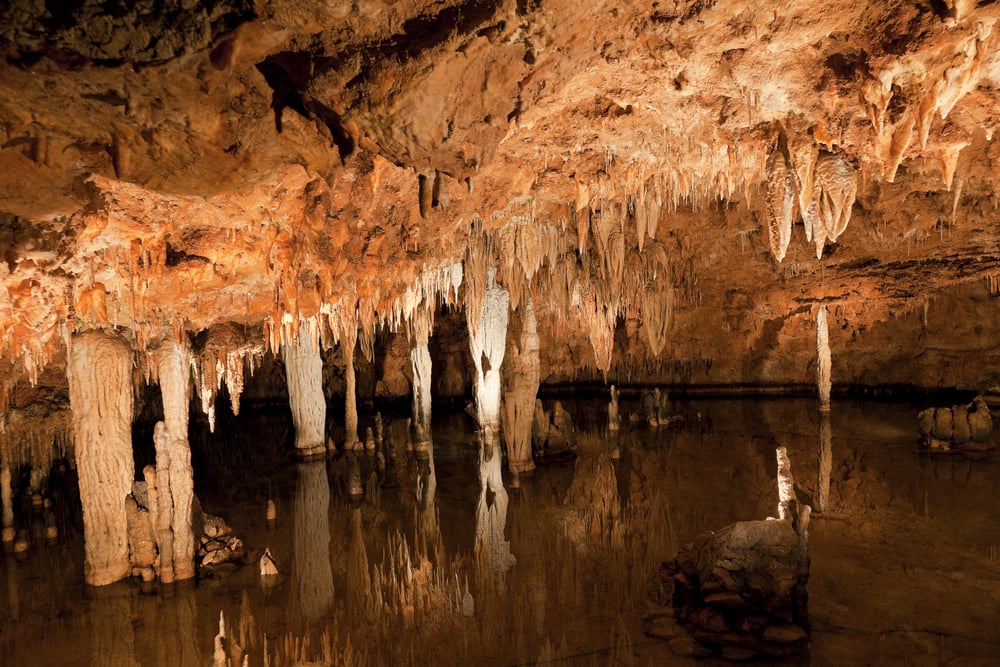
Everyone knows the story that Jesse James hid in Meramec Caverns. Tour guides love to point out the spot where he supposedly camped.
What they rarely mention is that the caves served as a natural refrigeration unit for a St. Louis brewery during Prohibition. Workers would haul beer barrels through a now-sealed entrance, stack them in a side chamber where the temperature never rose above 55 degrees, and retrieve them when needed.
The brewery paid the cavern owner in cash and beer. Some of those original barrels still sit wedged in crevices too narrow to retrieve.
The Chain of Rocks Bridge Bends for a Reason
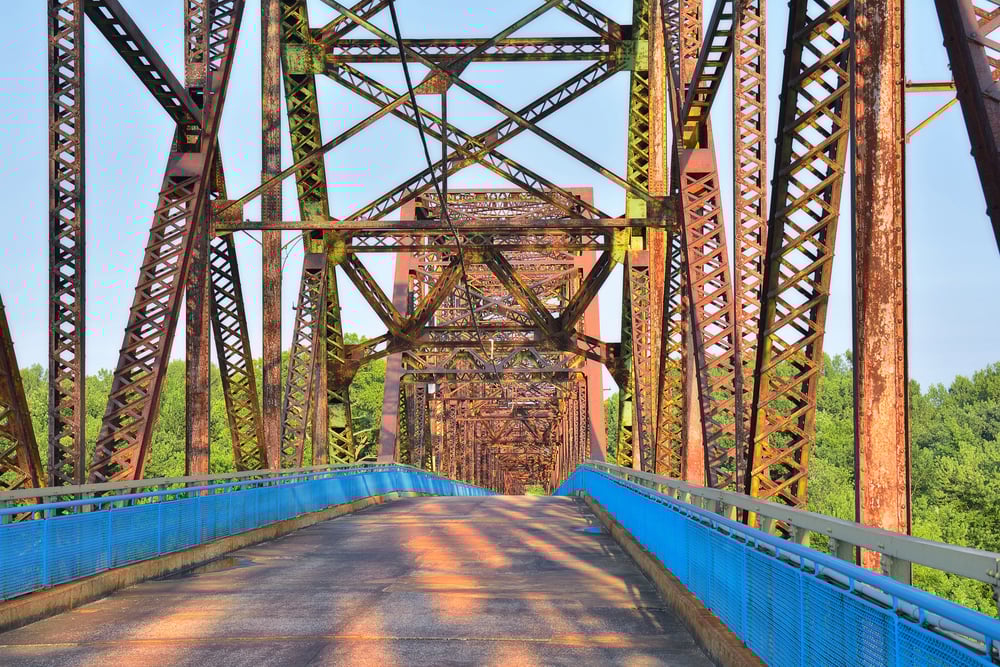
That strange 22-degree angle in the Chain of Rocks Bridge near St. Louis looks like a design mistake. It’s not.
When engineers built the bridge in 1929, they discovered an underwater rock formation that would have cost a fortune to remove. Instead of dynamiting the riverbed, they simply bent the bridge to follow the natural contour of the rocks below.
The angle actually makes the structure stronger—it distributes weight more evenly across the limestone foundation. Straightening it out would require rebuilding from scratch.
Arcadia’s Round Barn Uses Zero Interior Supports

The Round Barn in Arcadia, Oklahoma stands 60 feet tall with a 43-foot diameter. Not a single support post interrupts the interior space.
The architect, William Odor, designed a self-supporting roof using a technique he learned from studying Native American structures. The roof’s weight presses outward against the circular walls, which push back inward, creating a perfect balance.
Engineers still bring students to study it because the math shouldn’t work—but it does. The barn has survived six major tornadoes in its 100-year history.
The Munger Moss Motel’s Original Guest Registry

The Munger Moss Motel in Lebanon, Missouri has kept every guest registry since opening day in 1946. You won’t see them on display.
The current owners, Ramona Lehman, stores them in a climate-controlled room behind the office. Those registries contain signatures from politicians, musicians, and criminals, all mixed together in chronological order.
Some entries include sketches, poems, and confessions. One guest from 1952 drew a detailed map to buried money—though no one has ever verified if it was real or just a joke.
The registries also track the exact date Route 66 traffic started declining, marked by pages that go from full to sparse within a single year.
Pontiac’s Route 66 Hall of Fame Started as a Tire Shop

The Route 66 Association Hall of Fame and Museum in Pontiac, Illinois occupies what used to be a Firestone tire shop. The original hydraulic car lifts still work under parts of the floor.
During renovation, workers discovered that the previous owner had been using the basement as an unofficial museum for decades, collecting Route 66 memorabilia between brake jobs. His personal collection formed the core of what visitors see today.
The basement also contains a sealed room that the current owners have never opened—the previous owner’s will specifically requested it remain locked until 2040. No one knows what’s inside.
The World’s Largest Rocking Chair Isn’t What It Seems

Cuba, Missouri’s famous rocking chair stands 42 feet tall and rocks on its base. But it doesn’t rock naturally.
The chair contains a carefully calibrated system of springs and dampers that make it move in response to wind pressure. A local engineer named Paul Brokaw designed the system after the original chair kept breaking from uncontrolled rocking.
His solution mimics the shock absorption in earthquake-resistant buildings. The chair can withstand 80-mile-per-hour winds without sustaining damage—stronger than most buildings in town.
Santa Monica Pier’s End-of-the-Road Marker Moves

The official “End of the Trail” marker on Santa Monica Pier doesn’t stand in its original location. City officials move it every few years because coastal erosion keeps changing where the pier actually ends.
The marker has occupied seven different spots since 1990. Surveyors have to recalculate the precise geographic endpoint each time.
Technically, Route 66 now ends about 30 feet into the Pacific Ocean, but putting the marker there wouldn’t work well for photos.
The Gemini Giant Holds a Rocket That Flew

The Gemini Giant in Wilmington, Illinois—a 30-foot fiberglass spaceman holding a rocket—carries a piece of space history. That rocket in his hands is a genuine first-stage component from an early Mercury program test.
A salvage dealer bought it after NASA decommissioned it and sold it to the statue’s original owner for $50. NASA records confirm the piece as authentic, though they won’t say which specific mission it came from.
The restaurant owner just wanted something that looked the part. He had no idea he’d bought the real thing until someone noticed NASA serial numbers stamped on the base.
Big Texan’s Free Steak Deal Has a Medical Exception Clause

The Big Texan Steak Ranch in Amarillo offers a free 72-ounce steak to anyone who can finish it in an hour. The restaurant’s insurance policy requires customers to sign a waiver because three people have required medical attention after attempting the challenge.
What’s buried in that waiver? A clause that requires the restaurant to call an ambulance if someone shows signs of choking or distress—and that person must pay the full meal price plus ambulance fees.
The restaurant has never publicized this because it would discourage participants. They’ve made the call 11 times since 1960.
Devil’s Elbow Bridge Hides a Time Capsule
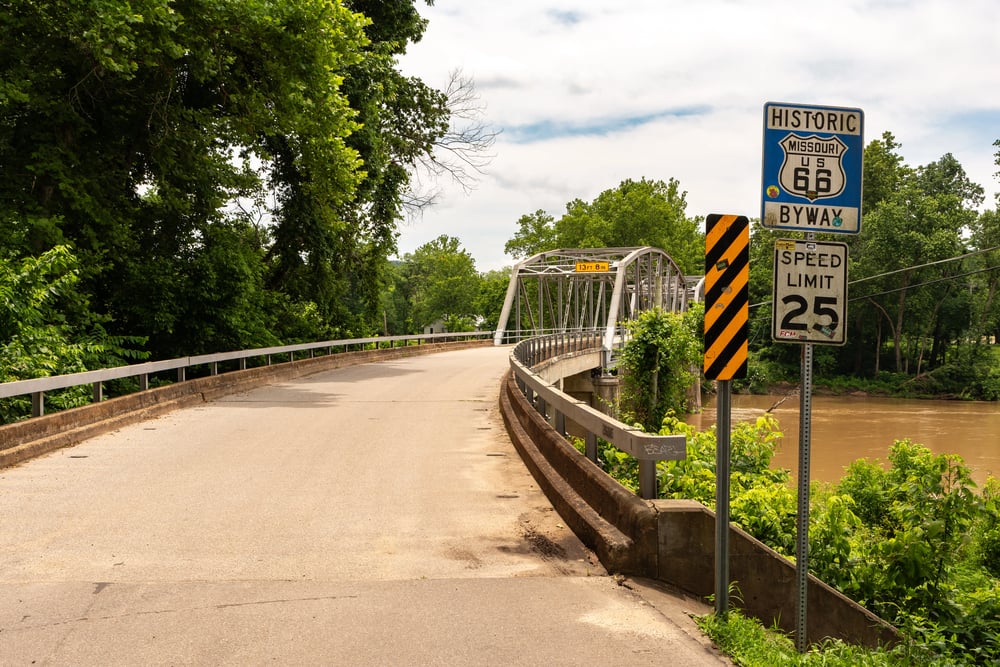
The Devil’s Elbow Bridge in Missouri got a rebuild back in 1943, when workers tucked a time capsule into the north support pillar. It wasn’t meant to be touched till 2043, yet local documents about where exactly vanished after a blaze wiped them out in 1978.
Today’s inspectors are sure it’s still inside since X-ray scans reveal a metal container embedded in the concrete. Still, they can’t tell the precise spot without risking harm to how solid the structure is.
So instead of poking around, they’re leaving it hidden until the whole bridge must go – could take fifty more years or so.
Where the Road Remembers
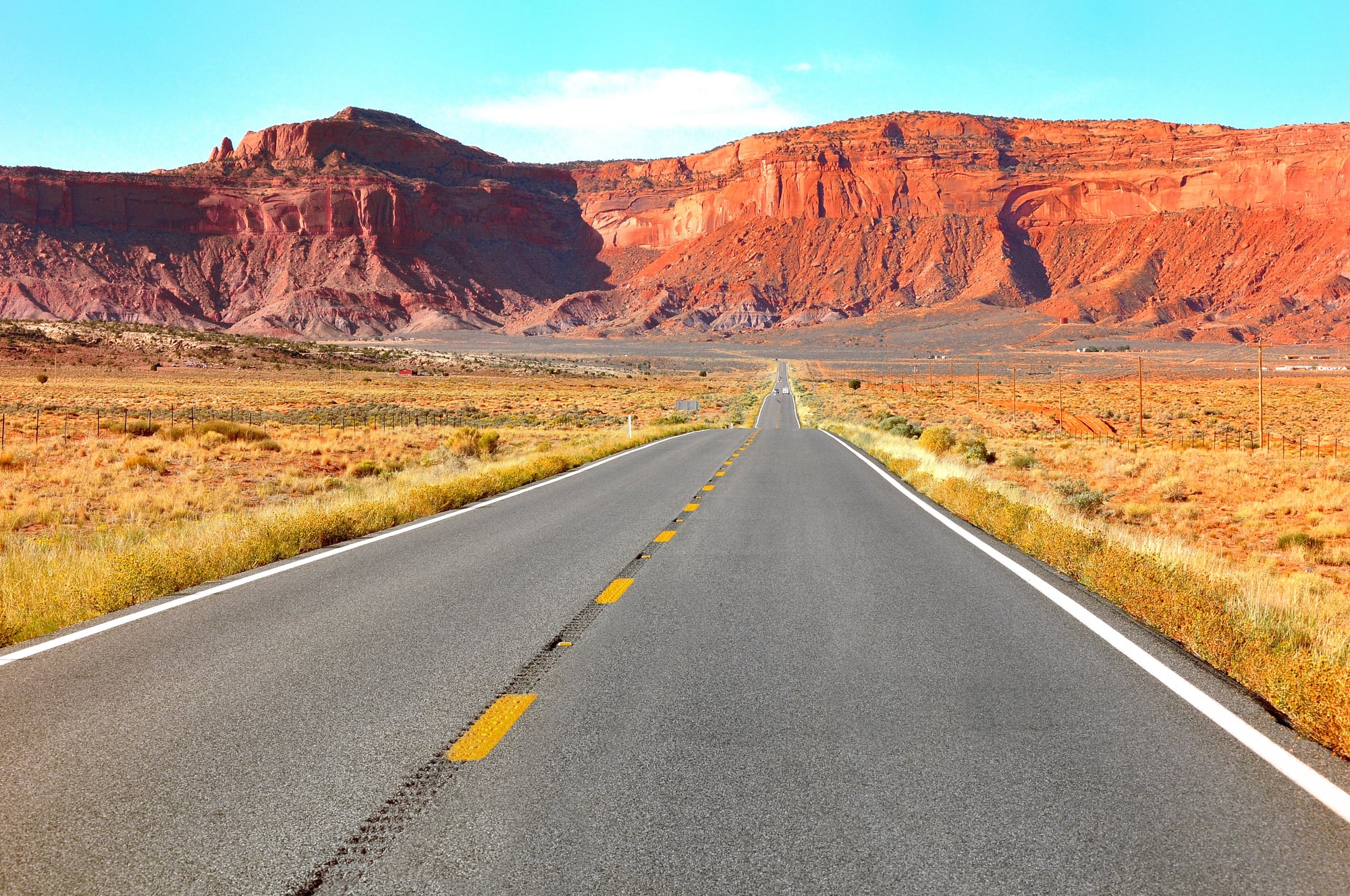
The old asphalt under your tires on certain bits of Route 66 contains pieces of the original roadway. When crews paved over sections in the ’50s and ’60s, instead of hauling away damaged layers, they broke them down – mixing that rubble right into new concrete – to save money while moving forward.
So what are you driving on now? It’s often material tossed back down once or even twice already.
That’s why cracks sometimes show patterns from decades ago – it’s history breaking through, showing itself again. Geologists bore into highways, yanking out pieces – every slab reveals another piece of America’s journey.
This route shifts more than distance; it’s built from history piling up.
More from Go2Tutors!

- The Romanov Crown Jewels and Their Tragic Fate
- 13 Historical Mysteries That Science Still Can’t Solve
- Famous Hoaxes That Fooled the World for Years
- 15 Child Stars with Tragic Adult Lives
- 16 Famous Jewelry Pieces in History
Like Go2Tutors’s content? Follow us on MSN.



