Meet the World’s Most Common Bird
If you’ve never heard of the red-billed quelea, you’re not alone. Despite being the most abundant wild bird on Earth, this sparrow-sized African native flies under the radar in most conversations about wildlife.
While domestic chickens technically outnumber them at around 22 billion, the red-billed quelea holds the crown for wild birds with an estimated 1.5 billion individuals soaring across sub-Saharan Africa. Think of them as nature’s ultimate flash mob—except instead of dancing, they’re devouring entire fields of crops in coordinated waves that can stretch for miles.
These small brown birds have earned themselves quite the reputation, and it’s not exactly flattering. Let’s dive into the fascinating world of these feathered phenomena and discover what makes them so incredibly successful.
A Master of Disguise in Plain Sight
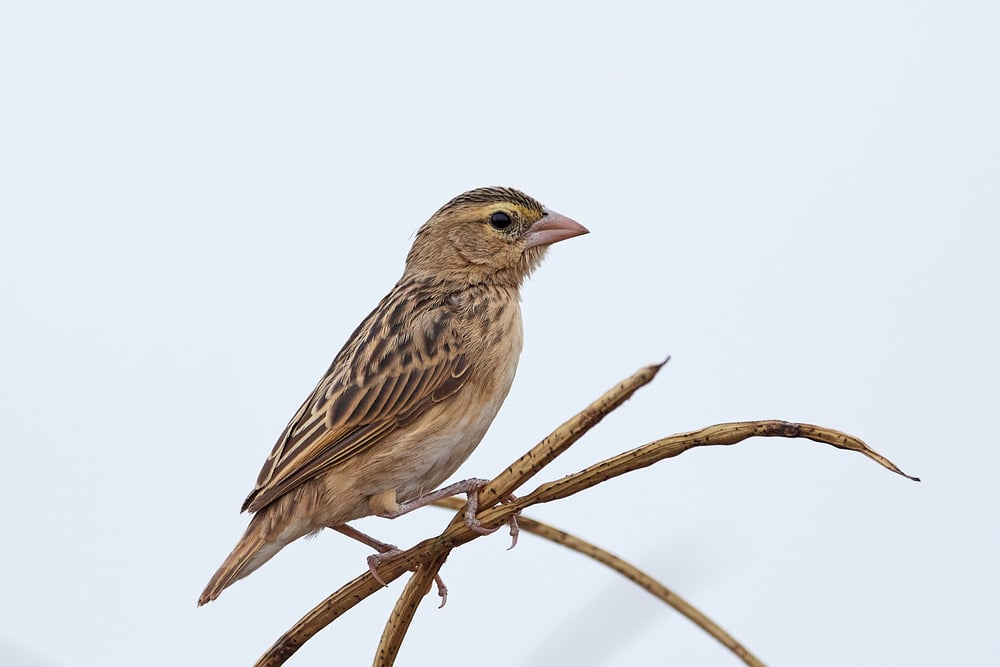
The red-billed quelea might look like just another sparrow at first glance, but there’s more to this 5-inch bird than meets the eye. Weighing less than an ounce, they sport mottled brown and white plumage that provides perfect camouflage in their grassland homes.
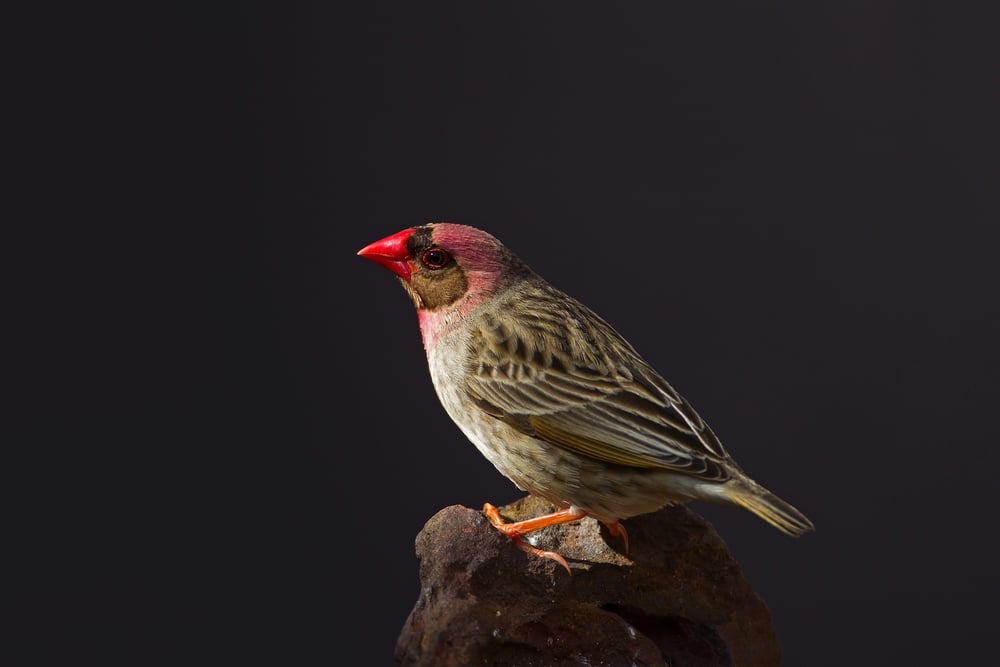
The most distinctive feature is right there in the name—that bright red, cone-shaped bill designed specifically for cracking open seeds with impressive efficiency. During breeding season, males transform into something far more striking.
They develop a dramatic black facial mask bordered by vibrant pink, rusty, or yellowish coloring that makes them look like tiny masked bandits. Sometimes they’ll sport a white mask instead, just to keep things interesting.
Females keep things more understated, with their bills shifting from red to orange or yellow during breeding time.
The Ultimate Nomads of Africa
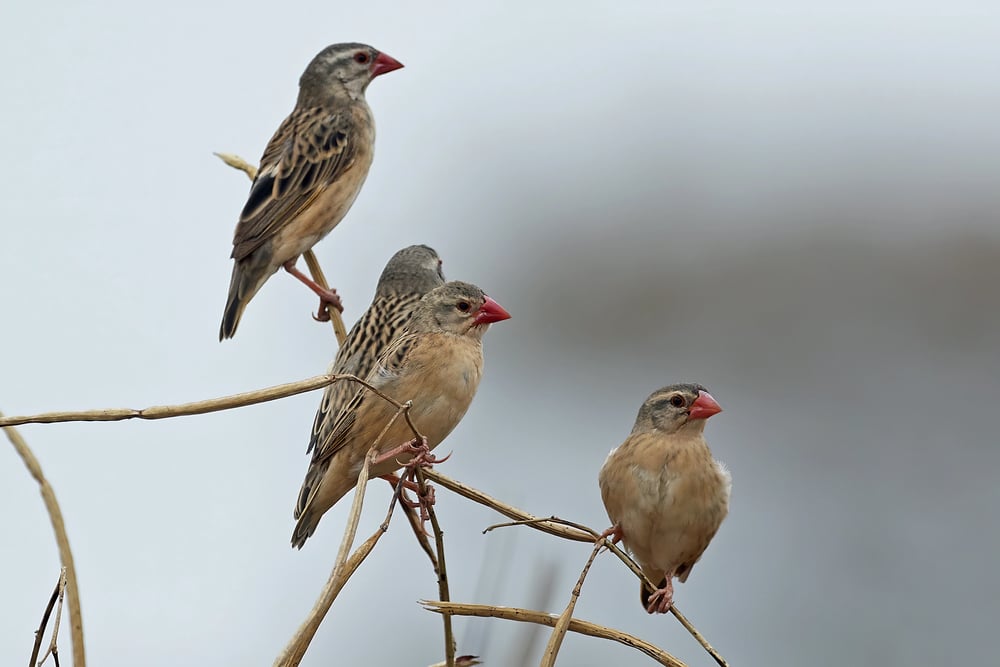
These birds treat the entire African continent like their personal buffet table, constantly on the move following the rains. Red-billed queleas migrate seasonally over long distances in anticipation of the availability of their main natural food source, seeds of annual grasses.
They’ve divided Africa into roughly five or six regions, hopping between temporarily wet areas as grass seeds become available. Their range stretches from Senegal to Somalia and down to South Africa, covering virtually all of sub-Saharan Africa except the dense rainforests and true deserts.
They’re picky about staying within about 19 miles of water sources, which makes sense when you’re part of a flock that can number in the millions and everyone needs a drink. The timing of their migrations follows a predictable pattern tied to rainfall, but the exact locations can vary dramatically from year to year.
It’s like following a massive, continent-wide music festival that changes venues based on the weather.
Like Go2Tutors’s content? Follow us on MSN.
Dining Habits That Would Make a Locust Jealous
Red-billed queleas are primarily seed-eating machines, with a particular fondness for grass seeds about 1-2 millimeters in size. A single bird may eat about 15 g (0.53 oz) in seeds each day.
When you multiply that by millions of birds in a single flock, you’re looking at some serious consumption. Their natural diet includes wild rice, jungle rice, and various native African grasses.
But here’s where things get problematic for humans—they’re not particularly picky about whether those seeds are growing wild or in someone’s carefully tended field. Rice, wheat, millet, sorghum, and barley all look equally appetizing to a hungry quelea.
During the breeding season, their diet shifts to include more insects like grasshoppers, ants, and termites, which provide the extra protein needed for raising chicks. The young birds get an almost 50-50 mix of insects and seeds, giving them the nutrients they need to grow quickly in this fast-paced world.
The Art of the Swarm

Picture this: millions of birds moving across the landscape like a rolling cloud, with those at the back constantly flying over the entire group to reach fresh feeding areas at the front. It feeds in huge flocks of millions of individuals, with birds that run out of food at the rear flying over the entire group to a fresh feeding zone at the front, creating an image of a rolling cloud.
This isn’t chaos—it’s a perfectly coordinated feeding strategy that maximizes efficiency for the entire flock. These massive gatherings aren’t just impressive to watch; they’re a survival strategy that has served the species incredibly well.
Safety in numbers means protection from predators, and the collective intelligence of the flock helps them locate the best feeding spots across vast distances. When they settle down to rest, entire trees can be so packed with birds that branches break under the weight.
A single large tree might hold nearly 6,000 nests during breeding season, turning the landscape into a bustling avian metropolis.
Speed Dating in the Thornbush
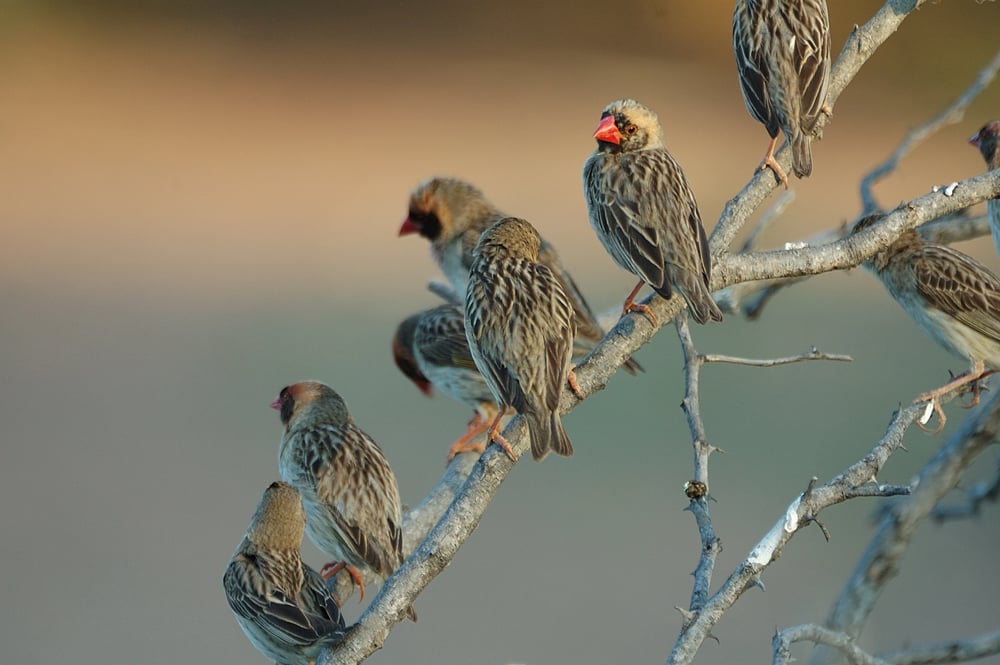
Red-billed queleas don’t waste time when it comes to romance. They practice serial monogamy, pairing up for just one breeding cycle before potentially finding new partners next season.
These birds need 300-800 mm (12-31 in) of precipitation to breed, with nest building usually commencing 4-9 weeks after the onset of the rains. Males kick things off by building the foundation of an oval-shaped nest in thorny bushes or reeds, then perch nearby to advertise their real estate to passing females.
Once a pair forms, they work together to complete their masterpiece using green grasses woven with the skill that gives their family—the weavers—their name. The whole process moves at breakneck speed.
Females lay 1-5 pale blue eggs (usually 3), incubate them for just 10-12 days, and then both parents work frantically to feed the chicks insects and seeds. After just 11-13 days, the young birds are ready to fledge, and within two more weeks, they’re completely independent.
By their first birthday, they’re ready to breed themselves.
Like Go2Tutors’s content? Follow us on MSN.
Africa’s Feathered Menace
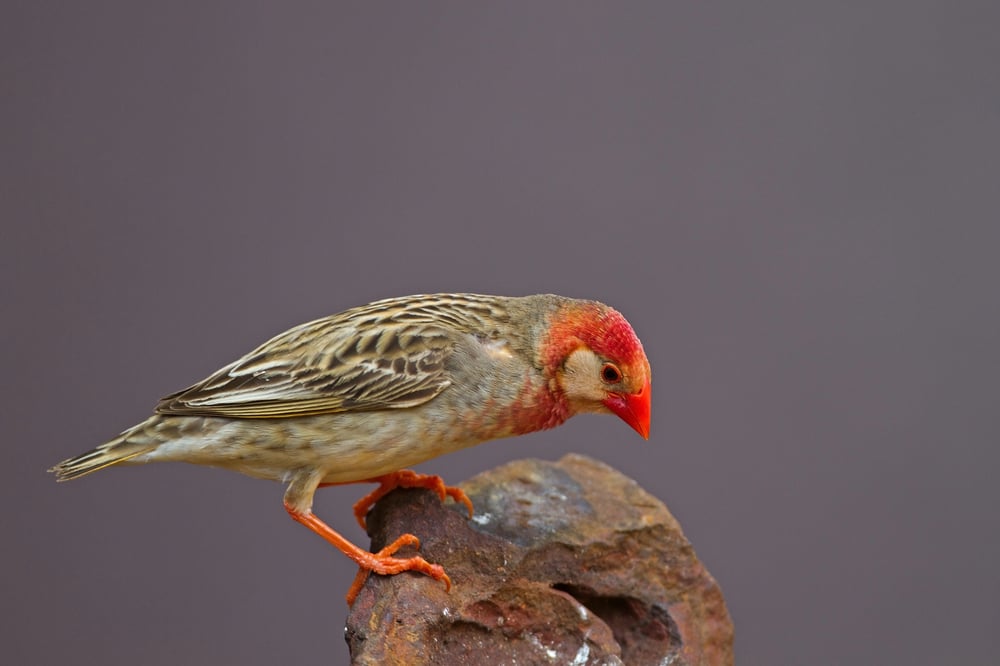
Here’s where the red-billed quelea’s success story becomes a bit of a double-edged sword. Sometimes called “Africa’s feathered locust”, the red-billed quelea is considered a serious agricultural pest in Sub-Saharan Africa.
When millions of these birds descend on a crop field, they can devastate a farmer’s entire harvest in a matter of hours. The problem has gotten worse as agriculture has expanded across Africa, providing more of the cereal crops that queleas love.
What used to be occasional raids on wild grass seeds has turned into systematic attacks on human food production. Small-scale farmers, who often can’t afford expensive bird control measures, can lose everything to a single quelea invasion.
Governments have tried everything from spraying pesticides to detonating fire-bombs in roosting colonies during the night. None of these methods have made much of a dent in the overall population.
The birds are simply too numerous, too mobile, and too good at finding new food sources.
Nature’s Ultimate Success Story
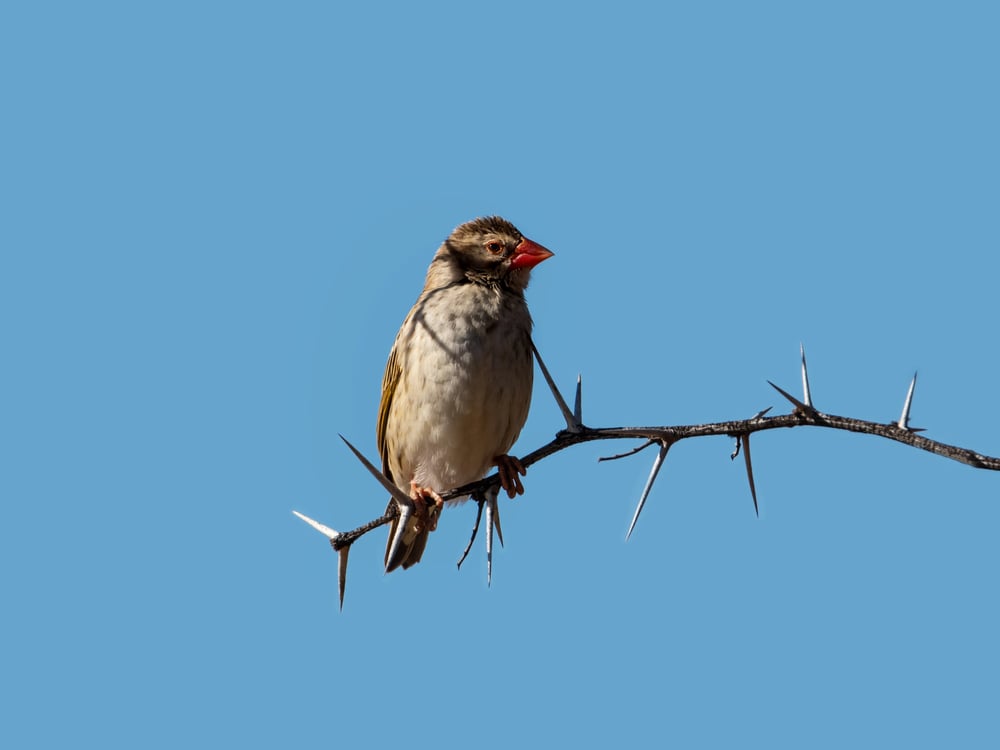
The red-billed quelea represents one of nature’s most successful experiments in survival strategy. Their ability to move quickly, reproduce rapidly, and exploit food resources efficiently has made them virtually unstoppable.
While this creates challenges for human agriculture, it’s also a testament to the incredible adaptability of life on Earth. These tiny birds have turned the entire African continent into their domain, thriving in an environment where many species struggle to survive.
In a world where we’re constantly hearing about declining wildlife populations, the red-billed quelea stands as proof that some species not only endure but absolutely flourish when they find the right formula for success.
More from Go2Tutors!

- 16 Historical Figures Who Were Nothing Like You Think
- 12 Things Sold in the 80s That Are Now Illegal
- 15 VHS Tapes That Could Be Worth Thousands
- 17 Historical “What Ifs” That Would Have Changed Everything
- 18 TV Shows That Vanished Without a Finale
Like Go2Tutors’s content? Follow us on MSN.



