Most Eccentric Buildings Ever Constructed
Architecture has always been a place where ambition and imagination collide. Most buildings follow rules — structural, aesthetic, and practical.
But every so often, someone decides the rules don’t apply to them, and what gets built is something that stops people in their tracks. Not always because it’s beautiful.
Sometimes because it’s baffling. Sometimes because it looks like it has no business existing in the physical world.
These are the buildings that pushed past normal and kept going.
The Crooked House, Poland
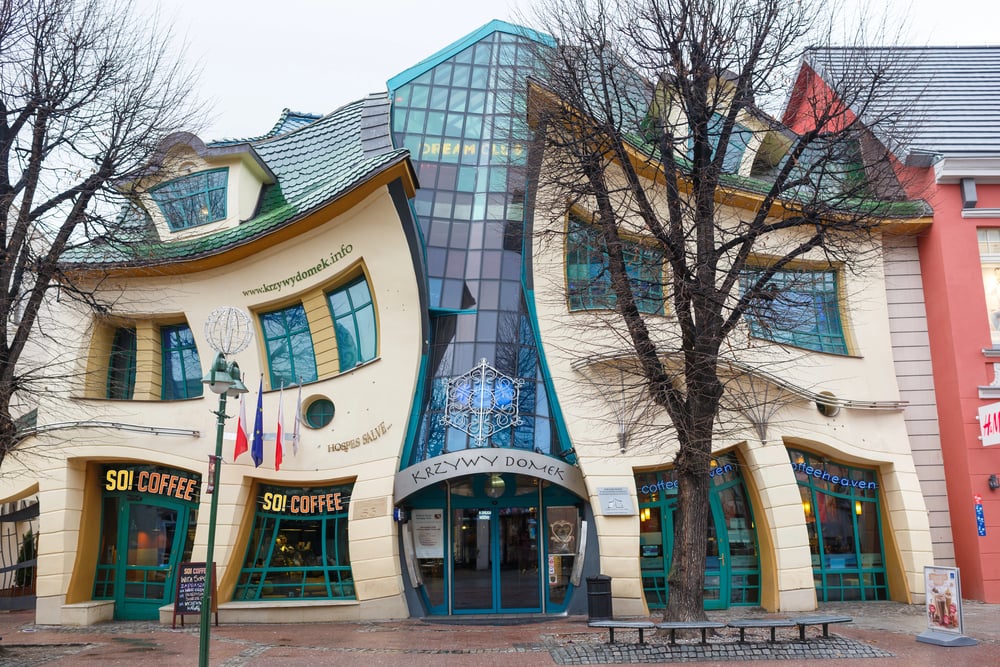
Sopot’s Krzywy Domek looks like it was drawn by a child having a very creative day. The walls bend and bulge, the roof ripples, and the windows are warped into curves that seem to defy the idea of a straight line entirely.
Built in 2004 and inspired by the illustrations of Polish artist Jan Marcin Szancer, the building is part of a shopping centre — which makes the whole thing even stranger. You can go inside and buy groceries.
The exterior looks like it’s melting.
The Basket Building, Ohio
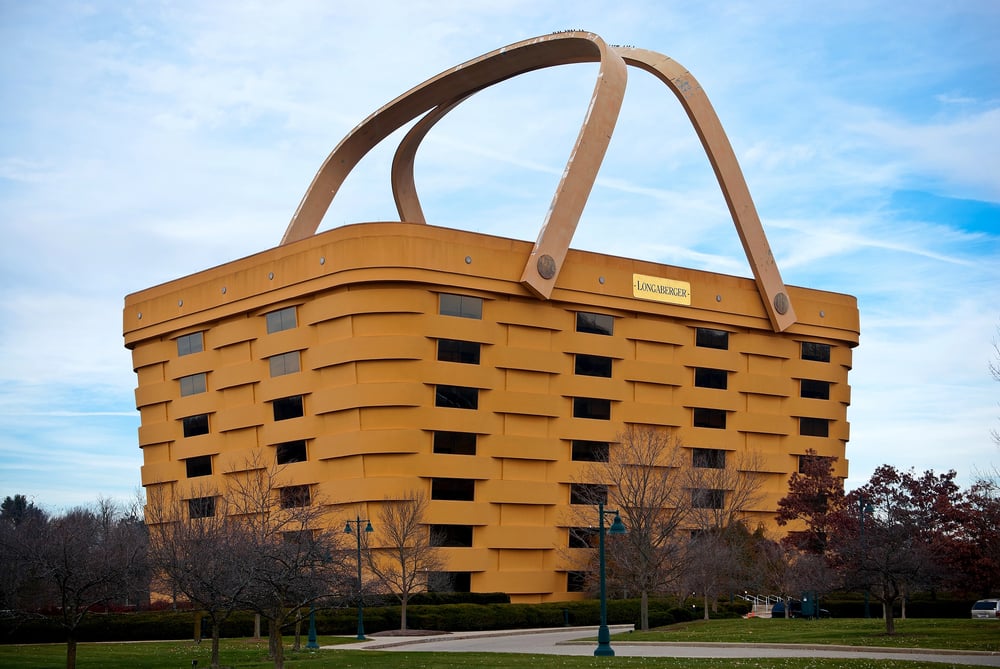
The Longaberger Company in Newark, Ohio wanted people to know what they did for a living, so they built their headquarters in the shape of a giant picnic basket. Not a building inspired by a basket.
An actual seven-storey replica of their most popular product, complete with two giant handles arching over the roof. It opened in 1997 and became one of the most photographed buildings in the state.
The company eventually moved out, and the building sat empty for years — which is somehow even more surreal than the original concept.
The Elephant Building, Bangkok
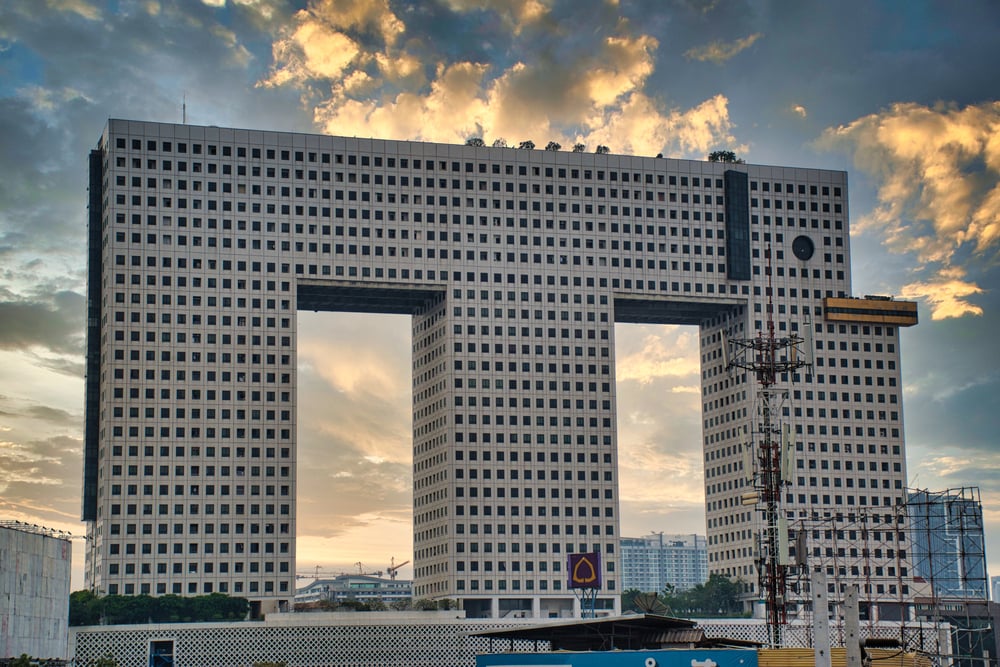
Bangkok’s Chang Building — chang meaning elephant in Thai — takes its theme completely literally. Three connected towers form the legs and body, a smaller structure at the top serves as the head, and two protruding sections on the front serve as tusks.
It houses offices and apartments, and residents go to work inside what is, from a distance, unmistakably an elephant. The building has become an accidental landmark for the city, visible from major roads and completely impossible to confuse with anything else.
The Dancing House, Prague
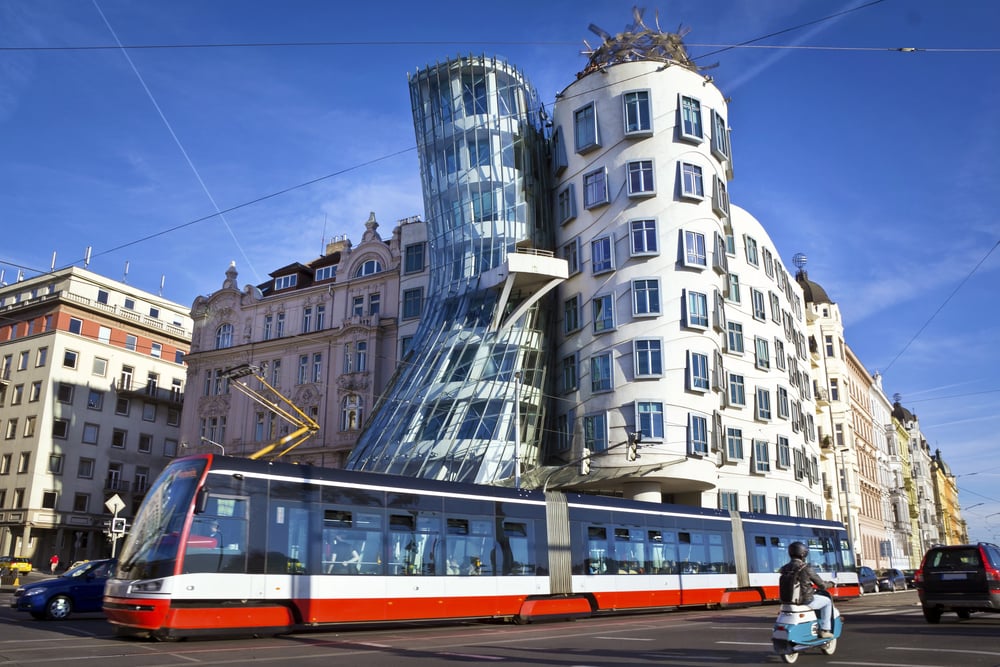
Designed by Frank Gehry and Vlado Milunić, the Dancing House was controversial from the moment it was completed in 1996. The two towers — one rigid and vertical, the other curved and leaning — were meant to evoke a pair of dancers, a nod to Fred Astaire and Ginger Rogers.
It sits along the Vltava River surrounded by ornate Baroque buildings, which makes the contrast jarring in a way that feels entirely intentional. Critics called it an eyesore. It’s now one of the most visited buildings in the city.
The Stone House, Portugal
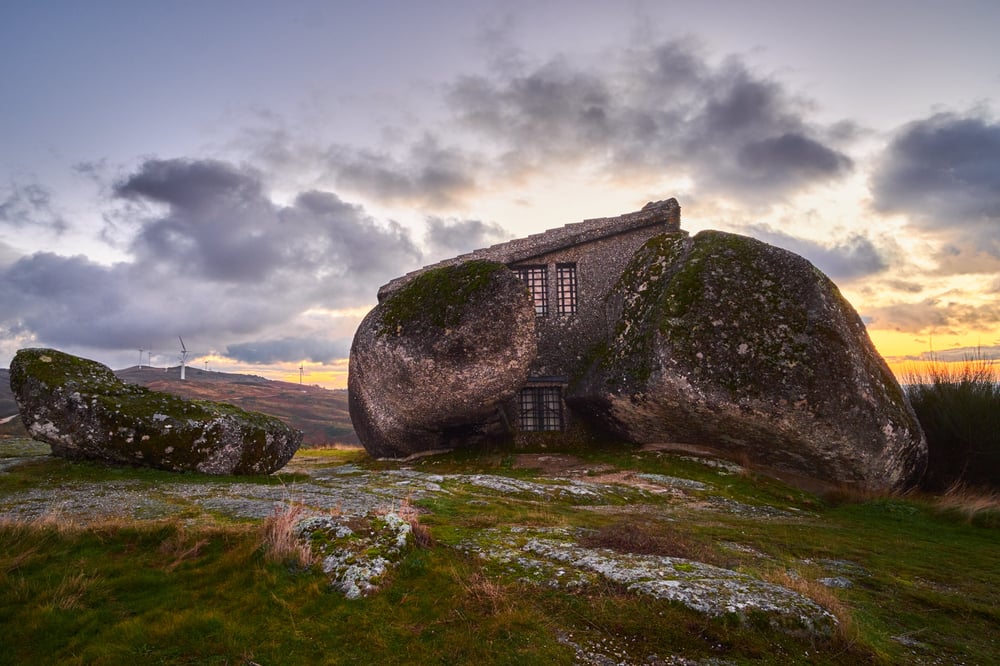
Sitting in the Fafe mountains of northern Portugal, the Casa do Penedo was built between four enormous granite boulders, using them as the walls and partial roof of the structure. From certain angles it looks like the boulders were stacked by something much larger than a human.
The house has a pool carved into the rock, a fireplace inside, and no electricity. It was built in 1974 as a family holiday home and has since become one of the most photographed buildings in Portugal, despite being entirely off the beaten path.
The Habitat 67, Montreal
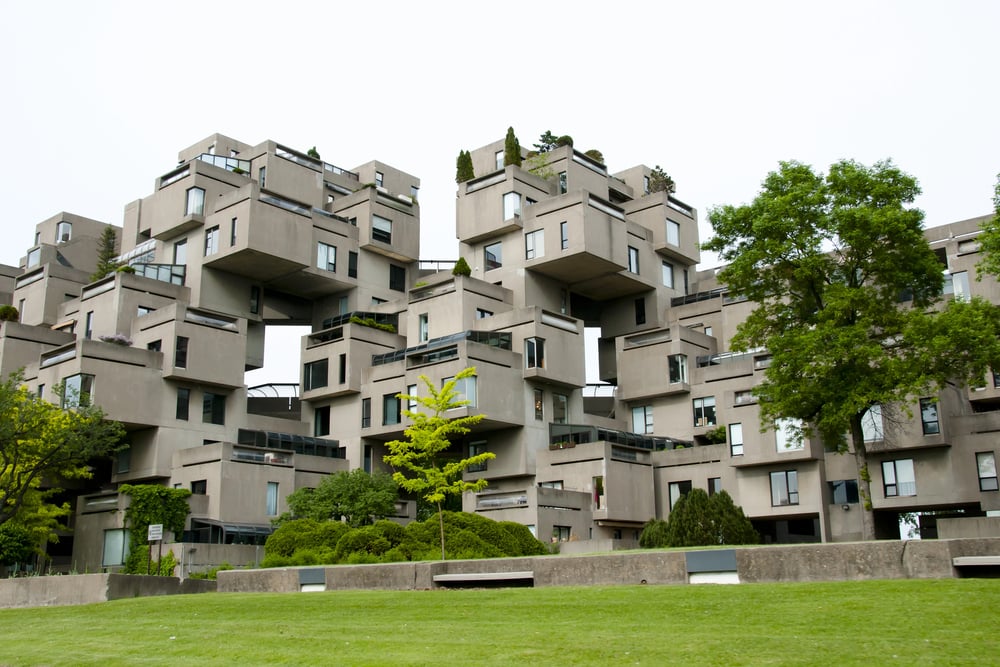
Moshe Safdie designed Habitat 67 for the 1967 World Exposition as a vision of what urban housing could become. The result is a pile of 354 prefabricated concrete boxes stacked and interlocked at seemingly random angles, creating a structure that looks like someone spilled a set of building blocks and decided to leave them.
Each unit is a separate apartment with its own roof garden. The building was meant to be replicated across cities worldwide.
That never happened, and Habitat 67 remains a one-of-a-kind experiment in Montreal, still residential, still strange.
The Upside Down House, Various Locations
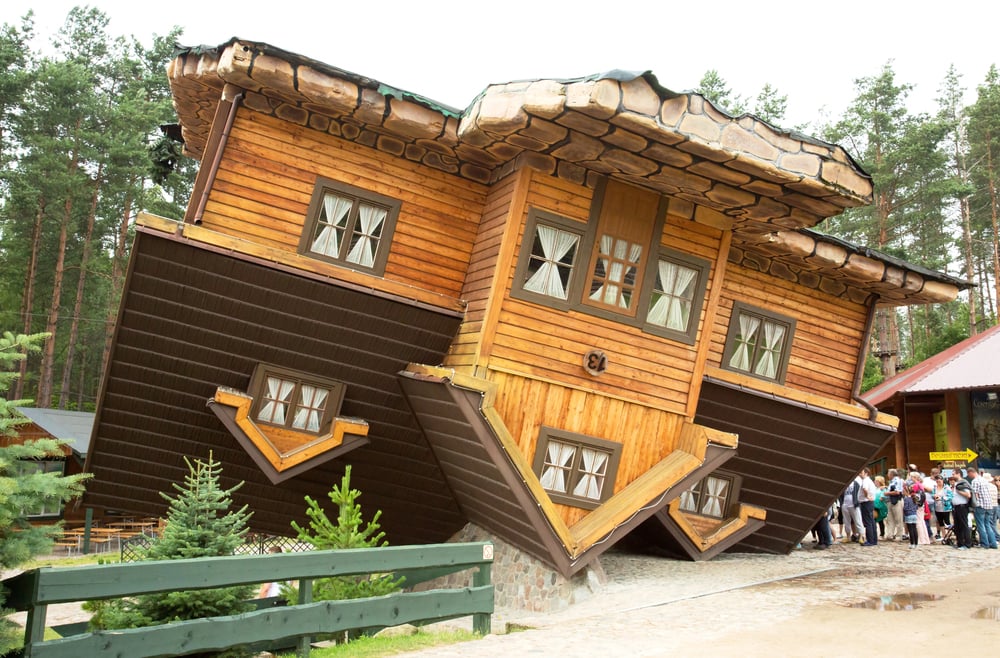
Several versions of the upside-down house exist around the world — in Poland, Germany, the Philippines, and elsewhere — but they all share the same basic premise: a house built with the roof at the bottom and the floor at the top, fully furnished on the inside as though gravity simply forgot to show up. Walking through one is genuinely disorienting.
Furniture is fixed to the ceiling, the stairs descend from nothing, and your brain keeps trying to correct what your eyes are telling it.
The Wonderworks Buildings, USA
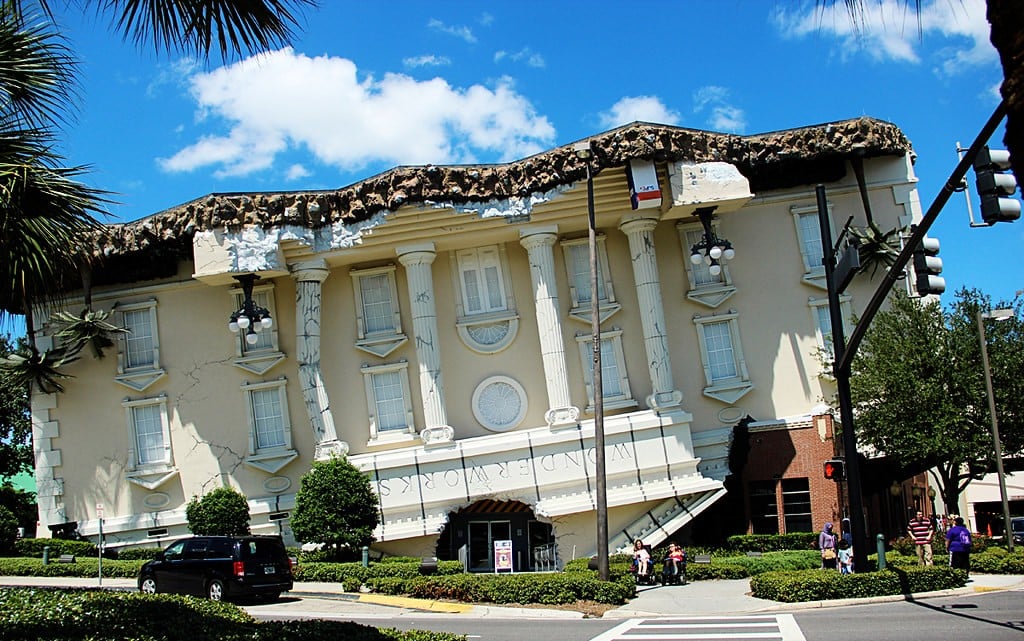
WonderWorks is a chain of entertainment attractions across the United States, and each location is housed in a building that looks like a normal structure that’s been flipped upside down and dropped onto a conventional base. The roof pushes into the ground, the windows face the wrong way, and the whole upper portion appears to hover in mid-collapse.
The concept is consistent across every location, but it never stops looking wrong — which is, of course, entirely the point.
The Nautilus House, Mexico City
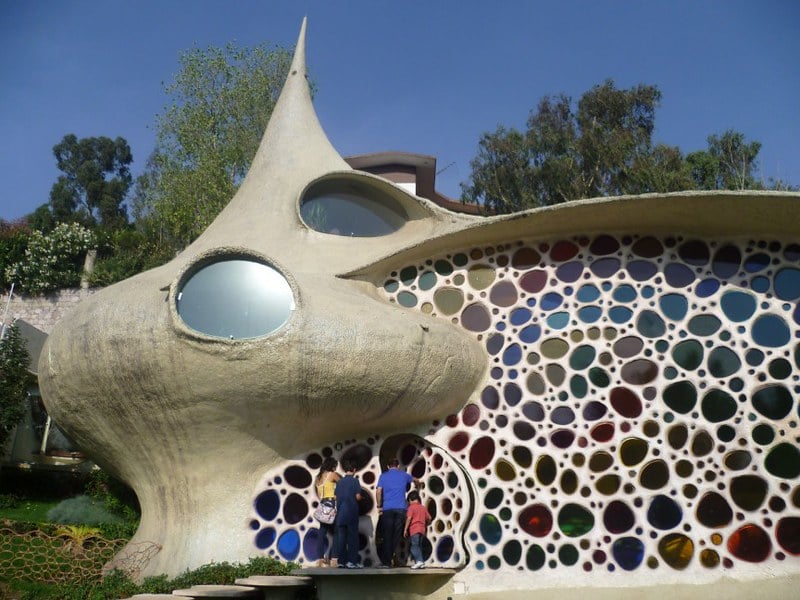
Architect Javier Senosiain designed the Nautilus House in Mexico City as an organic, shell-shaped home inspired by the spiral of a nautilus shell. There are almost no straight lines anywhere.
The entrance curves into a throat-like opening, the interior flows from room to room without rigid divisions, and the exterior is covered in mosaic tiles in blues and greens that give the whole structure the feeling of something aquatic. It sits in a suburban neighbourhood surrounded by perfectly ordinary houses, which does nothing to soften the contrast.
The Hundertwasserhaus, Vienna
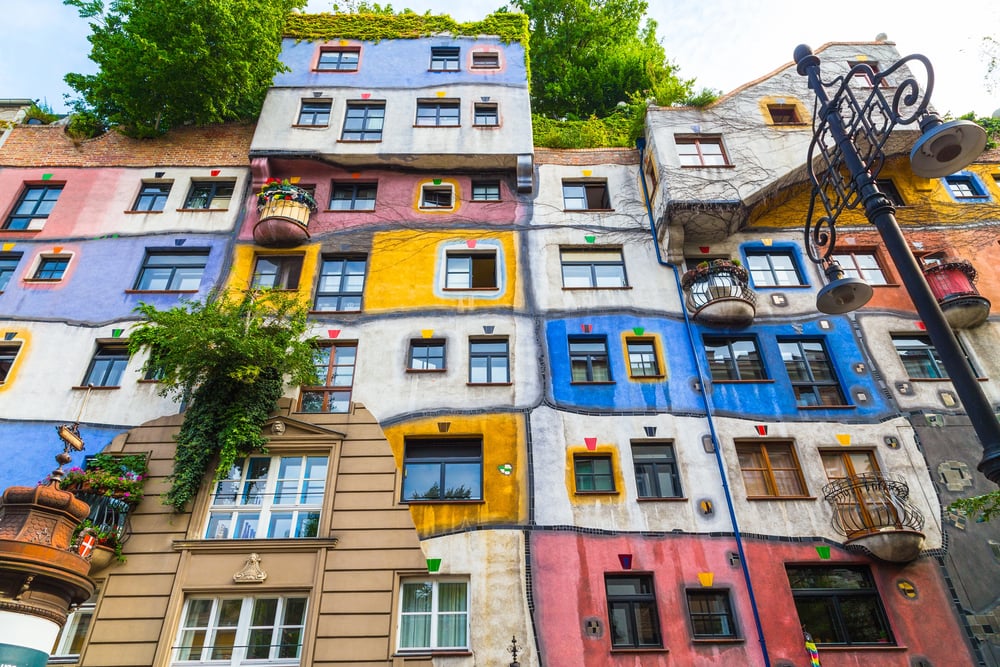
Friedensreich Hundertwasser believed that the straight line was godless and that nature had no use for it. His residential building in Vienna, completed in 1986, is the physical expression of that belief.
The facade is painted in clashing colours, the floors are deliberately uneven, trees grow from inside the rooms and protrude through the windows, and the roofline is covered in grass. It houses 52 apartments and is a functioning residential building, which means people come home to it every day and this is just where they live.
The Longshan Cultural Center, Taiwan
This building in Banqiao, New Taipei City, looks from the outside like a giant circuit board or a computer motherboard scaled up to architectural proportions. The geometric gridlines, the modular cutouts, and the way the facade is subdivided into panels all contribute to the impression that someone tried to print a piece of electronics at the scale of a city block.
It’s a cultural centre, which means concerts and community events happen inside something that looks like it should be processing data.
The Piano House, China
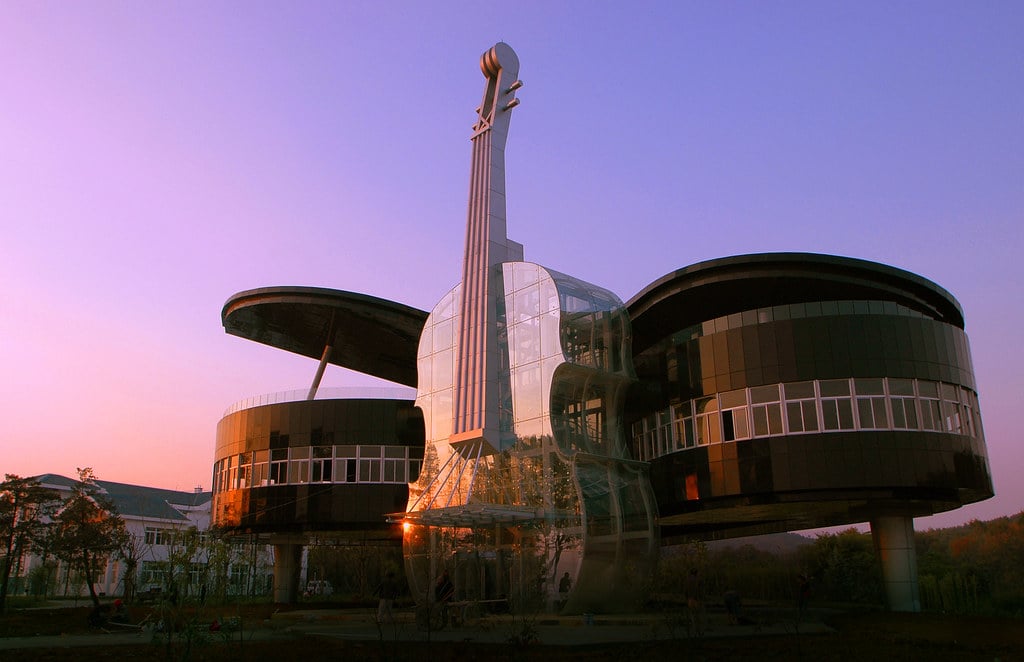
Huainan in China is home to a building that functions as a music school and cultural centre, built in the shape of a giant black grand piano with a transparent violin case forming the attached entrance hall. The piano’s lid is raised at an angle.
The violin case curves away from it in glass. It’s enormous, it’s literal, and it works exactly as described. Inside, students practice music.
Outside, you’re standing in front of a piano the size of a building.
The Hang Nga Guesthouse, Vietnam
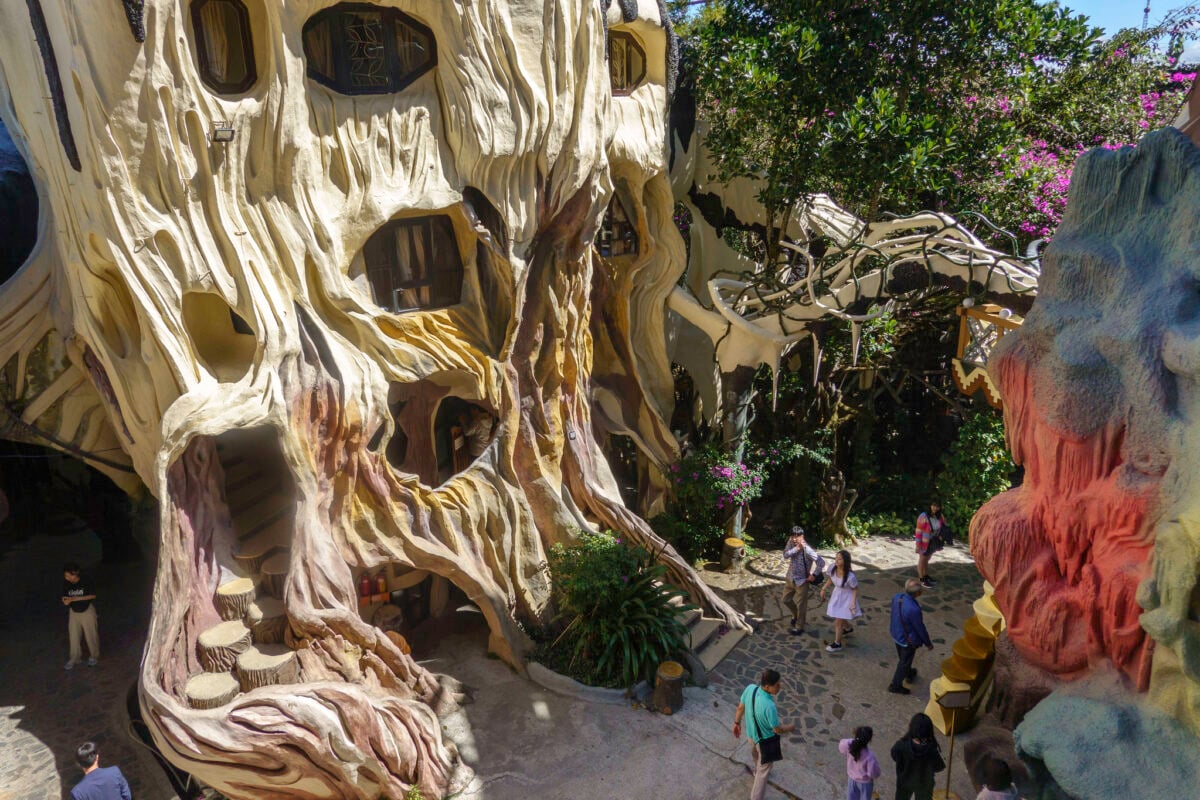
Also known as the Crazy House, Đặng Việt Nga’s guesthouse in Đà Lạt, Vietnam, has been under continuous construction since 1990 and shows no sign of stopping. The structure grows organically, with no fixed plan, into something resembling a tree that decided to become a building.
Tunnels wind through the interior, rooms are embedded in hollowed-out trunks, staircases spiral around exterior branches, and the whole compound connects in ways that feel more biological than architectural. Guests actually stay there overnight.
It’s a functioning hotel and one of the strangest places you can sleep on earth.
The Buildings That Refuse to Be Normal
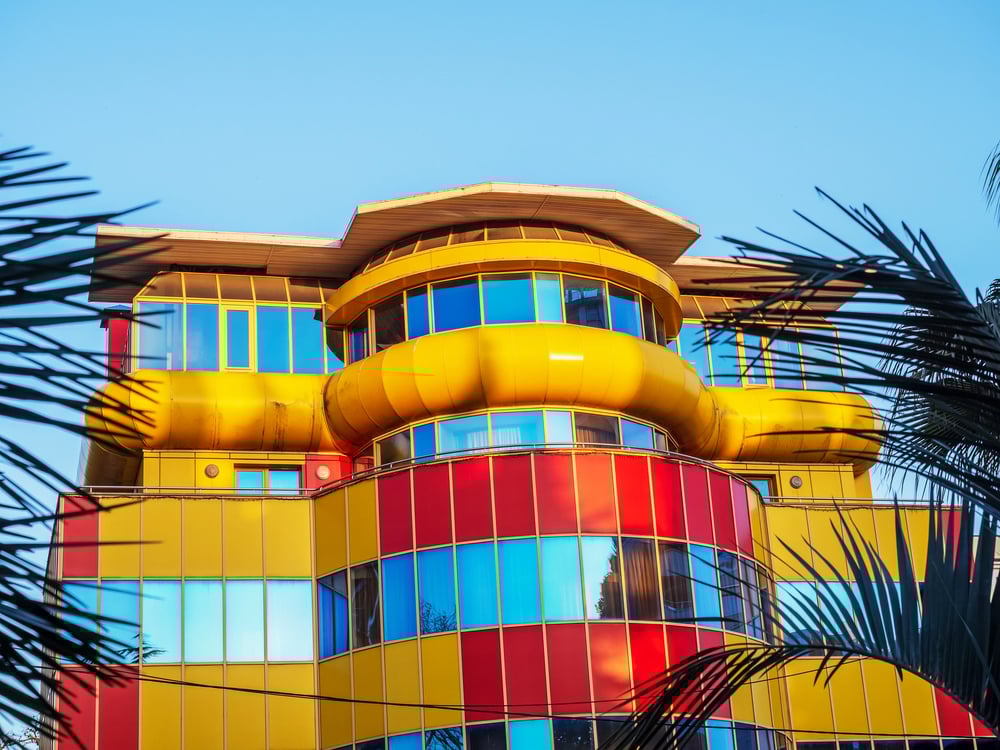
Strange looks tie these buildings together – yet deeper still lies their shared rejection of mere usefulness. Each began when a person wondered how a structure might speak, instead of simply sheltering.
One insists on new ideas about homes. Another honors an object, or the hand that made it.
A few exist only because someone thought wildly, then built without apology. Some catch your eye so sharply you freeze mid-step.
A slight turn of the head follows. Questions form – real ones – about how such a thing could ever be made.
Doing that well? Much tougher than most would guess.
More from Go2Tutors!

- The Romanov Crown Jewels and Their Tragic Fate
- 13 Historical Mysteries That Science Still Can’t Solve
- Famous Hoaxes That Fooled the World for Years
- 15 Child Stars with Tragic Adult Lives
- 16 Famous Jewelry Pieces in History
Like Go2Tutors’s content? Follow us on MSN.