Most Expensive Failed Projects
Money doesn’t guarantee success. Some of the biggest budget disasters in history prove that point better than any business school case study ever could.
These projects burned through billions of dollars before collapsing under the weight of bad planning, worse execution, or just plain terrible luck. The scale of these failures is hard to wrap your head around.
When a project costs more than the GDP of a small country and still ends up abandoned or scrapped, something has gone very wrong.
The Sagrada Familia’s Modern Rivals

Construction projects have a special talent for eating money. The Berlin Brandenburg Airport started construction in 2006 with a budget of around 2 billion euros.
When it finally opened in 2020—nine years late—the costs had ballooned to over 7 billion euros. The delays came from everything you can imagine: faulty smoke extraction systems, insolvency of major contractors, and planning changes that never seemed to stop.
Berlin already had two functioning airports. They kept running them while the new one sat empty, racking up maintenance costs with zero revenue.
Scotland’s Digital Disaster

The Scottish Parliament building in Edinburgh finished in 2004 at a cost of £414 million. The original estimate? £40 million.
That’s more than ten times over budget. The architect died partway through the project.
Design changes kept coming. The construction methodology proved far more complex than anyone anticipated.
What was supposed to take two years took five, and taxpayers got stuck with a bill that still makes people wince.
When Concorde Met Its Match

The Concorde represented the pinnacle of commercial aviation, but it never made financial sense. Development costs exceeded £1.3 billion in 1970s money.
That translates to over £20 billion today. Airlines bought just 20 aircraft total.
British Airways and Air France only operated them because their governments forced the issue. The planes were loud, thirsty for fuel, and expensive to maintain.
After 27 years of service, both airlines retired their fleets. The crash in Paris in 2000 accelerated the end, but the economics never worked from day one.
America’s Missile Defense Gamble

The Strategic Defense Initiative, nicknamed “Star Wars,” consumed roughly $30 billion during the Reagan era. The goal was creating a space-based missile defense system that could shoot down nuclear missiles in flight.
The technology just wasn’t there. Scientists couldn’t solve the targeting problems.
Test after test failed. Some tests were even rigged to appear more successful than they were. After the Cold War ended, the program quietly dissolved into smaller, less ambitious projects.
Billions vanished into research that produced little beyond some interesting papers and a lot of political theater.
The Tunnel That Broke Records

The Big Dig in Boston rerouted Interstate 93 underground through the heart of the city. Initial estimates put the cost at $2.6 billion.
Final costs hit $14.6 billion, with interest payments pushing it over $24 billion. Construction took 15 years instead of the planned 10.
A ceiling panel collapse in 2006 killed a motorist. Leaks plagued the tunnels.
The concrete work had defects. Federal investigators found widespread fraud and mismanagement.
Boston got prettier without the elevated highway cutting through downtown. Whether that visual improvement justified the expense and delays is still debated in Massachusetts.
Nuclear Power’s Price Tag

The Shoreham Nuclear Power Plant on Long Island cost $6 billion to build. It operated at full power for all of 65 hours before shutting down permanently.
Local opposition was fierce from the start. After Three Mile Island and Chernobyl, public fear of nuclear power intensified.
Emergency evacuation plans for Long Island proved impossible to create—there just aren’t enough roads to evacuate millions of people quickly. The plant never sold a single watt of electricity commercially.
The utility company that built it went bankrupt. Taxpayers and ratepayers split the bill for decommissioning.
The Supersonic Dream That Wouldn’t Die
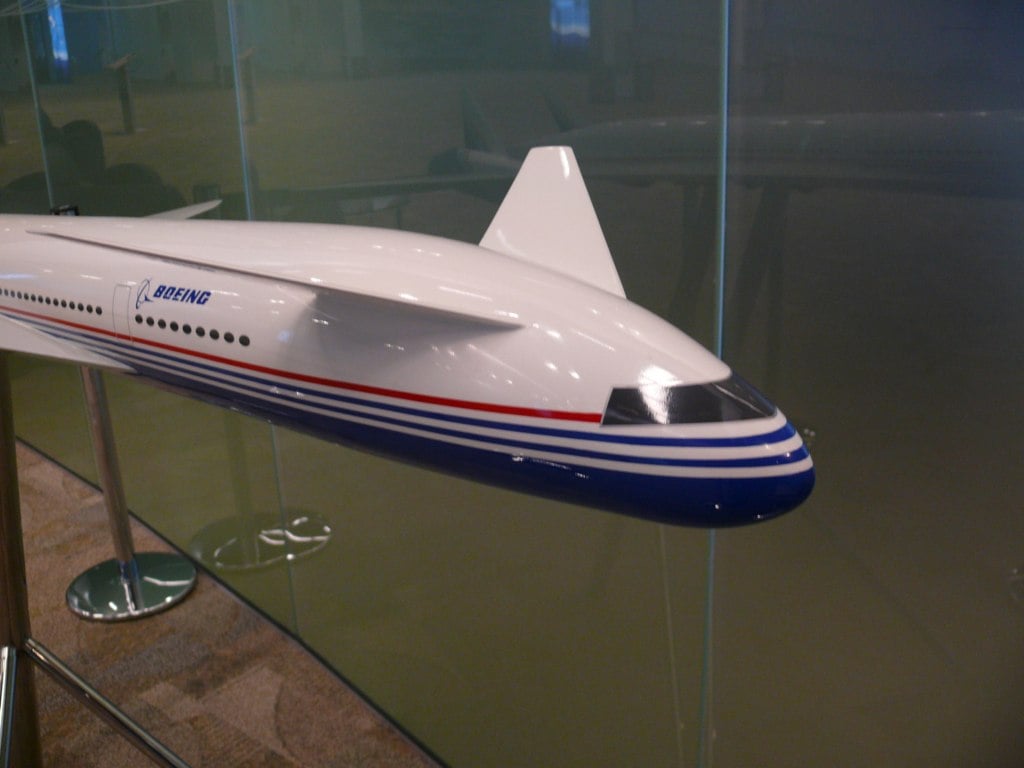
Boeing’s Sonic Cruiser program in the early 2000s aimed to build a jet that flew just below the speed of sound. Airlines showed interest.
Boeing poured hundreds of millions into development. Then fuel prices spiked. Airlines suddenly wanted efficiency, not speed.
The business case evaporated. Boeing scrapped the Sonic Cruiser and pivoted to the 787 Dreamliner instead. The Dreamliner itself became a cautionary tale.
Delays and cost overruns meant Boeing didn’t break even on the program until 2015, years behind schedule. But at least the Dreamliner flew and sold.
The Sonic Cruiser ended up as nothing but wind tunnel models and concept drawings.
London’s Millennium Fiasco

The Millennium Dome cost £789 million to build and operate for one year. The British government hoped it would showcase Britain’s achievements and attract 12 million visitors.
About 6.5 million people actually showed up. The exhibits inside disappointed almost everyone.
Critics savaged it as a monument to empty hype. The political fallout damaged Tony Blair’s government.
The building sat mostly empty for years before being converted into the O2 Arena, which at least generates revenue now. The original Millennium Dome remains a textbook example of poor planning and overpromising.
The Mars Observer Vanishes

NASA’s Mars Observer spacecraft cost $813 million. In 1993, just three days before entering Mars orbit, contact was lost.
Engineers believe a fuel line ruptured. All that money bought nothing.
No data, no pictures, no science results. The spacecraft is presumably still in orbit around Mars or crashed into its surface.
NASA never found out which. The failure led to a complete rethinking of Mars missions.
The “faster, better, cheaper” approach emerged from this disaster. Multiple smaller missions replaced single expensive ones.
Some of those failed too, but the losses hurt less.
Saudi Arabia’s Economic City

King Abdullah Economic City was supposed to be a massive new metropolis on the Red Sea coast. The project launched in 2005 with projections of $100 billion in investment and 2 million residents by 2020.
By 2020, only about 7,000 people lived there. Most of the planned development never happened.
The financial crisis in 2008 dried up funding. The scale of the vision proved wildly unrealistic.
Some industrial facilities and a port operate there now. But the grand vision of a rival to Dubai remains a desert mirage.
Construction continues slowly, with revised expectations that acknowledge reality better than the original hype.
The Spruce Goose Flies Once

Howard Hughes built the H-4 Hercules flying boat, nicknamed the Spruce Goose, for $23 million in 1940s dollars. That’s roughly $400 million today.
The massive wooden airplane was supposed to carry troops during World War II. It didn’t fly until 1947, two years after the war ended.
Hughes piloted it for about one mile at an altitude of 70 feet. Then it never flew again.
The plane sat in storage for decades. Now it’s a museum piece in Oregon.
Hughes proved you could build a plane that large out of wood. He also proved it wasn’t particularly useful.
Australia’s Broadband Gamble

The National Broadband Network in Australia started with a budget of 37.4 billion Australian dollars. Current estimates put the final cost over 51 billion.
The project has been plagued by technical problems, cost blowouts, and political interference. Multiple changes in government led to multiple changes in the technical approach.
The network uses a mix of technologies instead of the original fiber-to-the-home plan. Australians got their broadband, but slower and more expensive than promised.
The government-owned company running it is struggling to make the economics work. The network may never generate enough revenue to justify its cost.
Hollywood’s Heaven’s Gate

“Heaven’s Gate” destroyed United Artists as an independent studio. The 1980 Western started with a $7.5 million budget and ended up costing over $44 million.
Director Michael Cimino had complete creative control after his success with “The Deer Hunter.” He used it to reshoot scenes endlessly, build entire Western towns that appeared briefly on screen, and bring a production locomotive to South Dakota.
The film opened to devastating reviews and empty theaters. It made back only $3.5 million. United Artists couldn’t survive the loss.
MGM bought the studio at a fire-sale price. The film gave studios a renewed fear of giving directors unlimited power and budgets.
Ford’s Edsel Experiment

The Ford Edsel launched in 1958 as a completely new car brand. Ford spent $250 million on development and marketing—equivalent to about $2.6 billion today.
The car flopped immediately. Critics hated the styling, especially the vertical grille that looked like a toilet seat. The car had quality control problems.
The marketing created expectations the product couldn’t meet. Ford sold about 110,000 Edsels in three years before killing the brand.
The company lost hundreds of millions. The Edsel became synonymous with product failure.
Business schools still teach it as a case study in what not to do.
The Price of Ambition

These failures share common threads. Overconfidence in planning.
Underestimation of complexity. Political pressure pushed projects forward past the point where stopping made more sense.
Technical challenges that proved insurmountable with available technology and budgets. The human cost often gets lost in the dollar figures.
Careers ended. Companies failed.
Taxpayers got stuck with bills they never agreed to pay. Workers lost jobs when projects collapsed.
But failure teaches. Each disaster here generated lessons that influenced future projects.
Some of those later projects succeeded because people learned from these expensive mistakes. The price of that education was steep, but the knowledge gained had value beyond what any accounting ledger could measure.
Progress requires risk. Sometimes risk means failure.
The difference between a visionary and a fool often comes down to whether the project worked or not.
More from Go2Tutors!

- The Romanov Crown Jewels and Their Tragic Fate
- 13 Historical Mysteries That Science Still Can’t Solve
- Famous Hoaxes That Fooled the World for Years
- 15 Child Stars with Tragic Adult Lives
- 16 Famous Jewelry Pieces in History
Like Go2Tutors’s content? Follow us on MSN.