Most Expensive Stamps Ever Sold And What Made Them Valuable
The world of stamp collecting might seem quaint to some, but at its highest levels, it’s a cutthroat marketplace where tiny pieces of paper sell for millions. These aren’t just postage stamps that happened to survive—they’re printing errors, historical artifacts, and sometimes the only surviving examples of their kind.
The stories behind the most expensive stamps ever sold reveal a fascinating intersection of history, human error, and obsessive collecting that transforms mundane postal items into treasures worth more than most people’s homes.
British Guiana 1c Magenta
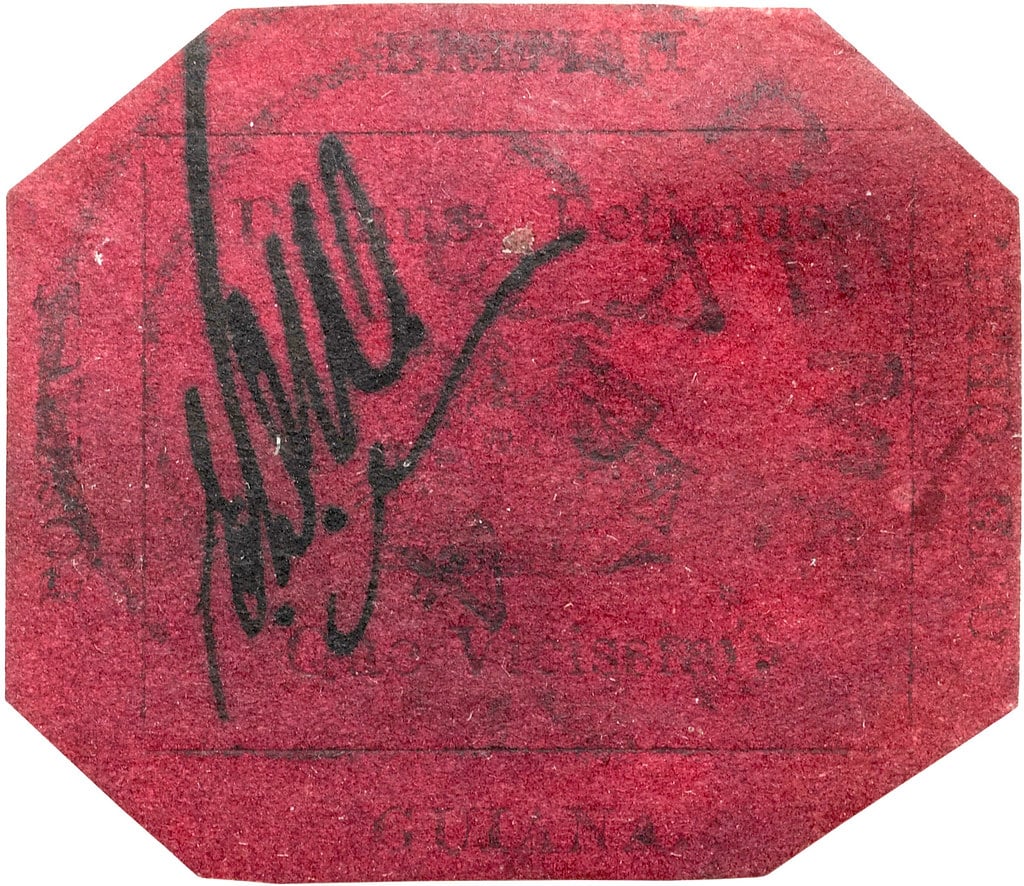
This stamp sold for $9.5 million in 2014. One piece of magenta paper, roughly an inch square.
The 1856 British Guiana 1c Magenta exists because someone at a printing shop in Georgetown ran out of proper stamps and improvised. They cut corners, used the wrong paper, got the color wrong.
Every other stamp from that emergency printing has vanished. What’s left is a stamp so unremarkable looking that it seems like a joke.
Faded magenta ink on newspaper-grade paper, initialed by a postal clerk who was just doing his job. The most expensive stamp in the world looks like something a child might make.
Treskilling Yellow
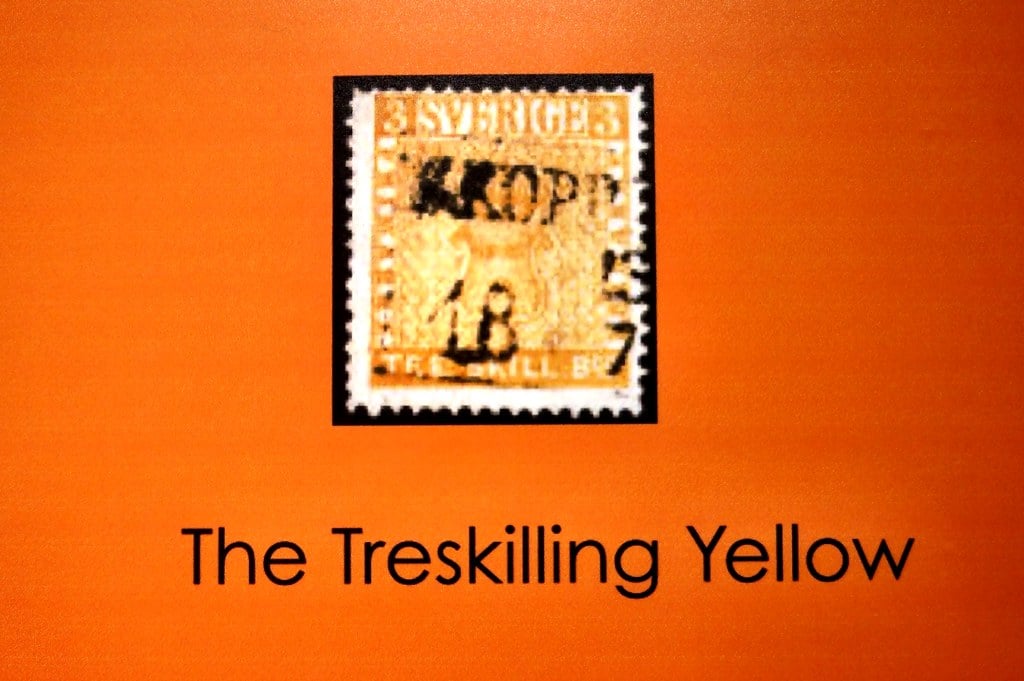
Sweden’s 1855 Treskilling Yellow shouldn’t exist, but here it stands as a $2.3 million testament to the beauty of mistakes (well, the beauty that collectors find in mistakes, which can sometimes feel like watching someone fall in love with a typo on a restaurant menu, except the typo happened 170 years ago and somehow survived when everything else around it crumbled). The stamp was supposed to be printed in blue-green—every other three-skilling stamp from that era was blue-green because that’s what three-skilling stamps looked like, what they had always looked like—but this one came out yellow.
Wrong color. And yet (or perhaps because of this very wrongness), when it was discovered in 1885 and later surfaced at auction in 1996 after being lost for over a century, it became the most valuable item ever produced in Sweden.
But wrong in exactly the right way. The schoolboy who discovered it was rummaging through his grandfather’s attic, which is either the most romantic stamp collecting story ever told or proof that the universe has a sense of humor about these things.
Georg Wilhelm Backman found the stamp and sold it to a Stockholm dealer for 7,000 Swedish kronor, a substantial sum at the time—though he had no idea the treasure he held would eventually command millions at auction decades later.
Mauritius “Post Office” Stamps
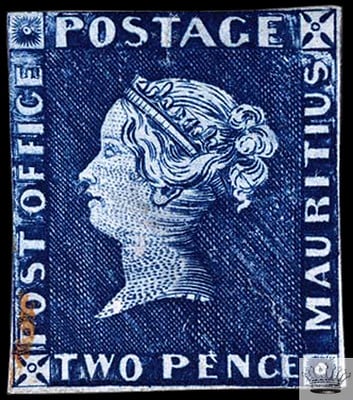
Here’s the thing about the Mauritius “Post Office” stamps: they were created for a party. Lady Gomm, the governor’s wife, needed stamps for her 1847 event invitations, and the local engraver got a bit creative with the wording.
Instead of “Post Paid,” he engraved “Post Office” on both the 1-penny orange-red and 2-penny deep blue stamps. Wrong text, but the party must go on.
Most of these stamps were used on the invitations and thrown away after the event—because who keeps party invitations from 1847? The surviving examples now sell for over $4 million each.
Those party guests had no idea they were tossing away fortunes with their used invitations.
Inverted Jenny
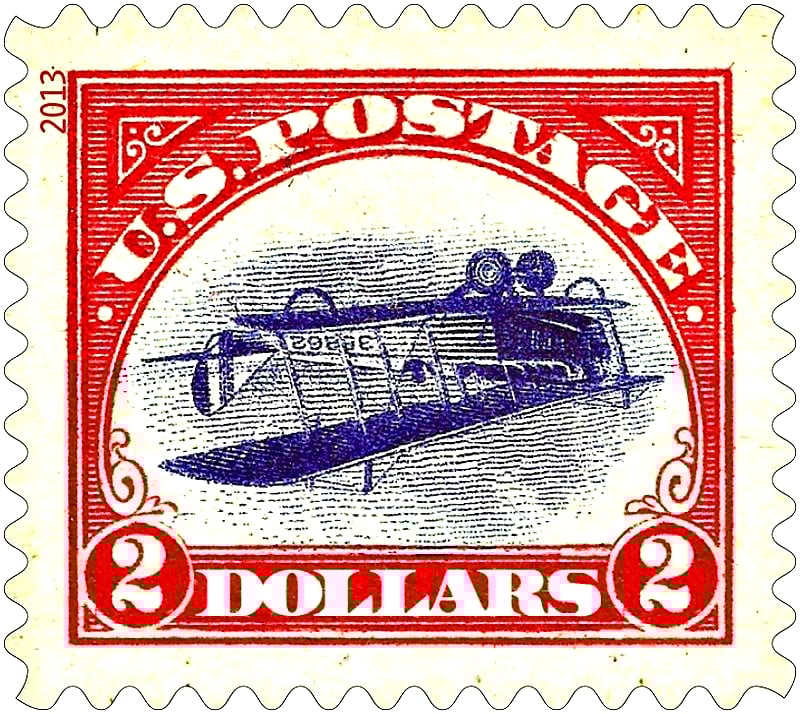
The 1918 Inverted Jenny carries the airplane upside down, and that’s exactly what makes collectors lose their minds over it—not because an upside-down plane means anything profound about aviation or American postal history, but because it represents the split second when a sheet of stamps went through the printing press the wrong way and nobody caught it until William T. Robey walked into a Washington D.C. post office on May 14, 1918, and bought the entire sheet of 100 for $24 (which feels a bit like buying a lottery ticket, except Robey knew he was buying a lottery ticket, having heard rumors about the printing error that morning).
The Postal Service tried to buy the sheet back immediately. Robey refused.
Individual copies now sell for over $1.3 million. That’s roughly $13,000 per stamp from his original $24 investment, which even accounting for inflation represents the kind of return that would make any financial advisor weep with envy.
Basel Dove
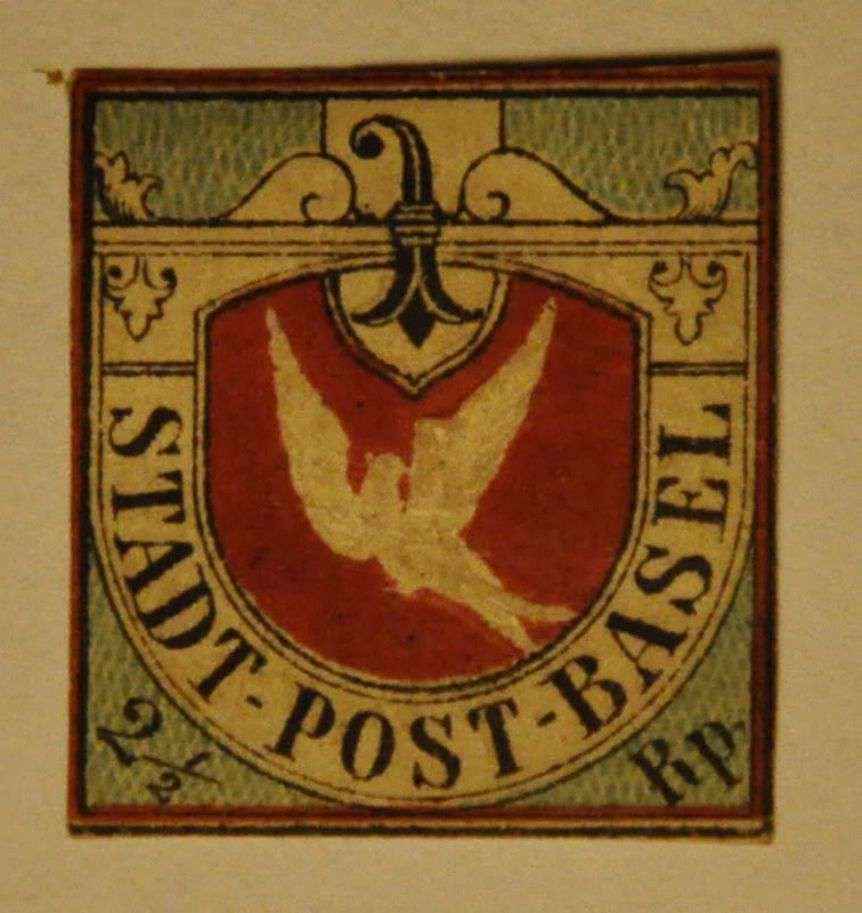
Switzerland’s 1845 Basel Dove was the first stamp to feature a dove in flight. Revolutionary stuff for 1845.
The design came from Melchior Berri, who apparently thought postal customers needed something more inspiring than the usual coat of arms or monarch’s profile. He gave them a dove carrying a letter, which was either charmingly literal or completely redundant, depending on your perspective.
Only a handful survive. One sold for $2.4 million in 2019.
That’s a lot of money for a dove, even a pioneering one.
Hawaiian Missionaries
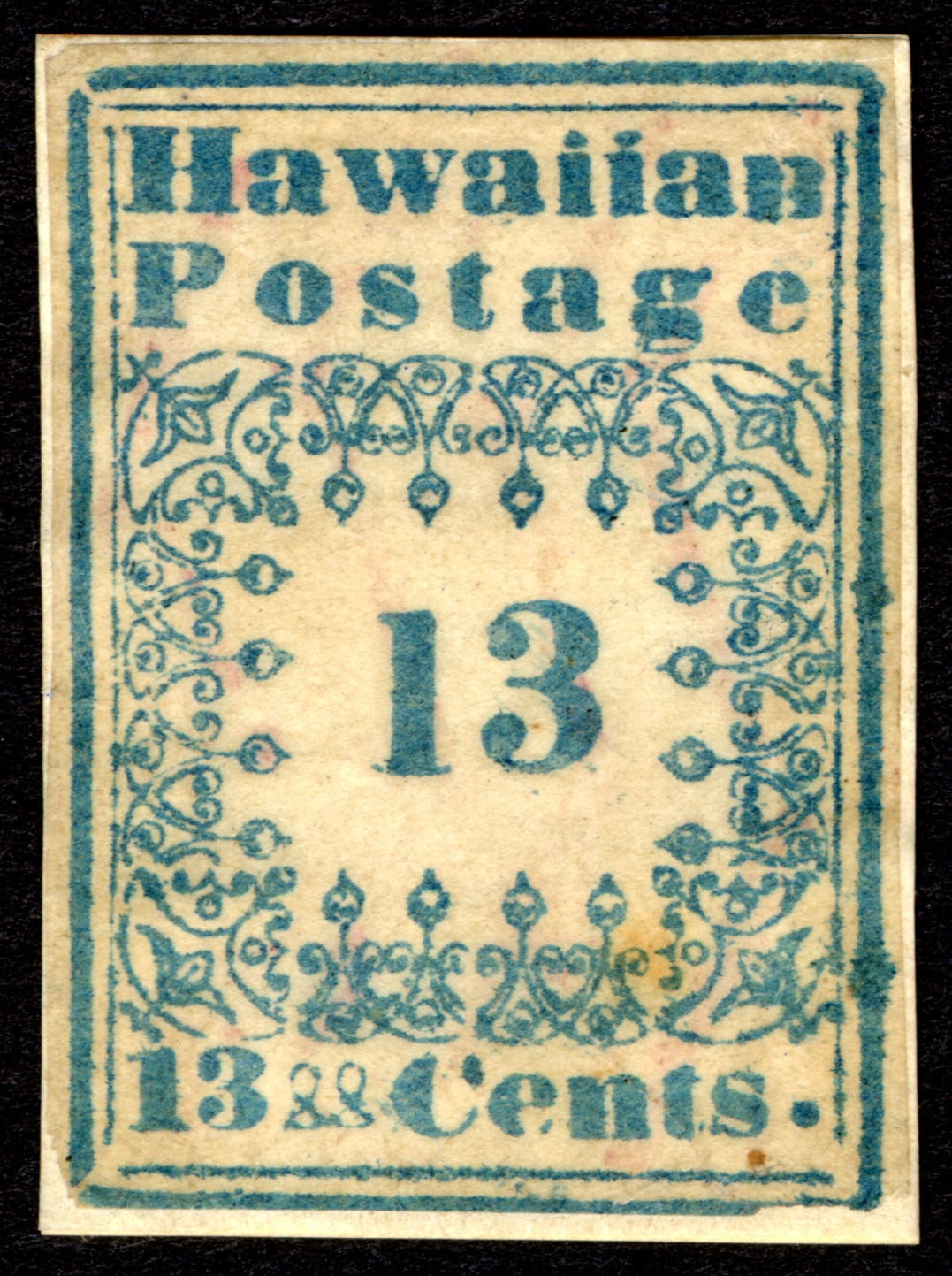
The 1851 Hawaiian Missionaries got their nickname because American missionaries used them to send letters back to New England (though really, anyone mailing letters from Hawaii in 1851 had to use these stamps, so calling them “Hawaiian Missionaries” is a bit like calling modern quarters “grocery store quarters” just because people use them at grocery stores, but collectors have never been particularly logical about naming conventions). These were Hawaii’s first stamps, printed on thin, fragile paper that was never meant to last—most copies that survived did so accidentally, pressed between pages of Bibles or forgotten in desk drawers for decades.
But here’s the thing about accidents: sometimes they’re worth $2 million. The missionaries who used these stamps were writing letters that took months to reach their destinations, assuming they reached them at all.
And now their postage costs more than most people’s houses.
Canada 12-Pence Black

Like watching someone perfect a magic trick through sheer repetition, Canada’s 1851 12-pence Black represents the kind of precision that emerges when a new postal system decides it won’t settle for mediocrity. The stamp features a portrait of Prince Albert rendered in such careful detail that each line seems deliberate, purposeful—the engraver treating this small rectangle of paper as if it were destined for a gallery wall rather than a letter’s corner.
Most copies were used and discarded, the way stamps are supposed to be used and discarded. The few that survived in pristine condition carry the weight of that lost world, when twelve pence actually meant something and Canada was still figuring out how to be Canada.
A pristine copy sold for $935,000 in 2019, which seems about right for a small piece of paper that accidentally became art.
Red Mercury

The 1856 Red Mercury from Austria exists because someone at the postal printing office had strong opinions about color coordination and apparently the authority to act on those opinions without asking permission. The standard Mercury stamps were printed in various colors depending on their denomination—blues, greens, the usual postal palette—but this particular 9-kreuzer stamp emerged in brilliant red, which was absolutely not what 9-kreuzer stamps were supposed to look like.
Wrong color, wrong everything. The printing error was caught quickly, making this one of those “destroyed before distribution” situations, except clearly not everything was destroyed because here we are, talking about a stamp that sold for over $1.8 million.
Collectors have a way of finding the things that were supposed to be lost forever, which says something either about the persistence of collectors or the inadequacy of 19th-century quality control.
Two-Penny Blue
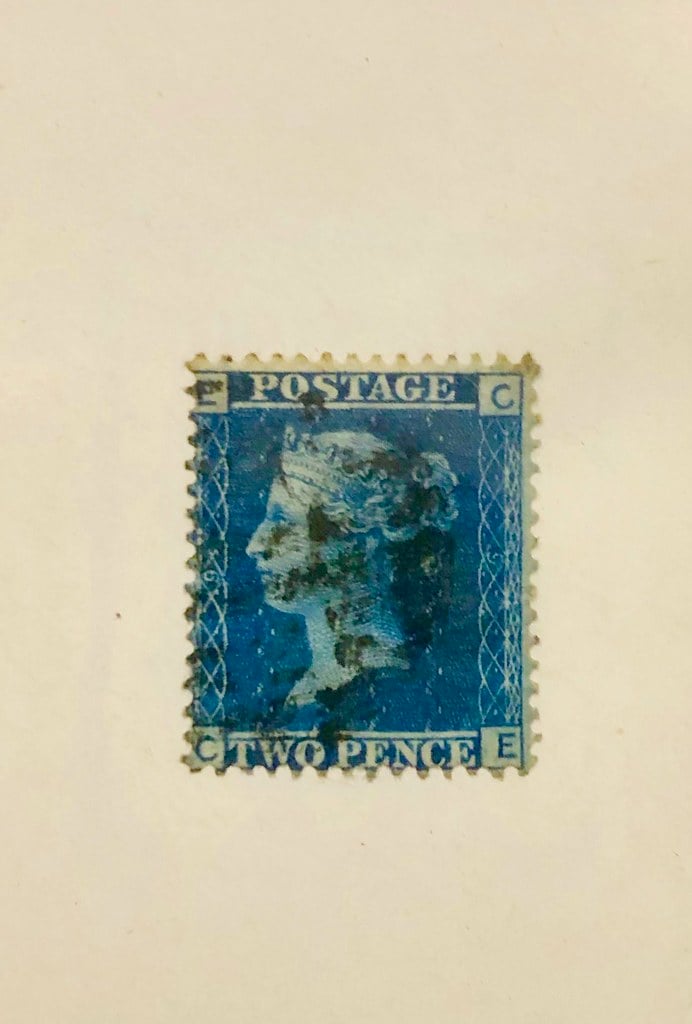
Britain’s 1840 Two-Penny Blue holds the distinction of being the world’s second postage stamp, which puts it in the awkward position of being historically significant but forever playing second fiddle to the Penny Black that came first. The Two-Penny Blue was part of the same postal reform that gave us modern mail service—suddenly anyone could send a letter anywhere in Britain for a fixed price, no matter how far it traveled or how much the recipient annoyed the local postmaster.
Most Two-Penny Blues were used heavily and discarded, as stamps should be. The surviving examples in mint condition represent a kind of accidental preservation, stamps that never fulfilled their intended purpose but gained value precisely because they didn’t.
A perfect copy can bring $2 million at auction. That’s roughly one million dollars per penny of original face value, which seems like a reasonable return on investment.
Alexandria Blue Boy

The 1846 Alexandria Blue Boy was America’s first postmaster provisional—essentially a local post office creating its own stamps before the federal government got its act together. Alexandria, Virginia needed stamps, Washington D.C. wasn’t providing them, so the local postmaster commissioned his own.
The design features a running figure that collectors have dubbed the “Blue Boy,” though whether the figure is running toward something or away from something remains charmingly unclear. The stamp exists because someone refused to wait for bureaucracy to solve their problem.
Only seven copies are known to survive. One sold for $1.2 million in 2016, making it one of the most expensive solutions to a local mail delivery problem ever recorded.
Penny Black
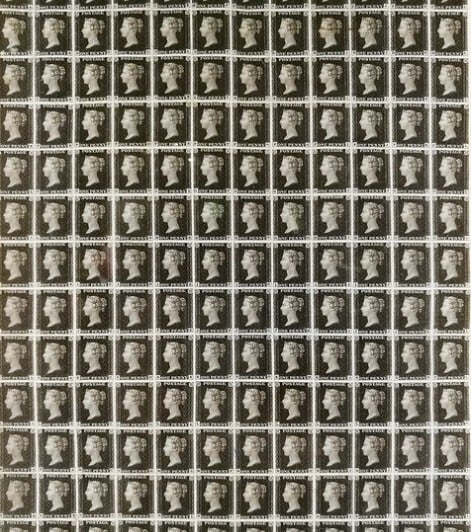
Here’s the truth about the Penny Black: it wasn’t meant to be collectible, revolutionary, or historically significant—it was meant to be convenient (imagine that, postal reform driven by the radical notion that mailing a letter shouldn’t require advanced mathematics or personal connections with the postmaster general). Britain’s 1840 Penny Black became the world’s first adhesive postage stamp because Sir Rowland Hill got tired of watching the postal system operate like an exclusive club where prices changed based on distance, weight, whim, and probably the weather.
One penny, anywhere in Britain, no questions asked. The Penny Black lasted exactly one year before being replaced by the Penny Red, which means every surviving example represents a brief moment when the world was figuring out how mail was supposed to work.
Most were used as intended and discarded, because in 1840 nobody was thinking about stamp collecting as a hobby—they were thinking about finally being able to afford to mail letters. A perfect Penny Black now sells for around $3 million.
That’s three million times its original face value, which represents either the best investment in history or the most expensive nostalgia ever recorded.
Z Grill
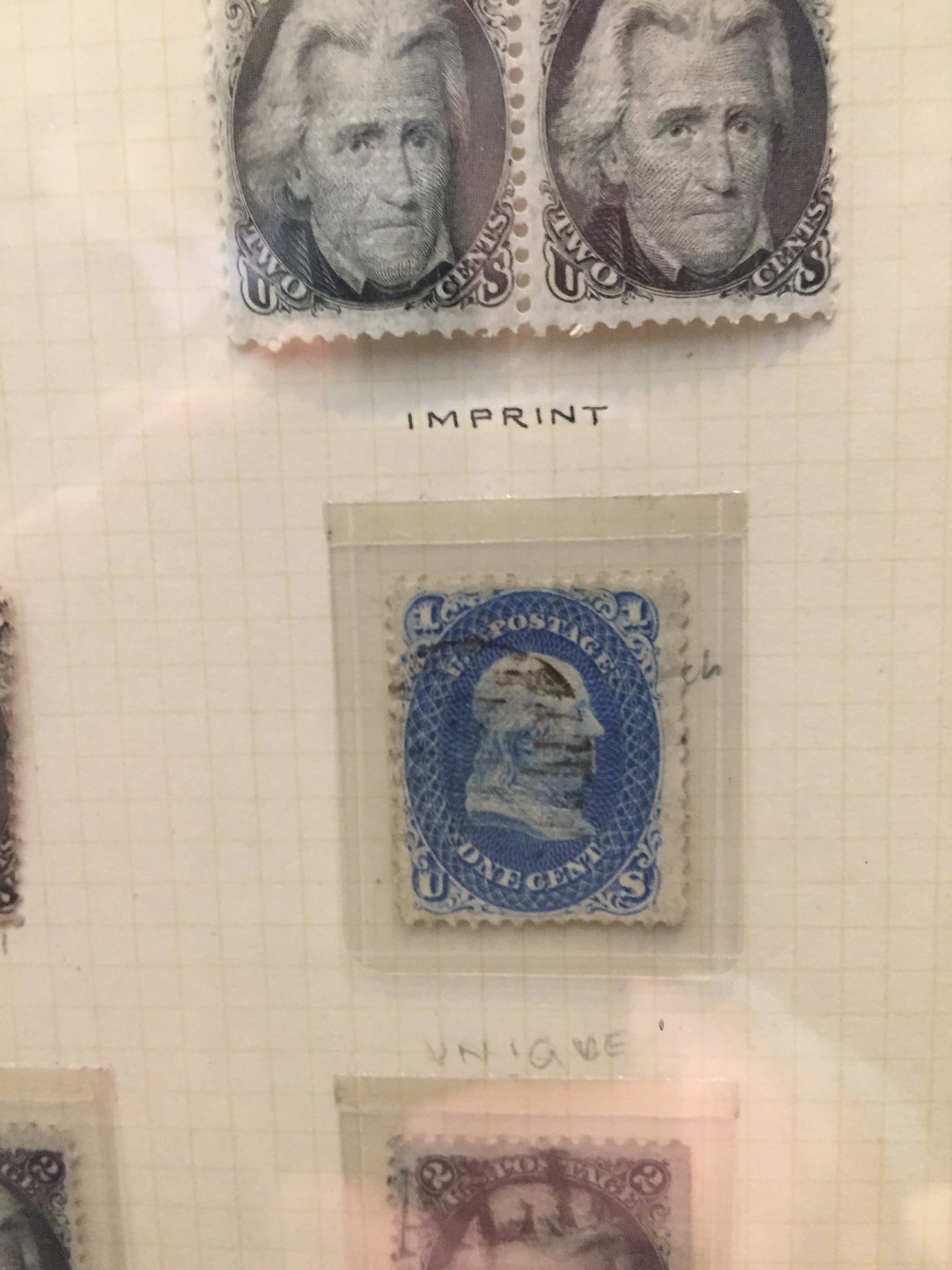
The 1868 Z Grill represents American postal paranoia at its finest—the Post Office decided that people were cleaning stamps and reusing them, so they invented “grilling,” which involved pressing tiny pyramid-shaped openings into the paper to make the ink soak in deeper and prevent cleaning. The Z Grill was one pattern among many, but most of the sheet was destroyed before distribution, leaving only two known copies in existence.
One copy sold for $935,000 in 2016. The other sits in the New York Public Library, making this one of those situations where a library’s stamp collection is worth more than most people’s retirement funds.
The irony is that grilling was abandoned after a few years because it made stamps more fragile, not less. Sometimes security measures backfire spectacularly.
Cotton Reels

Western Australia’s 1854 Cotton Reels got their nickname from their circular shape—apparently someone in Perth thought stamps didn’t have to be rectangular, which was either forward-thinking design innovation or complete disregard for postal convention. The stamps featured a black swan on a colored background, enclosed in a circle that made them look like spools of thread.
The design lasted less than a year before being replaced by conventional rectangular stamps, suggesting that postal customers found circular stamps either confusing or annoying. Most Cotton Reels were used and thrown away, but the few that survived now sell for over $380,000 each.
That’s a lot of money for a failed design experiment, but collectors seem to have a soft spot for postal innovation, even when it doesn’t work.
The Price Of Rarity

Think of stamp collecting as a museum where the exhibits keep disappearing. Every stamp that gets thrown away, damaged, or lost makes the surviving copies more valuable—not because they become more beautiful or historically important, but because they become rarer.
And rarity, in the collecting world, translates directly to price in ways that can seem almost magical to outsiders. The most expensive stamps share common traits: they were printed in small quantities, survived when everything else was destroyed, or represent mistakes that were caught and corrected quickly.
They’re valuable not because of what they are, but because of what didn’t survive alongside them.
More from Go2Tutors!

- The Romanov Crown Jewels and Their Tragic Fate
- 13 Historical Mysteries That Science Still Can’t Solve
- Famous Hoaxes That Fooled the World for Years
- 15 Child Stars with Tragic Adult Lives
- 16 Famous Jewelry Pieces in History
Like Go2Tutors’s content? Follow us on MSN.



