Most Expensive Vintage Photographs Ever Auctioned
There’s something almost absurd about paying millions for a piece of paper. And yet, that’s exactly what happens when rare photographs hit the auction block.
These aren’t just pictures — they’re fragments of history, captured moments that somehow escaped the relentless march of time. Each one tells a story that goes far beyond what the camera saw, carrying with it the weight of artistic vision, cultural significance, and pure scarcity.
Andreas Gursky’s “Rhein II”

This photograph sold for $4.3 million in 2011. A river, a path, some grass, and sky. That’s it.
Gursky digitally removed every trace of human presence from this landscape. No dog walkers, no cyclists, no industrial buildings cluttering the horizon.
What remains feels both familiar and impossible — nature as we remember it, not as it actually exists.
Richard Prince’s “Untitled (Cowboy)”
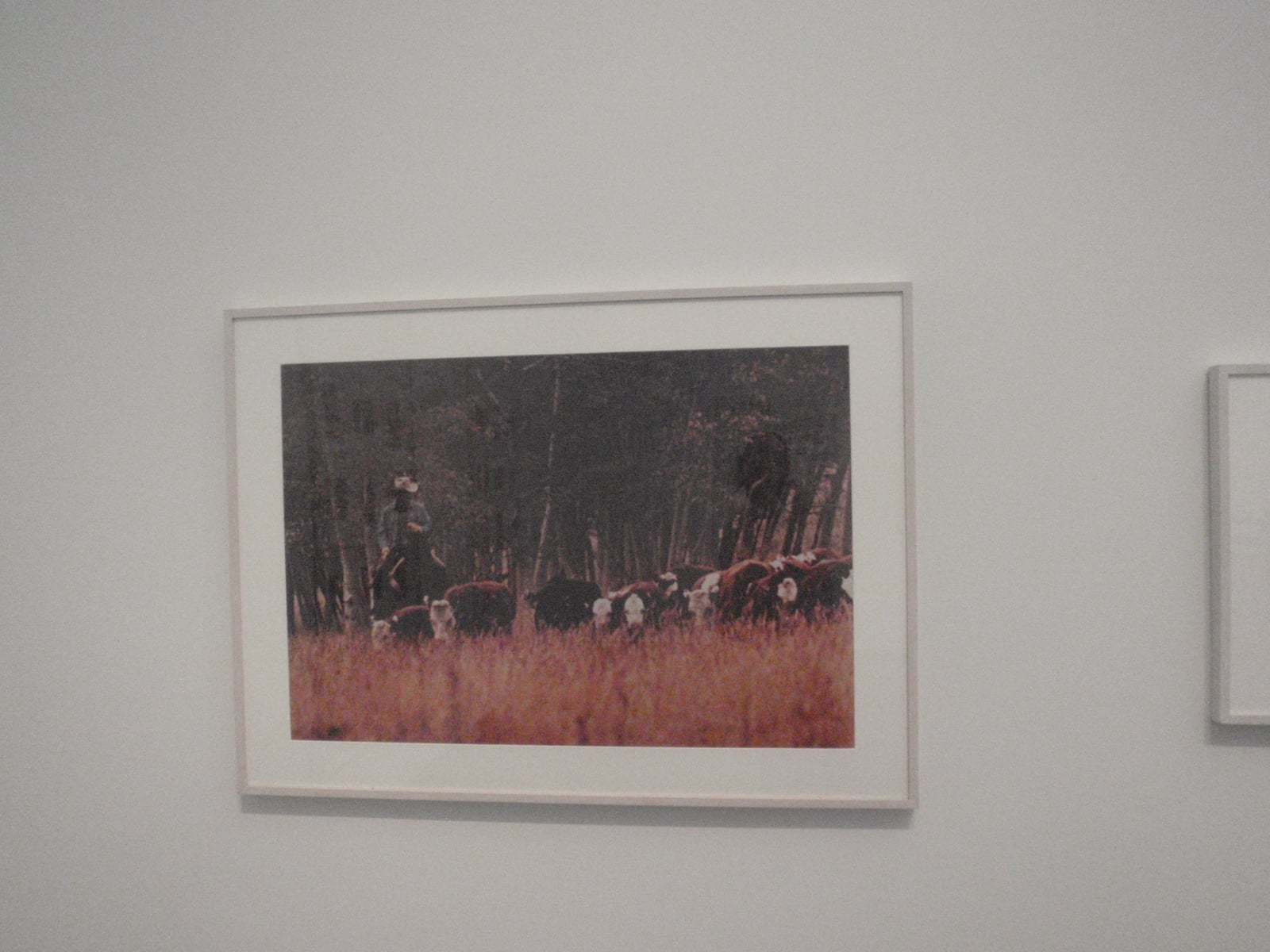
Prince never took this photograph. He found it in a Marlboro advertisement, cropped out the text, and called it art.
The art world lost its collective mind when this sold for $1.2 million. Here was someone literally stealing images from commercial campaigns and selling them as fine art.
The audacity was breathtaking. But that’s exactly why it worked — Prince understood that context changes everything.
Cindy Sherman’s “Untitled #96”

Sherman’s self-portraits aren’t really self-portraits at all — they’re exercises in becoming someone else entirely.
This particular image, which sold for $3.9 million, shows her transformed into what looks like a character from a 1950s film noir, complete with the kind of dramatic lighting that suggests secrets and bad decisions lurking just outside the frame.
The genius lies in how completely Sherman disappears into each role; you’re never looking at Cindy Sherman playing dress-up, you’re looking at whoever she’s decided to become that day.
It’s acting without an audience, performance without a script, and somehow that makes it more honest than most portraits that claim to show the “real” person.
Man Ray’s “Le Violon d’Ingres”
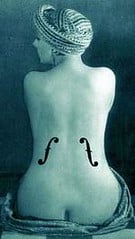
A woman’s back transformed into a violin through the simple addition of f-holes. Sold for $12.4 million, making it the most expensive photograph ever auctioned.
Man Ray understood that surrealism wasn’t about being weird for its own sake. It was about revealing the strange connections that already existed, waiting to be noticed.
The photograph works because once you see it, you can’t unsee the resemblance. The human form becomes an instrument, ready to be played.
Walker Evans’s “Alabama Tenant Farmer Wife”
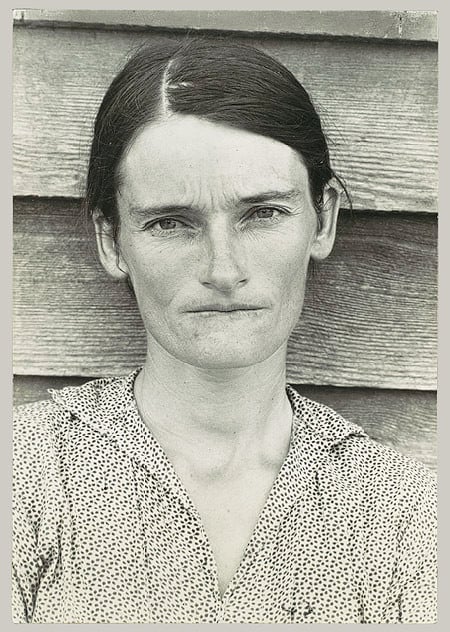
Depression-era photography wasn’t supposed to be collectible art — it was journalism, documentation, a record of hard times that most people wanted to forget.
But there’s something in the way Evans captured this woman’s face (the photograph sold for $389,000) that transcends its original purpose as social documentary.
Her expression holds decades of stories that will never be told, the kind of quiet endurance that doesn’t make headlines but somehow holds the world together.
Evans had the photographer’s most crucial skill: he knew when to press the shutter and when to simply witness.
This image feels less like voyeurism and more like respect, a moment when the camera became invisible and what remained was just one human being acknowledging another’s dignity despite circumstances designed to strip it away.
Alfred Stieglitz’s “Georgia O’Keeffe (Hands)”
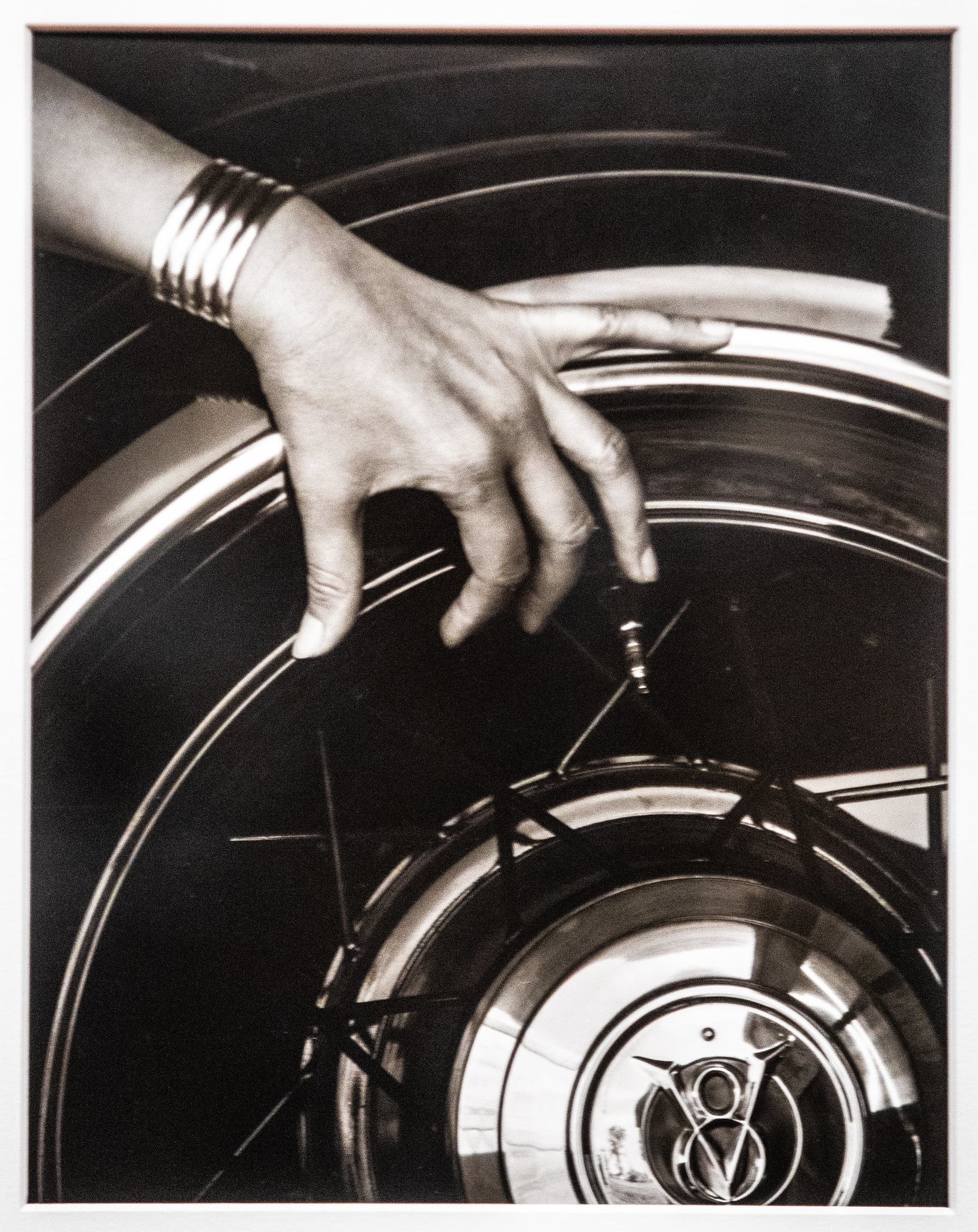
Stieglitz photographed O’Keeffe obsessively, but this particular image of her hands sold for $1.4 million because it captures something that portrait photography usually misses.
Hands tell stories that faces try to hide. They’re honest in ways that smiles aren’t, showing the work they’ve done and the tension they carry without meaning to.
O’Keeffe’s hands in this photograph look like they could shape clay or hold a brush with equal confidence — there’s strength there, but also sensitivity, the combination that made her paintings so distinctive.
Stieglitz understood that sometimes the most revealing portraits never show the subject’s face at all.
Ansel Adams’s “Moonrise, Hernandez, New Mexico”
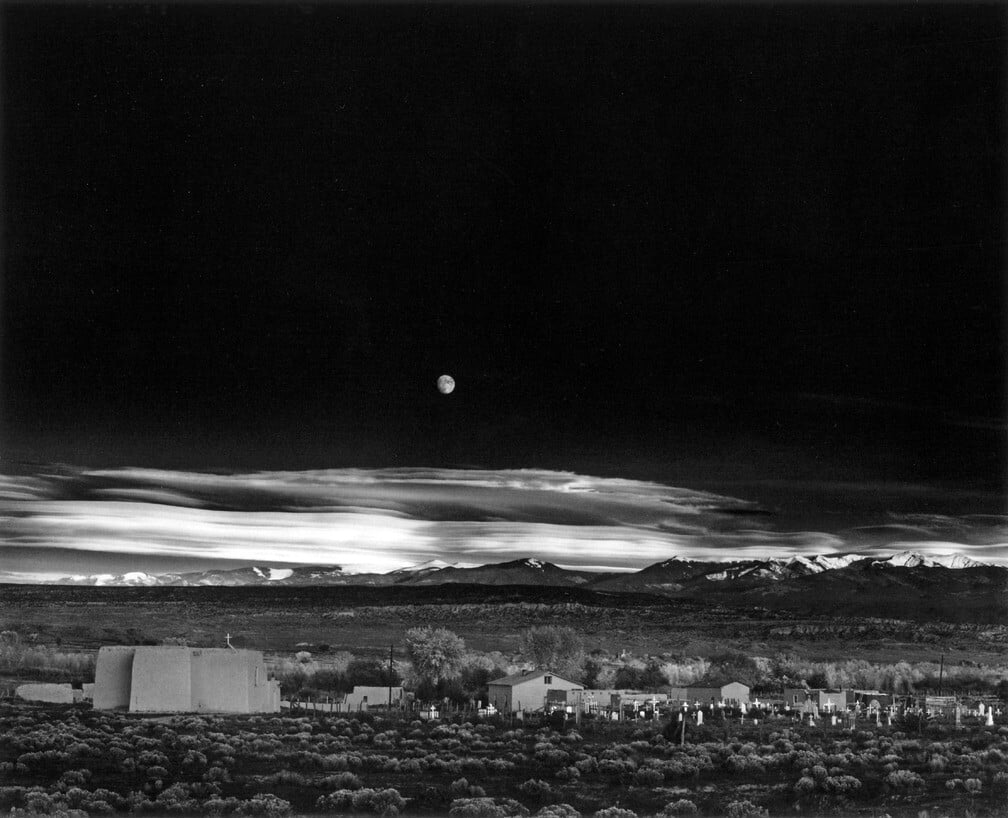
Nature photography that actually matters is rarer than people think. Most of it falls into scenic wallpaper territory, pretty but forgettable.
Adams’s “Moonrise” (which sold for $609,600) succeeds because it captures a moment that feels both eternal and fleeting — that brief window when day becomes night and ordinary landscapes turn mythic.
The cemetery in the foreground adds weight to what could have been just another sunset photograph, grounding all that celestial drama in something unmistakably human.
Adams had the patience to wait for light that most photographers would miss and the technical skill to capture it without losing the feeling.
Irving Penn’s “Cuzco Children”
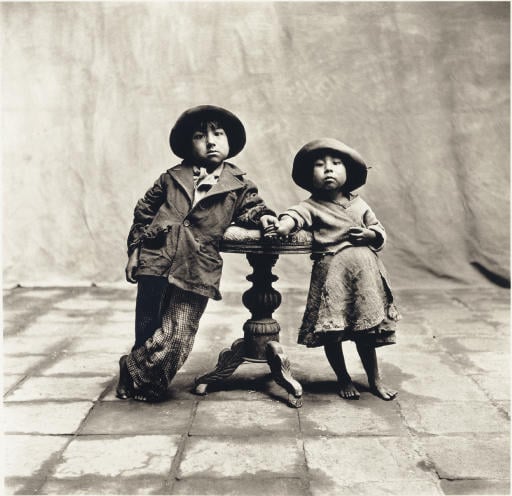
Penn traveled to remote corners of the world with a portable studio, setting up his trademark gray backdrop in places where fashion photography had never existed.
This image of three children from Peru (sold for $529,000) demonstrates why the approach worked so brilliantly — by removing all environmental context, Penn forced viewers to see his subjects as individuals rather than representatives of their culture or economic circumstances.
The children’s expressions range from curious to skeptical to slightly amused, as if they’re not quite sure what to make of this strange man with his camera and gray cloth, but they’re willing to play along.
It’s portraiture stripped of everything except human connection, which turns out to be more than enough.
Diane Arbus’s “Identical Twins, Roselle, N.J.”
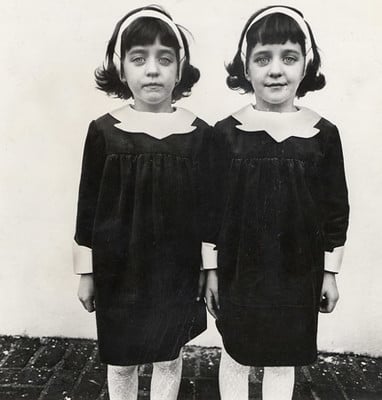
Twin girls in matching outfits should be cute. Instead, this photograph (which brought in $478,400) feels vaguely unsettling in ways that are hard to articulate.
Maybe it’s the slight differences in their expressions despite their nearly identical faces, or the way their matching headbands and dresses emphasize rather than diminish their individuality.
Arbus had a talent for finding the strangeness in ordinary situations, the moments when normal life revealed its underlying weirdness without warning.
The twins aren’t doing anything unusual — they’re just standing there, looking at the camera — but something in their gaze suggests they know things that children shouldn’t know.
William Klein’s “Gun 1, New York”
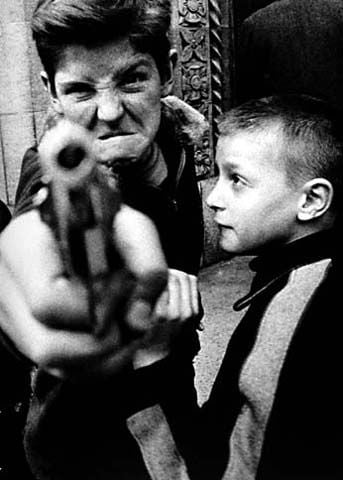
A child points a toy gun directly at the camera while other kids gather around, their faces a mixture of excitement and something harder to define.
Klein’s street photography (this image sold for $390,000) captured New York in the 1950s when the city was grittier and more dangerous, but also more spontaneous than it would later become.
The photograph works because it feels genuinely unposed — these kids aren’t performing for the camera, they’re just being themselves, which happens to include a casual relationship with violence that suburban America preferred to pretend didn’t exist.
Klein understood that the best street photography happens when the photographer becomes invisible and the street reveals its true character.
Helmut Newton’s “Sie Kommen”

Fashion photography that transcends fashion is Newton’s specialty, and this diptych (sold for $476,000) perfectly demonstrates his approach.
The same four models appear twice — once unclothed, once clothed in elegant evening wear — but the power dynamic remains unchanged regardless of what they’re wearing.
Newton’s women always look like they could take care of themselves in any situation, whether they’re wearing Yves Saint Laurent or nothing at all.
The photograph suggests that confidence is the only accessory that really matters, and that sometimes removing everything reveals more about a person’s character than adding layers of expensive clothing ever could.
Robert Mapplethorpe’s “Andy Warhol”
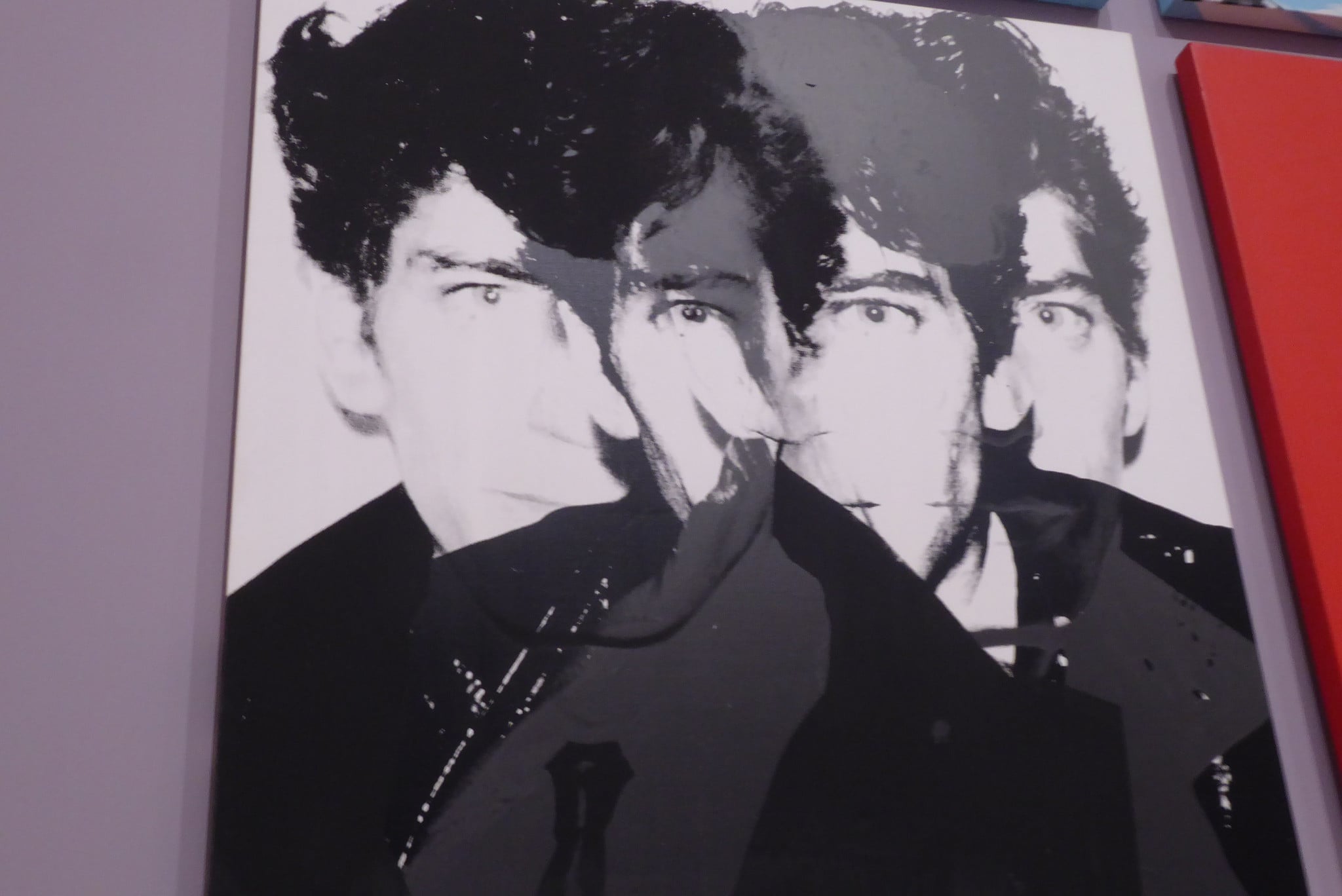
Mapplethorpe’s portrait of Warhol (which brought $643,200) captures the artist in an unusually unguarded moment, his famous white wig slightly askew, his expression softer than the calculated blankness he usually presented to cameras.
The lighting is pure Mapplethorpe — dramatic, sculptural, turning human features into something that belongs in a museum.
But there’s also genuine affection in this image, the kind of intimacy that only comes from photographing someone you actually know rather than just someone you’ve been hired to shoot.
It’s Warhol without the performance, which makes it both more human and somehow more mysterious than his carefully constructed public persona.
The Value Beyond Price

Looking at these astronomical figures, it becomes clear that the art market has decided photography deserves the same respect once reserved for paintings and sculptures.
These aren’t just pictures anymore — they’re cultural artifacts, investments, and status symbols rolled into one.
But somewhere beneath all that commerce, the original power of these images remains intact, waiting for viewers who still remember how to see rather than simply calculate worth.
More from Go2Tutors!

- The Romanov Crown Jewels and Their Tragic Fate
- 13 Historical Mysteries That Science Still Can’t Solve
- Famous Hoaxes That Fooled the World for Years
- 15 Child Stars with Tragic Adult Lives
- 16 Famous Jewelry Pieces in History
Like Go2Tutors’s content? Follow us on MSN