Most Iconic Game Shows We Used to Watch
There was something special about coming home from school, grabbing a snack, and settling in front of the television to watch people compete for prizes, answer trivia questions, or navigate ridiculous obstacle courses. Game shows became a part of daily life for millions of viewers, creating shared memories that still spark conversations decades later.
These programs weren’t just about winning money or fabulous prizes. They brought families together, gave us catchphrases we repeated endlessly, and made ordinary people into temporary celebrities right in our living rooms.
Let’s take a look at the shows that defined an era and kept us glued to our screens.
The Price Is Right

Bob Barker became a household name by asking contestants to guess the cost of everything from dishwashers to sports cars. The show’s simple premise turned shopping knowledge into a competitive sport, and viewers at home loved shouting their own guesses at the screen.
Watching someone spin the big wheel or play Plinko created genuine suspense, even though the stakes were just prizes and not life-changing decisions. The show proved that you didn’t need complicated rules to keep people entertained for an hour.
Jeopardy!

Alex Trebek turned trivia into an art form by making questions sound dignified and important. Contestants had to phrase their answers as questions, which added a unique twist that set the show apart from every other quiz program on television.
The categories ranged from ancient history to pop culture, so everyone watching could feel smart at least once per episode. Three decades of consistent quality made this show a reliable constant in American living rooms.
Wheel of Fortune

Pat Sajak and Vanna White became one of television’s most recognizable duos by hosting a show about spinning a wheel and guessing letters. The format took the childhood game of hangman and added prize money, turning a simple word puzzle into appointment viewing.
Contestants sometimes made hilariously bad guesses that became instant watercooler moments the next day. Vanna’s job of turning letters looked easy, but she did it with such grace that she became a cultural icon in her own right.
Family Feud
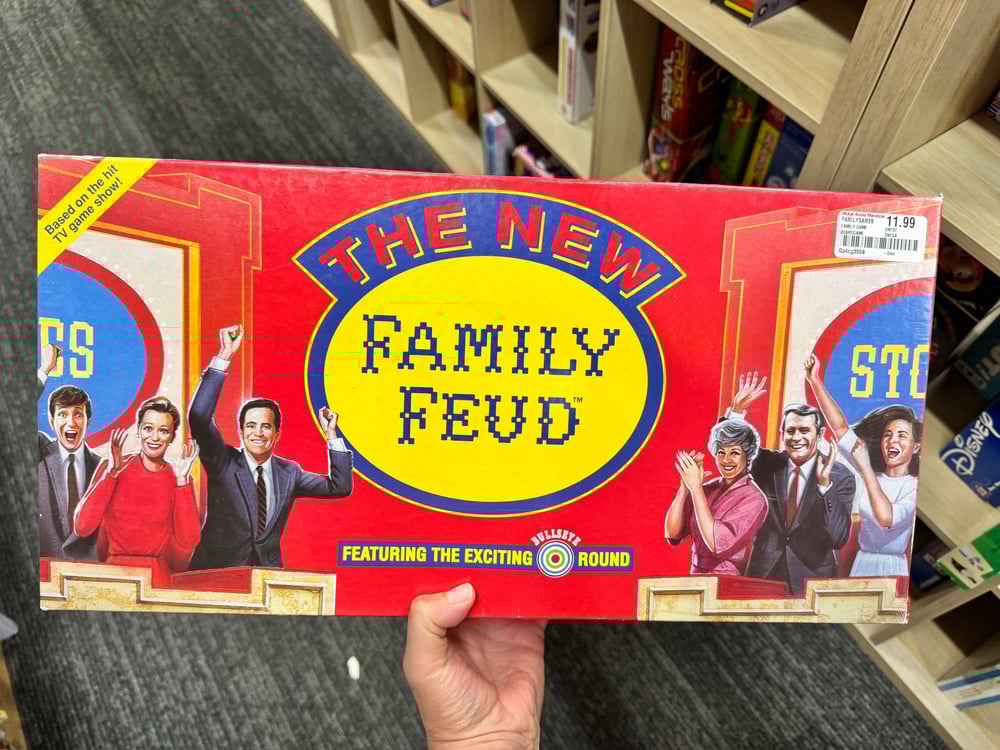
Richard Dawson started a tradition of kissing every female contestant, which would never fly today but was part of the show’s charm back then. Two families competed to guess the most popular answers to survey questions, leading to moments of brilliant strategy and absolute confusion.
The fast-paced format kept things moving, and the family dynamic added personal stakes beyond just winning money. Steve Harvey later revived the show and made it relevant for a new generation with his expressive reactions to absurd answers.
The Match Game

Gene Rayburn hosted a panel of celebrities who filled in blanks to match what contestants wrote down, creating comedy gold in the process. The show’s success relied heavily on the personalities of regulars like Charles Nelson Reilly and Brett Somers, who turned simple word games into hilarious moments.
Answers often veered into suggestive territory, pushing the boundaries of what daytime television could get away with in the 1970s. The chemistry between panelists made it feel less like a competition and more like watching friends joke around.
Press Your Luck

Contestants shouted ‘No Whammies!’ while frantically hitting a button to stop a board full of prizes and cartoon characters. The Whammy animations became beloved parts of the show, with each one featuring the little red character in different scenarios stealing away prize money.
One contestant named Michael Larson famously memorized the board patterns and won over $110,000, exposing a flaw the producers never saw coming. The combination of skill, luck, and those addictive Whammy animations made it impossible to change the channel.
Let’s Make a Deal

Monty Hall convinced audience members dressed in ridiculous costumes to trade prizes for mystery boxes and whatever was behind doors one, two, or three. The zonk prizes, like a live donkey or a giant pencil, became just as famous as the cars and vacations.
Contestants had to decide whether to keep what they had or risk it all on the unknown, creating genuine drama from simple choices. The show tapped into basic human psychology about greed and contentment in a way that felt both fun and slightly stressful.
Concentration

This show combined a memory matching game with a rebus puzzle, requiring contestants to use both recall and problem-solving skills. Players matched prizes hidden behind numbered squares while trying to solve a visual word puzzle that was revealed piece by piece.
The two-layered gameplay made it more intellectually demanding than most game shows of its era. Hugh Downs hosted with a calm professionalism that contrasted nicely with the mounting tension as puzzles neared completion.
The Newlywed Game

Bob Eubanks asked married couples embarrassing questions about each other, leading to moments of harmony and spectacular disagreement. The show’s appeal came from watching real relationships play out on television, complete with eye rolls and surprised reactions.
Questions often pushed into personal territory, making viewers wonder how these couples would interact once the cameras stopped rolling. It proved that relationship dynamics were endlessly entertaining, even without elaborate sets or big prize packages.
Name That Tune

Contestants raced to identify songs in as few notes as possible, turning musical knowledge into a fast-paced competition. The show worked because almost everyone has some familiarity with popular music, so viewers at home could play along easily.
Watching someone confidently bid two notes and then fail spectacularly provided a special kind of entertainment. The format was so strong that it survived multiple revivals across different decades.
Card Sharks

Jim Perry hosted this show where contestants predicted whether the next playing card would be higher or lower than the one showing. The game combined survey questions with the card predictions, adding layers of strategy to what seemed like pure chance.
Contestants could play it safe or gamble everything on a single flip, and those high-stakes moments kept viewers engaged. The Big Bet round at the end turned simple card guessing into genuinely tense television.
The Gong Show

Chuck Barris created controlled chaos by letting amateur performers take the stage while celebrity judges held giant gongs they could strike at any moment. The acts ranged from genuinely talented to bewilderingly strange, and the unpredictability was the entire point.
This show acknowledged that watching people fail could be just as entertaining as watching them succeed. The variety format mixed with the gong element created something that felt both mean-spirited and oddly wholesome at the same time.
Tic Tac Dough

Wink Martindale turned the simple children’s game into a trivia competition with a dragon lurking behind certain squares. Contestants answered questions to claim spaces on a giant tic-tac-toe board, but landing on the dragon meant losing everything.
The show’s straightforward concept made it easy to follow, while the hidden dragon added an element of danger. The format proved that classic games could be successfully adapted for television with just a few tweaks.
Password

Allen Ludden made one-word clues into an art form as celebrities and contestants tried to communicate without using the obvious associations. The show required genuine wit and clever thinking, rewarding teams who could read each other’s minds.
Betty White frequently appeared as a celebrity guest, and her partnership with Ludden extended beyond the show when they married in real life. The simplicity of the format meant that verbal intelligence took center stage without distracting gimmicks.
Supermarket Sweep

Contestants raced through a grocery store grabbing expensive items while answering trivia questions and completing shopping tasks. The show tapped into everyone’s fantasy of running wild through a store without worrying about the bill.
Watching people make strategic decisions about which products to grab in limited time created surprising tension. The inflatable turkeys and giant price tags became iconic symbols of early 1990s television excess.
Hollywood Squares

Nine celebrities sat in boxes while contestants played tic-tac-toe by agreeing or disagreeing with their answers to questions. Paul Lynde occupied the center square and delivered witty, often scandalous responses that pushed network censors to their limits.
The show’s success depended entirely on the personalities of the celebrities, who were encouraged to be funny rather than accurate. It proved that game shows could be vehicles for comedy just as much as competition.
Double Dare

Chaos turned into television gold when Marc Summers stepped behind the microphone. Slime dripped, pies splattered, and young players tackled every wild question or stunt thrown their way.
Instead of avoiding mess, Nickelodeon leaned right into it – turning gooey disorder into must-watch moments. A gauntlet of slimy walls, shaky bridges, and mystery goop waited at the end, growing nastier with each stage.
While grown-ups winced, children shouted from couches, dreaming of getting drenched on camera. That push-pull between disgust and delight shaped what kids actually wanted to see.
What’s My Line?
Sometimes folks watched as stars tried figuring out odd jobs by only asking questions that got a yes or no reply. This guessing game from the mid-20th century relied on quick thinking, plus sharp logic helped some players stand out.
A few names rose through skill – Dorothy Kilgallen was one, noted for how she shaped her queries. Hidden behind masks, those who sat across mystery guests stayed anonymous during the back-and-forth.
Known performers joined without revealing identity at first, which stirred curiosity among viewers. Elegance marked everything – the audience, hosts, even casual moments felt polished somehow.
People showed up wearing suits and gowns just to take part in a quiz. That kind of care defined TV before things turned casual.
Where These Shows Live Now

Week by week, these shows built a pattern future game series would stick to, long after flashy sets and big prizes arrived. Old episodes live online today, so younger viewers might finally understand why adults shout ‘Come on down!’ or grin at ‘Survey says!’.
Faces on screen turned into familiar friends, popping up regularly like relatives dropping by. It turns out TV could grab attention without fancy tricks – just real folks, straightforward goals, and chance playing a hand.
More from Go2Tutors!

- The Romanov Crown Jewels and Their Tragic Fate
- 13 Historical Mysteries That Science Still Can’t Solve
- Famous Hoaxes That Fooled the World for Years
- 15 Child Stars with Tragic Adult Lives
- 16 Famous Jewelry Pieces in History
Like Go2Tutors’s content? Follow us on MSN.



