Most Unique Public Holidays Around the World
You probably know about Christmas and New Year. Maybe Thanksgiving or Diwali. But have you heard about the holiday where thousands of people throw tomatoes at each other? Or the one where an entire city roller skates to church? What about the celebration that involves burning a giant snowman filled with explosives?
Every country has holidays that make perfect sense to locals but sound completely bizarre to outsiders. These celebrations reveal something about culture, history, and what communities value enough to turn into tradition.
Some of these holidays started as religious observances and evolved into something entirely different. Others began as accidents or marketing campaigns. A few are so old that nobody really remembers why they started, but everyone keeps celebrating anyway.
Spain Fights With Overripe Tomatoes

La Tomatina happens every August in Buñol, Spain. For exactly one hour, tens of thousands of people gather in the streets to throw overripe tomatoes at each other.
The tradition started in 1945 when some young people got into a spontaneous food fight during a parade. The tomato battle became so popular that the town eventually made it official. Now people travel from around the world to participate.
Trucks bring in tons of tomatoes specifically grown for throwing. These aren’t good tomatoes. They’re mushy, overripe, and perfect for splattering. The street becomes a river of tomato pulp and juice. Everyone ends up covered head to toe in red mush.
After the hour ends, fire trucks spray down the streets and buildings. The tomato acid actually cleans the stone surfaces better than most cleaning products. Participants wash off in nearby facilities or the river. The town returns to normal remarkably fast.
Colombia Lights Millions of Candles at Once

December 7 transforms Colombia into a country of flickering lights. The Day of the Little Candles marks the unofficial start of the Christmas season.
People place candles everywhere. On sidewalks, balconies, windowsills, in parks, along streets. Small candles, big candles, candles inside paper lanterns called faroles. The entire nation glows with candlelight.
The tradition dates back to 1854 when Pope Pius IX proclaimed the dogma of the Immaculate Conception. Catholics worldwide lit candles in celebration. Colombia embraced this gesture and never stopped.
Families gather on December 7 to light candles together. They make wishes. They give thanks for the year ending. They remember deceased relatives. Traditional foods appear: buñuelos (fried cheese fritters), natilla (cinnamon milk custard), tamales, hot chocolate.
Different regions celebrate differently. In Quimbaya, neighborhoods compete to create the most elaborate lantern displays. In the Caribbean region, people wait until the early hours of December 8 to light their candles. Some families stay up all night celebrating.
The religious meaning remains important for many Colombians. But even non-religious people participate. The holiday has become about community, family, gratitude, and hope. December 8 is a national holiday, so everyone gets the next day off to recover.
England Chases Cheese Down a Dangerous Hill

Cooper’s Hill in Gloucestershire hosts one of the world’s most dangerous holiday traditions. People chase a wheel of cheese down an incredibly steep hill.
The hill’s gradient reaches one-in-one in some places. Basically vertical. Racers can’t actually keep their feet under them. They end up tumbling, rolling, and crashing down after the cheese.
The cheese gets a one-second head start. It can reach speeds of 70 miles per hour. Nobody catches it. The winner is whoever reaches the bottom first, usually in an ambulance.
This tradition is centuries old. Nobody knows exactly when it started or why. Some say it relates to ancient harvest festivals or maintaining grazing rights. Others think people just liked watching idiots chase cheese down hills.
Injuries happen every year. Broken bones. Concussions. Dislocated shoulders. St John Ambulance stations volunteers at the bottom. The local hospital prepares for the casualties.
Officials have tried to stop the event multiple times due to safety concerns. Participants keep showing up anyway. The landowner stopped officially sanctioning it. People come and race regardless.
Greek Villages Walk on Fire
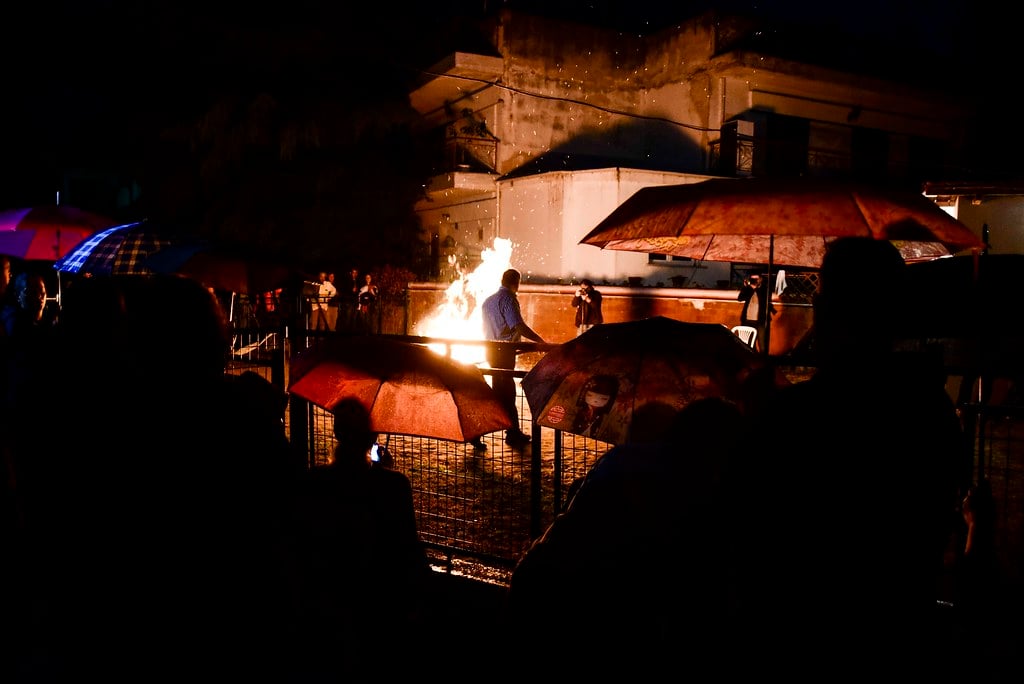
Every May, several villages in northern Greece hold firewalking festivals. People dance barefoot across beds of glowing coals.
The festivals honor Saint Constantine and Saint Helen. They last three days and feature music, dancing, and animal sacrifices. The firewalking ritual marks the finale.
Participants are descendants of those who entered Greece after the Balkan Wars. This tradition came with them and has continued for generations.
Before walking on fire, people dance for hours while holding icons of saints. The dancing puts them into a trance-like state. Then they step onto coals heated to extreme temperatures.
They don’t get burned. Scientists have studied this phenomenon. Part of the explanation involves physics: brief contact with low-conductivity materials at high temperatures doesn’t transfer enough heat to cause burns. But participants credit faith and the saints’ protection.
Tourists can watch but not participate. Firewalking requires specific preparation and spiritual readiness. Villages welcome visitors but maintain the sacred nature of the ritual.
Peru Honors the Sun God

Inti Raymi celebrates the Incan sun god Inti. It takes place June 24 in Cusco, Peru, during the winter solstice in the Southern Hemisphere.
During the Inca Empire, this was the most important festival of the year. It involved three days of purification, consuming only water, cooked corn, and a specific type of legume.
On the solstice, people faced northeast waiting for sunrise. They crouched down and blew kisses toward the sun. They raised two golden cups of chicha, an alcoholic beverage. They walked to Coricancha, an extremely important temple. They prepared for llama sacrifices.
Spanish conquistadors banned Inti Raymi in the 16th century. It remained suppressed for four centuries. In 1944, Cusco revived the celebration based on historical chronicles.
Today’s version is a massive theatrical production. Hundreds of actors reenact ancient rituals. Thousands of tourists attend. The festival lasts nine days and has become one of Peru’s biggest attractions.
The celebration starts at Qorikancha. Continues to Cusco’s main plaza. Ends at the ancient fortress of Sacsayhuamán. Participants wear elaborate costumes. Music plays. Dancing happens. Speeches honor the sun.
No real llamas get sacrificed anymore. Modern Peru uses theatrical props instead. But the reverence for the sun and connection to Incan heritage remain genuine.
Japan Celebrates a Giant Pink Shrine Object

Kawasaki hosts Kanamara Matsuri every April. The Festival of the Steel Phallus features a large, pink representation of male anatomy paraded through streets.
The festival dates to the Edo period. Local workers prayed at a shrine for protection against disease. The shrine’s symbol became a steel representation that believers claimed offered protection.
Today the festival raises awareness for health and fertility. Organizations promoting safe practices and research fundraise during the event. The atmosphere stays lighthearted and celebratory rather than crude.
Vendors sell themed candy, decorations, and souvenirs. People of all ages attend. Families bring children. The festival treats the subject matter matter-of-factly rather than salaciously.
The pink shrine object gets carried through Kawasaki on a portable shrine. Participants wear traditional festival clothing. Drummers play. Crowds cheer. Money raised goes to health organizations.
Japanese People Throw Beans at Demons

Setsubun marks the day before spring begins in the traditional Japanese calendar. It falls on February 3. People celebrate by throwing roasted soybeans at demons to drive away evil spirits.
The beans bring good luck and drive away evil. After throwing, people eat one bean for each year of their age, plus one more for the coming year.
Temples and shrines hold larger Setsubun celebrations. Celebrity sumo wrestlers sometimes appear to throw beans at crowds. These events get televised. Thousands attend to catch beans thrown by famous people.
The tradition connects to ancient beliefs about the changing seasons being vulnerable times when evil spirits could enter the human world. The bean throwing creates a protective barrier.
Some families place soybeans in decorations at their entrances. Others burn dried sardine heads because the smell supposedly repels demons. Holly leaves get added to keep evil away.
Kentucky Fried Chicken Became Japan’s Christmas
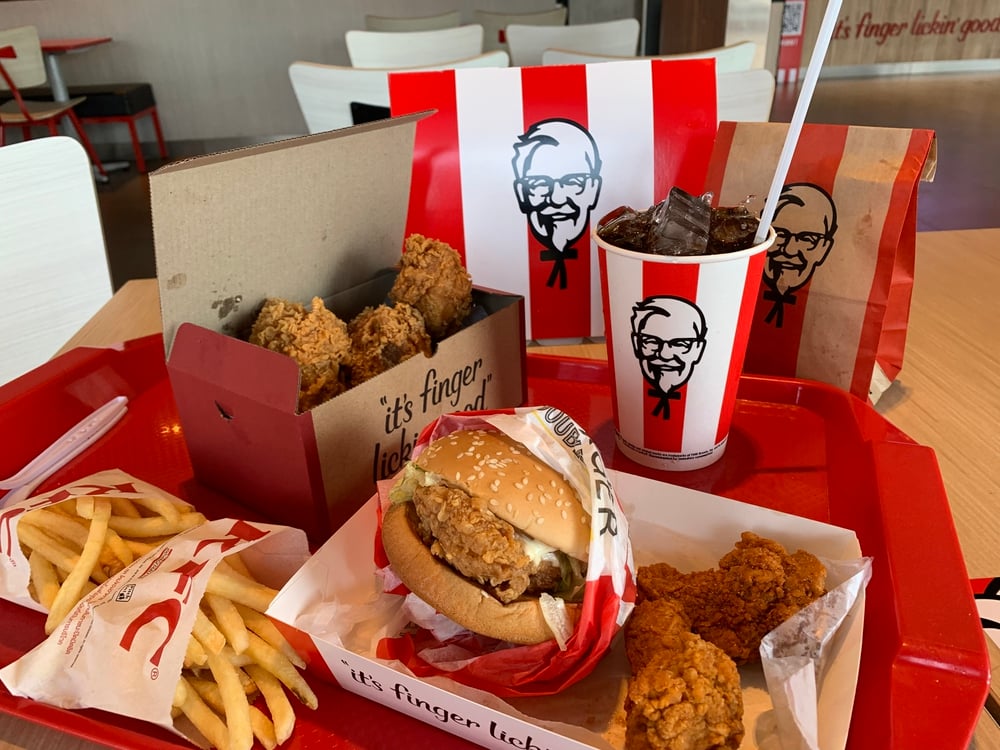
Three and a half million Japanese families eat KFC on Christmas Eve. This isn’t an ancient tradition. It’s the result of a marketing campaign from the 1970s.
KFC launched “Kurisumasu ni wa Kentakkii” which means “Kentucky for Christmas.” Christians make up a tiny percentage of Japan’s population. The country lacked established Christmas traditions. KFC filled that void.
The campaign succeeded beyond imagination. Now families pre-order their Christmas KFC meals months in advance. The special meal includes fried chicken, cake, and champagne.
Christmas Eve at KFC locations in Japan looks like Black Friday elsewhere. Long lines form. People wait hours for their orders. Some locations take reservations starting in October.
The meal became a tradition through pure marketing genius. But it stuck because it provided something families wanted: a special way to celebrate an adopted holiday.
Venezuela Roller Skates to Church
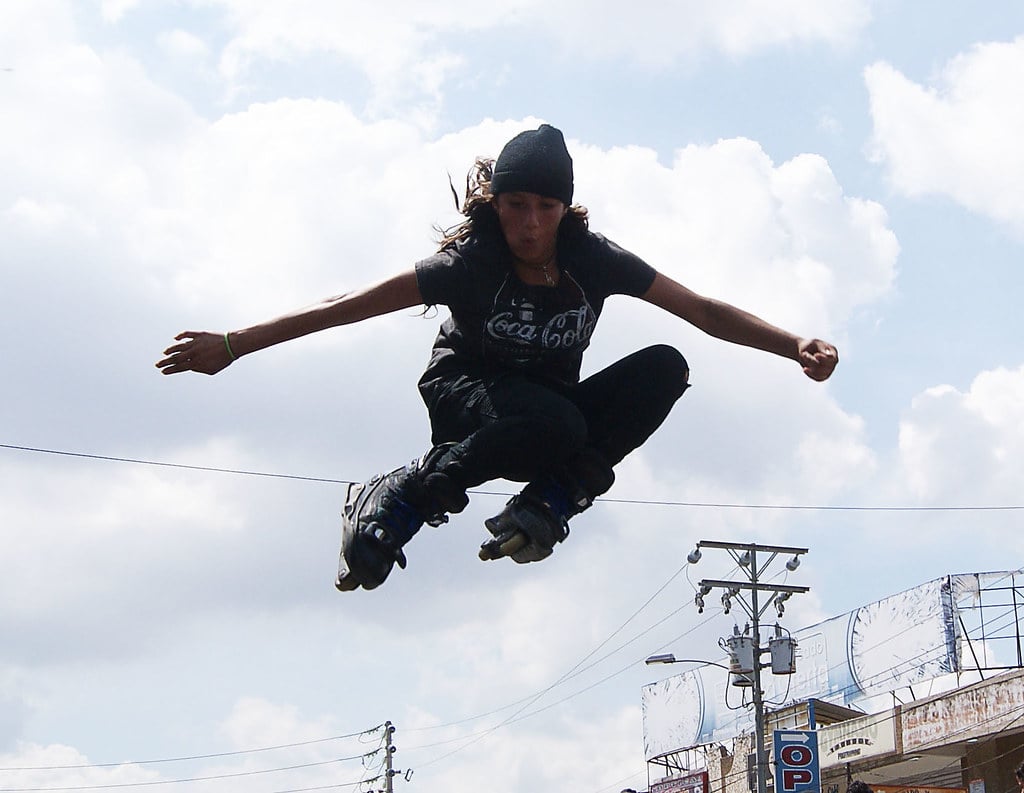
In Caracas, Venezuela, the capital city’s residents roller skate to early morning mass on Christmas Day. This is not a joke. It’s a cherished tradition.
Streets get closed to vehicle traffic before 8am specifically for the skaters. Families strap on roller skates and glide to church services.
The tradition’s origins are unclear. Some say it started because roller skating was a popular activity in Caracas. Others claim it began as a way to make the early morning church attendance more fun.
Children tie strings to their big toes the night before. They hang the other end of the string out their bedroom windows. Passing roller skaters tug the strings to wake them up for church.
After mass, everyone skates back home for Christmas celebrations. The combination of religious observance and roller skating creates a uniquely Venezuelan Christmas morning.
Japan Created a Response to Valentine’s Day

White Day happens on March 14 in Japan and other East Asian countries. It exists because Valentine’s Day in East Asia is one-sided.
On Valentine’s Day, women give chocolates to men. They give expensive chocolates to romantic partners. They give cheaper chocolates to coworkers, bosses, and male relatives. Men receive. Women give. That’s how it works.
A Japanese confectionery company in 1978 decided women deserved gifts too. They invented White Day, when men reciprocate by giving gifts to women who gave them chocolates.
The name “White Day” refers to white chocolate and the purity of young love. Men are expected to return gifts worth three times what they received. This is called “sanbai gaeshi” or triple return.
Acceptable White Day gifts include white chocolate, jewelry, white clothing, lingerie, and other romantic presents. The value matters. Cheap gifts insult the woman. Expensive gifts signal serious interest.
Some men dread White Day. The pressure to give appropriate gifts causes stress. Department stores dedicate entire floors to White Day shopping. Advertising campaigns run for weeks.
Sweden Throws a Crayfish Party

Kräftskiva, or Crayfish Party Day, happens every August in Sweden. It’s a loud, festive celebration dedicated to eating crayfish and drinking schnapps.
Tables get decorated with lanterns, paper hats featuring cartoon crayfish, and colorful bibs. The bib is essential because eating crayfish is messy.
What makes Kräftskiva unusual is the singing. Swedes belt out traditional drinking songs before every shot of aquavit, a strong alcoholic spirit. The gathering becomes progressively louder and more cheerful as the evening continues.
The party marks summer’s end. August in Sweden means the days are growing shorter. Darkness returns. Winter approaches. Swedes throw one last big outdoor celebration before retreating indoors.
Crayfish weren’t always abundant in Swedish waters. When they were scarce, only the wealthy could afford them. The government restricted crayfish harvesting to specific dates. When the season opened, people celebrated.
Now crayfish are farmed or imported. They’re accessible to everyone. But the tradition of throwing elaborate parties persisted. Neighborhoods gather. Coworkers party together. Families reunite specifically for Kräftskiva.
The songs themselves are traditional Swedish drinking songs passed down generations. Everyone knows the words. The melodies are simple and meant for group singing. Nobody cares if you’re off-key because everyone is.
Monkeys Get a Feast in Thailand

Lopburi, Thailand hosts an annual Monkey Buffet Festival. Organizers prepare elaborate spreads of fruits, vegetables, and treats for the local macaque population.
Hundreds of monkeys live in and around the ancient ruins of Lopburi. They’re considered both a tourist attraction and a nuisance. The festival honors them while attracting visitors.
Workers spend hours arranging food into towers, pyramids, and decorative displays. The presentations look like elaborate human buffets but contain monkey favorites: bananas, cucumbers, lettuce, grapes, and other produce.
When the monkeys are released to the buffet, chaos ensues. They scramble over the food. They fight for prime pieces. They stuff their mouths and cheeks. They knock over carefully arranged displays within seconds.
The festival started in the 1980s as a way to boost tourism and thank the monkeys for attracting visitors. Locals believe feeding the monkeys brings good luck and prosperity to the province.
Tourists flock to Lopburi for the spectacle. Photographers capture the mayhem. The monkeys don’t care about the spiritual significance. They’re just thrilled about the feast.
Animal welfare groups have criticized the festival. They argue that feeding wild animals disrupts natural behaviors and creates dependency. Festival organizers counter that the monkeys already depend on humans and tourists for food.
Scientists Celebrate Galactic Movement

Galactic Tick Day is one of the newest holidays on any calendar. It celebrates something invisible and incomprehensible to most people: our solar system’s movement around the center of the Milky Way Galaxy.
Everyone knows Earth orbits the sun once per year. Fewer people realize the entire solar system orbits the galactic center. This journey takes 225 million years to complete.
Scientists in 2016 decided this deserved celebration. But waiting 225 million years between parties didn’t work. So they divided the orbital path into smaller measurements.
They settled on the “galactic tick” which equals one centi-arc second of our orbital path. This tick takes roughly 633.7 days. The next Galactic Tick Day falls every 633.7 days.
The first official Galactic Tick Day was retroactively set to October 2, 1608, when Hans Lippershey filed his telescope patent. This gave the holiday historical significance tied to astronomy.
Very few people celebrate Galactic Tick Day. It remains mostly a novelty for science enthusiasts and astronomy fans. But it exists as an official holiday recognized by those who track such things.
The celebration involves contemplating our place in the universe. Our solar system hurtles through space at incredible speeds. We’re passengers on a cosmic journey that takes hundreds of millions of years. That deserves acknowledgment, even if most people ignore it.
What’s Worth Celebrating

The world contains thousands of holidays beyond the major ones everyone knows. Some celebrate gods, some celebrate seasons, some celebrate accidents that became traditions.
They’re all valid. They all mean something to someone. Whether you’re throwing tomatoes in Spain, lighting candles in Colombia, or eating KFC in Japan, you’re participating in something larger than yourself.
These celebrations connect the present to the past. They bring communities together. They mark time passing and seasons changing. They give people excuses to gather, eat special food, wear special clothing, and behave in ways they wouldn’t on normal days.
The strangest holidays often become the most beloved. They’re memorable precisely because they’re unusual. Nobody forgets the year they chased cheese down a hill or watched an exploding snowman predict summer weather.
Perhaps every place needs traditions that sound completely absurd to outsiders but make perfect sense to those who grew up with them. That’s how you know something belongs to a specific culture rather than being a generic celebration copied everywhere.
The festivals that endure are the ones that mean something real to the communities celebrating them, regardless of how strange they seem to everyone else.
More from Go2Tutors!

- The Romanov Crown Jewels and Their Tragic Fate
- 13 Historical Mysteries That Science Still Can’t Solve
- Famous Hoaxes That Fooled the World for Years
- 15 Child Stars with Tragic Adult Lives
- 16 Famous Jewelry Pieces in History
Like Go2Tutors’s content? Follow us on MSN.



