Must Know Facts About the Panama Canal
The Panama Canal stands as one of the most impressive feats of engineering the world has ever seen. This narrow stretch of water connecting two massive oceans has changed how global trade works, saved countless ships from dangerous journeys, and continues to shape economies today.
Built over a century ago through unimaginable challenges, the canal remains as important now as it was when it first opened. Understanding the Panama Canal means understanding a piece of history that literally moved mountains and connected continents.
Let’s take a closer look at what makes this waterway so remarkable.
It cuts about 8,000 miles off shipping routes

Before the Panama Canal existed, ships traveling between the east and west coasts of America had to sail all the way around Cape Horn at the southern tip of South America, adding roughly 8,000 nautical miles to the journey. That’s not just extra distance either.
The trip took about two months to complete, through some of the most dangerous waters on the planet. Storms down there are legendary.
The canal changed all that by creating a shortcut straight through Central America, turning a two-month nightmare into a ten-hour crossing.
The French tried first and failed

Led by Ferdinand de Lesseps, the builder of the Suez Canal in Egypt, the French began digging in 1880. After nine years of work and the loss of approximately 20,000 lives, they had to abandon the project.
Disease was the biggest killer. Yellow fever and malaria tore through the workforce faster than they could replace people. The collapse of the French canal company in 1889 was followed by a political scandal involving alleged corruption in the French government.
They’d barely completed one-tenth of the work when they gave up.
It connects the Atlantic and Pacific Oceans

The Panama Canal is 40 miles long from shoreline to shoreline, cutting through the narrowest part of the Americas. It’s an 82-kilometer waterway that links the Caribbean Sea with the Pacific Ocean.
What makes Panama special is geography. The land bridge between North and South America is skinny here, which made it the obvious choice for anyone crazy enough to try digging through a mountain range in the tropics.
The location wasn’t random; it was strategic thinking at its finest.
Theodore Roosevelt made it happen

According to historian David McCullough, the building of the Panama Canal can be credited above all to U.S. President Theodore Roosevelt. Roosevelt didn’t just support the project; he forced it into existence through sheer will.
Following Colombia’s rejection of what they considered unfair terms, Roosevelt gave his support to a group of Panamanians seeking independence from Colombia. He then dispatched U.S. warships to Panama City and Colón in support of Panamanian independence.
Panama declared independence on November 3, 1903, and Roosevelt signed a treaty with the brand new country almost immediately.
The U.S. paid Panama $10 million plus annual payments

The Hay-Bunau-Varilla Treaty of 1903 provided the United States with a 10-mile wide strip of land for the canal, a one-time $10 million payment to Panama, and an annual annuity of $250,000. That might sound like a good deal for Panama, but it wasn’t really.
The terms of the treaty between the U.S. and Panama heavily favored American interests, and remained a source of tension between Panama and the United States until the signing of the Torrijos–Carter Treaties in 1977. The deal basically gave America control over a huge chunk of Panama’s territory indefinitely, which understandably bothered Panamanians for decades.
It uses a lock system to raise and lower ships

The canal uses locks at each end to lift ships up to Gatun Lake, an artificial freshwater lake 26 meters (85 feet) above sea level. Think of locks as water elevators.
Ships entering from the Atlantic go through three Gatun Locks, where each massive chamber fills with 26.7 million gallons of water. The locks are paired, meaning there are two parallel flights at each of the three lock sites.
After crossing the lake, ships get lowered back to sea level on the other side. The whole system runs on gravity, no pumps needed.
Gatun Lake was the largest artificial lake in the world

Gatun Lake was created by damming the Chagres River and Lake Alajuela. When it was built, it was the biggest human-made lake on Earth.
The lake serves multiple purposes beyond just floating ships across Panama. Millions of people in the Canal zone get their drinking water from Lakes Gatún and Madden, and the dams provide hydroelectric power too.
Building this lake meant flooding entire communities and completely reshaping the landscape, but it was necessary to make the canal work without having to dig all the way down to sea level.
Each ship uses about 52 million gallons of water

An average of 200 million liters (52 million gallons) of fresh water is used in a single passing of a ship. That water doesn’t get recycled; it flows from the lakes into the ocean every time a ship passes through.
Each time a ship is lifted from the Pacific into Gatun Lake, it consumes the equivalent of 70 Olympic-size swimming pools. In a country that gets tons of rain, this usually isn’t a problem.
But during droughts, the canal has to limit traffic because there simply isn’t enough water to operate normally.
The original locks took no concrete construction to rival until the Hoover Dam

The locks were one of the greatest engineering works ever to be undertaken when they opened in 1914. No other concrete construction of comparable size was undertaken until the Hoover Dam in the 1930s.
The scale was insane. Some 3.4 million cubic meters of concrete went into building the locks.
Workers used elaborate cable systems to move materials, with towers and steel cables spanning the construction site to carry buckets of concrete weighing up to six tons at a time.
About 5,600 workers died during American construction
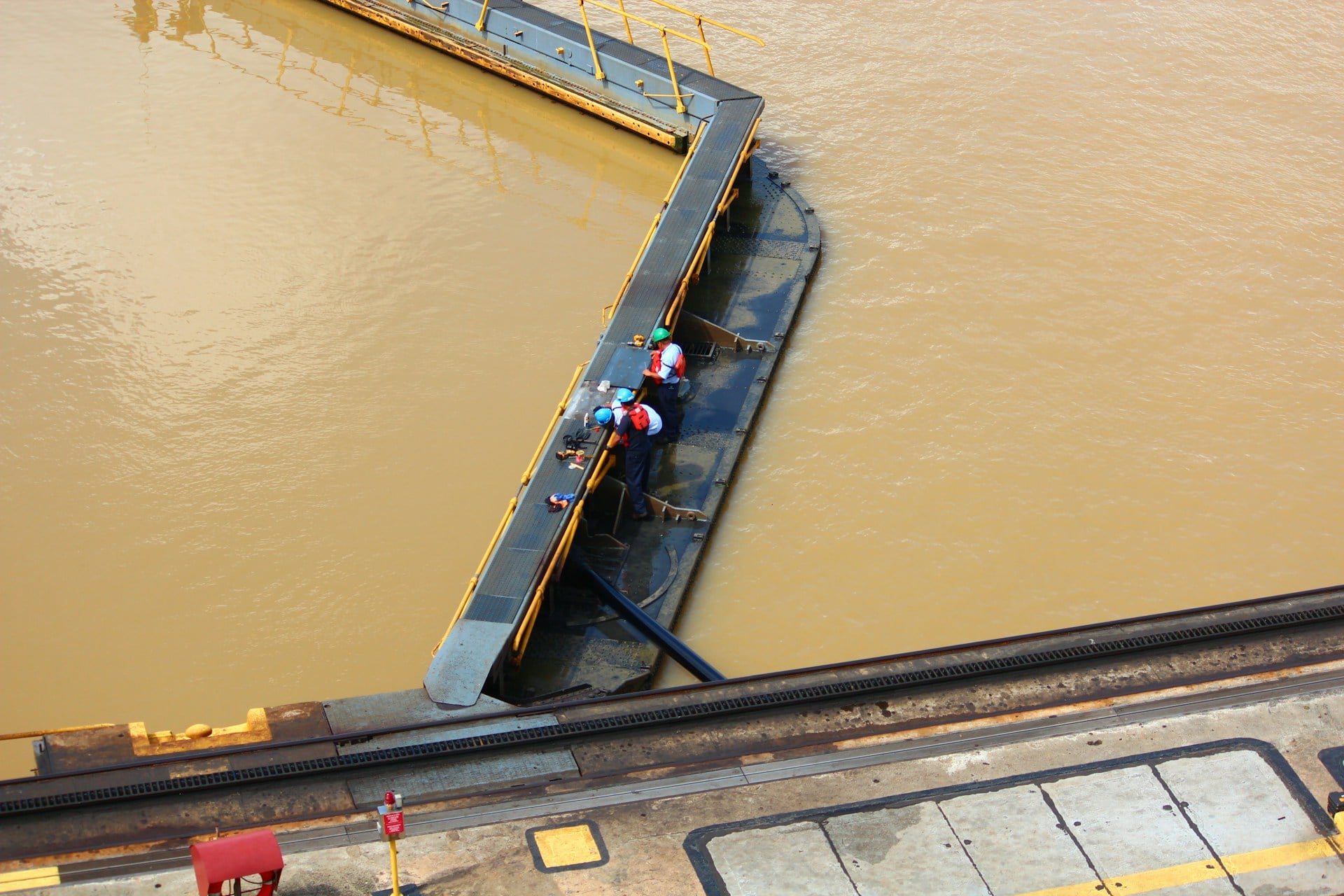
Of the 56,000 workers employed between 1904 and 1913, roughly 5,600 were reportedly killed, though the real number is probably higher since deaths outside hospitals often went unrecorded. The great majority were West Indian laborers, particularly those from Barbados, who had substantially poorer living conditions and mosquito remediation controls than White workers.
The battle against mosquitos was real. William Gorgas figured out how to control yellow fever and malaria, which saved thousands of lives, but construction remained incredibly dangerous work.
It opened on August 15, 1914
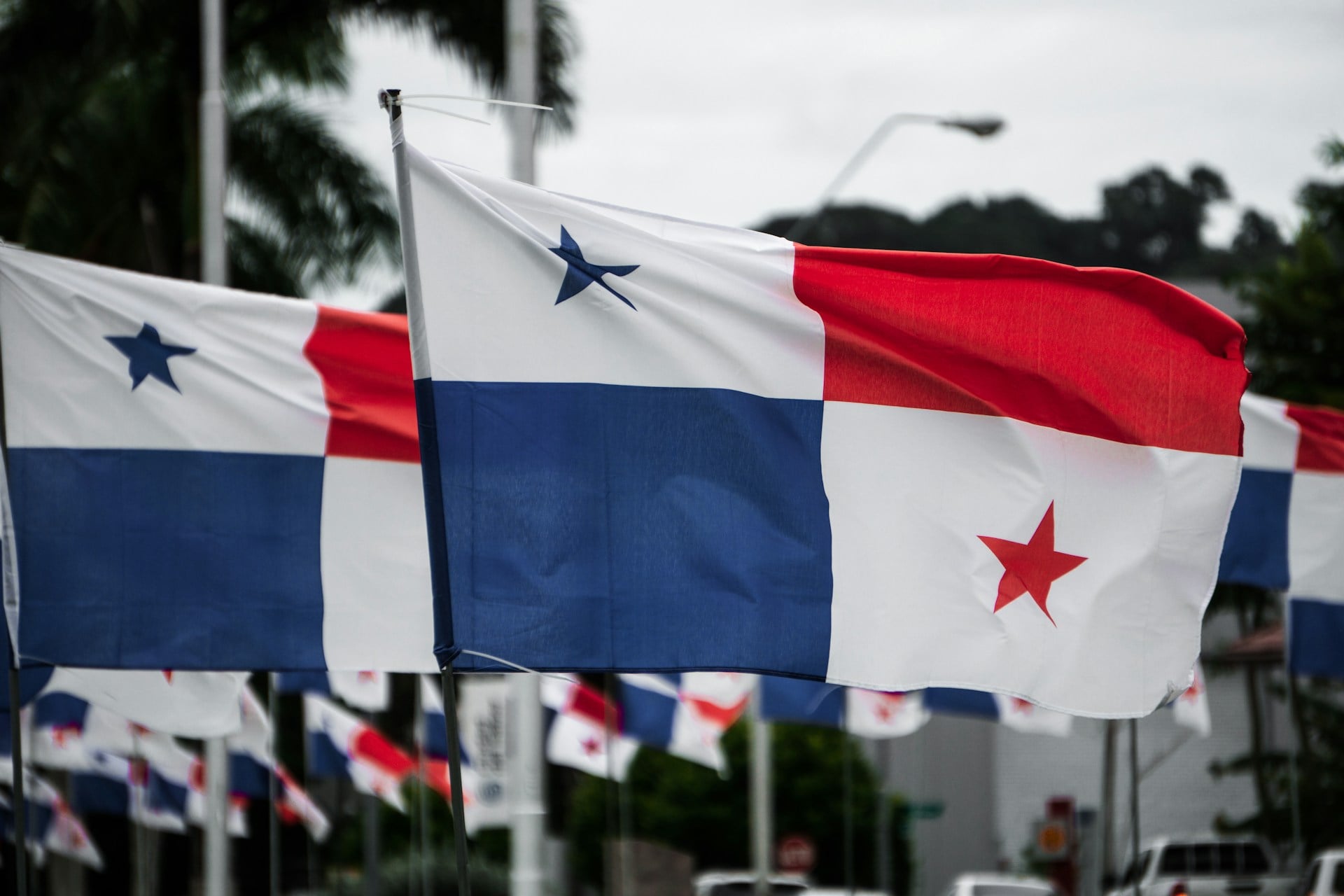
The Panama Canal officially opened on August 15, 1914, although the planned grand ceremony was downgraded due to the outbreak of WWI. Completed at a cost of more than $350 million, it was the most expensive construction project in U.S. history to that point.
The timing was unfortunate. The world was falling apart just as this triumph of engineering was coming together.
But the canal opened anyway and immediately started changing global shipping patterns.
The U.S. controlled it for 85 years

From its opening in 1914 until 1979, the Panama Canal was controlled solely by the United States. In 1979, control of the canal passed to the Panama Canal Commission, a joint agency of the United States and the Republic of Panama, and complete control passed to Panama at noon on December 31, 1999.
That handover was a big deal. The canal had been a constant reminder of American power in Panama’s backyard, and getting it back meant finally having full control over their own territory.
About 14,000 ships pass through it each year

Annual traffic has risen from about 1,000 ships in 1914, when the canal opened, to 14,702 vessels in 2008. By 2012, more than 815,000 vessels had passed through the canal.
Ships from every corner of the planet use this waterway. The canal proudly serves more than 180 maritime routes, connecting 1,920 ports across 170 countries.
Container ships, tankers, cruise ships, military vessels. If it floats and needs to get between oceans quickly, it’s probably going through Panama.
The canal doesn’t actually go east to west

The canal does not, as is generally supposed, cross the isthmus from east to west. It runs due south from its entrance at Colón on the Atlantic side through the Gatún Locks to a point in Gatún Lake, then turns sharply toward the east.
The geography of Panama means the Pacific entrance is actually east of the Atlantic entrance, which confuses a lot of people. The shape of the land forced engineers to follow the path of least resistance rather than a straight line.
It got expanded in 2016

The Panama Canal expansion project doubled the capacity of the canal by adding a new traffic lane and increasing the width and depth of the lanes and locks. The expanded canal began commercial operation on June 26, 2016.
The project was initially announced to be completed by August 2014 to coincide with the 100th anniversary, but various setbacks, including strikes and disputes over cost overruns, pushed the completion date back several times. The final cost topped $5.25 billion and took almost a decade of work.
New locks can handle ships carrying 13,000 containers

The construction of the third set of locks allows the passage of Post-Panamax ships with a capacity of up to 12,600 TEUs with a length of 366 meters and maximum width of 49 meters. Before the expansion, the canal could only handle ships carrying about 5,000 containers.
The new ships, called New Panamax, are about one and a half times larger than the previous Panamax size and can carry over twice as much cargo. These massive vessels completely changed the economics of shipping between Asia and the Americas.
The new locks use tugboats instead of locomotives

Instead of pulling vessels through with locomotives mounted on each side of a lock, vessels are navigated through using tugboats with one connected to each end of the ship. The old locks relied on electric mules, little locomotives that ran along the walls and kept ships centered.
The new locks are too big for that system to work effectively, so they switched to powerful tugboats. The process is a lot more complex than the locomotive system, and operators had to learn how to handle much larger ships in trickier conditions.
Climate change is creating water problems
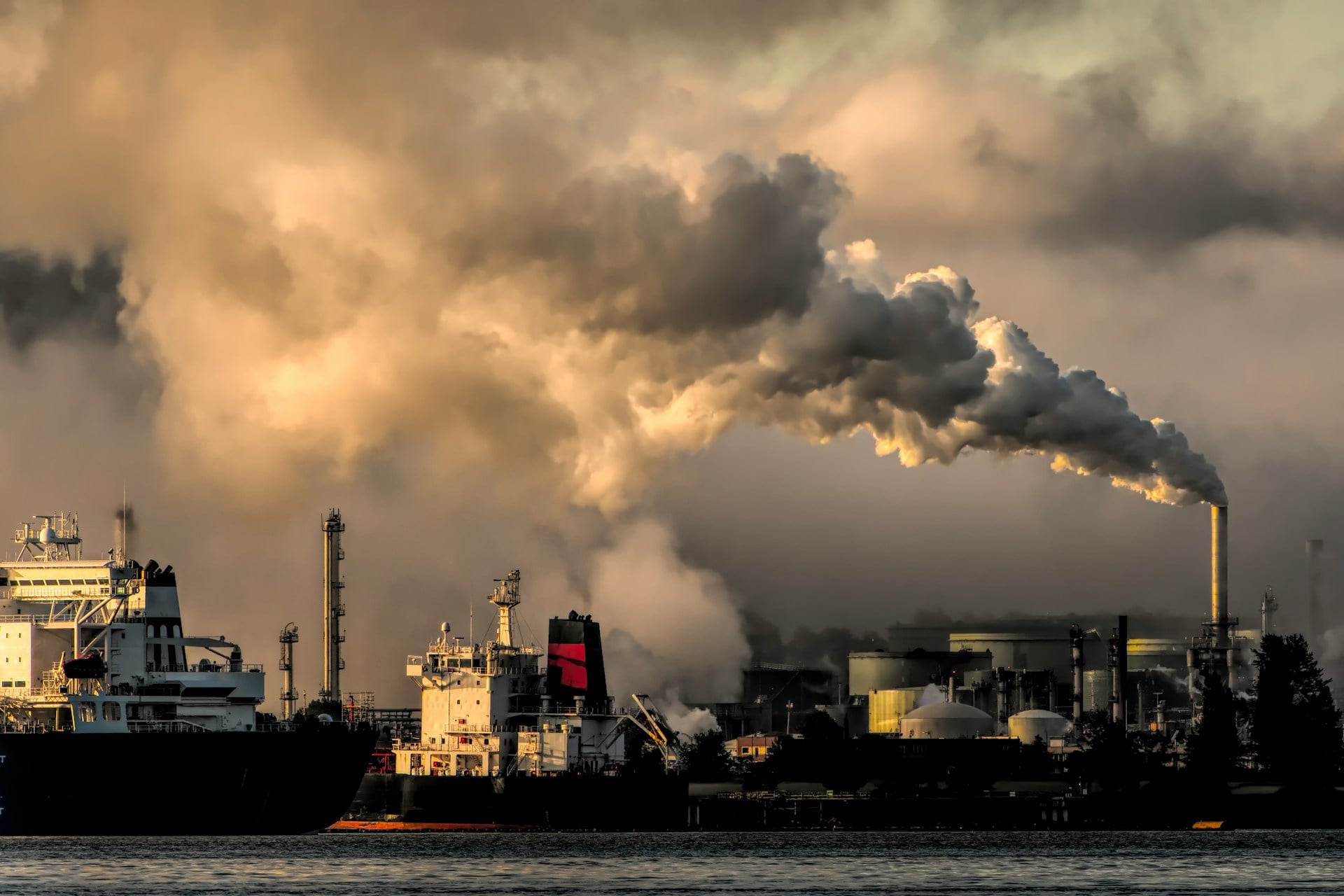
In 2023, Panama experienced a 30% reduction in rainfall compared to the average, marking it the second driest year in the history of the river basin. The occurrence of El Niño exacerbated this situation, and the canal had to restrict operations.
During a drought in 2019, Gatún Lake’s water levels dropped to historic lows because so much water was being used for the canal. The canal authority is now exploring ways to find additional water sources and build new reservoirs to ensure the canal can keep operating even when rainfall becomes less predictable.
Why it still matters today

The Panama Canal remains one of the most important pieces of infrastructure on the planet more than a century after it opened. It’s not just about the engineering anymore, though that’s still impressive.
The canal shapes where goods go, how much they cost, and how quickly they arrive. When the canal has problems, whether from drought or maintenance or political issues, the whole world feels it.
Ships pile up, delivery times stretch out, and prices start climbing. The expansion in 2016 proved that this waterway isn’t some relic from the past but a living, evolving system that adapts to modern shipping needs.
Every day, massive vessels carry billions of dollars worth of cargo through those locks, connecting continents and keeping global trade moving. That narrow strip of water in Panama punches way above its weight in importance, and that’s not changing anytime soon.
More from Go2Tutors!

- The Romanov Crown Jewels and Their Tragic Fate
- 17 Halloween Costumes Once Considered Taboo
- Famous Hoaxes That Fooled the World for Years
- 15 Child Stars with Tragic Adult Lives
- 16 Famous Jewelry Pieces in History
Like Go2Tutors’s content? Follow us on MSN.



