Obscure Sports With Fascinating Origins
You’ve probably heard of soccer, basketball, and tennis. But scattered across the globe, people compete in sports that sound made up until you see them in action. These aren’t recent inventions designed for viral videos.
Many have histories stretching back centuries, rooted in necessity, tradition, or someone’s wild imagination that just happened to catch on.
Sepak Takraw: The Gravity-Defying Kick Volleyball
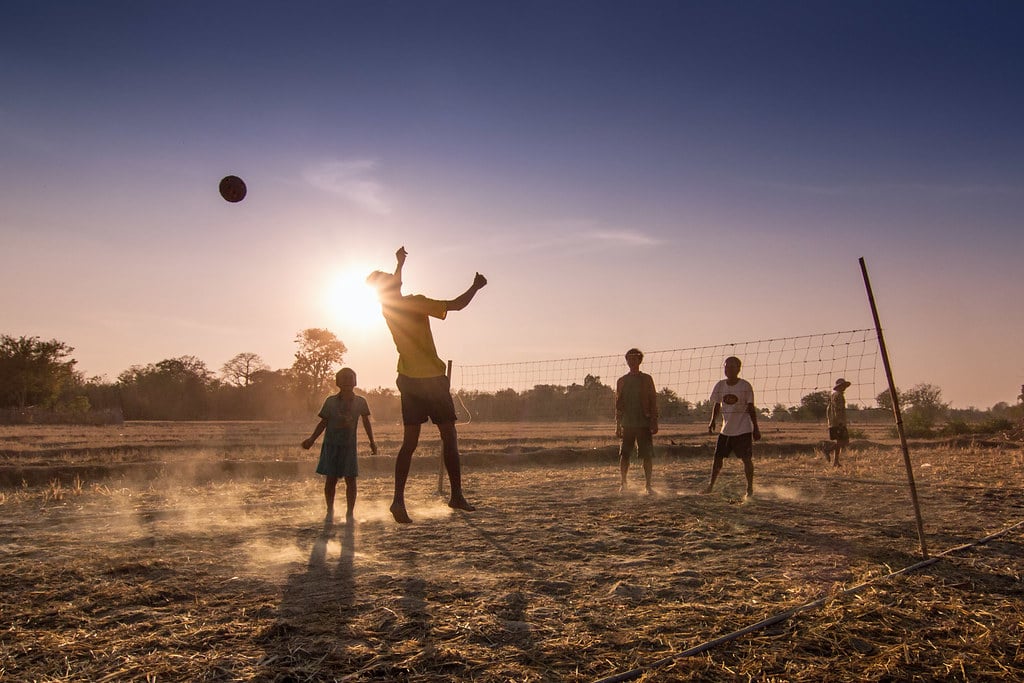
Picture volleyball, but players can’t use their hands. At all. Instead, they kick a woven rattan sphere over a net using acrobatic moves that look physically impossible.
The sport originated in Southeast Asia, with different countries claiming versions dating back to the 15th century. Malaysian, Thai, and Filipino communities all developed their own forms before it became standardized.
The name combines Malay and Thai words—”sepak” means kick, “takraw” refers to the woven palm stem that forms the traditional type used in play. Players launch themselves into midair bicycle kicks and contort their bodies in ways that make gymnasts jealous.
The athleticism required is staggering.
Buzkashi: Afghanistan’s Violent Horseback Battle
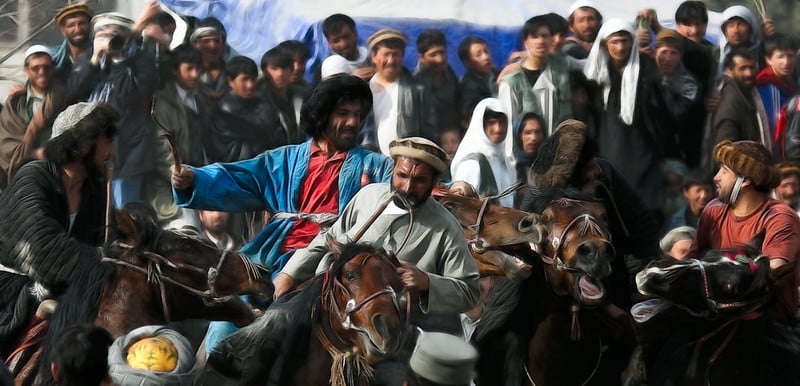
In Central Asia, riders on horseback drag a headless goat carcass toward a goal while opponents try to steal it away. Buzkashi translates to “goat pulling,” which undersells the chaos. This isn’t a game for the faint-hearted.
The sport emerged from nomadic herders who needed exceptional horse-riding skills for survival. At some point, they turned those skills into competition. Matches can involve dozens of riders in a free-for-all that lasts hours.
Traditional versions have few rules. Modern tournaments impose some structure, but the sport remains rough. Riders called chapandaz train for years to master the necessary strength and horsemanship.
Kabaddi: The Ancient Raiding Sport

Two teams face off on opposite sides of a court. One player crosses into enemy territory, tags as many opponents as possible, then tries to return home—all while holding their breath and chanting “kabaddi, kabaddi, kabaddi” to prove they haven’t inhaled. If they take a breath or get tackled, they’re out.
This Indian sport dates back at least 4,000 years. Ancient texts reference similar games used to develop defensive and offensive skills.
Villages played their own variations for centuries before it became organized. Pakistan, Bangladesh, Iran, and Japan now have professional leagues.
The sport combines strategy, speed, and wrestling in a format that looks deceptively simple.
Bossaball: Trampolines Meet Beach Volleyball

Someone looked at volleyball and thought, “This needs trampolines.” That person created Bossaball.
Teams play on an inflatable court with embedded trampolines near the net, allowing players to launch themselves into spectacular aerial moves. A Belgian living in Spain invented it in 2004, combining volleyball, soccer, gymnastics, and capoeira.
The sport includes a DJ who controls the game tempo with music, turning matches into performances. Players can use any body part to hit the specially designed lighter version of the standard equipment.
The scoring system rewards more difficult aerial moves, so matches become competitions of who can perform the most outrageous acrobatics while keeping things in play.
Chess Boxing: Brains and Brawn Alternate
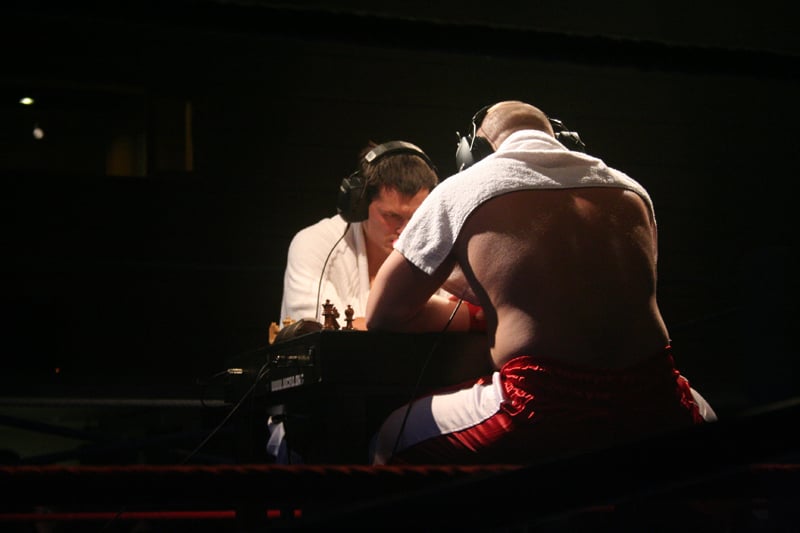
Competitors alternate between rounds of chess and boxing until someone gets checkmated or knocked out. This isn’t a joke.
It’s a legitimate hybrid sport with international competitions. Dutch performance artist Iepe Rubingh brought the concept to life in 2003, inspired by a French comic book that featured the same idea.
Matches consist of eleven rounds—six chess rounds and five boxing rounds. Competitors need to be skilled at both disciplines.
You can’t just be a strong boxer who knows how to move pawns, or a chess master who can’t take a punch.
Wife Carrying: Finland’s Oddly Romantic Race
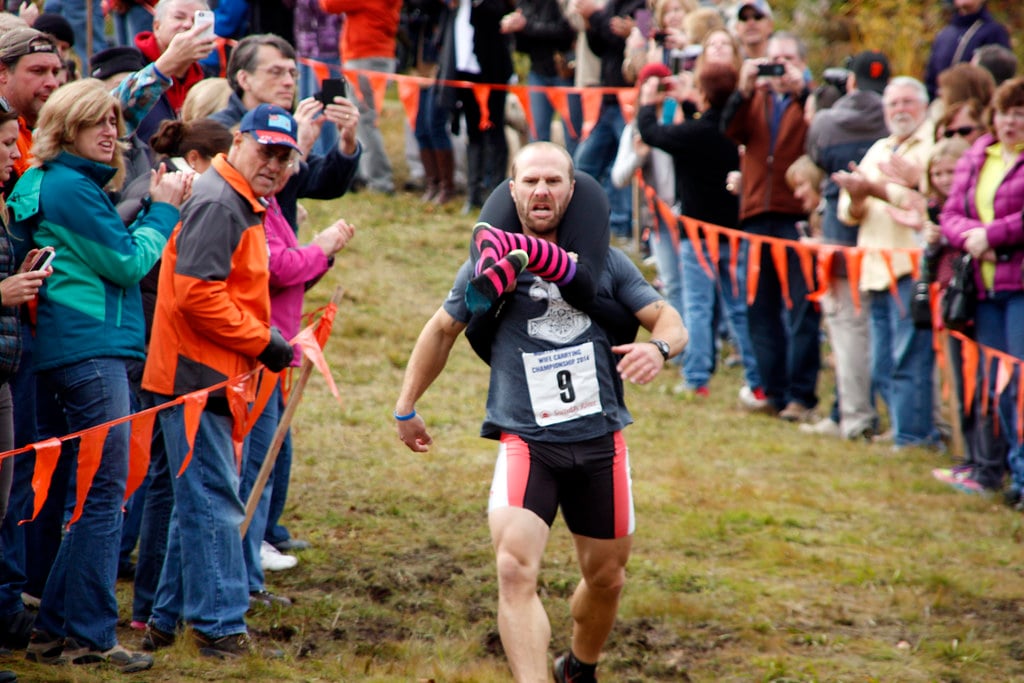
Men race through an obstacle course while carrying a woman—traditionally their wife, though the rules now allow any female partner. The track includes water hazards, sand pits, and hurdles.
Winners receive the woman’s weight in beer. The sport originated in Finland, with several origin stories floating around. One claims it stems from 19th-century bandits who raided villages and carried off women.
Another suggests it came from military training exercises. Either way, modern competitions started in Finland in 1992 and spread globally.
Competitors develop specific carrying techniques. The “Estonian carry,” where the woman hangs upside-down on the man’s back with legs around his neck, has become the most popular method.
Underwater Hockey: British Swimming Pool Innovation

Players wearing snorkels, fins, and gloves push a heavy puck along the bottom of a swimming pool toward goals at opposite ends. Teams consist of six players in the water, with substitutes ready to dive in during play.
You need lung capacity, swimming ability, and spatial awareness while holding your breath. British divers invented it in 1954 as a way to stay fit during winter when ocean diving was unpleasant.
They called it “Octopush” initially. The sport requires constant diving, surfacing for air, and diving again.
Matches are fast-paced despite happening at the bottom of a pool. Over 20 countries now have national teams.
Shin-Kicking: England’s Painful Tradition

Two opponents face each other, grab each other’s shoulders, and kick each other in the shins until someone falls down. That’s the sport.
Competitors stuff straw down their pants for minimal protection, though many embrace the pain as part of the tradition. Shin-kicking dates back to 17th-century England as part of the Cotswold Olimpicks, an early Olympic Games predecessor.
The sport was brutal in its original form. Contestants wore steel-toed boots.
Modern versions use softer footwear and enforce more rules, but it still hurts. Champions develop pain tolerance and learn techniques to unbalance opponents without destroying their own legs.
Bo-Taoshi: Japan’s Chaotic Pole-Toppling
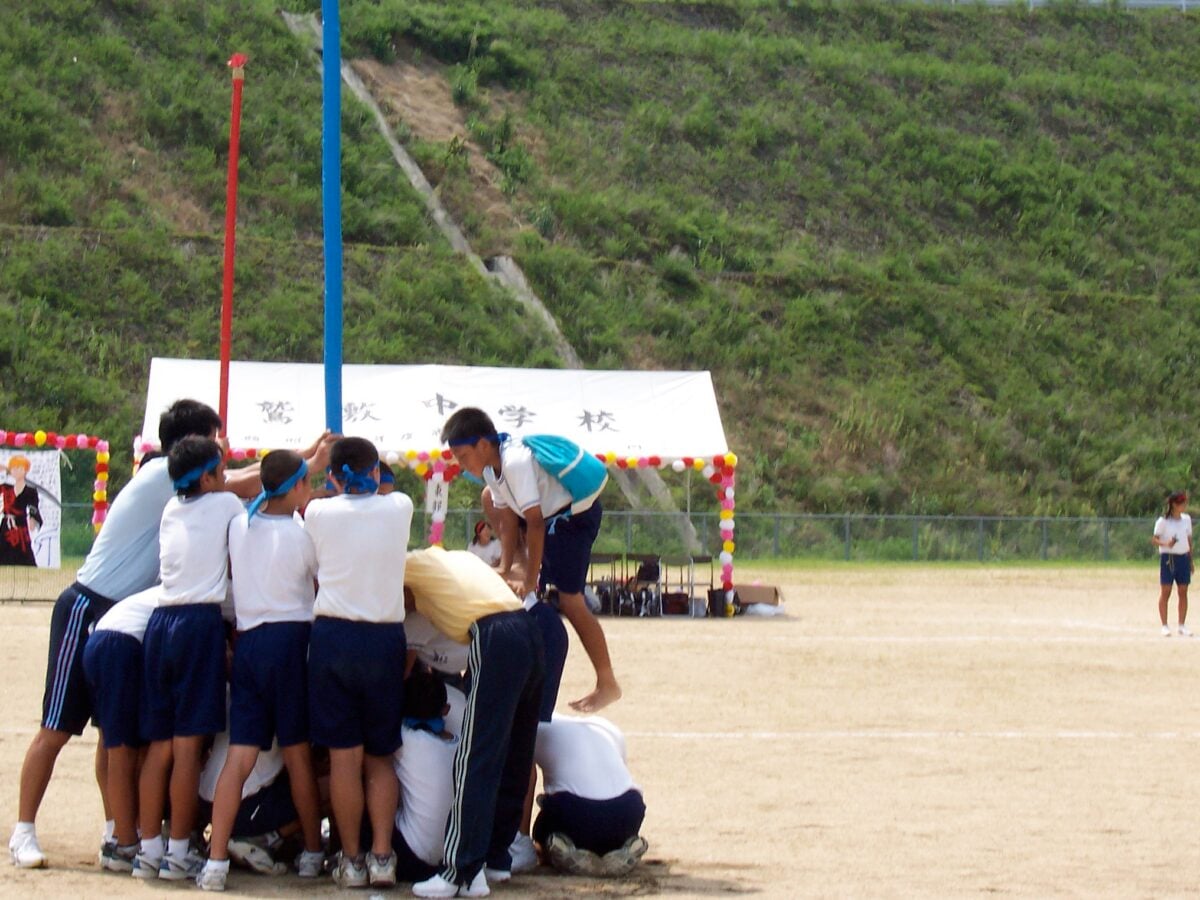
Picture 150 players divided into two teams. One team defends a tall pole while the other team attacks, trying to bring it down to a 30-degree angle.
Defenders climb the pole, form human pyramids, and create barriers. Attackers rush in like a medieval army.
Japanese universities developed Bo-Taoshi in the 1940s as a military training exercise. The name means “pole toppling.”
Matches look like controlled riots. Players have designated roles—pole defenders sit on top, ninjas block attackers, supporters hold defenders up.
The sport requires coordination, strength, and a high tolerance for getting trampled. Games typically last minutes once they begin, though the setup and strategy take longer.
Hurling: Ireland’s Ancient Battlefield Sport

Players use wooden sticks to hit a small leather projectile between goalposts or over a crossbar. The sport resembles field hockey if field hockey were played at twice the speed with fewer rules about physical contact.
Hurling is one of the world’s fastest field sports, and injuries are common despite players wearing minimal protective gear. Irish mythology references hurling games dating back 3,000 years.
The sport survived British colonization attempts to ban it and remained central to Irish culture. Modern rules were standardized in the 1880s.
Teams of 15 play on a field larger than a soccer pitch. The speed of play and skill required to catch, run with, and strike accurately make it thrilling to watch.
Jai Alai: The World’s Fastest Sport

Players use curved wicker baskets attached to their arms to catch and throw against a high wall at speeds exceeding 180 mph. The sport originated in the Basque region of Spain in the 17th century, evolving from traditional hand-pelota games.
Basque immigrants brought Jai Alai to Cuba, then Florida, where it became associated with gambling in frontons—specialized courts with high walls. The basket, called a cesta, allows players to scoop up the pelota and whip it forward with incredible force.
Professional players train for years to develop the arm strength and reflexes needed. The sport requires precision timing.
Miss a catch and the projectile hits the wall at speeds that could cause serious injury.
Camel Wrestling: Turkey’s Desert Spectacle

Two male camels are brought together during mating season and encouraged to wrestle each other. The animals naturally fight for dominance, and humans turned this into organized competition.
The sport is popular in Turkey’s Aegean region. Camel wrestling festivals date back thousands of years across Central Asia and the Middle East.
Traditional events include music, food, and celebration around the matches. The camels are specially bred and trained.
They don’t fight to the death—referees separate them if things get too intense. Matches end when one camel retreats, falls, or screams.
Animal welfare concerns have led to increased regulations in recent decades.
Pesäpallo: Finland’s Twisted Take on Baseball

Take baseball, change almost every rule, and you get Pesäpallo. The pitcher stands next to the batter and throws the item straight up.
The field is different. The base running is different.
The scoring is different. Finnish Olympic javelin thrower Lauri “Tahko” Pihkala invented Pesäpallo in the 1920s, specifically designing it to be more exciting than American baseball.
He wanted more action, more scoring, and faster gameplay. The sport caught on in Finland and never really left.
It’s the Finnish national sport, with professional leagues and widespread youth participation. Players develop specialized skills that don’t translate to baseball—the vertical pitch creates different batting mechanics, and the base-running strategy requires unique tactical thinking.
Hornussen: Switzerland’s Medieval Golf-Baseball Hybrid

One team uses a flexible stick to launch a small puck called a “hornuss” across a field. The defending team tries to knock it out of the air using large wooden boards.
The sport combines elements from golf, baseball, and cricket, but plays unlike any of them. Swiss farmers have played Hornussen for centuries, with written records dating to the 1600s.
The name comes from the buzzing sound the puck makes as it flies through the air—”hornuss” means “hornet.” The launching team’s striker winds up with a long flexible whip-like stick and hits the puck resting on a launch ramp.
Good shots send it hundreds of yards. Defenders spread across the field with their boards on poles, trying to block it before it lands.
Scoring is complex and based on how far the puck travels before being knocked down.
Games People Play
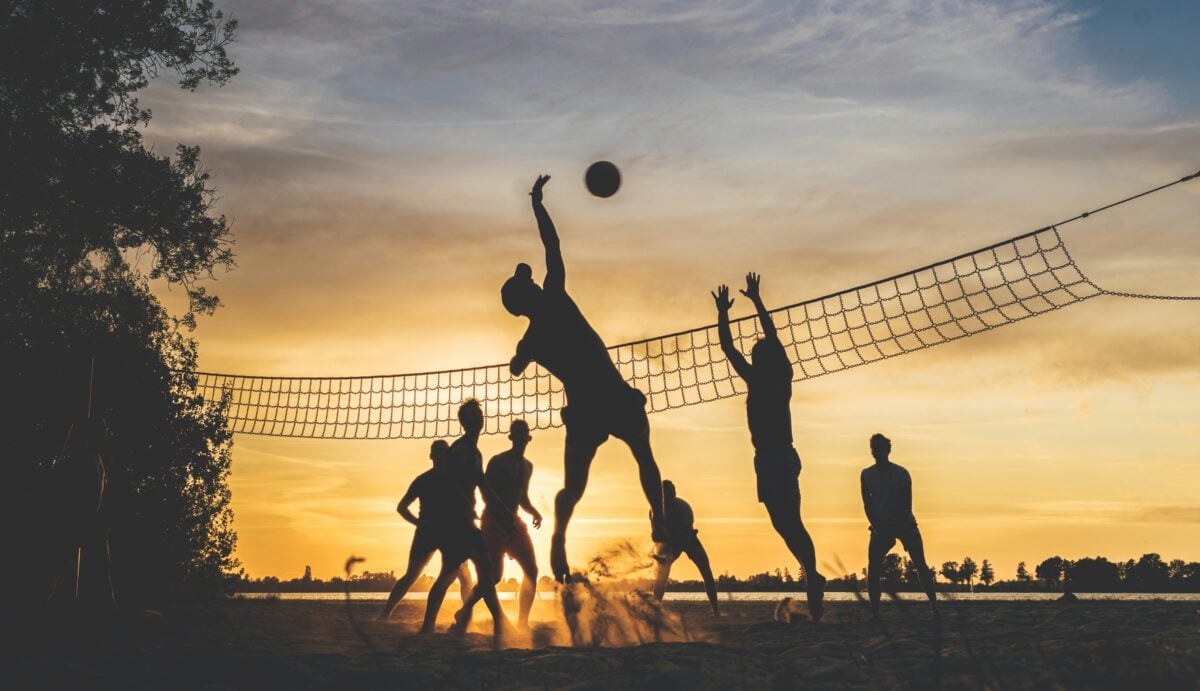
Sports emerge from the strangest circumstances. Military training becomes entertainment. Survival skills transform into competition.
Someone attaches trampolines to volleyball courts just to see what happens. These obscure sports survive because communities care enough to keep playing them, teaching them to new generations, and organizing tournaments that keep traditions alive.
You don’t need a billion-dollar industry or television contracts for a sport to matter. Sometimes all it takes is people who find joy in the game—whether that game involves acrobatic kicks, underwater pucks, or launching hornets across Swiss fields.
More from Go2Tutors!

- 16 Historical Figures Who Were Nothing Like You Think
- 12 Things Sold in the 80s That Are Now Illegal
- 15 VHS Tapes That Could Be Worth Thousands
- 17 Historical “What Ifs” That Would Have Changed Everything
- 18 TV Shows That Vanished Without a Finale
Like Go2Tutors’s content? Follow us on MSN.