Odd Symbols Carved Into Monuments
Every day, you pass monuments without giving them much thought. Bronze statues in parks, granite-etched names on war memorials, and stone columns outside government buildings.
They become part of the urban landscape. However, if you take the time to look closely at these structures, you will discover symbols that don’t immediately make sense, such as seemingly random geometric patterns, animals in odd places, letters from unfamiliar alphabets, and marks that weren’t even included in the original design.
The Mason’s Marks That Nobody Planned

Medieval cathedrals across Europe are covered in small symbols that the architects never intended to be there. These are mason’s marks—simple geometric shapes that stonemasons carved into their work as a kind of signature.
A circle with a cross through it. Three lines forming a triangle. A letter-like shape that isn’t from any alphabet. Each mason had his own mark, and he put it on every stone he cut and placed.
Why did they do this? Payment and quality control. Masons were paid by the piece, and the marks proved which stones they had worked on when it came time to settle accounts.
Some marks were placed where they’d be visible, serving as a form of accountability—if a stone failed or was poorly cut, everyone would know who was responsible. Others ended up hidden behind mortar or turned inward.
The visible ones remain today as a permanent record of medieval labor practices frozen in stone.
The Hobo Code on Public Structures

During the Great Depression, homeless men traveling by freight train developed a symbolic language to communicate with each other. They carved or chalked these symbols near train yards, on fence posts, gate markers, and near houses where they’d received help or been turned away.
A circle with two arrows meant “get out fast.” A triangle with hands meant “householder has a gun.” A cat symbol indicated “kind lady lives here.”
Most of these marks have weathered away or been cleaned off, but some remain on old railroad infrastructure and wooden posts from the 1930s. Railroad trestles and yard structures in particular preserve them because they’re often in remote locations where nobody bothers to maintain or paint over them.
Urban explorers and historians hunt for these symbols now, photographing them before they disappear completely. The marks aren’t just historical curiosities—they’re evidence of an entire subculture that created its own written language out of necessity.
The Mysterious Witch Marks

British churches contain thousands of symbols carved near doorways and windows that nobody can fully explain. They’re called witch marks or apotropaic marks—symbols meant to ward off evil.
The most common is a hexafoil, which looks like a flower made from six overlapping circles. Others include intersecting Vs (probably representing the Virgin Mary), mazes, and burn marks from candles.
The strange part is that nobody knows exactly when most of these were carved or by whom. Most appear to date from the 1500s through the 1700s, a period of intense anxiety about witchcraft and evil forces.
Some are clearly amateur work—crude scratches made with whatever tool was handy. Others show skill and planning. Were they carved by priests, by parishioners, or by the stonemasons who built the churches?
The churches don’t have records of them, which means they were probably done unofficially, maybe even secretly.
The Surveyor’s Marks That Became Permanent
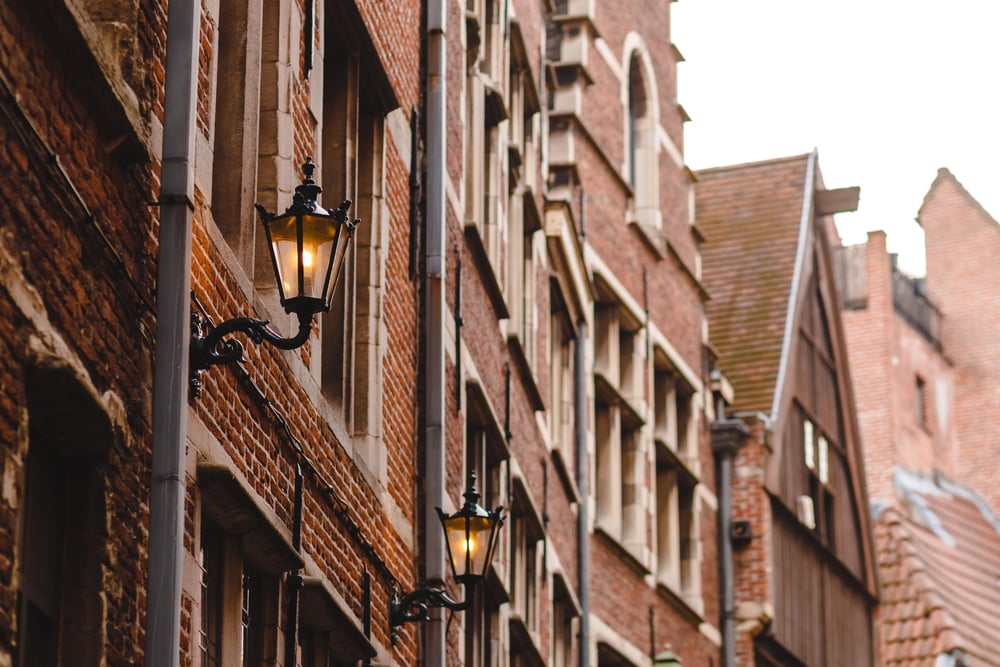
Walk around any old city and you’ll find small bronze or brass discs set into sidewalks and building foundations. These are survey markers, precisely placed points that surveyors use to measure elevation and location.
They’re covered in numbers, abbreviations, and symbols that mean nothing to most people but are essential reference points for anyone doing construction or mapping work.
The odd thing is how many of these markers are on monuments themselves. Civil War memorials, courthouse steps, and historic buildings often have survey discs embedded in them.
This wasn’t always intentional. Sometimes the monument was built after the marker was placed, and the builders just incorporated it rather than removing and resetting it. Other times, surveyors deliberately used monuments as reference points because they were permanent and easy to identify on maps.
Some of these markers are over a hundred years old. The abbreviations and agency names on them refer to organizations that no longer exist—railroad companies, county engineering departments, federal mapping projects from the 1930s.
They’re inadvertent time capsules, preserving information that seemed temporary but ended up outlasting the people who created them.
The Tourist Graffiti Problem
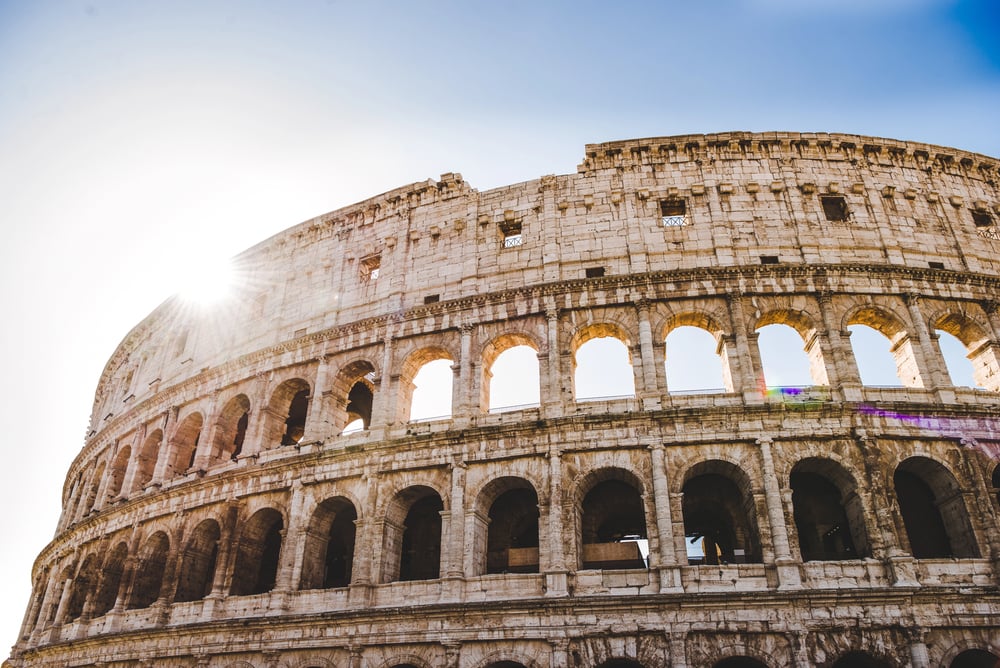
The Colosseum in Rome, the Pyramids of Giza, the Parthenon in Athens—all covered in graffiti that dates back centuries. Not modern spray paint (though there’s plenty of that too), but carved names and dates from visitors who wanted to leave their mark.
“Lord Byron 1810” appears on several Greek monuments. Soldiers from Napoleon’s army scratched their names into Egyptian temples. Medieval pilgrims carved crosses and prayers into the stones of Jerusalem.
At what point does graffiti become history? Some of these inscriptions are now protected because they document who visited these sites before modern tourism existed.
They tell us that a Swedish merchant made it to Rome in 1654, or that a British sailor saw the Sphinx in 1799. The marks that seemed like vandalism when they were fresh are now evidence that historians study to understand travel patterns and literacy rates.
Modern conservators face an impossible choice. Do you remove recent graffiti while preserving old graffiti? And if so, where do you draw the line? Is fifty years old enough? A hundred? The scratches from the 1970s will eventually be historical documents too, but right now they’re just damage.
The Hidden Freemason Symbols
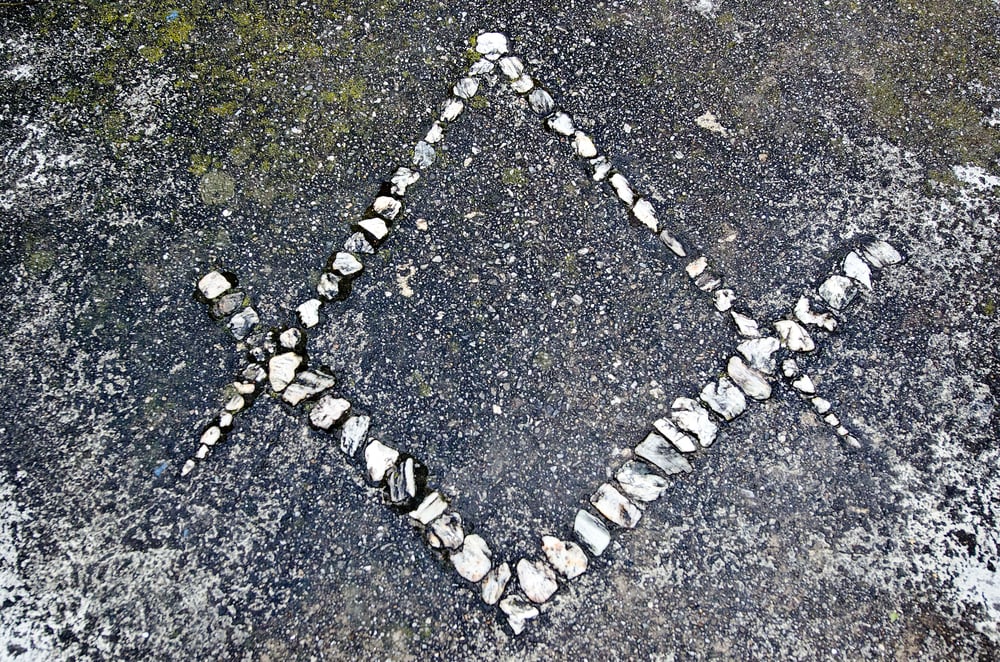
Freemasonry influenced architecture and monument design throughout the 18th and 19th centuries, and Masonic symbols appear on public monuments in ways that most people don’t recognize. The square and compass are obvious when you know what you’re looking for.
But Masonic symbolism goes deeper—specific numbers of steps on a monument, columns arranged in particular patterns, the angle at which stones are laid.
The Washington Monument has a Masonic cornerstone that was laid in a ceremony attended by thousands of people in 1848. Many state capitol buildings incorporate Masonic symbols into their design, often hidden in decorative elements that look purely ornamental.
Cemetery monuments are full of them—five-pointed stars, hourglasses with wings, all-seeing eyes, and pillars that represent the pillars of Solomon’s temple.
These weren’t secret in their own time. Everyone knew what they meant. But as Freemasonry declined in cultural importance, the symbols became obscure.
Now they’re just odd decorative elements that people assume are generic classical motifs, when actually they’re specific references to Masonic philosophy and ritual.
The Benchmark Arrow Mystery

British monuments and buildings have small arrow-shaped marks carved into them at specific heights above sea level. These are called benchmark arrows or broad arrows, and they were cut into structures by government surveyors creating elevation maps.
The mark consists of a horizontal line with an upward-pointing arrow beneath it—the horizontal line marks the exact elevation point, and nearby you’ll find a set of numbers indicating the height above sea level.
What makes them odd is where they appear. War memorials have them. Church walls. Bridge abutments. The sides of ancient castles.
Surveyors needed permanent, stable reference points, so they used whatever solid structures existed, regardless of what those structures were. This means you can find government surveying marks on 900-year-old Norman keeps and medieval monastery walls.
The arrows are crude—just a horizontal line with an arrow shape beneath it, all made with simple chisel marks. They look like someone started carving something and then gave up.
Most people walk past them without noticing, or they assume they’re just random damage. But they form a network of precisely measured points across the entire country, each one connected to all the others through calculations that took decades to complete.
The Coded Messages in Plain Sight

Some monuments contain encrypted messages that were put there deliberately. The Kryptos sculpture outside CIA headquarters in Virginia is the most famous example—it has four encrypted messages carved into its surface, and only three have been solved.
The fourth section has remained uncracked for over thirty years despite countless attempts by professional cryptographers.
But Kryptos isn’t alone. The Shugborough Monument in England has an eight-letter inscription—O U O S V A V V—that nobody has definitively decoded.
Theories range from Latin abbreviations to Masonic codes to romantic messages, but none have been proven. The monument has been there since the 1700s, and the family that commissioned it left no explanation.
These aren’t ancient mysteries. People carved them recently enough that there should be records, letters, or documents explaining what they mean.
But either those records were lost, or the creators deliberately chose not to explain, and now we’re left with symbols that were meant to be understood but aren’t anymore.
The Animal Symbols That Changed Meaning
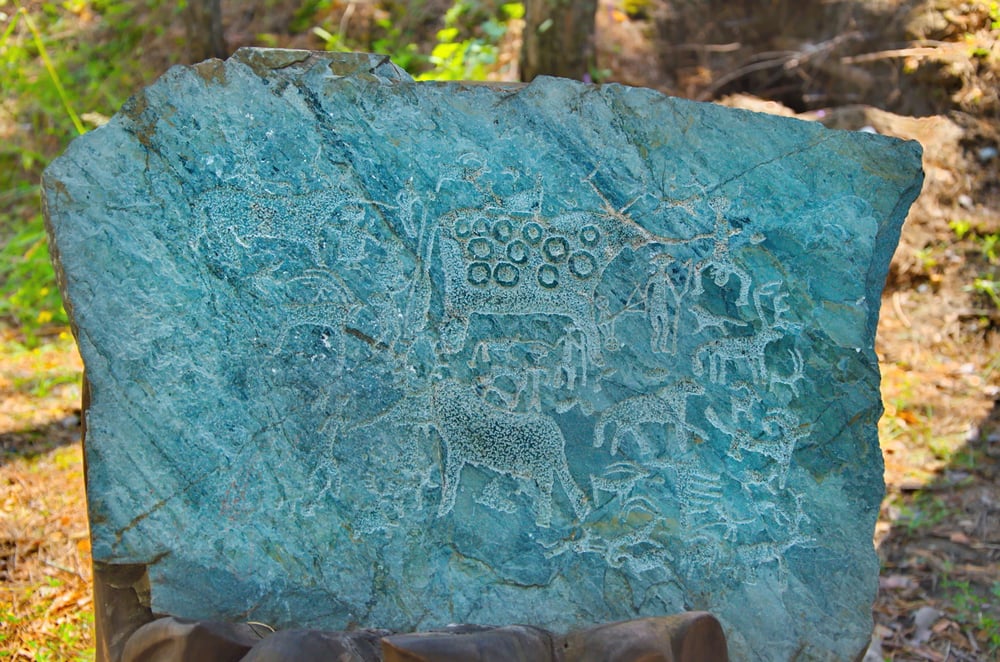
Medieval monuments are full of animals carved in stone—lions, eagles, griffins, dragons. These weren’t random decorations. Each animal had specific symbolic meaning that medieval people understood immediately.
Lions represented courage and kingship. Eagles meant vision and divine authority. Pelicans symbolized self-sacrifice because people believed pelicans fed their young with their own blood.
The problem is that these meanings have shifted or been forgotten. Modern viewers see a snake on a monument and think it represents evil, but in many contexts snakes symbolized healing and wisdom.
Owls meant wisdom to the Greeks but were bad omens to medieval Christians. A monument that made perfect symbolic sense to its original audience can seem contradictory or nonsensical now because we’ve lost the cultural context.
This gets even stranger when monuments incorporate animals from heraldry. Family crests used combinations of real and imaginary creatures, each with specific meanings that related to the family’s history or aspirations.
A monument might show a boar, three stars, and a stripe, and these would immediately identify which family it belonged to—but only if you knew the heraldic system. Today they’re just odd animal pictures.
The Repurposed Stone Inscriptions

Building materials were expensive, so old monuments often got torn down and their stones reused in new construction. This means modern monuments sometimes have fragments of earlier inscriptions carved into them, visible if you look closely.
A courthouse built in 1850 might have foundation stones from a demolished church, with Latin prayers still carved into their surfaces. War memorials might incorporate stones from torn-down fortifications, complete with military emblems from previous wars.
Sometimes this was deliberate—a way of connecting the new monument to the past. Other times it was just practical.
Either way, it creates layers of meaning that weren’t part of the architect’s plan. You end up with monuments that tell multiple stories depending on which stones you examine, like palimpsests where earlier writing shows through later text.
Archaeological excavations occasionally find that monuments thought to be from one era actually contain much older material. What looks like a Renaissance monument might have Roman bricks at its core, with bits of Latin inscription peeking through where the surface has worn away.
The monument becomes a kind of archaeological site in itself, preserving fragments from structures that would otherwise be completely lost.
The Weather Damage That Creates New Patterns
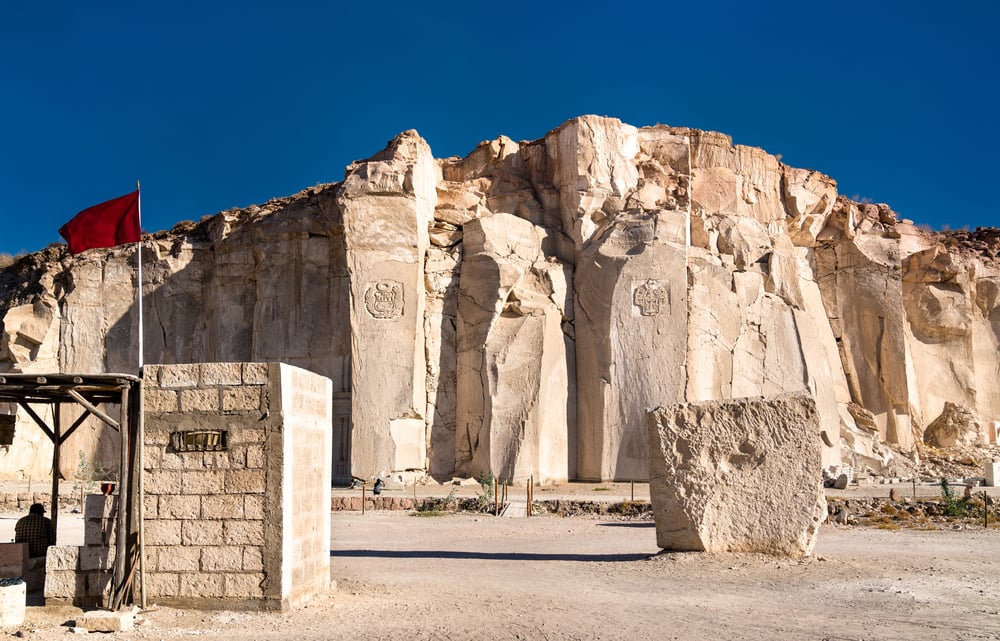
Acid rain, pollution, and natural erosion create patterns on stone monuments that weren’t originally there. Limestone dissolves unevenly, leaving some areas smooth while others become pockmarked and rough.
Mineral deposits from rainwater create streaks and stains. Lichen and moss grow in patches, following microclimatic zones on the stone’s surface.
Over time, these patterns can start to look intentional. A stain becomes a face. Erosion creates shapes that resemble letters or symbols.
People see meaning in randomness, especially on monuments where they expect to find meaning. This has led to countless theories about “hidden” symbols on famous monuments that are actually just weathering patterns.
The Sphinx’s face shows heavy erosion that some people interpret as evidence of water damage from ancient floods. More likely, it’s just the result of thousands of years of wind-blown sand wearing away softer layers of stone faster than harder layers.
But the patterns are there, and they look deliberate enough that people keep proposing elaborate explanations for them.
The Modern Digital Marks
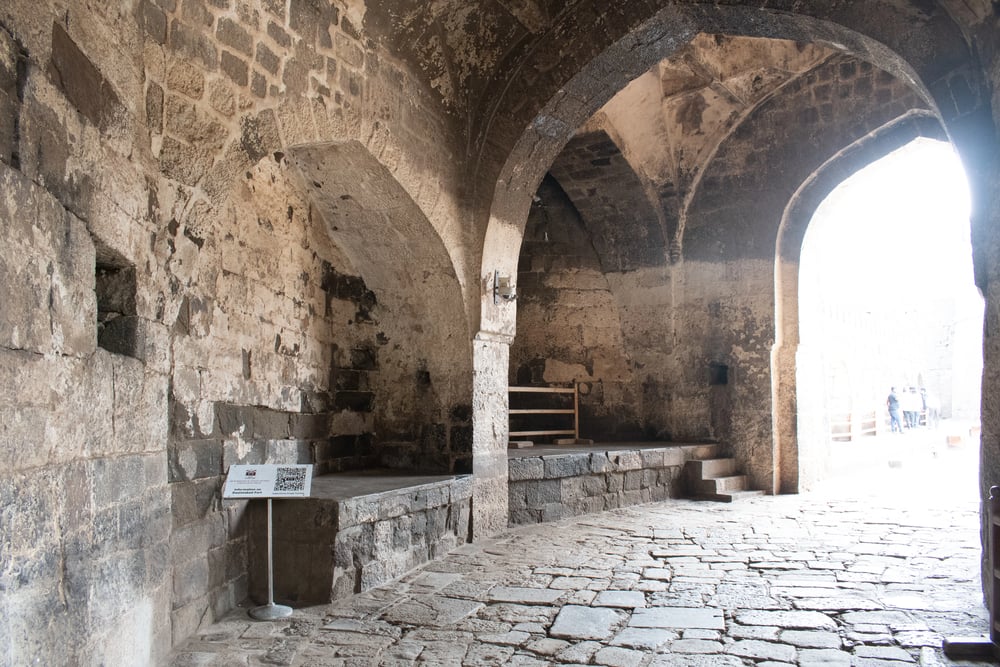
Some recent monuments have QR codes on attached plaques or informational panels. Yes, actual QR codes that you can scan with your phone to access websites about the monument’s history.
This seemed like a good idea in the 2010s when everyone was putting QR codes on everything. Now, a decade later, many of the websites these codes link to don’t exist anymore.
So we have physical marks on monuments that point to temporary digital resources. The codes will outlast the content they reference.
Future visitors will find these strange square patterns and have no idea what they were for, because the technology to read them will be obsolete and the servers they pointed to will be gone.
It’s not the first time technology has created marks that outlast their usefulness. The difference is that QR codes are fundamentally about linking to something else, and when that link breaks, they become meaningless in a way that plain text inscriptions never do.
The Shadows That Tell Time
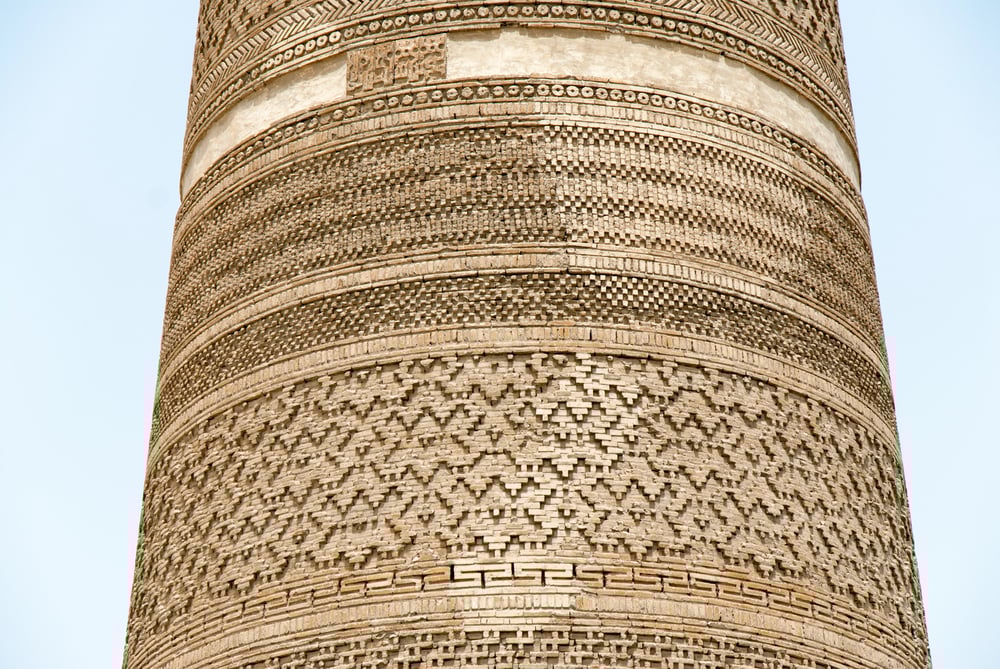
Sundials appear on many old monuments, but they’re easy to miss if you don’t know what to look for. They don’t always look like traditional sundials with a triangular pointer and hour marks.
Some are just small metal pins set into stone, casting shadows that mark noon. Others have geometric patterns carved into them that only make sense as timekeeping devices if you understand how they work.
Medieval churches used these to determine prayer times before mechanical clocks existed. You can still find them on south-facing walls, though most people walk past without realizing what they are.
The marks are often worn smooth or damaged, and without the metal pointer (which has usually corroded away or been removed), they just look like decorative circles with lines radiating from the center.
Some monuments have multiple sundials showing different time systems. Before time zones were standardized, every city kept its own local time based on the sun’s position.
Railway companies needed consistent timing across long distances for their schedules to work, so they standardized their operations around Greenwich time well before it became the national standard. These monuments preserve the moment when humanity decided to stop living entirely by the sun and start living by the clock.
What Gets Left Behind
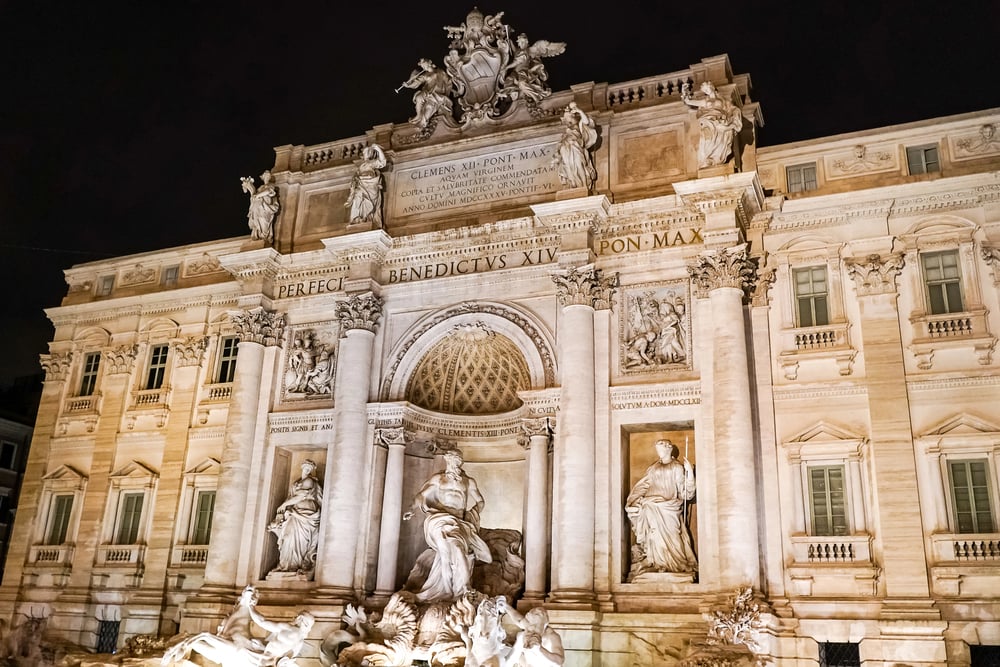
Monuments accumulate marks over time whether anyone plans for it or not. Bird droppings create patterns. Tree roots crack foundations. Rust from iron fittings bleeds through marble.
Each layer of dirt and damage tells part of the monument’s story, but we usually only see the surface. Cleaning reveals earlier layers—sometimes marks that were meant to be there, sometimes marks that weren’t.
A monument that looks pristine today was probably cleaned recently, and the cleaning removed evidence that historians would have found valuable. But leaving monuments dirty means they deteriorate faster.
There’s no perfect solution. The symbols we do see are only a fraction of what was carved. Wind and rain erase the shallowest marks first.
Soft stone wears away while hard stone persists. What survives is partly an accident—the right stone in the right place, sheltered from the worst weather.
The full symbolic language of any monument is partly lost before anyone has a chance to record it.
Reading Stone Like Books

Take a close look at an ancient monument while standing in front of it. Every surface, not just the primary inscription or the statue atop. The back, sides, and base.
Keep an eye out for any marks that seem out of place, such as those that are too small, too crude, or in the incorrect style. Where new stone is placed next to old, look for repairs.
Look for areas where the stone has been patched over after something was taken out. Every mark represents an individual’s choice to modify this enduring framework.
His payment mark was carved by the mason. Their name was scratched by a tourist. The surveyor required a point of reference.
The believer would be shielded from evil by a symbol. The stone was stained by the pigeon’s droppings after it roosted there for years.
In reality, monuments are just very slow dialogues between the people who add to them and the people who interpret them, despite their attempts to be timeless. The strange symbols are proof that monuments belong to both the people who use them and the people who built them, not errors or vandalism.
For as long as they exist, they will continue to amass new symbols, meanings, and mysteries.
More from Go2Tutors!

- The Romanov Crown Jewels and Their Tragic Fate
- 13 Historical Mysteries That Science Still Can’t Solve
- Famous Hoaxes That Fooled the World for Years
- 15 Child Stars with Tragic Adult Lives
- 16 Famous Jewelry Pieces in History
Like Go2Tutors’s content? Follow us on MSN.