Ordinary People Who Changed History
History books overflow with names you already know. Leaders, inventors, artists who shaped the world with their decisions and discoveries.
But between those famous names sit quieter stories—people who lived regular lives until one moment, one choice, one act of courage sent ripples through time. These weren’t people born into power or wealth.
They worked ordinary jobs, raised families, and worried about bills. Yet when circumstances demanded something from them, they stepped forward.
Sometimes they knew what they were doing. Other times, they had no idea their actions would echo for decades.
Rosa Parks and the Seat That Sparked a Movement

The seamstress boarded the bus after work on December 1, 1955. Tired from her day at the Montgomery Fair department store, she took a seat in the middle section.
When the driver demanded she give up her seat to a white passenger, she refused. That single act of defiance launched the Montgomery Bus Boycott and accelerated the civil rights movement.
Parks wasn’t the first Black person to resist segregation on Montgomery buses. But her arrest became the catalyst that Black leaders needed.
The boycott lasted 381 days. It brought a young minister named Martin Luther King Jr. to national attention.
It proved that organized resistance could work.
Stanislav Petrov’s Finger on the Button

September 26, 1983. Lieutenant Colonel Stanislav Petrov sat at his monitoring station in a Soviet bunker outside Moscow. His job was to watch for signs of nuclear attack from the United States.
Just after midnight, the system lit up. Five intercontinental ballistic missiles were heading toward the Soviet Union.
Protocol demanded he report the attack immediately to his superiors, who would almost certainly launch a counterstrike. Instead, Petrov hesitated.
Something felt wrong. Why only five missiles?
If the Americans were really attacking, they would send hundreds. He reported a system malfunction instead of an attack.
He was right—the satellite had mistaken sunlight reflecting off clouds for missiles. His decision not to follow procedure prevented nuclear war.
The Soviet Union reprimanded him for incomplete paperwork. The world never knew how close it came to ending until years later.
Henrietta Lacks and the Cells That Won’t Die
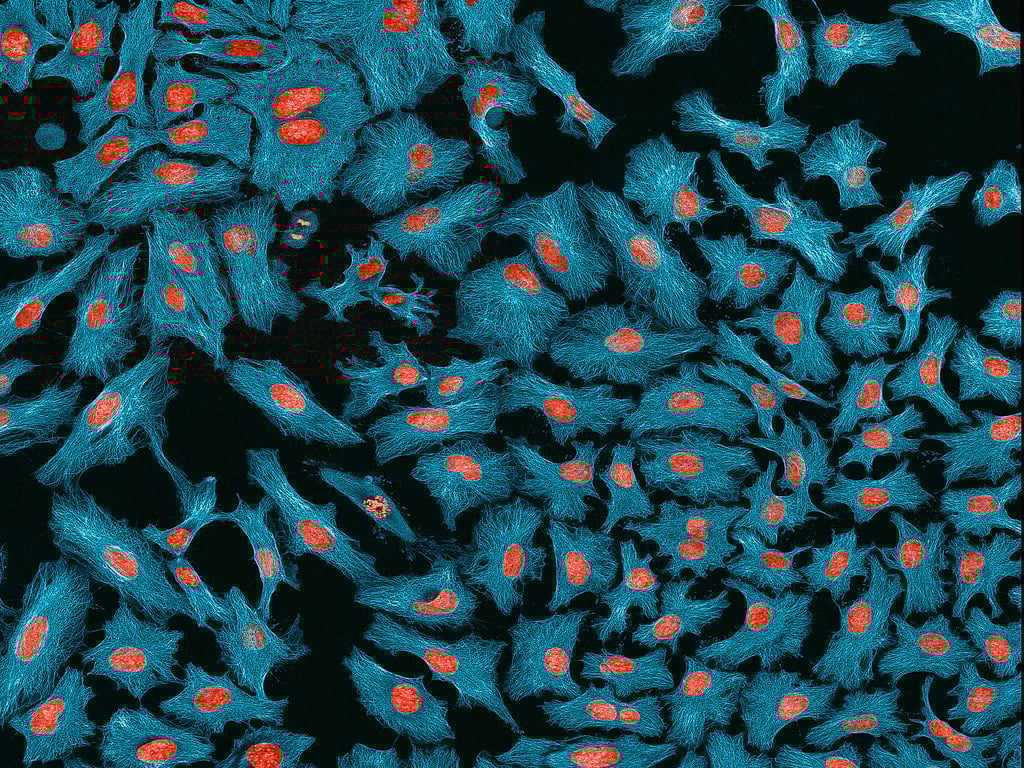
Henrietta Lacks entered Johns Hopkins Hospital in 1951 complaining of abdominal pain. Doctors diagnosed cervical cancer.
During treatment, they took a sample of her tumor cells without her knowledge or consent—standard practice at the time. Those cells did something no human cells had done before in a laboratory.
They survived. They multiplied.
They thrived. Scientists named them HeLa cells and began using them for research.
HeLa cells helped develop the polio vaccine. They went into space to see how cells behave in zero gravity.
They advanced cancer research, AIDS research, gene mapping. Scientists have grown over 20 tons of HeLa cells.
They’ve been used in more than 75,000 studies. Lacks died eight months after her diagnosis.
She never knew her cells would become immortal, or that they would contribute to nearly every major medical breakthrough of the past 70 years. Her family didn’t learn about the cells until 1975.
The Man Who Stood in Front of Tanks

You’ve seen the image. A lone man in a white shirt and dark trousers standing in front of a column of tanks.
Tiananmen Square, June 5, 1989. The tanks try to go around him.
He moves to block them again. Nobody knows who he was.
Journalists called him Tank Man. The Chinese government has never identified him.
Some reports say he was a student. Others claim he was a factory worker.
His name remains one of history’s mysteries. But his actions became the defining image of the Tiananmen Square protests.
When the Chinese government crushed the pro-democracy movement, killing hundreds or possibly thousands, this unknown man’s brief act of defiance became a symbol of resistance against authoritarian power. The tanks didn’t run him over.
Bystanders pulled him away into the crowd. What happened to him after that, nobody knows for certain.
Irena Sendler’s List of 2,500 Names

During World War II, Irena Sendler worked as a social worker in the Warsaw Ghetto. The Nazis had confined half a million Polish Jews there, where disease and starvation killed thousands.
Sendler began smuggling Jewish children out of the ghetto. She hid them in ambulances, toolboxes, and potato sacks.
She recruited a network of helpers who placed the children with Polish families or in convents. She kept a list of their real names buried in jars in her garden so families could be reunited after the war.
The Gestapo arrested her in 1943. They broke her feet and legs during torture.
She refused to reveal any names. Her network managed to bribe her guards and help her escape before her scheduled execution.
She saved 2,500 children. After the war, she tried to reunite families, but most of the parents had died in concentration camps.
The communist Polish government suppressed her story for decades. She lived in obscurity until the 1990s when three Kansas schoolgirls researched her life for a history project and brought her story to international attention.
Ryan White’s Fight Against Fear

The 13-year-old boy from Indiana had hemophilia. In 1984, doctors told him a blood transfusion had infected him with AIDS.
They gave him six months to live. When White tried to return to school, parents and teachers panicked. They banned him from classes.
They held meetings demanding his removal. Someone shot a bullet through his living room window.
The family’s pastor asked them to stop attending church. White and his mother fought back through the courts and won.
He returned to school but faced continued hostility. The family eventually moved to another town.
White appeared on television, giving AIDS a face that challenged public misconceptions. He showed people you couldn’t contract the virus through casual contact.
He died in 1990, six years after his diagnosis. Congress passed the Ryan White CARE Act four months later, providing funding for HIV/AIDS treatment.
His case changed public perception of the disease and the people living with it.
Mohamed Bouazizi’s Cart

The 26-year-old Tunisian sold fruit from a street cart to support his family. On December 17, 2010, a police inspector confiscated his cart because he lacked a permit—permits that were nearly impossible for poor people to obtain.
When Bouazizi went to the governor’s office to complain, officials refused to see him. An hour later, he returned to the governor’s office, poured paint thinner over himself, and set himself on fire.
He died 18 days later. His death sparked protests across Tunisia.
Within weeks, those protests forced dictator Zine El Abidine Ben Ali to flee the country. The revolution spread across the Middle East and North Africa.
People in Egypt, Libya, Syria, Yemen, Bahrain rose up against their governments. The Arab Spring had begun.
Some of those uprisings succeeded. Others descended into civil war.
But they all started because one desperate street vendor decided he couldn’t take it anymore.
Nadezhda Durova and the Horse Regiment

Born in 1783 to a Russian army officer, Nadezhda Durova grew up around soldiers and horses. She learned to ride better than most men.
When her father arranged her marriage at 18, she agreed reluctantly. She had a son but found domestic life suffocating.
At 23, she disguised herself as a man, enlisted in the Russian cavalry as Alexander Sokolov, and rode off to war. She fought Napoleon’s army for nine years.
She earned medals for bravery. She saved an officer’s life during battle.
When her identity was discovered in 1807, Tsar Alexander I was so impressed by her service that he let her continue fighting. She became the first woman in Russia officially allowed to serve in the military.
After the war, she wrote her memoirs. Her story inspired other women to challenge traditional roles.
She proved women could do everything men could do in the military, a fact that took most of the world another century to accept.
Frank Serpico’s Testimony
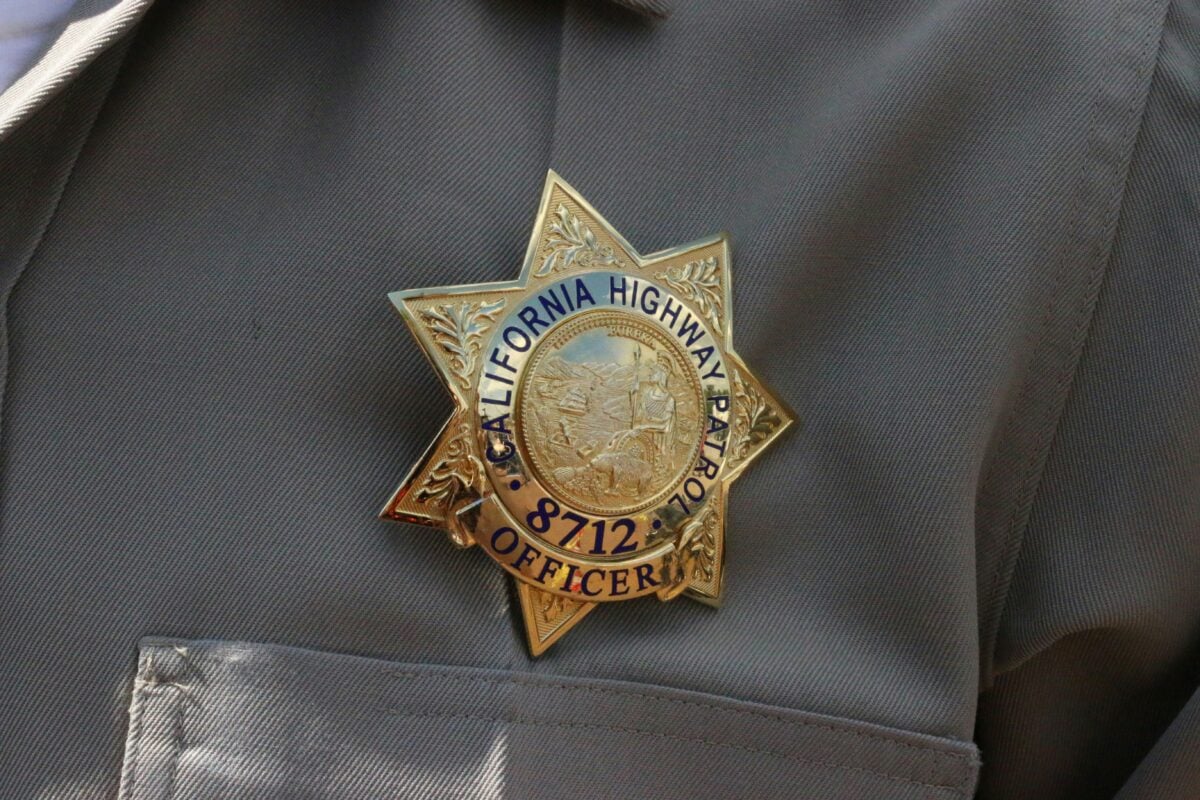
The New York City police officer refused to take bribes. In the 1960s, that made him unusual.
Most cops in his precinct supplemented their salaries with payoffs from gamblers, drug dealers, criminals of all kinds. The corruption ran deep and everyone knew it.
Serpico reported the corruption to his superiors. Nothing happened.
He went to different officials. Still nothing.
Finally, he went to the New York Times. The newspaper ran a front-page story in 1970.
A few months later, while Serpico was investigating a drug dealer, someone shot him in the face during a raid. His fellow officers failed to radio for an ambulance.
A neighbor had to drive him to the hospital. He survived but lost hearing in one ear.
He testified before the Knapp Commission investigating police corruption. His testimony led to reforms and hundreds of indictments.
Other officers shunned him for breaking the blue wall of silence.
Dashrath Manjhi and the Mountain

Dashrath Manjhi lived in a small village in Bihar, India, cut off from nearby towns by a rocky mountain ridge. Villagers had to walk 55 kilometers around the ridge to reach the nearest doctor and market.
In 1959, Manjhi’s wife fell while crossing the ridge and was seriously injured. She died because they couldn’t get her medical help in time.
Manjhi decided to carve a path through the mountain so no one else would suffer the same loss. He worked alone for 22 years.
Armed with only a hammer and chisel, he chipped away at the rock. People called him crazy.
His wife had died, they said, and now he was wasting his life on an impossible task. In 1982, he finished.
He had carved a path 360 feet long, 30 feet wide, and 25 feet deep through solid rock. The journey to the next town dropped from 55 kilometers to 15.
The “crazy” man had done the impossible.
Marsha P. Johnson at Stonewall

Nobody planned the Stonewall Riots. On June 28, 1969, police raided the Stonewall Inn, a gay bar in New York’s Greenwich Village.
Such raids happened regularly. Usually, patrons went quietly.
Not that night. Someone threw something at the police.
Others joined in. The crowd grew larger and angrier.
For five days, protests and clashes continued. Marsha P. Johnson, a Black transgender woman, was there that night.
Some say she threw the first object—a shot glass—though she herself said she arrived after things started. Either way, she became one of the most visible activists in the movement that followed.
Johnson co-founded the Street Transvestite Action Revolutionaries, providing shelter and support for homeless LGBTQ+ youth. She marched in pride parades. She advocated for AIDS patients.
She lived openly as herself in an era when that took immense courage. She died under mysterious circumstances in 1992.
But the movement she helped launch during those chaotic nights at Stonewall transformed LGBTQ+ rights across America and the world.
Todd Beamer on Flight 93

The Oracle software salesman boarded United Airlines Flight 93 on September 11, 2001. When hijackers took control of the plane, Beamer called an operator from the plane’s phone.
He described what was happening. He learned about the attacks on the World Trade Center and Pentagon.
He realized his plane was heading toward another target—likely the White House or Capitol. He and other passengers decided to fight back.
Before they rushed the cockpit, Beamer said three words to the operator: “Let’s roll.” The passengers never regained control.
The plane crashed in a Pennsylvania field, killing everyone aboard. But they prevented the hijackers from reaching their target.
They saved countless lives on the ground. Their resistance became one of the few moments of light on that dark day.
Beamer’s children never really knew their father. His wife was pregnant when he died.
But his final words became a rallying cry. An ordinary man on a business trip chose to act when it mattered most.
Luis Urzúa and 33 Trapped Miners

When the San José copper mine in Chile collapsed on August 5, 2010, Luis Urzúa was the shift foreman. He and 32 miners were trapped 700 meters below ground.
The entrance had caved in. Nobody on the surface knew if anyone had survived.
For 17 days, the miners waited in a small refuge while rescuers searched. Urzúa rationed their limited food supplies—originally meant to last 48 hours—to keep all 33 men alive.
He maintained discipline and morale in complete darkness. When rescue drills finally broke through, Urzúa organized the miners’ response.
He scheduled shifts, resolved conflicts, and kept everyone focused on survival. The rescue operation took another two months.
One by one, the miners came up in a specially designed capsule. Urzúa came up last, as any good captain would.
All 33 miners survived. The international media called it the “Chilean mining miracle,” but it was Urzúa’s leadership that kept them alive long enough for rescue to arrive.
When Someone Steps Forward

History turns on decisions made by people who never imagined they’d be remembered. They weren’t trying to change the world.
They were trying to get through the day, do what seemed right, survive impossible situations. Some faced down systems designed to crush them.
Others made split-second choices in moments of crisis. A few spent years on tasks everyone said were impossible.
What they had in common was that when their moment came, they didn’t look away. You pass their spiritual descendants every day.
The coworker who speaks up about unfairness. The neighbor who helps during a disaster.
The stranger who intervenes when someone needs help. Most of them won’t make history books.
But every time someone chooses courage over comfort, something shifts. The world becomes a bit different than it was before.
Sometimes that’s enough.
More from Go2Tutors!

- The Romanov Crown Jewels and Their Tragic Fate
- 13 Historical Mysteries That Science Still Can’t Solve
- Famous Hoaxes That Fooled the World for Years
- 15 Child Stars with Tragic Adult Lives
- 16 Famous Jewelry Pieces in History
Like Go2Tutors’s content? Follow us on MSN.