Photos of Oldest Operating Mountain Lodges in the World
There’s something magnetic about mountain lodges that have weathered decades or centuries of storms, welcomed countless travelers, and somehow managed to keep their doors open when others have crumbled into memory. These aren’t just places to sleep — they’re repositories of stories, witnesses to changing times, and stubborn monuments to human persistence in places where nature doesn’t always cooperate.
The oldest operating mountain lodges carry a particular kind of magic. Their weathered timber and stone walls hold echoes of explorers, adventurers, and everyday travelers who sought shelter in the high country long before modern conveniences made mountain travel routine.
Each lodge represents a different era, a unique approach to hospitality, and a testament to the enduring human desire to build something lasting in the world’s most unforgiving places.
Hospice du Grand-Saint-Bernard, Switzerland

The Alps don’t mess around. Neither does this place.
Founded in 1049, it’s been saving travelers for nearly a thousand years. The monks here bred those famous rescue dogs — the ones with the brandy barrels that never actually carried brandy barrels.
Mount Washington Hotel, New Hampshire

When you think about what draws people to remote places (and what keeps them there long enough to justify the enormous expense of building something permanent), it’s usually the promise that isolation will somehow correct what civilization has gotten wrong. The Mount Washington Hotel, opened in 1902, made that promise with such grand conviction that it convinced railroad barons and steel magnates to trek into the White Mountains for months at a time.
And here’s the thing about promises made with enough architectural flourish: people want to believe them, even when the mountain weather suggests otherwise.
The hotel’s survival through two world wars, the Great Depression, and countless New England winters says something about the stubborn appeal of places that insist on existing where logic suggests they shouldn’t.
So does its continued operation more than a century later, when the guests who arrive by car instead of private rail car still find themselves susceptible to the same spell.
Timberline Lodge, Oregon

There are buildings that fight the landscape, and then there’s Timberline Lodge, which sits on Mount Hood like it grew there naturally — though the truth is more interesting than that metaphor suggests. Built in 1937 as a Depression-era work project, the lodge emerged from a collaboration between government funding, local craftspeople, and the kind of ambitious vision that only makes sense when regular employment has disappeared and people are willing to try anything.
The lodge’s massive timber frame and stone foundation were designed to handle Oregon’s mountain weather, but what makes the place remarkable isn’t just its durability.
It’s the way every detail — from the hand-forged ironwork to the carved wooden panels — suggests that building something beautiful was just as important as building something functional.
Even when resources were scarce.
Crater Lake Lodge, Oregon

Crater Lake Lodge opened in 1915 and immediately began a decades-long argument with the Oregon weather about whether it deserved to exist.
The weather nearly won several times.
The lodge closed for renovations that lasted fifteen years, reopened in 1995, and now operates with the confidence of a building that has already survived its worst possible fate.
The rim location means guests wake up looking directly into one of the deepest lakes in the world, which goes a long way toward justifying the effort it took to keep the place standing.
Paradise Inn, Washington
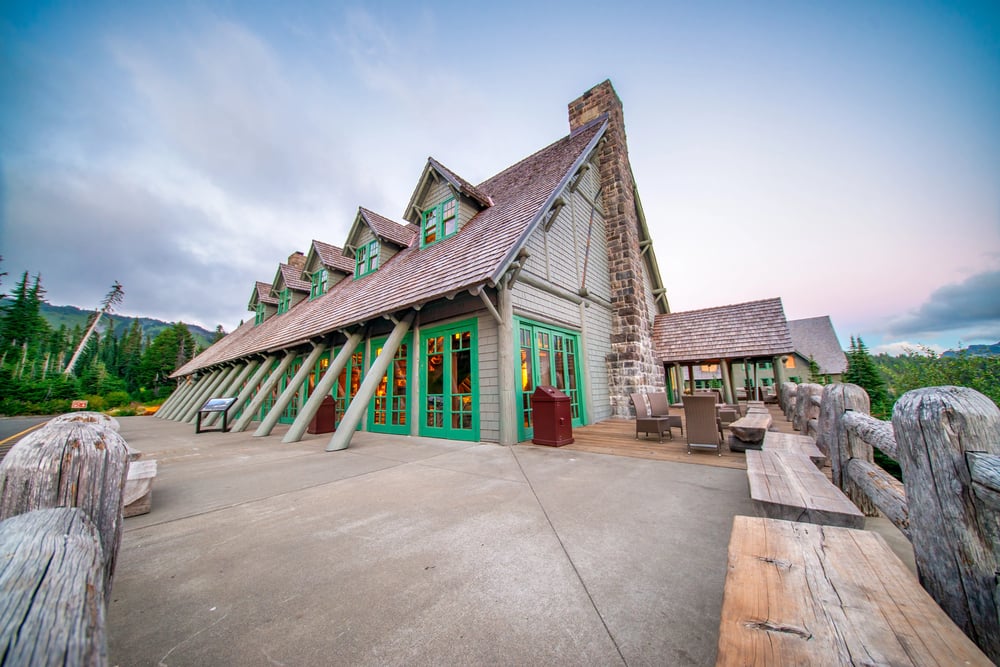
Like a tree that grows crooked because of persistent wind, Paradise Inn has developed its own particular character after nearly a century of Mount Rainier weather. Built in 1916, the lodge started as a summer-only operation and has never pretended to be anything fancier than necessary — which, given its location at 5,400 feet on the south slope of an active volcano, shows admirable self-awareness.
The massive stone fireplace anchors the main lobby, but it’s the smaller details that reveal the lodge’s age and persistence: floors worn smooth by decades of hiking boots, windows that frame the same mountain views that drew the first guests, and a dining room that still serves the kind of straightforward food that makes sense after a day in the alpine air.
And the cedar-shake exterior that has darkened and weathered until the building looks like it belongs exactly where it is.
Many Glacier Hotel, Montana

Glacier National Park doesn’t compromise, and Many Glacier Hotel, built in 1915, learned early not to ask it to.
The lodge sits on the shore of Swiftcurrent Lake looking directly at Mount Gould and Grinnell Point.
The views are the kind that make people forgive almost any accommodation shortcoming, which is convenient because the hotel has always been more about location than luxury.
The original Swiss chalet design has held up well, probably because it was designed for mountain conditions in the first place.
Old Faithful Inn, Wyoming

Old Faithful Inn proves that sometimes the most obvious solution is also the most enduring one. Built in 1904 from local logs and stone, the lodge positioned itself within view of Yellowstone’s most reliable geyser and then designed everything around that singular fact.
The result is a building that works because it never tried to be anything other than what the location demanded.
The massive log structure rises seven stories, with a central lobby dominated by a stone fireplace that burns logs the size of telephone poles.
The inn’s survival through more than a century of Wyoming winters and Yellowstone’s seismic activity suggests that building with local materials and respecting the landscape isn’t just aesthetically pleasing — it’s practical.
Even the original dining room still operates, serving food to guests who come for the same reason people came in 1904: to witness something reliable in a landscape that usually isn’t.
El Tovar Hotel, Arizona

The Grand Canyon presents a particular challenge to lodge builders: how do you create accommodations worthy of one of the world’s most dramatic landscapes without competing with it? El Tovar Hotel, opened in 1905, solved this by building something substantial enough to feel permanent but restrained enough to avoid upstaging the main attraction.
The lodge’s stone and timber construction echoes the canyon’s natural colors, and its position on the South Rim means every window offers views that have been stopping conversations for over a century.
But what makes El Tovar remarkable isn’t just its location — it’s the way the building has aged into the landscape, weathering and settling until it feels like part of the rim itself.
Ahwahnee Hotel, California

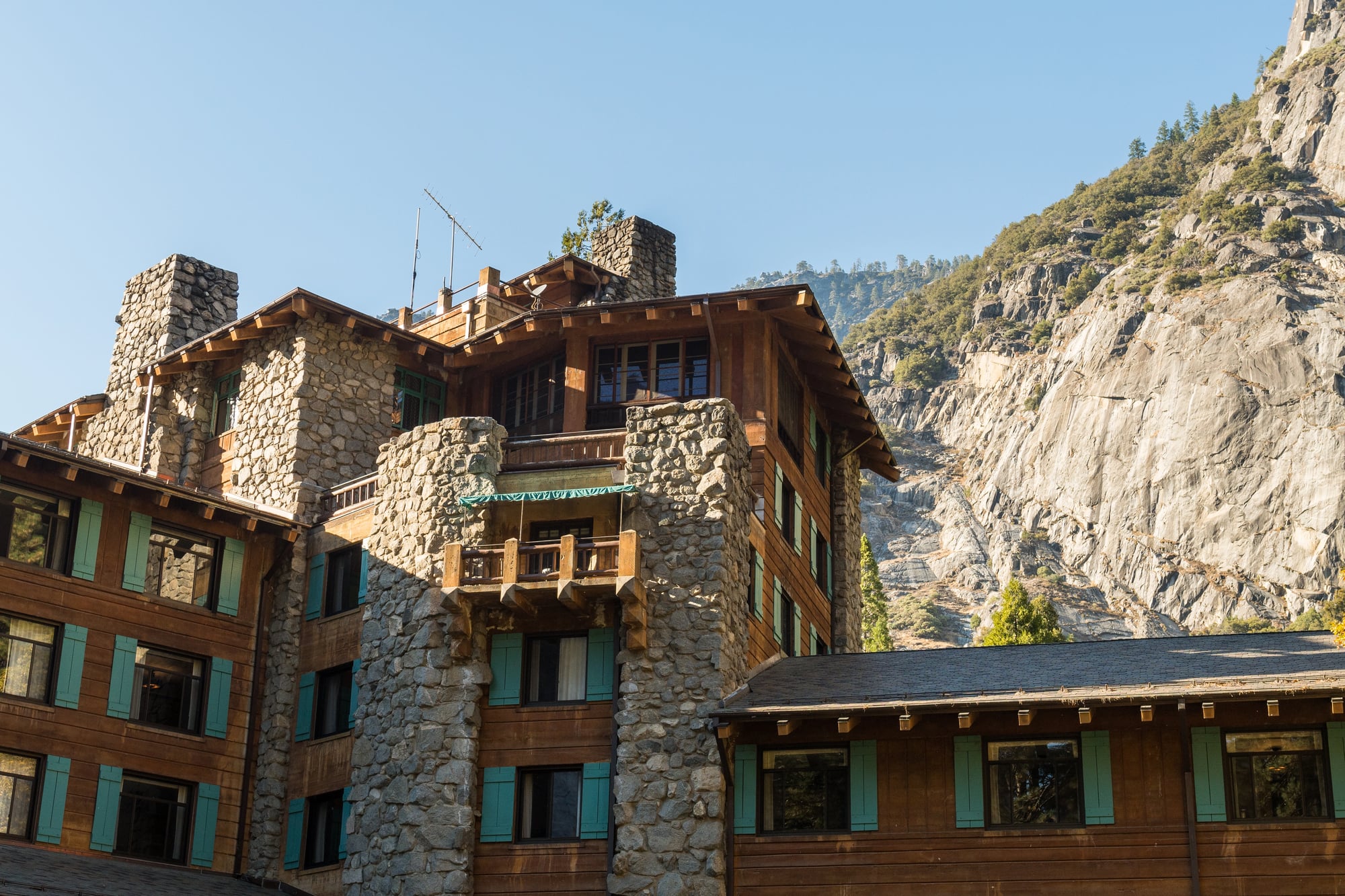
Some buildings announce themselves loudly, and others — like the Ahwahnee Hotel in Yosemite Valley — let their surroundings do the talking. Built in 1927 from granite, concrete, and timber, the lodge was designed to complement rather than compete with the valley’s overwhelming natural drama.
The Ahwahnee succeeded by understanding something fundamental about mountain hospitality: guests come for what’s outside, not what’s inside.
So the hotel focused on creating spaces that frame and enhance the valley views rather than distract from them.
The great lounge’s floor-to-ceiling windows open onto El Capitan and Glacier Point, and the dining room’s massive stone fireplace creates a gathering place that makes sense in a building surrounded by granite walls and waterfalls.
Mohonk Mountain House, New York
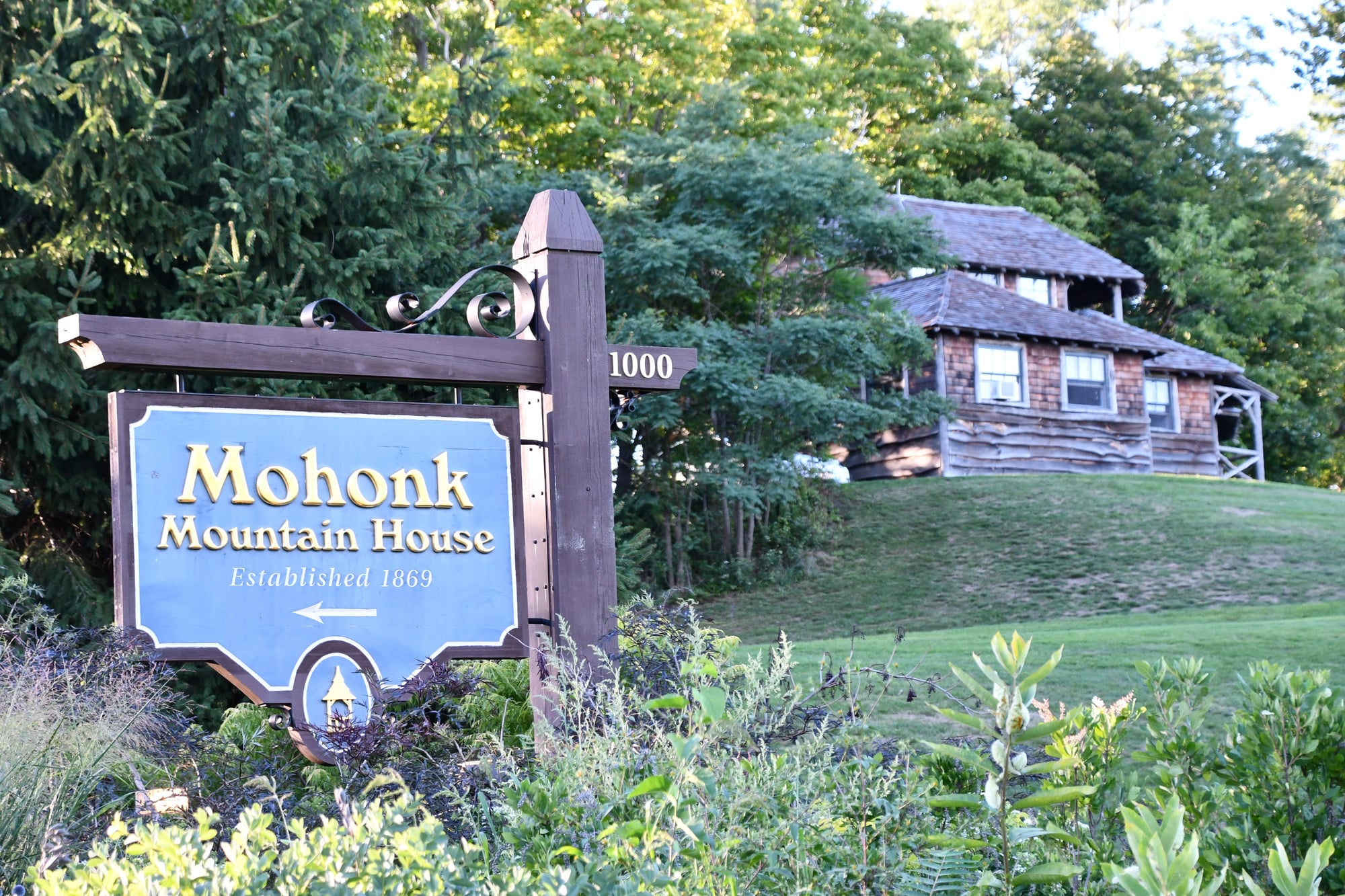
Mohonk Mountain House has been operating continuously since 1869, which makes it either remarkably persistent or remarkably stubborn — and in the lodge business, those qualities are often indistinguishable.
Built on a glacial lake in New York’s Shawangunk Mountains, the Victorian castle-style lodge expanded organically over decades until it became the sprawling complex that exists today.
The result is a building that grew with its own success, adding towers and wings and porches until the architecture itself tells the story of more than 150 years of mountain hospitality.
Which explains why navigating the lodge’s corridors feels like exploring a small town rather than a single building.
Skoki Lodge, Alberta

Skoki Lodge exists because someone decided in 1930 that cross-country skiing eleven kilometers into the Canadian Rockies to reach a remote cabin sounded like a good time. That person was either crazy or visionary, and the lodge’s continued operation suggests the distinction doesn’t matter much in the mountains.
Built as a ski lodge when downhill skiing was still a novelty, Skoki carved out its niche by offering access to backcountry terrain that couldn’t be reached any other way.
The original log construction has weathered nine decades of Alberta winters, and the lack of road access means the lodge still operates much the way it did in 1930: guests ski or hike in, stay as long as they can, and leave with stories about a place that feels genuinely remote.
Hotel Villa Honegg, Switzerland
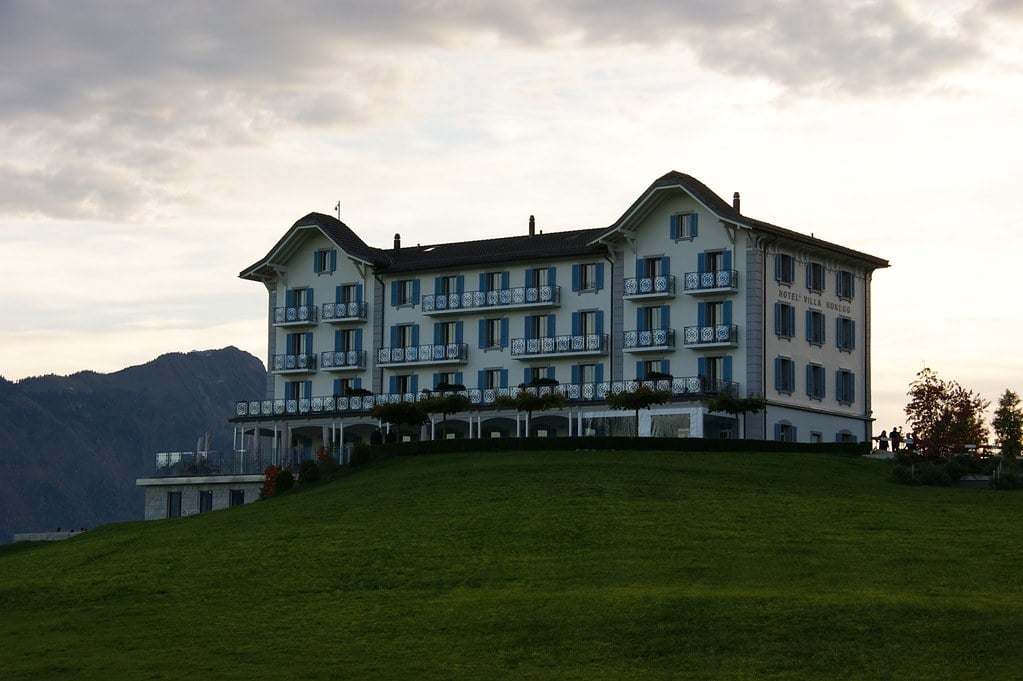
The Swiss have been building mountain lodges longer than almost anyone else, so when they construct something designed to last, it tends to prove the point. Hotel Villa Honegg, originally opened in 1905, overlooks Lake Lucerne from its perch on Mount Bürgenstock and has been welcoming guests who appreciate both mountain air and mountain views for well over a century.
The Belle Époque architecture reflects the era when Swiss mountain tourism was becoming an established industry, and the hotel’s survival through two world wars and numerous economic upheavals demonstrates the enduring appeal of places that offer what cities cannot: genuine quiet, clean air, and views that stretch beyond the next building.
The recent renovation preserved the historical character while updating the infrastructure, which is exactly what you’d expect from a country that has turned mountain hospitality into an art form.
Where Stories Sleep
These lodges share more than just age and elevation. They represent a particular kind of optimism — the belief that remote places deserve permanent structures, that mountain hospitality can be both rustic and refined, and that some views are worth the considerable trouble it takes to wake up to them regularly.
Their survival suggests that whatever draws people to high places hasn’t changed much over the past century, even when everything else has.
Each lodge tells its own version of the same story: someone looked at a difficult location and decided it needed a place where travelers could find shelter, warmth, and maybe a decent meal.
That these buildings still stand, still welcome guests, and still serve that fundamental purpose says something encouraging about both human persistence and the enduring appeal of places where the horizon stretches beyond the parking lot.
More from Go2Tutors!

- The Romanov Crown Jewels and Their Tragic Fate
- 13 Historical Mysteries That Science Still Can’t Solve
- Famous Hoaxes That Fooled the World for Years
- 15 Child Stars with Tragic Adult Lives
- 16 Famous Jewelry Pieces in History
Like Go2Tutors’s content? Follow us on MSN.