Physics Laws That Rule Real Life
You use physics constantly without thinking about it. Walking, driving, cooking dinner—all of these activities follow the same laws that govern planets and galaxies.
Physics isn’t just abstract equations on a chalkboard. It’s the reason your coffee stays in the cup and your car stops at red lights.
Newton’s First Law: Inertia

Objects at rest stay at rest. Objects in motion stay in motion.
This law explains why you lurch forward when a car brakes suddenly. Your body wants to keep moving at the same speed the car was going.
Seatbelts exist because of inertia. Without something to stop you, you’d continue moving forward through the windshield.
The same principle applies when you’re standing on a bus. When the bus starts moving, you feel pulled backward because your body resists the change in motion.
Newton’s Second Law: Force and Acceleration
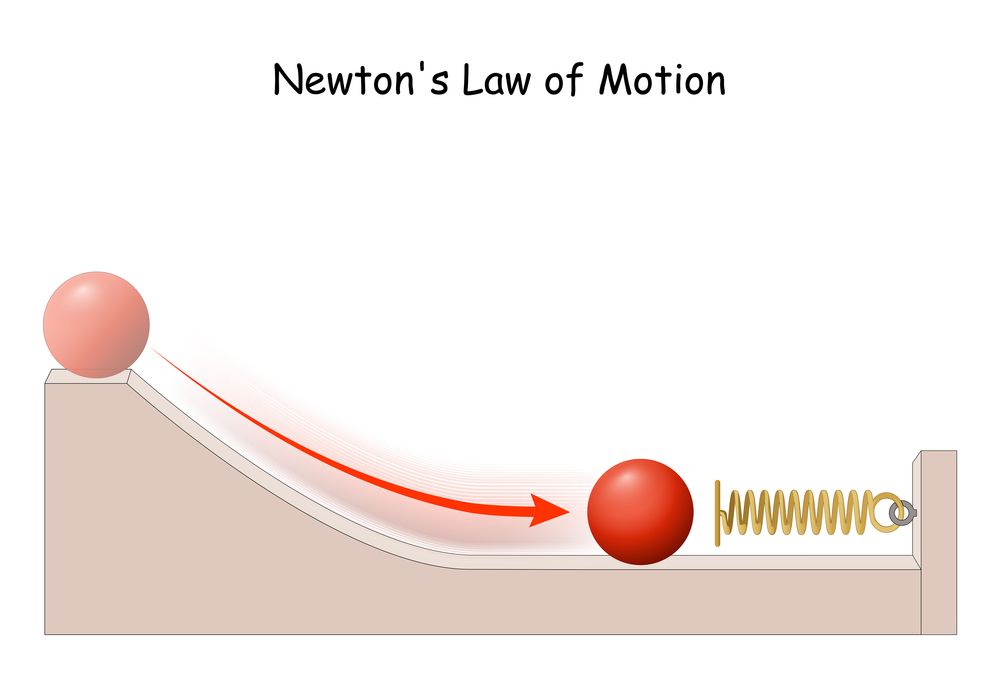
Force equals mass times acceleration. Push a shopping cart and it moves easily.
Push a car and it barely budges. The difference comes down to mass.
More mass requires more force to accelerate. This law determines how quickly things speed up or slow down.
A sports car accelerates faster than a loaded truck because the same engine force acts on less mass. Your bike stops faster than a motorcycle for the same reason—less mass means less force needed to change speed.
Newton’s Third Law: Action and Reaction
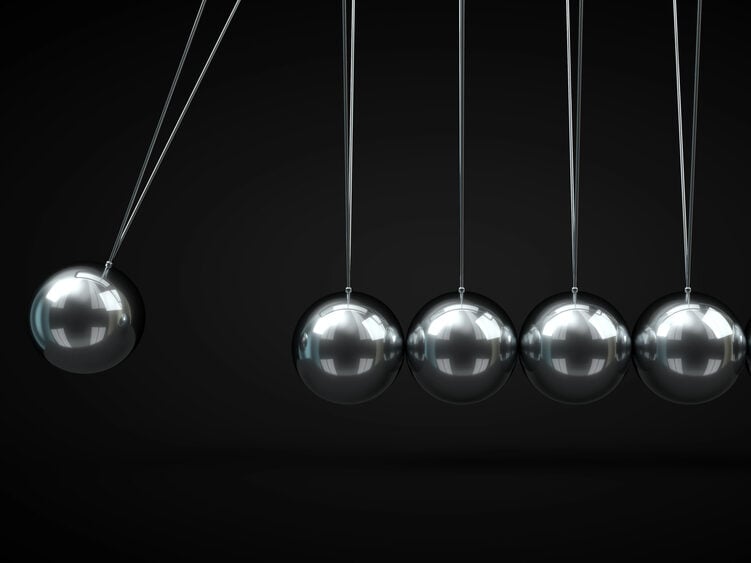
Every action has an equal and opposite reaction. When you walk, you push backward on the ground.
The ground pushes forward on you with equal force. That forward push moves you along.
Swimming works the same way. You push water backward, and the water pushes you forward.
Rockets use this principle too. They blast exhaust gases downward, and the gases push the rocket upward.
The harder you push in one direction, the harder you get pushed back in the opposite direction.
Gravity
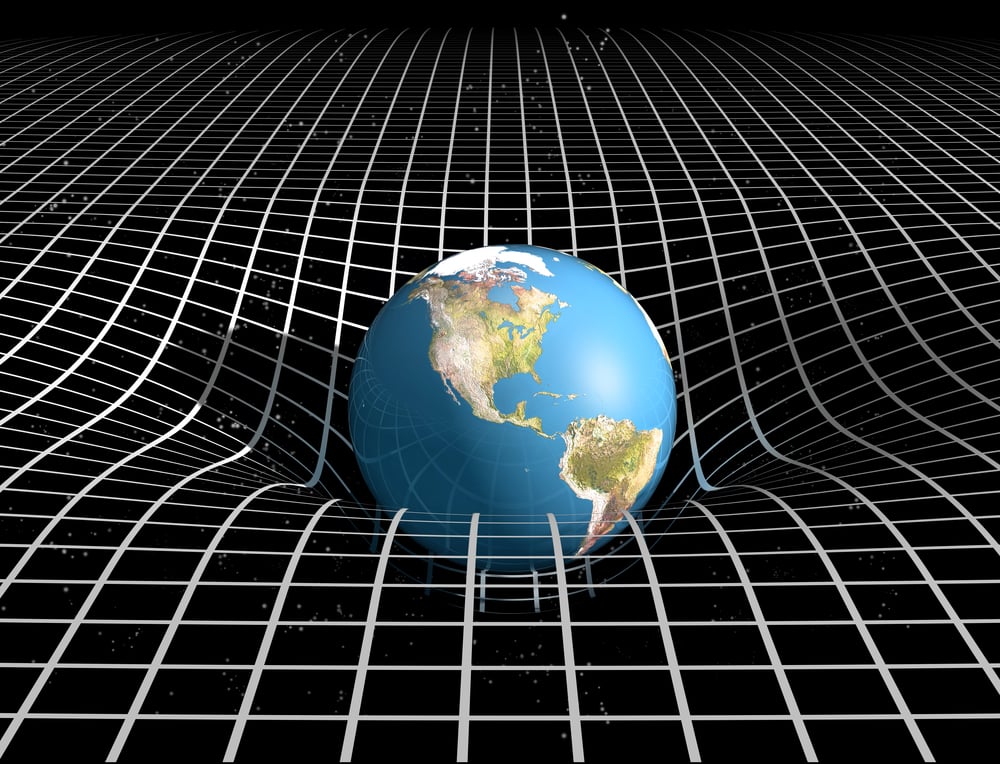
Everything with mass attracts everything else with mass. The Earth’s mass creates enough gravitational pull to keep you from floating away.
The Moon’s gravity causes ocean tides. The Sun’s gravity keeps planets in orbit.
Gravity accelerates all objects at the same rate regardless of their mass. A feather and a hammer fall at the same speed in a vacuum.
On Earth, air resistance makes the feather fall slower, but gravity pulls on both equally. That’s why objects feel heavier on Jupiter and lighter on the Moon—different masses create different gravitational forces.
Conservation of Energy

Energy cannot be created or destroyed, only transformed from one form to another. When you flip a light switch, electrical energy converts to light and heat.
When you eat food, chemical energy converts to kinetic energy for movement and thermal energy to maintain body temperature. Roller coasters demonstrate this law perfectly.
At the top of the first hill, the coaster has maximum potential energy. As it drops, that potential energy converts to kinetic energy—speed.
The total amount of energy stays constant, just changing forms.
Friction
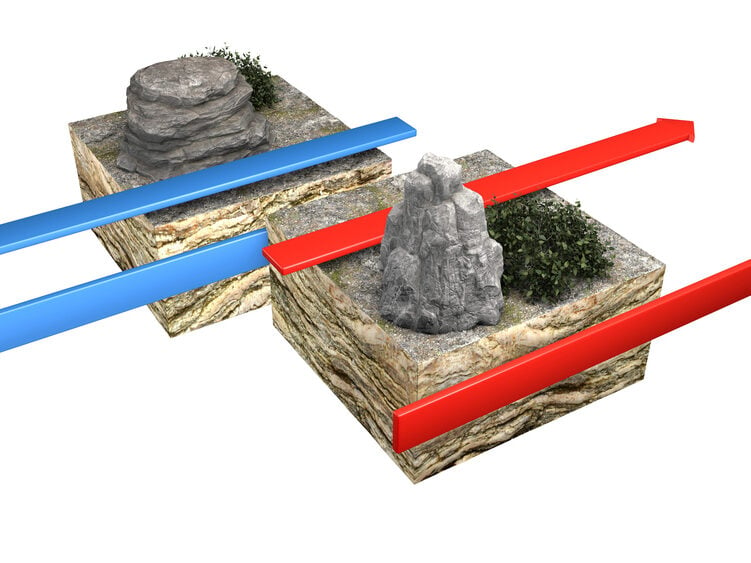
Surfaces in contact resist sliding past each other. Friction opposes motion, which sounds bad until you realize it’s what lets you walk.
Without friction between your shoes and the floor, you’d slip with every step. Friction also stops your car. Brake pads create friction against the wheels.
The rougher the surfaces, the more friction. That’s why ice is dangerous—it’s smooth, creating very little friction.
Your tires can’t grip, and your car slides.
Thermodynamics: Heat Flow
Heat flows from hot objects to cold objects, never the reverse. Put an ice cube in hot coffee and the coffee gets cooler while the ice melts.
The heat energy moves from the coffee to the ice until both reach the same temperature.
Your refrigerator works by removing heat from inside and releasing it outside. Air conditioners do the same thing.
They don’t create cold—they move heat from inside your house to outside. That’s why the back of your fridge feels warm.
Bernoulli’s Principle
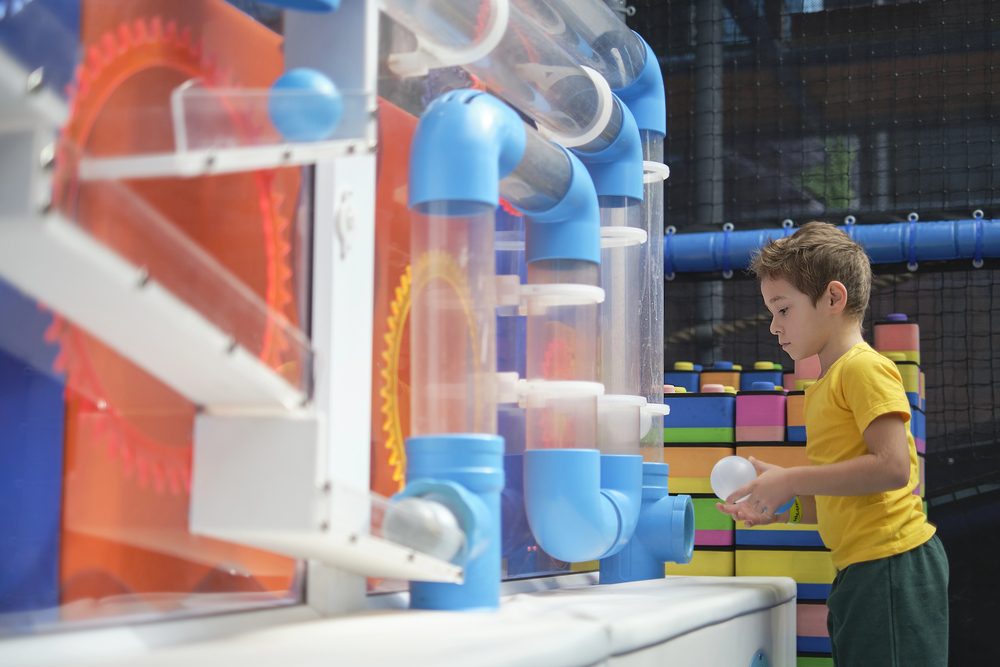
Faster-moving fluids create less pressure than slower-moving fluids. This principle explains how airplane wings generate lift.
Air moves faster over the curved top of the wing than under the flat bottom. The faster-moving air on top creates lower pressure, and the higher pressure underneath pushes the wing up.
You can test this yourself. Hold a piece of paper just below your mouth and blow across the top.
The paper lifts up because the fast-moving air creates low pressure above it while normal air pressure pushes from below.
Archimedes’ Principle
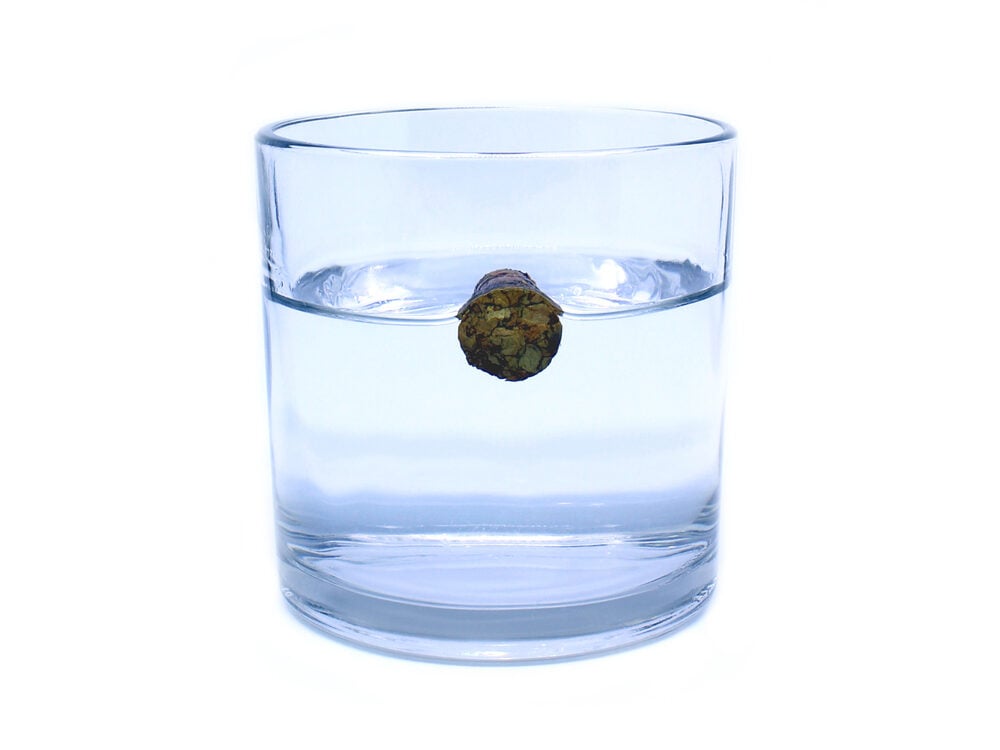
An object in water experiences an upward force equal to the weight of water it displaces. Heavy steel ships float because they displace enough water to create sufficient upward force.
The ship’s hollow design means it displaces more water than a solid steel block of the same weight. This principle determines whether you float or sink in a pool.
Your body is slightly less dense than water, so you float. When you fill your lungs with air, you become even less dense and float higher.
Exhale completely and you sink lower.
Doppler Effect
Wave frequency changes when the source moves relative to the observer. When an ambulance drives toward you, the siren sounds high-pitched.
As it passes and moves away, the pitch drops. The siren itself hasn’t changed—the motion compresses or stretches the sound waves.
Radar guns use the Doppler effect to measure car speeds. Police radar bounces waves off moving vehicles.
The frequency change in the reflected waves reveals how fast the car is traveling. Weather radar uses the same principle to track storm movement.
Centripetal Force
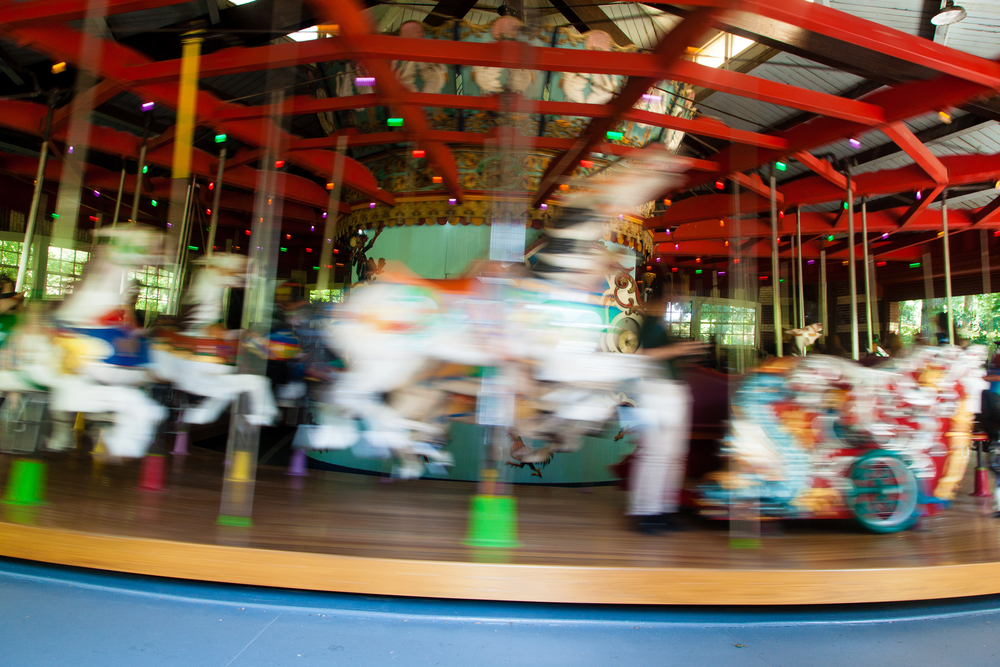
Objects moving in circles need a force pointing toward the center of the circle. When you swing a bucket of water in a circle over your head, the bucket pulls on the water, keeping it moving in a curve.
Stop pulling and the water flies off in a straight line. Cars turning corners need centripetal force too.
The friction between tires and road provides that force. Take a turn too fast and friction can’t provide enough force—the car slides outward in a straight line.
Banked curves help by angling the road so gravity contributes to the centripetal force.
Electromagnetism
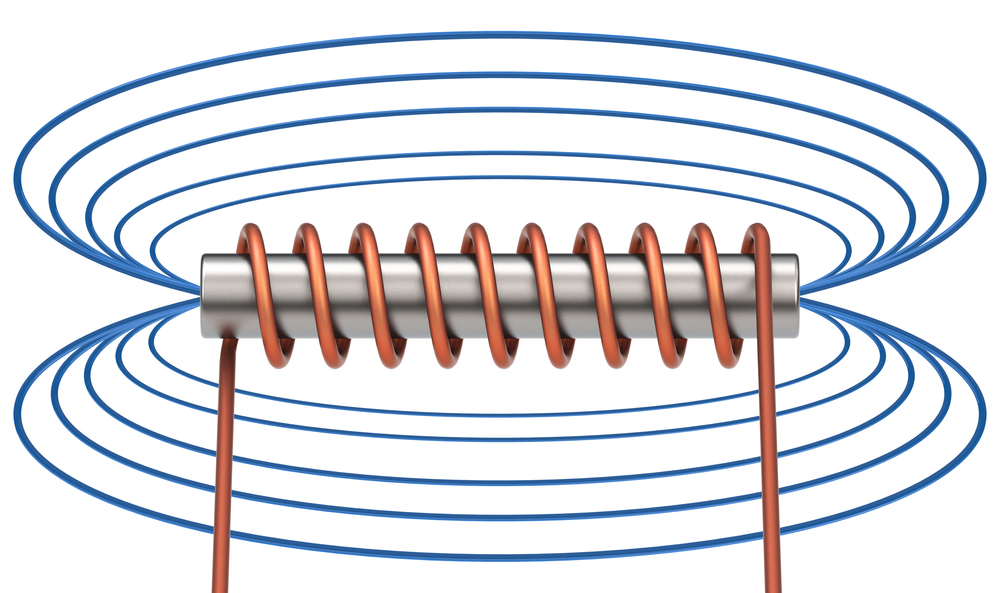
Moving electric charges create magnetic fields. Magnetic fields can induce electric currents. This relationship powers electric motors and generators.
The motor in your vacuum cleaner converts electrical energy to mechanical motion. The generator at a power plant does the reverse, converting mechanical motion to electricity.
Credit cards use magnetism too. The magnetic strip stores information in patterns of magnetized particles.
Your phone’s speaker and microphone both rely on electromagnetism—converting electrical signals to sound and back again.
Refraction

Light bends when it passes from one material to another at an angle. This bending happens because light travels at different speeds in different materials.
When light enters water from air, it slows down and changes direction. Eyeglasses work because of refraction.
The curved lenses bend light rays to focus them properly on your retina. A straw in a glass of water looks bent because light from the submerged part refracts as it leaves the water.
Your brain interprets the bent light as a bent straw.
Momentum

Momentum equals mass times velocity. Heavy objects moving fast have lots of momentum. Stopping them requires significant force over time.
That’s why cars have crumple zones—they extend the time it takes to stop during a crash, reducing the force on passengers. Momentum gets transferred between objects during collisions.
When a baseball bat hits an orb, the bat’s momentum transfers to the orb, sending it flying. The bat slows down slightly while the orb speeds up dramatically because the orb has much less mass.
Laws Written in Everything

Those physics rules work nonstop – whether you get ’em or not. No matter what, they handle every move your body makes.
Your mug sitting there follows just the same basics as far-off suns. You start seeing everyday stuff differently once you get this.
It’s not just about walking – every step pushes against the earth, thanks to Newton’s third law, meanwhile friction keeps your feet from sliding out. Riding a bike? That’s not random – it’s you managing rotational motion while gravity tugs at you constantly.
Everything works by set patterns, even when it seems like nothing special is happening around you. Physics doesn’t just live in labs.
Yet it shapes every object you feel, each thing you spot, all moments you go through.
More from Go2Tutors!

- The Romanov Crown Jewels and Their Tragic Fate
- 13 Historical Mysteries That Science Still Can’t Solve
- Famous Hoaxes That Fooled the World for Years
- 15 Child Stars with Tragic Adult Lives
- 16 Famous Jewelry Pieces in History
Like Go2Tutors’s content? Follow us on MSN.



