Playground Games That Would Be Banned Today
Remember when recess meant genuine risk? When the playground was less of a carefully engineered safety zone and more of a proving ground for childhood courage? According to the U.S. Consumer Product Safety Commission, which first published playground safety guidelines in 1981, those days are gone, swept away by updated safety standards and a fundamental shift in how we think about kids and danger.
The games and equipment that once defined childhood play have either disappeared entirely or been transformed into something almost unrecognizable. It’s not just nostalgia talking.
The playgrounds of the past were legitimately wild. Let’s take a closer look at what modern safety standards have left behind.
Dodgeball

The gym class classic has become ground zero in the debate over childhood resilience versus protection from harm. School districts in states such as Massachusetts, Maine, Maryland, New York, Virginia, Texas, and Utah began banning dodgeball and its variations at the district level starting in the early 2000s.
The reasoning is straightforward enough: throwing hard rubber projectiles at other kids, especially when the weaker players get eliminated first, looks a lot like institutionalized bullying when you actually think about it. SHAPE America, the largest membership organization of physical education teachers in the country, published a position statement in 2017 discouraging dodgeball in schools.
Still, the game has passionate defenders who argue it teaches teamwork, communication, and conflict resolution.When one New Hampshire school district banned it in 2013, the decision sparked such backlash that the board eventually reversed course.
The controversy hasn’t died down since. The lawsuits didn’t help dodgeball’s case either, with reported incidents including broken elbows and dental injuries from stray throws.
Even schools that still allow the game have switched to foam alternatives and imposed strict supervision rules, transforming it into something far gentler than the version most adults remember.
Red Rover

Few playground games better capture the ‘what were we thinking?’ spirit than Red Rover. Two lines of kids link arms and call someone over to try breaking through their human chain.
The person charging across the playground aims to snap apart the linked arms, while everyone else tries to stop them. Injuries were common.
The San Diego Unified School District reportedly paid fifteen thousand dollars in 2013 to settle a lawsuit after a seventh grader broke their leg during an unsupervised game.
The game has been banned or discouraged by many schools because of the risk of physical harm, a reputation it has carried for decades. The linked-arm chain creates obvious hazards, from dislocated shoulders to head injuries when kids slam into each other at full speed.
Some schools tried modified versions with gentler rules, but the core appeal of Red Rover was always its physicality.
British Bulldog

This tag-based game is characterized by its physicality, with players inevitably using force to stop others from crossing the field. According to a Play England survey from 2011, more than a quarter of teachers in England and Wales said British Bulldog had been banned at their schools.
The Australian version, sometimes called Pile-ons, was particularly brutal, with full tackling and multiple bulldogs piling onto runners who were already on the ground. The game’s rough nature resulted in numerous broken bones when it was popular in the 1970s and at least one spinal injury reported in the British Medical Journal in 1985.
A tragic incident in 2013 involving an eight-year-old child in Twickenham highlighted the risks of such high-contact play. Schools that still permit British Bulldog typically enforce non-contact versions where bulldogs simply tag runners instead of tackling them, but that defeats the entire point.
Metal Slides
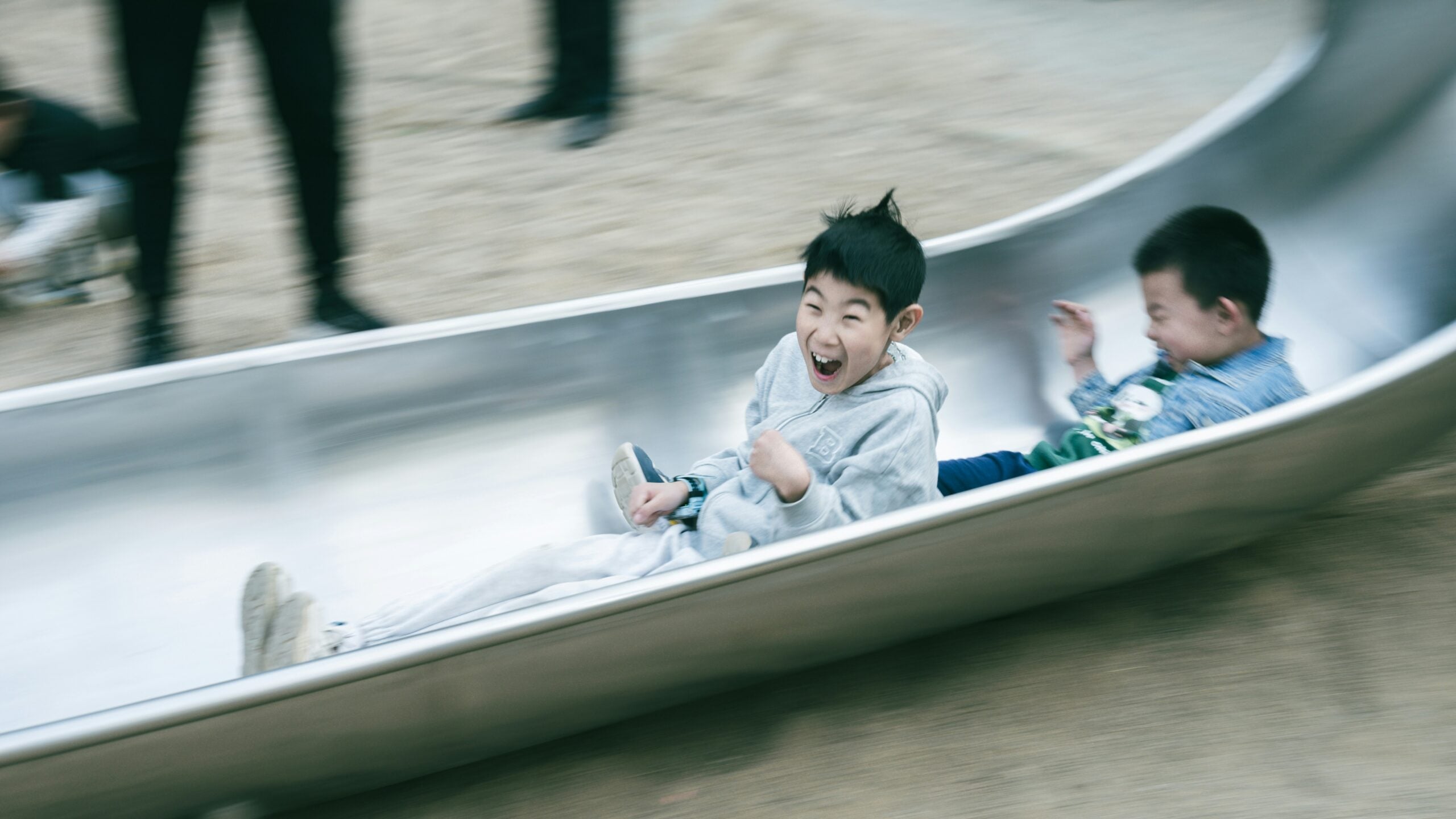
Anyone who grew up before the plastic era knows the specific torture of a metal slide on a summer day. These slides were sometimes as tall as thirty feet, completely metal, and designed to fulfill any child’s need for speed.
They got hot enough in the sun to cause burn injuries, and their heights made falls potentially catastrophic. The slides were narrow and easy to fall off, and the ladders leading up were hazardous because children could slip between the rungs onto concrete below.
The U.S. CPSC safety guidelines, which follow ASTM F1487 standards, now discourage tall metal slides due to burn and fall hazards. Today, most metal slides have been replaced with plastic versions or slides covered with heat-reducing paint.
The change makes sense from a safety perspective, but something got lost in translation. Modern slides sit much lower to the ground and offer far less of that stomach-dropping sensation.
Merry-Go-Rounds

While a few merry-go-rounds can still be found on older public playgrounds, most have been ripped out following lawsuits and safety concerns. The CPSC recommended phasing out fast-spinning versions in 1991 and replacing them with controlled-speed models.
These spinning platforms could reach dangerous speeds, especially when older kids decided to see exactly how fast they could push the thing. The slim metal handrails got blisteringly hot in summers, rust made them increasingly hazardous over time, and some vintage versions weighing 1,500 pounds could accommodate forty children at once.
The physics of merry-go-rounds meant that centrifugal force would eventually fling someone off, usually onto concrete or packed dirt. Kids would inevitably try to jump on or off while the platform was spinning, leading to crushed fingers, twisted ankles, and worse.
Modern inclusive play spinners are designed with speed limiters and soft surfacing, but they lack the wild momentum of their predecessors.
The Giant Stride

The giant stride, also called a maypole-style swing, might be the most notorious piece of playground equipment in history. This contraption featured a central pole with trapeze-like bars, chains, or ropes dangling from a wheel at the top.
Kids would grab on and run in circles, letting centrifugal force lift them off the ground as the wheel spun faster and faster. The National Recreation Association first called for their removal back in 1921.
After the death of a child in rural Pennsylvania in 1924, school boards began locking up the equipment or drawing danger zones around it. The CPSC has included giant strides on its list of inappropriate equipment since 1976.
Even those precautions couldn’t make the giant stride reasonably safe. Once the wheel built up speed, children had to hold on or get thrown clear.
Falls were inevitable, and by the 1970s, North American playgrounds had banned and destroyed virtually all of them.
The Tradeoff We Made
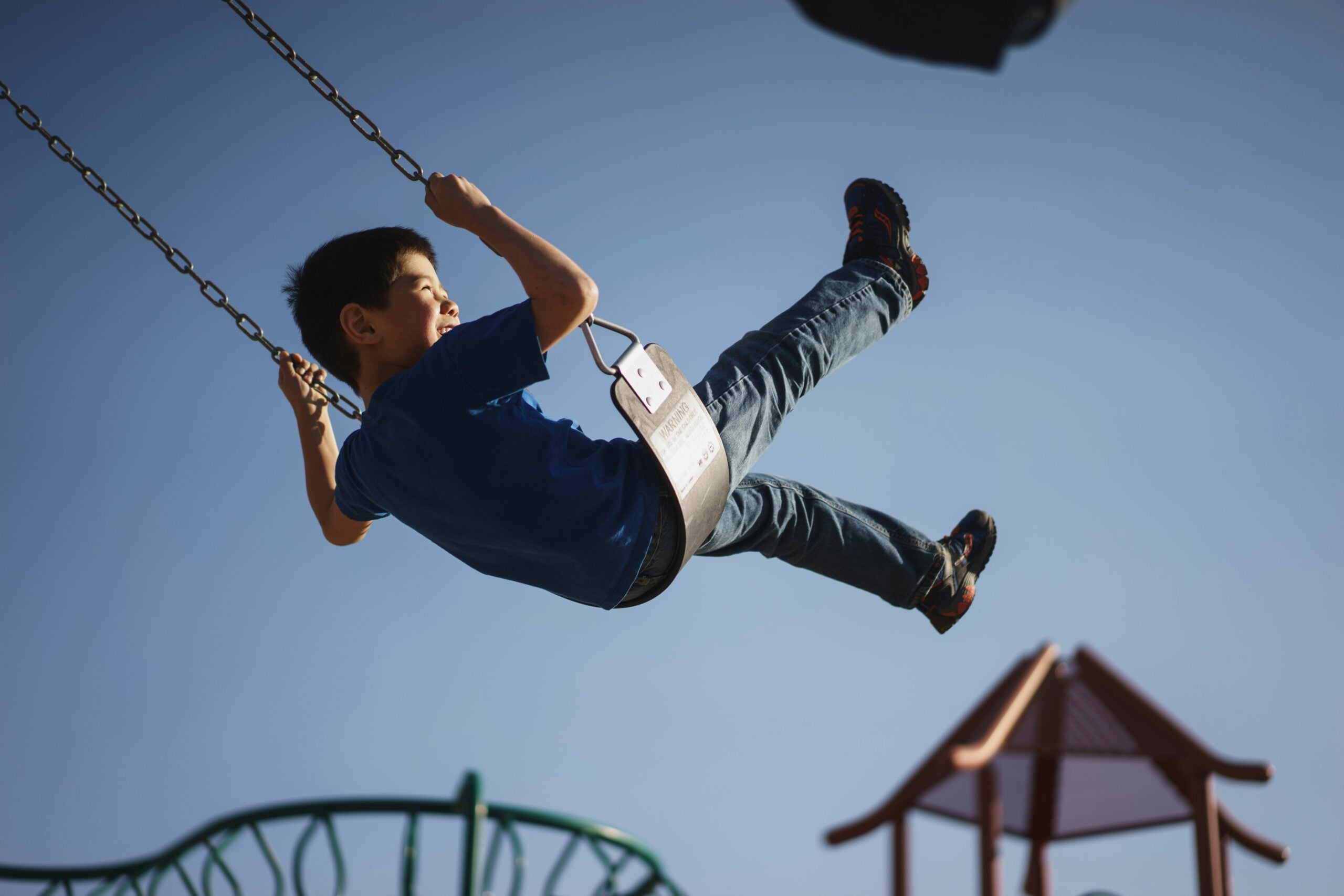
Modern playgrounds prioritize inclusion, accessibility, and above all, safety. Equipment sits lower to the ground, surfaces are softer, and supervision is stricter.
The CPSC estimates there are still over 190,000 emergency room-treated playground injuries annually, but the changes have demonstrably reduced serious injuries from equipment-related hazards. That’s objectively progress.
Even so, pediatric occupational therapist Angela Hanscom, author of Balanced and Barefoot, published in 2016, reports observing troubling trends. Teachers report declines in postural control and attention spans among students.
Hanscom notes that children appear weaker and their balance systems are significantly underdeveloped compared with previous generations. Some researchers suggest that removing challenging playground equipment has unintended consequences for child development.
The merry-go-rounds and tall swings provided vestibular input that helped develop spatial awareness and body sense. The playground equipment of the past was unquestionably dangerous by modern standards.
The question isn’t whether we should bring back thirty-foot metal slides. It’s whether we’ve swung too far in the opposite direction, creating spaces so safe they fail to prepare children for a world that will never be entirely risk-free.
The games and equipment might be gone, but the debate over what childhood should look like continues.
More from Go2Tutors!

- The Romanov Crown Jewels and Their Tragic Fate
- 13 Historical Mysteries That Science Still Can’t Solve
- Famous Hoaxes That Fooled the World for Years
- 15 Child Stars with Tragic Adult Lives
- 16 Famous Jewelry Pieces in History
Like Go2Tutors’s content? Follow us on MSN.