Priceless Libraries Lost to Fire
Some of the world’s greatest treasures weren’t made of gold or jewels—they were written on paper, carved in stone, and preserved on ancient scrolls.
Throughout history, libraries have served as repositories of human knowledge, collecting centuries of learning, discovery, and wisdom under one roof.
When fire sweeps through these institutions, it doesn’t just destroy buildings.
It erases irreplaceable pieces of civilization itself, taking with it manuscripts that can never be recovered and knowledge that vanishes like smoke.
Here’s a closer look at the libraries whose flames consumed not just books, but entire chapters of human history.
The Library of Alexandria
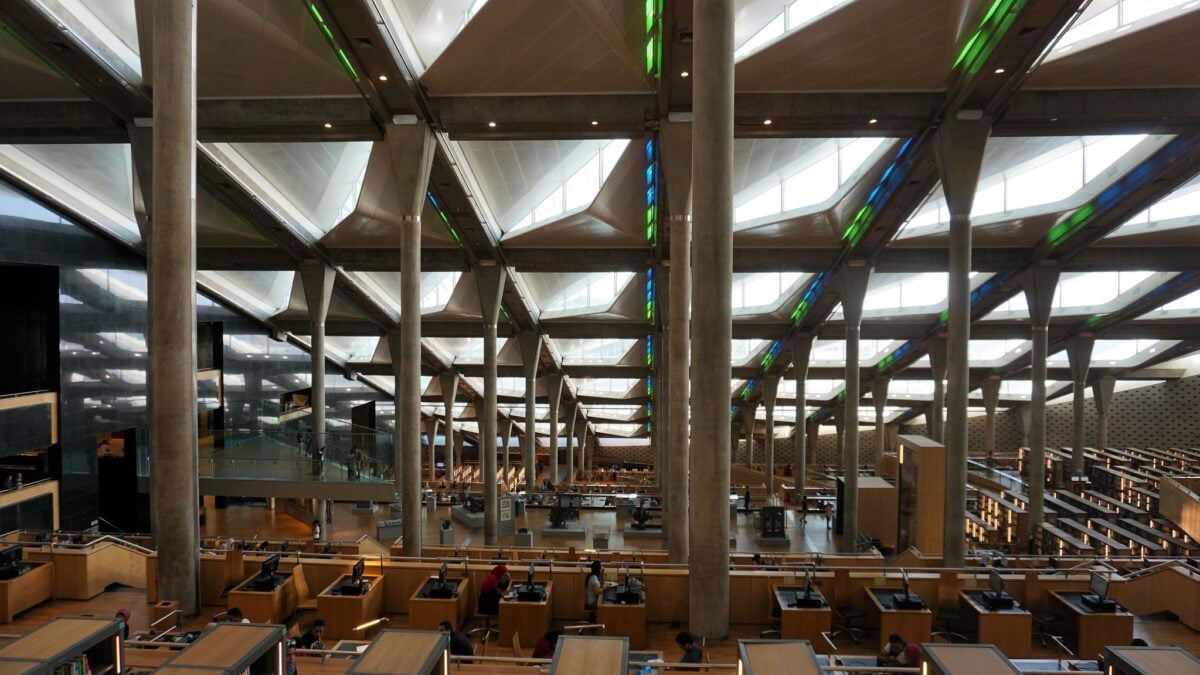
The Great Library of Alexandria in Egypt was one of the largest and most significant libraries of the ancient world, part of a larger research institution called the Mouseion, dedicated to the nine Muses of the arts.
The library quickly acquired many papyrus scrolls, and estimates range from 40,000 to 400,000 volumes at its height.
In 48 B.C., during a civil war in Egypt, Roman general Julius Caesar attempted to block the fleet of Ptolemy XIV by setting ships and wharves on fire, and the flames spread to the Mouseion.
Historical sources disagree on how much damage resulted—some early historians like Plutarch claim the entire library burned, while others suggest only 40,000 scrolls were destroyed.
The geographer Strabo visited the Mouseion around 20 BC, several decades after Caesar’s fire, indicating it either survived or was rebuilt, though it was nowhere near as prestigious as before.
A daughter library protected by the Serapeum survived until the 4th century, but when Christianity became the empire’s official religion, Emperor Theodosius sanctioned the demolition of temples in Alexandria in 391 CE.
The Library of Alexandria didn’t die in one dramatic blaze—it faded gradually over centuries, with each fire and attack taking another piece of the ancient world’s greatest collection.
Anna Amalia Library
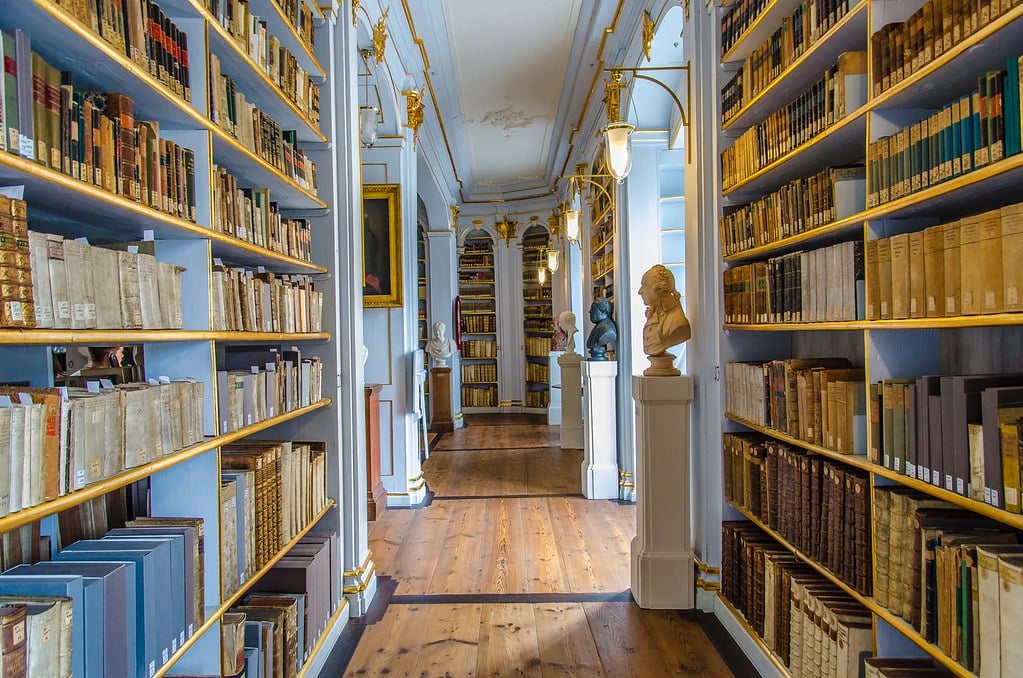
The Duchess Anna Amalia Library in Weimar, Germany, houses a major collection of German literature and historical documents, and was inscribed on the UNESCO World Heritage List as part of Classical Weimar.
One of the library’s most famous patrons was Johann Wolfgang von Goethe, who worked there from 1797 to 1832, and it includes the world’s largest Faust collection.
On September 2, 2004, the historic library was ravaged by a fire that investigators believe was sparked by equipment being used to test the building’s structural integrity, which overloaded a 1940s copper wire running through the edifice.
Fifty thousand books were lost to the flames, and another 118,000 were damaged by fire, water, smoke, and soot, with 12,500 volumes considered irreplaceable.
Among the losses were the world’s largest collection of Faust by Goethe, about 2,000 medieval manuscripts, and 8,400 historic maps, as well as important collections of early printed works and musical volumes.
Restoration work took years, with Germany establishing its first restoration workshop specifically for fire-damaged documents, and the library reopened in October 2007 after spending over 18 million dollars on reconstruction.
The recovery continues today—restorers are still working to salvage and reconstruct charred pages from what they call ‘ash books,’ a process that won’t be complete until 2028.
The Library of Congress

On Christmas Eve 1851, a devastating fire caused by a faulty chimney flue ripped through the Library of Congress in Washington, D.C., destroying about 35,000 volumes—roughly two-thirds of its 55,000-book collection.
Among the losses were two-thirds of Thomas Jefferson’s personal library, which he had sold to Congress in 1815 after the British burned the Capitol during the War of 1812.
Jefferson had offered to sell his library of between 9,000 and 10,000 volumes to Congress as a replacement for the 3,000-volume collection destroyed by the British.
Congress purchased Jefferson’s library for $23,950 in 1815, and the collection included books in French, Spanish, German, Latin, and Greek on subjects ranging from architecture to science, literature, philosophy, and geography.
The Union newspaper in Washington lamented that ‘the precious accumulations of more than 30 years have been reduced, in one short, melancholy hour, to a mass of black cinders.’
In preparation for the Library’s bicentennial in 2000, a worldwide search was launched to locate duplicate editions of Jefferson’s lost volumes, and over the following decade, more than 4,000 replacement copies were found.
The fire didn’t just destroy books—it erased the personal collection of one of America’s most intellectually curious founders.
Nalanda University Library
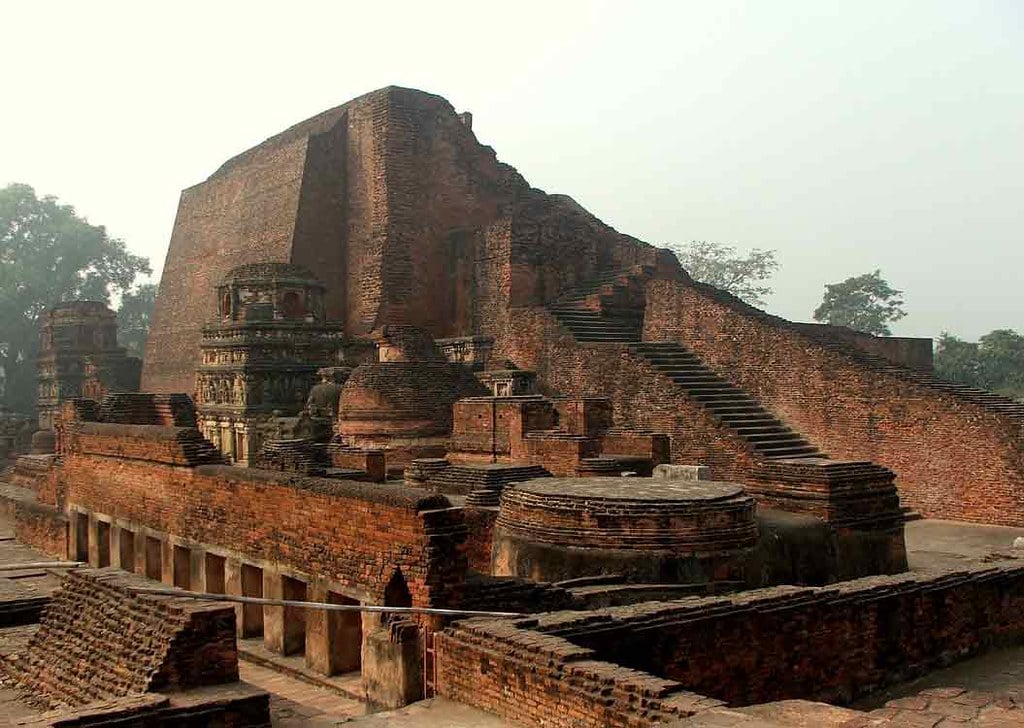
Nalanda was a renowned Buddhist monastery and university in ancient India that attracted thousands of students and scholars from across Asia, offering a diverse curriculum that included Buddhist scriptures, logic, grammar, medicine, mathematics, and astronomy.
The Mahavihara had a renowned library that was a key source for Sanskrit texts transmitted to East Asia by pilgrims.
In approximately 1193, the monastery was ransacked and destroyed by Turkish Muslim invaders under Bakhtiyar Khalji of the Delhi Sultanate.
Traditional sources report that the library at Nalanda was spread over three large multi-storied buildings, with one building having nine stories housing the most sacred manuscripts, and that the library burned for three months after invaders set fire to the buildings.
According to the biography of Tibetan monk-pilgrim Dharmasvamin, who visited the site around 1234—about 40 years after the destruction—he found it damaged and looted, with an elderly teacher instructing about 70 students among the ruins.
The destruction of Nalanda and other Buddhist universities led to thousands of monks fleeing to Tibet, Nepal, and Southeast Asia, and is considered responsible for the demise of ancient Indian scientific thought in mathematics, astronomy, and other fields.
While the exact number of manuscripts lost remains uncertain, the cultural and intellectual devastation was immeasurable.
Rome’s Palatine Libraries
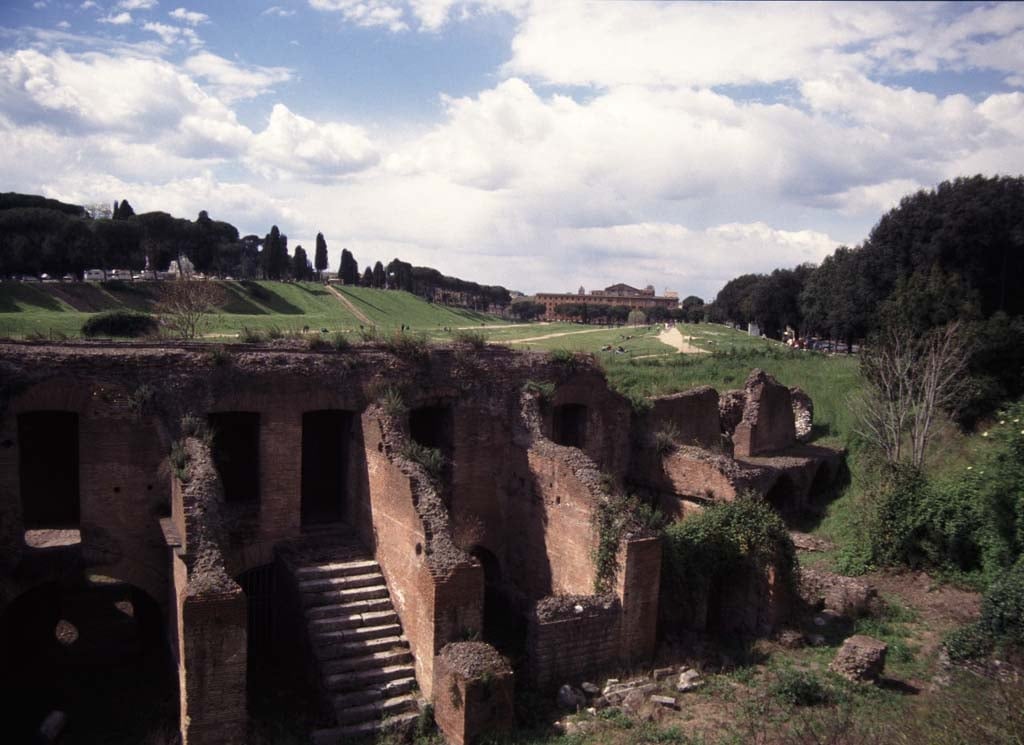
In 192 CE, a great fire tore through central Rome, destroying three public libraries located on the Palatine Hill.
The physician Galen, court physician to several Roman emperors, documented the tragedy in his work ‘On Consolation from Grief,’ written in the aftermath of the blaze.
A crucial function of imperial public libraries in ancient Rome was to safeguard authoritative versions of important texts in a world without printing presses or photography.
Unable to check books out, scholars would conduct research at the library or produce their own copies, and many rented nearby storage space for their personal books and research materials, making the streets full of scholars debating and booksellers hawking their wares.
Among the losses were rare texts that were permanently lost to the world, along with copies stored nearby when the fire swept through the scholarly neighborhood.
The fire of 192 CE destroyed not just books but the entire intellectual ecosystem that had grown around these libraries—the workspaces, the personal collections, and the community of learning itself.
What Burns Beyond the Pages

These library fires share a haunting pattern.
Each began with something mundane—a military tactic, a faulty wire, a bad chimney, the flames of conquest.
But what they destroyed was anything but ordinary.
When the Library of Alexandria burned, humanity lost works of ancient mathematics and philosophy that might have accelerated scientific progress by centuries.
When Anna Amalia’s collection went up in smoke, first editions of Shakespeare and Schiller vanished forever.
When Jefferson’s library burned, it took handwritten notes and rare volumes that represented decades of one man’s intellectual journey.
The tragedy isn’t just what we lost—it’s that we’ll never fully know what we lost.
How many medical breakthroughs were detailed in Nalanda’s Sanskrit texts?
What navigation secrets were recorded in Portugal’s Royal Library archives before the 1755 Lisbon earthquake?
Which philosophical arguments, recorded only once in Alexandria, might have changed the course of Western thought?
The smoke cleared centuries ago, but the gaps in human knowledge remain.
Modern technology offers some protection.
Digital archives, distributed copies, and fire suppression systems make catastrophic loss less likely.
Yet even with these safeguards, the fundamental vulnerability remains.
Paper burns.
Buildings collapse.
And when they do, they take with them not just information but context—the marginalia, the annotations, the physical evidence of how past minds engaged with ideas.
The Memory That Remains
The ruins of Nalanda still stand in Bihar, a reminder of what once was.
The Anna Amalia Library reopened with its restored Rococo hall, though visitors now see replacement volumes where originals once lived.
The Library of Congress launched a global search to rebuild Jefferson’s collection, book by book.
These efforts matter, but they’re approximations of what was lost—like trying to reconstruct a symphony from sheet music when you’ve never heard the original performance.
Perhaps that’s the real lesson of these fires.
Libraries aren’t just buildings full of books.
They’re physical manifestations of humanity’s collective memory, repositories of every question we’ve asked and every answer we’ve attempted.
When they burn, we lose more than knowledge—we lose the tangible connection to the minds that came before us.
The flames consume not just pages but the very threads that connect our present to our past, leaving us to wonder what wisdom went up in smoke, what insights we’ll have to rediscover on our own, and what we’ve lost forever without ever knowing it existed.
More from Go2Tutors!

- The Romanov Crown Jewels and Their Tragic Fate
- 13 Historical Mysteries That Science Still Can’t Solve
- Famous Hoaxes That Fooled the World for Years
- 15 Child Stars with Tragic Adult Lives
- 16 Famous Jewelry Pieces in History
Like Go2Tutors’s content? Follow us on MSN.