Priceless Statues Broken by Conquerors
There’s something particularly brutal about watching stone faces crumble. The careful chisel work of centuries, the patient craftsmanship that once captured power and reverence in marble and bronze—all reduced to rubble in moments of conquest and rage.
Throughout history, conquerors have understood that destroying art isn’t just about eliminating beauty; it’s about erasing the very soul of a civilization (and sometimes their own legacy in the process). The destruction of statues follows conquest like shadows follow light.
From ancient Mesopotamia to modern Syria, victorious armies and rising powers have wielded hammers and dynamite against the artistic achievements of their predecessors. What follows isn’t just a catalog of cultural vandalism, but a pattern that reveals something darker about human nature and the psychology of power.
King Sargon of Akkad
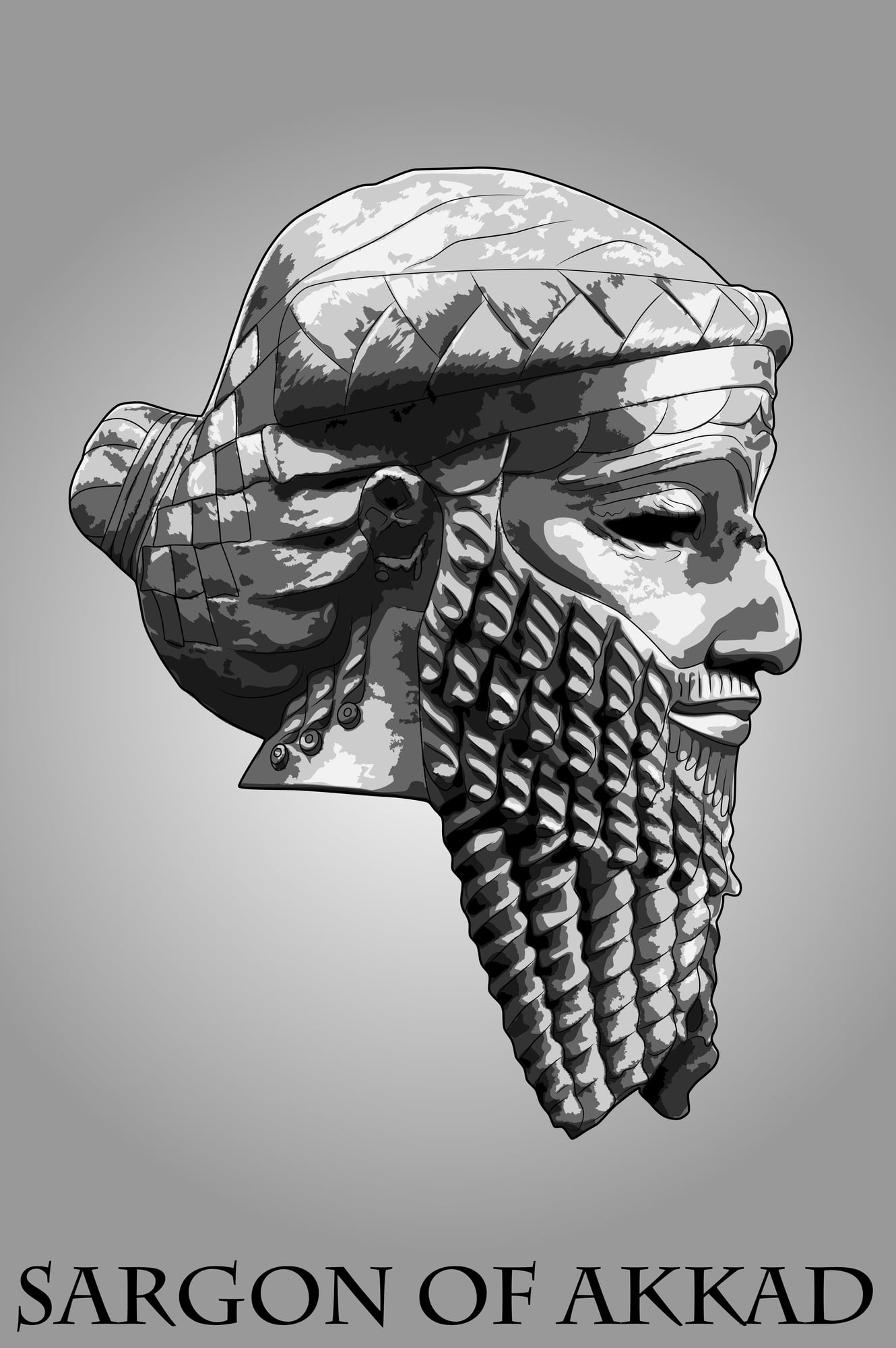
The bronze portrait of King Sargon of Akkad, known for conquering nearby Sumerian city-states, was later purposefully mutilated by Akkadians who cut off its ears, broke its nose and gouged out one of its eyes . This happened around 2300-2150 B.C., making it one of the earliest recorded instances of systematic statue destruction.
The irony cuts deep—the very people who likely created this magnificent bronze likeness later turned on it with deliberate savagery. The easiest way to “kill” a statue in ancient Egypt was to chop off its nose, so the statue would suffocate and die .
Ancient peoples believed statues could breathe, eat, and drink, just like living beings. Destroying the nose wasn’t vandalism—it was execution.
Queen Hatshepsut’s Monuments
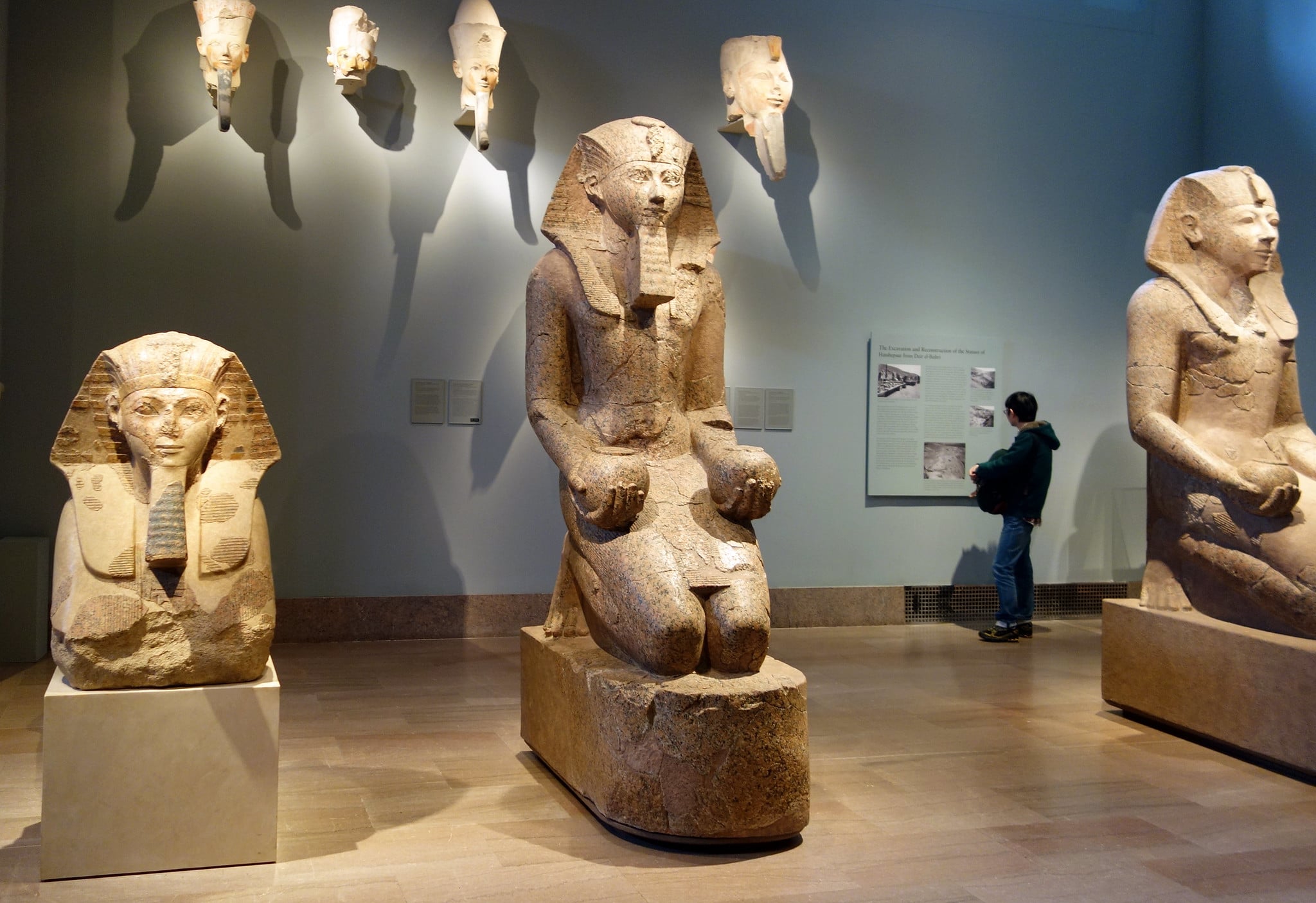
Thutmose III’s craftsmen were instructed in how best to annihilate these statues so they could break the link between Hatshepsut and the kingship, including removing images of Hatshepsut from monuments, reliefs, statues, and cartouches as well as omitting her name from the official list of Egyptian rulers . The systematic erasure began decades after her death, around the 15th century B.C.
Her successors weren’t content with simply removing her from power—they wanted to erase her from existence itself. Hatshepsut’s memory was targeted for erasure as stepmother of the succeeding pharaoh, in what may have been an attempt to legitimate the change in the line of succession .
The destruction was so thorough that modern archaeologists only began piecing together her remarkable reign in the 20th century.
The Colossus of Nero
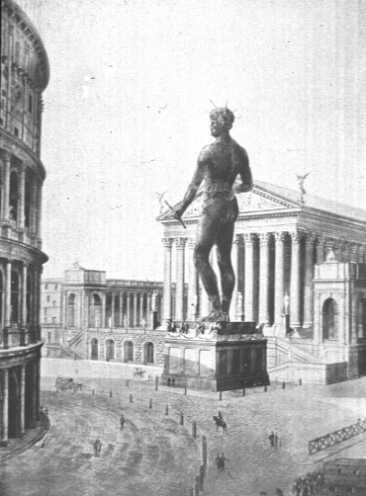
The gilded bronze statue, originally located in the vestibule of the Domus Aurea, depicted the Roman emperor in the guise of a god . Standing over 100 feet tall, this massive statue dominated the Roman landscape until it mysteriously vanished.
Some scholars hypothesize the destruction due to an earthquake that Rome suffered in the fifth century, while according to other theories the Colossus was melted down by Pope Gregory the Great, who could not stand the presence of a pagan God . The statue’s fate mirrors the empire’s transformation from pagan to Christian.
Where once Romans worshipped their emperors as living gods, later Christians saw these same representations as demonic abominations. The Colosseum itself got its name from this enormous statue that once stood nearby—a monument so imposing it gave its name to one of history’s most famous structures.
Ramesses II’s Fallen Giant
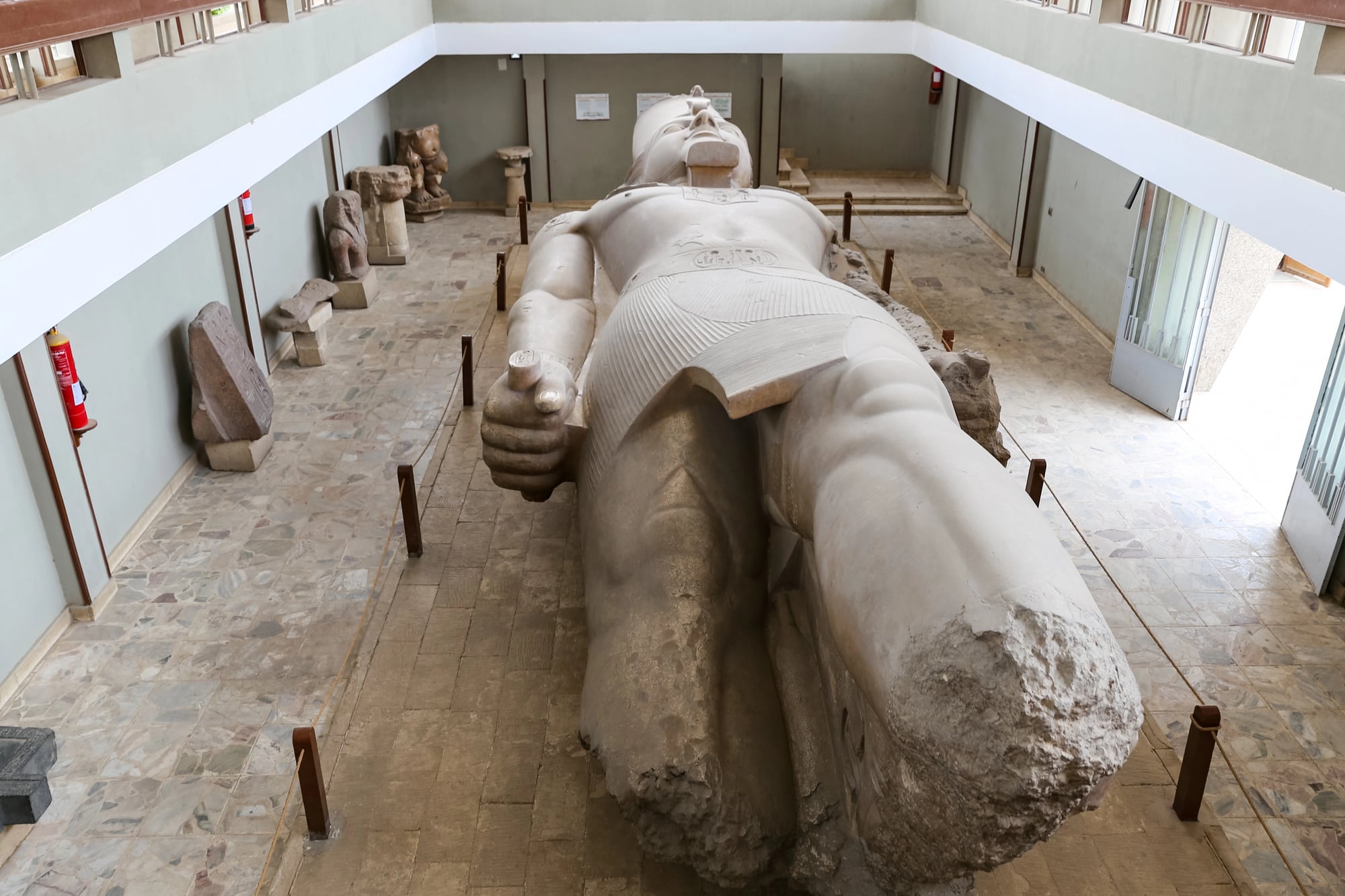
At an estimated 1,000 tons, it was one of the heaviest stones carved and transported in Egyptian history and one of the largest free-standing statues of the ancient world. Ramesses’ colossus was chiseled, toppled and defaced .
This colossal statue had been described as “the largest of any in Egypt … not merely for its size that this work merits approbation, but it is also marvellous by reason of its artistic quality.” The destruction came during the early Christian period when Emperor Theodosius pronounced an edict on pagan temples in 392 AD, ordering the demolition of heathen temples, and subsequently the Serapeum was destroyed .
The sight of this massive statue being systematically broken apart must have been both terrifying and exhilarating for those who witnessed it.
The Serapeum of Alexandria

The governor of Alexandria, and the commander-in-chief of the troops in Egypt, assisted Theophilus in demolishing the heathen temples . The destruction wasn’t a spontaneous mob action but an organized campaign backed by imperial authority.
Then he destroyed the Serapeum. The governor of Alexandria, and the commander-in-chief of the troops in Egypt, assisted Theophilus in demolishing the heathen temples.
These were therefore razed to the ground, and the images of their gods molten into pots and other convenient utensils for the use of the Alexandrian church . The practical reuse of divine statues as kitchen utensils represents one of history’s most dramatic religious reversals.
Gods that had been worshipped for millennia were literally melted down to make cooking pots. The symbolism was unmistakable: the old gods were now good for nothing more than serving meals.
Buddhist Temples Under Emperor Wuzong

During the systematic persecution of Buddhists in AD 845 by the Taoist Emperor Wuzong of Tang, more than 4,600 Buddhist temples were destroyed across the empire . Later, in 955, Emperor Shizong of the Later Zhou ordered the systematic destruction of Buddha statues for copper to mint coins, leading to the destruction of 3,336 of China’s 6,030 Buddhist temples .
The economic motivation here reveals something particularly cynical about statue destruction. These weren’t destroyed in religious fervor or political rage, but simply because the bronze was worth more as currency than as art.
The spiritual value of thousands of Buddhist statues counted for nothing against the practical need for metal to make money.
Marduk’s Statue in Babylon

The ancient city of Babylon was considered the city of the god Marduk, victor over the forces of chaos and creator of the universe, but in the year 689 B.C., during the destruction carried out by Sennacherib, the statue of the god was deported, an event considered by literature as a sacrilegious act . The deportation of Marduk’s statue wasn’t just theft—it was cosmic kidnapping.
Ancient Mesopotamians believed their city-gods resided physically in their statues. Removing Marduk from Babylon was like tearing the heart from the city itself.
But the city’s might was also its downfall when an unlikely alliance of the Babylonians, Medes, Persians, Chaldeans, Scythians, and Cimmerians sacked the city in 612 BCE .
Roman Damnatio Memoriae

If the Senate decided on “condemnation of memory” for an unpopular, unpalatable, or politically divisive emperor, all official monuments carrying his likeness would be destroyed . Government decrees known as damnatio memoriae would attempt to destroy visual depictions of emperors or public figures who were deemed unworthy of being part of the community: their names would be scratched out from inscriptions; their portraits reworked on frescos; and coins bearing their image would effaced .
The Romans perfected the art of systematic forgetting. Geta, the murdered younger brother of emperor Caracalla, was so systematically chiselled out of inscriptions that obviously reworked blocks of text are prominent hallmarks of epigraphy in Caracalla’s reign, while his portrait was erased with no particular attempt to disguise it .
The crude chiseling left obvious scars—a reminder that someone had been deliberately forgotten.
The Buddhas of Bamiyan
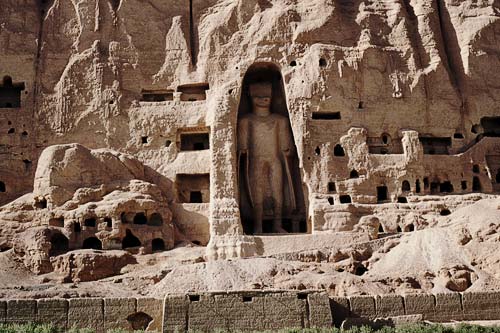
The Buddhas of Bamiyan in Afghanistan were two monumental statues of Gautama Buddha carved into the side of a cliff in the Bamyan valley. The smaller statue was built around 507 BC and stood approximately 125 feet.
The larger statue was built in 554 BC and stood approximately 174 feet. The statues stood for more than 1,500 years and were unfortunately destroyed by the Taliban in 2001 .
These structures were an important testament to the Gandharan school of Buddhist art in the Central Asian region until news of their destruction at the hands of the Taliban, using dynamite, over the course of several weeks reverberated around the world, in March 2001 . The destruction was broadcast globally, turning cultural annihilation into a media spectacle.
The Taliban knew exactly what they were doing—they wanted the world to watch.
Palmyra’s Temple of Bel

On 23 August 2015, it was reported that IS had blown up the 1st-century Temple of Baalshamin. On 30 August 2015, IS demolished the Temple of Bel with explosives.
Satellite imagery of the site taken shortly after showed almost nothing remained . Militants destroyed the Temple of Bel, the Temple of Baalshamin, the Arch of Triumph and part of a second century Roman theater—all major landmarks of the ancient city .
Among the many horrors committed by ISIS was the execution of 81-year-old Khaled al-Asaad, who was Palmyra’s director of antiquities. He was decapitated by ISIS and his body put on display after he reportedly refused to divulge where authorities had hidden some of the treasures .
His death represents the ultimate price of protecting art from destruction.
Lion of Al-lāt

On 27 June 2015, IS demolished the ancient Lion of Al-lāt statue in Palmyra. (It has since been restored, and is in storage in a Damascus museum until it can be determined that the statue can be safely returned to Palmyra.)
During its first occupation in 2015, militants destroyed the Al Lat Lion, a 2,000-year-old statue that once guarded an ancient temple dedicated to the pre-Islamic goddess Al Lat, and was a modern tourist favorite after its excavation in the 1970s . The restoration of this limestone lion took two months and required painstaking work to reassemble the fragments.
The restoration of the Lion of Al-lāt took two months and the statue was displayed on 1 October 2017; it will remain in the National Museum of Damascus . Sometimes, against all odds, the broken can be made whole again.
Nimrud’s Winged Bulls
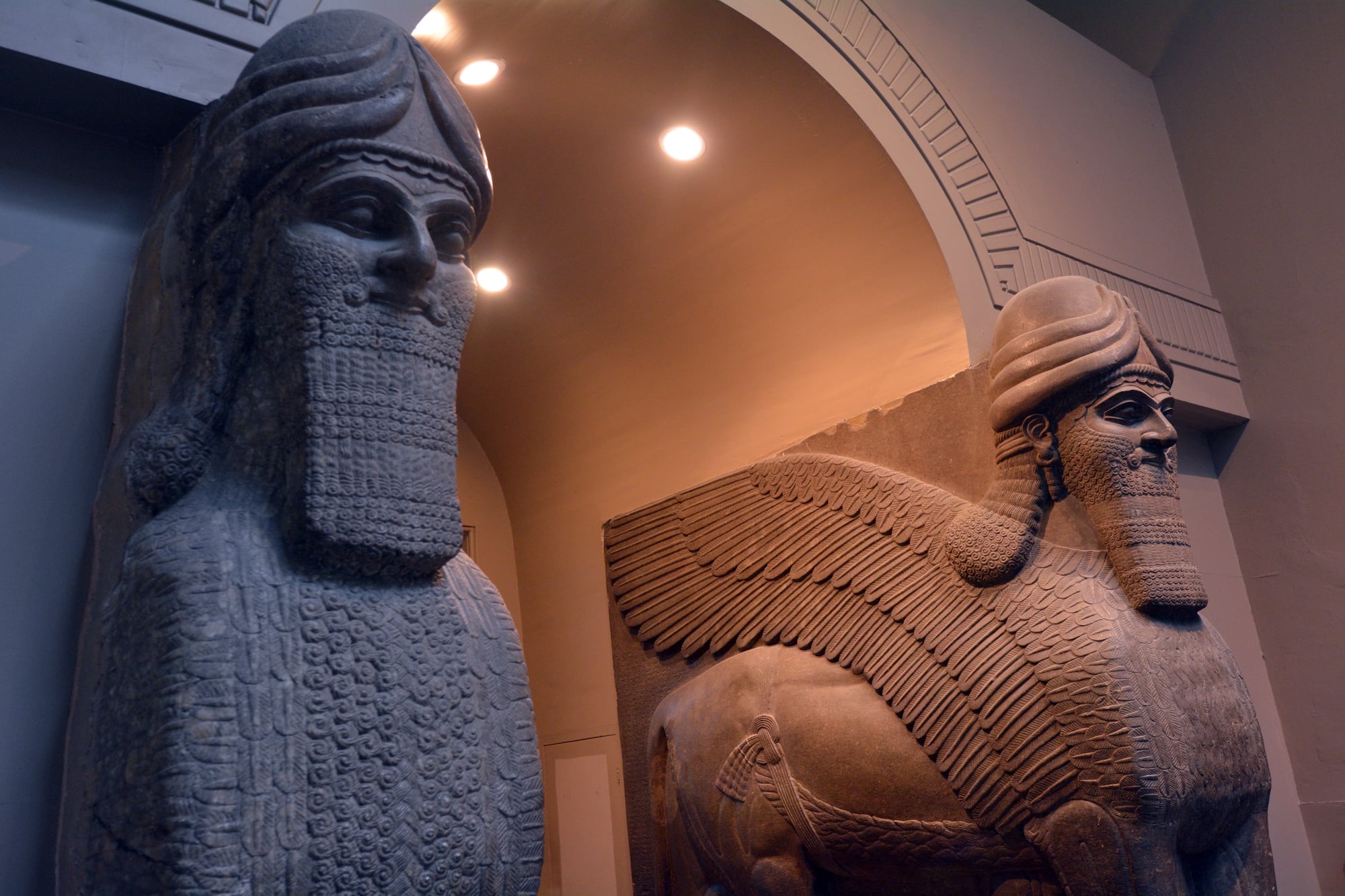
Nineveh’s most famous sculptures are the lamassu, the human-headed winged bulls that have guarded this ancient Mesopotamian city for over two millennia. In a video released by ISIS, the destruction of the lamassu at the Nergal Gate vividly shows their continuous campaign of cultural cleansing.
ISIS took sledgehammers and electric drills to the face and body of the ancient statues – ending more than 2,000 years of Lamassu’s mighty reign of protection over Nineveh . The methodical nature of the destruction was particularly chilling.
These weren’t acts of passion or spontaneous rage—they were calculated performances designed for maximum psychological impact. The drilling and hammering continued for hours, broadcast to horrify and demoralize anyone who valued the ancient world.
Notre-Dame’s Royal Gallery

In the devastation of Notre-Dame during the French Revolution, all precious metal objects were sent to the mint to be melted down and, from October 1793, all the statues on the facade, both those in the Gallery of the Kings and those on the portals, were destroyed as they were believed to represent the kings of France. These were later found during restoration work in the basement of the Banque Française du Commerce Extérieur in 1977, and are now on display at the Cluny Museum .
The revolutionary crowd’s mistake was revealing—they assumed the medieval kings of Judah depicted in the cathedral must be French royalty. In their fury to eliminate monarchical symbols, they beheaded biblical figures.
The heads lay buried under a Parisian bank for nearly two centuries, a fitting metaphor for how revolutionary fervor can literally bury history.
The Farnese Hercules
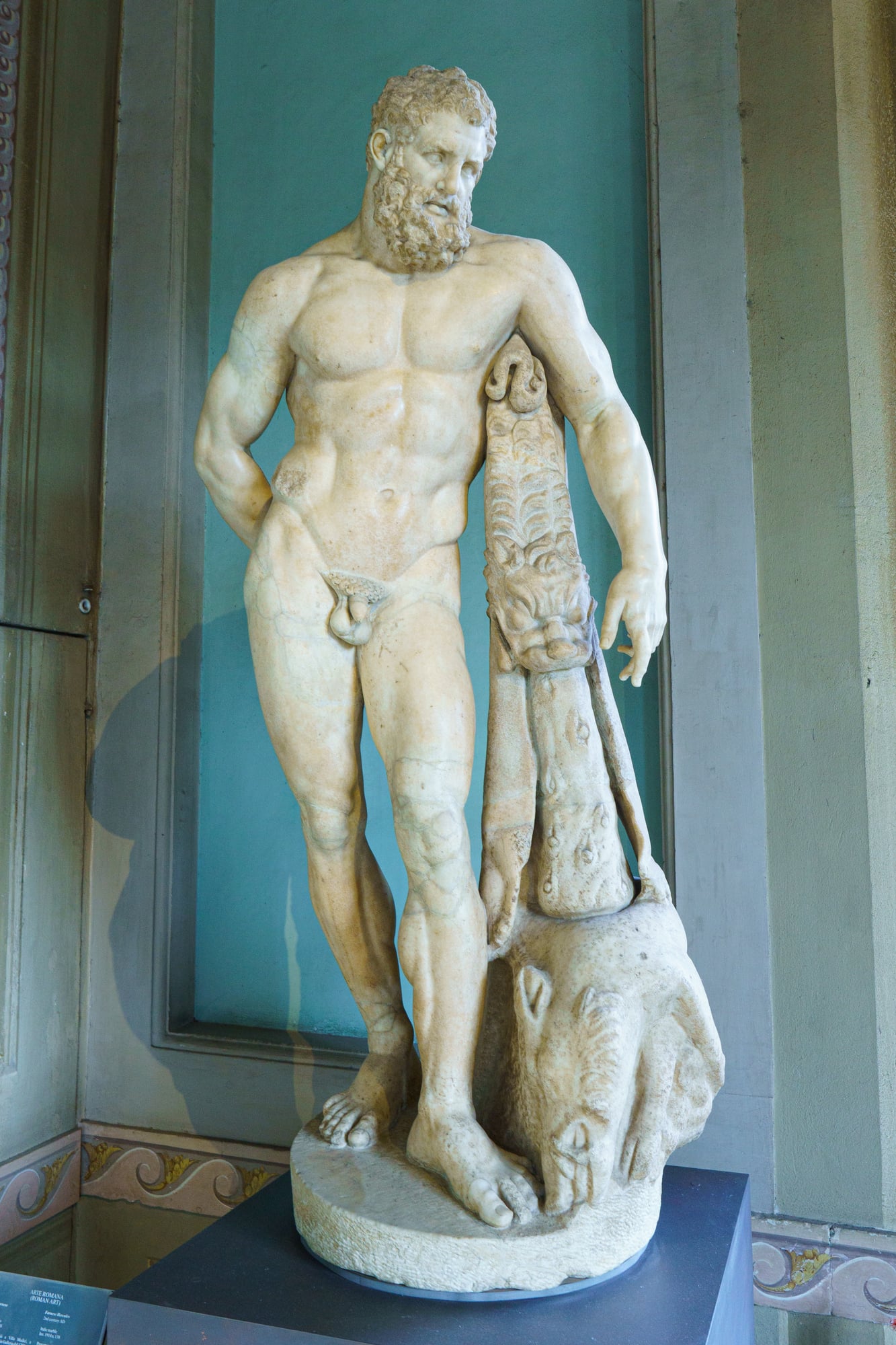
The Farnese Hercules, a Roman era marble copy of a lost bronze original by Lysippos. Its head was found in a well, its torso in the ruins of a bath, the legs 10 miles away .
This scattering tells its own story of systematic destruction and reuse. The statue wasn’t simply toppled—it was deliberately dismembered and its parts scattered across the landscape like a body after a violent crime.
The reconstruction of the Farnese Hercules required detective work that spanned centuries. Finding the head in a well suggests it was deliberately hidden or discarded, while the legs being found 10 miles away indicates the systematic stripping of valuable marble for construction projects.
Even in pieces, the statue’s power was so intimidating that it had to be completely dispersed.
Statues as Building Material

Ancient texts describe thousands of bronze statues in Greece and in Rome , yet almost none survive. None of their original portrait statues have survived.
All 1,500 statues created by Lysippos are lost. The marble Roman copies only offer an empty stare .
The systematic recycling of ancient art as construction material represents one of history’s greatest cultural losses. Muslims no longer understood what these monumental statues meant, so they reshaped them into building blocks for new construction .
The practical reuse wasn’t necessarily malicious—it was often simple economics. Why quarry new stone when perfectly good carved blocks were lying around unused?
The artistic and historical value was invisible to people who saw only useful building material.
The Pattern That Never Ends

The destruction continues today, but the motivations remain remarkably consistent across millennia. IS justifies the destruction of cultural heritage sites by its Salafism, which places “great importance on establishing tawhid (monotheism)” and “eliminating shirk (polytheism)”.
Thus there is an ideological underpinning to their destruction of historical and cultural heritage sites . Whether it’s Christian monks destroying pagan temples, revolutionaries toppling royal statues, or modern extremists dynamiting ancient monuments, the impulse remains the same: to erase the past in service of an ideological future.
Grabbing the world’s attention is easily done through the destruction of such sites, given the extensive media coverage and international condemnation that comes afterwards . Modern conquerors understand that destroying a priceless artifact generates more publicity than creating one ever could.
In our media-saturated age, destruction has become performance art of the most cynical kind. What strikes the observer across this long history is how the destroyers always believe they’re creating something better.
The early Christians thought they were freeing the world from demonic influences. The French revolutionaries believed they were eliminating symbols of oppression.
Modern extremists claim they’re purifying the world of idolatry. Yet the pattern suggests something different: the compulsive need to destroy beauty might reveal more about the destroyers than about their stated causes.
Perhaps some conquerors break statues not because the art is evil, but because it reminds them that civilizations far more sophisticated than their own once flourished—and might again, long after the destroyers themselves are forgotten.
More from Go2Tutors!

- The Romanov Crown Jewels and Their Tragic Fate
- 13 Historical Mysteries That Science Still Can’t Solve
- Famous Hoaxes That Fooled the World for Years
- 15 Child Stars with Tragic Adult Lives
- 16 Famous Jewelry Pieces in History
Like Go2Tutors’s content? Follow us on MSN.