Quarterbacks Who Never Won a Super Bowl
Winning a Super Bowl defines how most people measure quarterback greatness. It’s the ultimate team achievement that gets pinned on individual players, fair or not.
But some of the most talented quarterbacks to ever play the game retired without a ring. Their careers tell a different story about excellence—one where statistics, consistency, and respect from peers matter just as much as championship hardware.
These players changed how the position gets played. They set records that still stand.
They filled stadiums and captivated audiences for over a decade each. Yet the one thing that supposedly matters most always stayed just out of reach.
Dan Marino

Marino threw for 61,361 yards and 420 touchdowns across 17 seasons with the Miami Dolphins. Those numbers dominated the record books for years.
His quick release and ability to read defenses made him nearly impossible to stop during his prime. He reached the Super Bowl once, in just his second season.
The Dolphins lost to the 49ers 38-16. Marino never got back. Miami’s defense declined through the late 1980s and 1990s, and the team couldn’t build a complete roster around him.
He kept putting up massive passing numbers, but the supporting cast wasn’t strong enough to make another championship run. Marino retired in 1999.
By then, the narrative had already formed—great quarterback, no ring. But anyone who watched him play understood that he redefined what a pocket passer could accomplish.
Jim Kelly

Kelly went to four consecutive Super Bowls with the Buffalo Bills from 1990 to 1993. He lost all four.
That streak defines his legacy more than anything else he accomplished, which seems cruel given how rare it is to even reach one Super Bowl. The Bills ran a no-huddle offense that revolutionized how teams approached tempo.
Kelly orchestrated it perfectly, reading defenses at the line and making split-second adjustments. He threw for 35,467 yards and 237 touchdowns during his career.
Those are Hall of Fame numbers by any measure. But four straight losses create a narrative that’s hard to shake.
The Bills faced dominant teams each time—the Giants, Redskins twice, and the Cowboys. They came close in a few of those games.
Close doesn’t get you a ring.
Warren Moon

Moon spent six seasons in the Canadian Football League before joining the NFL at age 28. That late start cost him years of NFL statistics.
He still threw for 49,325 yards and 291 touchdowns across 17 NFL seasons. The Houston Oilers teams of the late 1980s and early 1990s had explosive offenses but couldn’t get past the divisional round.
Moon eventually moved to Minnesota, Seattle, and Kansas City, chasing a championship that never materialized. He made the playoffs ten times but never reached a Super Bowl.
His numbers would be even more impressive if you count his CFL stats. Moon threw for over 21,000 yards and 144 touchdowns in Canada.
Combined, he’s one of the most prolific passers in professional football history, just not in the one game that defines quarterbacks.
Dan Fouts

Fouts played 15 seasons with the San Diego Chargers, throwing for 43,040 yards and 254 touchdowns. He led the league in passing yards four straight years from 1979 to 1982.
The Chargers’ offense, nicknamed “Air Coryell” after head coach Don Coryell, changed how teams thought about the passing game. San Diego reached the AFC Championship Game twice but lost both times.
The 1981 game against Cincinnati happened in freezing temperatures that Fouts called “The Freezer Bowl.” The Chargers had built an offense for warm weather and couldn’t adjust to the conditions.
They lost 27-7. Fouts never got another chance.
The Chargers remained competitive through the mid-1980s but couldn’t break through. He retired in 1987 with a reputation as one of the greatest pure passers ever, but no championship.
Philip Rivers

Rivers played 17 seasons, throwing for 63,440 yards and 421 touchdowns. Only four quarterbacks have thrown for more yards.
Only five have thrown more touchdowns. Those numbers put him in elite company.
The Chargers teams of the mid-2000s had championship-caliber rosters. They went 14-2 in 2006 but lost in the divisional round.
They went 13-3 in 2009 and lost in the divisional round again. Rivers kept playing at a high level, but the team couldn’t capitalize on their windows of opportunity.
He finished his career with the Colts in 2020, one last attempt to chase a ring. It didn’t happen.
Rivers retired as one of the most consistently productive quarterbacks of his generation, recognized by peers as someone who played the position at an elite level. Just not a champion.
Fran Tarkenton

Tarkenton won three Super Bowls with the Minnesota Vikings in the 1970s. He lost all three by double digits.
The Vikings kept running into dynasties—the Dolphins in 1973, the Steelers in 1974, and the Raiders in 1976. He played 18 seasons and revolutionized quarterback mobility.
Before Tarkenton, quarterbacks stayed in the pocket. He scrambled, extended plays, and created opportunities that didn’t exist in the original play design.
That style became the foundation for how modern quarterbacks operate. Tarkenton retired with every major passing record—yards, touchdowns, completions.
Those records have since been broken, but his impact on how the position evolved remains significant. Three Super Bowl losses define his legacy in ways that seem unfair given everything else he accomplished.
Sonny Jurgensen
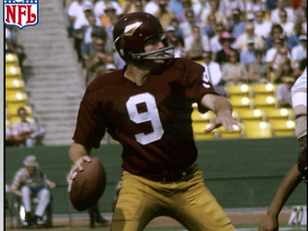
Jurgensen played 18 seasons and threw for 32,224 yards with 255 touchdowns. Those numbers dominated the 1960s and early 1970s.
He made five Pro Bowls and earned a reputation as one of the most accurate passers of his era. The problem was his team.
Jurgensen spent most of his career with bad Washington teams that couldn’t compete. He had one good season with the Eagles early in his career, but they didn’t make the playoffs.
By the time Washington built a competitive roster in the early 1970s, Jurgensen was past his prime and was backing up Billy Kilmer. He watched from the sideline as Washington made the Super Bowl in 1972.
They lost to the undefeated Dolphins. Jurgensen retired shortly after without ever getting his moment.
Boomer Esiason

Esiason threw for 37,920 yards and 247 touchdowns across 14 seasons. He won the MVP award in 1988 when he led the Cincinnati Bengals to the Super Bowl.
They lost to the 49ers in one of the most famous games ever played, with Joe Montana driving down the field in the final minutes for the winning touchdown. That was Esiason’s only Super Bowl appearance.
He played several more seasons with Cincinnati, then the Jets, and finally the Bengals again. The teams weren’t good enough to make another run.
He remained a solid starter but never recaptured that 1988 magic. Esiason transitioned to broadcasting after retirement and built a successful second career.
But that Super Bowl loss to Montana still comes up whenever people discuss his playing days.
Randall Cunningham

Cunningham played 16 seasons and threw for 29,979 yards with 207 touchdowns. But his rushing ability made him special—6,928 rushing yards and 35 rushing touchdowns.
He was the prototype for the dual-threat quarterback before that term existed. His best chance came in 1998 with the Minnesota Vikings.
That team went 15-1 in the regular season and had one of the most explosive offenses in NFL history. They lost in the NFC Championship Game to the Falcons after missing a field goal in overtime.
Cunningham never got that close again. He retired in 2001.
By then, younger quarterbacks like Michael Vick were taking the dual-threat concept even further. Cunningham pioneered the style but never won the championship that would have cemented his legacy.
Ken Anderson

Anderson spent 16 seasons with the Cincinnati Bengals, throwing for 32,838 yards and 197 touchdowns. He won the MVP award in 1981 and led the Bengals to the Super Bowl that same year.
They lost to the 49ers 26-21. Anderson remained the Bengals’ starter through the mid-1980s but the team couldn’t build another championship contender.
He was known for his accuracy and decision-making, consistently posting low interception numbers in an era when defenses could still maul receivers. His numbers don’t jump off the page compared to modern quarterbacks, but Anderson was extremely efficient for his time.
He just played for a franchise that couldn’t sustain success. One Super Bowl appearance, one loss, no second chances.
Matt Ryan

Ryan has thrown for over 61,000 yards and 381 touchdowns across his career. He won the MVP award in 2016 when the Falcons went to the Super Bowl.
They had a 28-3 lead in the third quarter against the Patriots. They lost 34-28 in overtime.
That collapse overshadows everything else Ryan accomplished. He continued playing at a high level for several more seasons, but the Falcons never built another roster capable of competing for a championship.
Ryan eventually moved to Indianapolis, then retired after the 2023 season. The 28-3 game defines his career in the worst possible way.
Most quarterbacks never reach a Super Bowl. Ryan got there, had a massive lead, and watched it slip away.
That might be harder to accept than never getting the chance at all.
Tony Romo

Romo threw for 34,183 yards and 248 touchdowns across 14 seasons with the Dallas Cowboys. He went undrafted, worked his way up from clipboard holder to franchise quarterback, and had several excellent seasons in the late 2000s and early 2010s.
The Cowboys made the playoffs four times with Romo as a starter. They won just two playoff games total.
His most famous moment is probably bobbling a hold on a field goal attempt in the 2006 playoffs, a mistake that cost Dallas a win. That play haunted him for years.
Romo retired after the 2016 season following a back injury. He transitioned to broadcasting and became one of the best NFL analysts on television.
But his playing career always comes back to what he didn’t win rather than what he accomplished.
The Weight of What’s Missing

Titles shape how we see QBs – sometimes way more than they should. A team’s got 53 guys, solid coaches, smart owners, plus breaks like health and when things click.
The QB influences wins more than anyone else on the field – but still doesn’t call every shot.
Dan Marino suiting up elsewhere could’ve meant several titles.
If Jim Kelly had faced weaker foes in those big games, maybe he would have taken home a trophy. Philip Rivers leading those strong Chargers squads – remember 14-2 and 13-3? He probably should’ve gone deeper.
Whether a top-tier QB gets a ring or not usually boils down to luck, timing, or team strength – not just skill. These players shifted how things were played. Yet they broke marks no one thought possible.
Because their actions drew admiration from anyone paying attention up close, true, the title eluded them – still, that gap can’t wipe out the rest. Greatness? Often it’s found in what you pulled off even without lifting that specific prize.
More from Go2Tutors!

- The Romanov Crown Jewels and Their Tragic Fate
- 13 Historical Mysteries That Science Still Can’t Solve
- Famous Hoaxes That Fooled the World for Years
- 15 Child Stars with Tragic Adult Lives
- 16 Famous Jewelry Pieces in History
Like Go2Tutors’s content? Follow us on MSN.



