Rare Natural Wonders Few Have Seen
Most people know about the Grand Canyon or Niagara Falls. Those places earned their fame for good reasons.
But the planet holds countless other spectacles that remain largely unknown, tucked away in corners where few travelers venture. Some require permits that limit daily visitors.
Others sit so far from conventional routes that getting there becomes part of the adventure. And a few stay hidden simply because nobody talks about them.
The Marble Caves of Patagonia
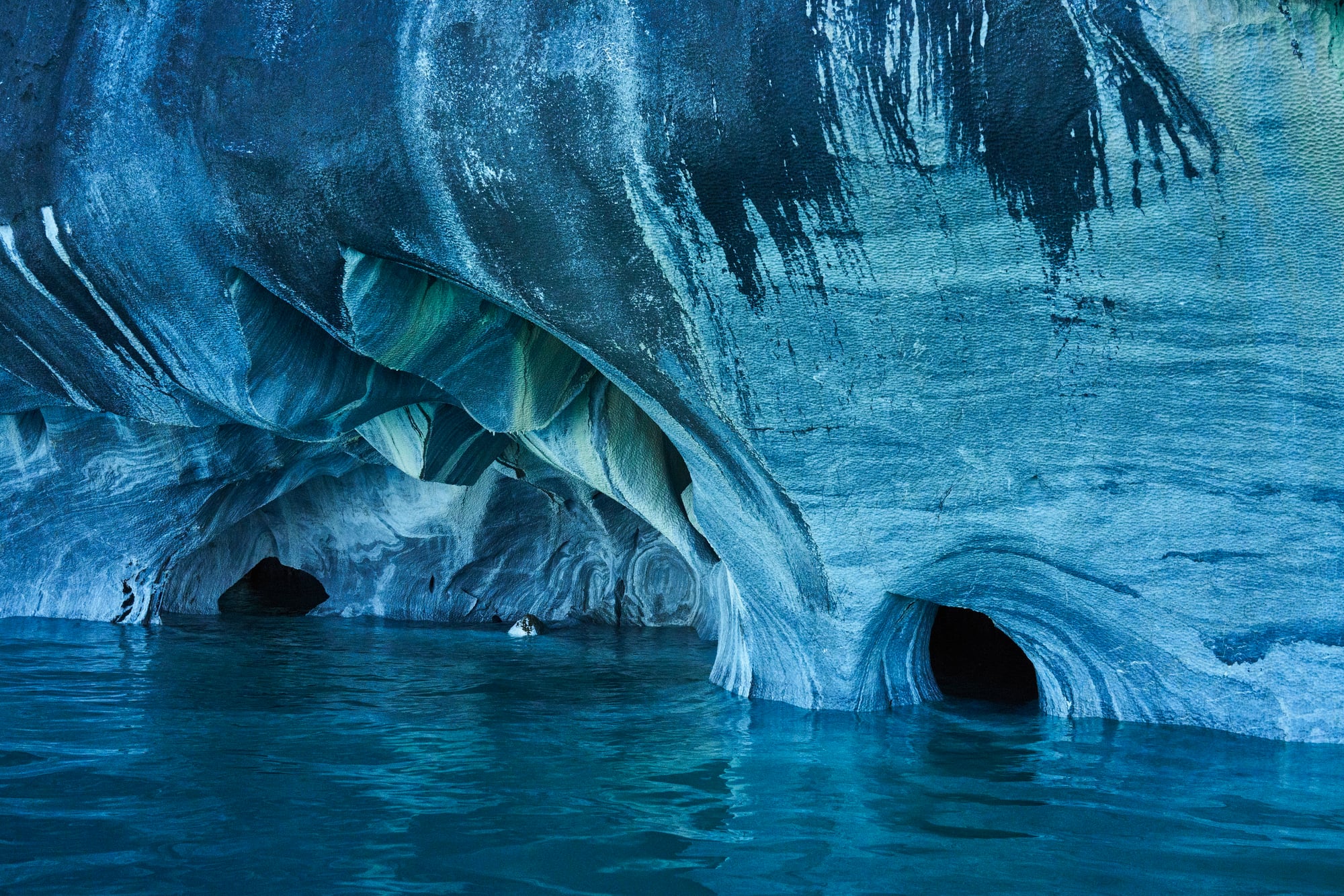
Turquoise water reflects against swirling patterns carved into calcium carbonate. These caves sit on the border between Chile and Argentina, accessible only by boat on General Carrera Lake.
The mineral content in the rock creates bands of white, blue, and grey that shift with the light and water levels throughout the day. The entire structure took over 6,000 years to form, and the water level determines how much of the interior you can explore at any given time.
Socotra’s Dragon Blood Trees

Picture an umbrella turned inside out and petrified. That’s roughly what these trees look like.
They grow only on Socotra Island off the coast of Yemen, and their strange shape evolved to capture moisture from fog. The red sap gave them their dramatic name, and locals have used it for dye and medicine for centuries.
The island’s isolation created a bizarre ecosystem—about a third of the plant species exist nowhere else on Earth.
Lake Natron’s Calcified Animals

This salt lake in Tanzania turns animals into statues. The water contains such high levels of sodium carbonate that deceased creatures become preserved in mineral deposits, their bodies covered in a chalky coating that makes them look carved from stone.
The lake’s pH reaches 10.5, nearly as alkaline as ammonia. Yet lesser flamingos breed here by the millions, somehow thriving in conditions that would kill most other species.
The Door to Hell

Someone drilled into the wrong spot in Turkmenistan’s Karakum Desert in 1971. Natural gas started escaping, and to prevent poisonous gas from spreading, geologists lit it on fire.
They expected it to burn out in a few weeks. It’s still burning.
The crater spans 230 feet across and 65 feet deep, glowing orange against the desert night. Locals call it Darvaza, and the methane fire has consumed that patch of earth for over five decades.
Zhangye Danxia’s Rainbow Mountains
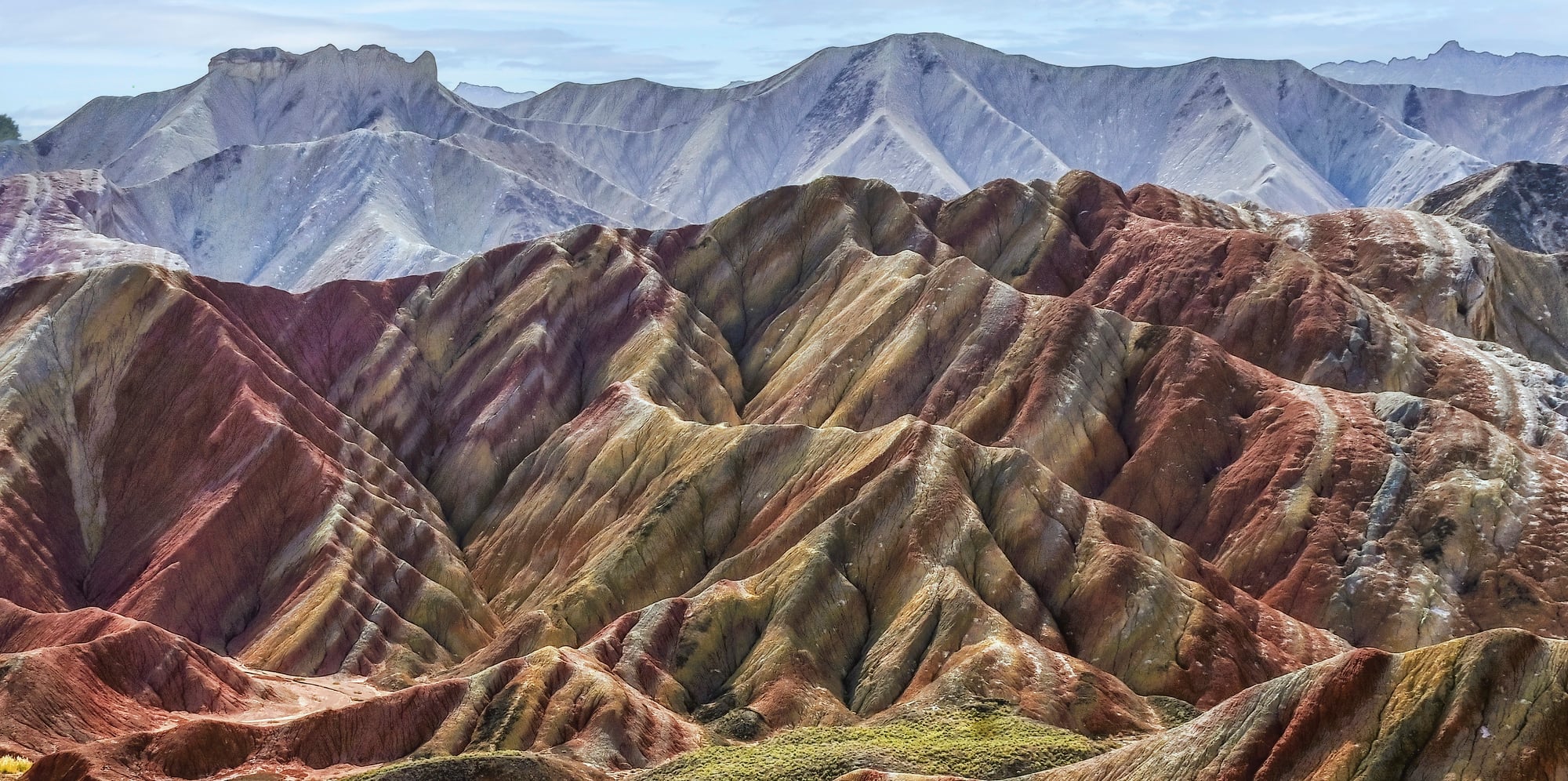
Red sandstone and mineral deposits layered over 24 million years created what looks like a geology textbook illustration come to life. The mountains in China’s Gansu Province display bands of color—rust orange, yellow, green, grey—that ripple across the landscape.
The patterns formed when tectonic plates pushed ancient lakebeds upward, and erosion revealed the striped interior. The park restricts access to preserve the formations, but wooden walkways let visitors view the most dramatic sections.
Fly Geyser

This wasn’t supposed to exist. In 1964, a geothermal test well in Nevada started leaking, and dissolved minerals built up around the vent.
The result looks more alien than earthly—a mound of terraced pools in red, green, and gold, with water jets shooting skyward. The colors come from thermophilic algae that thrive in the scalding water.
The site sits on private property, and tours became available only recently after the Burning Man organization purchased the land.
Son Doong Cave’s Underground Jungle

The world’s largest cave passage contains its own weather system and forest. In Vietnam’s Phong Nha-Ke Bang National Park, Son Doong stretches over three miles long with sections tall enough to fit a 40-story building.
A collapsed roof lets sunlight stream in, creating conditions where trees grow 100 feet tall inside the cavern. Clouds form near the ceiling.
A river runs through it. Only about 1,000 people visit each year due to permit restrictions and the technical difficulty of the journey.
Kawah Ijen’s Blue Fire

At night, electric blue flames flicker across an Indonesian crater. Sulfuric gases emerge from cracks in the volcano, and when they ignite, they burn with that otherworldly blue glow.
The phenomenon occurs in only a handful of places worldwide. Miners work inside the crater, extracting sulfur in conditions that would fail every modern safety standard.
The lake at the crater’s center holds the distinction of being the most acidic body of water on the planet.
The Crooked Forest

In Poland, about 400 pine trees grew with 90-degree curves at their base before straightening upward. Nobody knows why with certainty.
Theories range from timber manipulation techniques to gravitational anomalies to snowstorm damage, but the truth disappeared with the people who planted them in the 1930s. The trees all curve in the same direction, suggesting human intervention rather than natural causes.
The surrounding forest grows perfectly straight, which makes the bent grove even more striking.
Antarctica’s Blood Falls

A red stain flows from the face of Taylor Glacier onto the white ice below. The color comes from iron oxide in saltwater that remained trapped beneath the glacier for potentially millions of years.
When the brine seeps out and contacts oxygen, it rusts, creating the appearance of ice. The water contains no oxygen and supports microbial life that survives on sulfur and iron compounds—an ecosystem completely cut off from the sun’s energy.
Waitomo’s Glowworm Caves

Thousands of tiny lights dot the ceiling of limestone caves in New Zealand, creating the illusion of an underground night sky. The glowworms are actually fungus gnat larvae that produce bioluminescence to attract prey.
They dangle sticky threads like fishing lines and wait for insects drawn to the light. The darker the cave, the brighter they glow.
Boat tours glide silently through the chambers while visitors stare upward at what looks like a field of blue stars.
The Wave in Arizona

Sandstone ripples frozen in time. The Wave forms part of the Coyote Buttes formation, where erosion carved flowing patterns into rock layers deposited during the Jurassic period.
The formation spans just a small area, but its photogenic quality made it famous among photographers. The Bureau of Land Management issues only 20 permits per day to protect the fragile surface, and thousands enter the daily lottery for those slots.
Getting permission to visit requires as much luck as planning.
Salar de Uyuni’s Mirror Effect
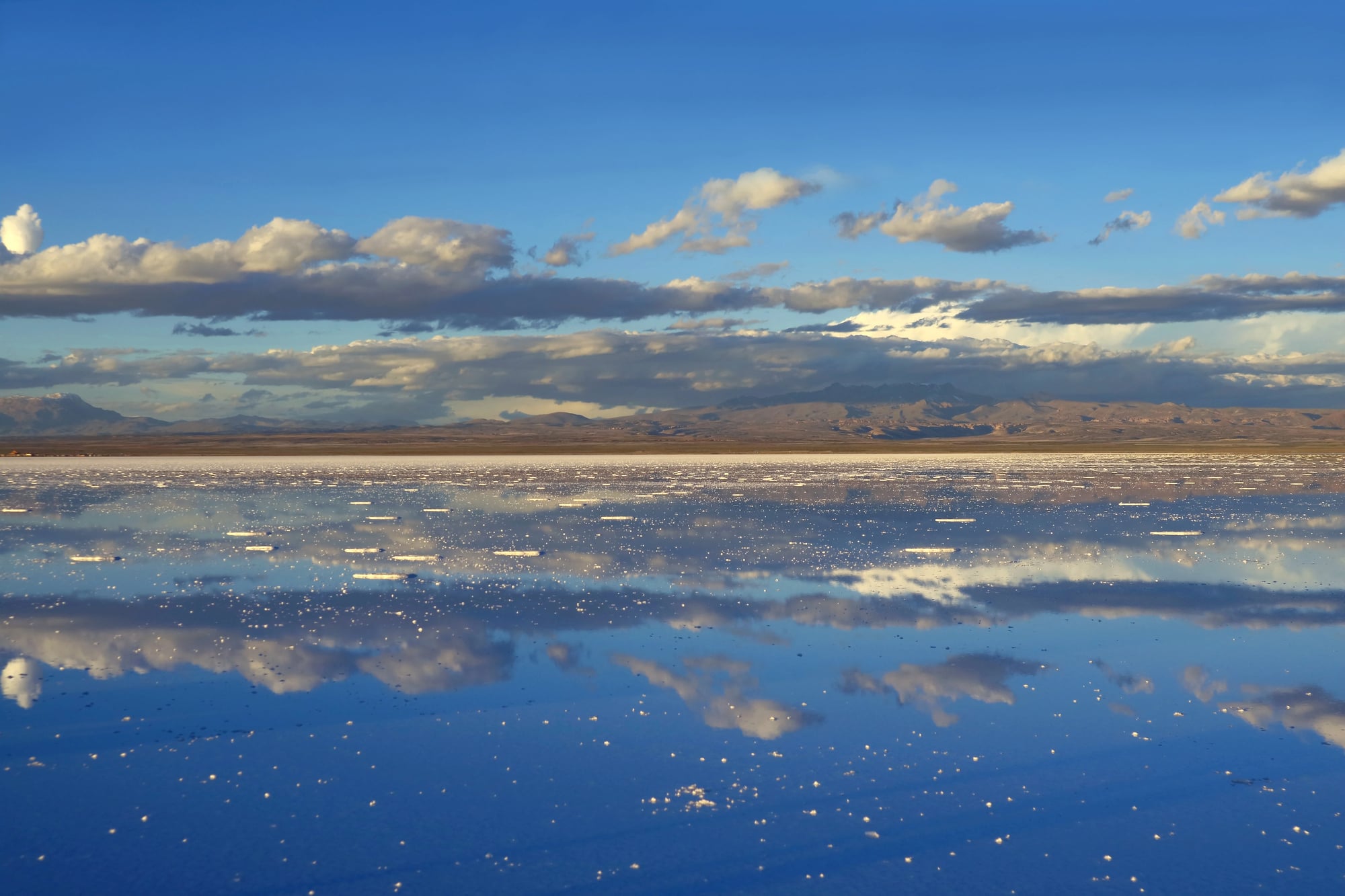
Bolivia’s salt flats create the largest mirror on Earth when a thin layer of water covers the surface. The reflection becomes so perfect that sky and ground merge, erasing the horizon.
The salt crust formed when ancient lakes dried up, leaving behind a flat white expanse that stretches over 4,000 square miles. The flats also contain massive lithium deposits—about half the world’s known reserves sit beneath that crystalline surface.
Lake Hillier’s Pink Water

The water stays pink year-round, though scientists still debate exactly why. Theories point to algae, bacteria, or salt-dwelling microorganisms that produce certain pigments.
The lake sits on Middle Island off Australia’s southern coast, surrounded by eucalyptus forest and separated from the ocean by a narrow strip of sand. The color doesn’t fade when you remove water from the lake, and the water appears safe to swim in, though few people make the journey to try.
Deception Island’s Volcanic Beaches

You can take a dip in Antarctic waters here without turning into an ice cube. Deception Island isn’t just any island – it’s a collapsed volcano, where underground heat warms the shoreline spots.
Scoop out a little pit in the dark sand, then watch hot water bubble up from under. Back in ’69, the whole place blew apart, wiping out a science camp – now it’s still jumpy with volcanic energy.
Old whale-processing ruins and corroded metal bits scatter around, giving the unstable ground a spooky edge.
Where Wonder Lives
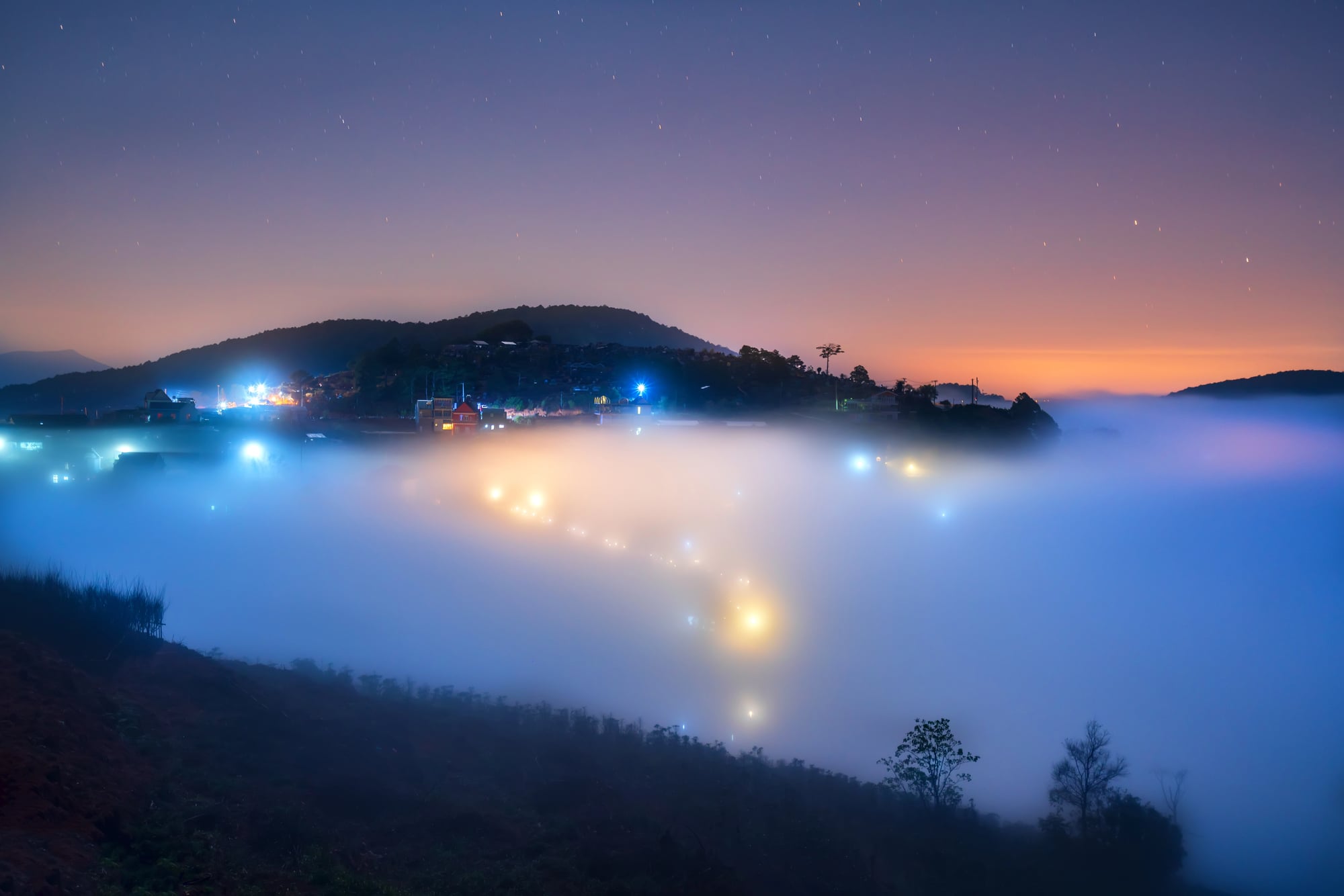
These spots are there even if no one sees them. Shaped over countless years, they don’t care if people find them or not.
But things shift when you’re standing right in front of one – how huge it is, how unlikely, how weird nature can get with rock, chemicals, and age. It hits you: Earth’s got hidden wonders, unexpected moments, magic shapes nobody saw coming.
All you need is to check where most folks never bother.
More from Go2Tutors!

- The Romanov Crown Jewels and Their Tragic Fate
- 13 Historical Mysteries That Science Still Can’t Solve
- Famous Hoaxes That Fooled the World for Years
- 15 Child Stars with Tragic Adult Lives
- 16 Famous Jewelry Pieces in History
Like Go2Tutors’s content? Follow us on MSN.