Rare Pyrex Pieces Worth a Lot Now
Old Pyrex isn’t simply about cooking anymore. Beginning life as everyday items between the 1940s and 1980s, these dishes now pull strong focus from those who collect them.
Objects once bought cheap at house clear-outs can sell for large sums today. Though bright designs and fond memories spark curiosity, it’s how hard they are to find that sets their worth.
Now it’s these that collectors search out. Some designs came in small batches, vanished fast, or reached just a few places.
Lucky in Love Cinderella Bowls
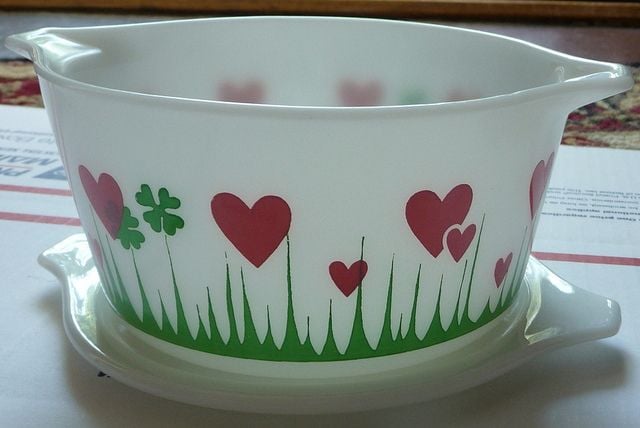
The Lucky in Love pattern features pink hearts on white Pyrex, and collectors consider it one of the holy grails. Corning produced this pattern for a very short time in the 1950s, primarily as promotional items.
A complete set of four nesting bowls can sell for over $4,000. Even individual bowls bring hundreds of dollars.
The pattern’s scarcity stems from its limited production run and the fact that many pieces ended up broken or discarded over the decades.
Pink Gooseberry
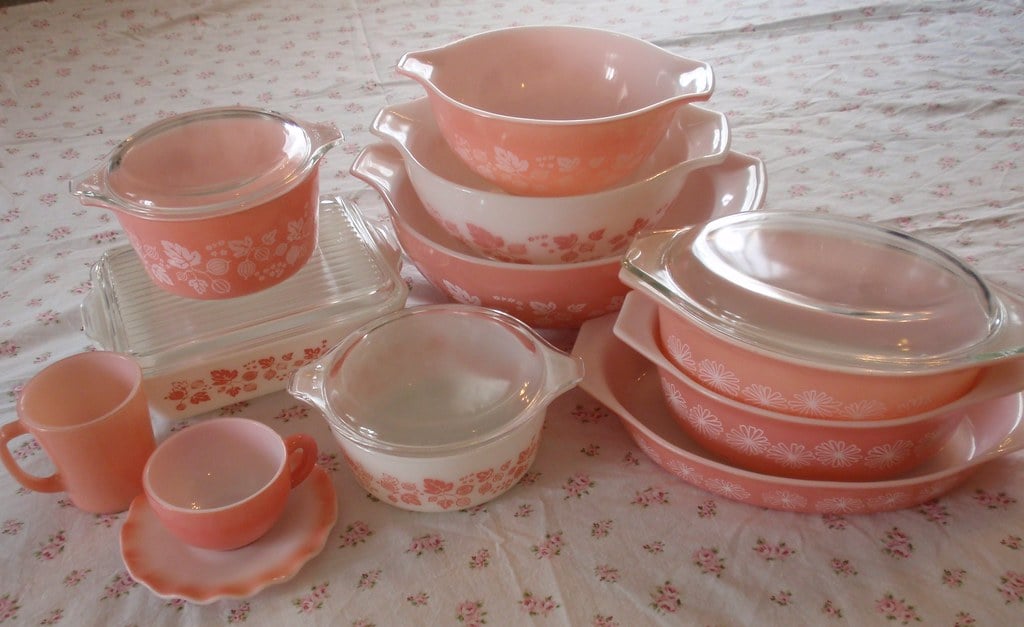
This pattern shows pink gooseberries and leaves on white Pyrex, and it only appeared on the Cinderella bowl shape. Corning manufactured it briefly in the late 1950s, making it exceptionally rare.
The 444 bowl, the largest in the set, rarely appears on the market. When it does, prices exceed $1,000 for that single piece.
The smaller bowls in the set still command premium prices. The delicate pink design appeals to collectors who focus on rare patterns.
Turquoise Butterprint
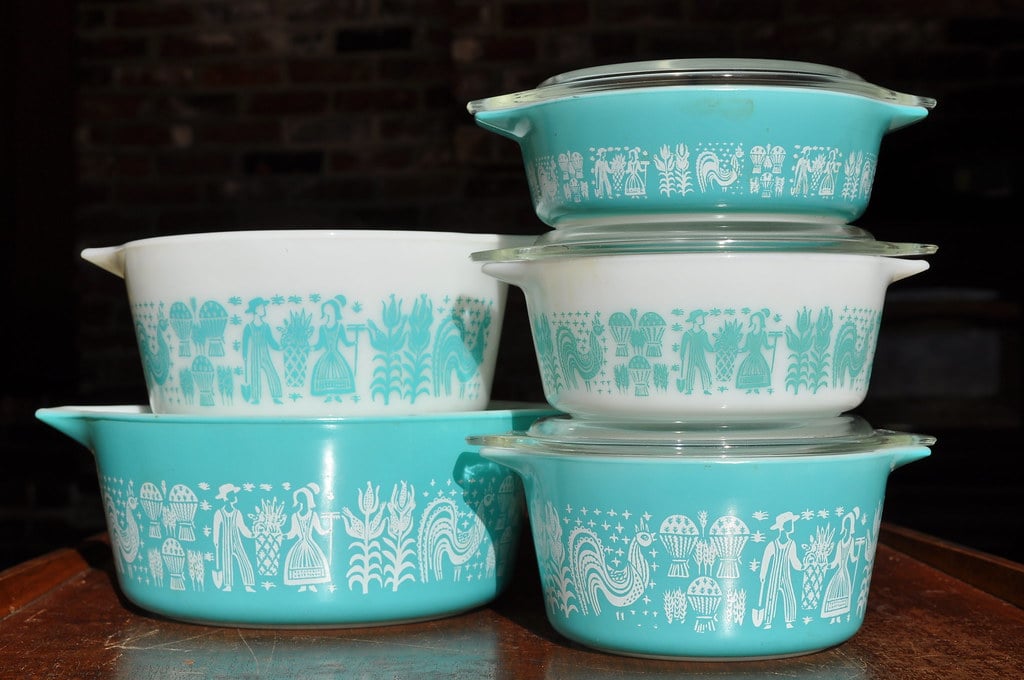
Everyone knows the standard white Butterprint pattern with the turquoise Amish-style farmers. But Pyrex also made a reverse version with a turquoise background and white print.
This variation is significantly rarer than the common version. The four-piece refrigerator set in turquoise brings $800 to $1,200.
Individual pieces start at $200. The vibrant turquoise color makes these pieces stand out, and their scarcity drives sustained demand.
Primary Colors Nesting Bowls

These pure colored mixing bowls came in red, yellow, blue, and green. Corning introduced them in 1945, making them some of the earliest colorful Pyrex pieces.
A complete set of four in excellent condition sells for $600 to $1,000. The challenge comes from finding all four colors in the same condition without chips, fading, or dishwasher damage.
Many collectors spent years assembling their sets. The red bowls are particularly hard to find in pristine condition because the color fades easily.
Pink Daisy Pattern

Pink Daisy appeared on the space-saver casserole dishes, also called “spacesavers.” These rectangular dishes featured white daisies with pink centers on a pink background.
Production was limited, and the pattern only lasted a short time. A complete set with lids can exceed $500.
Even single pieces bring strong prices. The pink color and floral design attract collectors focused on feminine vintage patterns.
Black Snowflake on Turquoise
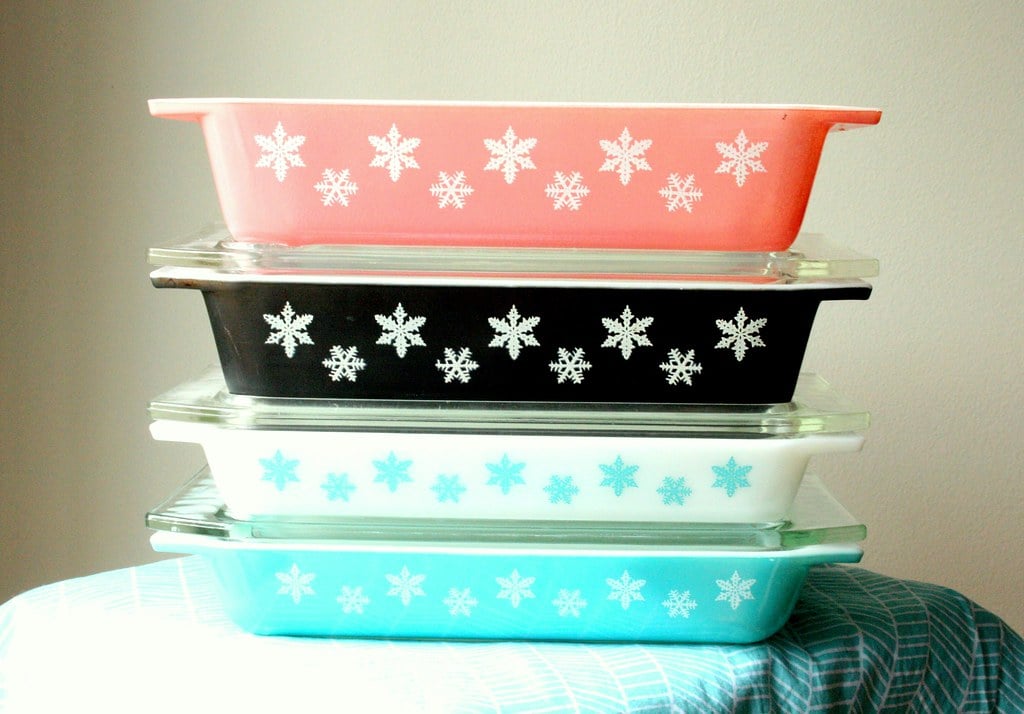
Most people recognize the standard Snowflake pattern with white snowflakes on turquoise. Pyrex made a small quantity with black snowflakes instead.
These pieces are exceptionally rare. A four-piece refrigerator set in this colorway can sell for over $2,000.
Single pieces regularly exceed $400. The dramatic black-on-turquoise contrast makes these visually striking, and their scarcity ensures continued collector interest.
Terra Pattern Earth Tones

The Terra pattern came out in the 1970s and featured earth-tone browns and oranges in geometric designs. While not as old as some rare pieces, certain Terra items command high prices due to limited production.
The larger covered casseroles in this pattern sell for $200 to $400. The pattern represents the shift in Pyrex design toward 1970s aesthetics, and collectors who focus on that era seek these pieces out.
Promotional and Advertising Pieces
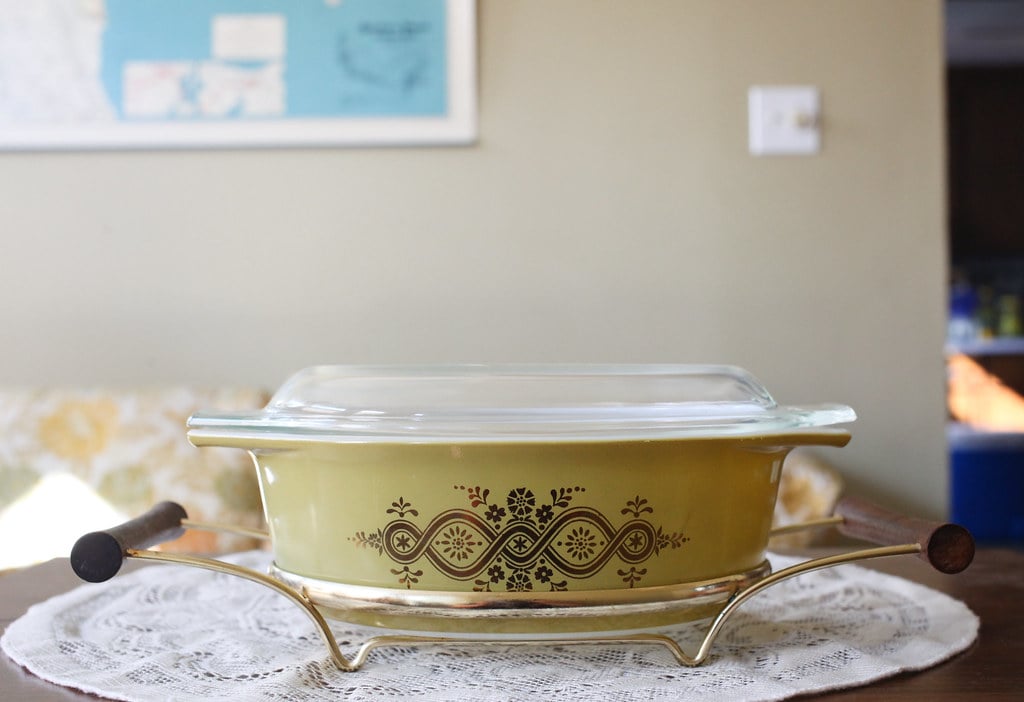
Pyrex produced special pieces for promotional campaigns. Some featured company logos or came as premiums with product purchases.
Others served as advertising displays in stores. These promotional items were never meant for regular retail sale.
Examples include bowls with specific brand names or special event commemorations. Prices vary widely based on the specific promotion.
Some bring $500 or more because so few were made and fewer survived.
Barcode Pattern Sets
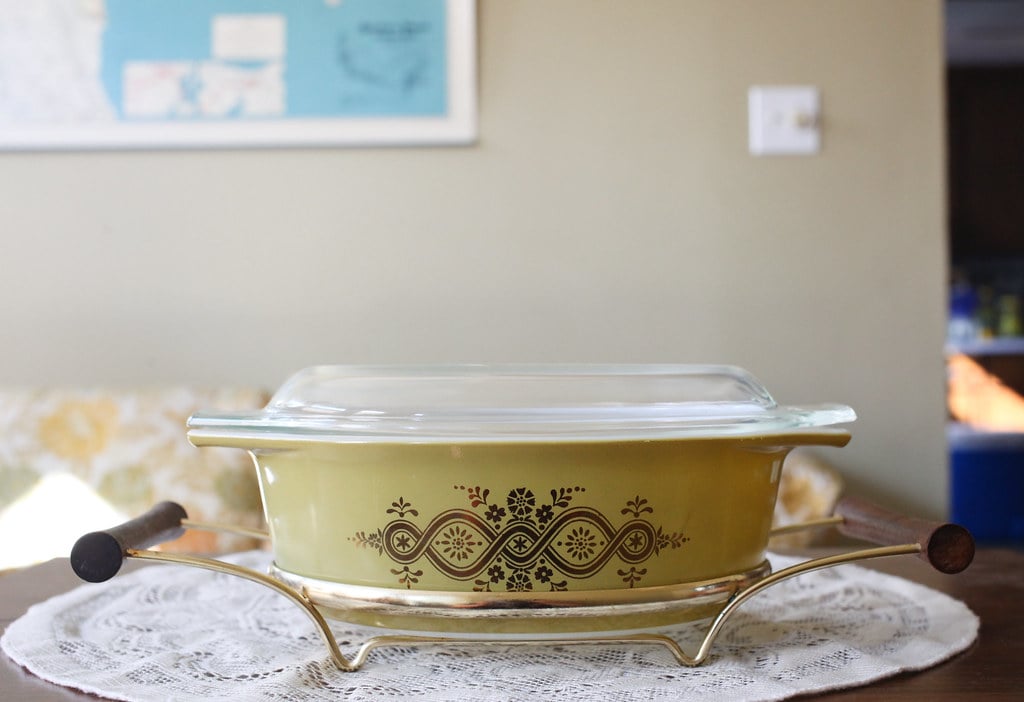
This pattern might look simple—just thin parallel lines on clear glass—but it’s one of the rarest. Pyrex made these pieces for test markets or specific promotions.
Very few survived. A complete set of mixing bowls in the Barcode pattern can exceed $1,500.
Even fragments of this pattern interest collectors. The minimalist design appeals to people who prefer modern aesthetics over the typical Pyrex florals and prints.
Eyes Pattern

Yes, this pattern features actual eyes staring out from the Pyrex. Created in the 1970s, these pieces were part of a limited run that didn’t resonate with mainstream consumers.
The unsettling design makes them highly collectible now. A complete set of mixing bowls brings $800 to $1,200.
The Eyes pattern represents one of Pyrex’s more unusual design choices, and that oddity drives collector interest.
Black and White Patterns

Several black and white patterns command attention. The New Dots pattern, featuring black dots on white, is particularly valuable.
So is the Black Starburst. These patterns offered a stark contrast to the colorful designs Pyrex typically produced.
A four-piece refrigerator set in Black Starburst can sell for $700. Single pieces regularly bring $150 or more.
The monochromatic designs appeal to collectors seeking modern or minimalist vintage pieces.
Friendship Pattern

This promotional pattern featured simple bird designs and came as part of a specific campaign. Pyrex didn’t produce it in large quantities.
The pattern appeared primarily on smaller pieces like refrigerator dishes. A complete set now sells for $400 to $600. Individual pieces start around $100.
The bird motif and limited availability make these desirable for collectors who want something beyond the standard floral patterns.
Rare Colors of Common Patterns

Not always about the design being scarce – sometimes it’s just the shades that make it stand out. Though most Butterprint items arrived in turquoise and white, other tones slipped through by accident or trial.
Colors like pink, when slapped onto a usually blue print, catch more eyes than expected. These odd mixes weren’t meant to last long.
Yet today they pull high bids where regular ones barely turn heads. What normally sells for little might suddenly triple – if it wears the right hue.
Rare tints change everything.
Gold Leaf Divided Dishes
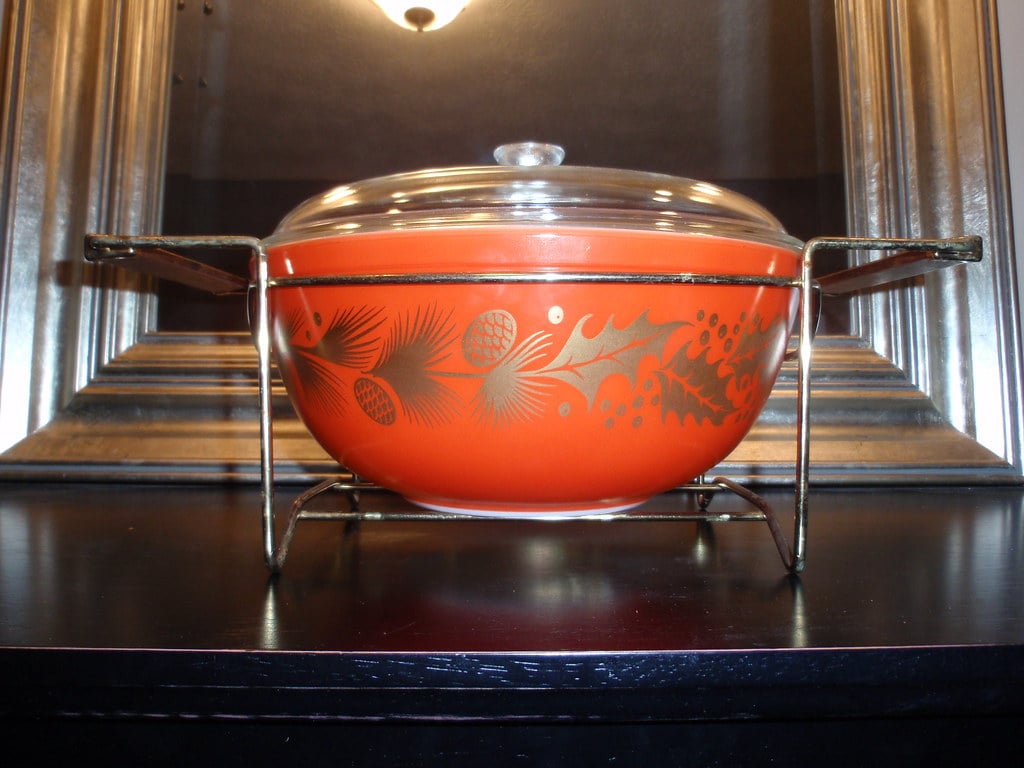
The Gold Leaf pattern featured metallic gold leaves on white Pyrex. These pieces appeared primarily on divided serving dishes and casseroles.
The gold often wore off with use and washing, making pristine examples rare. A divided dish with intact gold decoration sells for $200 to $300.
Pieces without wear or fading command the highest prices. Collectors prize these for dinner parties and display because they look elegant compared to the more casual patterns.
The Hunt Continues

Hunting down these uncommon items takes time. From estate auctions to secondhand shops, surprises pop up – yet lots tend to show up first.
People scan websites every morning, driving hours just hoping to spot something special. Joy strikes when you least expect it: maybe a bright pink bowl at a sidewalk table, perhaps a dark-speckled plate hiding behind old mugs.
Still, prices climb while leftover sets vanish into private groups. Because they spark old memories, look good on shelves, yet show up so rarely, nobody seems in a hurry to let go of these bright dishes once found in 1950s homes.
More from Go2Tutors!

- The Romanov Crown Jewels and Their Tragic Fate
- 13 Historical Mysteries That Science Still Can’t Solve
- Famous Hoaxes That Fooled the World for Years
- 15 Child Stars with Tragic Adult Lives
- 16 Famous Jewelry Pieces in History
Like Go2Tutors’s content? Follow us on MSN.



