Rarest Flowers in the World
Out on the far side of life, some blooms only make it because everything lines up just right. Not every petal survives – only where one bee shows up, or frost comes late, or soil stays thin on a steep rock face.
It takes more than luck; it demands timing down to days. Change any piece – even slightly – and what once grew begins to fade.
It’s strange how some flowers keep going when everything seems against them. Once in a while, they open after waiting years without notice.
Notable among these are the ones tied so tightly to certain insects or animals that disappearance of even one spells trouble. Without people stepping in exactly when needed, a handful would have vanished completely by now.
A few blooms stand out for how seldom they appear, their survival hanging on delicate threads. What keeps these plants alive often comes down to precise conditions found almost nowhere else.
Middlemist Red
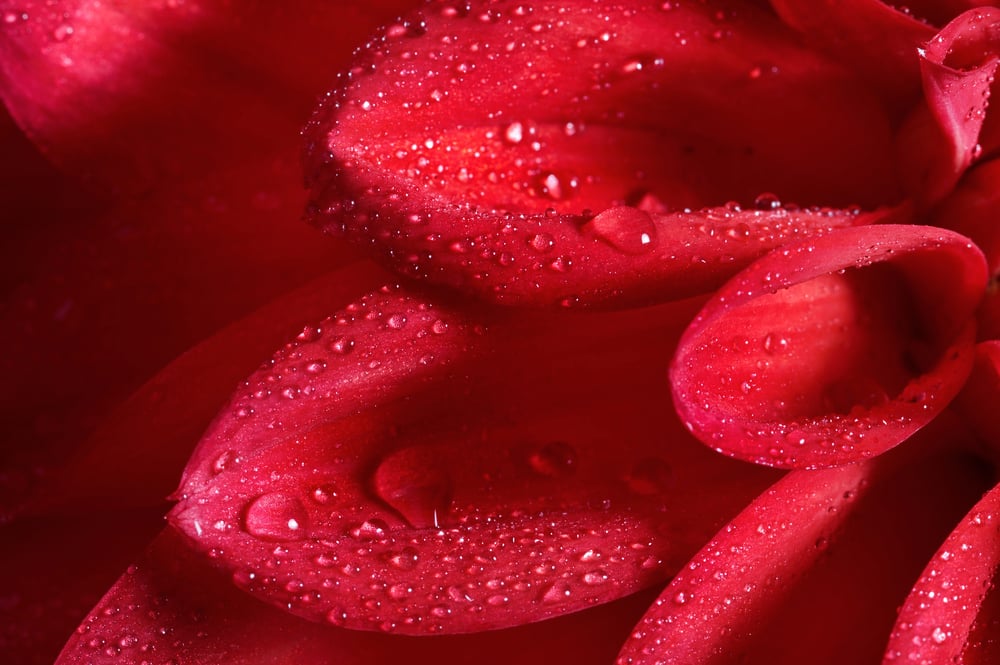
The Middlemist Red is widely regarded as the rarest flower on Earth. Only two known specimens exist today, one cultivated in England and the other in New Zealand.
Both trace their lineage back to a single plant brought from China in the early nineteenth century. What makes this flower especially striking is that it is extinct in the wild.
Its continued existence depends entirely on careful human cultivation. Visually, it resembles a pink camellia, elegant but not flamboyant.
That understated appearance contrasts sharply with its extreme rarity, reminding us that scarcity is not always obvious at first glance.
Ghost Orchid
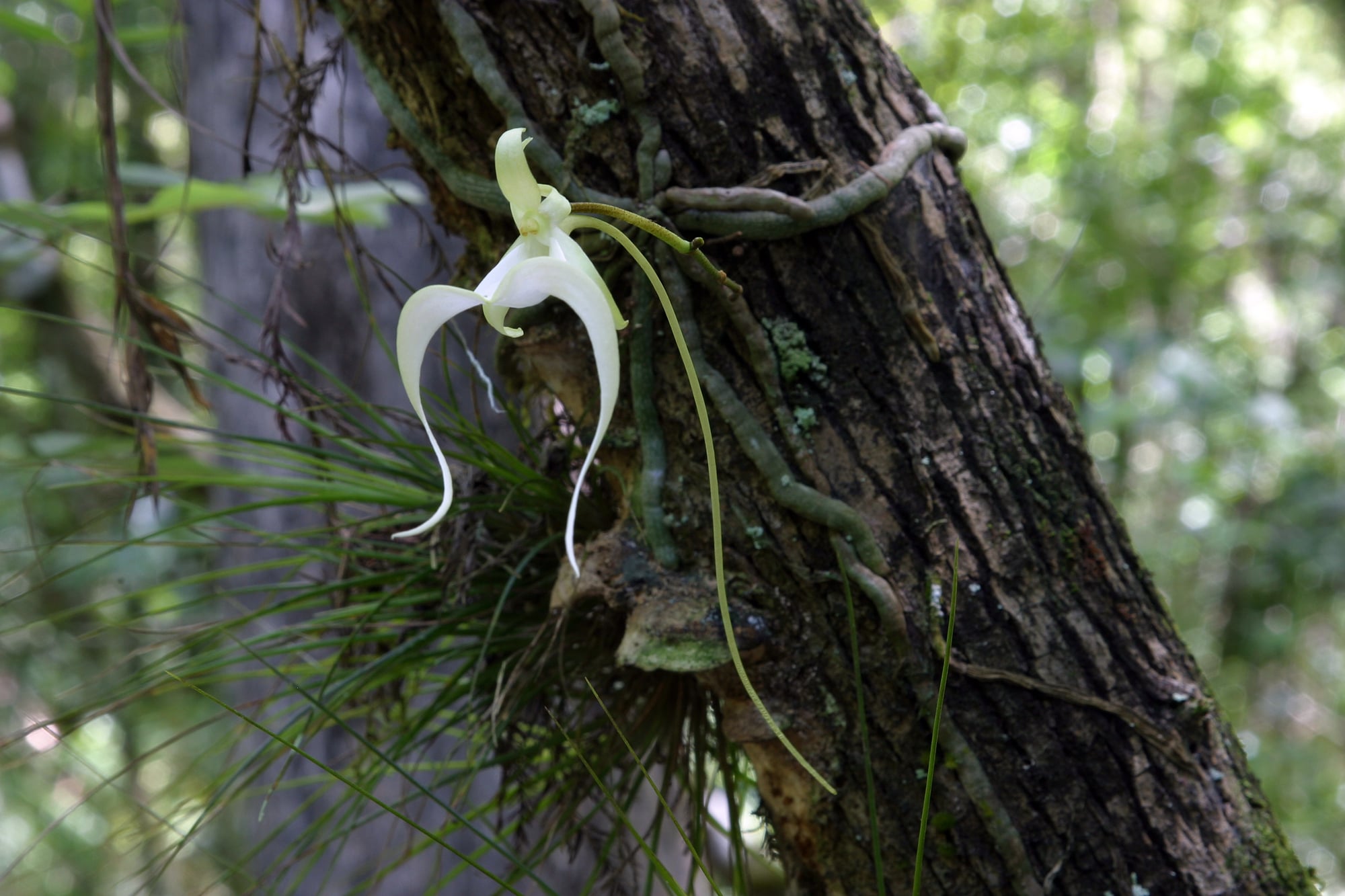
The ghost orchid appears almost unreal when it blooms. Native to remote swamps in Florida, Cuba, and parts of the Caribbean, it has no leaves and seems to hover in midair, attached only by thin roots clinging to tree bark.
Its survival depends on a delicate balance of humidity, temperature, and a specific fungal partnership that allows it to absorb nutrients. Flowering is unpredictable, sometimes skipping years entirely.
Because it also relies on specialized pollinators, the ghost orchid exists within an exceptionally narrow ecological window. Encountering one in bloom is considered extraordinary even among seasoned botanists.
Jade Vine

The jade vine produces cascading clusters of turquoise-green flowers that look more sculpted than grown. Native to the rainforests of the Philippines, it relies on specific bat species for pollination, forming a rare example of co-evolution between plant and animal.
As forests have disappeared, both the vine and its pollinators have declined. While cultivated specimens can be found in botanical gardens, wild jade vines are increasingly rare.
Seeing one in its natural environment is becoming less common each year, making its survival closely tied to conservation efforts.
Corpse Flower

The corpse flower is best known for its size and its powerful odor, but rarity is what defines it most clearly. Native to the rainforests of Sumatra, it produces the largest flower structure in the world, yet blooms only once every several years, sometimes once a decade.
When it does bloom, the event lasts just a few days. The scent attracts insects that act as pollinators, but the window is narrow.
Habitat loss has made wild sightings increasingly uncommon. Each bloom is now treated as a significant scientific and conservation moment rather than a natural occurrence.
Chocolate Cosmos
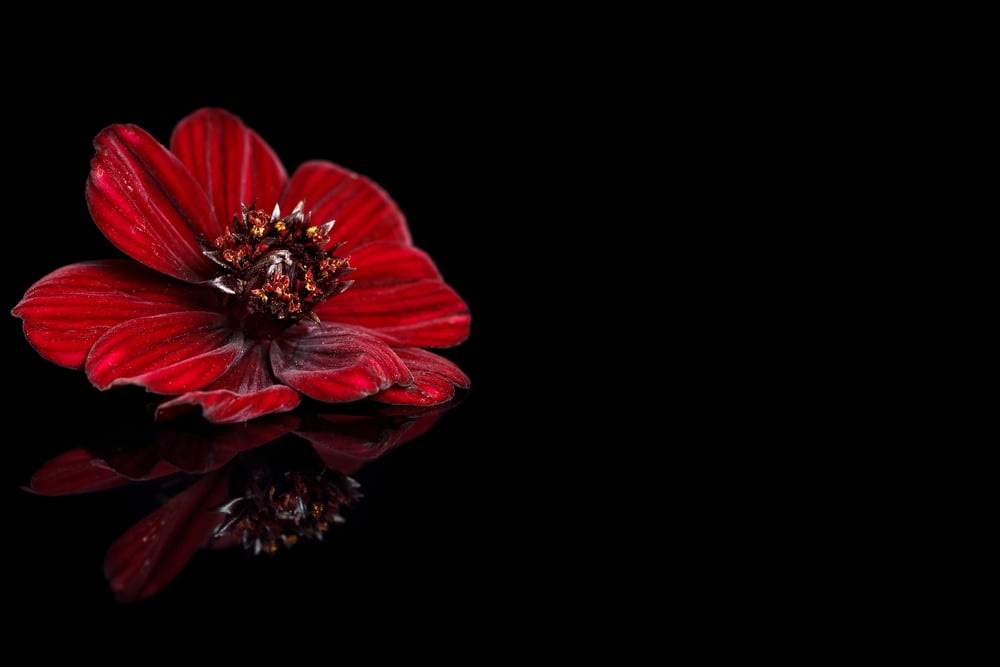
Chocolate cosmos once grew naturally in Mexico, producing dark red flowers with a subtle scent often compared to cocoa. Despite its appeal, it vanished from the wild in the early twentieth century, likely due to habitat loss.
All chocolate cosmos plants alive today are descended from cultivated specimens. They are sterile and must be propagated manually.
While gardeners can grow them, their absence from natural ecosystems places them among the rarest flowers in terms of wild existence. Their survival depends entirely on continued human care.
Franklin Tree Flower
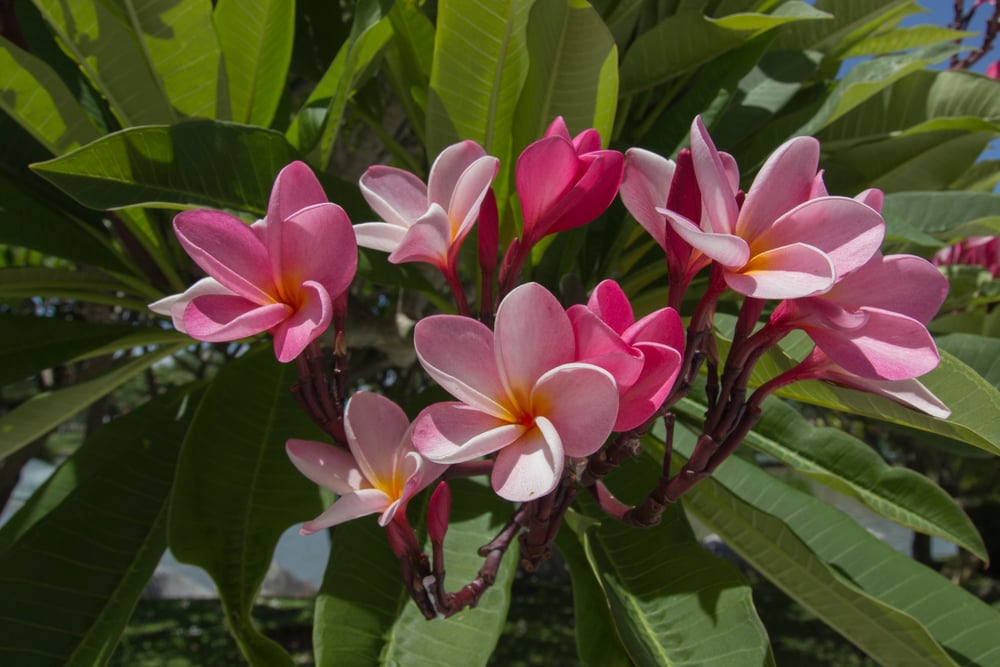
The Franklin tree was first documented in the southeastern United States in the late eighteenth century. Within decades, it disappeared completely from the wild.
The cause remains uncertain, though disease and environmental change are likely contributors. Every Franklin tree alive today traces back to seeds collected before its extinction in nature.
The tree produces fragrant white flowers with bright centers and blooms reliably in cultivation. Its story is often cited as an early example of accidental conservation, where foresight preserved a species before its loss was fully understood.
Kadupul Flower

The kadupul flower is rare not because of geography, but because of time. Native to Sri Lanka, it blooms only at night and fades before dawn.
By morning, there is no physical trace of its presence. Because it cannot be picked or preserved, the flower exists primarily as an experience.
Those who witness it describe its bloom as brief and luminous, gone almost as soon as it appears. Its rarity is defined by impermanence rather than population size.
Parrot’s Beak

The parrot’s beak plant, native to the Canary Islands, produces curved red flowers shaped like a bird’s beak. Its unusual form evolved alongside specific pollinators that are now rare or extinct.
As those pollinators disappeared, the plant struggled to reproduce naturally. Conservation programs have reintroduced it in controlled environments, but wild populations remain extremely limited.
Its survival depends on ongoing human involvement, making it a living example of assisted preservation.
Youtan Poluo
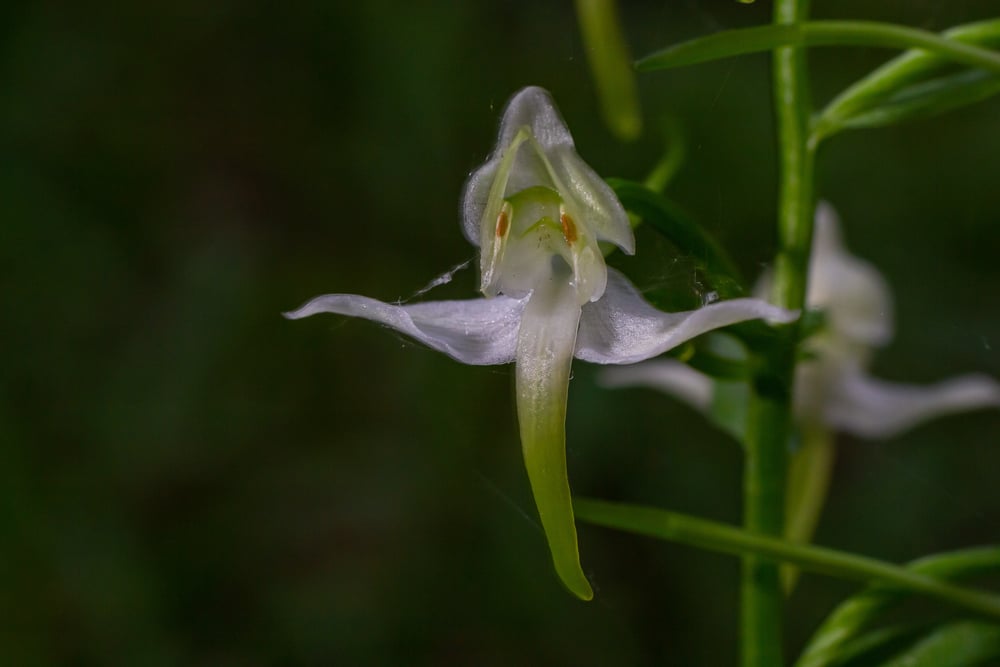
The Youtan Poluo is one of the most mysterious flowers ever recorded. Tiny and delicate, it has appeared sporadically across parts of Asia.
Some accounts suggest it blooms once every several thousand years, though scientific confirmation remains elusive. Verified sightings are extremely rare, and its minute size makes it easy to overlook.
The flower occupies a space between documented botany and cultural mythology. That ambiguity only adds to its reputation as one of the rarest blooms on Earth.
Why Flowers Become Rare

Rarity is almost never caused by a single factor. Most rare flowers exist at the intersection of narrow habitat requirements, specialized pollination, and environmental disruption.
Remove one element, and the entire system collapses. In some cases, rarity develops gradually as conditions shift.
In others, it arrives suddenly due to deforestation, land conversion, or climate change. Once populations fall below a certain point, recovery becomes increasingly difficult without intervention.
Cultivation Versus Survival

Some rare flowers persist because they can be cultivated in gardens and research centers. Others resist cultivation entirely, requiring conditions that are nearly impossible to recreate.
This divide shapes modern conservation strategies. Cultivation preserves genetic material, but it cannot replace functioning ecosystems.
Flowers that survive only under human care lose their natural context. Conservation efforts now balance protection of habitats with controlled propagation, recognizing that both are necessary.
Why Rare Flowers Matter
Rare flowers capture attention because they feel vulnerable. Their existence depends on restraint, protection, and patience.
Unlike common plants, they remind us that biodiversity is fragile and reversible. They also challenge assumptions about beauty and permanence.
Some are spectacular, others subtle. Some bloom for minutes, others for days.
What unites them is a narrow margin of survival that makes each appearance meaningful.
Living Evidence of Balance

Beauty shows up when nature stays in step. These uncommon blooms aren’t just odd plants found far away.
They signal whether the living world around them runs smoothly. Lose that balance, and silence fills the space where color once grew.
A quiet vanishing trail behind disruption. Survival isn’t just luck – it leans more on attention, on steady effort.
These blooms persist because of choices repeated, not random fortune. Change rushes forward, yet they remain, soft signals of what endurance requires.
More from Go2Tutors!

- The Romanov Crown Jewels and Their Tragic Fate
- 13 Historical Mysteries That Science Still Can’t Solve
- Famous Hoaxes That Fooled the World for Years
- 15 Child Stars with Tragic Adult Lives
- 16 Famous Jewelry Pieces in History
Like Go2Tutors’s content? Follow us on MSN.