Rarest Gemstones Discovered in Modern Times
The earth keeps its best secrets buried deep, waiting centuries or millennia before revealing treasures that make even seasoned gemologists do a double-take. While diamonds and rubies capture most of the headlines, the truly extraordinary finds are stones so rare that many people will never see one in person.
These aren’t just expensive rocks—they’re geological miracles, formed under conditions so specific that their very existence borders on the impossible.
The past few decades have produced discoveries that have rewritten textbooks and left collectors scrambling. Some of these stones are so scarce that the entire known supply could fit in your palm, while others display properties that seem to defy physics itself.
Each one tells a story of pressure, time, and the kind of cosmic coincidence that makes you wonder what else might be hiding beneath our feet.
Painite

Painite held the title of world’s rarest gemstone for decades, and looking at the numbers, it’s easy to understand why. Until 2001, only three specimens existed anywhere on Earth.
The mineral was first discovered in Myanmar in the 1950s by British mineralogist Arthur Pain (hence the name that sounds more like a medical condition than a precious stone). For over 50 years, painite existed more as a scientific curiosity than something anyone could actually own.
Even now, with additional finds expanding the known supply, fewer than a few thousand crystals have been recovered worldwide. Most are tiny, and gem-quality specimens remain extraordinarily scarce.
What makes painite particularly fascinating isn’t just its rarity—it’s the way it formed. The stone requires such a precise combination of geological conditions that scientists initially struggled to understand how it could exist at all.
The chemistry involves elements that typically don’t play well together, yet somehow painite manages to incorporate them into a stable crystal structure that glows a deep reddish-brown under certain lighting conditions.
Red Beryl
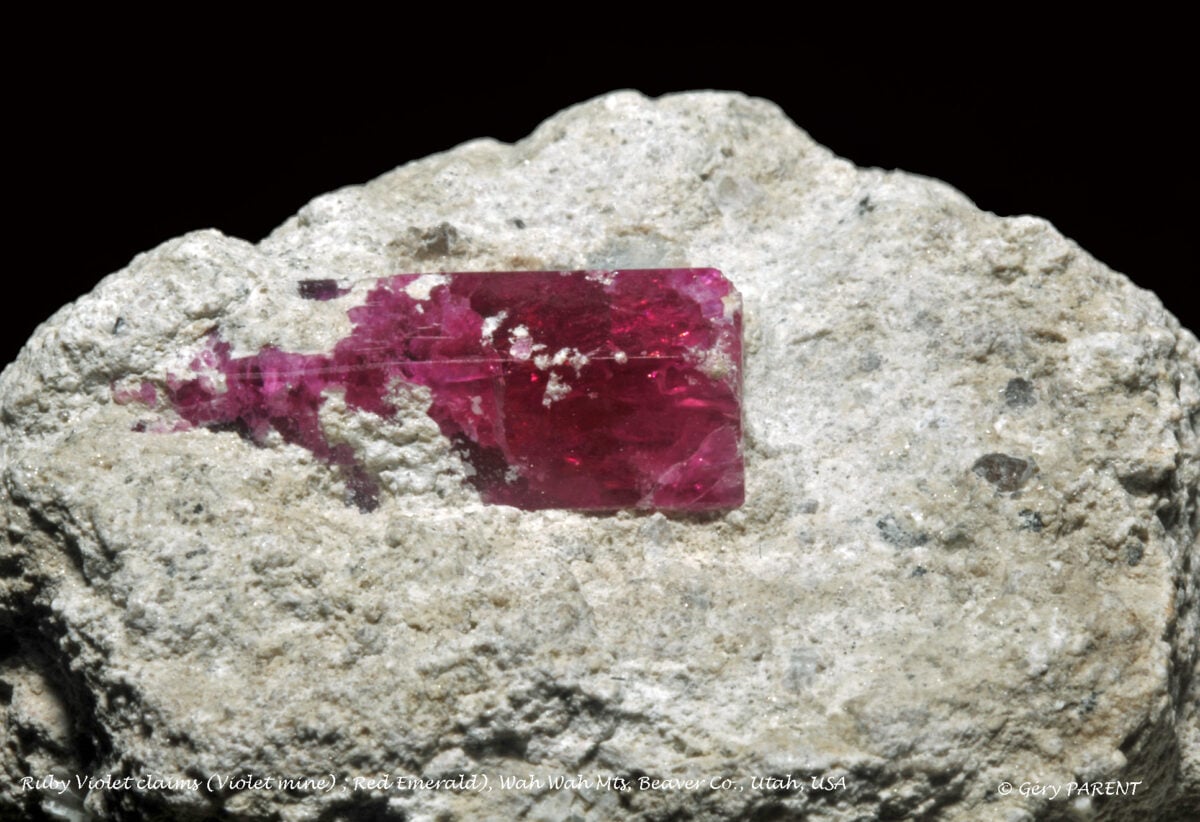
Red beryl breaks every rule about where gemstones are supposed to form, which explains why finding it feels more like discovering a glitch in nature than uncovering buried treasure. Most beryls (emeralds, aquamarines, morganites) develop in pegmatites—those slow-cooling underground chambers where crystals have time to grow large and perfect. Not red beryl, though (and this is where things get interesting, because geology rarely makes exceptions without good reason).
This particular variety decided to crystallize in rhyolite flows, where volcanic activity creates conditions that should theoretically prevent beryl formation entirely.
So you end up with a mineral that shouldn’t exist, growing in an environment that shouldn’t support it, producing crystals so small that most specimens wouldn’t cover your fingernail. But that’s not even the strangest part—red beryl’s color comes from manganese, and the precise conditions needed to incorporate manganese into beryl’s crystal structure are so narrow that the Wah Wah Mountains in Utah remain the world’s primary source of gem-quality red beryl, and for practical commercial purposes, supply is limited almost exclusively to this location.
The geology is stubborn about this: red beryl forms or it doesn’t, and apparently it doesn’t anywhere else on the planet.
Jadeite
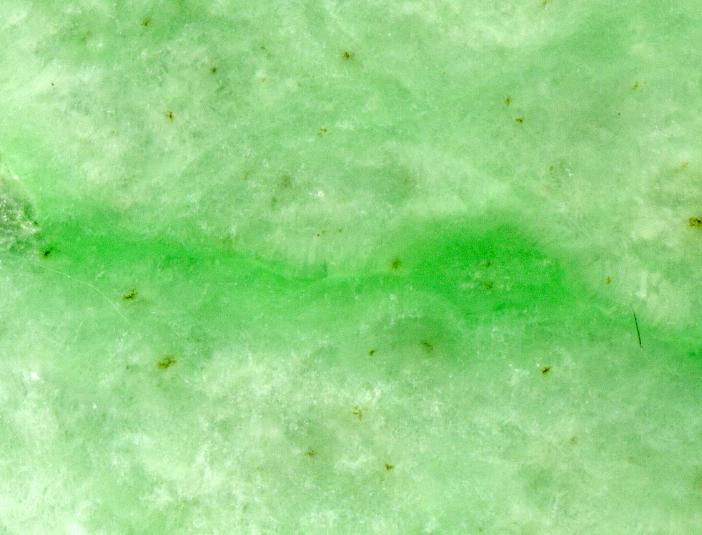
Jadeite commands higher prices per carat than most diamonds, which says everything about how thoroughly the market has embraced this particular shade of green. The finest specimens—those translucent, emerald-colored pieces that seem to glow from within—sell for astronomical amounts at auction.
Myanmar produces virtually all of the world’s imperial jadeite, and the mining operation resembles something between archaeology and gambling. Rough stones are bid on before anyone knows what’s inside, and a single boulder can make or break fortunes depending on the quality of jadeite hidden beneath its weathered exterior.
The entire process has an element of beautiful absurdity: some of the world’s most valuable gemstones are locked inside rocks that look like nothing special until someone takes a saw to them.
The cultural significance amplifies the rarity. In Chinese culture, jadeite represents everything from spiritual protection to social status, creating demand that far outstrips the limited supply of truly exceptional material.
Jeremejevite
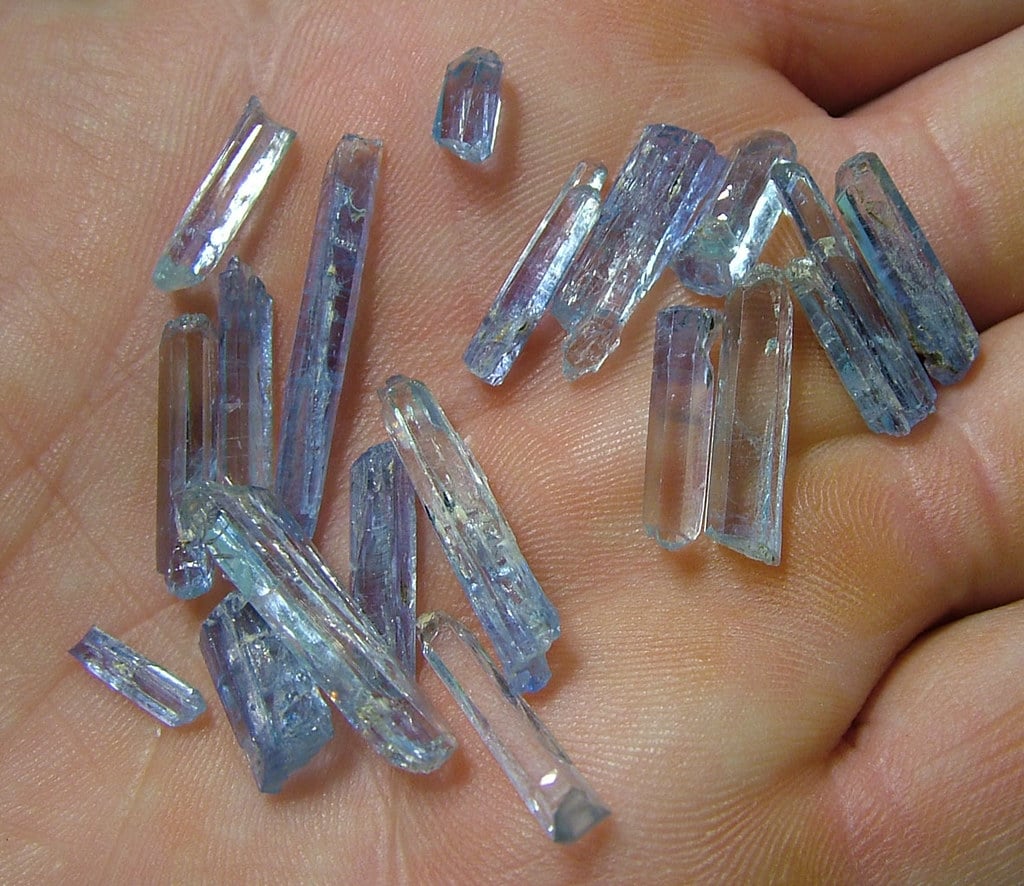
There’s something almost aggressive about jeremejevite’s rarity, as if the mineral decided that appearing in more than a handful of locations worldwide would be beneath its dignity. The stone forms under conditions so specific that most of the planet’s crust simply can’t accommodate its needs: it requires aluminum, boron, and fluorine to come together in precise proportions, typically in granite pegmatites that have been altered by boron-rich fluids.
The result is a gemstone that most collectors will never encounter outside of museums or specialized exhibitions. Jeremejevite crystals tend to be small, and the transparent, facetable material that makes for decent jewelry represents just a fraction of an already minuscule supply.
The color ranges from colorless to pale yellow to blue, but regardless of hue, finding jeremejevite feels less like shopping and more like winning a very expensive lottery.
Discovery locations read like a geography quiz of remote places: the Erongo Mountains in Namibia, a few spots in Russia, scattered finds in Tajikistan. Each new source generates excitement among collectors precisely because jeremejevite sources are so few and far between.
Taaffeite
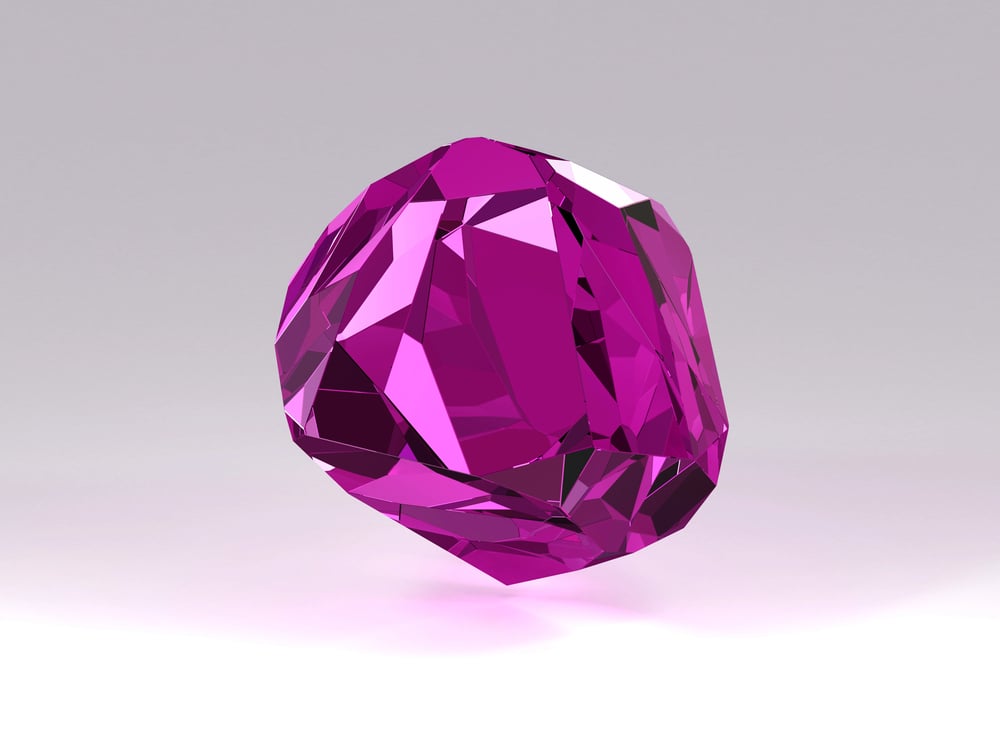
Taaffeite was discovered by accident, which seems appropriate for a gemstone that shouldn’t technically exist. Count Edward Taaffe was examining a collection of spinels in 1945 when he noticed that one specimen displayed optical properties that didn’t match spinel at all—different refractive index, different birefringence, different everything.
What he’d found was an entirely new mineral, one so similar to spinel in appearance that previous examples had been misidentified for decades.
The discovery raised an uncomfortable question: how many other “spinels” sitting in collections around the world were actually taaffeite? The answer, as it turned out, was not many.
True taaffeite specimens remain extraordinarily rare, with Sri Lanka and Tanzania producing most of the known material.
The gemstone occupies an odd position in the mineral world—too rare for most people to encounter, too similar to spinel for casual identification, and too recently discovered to have developed the cultural significance of older gemstones. Taaffeite exists in that strange space between scientific curiosity and collector’s obsession, valuable precisely because so few people know what it is.
Poudretteite
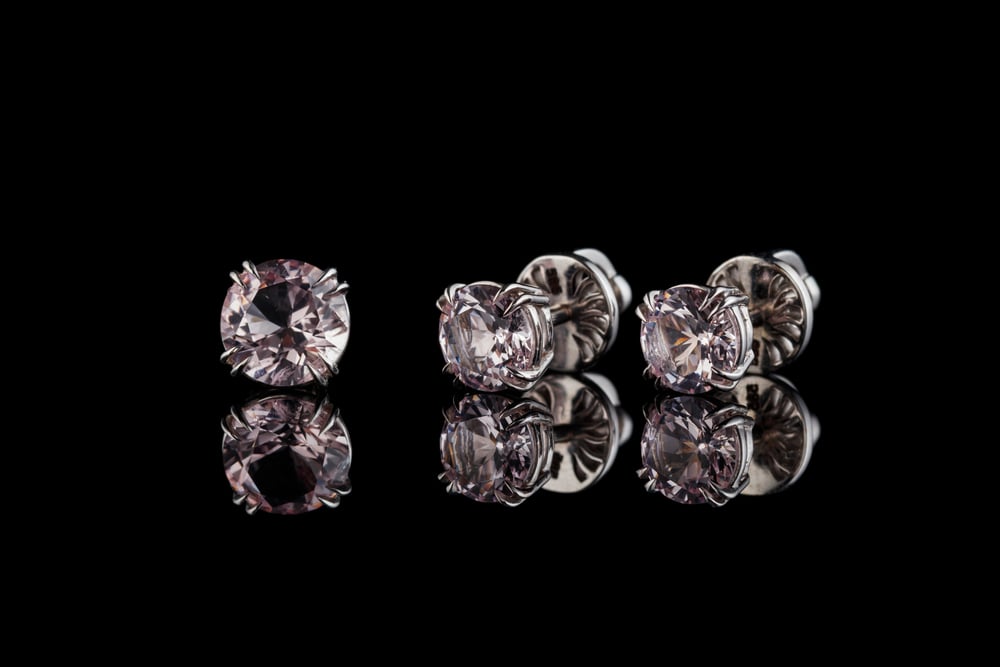
The story of poudretteite reads like a geological accident report: a mineral so improbable that it took decades for anyone to figure out what they were looking at. The first specimens turned up at Mont Saint-Hilaire in Quebec, a location known for producing unusual minerals but not necessarily gemstones.
For years, poudretteite existed mainly as a mineralogical curiosity—small, pale crystals that interested scientists more than jewelers.
Then Myanmar entered the picture. The Mogok region, already famous for producing exceptional rubies and sapphires, began yielding poudretteite crystals large enough and clear enough to cut.
Suddenly, this obscure mineral transformed from scientific specimen to legitimate gemstone, though one that remained stubbornly rare. The chemical formula requires potassium, sodium, beryllium, aluminum, silicon, and oxygen to arrange themselves in a specific crystal structure—not impossible, but unlikely enough that poudretteite sources remain limited to just a few locations worldwide.
Most gem-quality poudretteite displays a pale pink color that seems almost reluctant to commit to being pink at all. The stones have a understated quality that appeals to collectors who prefer subtlety over flash, though finding specimens large enough for jewelry requires considerable patience and deeper pockets than most people possess.
Musgravite
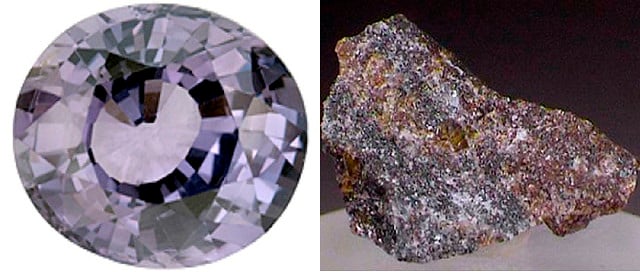
Musgravite belongs to the taaffeite family, which should tell you everything about how cooperative this mineral is about being found and identified. First discovered in the Musgrave Ranges of South Australia in 1967, musgravite spent decades existing primarily as tiny, non-gem-quality crystals that interested mineralogists but offered little hope for anyone wanting to actually wear the stuff.
The breakthrough came when new deposits in Madagascar and Sri Lanka began producing larger, cleaner crystals. Even so, musgravite remains one of those gemstones that exists more in theory than practice for most collectors.
The color ranges from gray to purple to green, with the finest specimens displaying a grayish-purple hue that manages to be both subtle and striking. The optical properties—high refractive index, moderate dispersion—create stones that seem to glow with internal light when properly cut.
Finding musgravite requires knowing what to look for, since its resemblance to other gemstones leads to frequent misidentification. The mineral’s rarity ensures that most jewelers will never encounter it, and most consumers will never have the opportunity to choose it over more readily available alternatives.
Musgravite occupies that rarefied space reserved for stones that are technically available but practically unobtainable.
Grandidierite
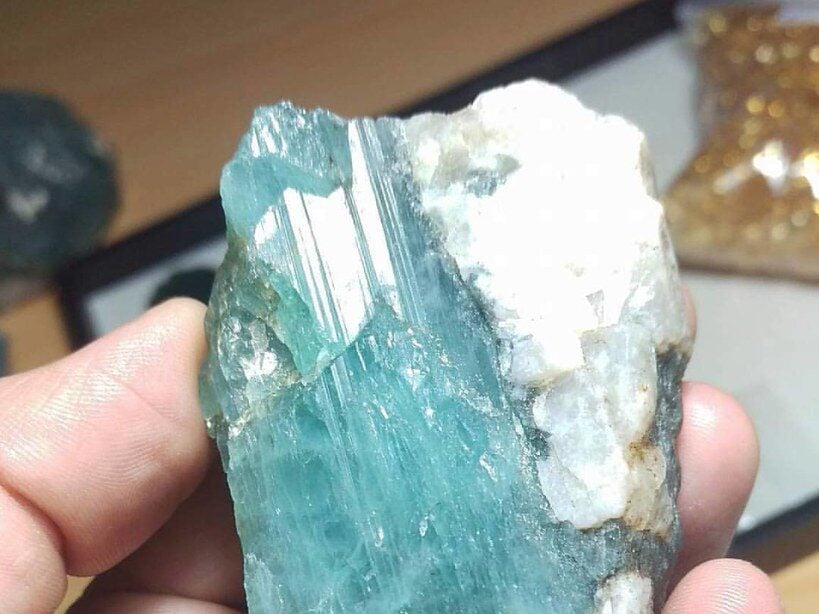
Grandidierite’s blue-green pleochroism creates an optical effect that seems designed to confuse anyone trying to determine the stone’s actual color—turn it one way and it appears blue, rotate it slightly and green dominates, find the right angle and both colors seem to exist simultaneously in the same crystal. This isn’t a flaw in the gemstone; it’s the entire point.
The mineral was first identified in Madagascar in 1902, named after French explorer Alfred Grandidier. For most of the following century, grandidierite existed as small, opaque specimens that demonstrated interesting optical properties but offered little hope for jewelry applications.
The situation began changing when new discoveries in Madagascar produced larger, more transparent crystals, though even the finest material remains scarce enough that most people will encounter grandidierite only in photographs or museum displays.
The pleochroism—that color-changing property—occurs because the crystal structure absorbs different wavelengths of light depending on the viewing angle. The effect is subtle enough that casual observation might miss it entirely, but dramatic enough that anyone paying attention will notice something unusual about the way light behaves inside these stones.
Grandidierite demands attention without being obvious about it, which perfectly matches its status as a gemstone for people who know what they’re looking at.
Black Opal
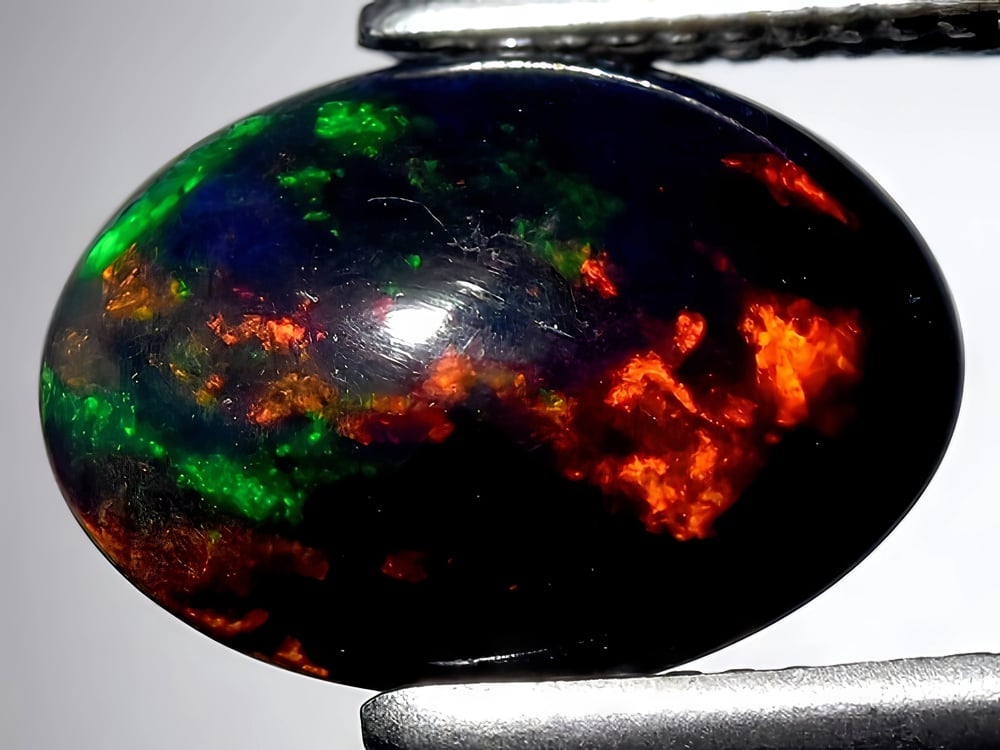
Black opal breaks the rules about how gemstones are supposed to display color, creating fire that seems to burn from within a dark body tone that shouldn’t logically enhance brightness but somehow does. The phenomenon defies intuition—darker backgrounds should make colors appear duller, not more vivrant—yet black opal’s play-of-color often surpasses that of lighter opals from the same deposit.
Lightning Ridge in New South Wales produces virtually all of the world’s fine black opal, and the mining process resembles equal parts science and superstition (miners follow seams of opal-bearing rock through underground workings that can extend for miles, never quite sure when a pocket of exceptional material might appear or when the seam might peter out entirely, leaving nothing but common clay). The unpredictability creates a market where prices can vary wildly depending on the specific pattern and intensity of color displayed by individual stones.
The finest black opals exhibit broad flashes of color that seem to move as the stone is tilted—reds and oranges dancing across the surface, blues and greens appearing and disappearing with changes in viewing angle. These top-quality specimens command prices that rival fine emeralds or sapphires, though unlike those stones, black opal’s value depends entirely on subjective factors like pattern attractiveness and color intensity rather than standardized criteria.
Alexandrite
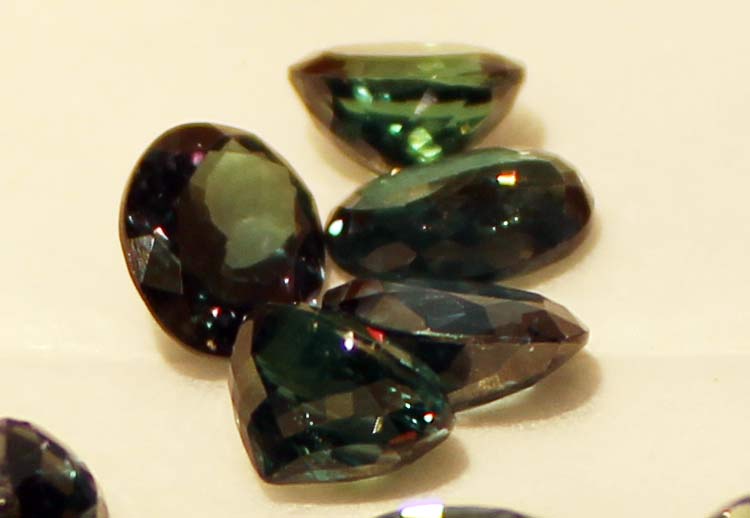
Alexandrite performs a color-change trick that seems almost too convenient to be real: green in daylight, red under incandescent light, as if the gemstone deliberately chose the two colors most likely to create dramatic contrast. The effect occurs because alexandrite’s crystal structure absorbs yellow light while transmitting both blue-green and red wavelengths, but the apparent color depends entirely on the light source’s spectral composition.
Russian deposits in the Ural Mountains produced the original alexandrite, and those early specimens established the standard against which all subsequent finds are measured. The Russian material displayed the most dramatic color change—vivid green to vibrant red with minimal intermediate tones—creating stones that seemed to switch between being emeralds and rubies depending on the lighting conditions.
Modern sources in Brazil, Sri Lanka, and East Africa produce alexandrite with varying degrees of color change, though few match the intensity of the original Russian material.
The gemstone’s discovery in 1830 coincided with the coming of age of the future Tsar Alexander II, creating a patriotic connection that Russian nobility embraced enthusiastically. The timing was perfect: alexandrite’s red and green colors matched the Russian military colors, transforming a geological curiosity into a symbol of imperial pride.
That historical association, combined with genuine rarity, ensures that fine alexandrite remains one of the most sought-after colored gemstones.
Padparadscha Sapphire
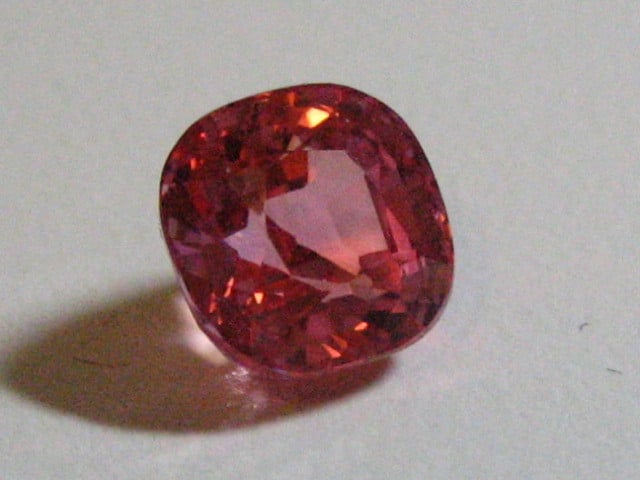
Padparadscha sapphire occupies the narrow color range between pink and orange where gemological precision meets marketing poetry, and the result is a stone that generates more debate than almost any other colored gemstone. The name comes from the Sinhalese word for lotus blossom, suggesting a delicate peachy-pink hue, though defining exactly which shades qualify as true padparadscha remains contentious among dealers, gemologists, and collectors.
Sri Lanka produces the finest examples, though new sources in Madagascar have expanded the available supply while complicating the definitional arguments (some purists insist that only Sri Lankan material deserves the padparadscha designation, while others accept any corundum displaying the appropriate color regardless of origin, and the gemological community remains diplomatically divided on the question). The most prized specimens exhibit a balanced blend of pink and orange with no brown undertones, creating a color that seems to glow with internal warmth.
Heat treatment can enhance padparadscha sapphires or create orange-pink colors in stones that originally displayed different hues, adding another layer of complexity to an already complicated market. Natural, unheated padparadscha sapphires command premium prices, especially when accompanied by respected laboratory reports confirming both the color designation and the absence of thermal enhancement.
Demantoid Garnet
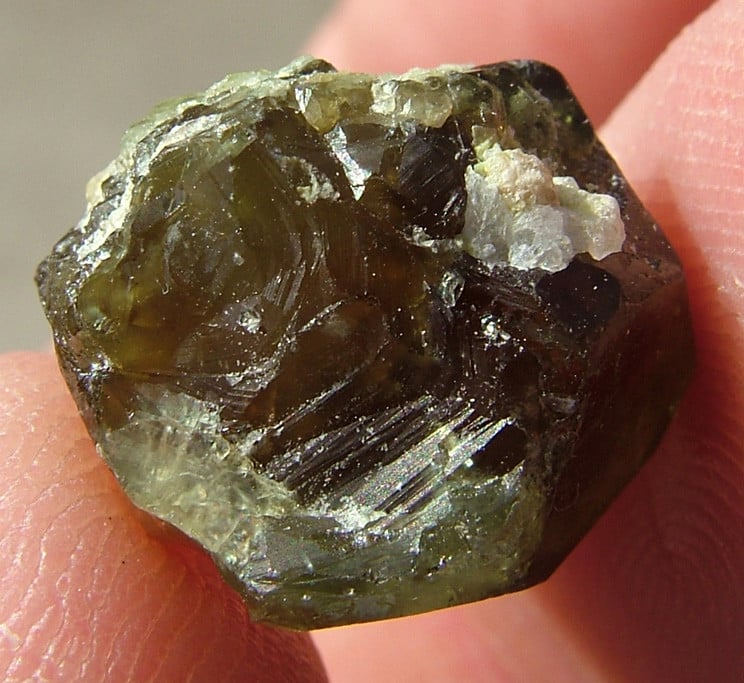
Demantoid garnet displays more fire than most diamonds, which explains both its name and why Russian nobility became obsessed with it during the late 19th century. The mineral’s high refractive index and strong dispersion create rainbow flashes that seem almost excessive in their intensity, particularly in stones cut with proportions designed to maximize the effect.
The original Russian deposits in the Ural Mountains produced demantoid with distinctive horsetail inclusions—curved clusters of golden byssolite fibers that created internal landscapes more beautiful than most flawless gemstones. These inclusions, which would be considered flaws in other garnets, actually increase demantoid’s value when they display the characteristic radiating pattern.
The effect transforms inclusions from defects into desirable features, reversing normal gemstone valuation logic.
Modern sources in Namibia and Madagascar produce demantoid with different inclusion patterns and slightly different color nuances, expanding the available supply while creating new categories for collectors to obsess over. The Namibian material tends toward yellower greens, while some Madagascar stones approach the vivid green of the finest Russian examples.
Regardless of source, high-quality demantoid remains rare enough that many jewelers stock other garnets but have never handled exceptional demantoid specimens.
Benitoite
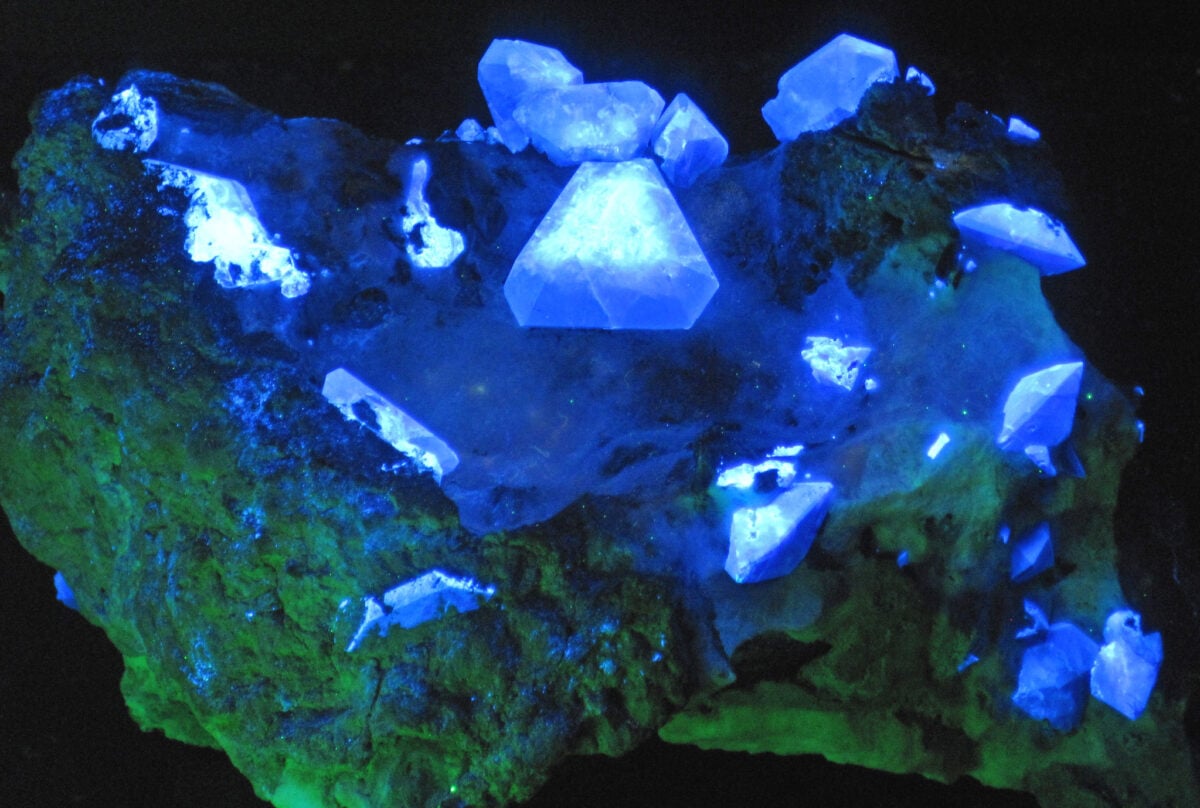
Benitoite exists in exactly one location on Earth, which makes it either the ultimate collector’s gemstone or an exercise in geological stubbornness depending on your perspective. The San Benito Mountains of California remain the sole source of gem-quality material, a situation that has persisted since the mineral’s discovery in 1907 and shows no signs of changing.
The gemstone displays a blue color that ranges from pale sky blue to deep sapphire blue, often with a subtle violet component that becomes more apparent under certain lighting conditions (fluorescent light tends to emphasize the violet, while daylight brings out the pure blue, creating a subtle color-change effect that adds complexity to stones that already possess considerable optical interest). The high refractive index and strong dispersion create fire that rivals diamond, though the blue body color modifies the effect, producing flashes that seem more integrated with the stone’s overall appearance.
California designated benitoite as the state gemstone in 1985, acknowledging both its rarity and its unique connection to the region. The original mine ceased commercial operation decades ago, leaving only occasional collecting expeditions and small-scale recovery efforts.
This limited supply ensures that benitoite prices continue rising while availability decreases, creating a market dynamic that favors collectors patient enough to wait for exceptional specimens.
The Enduring Mystery of Earth’s Hidden Treasures
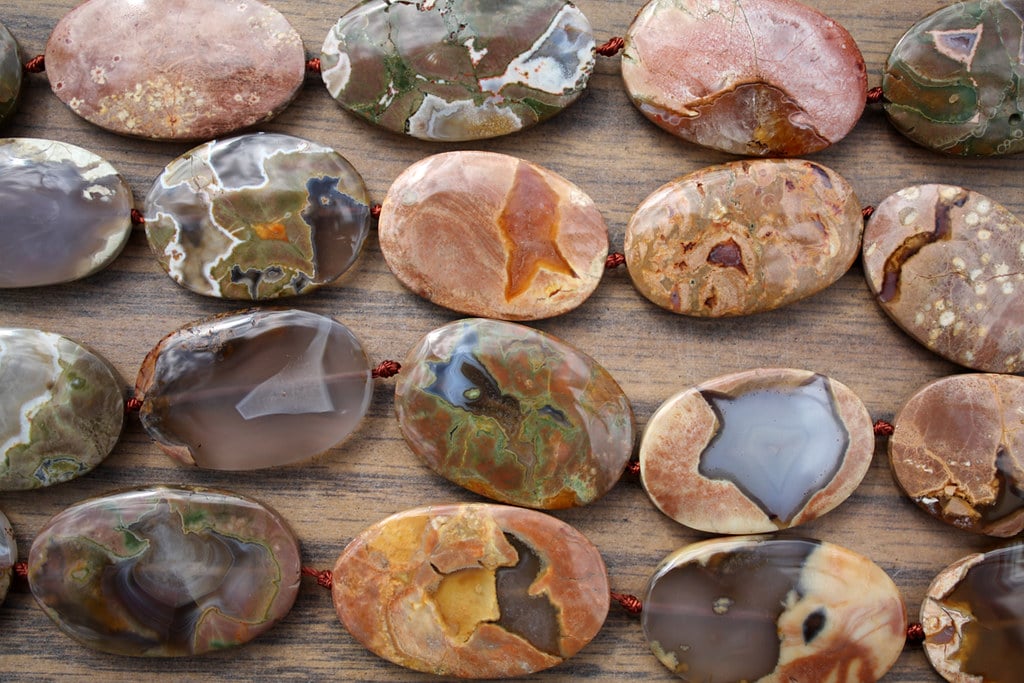
These rare gemstones remind us that the planet still holds surprises, even after centuries of systematic exploration. Each discovery reshapes our understanding of what conditions can create, what combinations of elements can coexist, and what beauty can emerge from the most unlikely geological circumstances.
The rarity isn’t just about market value—it’s about the sheer improbability of these minerals existing at all.
What makes these finds particularly remarkable is their recent discovery timeline. While humans have treasured gemstones for millennia, most of
More from Go2Tutors!

- The Romanov Crown Jewels and Their Tragic Fate
- 13 Historical Mysteries That Science Still Can’t Solve
- Famous Hoaxes That Fooled the World for Years
- 15 Child Stars with Tragic Adult Lives
- 16 Famous Jewelry Pieces in History
Like Go2Tutors’s content? Follow us on MSN.



