Robots That Look Exactly Like Us
The first time you see one up close, your brain struggles to process what’s happening. The face moves.
The eyes blink. The lips form words.
But something feels wrong in a way you can’t quite name. These robots sit in the space between human and machine, and that’s exactly where their creators want them.
The technology has reached a point where you have to look twice to be sure what you’re seeing isn’t alive.
Sophia Became the First Robot Citizen

Hanson Robotics unveiled Sophia in 2016, and she quickly became the most famous humanoid robot in the world. Her face uses a material called Frubber that mimics human skin, and she can make over 60 different facial expressions.
Saudi Arabia granted her citizenship in 2017, making her the first robot to receive legal personhood anywhere. Sophia has appeared on talk shows, given speeches at conferences, and even addressed the United Nations.
Her creators programmed her to hold conversations using artificial intelligence, though experts debate how much of her responses come from genuine AI versus scripted answers. She looks remarkably human from certain angles, with realistic eyes and subtle facial movements that create the illusion of thought.
The citizenship decision sparked controversy. Critics pointed out that a robot received rights that many human residents of Saudi Arabia still lack.
But the publicity worked. Sophia became a global ambassador for robotics technology and sparked conversations about AI rights that continue today.
Geminoid Robots Clone Their Creator

Japanese roboticist Hiroshi Ishiguro built a robot that looks exactly like him. The Geminoid HI-4 replicates his appearance down to his wrinkles and hair patterns.
Ishiguro can control the robot remotely, making it mimic his movements and speak with his voice. He’s created several versions of himself over the years as his appearance aged.
Ishiguro doesn’t just make copies of himself. He’s built Geminoids of other people too, including a news anchor and several actors.
These robots can sit in for their human counterparts in meetings or presentations. The technology uses compressed air to create subtle movements in the face and body, making them breathe and shift weight like real people.
The goal isn’t perfect replication. Ishiguro aims for something he calls the “uncanny valley”—that uncomfortable zone where something looks almost but not quite human. He believes studying these robots helps us understand what makes humans human.
When you strip away everything except appearance and basic movement, what’s left that defines humanity?
Ameca Shows Every Emotion
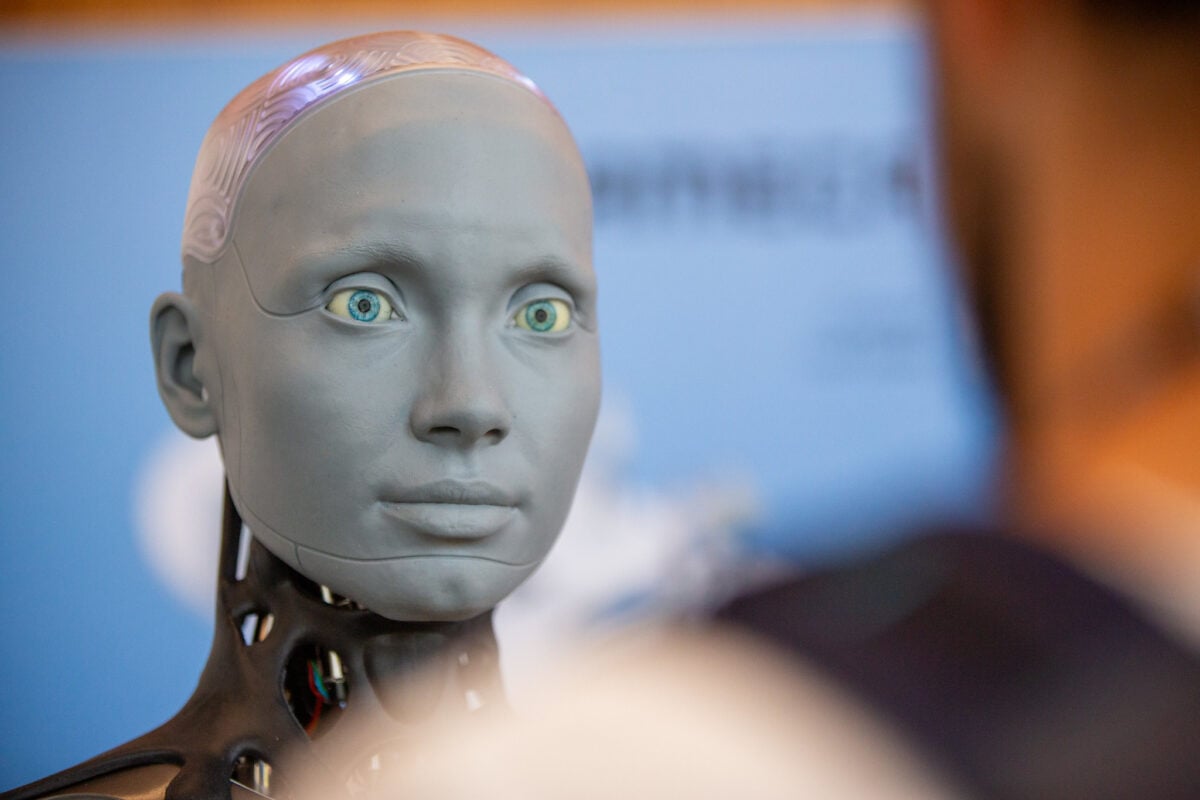
Engineered Arts in the UK created Ameca as what they call “the world’s most advanced human-shaped robot.” The gray-skinned android can express surprise, confusion, happiness, and concern with remarkable subtlety.
Videos of Ameca’s facial expressions went viral because the robot’s reactions look genuinely startled and curious. The modular design means engineers can upgrade Ameca’s systems without rebuilding the entire robot.
Different AI systems can control it, and the robot serves as a platform for testing new software and hardware combinations. The gray skin was a deliberate choice to avoid the uncanny valley problem while still demonstrating realistic facial movements.
Ameca can track people with its eyes, respond to voices, and make hand gestures that seem natural. The technology focuses on realistic upper-body movement rather than walking.
You can have a conversation with Ameca and watch expressions cross its face that match what you’d see on a person processing information.
Erica Reads Your Emotions

Japanese researchers developed Erica as an autonomous android that can hold conversations and respond to emotional cues. She has 19 infrared sensors to track people, microphones to process speech, and cameras in her eyes to recognize faces.
Her creators programmed her to understand social cues and respond appropriately to different emotional states. Erica’s appearance combines features from multiple people to create a face that looks generically attractive without resembling anyone specific.
She can nod, gesture, and maintain eye contact during conversations. The team behind her focused on making interactions feel natural rather than robotic.
The android has worked as a receptionist and news anchor in experimental settings. She can remember previous conversations and reference them later, creating the impression of ongoing relationships.
Her voice sounds natural, with appropriate pauses and intonation that match the content of what she’s saying.
Junko Chihira Greets Department Store Customers

Toshiba’s Junko Chihira works as a receptionist in Japanese department stores, greeting customers and providing information. She looks like a young Japanese woman with long dark hair and carefully applied makeup.
Her movements are slower than a human’s but smooth enough to avoid looking jerky or mechanical. Chihira can speak multiple languages and switch between them based on who she’s talking to.
Her facial expressions remain limited compared to more advanced models, but she can smile and make eye contact. The robot demonstrates how humanoid androids might integrate into retail and service industries.
Department stores use Chihira as both a functional employee and a tourist attraction. People line up to take photos with her and ask her questions.
The novelty brings in customers while also handling basic information requests that would otherwise require human staff.
Nadine Has Social Memory
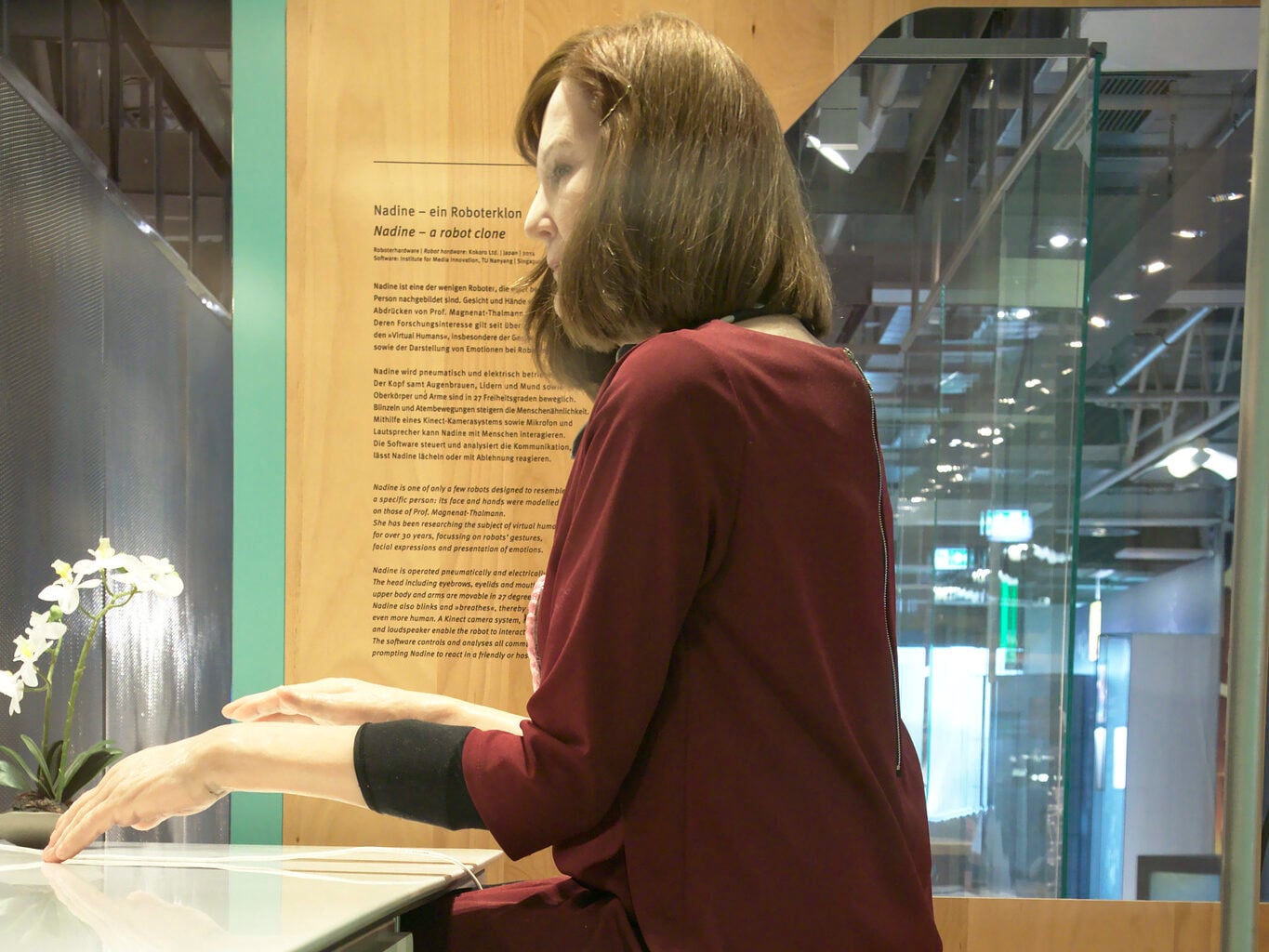
Developed at Nanyang Technological University in Singapore, Nadine looks remarkably like her creator, Professor Nadia Thalmann. The robot remembers previous conversations, recognizes people she’s met before, and can hold grudges or show favoritism based on past interactions.
Nadine’s social intelligence goes beyond simple question-and-answer exchanges. She can work as a social companion, particularly for elderly people who might otherwise spend days alone.
The robot engages in small talk, remembers birthdays and important events, and responds to emotional states with appropriate reactions.
The technology aims to create genuine relationships between humans and machines. Nadine doesn’t just process information.
She builds context over time about the people she interacts with, creating the foundation for something that resembles friendship.
Han Became a Teaching Tool

Another creation from Hanson Robotics, Han looks like a young man with Asian features. His creators designed him specifically for research and education about artificial intelligence.
Han can see, hear, walk, and interact with people in ways that demonstrate current robotics capabilities. Schools and universities use Han for STEM education, letting students program his responses and study his systems.
He serves as a bridge between abstract AI concepts and tangible results that students can see and touch. Watching Han respond to new programming helps students understand how machine learning works.
Han’s expressive face can show happiness, sadness, anger, and surprise. His movements look more natural than earlier models, with less of the stiffness that marked previous generations of humanoid robots.
The educational focus means his technology gets updated frequently as new advances become available.
Harmony Blurs Different Lines
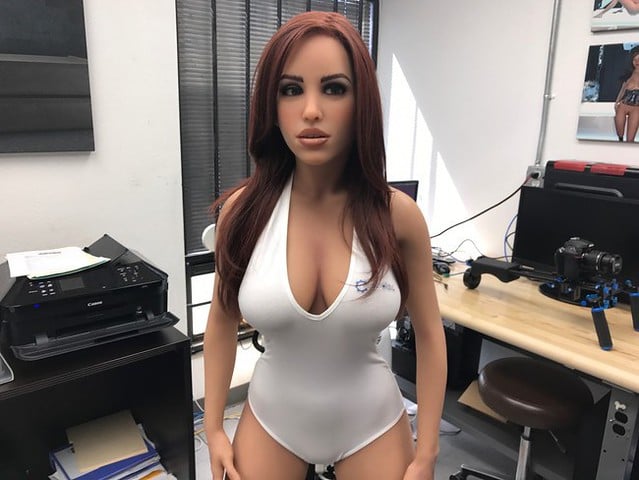
RealDoll’s Harmony represents a different approach to humanoid robots. The company, known for realistic adult products, added AI and robotics to create a companion that can talk, learn, and remember.
Harmony’s customizable appearance and personality make each model unique to its owner. The robot can hold conversations about various topics, remember personal details, and express preferences.
Her face uses animatronics to create expressions, and her voice can be adjusted to different tones and accents. Users can modify their personality traits through a smartphone app.
Harmony raises questions about the ethics of humanoid robots designed specifically for companionship. Critics worry about the implications of relationships with machines.
Supporters argue that the technology provides comfort for people who struggle with human relationships. The debate continues as the technology improves and becomes more accessible.
Actroid Robots Work Trade Shows

Kokoro Company produces Actroid robots that work as booth attendants and receptionists at trade shows and corporate events. These androids look like young women with realistic skin, natural hair, and coordinated outfits.
They can give presentations, answer questions, and interact with crowds. Multiple versions exist, each with slightly different appearances and capabilities.
The robots breathe realistically, with their chests rising and falling. They blink naturally and make subtle movements that prevent them from looking frozen or statue-like.
The attention to small details creates a more convincing human appearance. Companies rent Actroids for events where they want to demonstrate technological sophistication or simply attract attention.
The robots generate publicity and draw crowds, serving both practical and promotional purposes. They represent how humanoid robots have entered commercial applications.
Telenoid Takes a Minimalist Approach

Hiroshi Ishiguro also created Telenoid, which looks nothing like a complete human but somehow feels deeply human anyway. The small, childlike robot has a minimal face, stubby limbs, and a simplified body.
Despite the abstract appearance, people report feeling strong emotional connections when holding and talking to Telenoid. The robot serves as a telepresence device.
Someone far away can control it, speaking through it and seeing through its cameras. The person holding the Telenoid feels like they’re hugging and talking to their distant loved one.
The minimal features let your brain fill in the missing details, imagining the person behind the connection. Telenoid demonstrates that looking exactly like a human isn’t always necessary for creating a human connection.
Sometimes less is more. The simplified design avoids the uncanny valley while still triggering emotional responses that more realistic robots often miss.
Bina48 Preserves a Personality
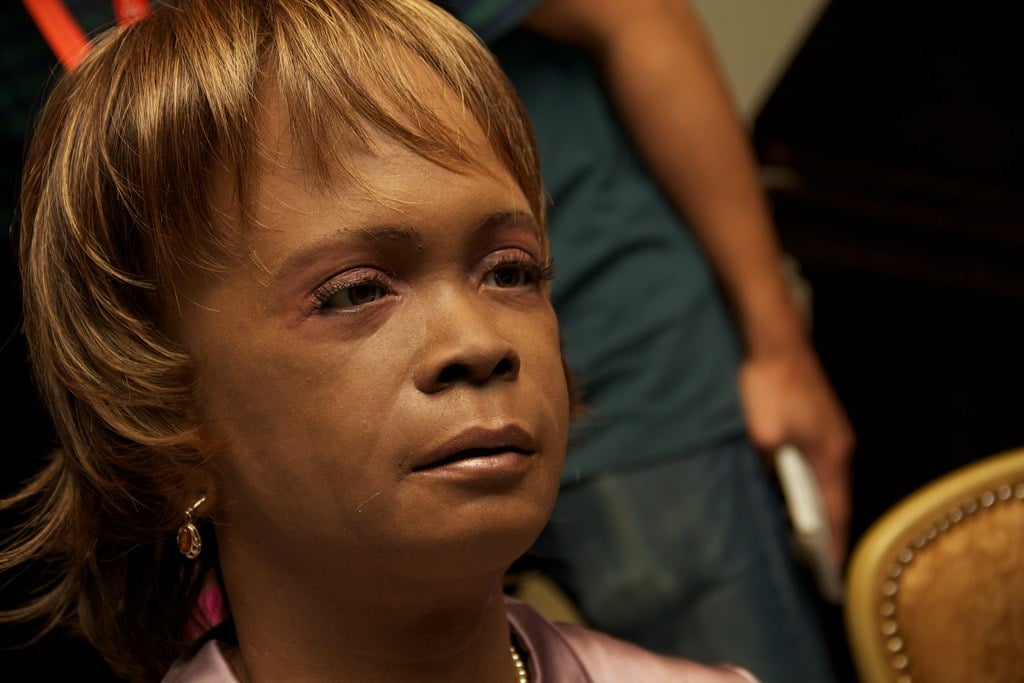
This robot contains the memories, feelings, and beliefs of a real woman named Bina Aspen Rothblatt. Her wife, Martine Rothblatt, commissioned the robot in 2010 as an experiment in consciousness and identity.
Hours of interviews with Bina were programmed into the robot’s AI, letting it respond as Bina would. Bina48 looks like its namesake with dark skin, dreadlocks, and realistic facial features.
The robot can discuss philosophy, share memories from Bina’s life, and hold surprisingly deep conversations. It raises questions about whether personality can be digitized and what it means to preserve someone’s essence in machine form.
The robot has given TED talks, taught classes, and participated in art projects. Some conversations feel like talking to the real Bina.
Others reveal the limitations of current AI technology. The project pushes boundaries in how we think about identity, memory, and the possibility of digital immortality.
Yangyang Helps Hospital Patients
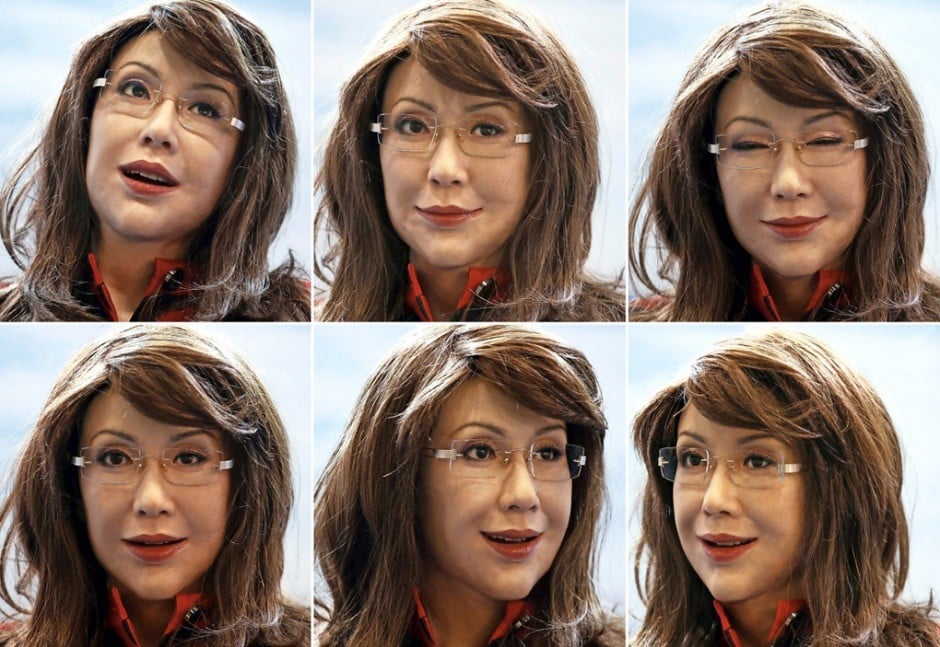
Developed in China, Yangyang works as a nursing assistant in hospitals. The robot looks like a young Chinese woman in medical scrubs.
She can check patient vitals, deliver medication reminders, and provide companionship to people recovering from illness or surgery. Yangyang’s programming focuses on medical knowledge and bedside manner.
She can explain procedures, answer health questions, and offer encouragement. Patients report feeling comfortable talking to her about concerns they might hesitate to share with human staff.
The robot demonstrates practical applications for humanoid technology in healthcare. As populations age and healthcare workers face increasing demands, robots like Yangyang might help fill gaps in patient care.
The human appearance helps patients feel cared for rather than processed by impersonal machines.
Where This Technology Leads

Years of work shape these machines meant to mirror how people move and appear. The closer we get, the more subtle gaps remain when mimicking quick human exchanges.
Still, every breakthrough shows just how little we grasp about the real connection between people. It moves just right, has smooth skin, and eyes that seem alive.
It knows when you’re sad, and recalls the date you were born. Yet there’s a gap, quiet but clear.
That flicker – real awareness – isn’t there. Perhaps never could be.
Looks aren’t what decide if a robot fits in. Some already resemble humans closely, especially under bright lights indoors.
What really counts is how they affect those around them. Success comes not from skin-like surfaces but from gestures that suggest understanding.
It’s the quiet reactions – timing, eye contact, pauses – that build trust. Feeling seen matters more than looking real.
Step by step, new machines grow closer to how people move and act. You may find them scanning items where you shop.
A few could sit beside older relatives during quiet afternoons. Others might guide kids through lessons in classrooms.
Change slips in quietly – robot by robot. How it seems to you – hopeful or strange – might hinge on whether they can truly grasp emotion behind familiar faces.
More from Go2Tutors!

- 16 Historical Figures Who Were Nothing Like You Think
- 12 Things Sold in the 80s That Are Now Illegal
- 15 VHS Tapes That Could Be Worth Thousands
- 17 Historical “What Ifs” That Would Have Changed Everything
- 18 TV Shows That Vanished Without a Finale
Like Go2Tutors’s content? Follow us on MSN.



