Riddles That Most Adults Cannot Solve
Something shifts in your brain when you’re a kid solving riddles. The answers come easier because you haven’t built up years of overthinking and complex reasoning patterns.
Adults tend to make riddles harder than they need to be, searching for elaborate solutions when the answer sits right in front of them. These riddles prove that point repeatedly, stumping grown-ups while kids crack them in seconds.
The Three Switches
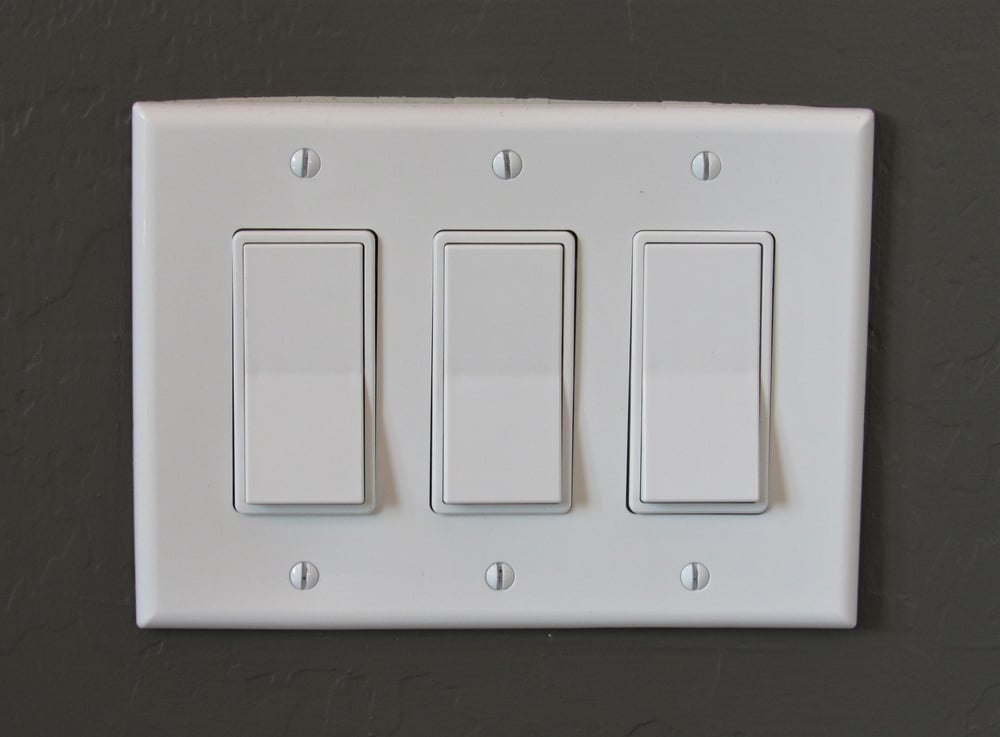
You stand outside a closed room that contains one light bulb. Outside the room, you find three switches, but only one of them controls the bulb inside.
You can flip the switches however you want, but you can only enter the room once to check the bulb. How do you figure out which switch controls the light?
Most people get stuck thinking they need some trick with timing or multiple entries. The solution uses heat.
Flip the first switch on and leave it for several minutes. Then turn it off, flip the second switch on, and enter the room.
If the light is on, the second switch controls it. If the light is off but warm, the first switch controls it. If the light is off and cold, the third switch controls it.
The Prisoner and Two Doors

Two doors stand before you. One leads to freedom, the other to certain death.
A guard stands in front of each door. One guard always tells the truth.
The other always lies. You don’t know which is which.
You can ask one guard one question to determine which door leads to freedom. What do you ask? Adults overcomplicate this.
They try to craft elaborate questions or find loopholes. The answer is simple: ask either guard, “If I asked the other guard which door leads to freedom, what would they say?” Then choose the opposite door.
The truth-teller would report the liar’s false answer. The liar would lie about the truth-teller’s honest answer.
Both responses point you toward the death door, so you pick the other one.
The River Crossing

A farmer needs to cross a river with a fox, a chicken, and a bag of grain. His boat only holds him and one other item.
If he leaves the fox alone with the chicken, the fox eats the chicken. If he leaves the chicken alone with the grain, the chicken eats the grain. How does he get everything across?
The trick is recognizing you can bring things back. Take the chicken across first.
Go back alone. Take the fox across, but bring the chicken back with you.
Leave the chicken, take the grain across. Go back alone one more time and get the chicken.
People get stuck because they think every trip must move forward only.
The Hotel Bill Split

Three friends rent a hotel room for thirty dollars. They each pay ten dollars.
Later, the manager realizes he overcharged them. The room only costs twenty-five dollars.
He gives the bellhop five one-dollar bills to return to the guests. The bellhop decides to keep two dollars for himself and gives each guest one dollar back.
So each guest paid nine dollars. Three times nine equals twenty-seven dollars.
The bellhop kept two dollars. That’s twenty-nine dollars.
Where did the missing dollar go? There is no missing dollar. The question tricks you with bad math.
The guests paid twenty-seven dollars total. Twenty-five went to the hotel, and two went to the bellhop.
The riddle tries to make you add the bellhop’s two dollars to the twenty-seven, but you should subtract it from the twenty-seven to get the twenty-five the hotel received.
The Birthday Paradox

How many people do you need in a room before there’s a better than 50% chance that two of them share the same birthday? Most adults guess way too high.
Some say 183 (half of 365). Others go with 100 or more.
The answer is just 23 people. This happens because you’re not comparing one specific person’s birthday to everyone else’s.
You’re comparing every possible pair of people. With 23 people, you get 253 possible pairs.
The math works out to about a 50.7% probability of at least one matching birthday.
The Pill Problem

A doctor gives you two pills that look identical. You must take one of each pill at the same time, but taking two of the same pill will kill you.
You accidentally knock both bottles over, and now you have four pills mixed together with no way to tell them apart. Two are type A and two are type B.
How do you take your medication correctly without wasting any pills? Cut all four pills in half. Take one half from each of the four pills today.
Tomorrow, take the remaining halves. This guarantees you get exactly one of each type each day.
Adults struggle because they try to identify which pill is which, when the solution requires accepting you can’t know.
The Rope Around Earth

Imagine a rope wrapped tightly around Earth’s equator. Someone adds just ten feet to the rope’s length and lifts it up evenly all around.
How much space appears between the rope and the ground? People assume ten feet spread around Earth’s entire circumference creates basically no gap at all.
The actual answer is about 1.6 feet, which is enough space for a small child to crawl under. This works because of how circles and circumferences relate.
When you increase the circumference by ten feet, you increase the radius by about 1.6 feet, no matter how big the original circle was. The same math applies whether you’re measuring Earth or a basketball.
The Truthful Family

A family has five daughters. Each daughter has one brother.
How many children does the family have? Six children total.
The mistake most people make is multiplying the brother by five. But all five daughters share the same brother.
They each have one brother, but it’s the same boy. This riddle punishes quick multiplication without careful reading.
The Two Coins

You have two coins that add up to thirty cents. One of them is not a nickel.
What are the coins? A quarter and a nickel. The statement says one of them is not a nickel.
That’s true. The quarter is not a nickel.
But the other coin is a nickel. People hear “one of them is not a nickel” and assume neither coin can be a nickel.
The language tricks you into eliminating the correct answer.
The Six-Digit Number

What is the only six-digit number where the first digit equals the number of zeros in the entire number, the second digit equals the number of ones in the entire number, the third digit equals the number of twos, the fourth digit equals the number of threes, the fifth digit equals the number of fours, and the sixth digit equals the number of fives?
The answer is 210,000. There are two zeros (first digit is 2), one 1 (second digit is 1), zero 2s (third digit is 0), zero 3s (fourth digit is 0), zero 4s (fifth digit is 0), and zero 5s (sixth digit is 0).
This riddle requires patience and working backwards. Adults often give up before trying enough combinations.
The Bartender and the Man

A man walks into a bar and asks the bartender for a glass of water. The bartender pulls out a gun and points it at the man.
The man says “thank you” and walks out. Why? The man had hiccups.
He asked for water to cure them. The bartender scared him instead, which also cures hiccups.
The shock made the hiccups stop. People struggle because they invent complex scenarios about threats or crimes when the answer involves simple human biology.
The Woman in the Picture
A man is looking at a photograph. Someone asks who’s in the picture.
The man replies, “Brothers and sisters have none, but that man’s father is my father’s son.” Who is in the photograph?
His son. Work through the relationship step by step.
“My father’s son” means himself (since he has no brothers). So he’s saying “that man’s father is me.”
Therefore, the man in the picture is his son. Adults try to map complex family trees when the answer uses straightforward logic.
The Clock Chime

A clock takes two seconds to strike 2 o’clock (one second between the first chime and the second chime). How long does it take to strike 12 o’clock?
Eleven seconds, not twelve. Between twelve chimes, there are only eleven gaps.
Most people multiply twelve times one second because they count chimes instead of gaps. This riddle catches people who calculate too quickly without visualizing the actual sequence.
The Matchstick Equation

You have the equation VI = I written in matchsticks. It’s wrong. Move exactly one matchstick to make the equation correct.
You can’t make it into an inequality (no “not equal” signs). How do you fix it?
Move one matchstick from the V to make it a square root symbol over the I on the left. Now it reads √I = I, which is mathematically correct since the square root of one equals one.
This requires thinking beyond basic arithmetic to more advanced mathematical notation. Adults often limit themselves to simple operations.
The Monty Hall Problem

A sudden spotlight hits the stage. Three doors stand in a row under dim lights.
One hides a car without making a sound. The others quietly guard goats behind their frames.
Your hand lifts toward door number 1 by instinct. Now here’s the twist – after seeing your pick, the host swings open a different door, maybe number 3, just to show there’s a goat inside.
Then he turns and wonders aloud whether switching to door number 2 might be smarter. Is that move better? Switching works better.
Odds jump from one out of three to two out of three when changing. At first, picking gives just a single shot at correct – two times out of three it misses.
The host removes an incorrect option afterward. Changing means banking on that early mistake having happened – which occurs twice every three rounds.
Most folks can’t wrap their heads around this puzzle – it runs opposite to gut feeling. Experts in math went back and forth on it, stuck in debate for ages.
Logic and Humility Together

Puzzles like these never show grown-ups are dumber than kids. Loaded minds come with extra weight.
Past knowing shapes habits; those habits shape guesses. Walk in already assuming – thanks to long practice tackling tangled puzzles – something sneaky must be hiding underneath.
It feels different when thoughts come fast, unpolished. A moment ago, everything seemed tangled – now it’s clear, almost too obvious.
That idea you dismissed earlier? It sits right there, unchanged, waiting only for you to stop rearranging the pieces. Clarity shows up after the mind quiets, not before.
Simple does not mean weak – it means untouched by extra weight. You were close all along, just buried under second guesses.
More from Go2Tutors!

- 16 Historical Figures Who Were Nothing Like You Think
- 12 Things Sold in the 80s That Are Now Illegal
- 15 VHS Tapes That Could Be Worth Thousands
- 17 Historical “What Ifs” That Would Have Changed Everything
- 18 TV Shows That Vanished Without a Finale
Like Go2Tutors’s content? Follow us on MSN.



