Rivers That Meet But Never Mix
Rivers often come together smoothly, one current folding into another without a hitch.
Each curve and bend works like it’s meant to wipe away dividing lines, moving dirt and food-like stuff along in tandem.
But every now and then, on rare stretches across the planet, two rivers touch yet stay apart – flowing parallel for long distances before joining up.
Their different shades and thicknesses form scenes so sharp they look unreal.
What you see isn’t just eye candy – it also shows how water behaves when forces clash beneath the surface.
This strange action happens because of changes in heat, thickness, flow rate, or particles carried along.
Where streams crash together with such mismatches, a clear line often holds steady across long stretches.
That sight grabs attention – researchers, lens lovers, nature fans all come running.
Now take a look at standout cases where waterways touch without blending, plus what sets every clash apart.
Meeting of Waters, Brazil

Maybe the best-known case happens right in the middle of the Amazon jungle, close to Manaus – where the deep-colored Rio Negro runs into the light brown Solimões River.
These waterways travel next to each other over six miles without blending, forming a sharp line that seems like it was drawn by hand across nature’s canvas.
Flowing at a relaxed pace, the Rio Negro brings warm, dark-tinted liquid made from rotting forest plants.
Meanwhile, the Solimões moves quickly, filled with cold, muddy runoff washed down from the Andean mountains.
Because they differ in how fast they move, their temperatures, and thickness, the waters don’t merge straight away.
Tourists usually hop on boats here just to see where the dark water meets the muddy flow – side by side but clearly split.
Though both rivers join up to form part of the Amazon, their difference keeps showing farther along the riverbank.
Rhône and Arve, Switzerland
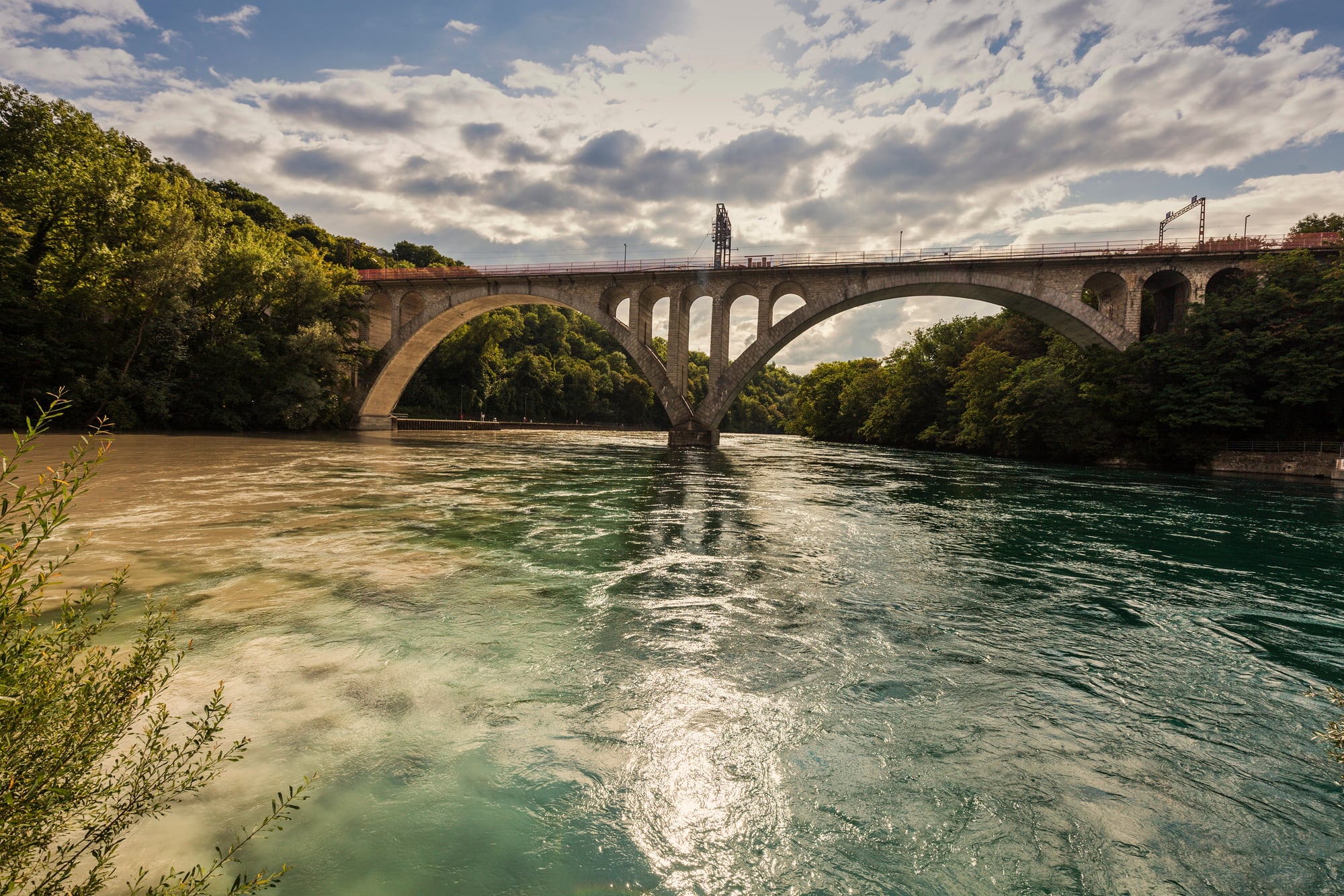
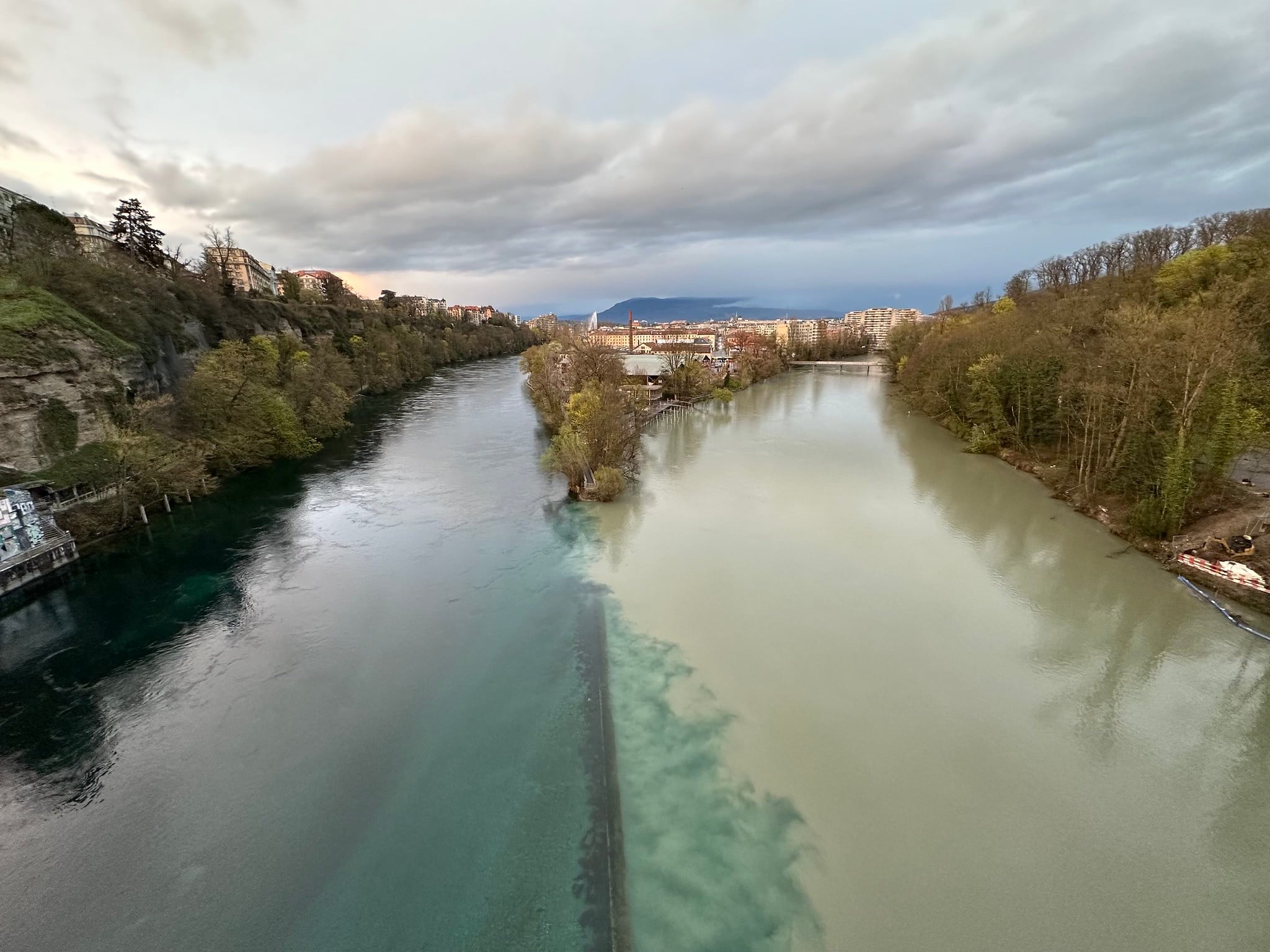
In Geneva, Switzerland, something cool happens when the Rhône joins the Arve.
While the Rhône gets water from glaciers and stays pretty clean, showing off a light blue-green shade, the Arve packs loads of fine dirt scraped by ice, making it look dull and grayish.
Because one flows quicker than the other, churning starts where they meet; still, despite that push, they don’t blend right away – instead, they run side by side for hundreds of meters before finally merging.
The change stands out most in spring, also early summer – glacier runoff hits full flow then.
People from around here or just passing through tend to stop by the water’s edge, watching that sharp border where both flows meet; it quietly shows how different worlds fit side-by-side without blending.
Black Aragvi and White Aragvi, Georgia

Georgia sits quietly where the Caucasus Mountains meet open valleys – no fanfare, just real beauty.
Close to Pasanauri, two rivers come together: the Black Aragvi and the White.
One runs dark, stained by soil washed from trees upstream; the other stays pale, fed by snow melting off high ridges.
Where they join, colors don’t blend right away – one slips beside the other, clear lines holding until farther downstream.
You can stand on an old bridge or look down from rocky edges and see how sharply one stream refuses to mix with its neighbor.
People’ve shared tales for ages ’bout how these rivers refuse to mix, calling it like two clashing worlds coming together.
Not just myths though – this split shapes how dirt settles and affects fish, forming a unique zone where both flows keep their vibe far beyond the junction.
Dudh Koshi and Bhote Koshi, Nepal

In Nepal’s rough terrain, the Dudh Koshi and Bhote Koshi show something eye-catching.
Flowing down from high-altitude ice fields, the Dudh Koshi brings along cloudy white debris – on the flip side, the Bhote Koshi starts lower and runs darker but more transparent.
Once they join up, these streams stay mostly separate for long stretches, barely blending even though they’re now one path.
This split look gets stronger when glaciers thaw heavily, making the silt levels jump sharply.
The bold color differences catch your eye, yet they’re useful – locals and hikers can spot water changes or dangers without getting close.
These streams refuse to mix, showing how natural flows, strong as they are, sometimes hit a boundary.
The Science Behind the Separation

On the surface, it’s kind of mind-blowing how something as fluid as water can avoid merging.
Yet, the science explaining this isn’t mystical – it’s clear and pretty cool.
Varying temps, mass per volume, and particles carried along set up a sort of invisible wall between separate masses of water.
Since chilly liquid drops down and hotter stuff rises up, layers form – this stacking effect makes blending take way longer.
A similar thing happens when a muddy stream runs into a cleaner one – its heavier weight changes how it moves, making side-by-side layers.
Speed plays a role too: when one current rushes past another much slower, swirling appears along the edge without breaking things apart right away.
Together, these elements build a short-lived yet eye-catching divide that stretches across long distances until mixing slowly wipes it out.
Physics breaks down how it works, though seeing it still seems like an odd natural surprise.
Cultural and Ecological Impact
Some river meetings aren’t only spots people visit or study out of curiosity.
Yet they carry meaning in traditions, sparking stories passed through generations.
Down in Brazil, native groups see the joining waters as holy – tied closely to survival and respect for nature’s flow.
Over in Switzerland, folks have always watched where the Rhône meets the Arve – it marks where contrasting terrains come together.
Without mixing right away, these streams support unique creatures living within each stretch.
One river supports life tuned to certain mud amounts or warmth, while the other doesn’t – this split boosts variety where flows run close.
Though they join later, that short divide shapes how minerals spread and dirt settles farther on.
Why It Still Matters

The rivers come together yet stay apart, showing how intricate nature really is.
Though everything flows and shifts around them, some lines hold firm – often in surprising, quiet ways.
Where they meet grabs focus, not only on water paths but also the life nearby depends on them plus what people see in these places.
They make you think about separate things existing side by side without merging fast, an idea that matters way outside maps or terrain.
Watching things like this in nature sparks wonder, makes you appreciate the quiet power behind how our world works.
Ultimately, rivers refusing to mix shows – on a tiny scale – how nature still finds ways to amaze us.
More from Go2Tutors!

- The Romanov Crown Jewels and Their Tragic Fate
- 13 Historical Mysteries That Science Still Can’t Solve
- Famous Hoaxes That Fooled the World for Years
- 15 Child Stars with Tragic Adult Lives
- 16 Famous Jewelry Pieces in History
Like Go2Tutors’s content? Follow us on MSN.