Skyscrapers That Sway in the Wind
Stand at the top of a skyscraper on a windy day and you might notice something unsettling. The building moves.
Not a lot. Not enough to knock you over.
But if you watch the water in a glass or look at the blinds near the windows, you can see it. The whole structure shifts back and forth like a tree in the breeze.
This is normal. Engineers designed it to happen.
A completely rigid building that tall would crack under the pressure. The flexibility keeps the structure safe.
But knowing the building is supposed to move doesn’t make it feel any less strange when you’re standing inside it.
Why Tall Buildings Have to Move
Physics doesn’t give skyscrapers much choice. Wind hits the side of a building and pushes.
The higher the building, the stronger the wind. At street level, you might feel a gentle breeze.
Up 100 stories, that same weather system becomes a sustained force pushing against thousands of square feet of surface area. If the building stood completely still against that pressure, the stress would concentrate in the structure.
Steel and concrete can bend to a degree. They’re designed to flex slightly without breaking. But if they can’t move at all, the force has nowhere to go.
Eventually, something gives. Engineers build skyscrapers to sway because letting them move distributes the energy throughout the structure instead of focusing it in one spot.
The building absorbs the wind’s force by bending with it.
The Willis Tower Moves Three Feet

The Willis Tower in Chicago sways about six inches on a calm day. When strong winds hit, it can move up to three feet in either direction.
The building opened in 1973 and held the title of world’s tallest for 25 years. Engineer Fazlur Rahman Khan designed it using a bundled tube system.
Instead of building it as a solid column, he created it as a hollow steel tube. This made the entire structure lighter and more flexible than comparable buildings of that era.
The design became a template for future skyscrapers. Workers in the Willis Tower sometimes notice the movement when their blinds start swaying or water in their bottles shifts around.
Most of the time, people don’t feel it. The movement is slow enough that human bodies don’t register it as motion.
But visual cues give it away.
The Empire State Building’s Modest Inch

By comparison, the Empire State Building hardly moves at all. Even in winds hitting 100 miles per hour, it sways about an inch.
The building opened in 1931 and was built with a fortified steel truss around the central elevator shaft. The difference in movement between the Empire State Building and the Willis Tower comes down to design philosophy and era.
Early skyscrapers were built with more rigid cores. Engineers braced them heavily against any movement.
Later designs embraced flexibility as a feature rather than something to prevent. Both approaches work.
The Empire State Building has stood for over 90 years without structural issues. The Willis Tower has been fine for more than 50 years.
But newer buildings tend to allow more movement because it’s more cost-effective than building everything strong enough to resist the wind completely.
The Burj Khalifa Swaying Four to Five Feet
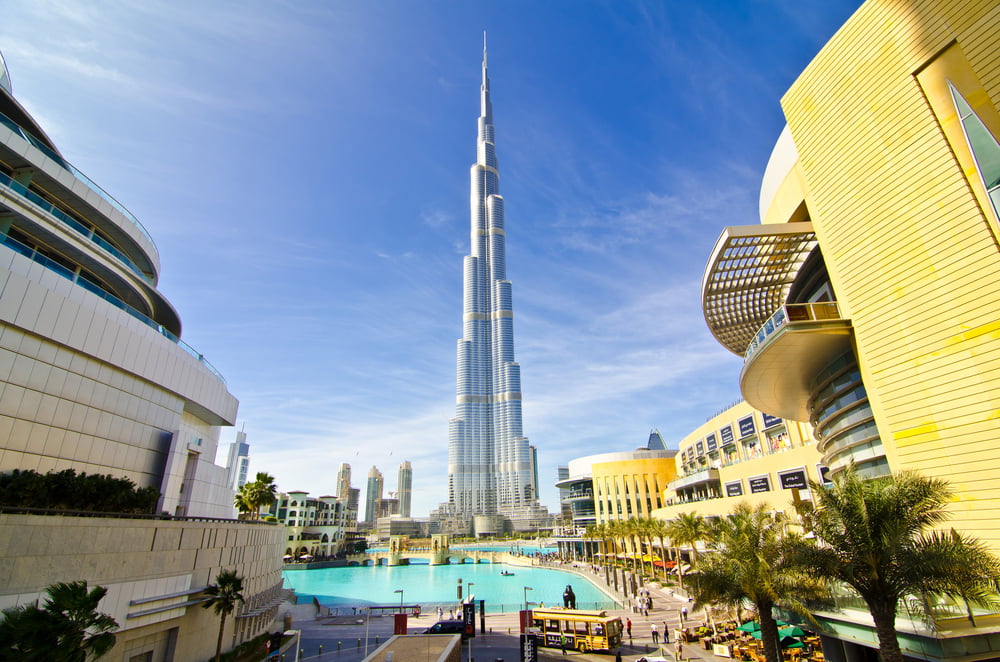
At 828 meters tall, the Burj Khalifa in Dubai is the tallest building in the world. It sways about four to five feet at the very top during high winds.
That’s roughly the same amount of movement as the Willis Tower, despite being nearly twice as tall. The reduced sway comes from the building’s shape.
The tower rises in separate stalks that top out at different heights around a central spire. This design confuses the wind.
Instead of hitting a uniform surface and forming organized whirlpools of air, the wind gets broken up and deflected around the structure. Chief structural engineer Bill Baker calls it “confusing the wind.”
The spiral shape prevents vortices from forming at a consistent frequency that would rock the building more severely.
Taipei 101 and Its Giant Pendulum

Taipei 101 in Taiwan stands 508 meters tall. Between the 88th and 92nd floors hangs a 660-ton steel sphere.
The sphere is a tuned mass damper, and it’s the largest one in the world. When the wind pushes the building in one direction, the sphere swings the opposite way.
The movement counteracts the building’s sway and reduces it by up to 40 percent. The damper can move about a meter in any direction.
During Typhoon Soudelor in 2015, strong winds swayed the main damper by exactly one meter—the largest movement ever recorded for that system. Visitors can see the golden sphere from observation decks.
It’s become a tourist attraction as much as an engineering feature.
What People Can Actually Feel

Engineers don’t limit building movement based on structural safety. They limit it based on human comfort.
A building can safely sway much more than engineers actually let it move. Humans can sense acceleration as small as 5 to 25 milli-g’s.
That’s a tiny fraction of the force of gravity. Our bodies respond badly to rhythmic motion.
We get nauseated. We lose concentration.
Some people become genuinely afraid. During Hurricane Alicia in 1983, two engineers rode out the storm inside Houston’s Allied Bank Plaza specifically to measure how the building moved.
The floor shifted beneath them. Windows distorted like funhouse mirrors.
They couldn’t walk upright. The building was never in structural danger, but the human experience was deeply unpleasant.
The Narrow Space Between Cost and Comfort

Engineers have to design buildings within a specific range. Too much movement makes people sick. Too little movement costs too much money.
The sturdier the building, the more expensive it is to construct. Chuck Besjak, director of structural engineering at SOM, describes the process as solving for gravity, solving for basic strength, solving for wind, and then solving for people.
That last part is often the hardest. Buildings can physically tolerate more sway than humans can.
So engineers add dampers, adjust shapes, and incorporate design features specifically to keep occupants comfortable rather than to keep the building standing.
Tuned Mass Dampers Across the World

Many skyscrapers use tuned mass dampers beyond Taipei 101. The Citicorp Center in New York has a 400-ton concrete weight that shifts back and forth on one of the top floors.
A computer system monitors wind conditions and moves the weight to counterbalance the building’s movement. Trump World Tower, 432 Park Avenue, and 53W53 in New York all use these systems.
So does the Burj al-Arab in Dubai, which has 11 separate dampers. The devices don’t add structural strength.
They’re purely for comfort. Most buildings hide their dampers.
A giant metal pendulum in the middle of an expensive high-rise doesn’t inspire confidence in residents who want to believe their building is completely solid.
Water Tanks as Dampers

Some buildings use water instead of solid weights. These slosh tanks work on the same principle as tuned mass dampers but use liquid that moves within a tank rather than a suspended weight.
The water shifts opposite to the building’s movement. As the building sways one direction, the water rushes the other way, pulling the structure back toward the center.
The system has to be carefully calibrated for each specific building’s height and mass. These systems are less visible than giant steel spheres and serve the same purpose.
Engineers choose between different damping technologies based on the specific needs and constraints of each project.
Building Shapes That Reduce Wind
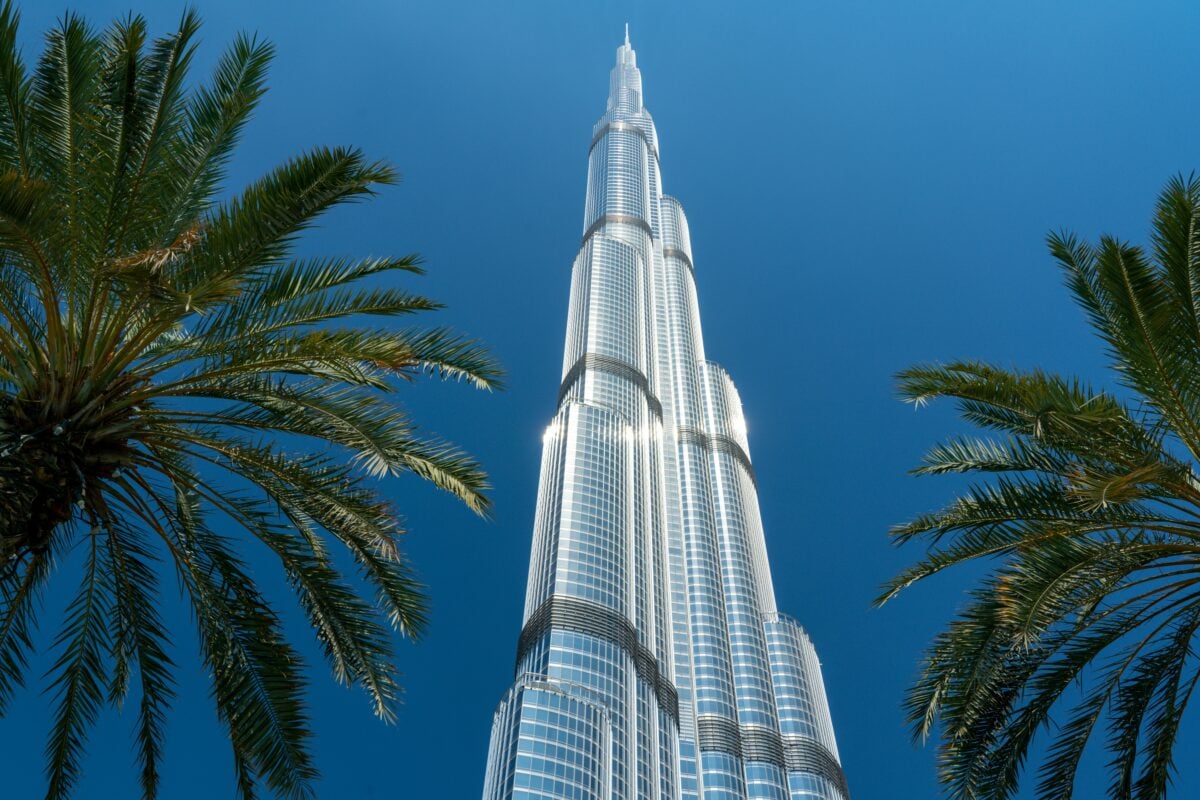
The Burj Khalifa’s spiral design shows how architecture itself can reduce wind effects. The Shanghai Tower uses a similar approach with twisted sides.
The Shard in London tapers as it rises, breaking up the uniformity that causes vortex shedding. Taipei 101 has decorative cutouts on its corners that reduce movement by 25 percent.
These aren’t just aesthetic choices. Every design element serves a function in how wind interacts with the building.
Some New York skyscrapers from the early 1900s have setbacks—sections where the building steps inward as it rises. These were originally required by ordinances to let sunlight reach the street.
They also happen to reduce wind effects by preventing uniform surfaces that would create strong vortices.
Wind Tunnel Testing Before Construction

Engineers don’t guess how wind will affect a building. They test scale models in wind tunnels during the design phase.
Companies like Rowan Williams Davis & Irwin conduct these tests for projects worldwide. A simulation of Taipei 101 revealed that the original corner design would create a problematic vortex during certain wind conditions.
Engineers changed to a double chamfered step design, which dramatically reduced the oscillation. That’s why the building has its distinctive double-stairstep corners.
The Burj Khalifa went through extensive wind tunnel testing. So did the Willis Tower, the Petronas Towers, and basically every major skyscraper built in the last few decades.
The testing happens before construction starts so engineers can adjust the design rather than trying to fix problems after the building is standing.
Buildings Strong Enough to Sway
The flexibility that allows swaying also helps buildings survive earthquakes. When the ground shakes, a flexible building moves with it rather than fighting against it.
The entire structure shifts together so the frame doesn’t twist and strain. Taipei 101 sits just 200 meters from a major fault line.
It’s designed to withstand a magnitude 9 earthquake. During a magnitude 6.8 earthquake in 2016, the building swayed visibly.
The movement was exactly what engineers wanted. The structure flexed, the damper swung, and everything worked as designed.
Traditional East Asian architecture used this principle for centuries. Japanese pagodas and Chinese palaces were built to move with earthquakes rather than resist them rigidly.
Modern engineering applies the same concept with different materials and at much greater scales.
What It Actually Feels Like

On most days, people working in skyscrapers don’t notice any movement. The sway is too slow and subtle for our bodies to detect without visual reference points.
You might work in the Willis Tower for years and never consciously feel the building move. During storms, it’s different.
Strong winds create enough movement that blinds sway, water shifts in glasses, and some people report feeling nauseated or dizzy. The building is still safe, but the experience can be unsettling.
Engineers conducted secret research in the 1970s to figure out how much movement people could tolerate. They brought test subjects into a room mounted on rails and moved it with hydraulic rams.
The participants thought they were getting free vision exams. Researchers gradually increased the simulated sway until someone complained.
That data helped establish the limits engineers use today.
Living at the Top

Residential floors in ultra-tall buildings are often the most affected by sway. Apartments on the upper floors of buildings like 432 Park Avenue in New York command premium prices for their views, but residents also experience more movement than anyone else in the structure.
Some buildings install dampers specifically to keep these top floors comfortable. The engineering isn’t about structural safety at that point.
It’s about making sure people can live their daily lives without feeling like they’re on a boat. High-end residential towers compete partly on how stable they feel.
Developers know that selling penthouses becomes harder if residents complain about motion sickness. So they invest in damping systems that might not be structurally necessary but are essential for market reasons.
The Future of Tall Buildings

Engineers say we could build much taller than we currently do. The X-Seed 4000 is a proposed skyscraper that would reach four kilometers high with a six-kilometer foundation. The technology exists. The cost doesn’t make sense.
As buildings get taller, managing wind becomes more complex. But engineers keep finding new solutions. Shapes that confuse wind.
Materials that flex precisely. Computer systems that adjust dampers in real time.
The constraints aren’t usually technical anymore. They’re economic and practical.
How much does it cost to build? How do you evacuate people quickly?
How do you make elevators work efficiently?
Standing Inside Movement

The next moment you’re inside a high-rise when storms hit, keep an eye out for tiny clues. The curtains twitching now and then.
Liquid rippling in that water bottle sitting nearby. That’s just the structure acting like it should.
For years, engineers worked hard just to get these buildings stable and livable. What allows them to move slightly is actually what stops them from falling.
Seems odd at first – till it clicks. After that, everything fits together naturally.
The buildings shift simply ’cause they must. Otherwise, you’d get structures unable to soak up pressure, sending all that strain straight into their skeletons.
Such constructions wouldn’t survive long. But the flexible ones – the kind that rock slightly when breezes hit – they’re the ones remaining upright.
More from Go2Tutors!

- The Romanov Crown Jewels and Their Tragic Fate
- 13 Historical Mysteries That Science Still Can’t Solve
- Famous Hoaxes That Fooled the World for Years
- 15 Child Stars with Tragic Adult Lives
- 16 Famous Jewelry Pieces in History
Like Go2Tutors’s content? Follow us on MSN.