Strangest Items Ever Sent Into Outer Space
Space exploration has always pushed the boundaries of human achievement, but not everything launched beyond our atmosphere has been strictly scientific.
Over the decades, astronauts and space agencies have sent some truly bizarre items into the cosmos.
Some were for research purposes, others for publicity stunts, and a few simply because someone thought it would be cool.
Here is a list of 14 strangest items ever sent into outer space.
Elon Musk’s Tesla Roadster

On February 6, 2018, SpaceX launched a cherry-red Tesla Roadster into space as a test payload for the Falcon Heavy rocket’s maiden flight.
The electric car, complete with a spacesuit-clad mannequin named ‘Starman’ in the driver’s seat, now orbits the sun on an elliptical heliocentric trajectory that crosses the orbits of both Earth and Mars.
The dashboard carries a miniature Hot Wheels version of itself, the Foundation trilogy stored on an Arch Mission data crystal, and a sign reading ‘Don’t Panic’ as a nod to The Hitchhiker’s Guide to the Galaxy.
Pizza Hut Pizza
In 2001, Pizza Hut became the first company to deliver food to space when they sent a pizza to the International Space Station aboard the Progress M-44 resupply rocket.
Russian cosmonaut Yuri Usachov was the lucky recipient of this marketing stunt that cost the company over a million dollars.
The chefs had to make special adjustments though—they used salami instead of pepperoni because it had a longer shelf life, and they added extra seasoning since astronauts’ taste buds become less sensitive in microgravity.
Luke Skywalker’s Original Lightsaber
The actual prop lightsaber wielded by Mark Hamill in the original Star Wars film took a trip to space in October 2007 aboard the Discovery shuttle on mission STS-120.
The timing couldn’t have been more perfect—the launch coincided with the 30th anniversary of A New Hope’s theatrical release.
Lucasfilm collaborated with Space Center Houston to send this piece of cinema history to the International Space Station, and it returned to Earth on November 7, 2007.
Voyager Golden Records
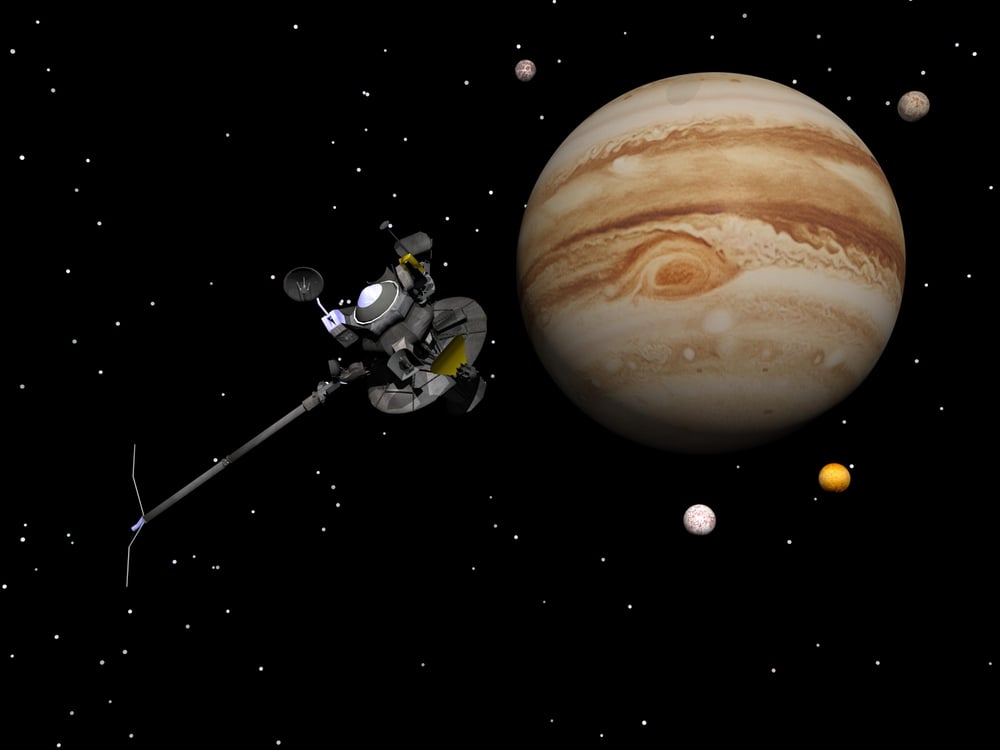
NASA’s twin Voyager spacecraft, launched in 1977, each carry a gold-plated phonograph record designed as a message to potential extraterrestrial life.
Astronomer Carl Sagan led the committee that curated 115 images, greetings in 55 languages, natural sounds from Earth, and 90 minutes of music ranging from Mozart to Chuck Berry.
The records include instructions on how to play them and are expected to remain intact for billions of years as they drift through interstellar space.
Nickelodeon Slime

Astronauts aboard the International Space Station got slimed in 2019 and 2020 when Nickelodeon sent the iconic green goo into orbit via SpaceX CRS-18.
NASA astronauts Christina Koch and Drew Morgan conducted experiments to understand how this non-Newtonian fluid behaves in microgravity.
Astronauts tossed slime-filled containers and made floating slime formations, providing data that could help improve how liquids are handled in space and potentially influence plant watering systems on future missions.
Tardigrades

These microscopic creatures, also known as water bears, became the first animals to survive direct exposure to the vacuum of space.
In 2007, the European Space Agency’s FOTON-M3 mission carried tardigrades into orbit as part of the TARDIS experiment, exposing them to the harsh radiation and freezing temperatures of open space for 10 days.
When they returned to Earth and were rehydrated, 68 percent of the specimens survived, and some even produced viable offspring afterward.
A Gorilla Suit

Astronaut Mark Kelly sent his twin brother Scott a rather unusual birthday present while Scott was stationed on the International Space Station in 2016.
The gorilla suit arrived on SpaceX CRS-8, and Scott wasted no time using it to prank British astronaut Tim Peake.
Video footage posted in February 2016 shows the costumed astronaut floating through the station’s corridors, creating one of the most surreal moments in space exploration history.
60,000 Jellyfish

NASA launched jellyfish into space in 1991 aboard Columbia on mission STS-40 to study how weightlessness affects their development.
The mission sent approximately 2,000 jellyfish polyps in flasks filled with artificial seawater, and astronauts induced them to reproduce in orbit.
By mission’s end, more than 60,000 jellyfish were floating around the shuttle.
NASA scientists confirmed that the space-born jellies had serious trouble swimming in normal gravity when they returned—they experienced extreme vertigo because their balance systems had developed without gravitational cues.
A Kitchen Spatula

During a July 2006 spacewalk outside the Discovery shuttle on mission STS-121, British-American astronaut Piers Sellers was testing a new method for repairing heat shields using protective goo.
He needed something to spread the material, so he grabbed a standard kitchen spatula for the EVA.
Everything went fine until Sellers accidentally let go of the tool, and it floated away into orbit.
Observers nicknamed it ‘spatsat,’ and it was briefly tracked before burning up in the atmosphere.
LEGO Figurines
These plastic toys have hitched rides on multiple space missions, including earlier student experiments.
The most famous LEGO space travelers were three custom figurines aboard NASA’s Juno mission to Jupiter, which launched in 2011.
The tiny passengers represented the Roman god Jupiter, his wife Juno, and the Italian astronomer Galileo Galilei.
Their lightweight design made them perfect decorative additions to the spacecraft, and they’re still on their way to explore the gas giant.
Human Ashes
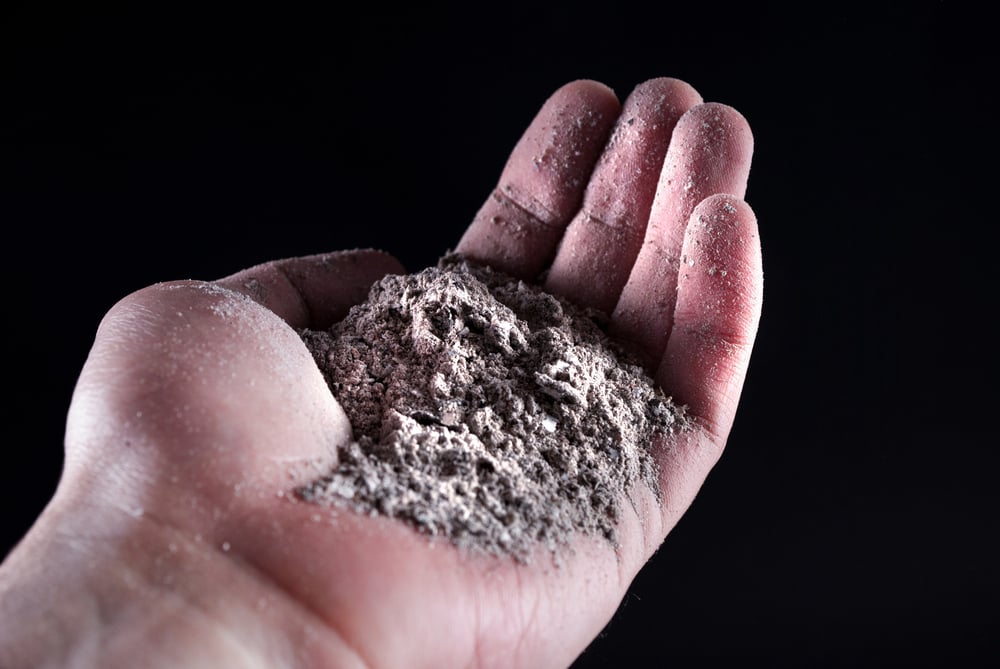
Gene Roddenberry, creator of Star Trek, became the first person to have his remains sent into space when a portion of his ashes flew aboard mission STS-52 in 1992.
His cremated remains took additional trips in 1997 and 2012, fulfilling his wish to ‘boldly go where no one has gone before.’
Since then, commercial space burial services like Celestis have launched the ashes of numerous people into orbit and beyond.
Salmonella Bacteria

In September 2006, researchers sent samples of salmonella to space aboard the Atlantis shuttle on mission STS-115, with results analyzed after the bacteria’s return in 2007.
Scientists wanted to understand how bacteria reacts to zero gravity, and the findings from this NASA and Arizona State University study were actually kind of alarming—the bacteria became three times more virulent than samples kept on Earth in similar conditions.
This discovery has major implications for understanding how pathogens might behave during long-duration space missions.
Andy Warhol Artwork

A thumb-sized ceramic wafer etched with drawings by Andy Warhol and five other prominent artists was secretly smuggled to the Moon aboard Apollo 12 in 1969.
American sculptor Forrest ‘Frosty’ Myers worked with scientists to create the Moon Museum project, then an engineer clandestinely attached one tile to a leg of the lunar module.
Warhol’s contribution was simply his initials, which were shaped like a crude rocket ship.
Musical Instruments

Astronauts have played everything from guitars to didgeridoos aboard the International Space Station over the years.
Canadian astronaut Chris Hadfield famously recorded David Bowie’s ‘Space Oddity’ with his guitar in 2013, a performance verified by the Canadian Space Agency and NASA.
Other crew members have performed on keyboards, saxophones, flutes, and even a didgeridoo, with the ISS hosting quite the musical ensemble over its operational years.
Beyond the Atmosphere

The collection of odd objects orbiting our planet and traveling through the solar system tells a story that goes beyond scientific discovery.
These items represent our curiosity, our humor, and our very human desire to leave a mark on the universe.
From fast-food marketing stunts to genuine attempts at communicating with alien civilizations, each strange object launched into space reflects something about who we are as a species—and sometimes, it just shows we’re willing to send absolutely anything up there if given the chance.
More from Go2Tutors!

- The Romanov Crown Jewels and Their Tragic Fate
- 17 Halloween Costumes Once Considered Taboo
- Famous Hoaxes That Fooled the World for Years
- 15 Child Stars with Tragic Adult Lives
- 16 Famous Jewelry Pieces in History
Like Go2Tutors’s content? Follow us on MSN.



