Strangest Weather Events in History
The weather does predictable things most of the time. Rain falls.
Snow melts. Wind blows.
But every so often, the atmosphere throws something at us that defies expectations. These aren’t just extreme versions of normal weather—they’re phenomena that seem to break the rules entirely.
Some have scientific explanations that make sense once you understand them. Others leave meteorologists scratching their heads even decades later.
The Year Without a Summer
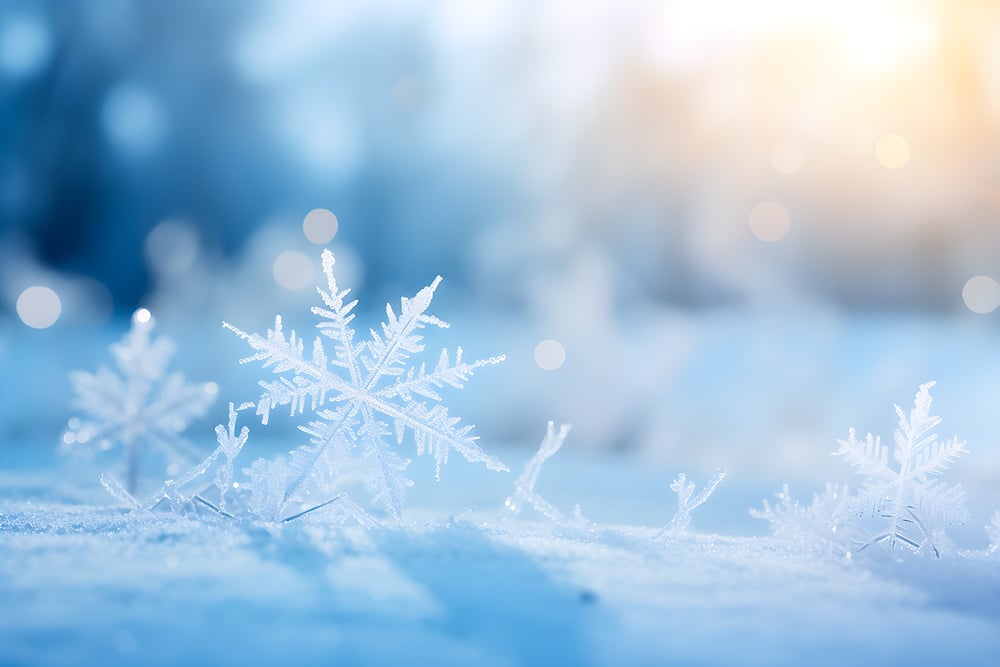
In 1816, summer never really arrived in the Northern Hemisphere. Snow fell in June across New England.
Frost killed crops in July. Europe faced food shortages that sparked riots. The cause? Mount Tambora in Indonesia erupted the previous year with such force that it ejected massive amounts of ash into the stratosphere.
That ash circled the globe and blocked enough sunlight to drop temperatures worldwide. Farmers watched their harvests fail in the middle of what should have been the growing season.
The effects lasted well into 1817. Some people called it “Eighteen Hundred and Froze to Death.”
The eruption killed tens of thousands directly, but the climate disruption that followed may have caused even more deaths through starvation and disease.
Raining Animals

Waterspouts and tornadoes sometimes lift small animals from ponds and lakes, carry them for miles, then drop them elsewhere. Fish, frogs, and even small birds have fallen from clear skies onto startled communities throughout history.
In 2010, hundreds of small fish rained down on a remote Australian town. Residents found them scattered across roads and rooftops.
Meteorologists explained that a tornado likely sucked them from a river system miles away. Similar events happened in Honduras in the 1800s, where witnesses reported fish falling so regularly that locals called it “Lluvia de Peces” and eventually turned it into an annual festival.
The phenomenon continues there occasionally even today. England recorded a rain of frogs in 1969. Japan saw a rain of tadpoles in 2009.
These events sound biblical, but they’re just rare combinations of weather conditions and aquatic life.
The Great Smog of London

In December 1952, cold weather and windless conditions trapped coal smoke over London for five days. Visibility dropped to a few feet.
People got lost walking home on familiar streets. The smog was so thick it seeped into buildings, stopping theater performances because audiences couldn’t see the stage.
The death toll reached at least 4,000 during those five days, with another 8,000 dying in the following weeks and months from respiratory complications. The smog contained sulfur dioxide, nitrogen oxides, and soot particles that turned deadly in such high concentrations.
This wasn’t technically unusual weather—just normal fog combined with extreme air pollution. But the scale and lethality made it one of the worst weather-related disasters in modern history.
It led to clean air legislation that changed how cities approach industrial emissions.
The Tunguska Event

In 1908, something exploded over Siberia with the force of a large nuclear weapon. The blast flattened 80 million trees across 830 square miles.
Witnesses hundreds of miles away reported seeing a fireball and feeling intense heat. Yet the explosion left no crater.
Scientists now believe a meteor or comet fragment exploded several miles above the ground, creating an airburst that devastated the forest below. The shockwave circled the globe twice.
For several nights after, skies across Europe and Asia glowed bright enough to read by at midnight. The remoteness of the location meant no one investigated for nearly two decades.
By the time researchers arrived, the evidence had degraded. Some trees had started growing back through the scorched landscape, and witnesses had scattered or died.
If the same event happened over a populated area today, it would cause catastrophic damage.
Red Rain in Kerala
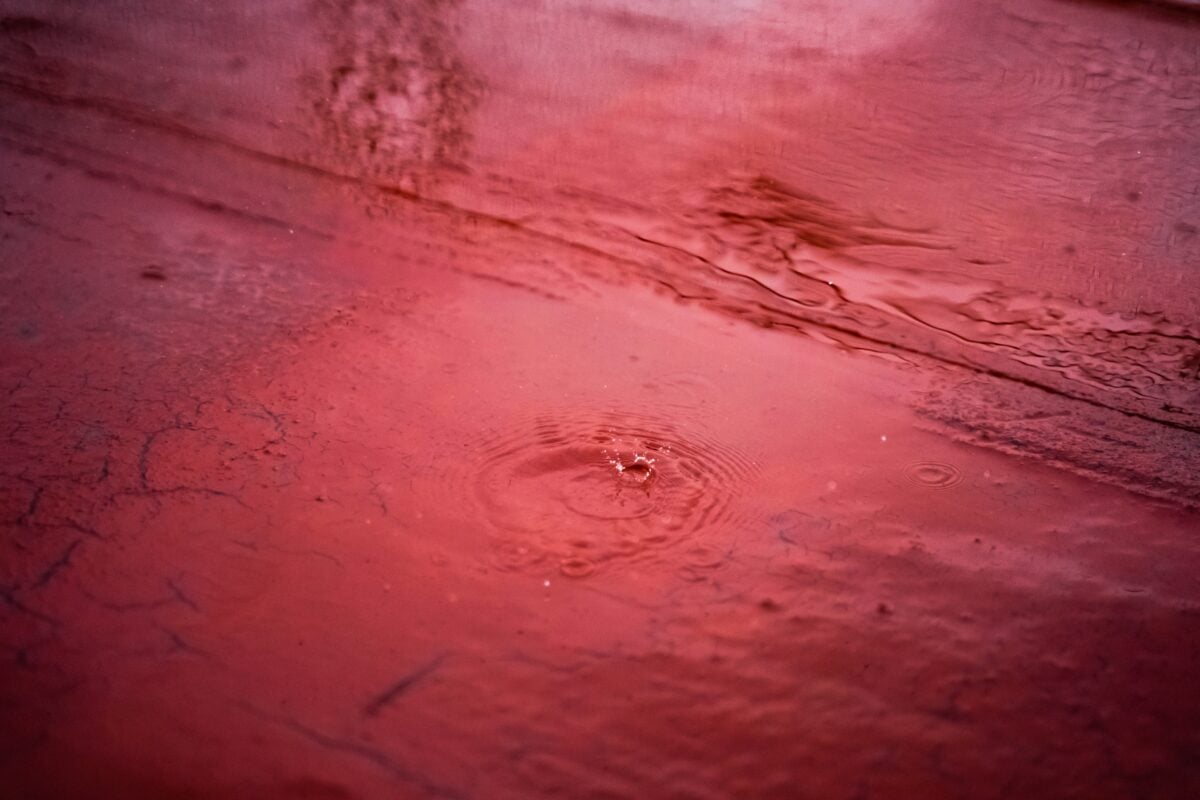
In 2001, red rain fell across parts of Kerala, India, for about two months. The rain stained clothes looked like diluted blood. Initial speculation ran wild—some suggested extraterrestrial origins.
Analysis showed the red color came from airborne spores of a local algae species. Strong winds had lifted massive quantities of these spores into the atmosphere.
Then rain formed, it collected the spores and brought them down in concentrated amounts. The explanation sounds simple now, but before testing confirmed it, the red rain sparked genuine concern.
People worried about pollution, biological weapons, or stranger possibilities. Sometimes the weirdest-looking weather has the most mundane cause.
The Tri-State Tornado
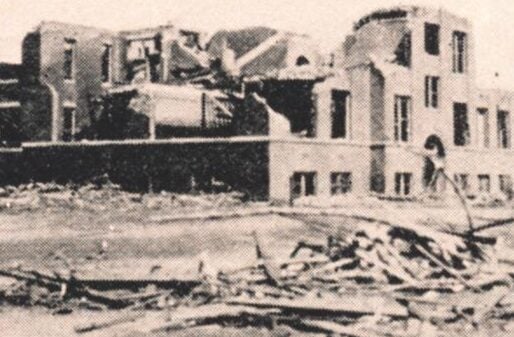
The deadliest single tornado in U.S. history tore through Missouri, Illinois, and Indiana in 1925. It stayed on the ground for over three hours, traveling 219 miles without lifting.
The path of destruction averaged nearly a mile wide. At least 695 people died, though the real number may be higher since rural casualties often went unreported.
Entire towns disappeared. The tornado moved so fast—over 70 miles per hour in some sections—that people had almost no warning. What makes this tornado strange isn’t just its size or duration.
Some meteorologists question whether it was actually one continuous tornado or a family of tornadoes that formed along the same path. The 1925 weather tracking technology couldn’t definitively determine which.
Snow in the Sahara Desert
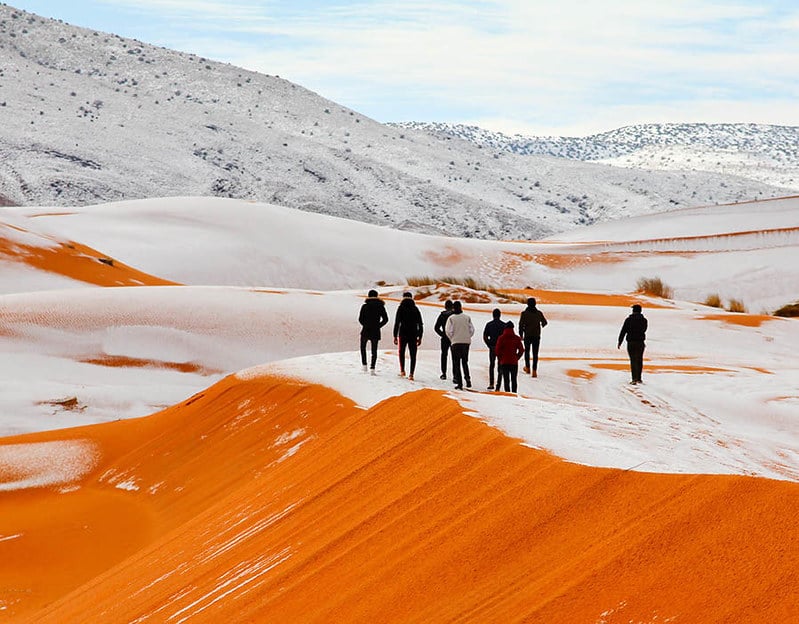
The Sahara Desert occasionally gets snow. Not every year, and never very much, but it happens. In 1979, a snowstorm dusted parts of southern Algeria.
In 2018, snow fell in the Algerian town of Ain Sefra for the third time in 40 years. The snow usually melts within hours.
Desert temperatures drop significantly at night, especially in winter, but daytime heat prevents snow from lasting. Still, the sight of sand dunes topped with white creates an unsettling contrast.
These rare snowfalls require specific conditions—cold air masses from Europe pushing south, moisture from the Atlantic or Mediterranean, and temperatures that drop below freezing at just the right time. All these factors align rarely enough that Saharan snow remains remarkable when it does occur.
The Dust Bowl
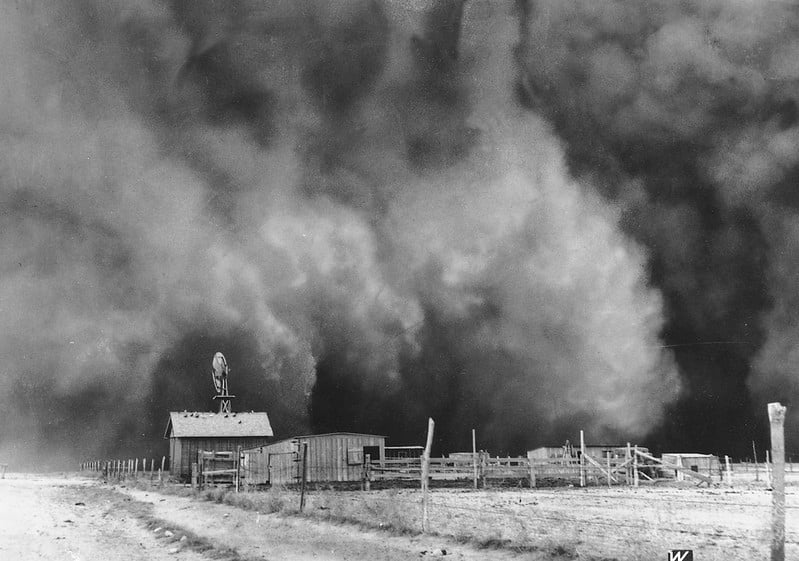
In the 1930s, severe drought and poor farming practices turned the Great Plains into a wasteland. Massive dust storms—called “black blizzards”—swept across the region, blocking out the sun and burying entire farms under feet of dirt.
The worst storm hit on April 14, 1935, a day remembered as “Black Sunday.” A wall of dust thousands of feet high rolled across the plains, turning day into night in minutes.
People caught outside sometimes suffocated. The dust penetrated every crack in homes, covering food, water, and furniture. These storms resulted from human activity as much as weather.
Farmers had plowed up native grasses that held the soil together. When drought came, nothing prevented wind from lifting the topsoil and carrying it away. Dust from the plains fell on ships hundreds of miles out in the Atlantic Ocean.
Millions of people abandoned their farms and migrated west. The ecological and human catastrophe reshaped American agriculture and led to soil conservation programs that continue today.
The Storm of the Century
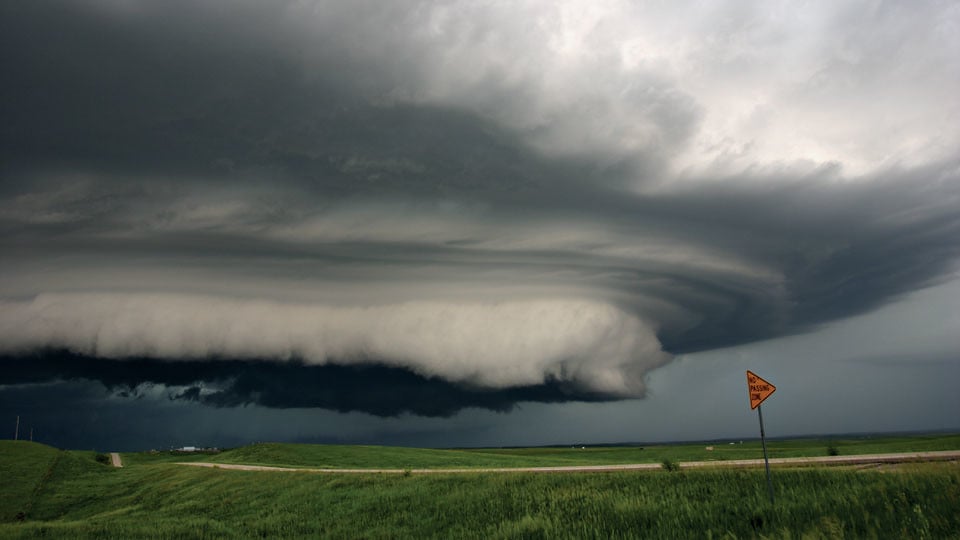
In March 1993, a massive storm system brought blizzard conditions, tornadoes, and storm surge to the eastern United States and Canada simultaneously. Snow fell from Alabama to Canada.
Florida experienced a 12-foot storm surge. Tornadoes touched down across multiple states.
The storm killed over 300 people and caused billions in damage. Its geographic scope was unprecedented—it affected more than 40 percent of the U.S. population.
Some areas received over 4 feet of snow. Wind gusts exceeded 100 miles per hour.
Meteorologists saw this storm coming days in advance, which saved countless lives. Without modern forecasting, the death toll would have been far higher.
The storm demonstrated how weather systems can combine multiple hazards simultaneously across vast areas.
Fire Tornadoes

Wildfires sometimes create their own weather systems, including tornado-like vortices of flame. These fire whirls form when intense heat from a fire creates powerful updrafts.
Under the right conditions, these updrafts begin rotating, creating a vertical column of spinning fire and superheated air. The Great Chicago Fire of 1871 reportedly produced fire tornadoes.
More recently, the 2003 Canberra fires in Australia generated a fire tornado that reached temperatures estimated at over 2,000 degrees Fahrenheit. These aren’t classified as true tornadoes because they don’t form from thunderstorms.
But they behave similarly, picking up burning debris and spreading fire across larger areas. Fire whirls can reach heights of several hundred feet and generate winds strong enough to uproot trees or flip vehicles.
Sailing Stones

In California’s Death Valley, rocks move across the desert floor, leaving long tracks behind them. Some stones weigh hundreds of pounds.
Until recently, no one had ever witnessed them moving, though the tracks proved they did. The mystery persisted for decades.
Theories ranged from magnetic fields to aliens. In 2014, researchers finally caught the stones moving on camera.
The explanation involved an unlikely combination of conditions: thin layers of ice forming on winter nights, mild winds, and morning sun that melted the ice just enough to reduce friction. The stones essentially sail across mudflats on sheets of ice, pushed by wind.
It only happens when multiple rare factors align perfectly, which is why no one observed it for so long despite searching.
The Perfect Storm
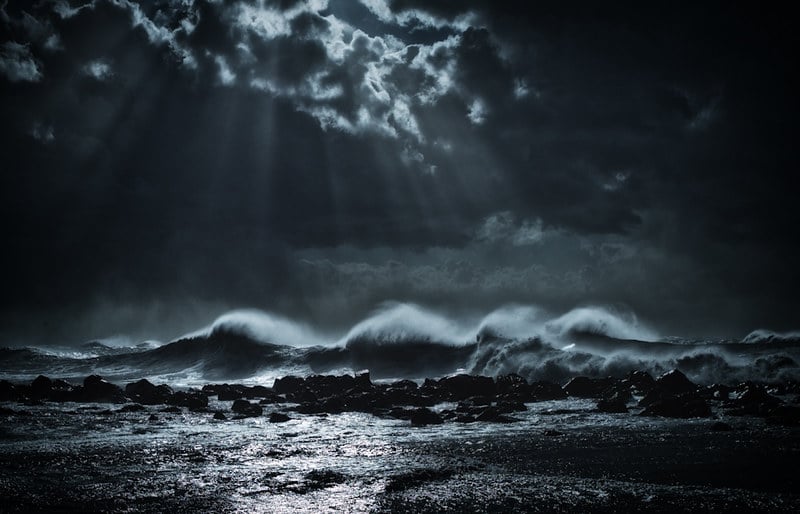
In October 1991, three separate weather systems—a hurricane, a cold front, and remnants of another weather system—merged off the coast of New England. The resulting storm generated waves over 100 feet high and sustained winds exceeding 70 miles per hour.
The Andrea Gail, a fishing boat, disappeared during this storm, later made famous by the book and film “The Perfect Storm.” The crew’s final transmission came as they sailed directly into the worst of it.
Meteorologically, the storm was fascinating because it resulted from multiple systems that individually would have been manageable. Their convergence created something far more dangerous than any single component.
The National Weather Service called it “the perfect storm” in their bulletins—a term that entered popular usage afterward.
When the Sky Breaks Its Own Rules
Weather follows basic physics, yet sometimes things mix in ways you’d never expect – until they do. Lots of folks see pretty much the same skies day after day.
But then comes blood-colored rain or rocks that move on their own, showing how nature can still shock you. The oddest weather tends to show us the biggest lessons.
When weird things happen, we see how air, moisture, and heat actually work together. Experts look into these odd cases since they stretch normal limits while questioning what we take for granted.
An event that feels random starts feeling logical once you know exactly what led up to it. You don’t have to see odd weather up close to get how wild it is.
Because you know things like raining fish or moving rocks actually occurred, your sense of possibility grows. The air around us holds way more surprises than one person could ever live through.
Which makes you feel small – but also kind of at ease.
More from Go2Tutors!

- The Romanov Crown Jewels and Their Tragic Fate
- 13 Historical Mysteries That Science Still Can’t Solve
- Famous Hoaxes That Fooled the World for Years
- 15 Child Stars with Tragic Adult Lives
- 16 Famous Jewelry Pieces in History
Like Go2Tutors’s content? Follow us on MSN.