Subway Stations That Look Like Art Galleries
Most people treat their commute as dead time. You scroll your phone, avoid eye contact, count the stops.
But in certain cities around the world, the ride itself becomes the destination. The stations waiting at either end of your journey are filled with mosaics, chandeliers, stained glass, and sculptures that rival anything hanging in a proper museum.
And unlike those museums, nobody charges admission.
Stockholm’s 110-Kilometer Gallery
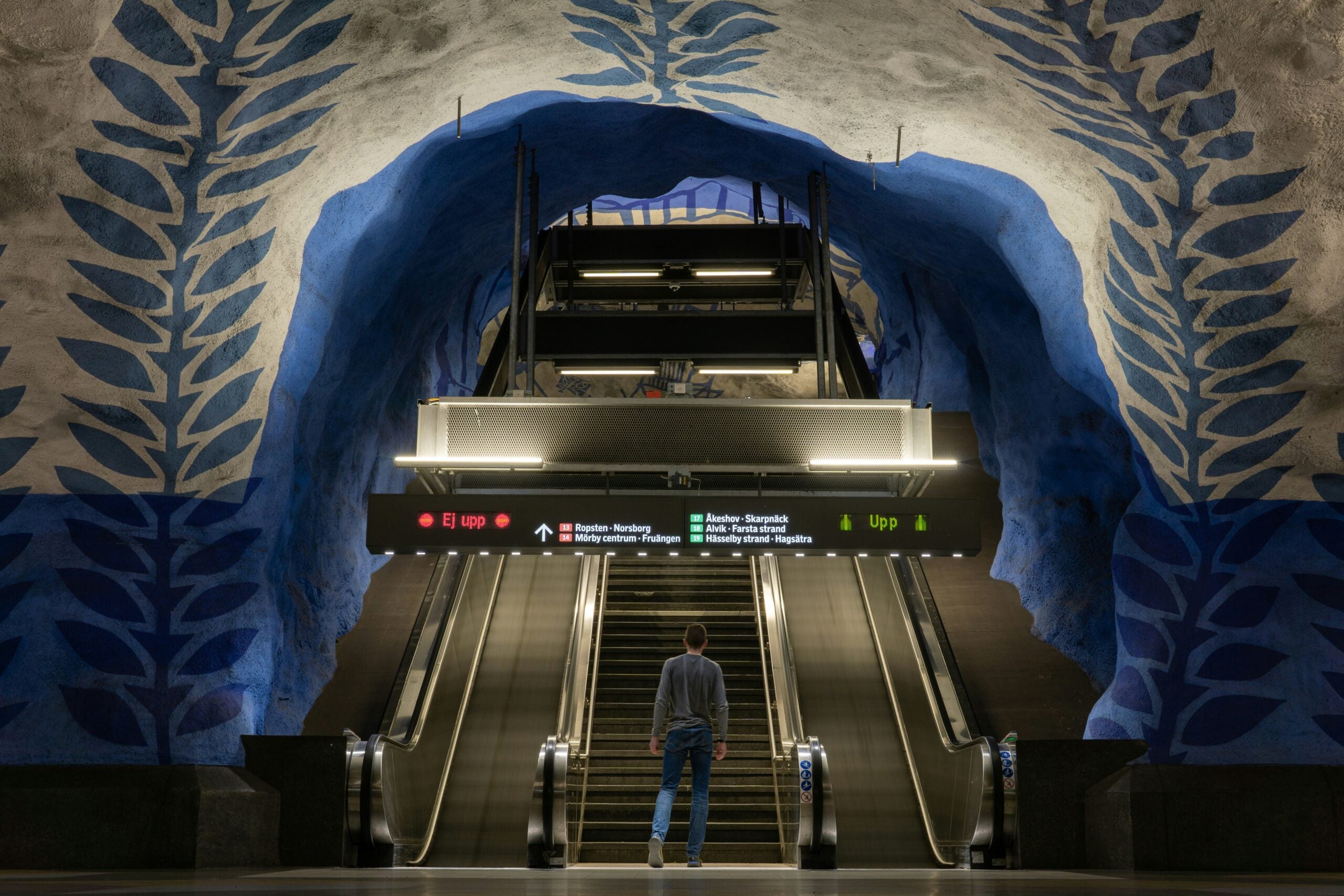
The Stockholm metro, known locally as the Tunnelbana, bills itself as the world’s longest art gallery. That claim holds up.
More than 90 of its 100 stations feature artwork created by over 150 artists across several decades. The project started in 1957, and artists have been involved in every station expansion since.
What makes Stockholm stand out is how the Blue Line stations embrace the raw bedrock. Rather than covering up the excavated caves with concrete, designers left the rock exposed and painted directly onto it.
At Solna Centrum, the entire station glows in shades of cadmium red and forest green, with painted scenes depicting Swedish life in the 1970s: the countryside, environmental concerns, local neighborhoods. At T-Centralen, the main hub where all three lines meet, blue silhouettes of construction workers are painted onto white surfaces, making the station look perpetually in progress.
The Cave Stations of the Blue Line
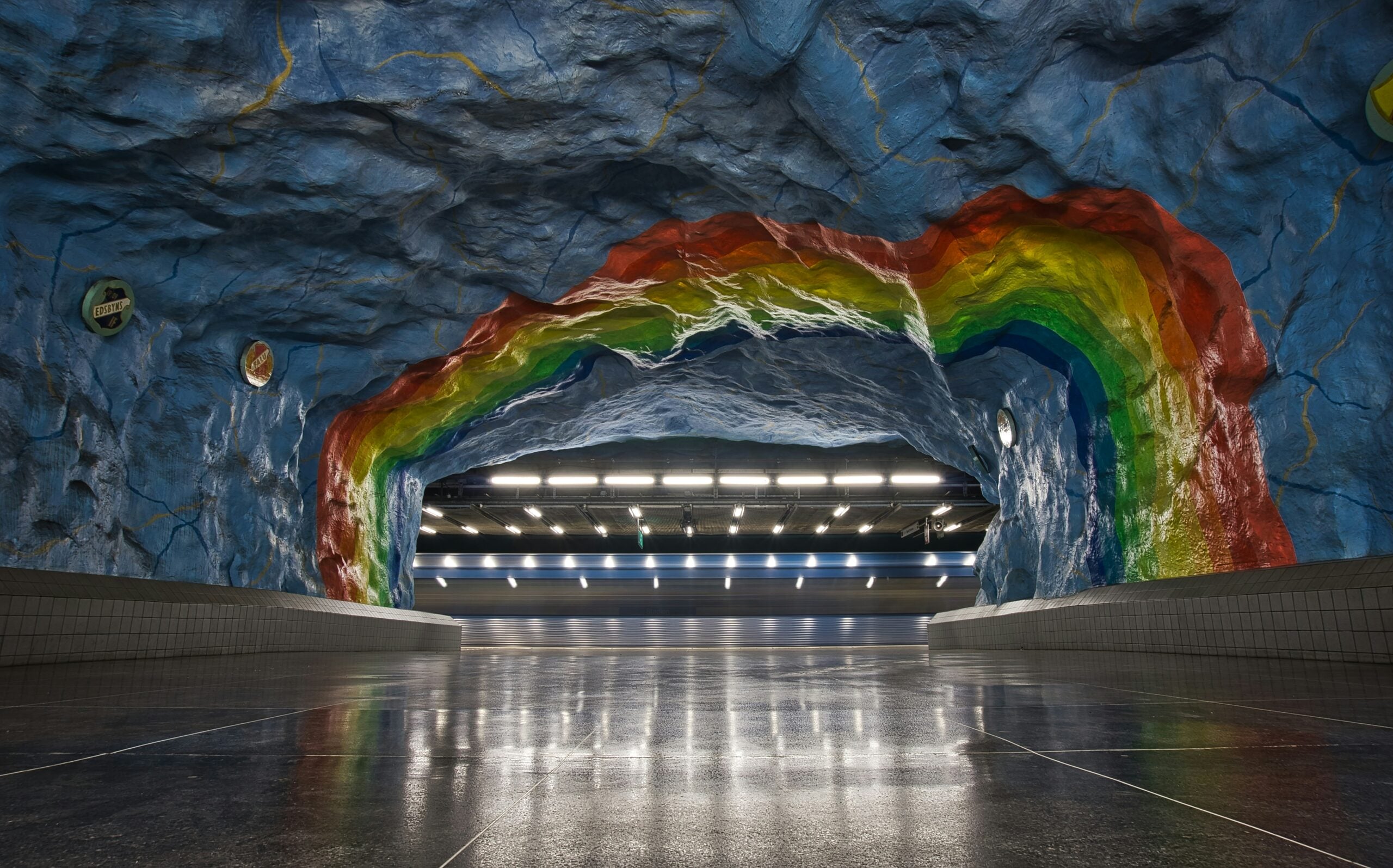
Stadion station sits near Stockholm’s Olympic Stadium and features bright rainbows arching across its ceiling. Kungsträdgården, at the southern end of the Blue Line, incorporates archaeological finds from the area, including replicas of ancient runestones.
The effect is like commuting through a cave painting that happens to have escalators.
Per Olof Ultvedt created the artwork at T-Centralen specifically to calm harried commuters. The blue color palette and simple botanical motifs were meant to give passengers a moment of mental pause while rushing to change trains.
It works.
Moscow’s Underground Palaces
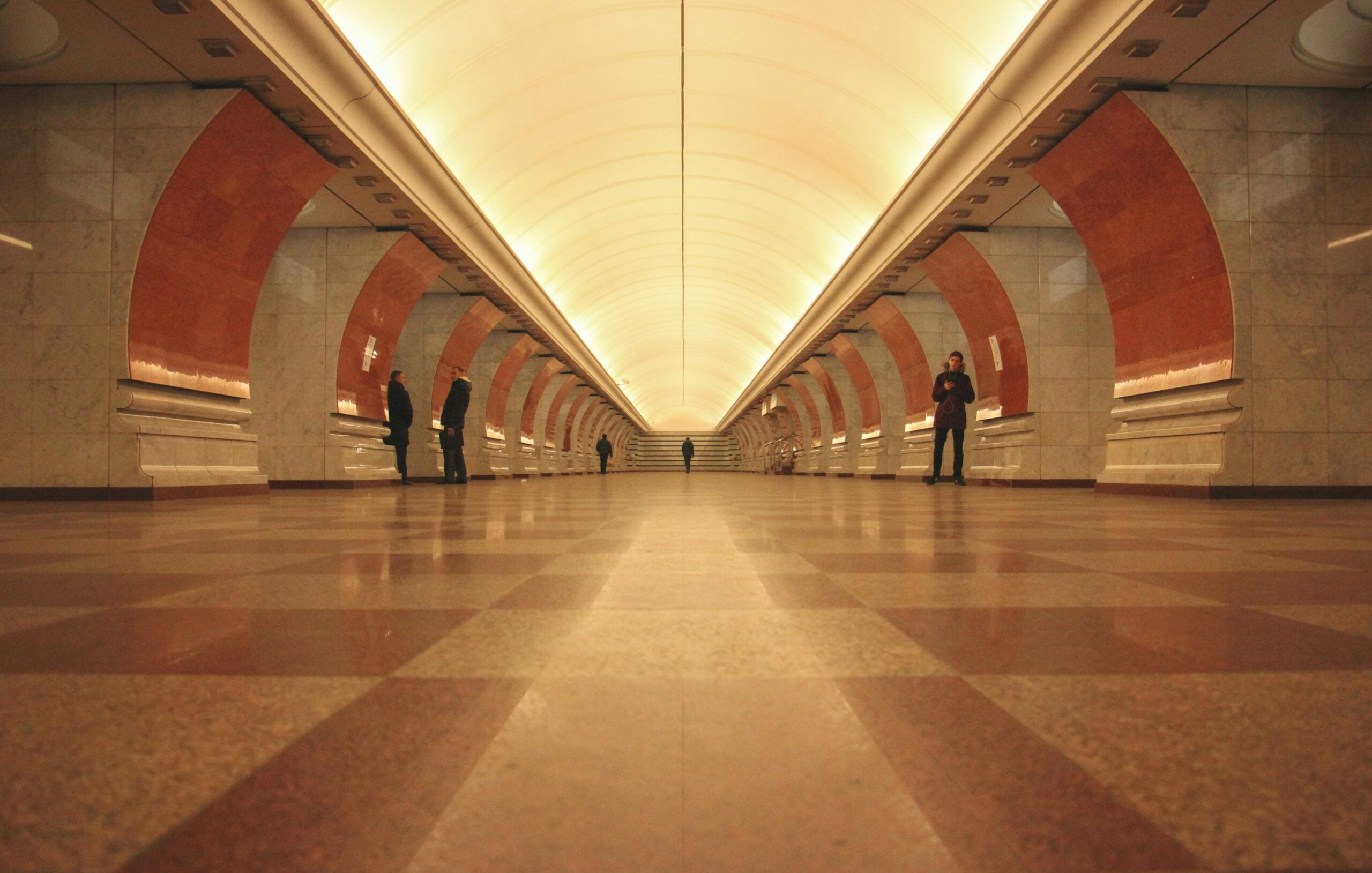
The Moscow Metro opened in 1935 under Stalin, and from the beginning, the stations were designed as what Soviet planners called “palaces for the people.” They meant it literally.
Mayakovskaya station, completed in 1938, won the Grand Prix at the 1939 New York World’s Fair. Its columns are clad in stainless steel and pink semi-precious stone, and its ceiling features 34 oval mosaics depicting 24 hours in Soviet skies: paratroopers, airplanes, factory chimneys.
Today the Moscow Metro has 300 stations across more than 525 kilometers of track, making it the longest metro system in Europe. Komsomolskaya features yellow stucco ceilings, marble pillars, gilded bas-reliefs, and circular chandeliers that would look at home in a ballroom.
Ploshchad Revolyutsii has 76 bronze sculptures of Soviet citizens tucked into arches, from soldiers to farmers to athletes.
Art as Ideology
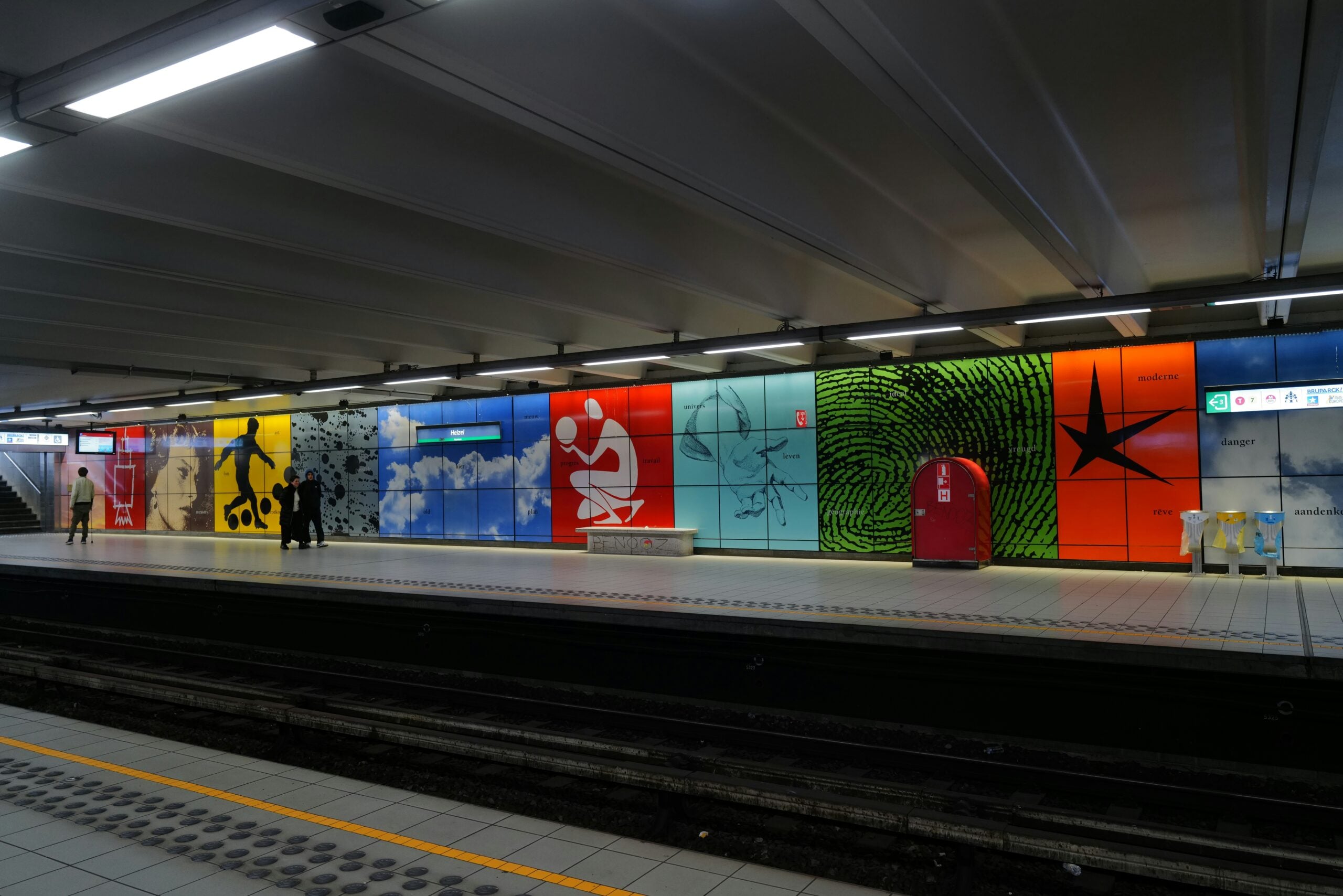
The aesthetics were never purely decorative. Stalin wanted the metro to transform Soviet citizens into true believers.
The method was influenced by the nihilist Nikolay Chernyshevsky, who wrote that “art is no useful unless it serves politics.” Every station combined aesthetics, technology, and ideology into a coherent message.
Citizens who rode the metro absorbed socialist values with each trip.
The propaganda functions have faded, but the artistry remains. Tourists now take guided tours through passages that Muscovites use for their daily commute.
The stations stay immaculate, free of graffiti and vandalism, maintained as points of civic pride.
Naples and the Three As
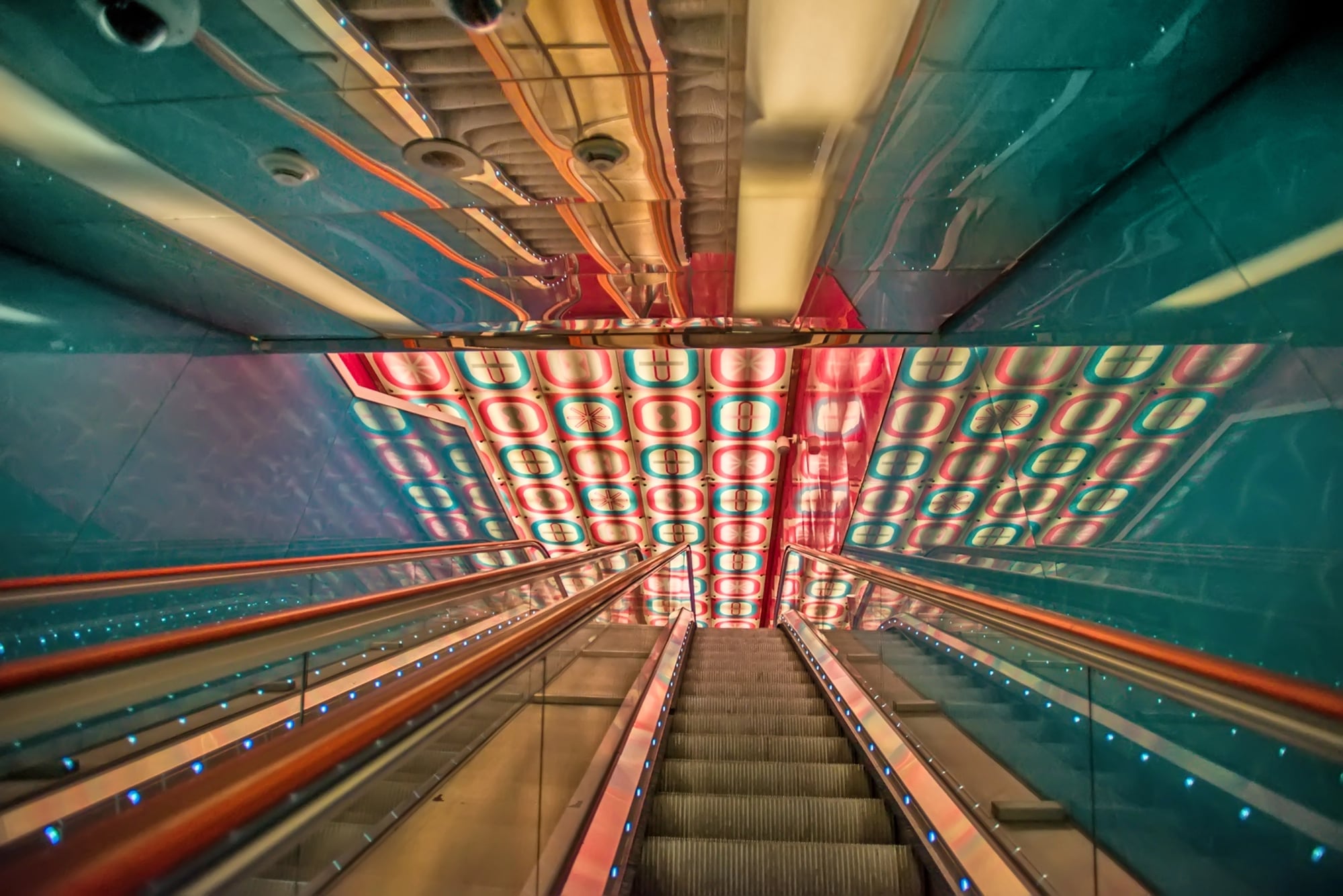
When Naples began expanding its metro in the 1980s, city planners made a deliberate decision: every station would integrate architecture, art, and archaeology. They called it the “three As.”
The idea was to revamp the city’s image while building modern infrastructure.
The result is the Metro dell’Arte, with more than 180 works of art by 90 international artists spread across Lines 1 and 6. Toledo station, designed by Spanish architect Oscar Tusquets Blanca, was named the most beautiful metro station in Europe by The Daily Telegraph in 2012.
CNN echoed the praise.
Descending into the Mediterranean
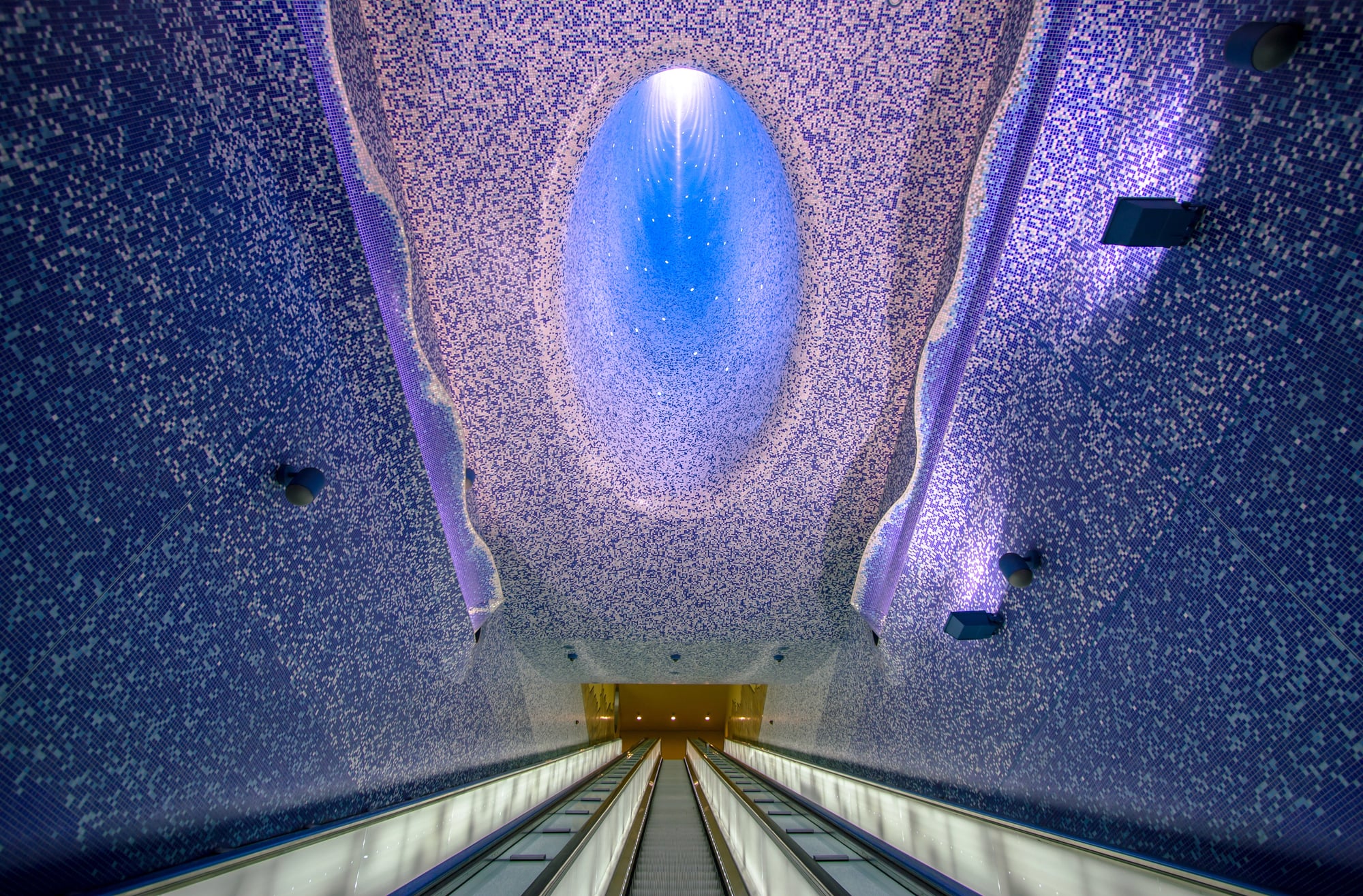
Toledo sits about 50 meters below street level, one of the deepest stations in Naples. As you descend, the walls transition from black (representing urban asphalt) to ochre and yellow (the colors of Neapolitan tuff and sunlight) to deep blue.
Thousands of Bisazza tiles create the effect of sinking into the Mediterranean. The centerpiece is the “Crater de Luz,” a cone-shaped skylight that sends natural light deep underground.
At Università station, designer Karim Rashid went in a completely different direction. Bright fuchsia and lime green walls greet commuters, with sculptural forms meant to represent synapses and neural connections.
The station opened in 2011 and looks like the inside of someone’s imagination.
Pyongyang’s Secret Stations
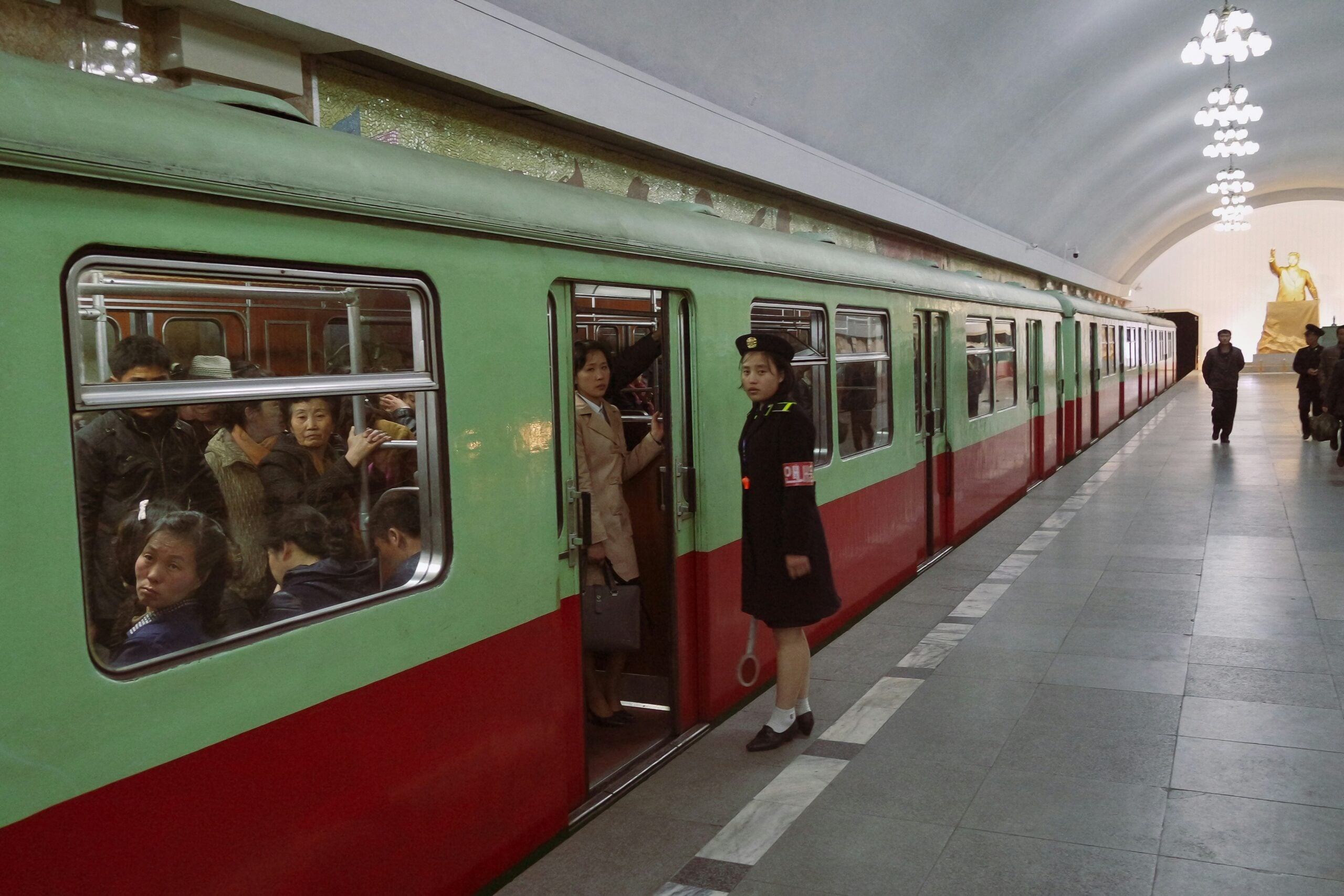
For decades, photography was banned in the Pyongyang Metro. The system, which opened in 1973, was classified as a military installation because it doubled as a nuclear shelter.
Stations reach depths of over 100 meters, making it one of the deepest metro systems in the world.
What tourists discovered when restrictions were lifted was a frozen-in-time collection of socialist grandeur. Chandeliers hang from vaulted ceilings, marble pillars line platforms.
Mosaics depicting revolutionary scenes and national achievements cover entire walls. Each station is named after ideological concepts like Glory, Victory, and Reunification.
Reading the Newspaper Underground
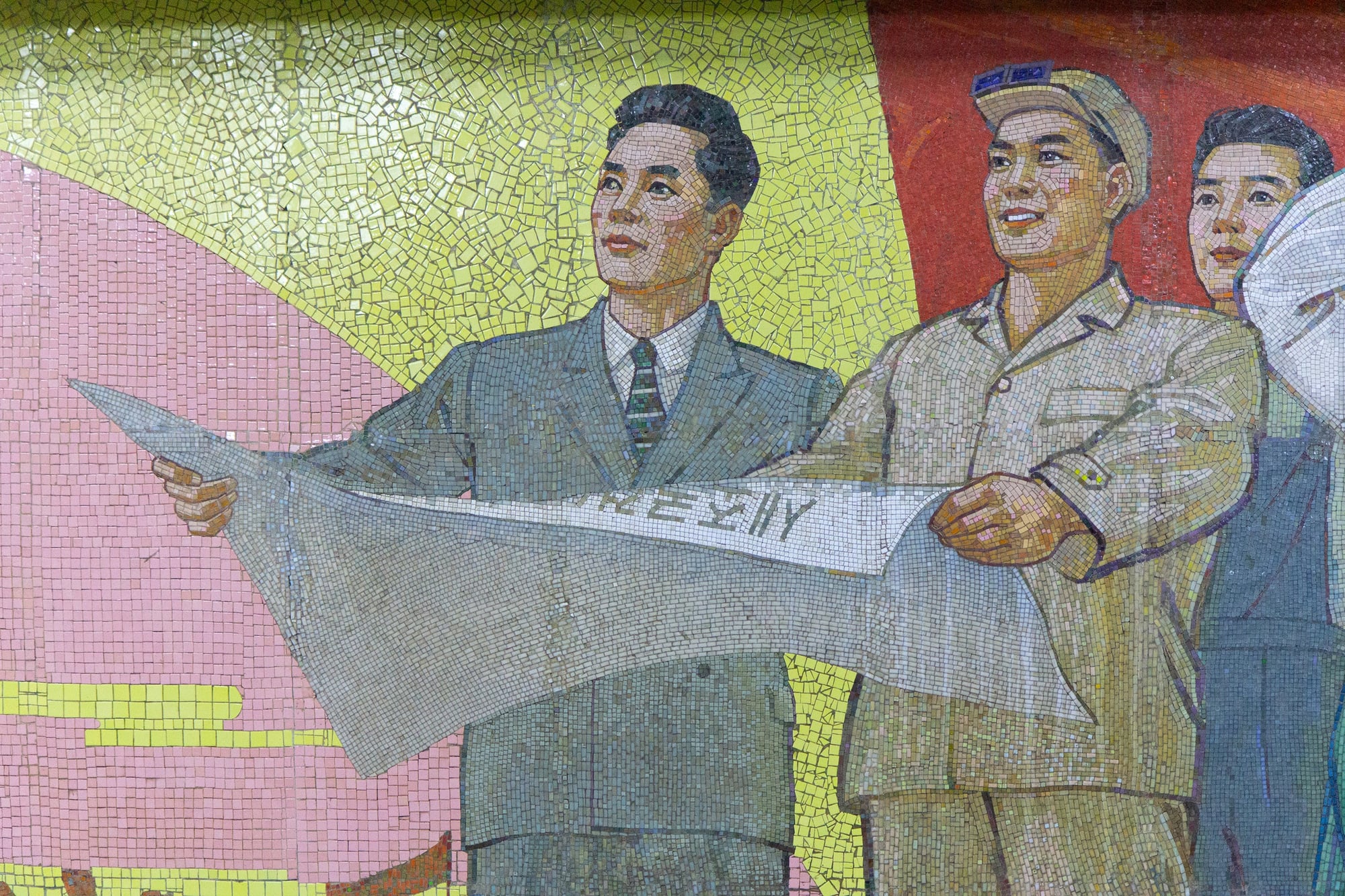
Yonggwang (Glory) station features chandeliers designed to resemble fireworks celebrating victories. Puhung (Reconstruction) station was built in 1987 with elaborate decorations that rivaled anything in Moscow.
The trains themselves are former Berlin U-Bahn cars, repainted in red and cream and stripped of all advertising. Portraits of Kim Il Sung and Kim Jong Il hang in every carriage.
At about 5 North Korean won per ride (less than a US cent), it remains the cheapest metro in the world. Newspapers are displayed on platforms for commuters to read while waiting, though the dim lighting means some passengers bring their own flashlights.
Tashkent’s Silk Road Underground
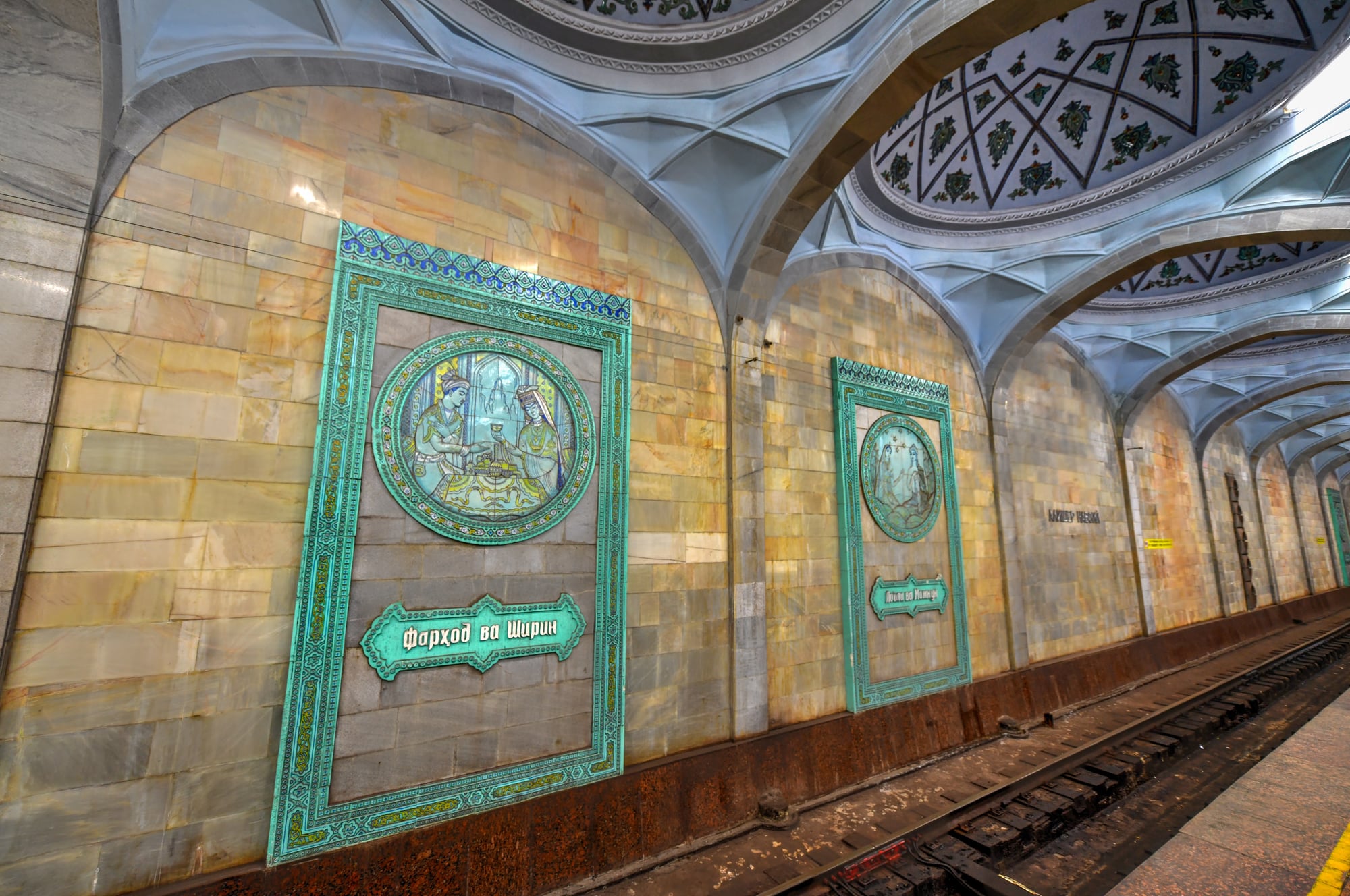
Uzbekistan’s capital built Central Asia’s first metro after a devastating earthquake in 1966 leveled much of the city. Soviet planners used the reconstruction as an opportunity to create a “model socialist city,” and that included an ornate metro system.
Until 2018, photography was forbidden here too. Now visitors can document what locals have known for decades: each of the system’s 50 stations is individually themed, combining Soviet ideology with Uzbek cultural heritage.
At Alisher Navoi station, turquoise domes evoke the mosques and madrasas of the Silk Road era. Murals depict scenes from the famous poet’s stories.
Cotton, Cosmonauts, and Chandeliers
Kosmonavtlar (Cosmonauts) station features blue walls and ceiling decorations paying tribute to the space race. Ceramic discs show cosmonauts floating through a spectral void.
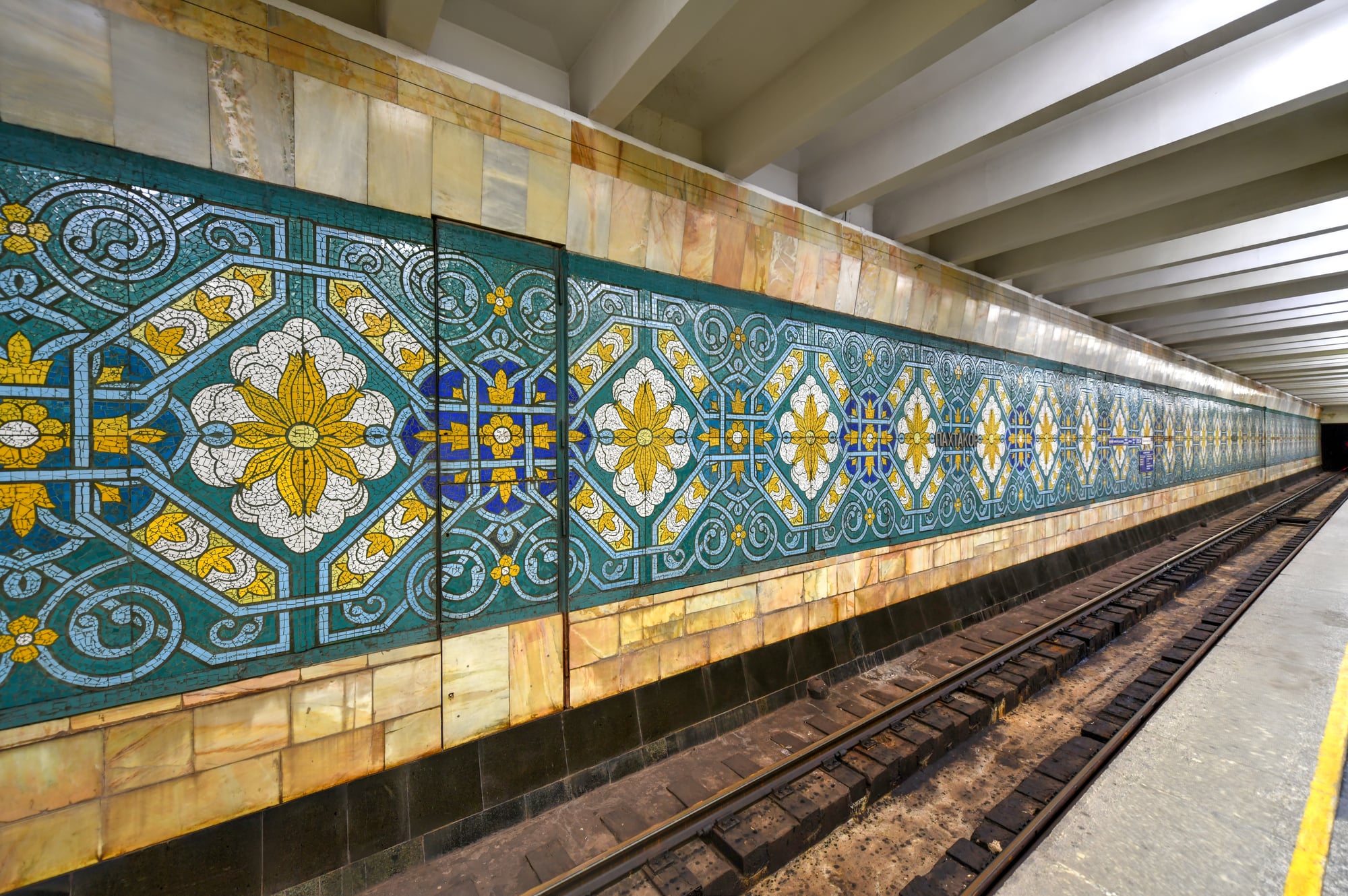
Paxtakor (Cotton Grower) station displays mosaic walls of flowering cotton plants, a nod to Uzbekistan’s agricultural history. Crystal chandeliers hang throughout.
After independence in 1991, some Soviet-era imagery was removed or amended. October Revolution station became Amir Temur, named after the 14th-century conqueror.
But the fundamental character of the stations remains: marble everywhere, ornate lighting, ceramic murals depicting everything from daily life to national pride.
Montreal’s Competing Architects

When Montreal built its metro in the 1960s, Mayor Jean Drapeau held a competition among Canadian architects. Each station would be designed by a different firm.
No two would look alike.
The result is 68 stations spread across 69 kilometers, each with its own identity. Champ-de-Mars features stained glass by Marcelle Ferron that throws colorful light onto the platforms when the sun hits it right.
Square-Victoria station has an authentic Art Nouveau entrance from the Paris Métro, a gift from the RATP to commemorate their cooperation in building the system.
The Automatistes Underground
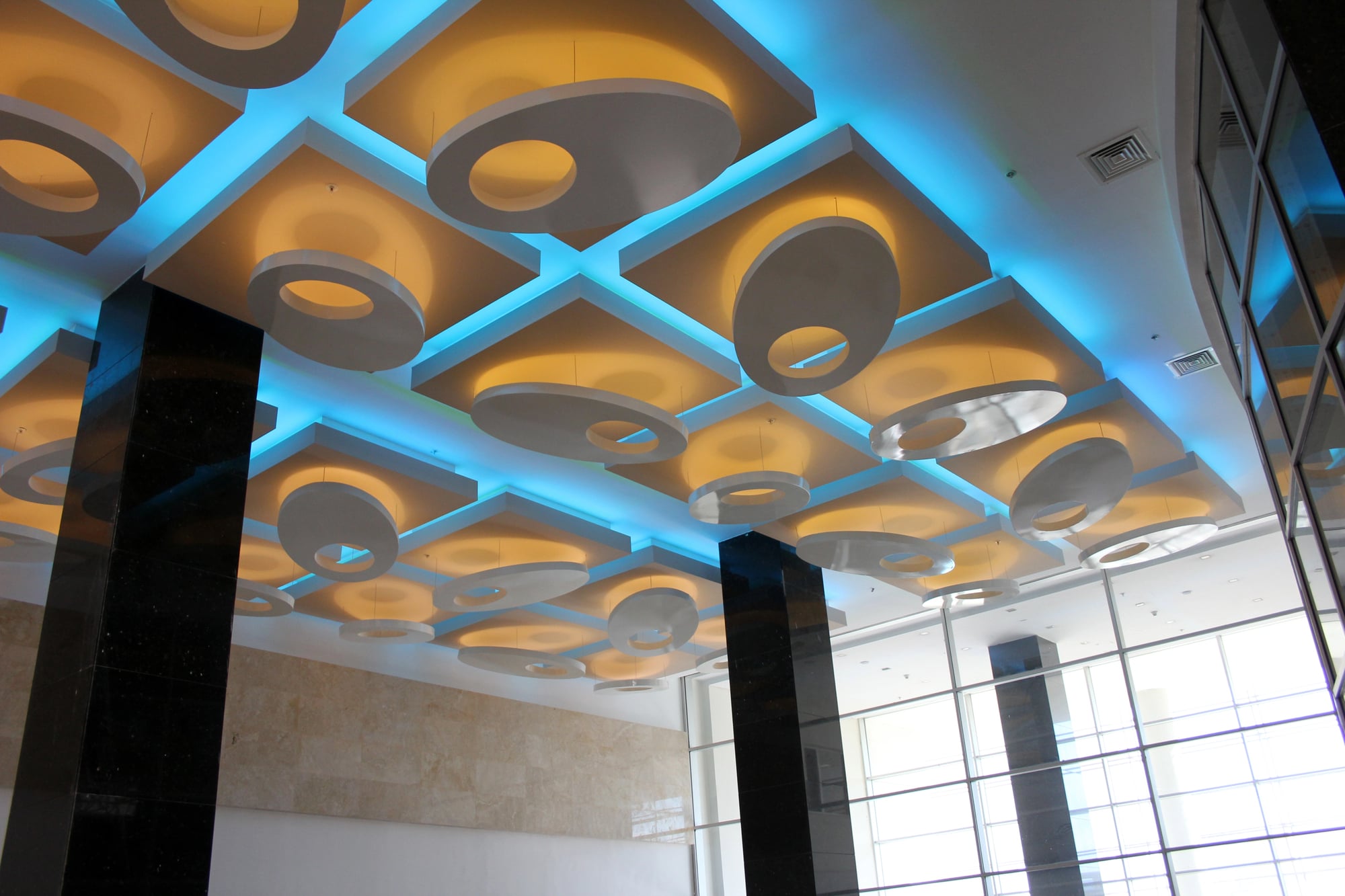
Artist Jean-Paul Mousseau’s colorful circles became a unifying theme at Peel station, appearing on walls and floor tiles. The Automatistes, a famous Quebec art movement, are represented throughout the system.
Artists like Frédéric Back, Jordi Bonet, and Jacques de Tonnancour contributed pieces that turned the metro into a museum of Quebec culture.
At Berri-UQAM, one of the busiest stations, modernist architecture creates soaring spaces. The Guimard entrance at Square-Victoria was completely restored in 2003, bringing a piece of Belle Époque Paris to Canadian winters.
Munich’s Rainbow Underground
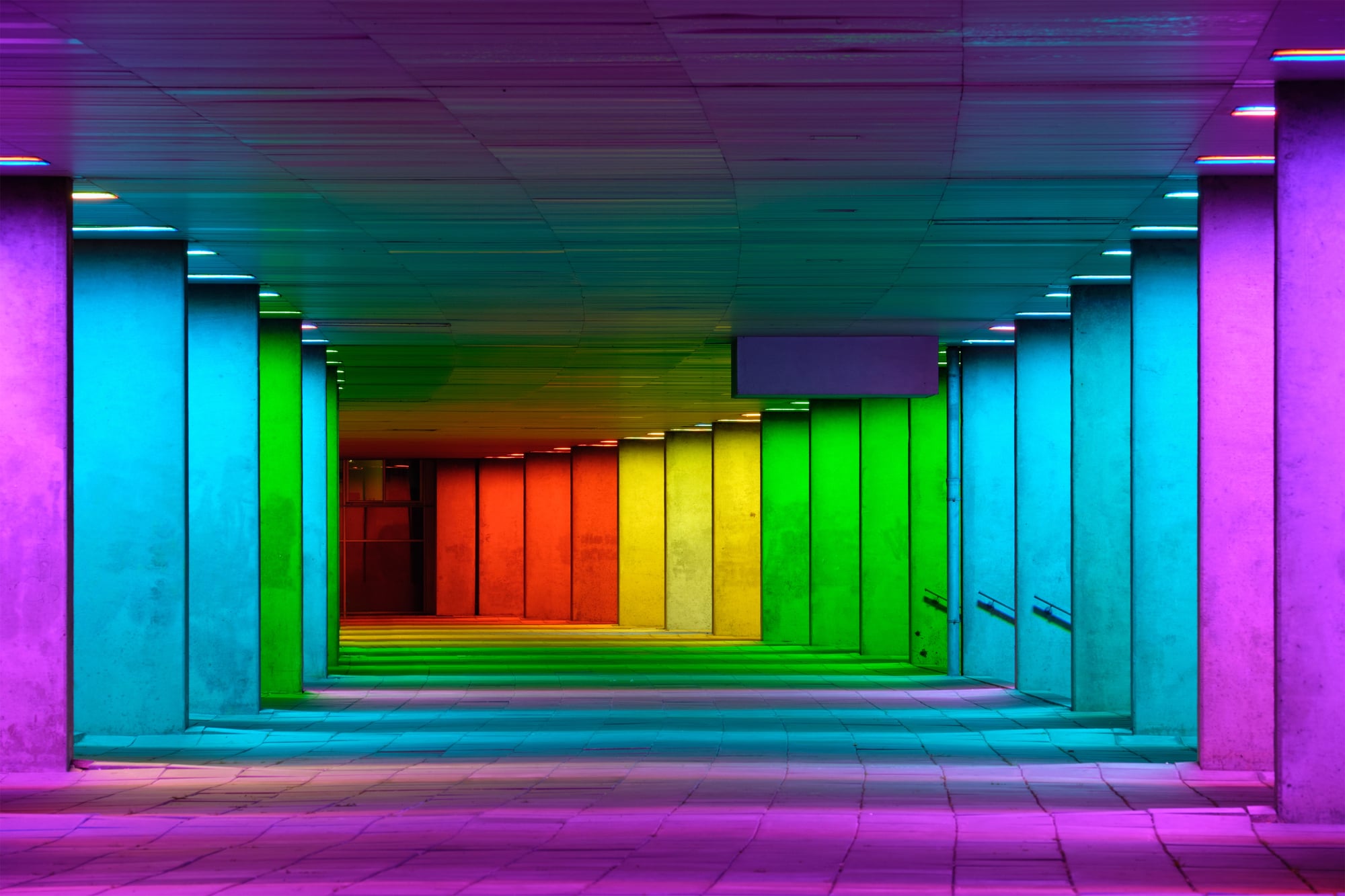
Munich’s U-Bahn is relatively young, having opened in 1971 for the Olympic Games. In the early years, architects considered underground design unglamorous.
That changed in the 1980s, when requirements for attractive station design increased substantially.
Westfriedhof station, opened in 1998, features 11 oversized lamps measuring about 3.6 meters in diameter. They bathe the platform in swaths of blue, red, and yellow light.
The raw rock walls were left exposed, creating a contrast between natural texture and the otherworldly lighting designed by Ingo Maurer.
Colors You Can Navigate By
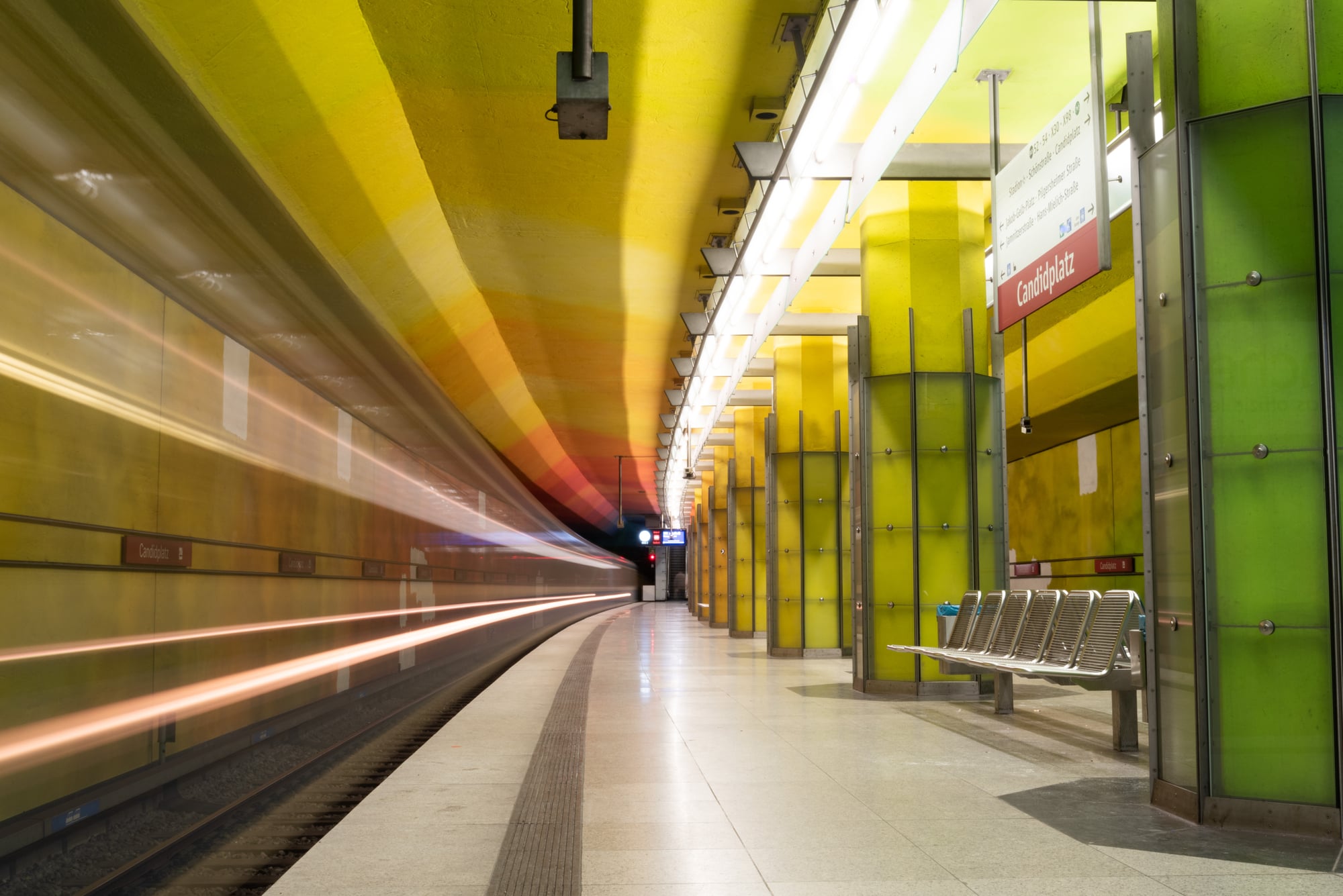
Candidplatz station sits on a curve and is painted in every color available to a painter. Dülferstraße features rainbow-colored glass panels that glow in the lower sections of the platform.
Marienplatz, with its orange tunnels, has become one of the most photographed stations in Munich.
The reasoning behind all this color is practical as well as aesthetic. Each station has its own personality so that passengers know instantly where they are when a train rolls in.
You navigate by color, not just by signs.
Lisbon’s Tile Tradition
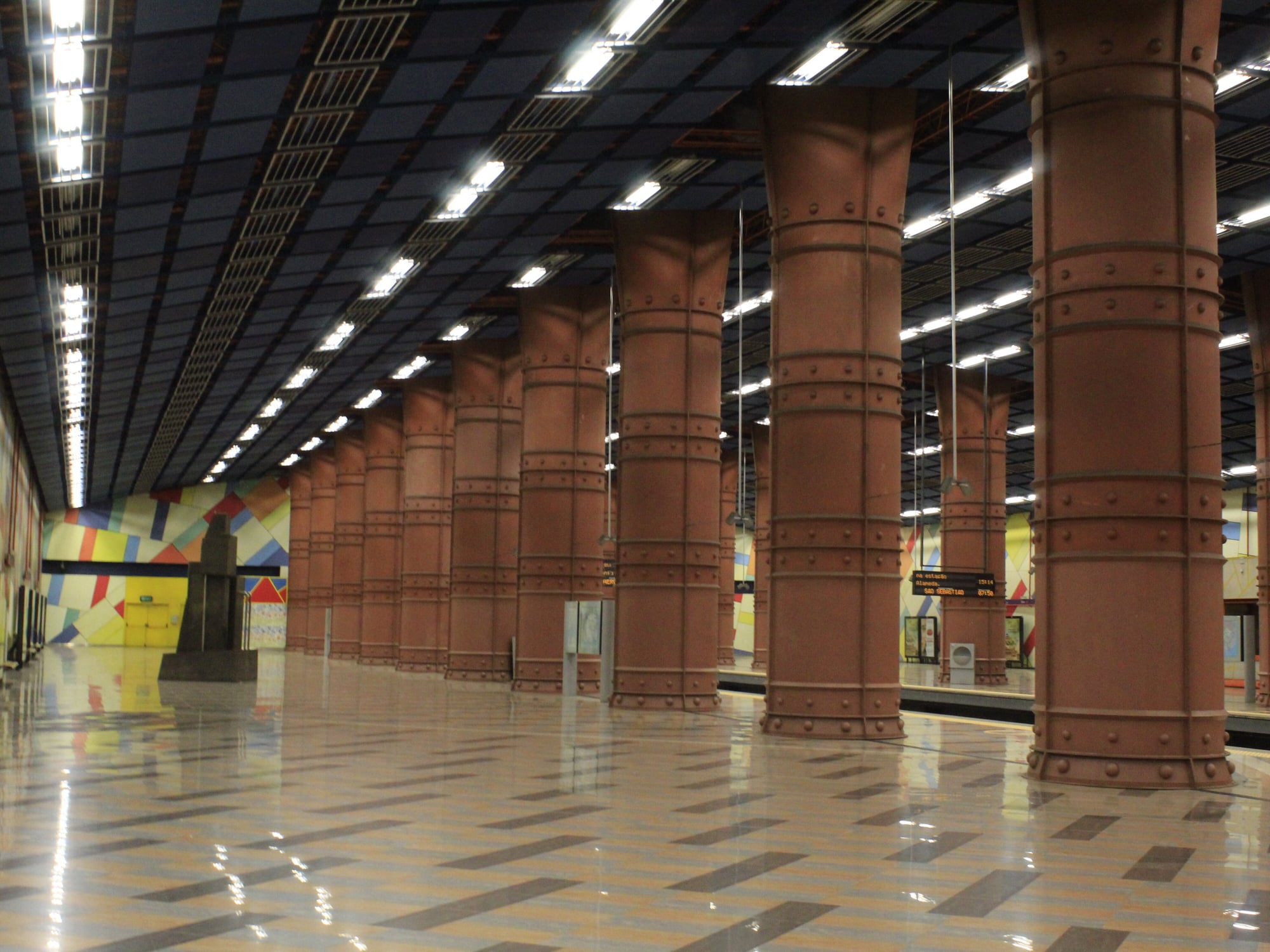
Portugal has decorated buildings with azulejo tiles since the 16th century. When Lisbon opened its metro in 1959, artist Maria Keil extended that tradition underground.
She decorated 19 stations over 25 years, reviving enthusiasm for the art form and inspiring a new generation of tile artists.
Olaias station, opened in 1998, won international awards for its design. Architect Tomás Taveira collaborated with artists Pedro Cabrita Reis and Graça Pereira Coutinho to create a station that uses color, light, and geometric forms to make commuters feel like they’re inside a kaleidoscope.
A Dome of Glass in Taiwan
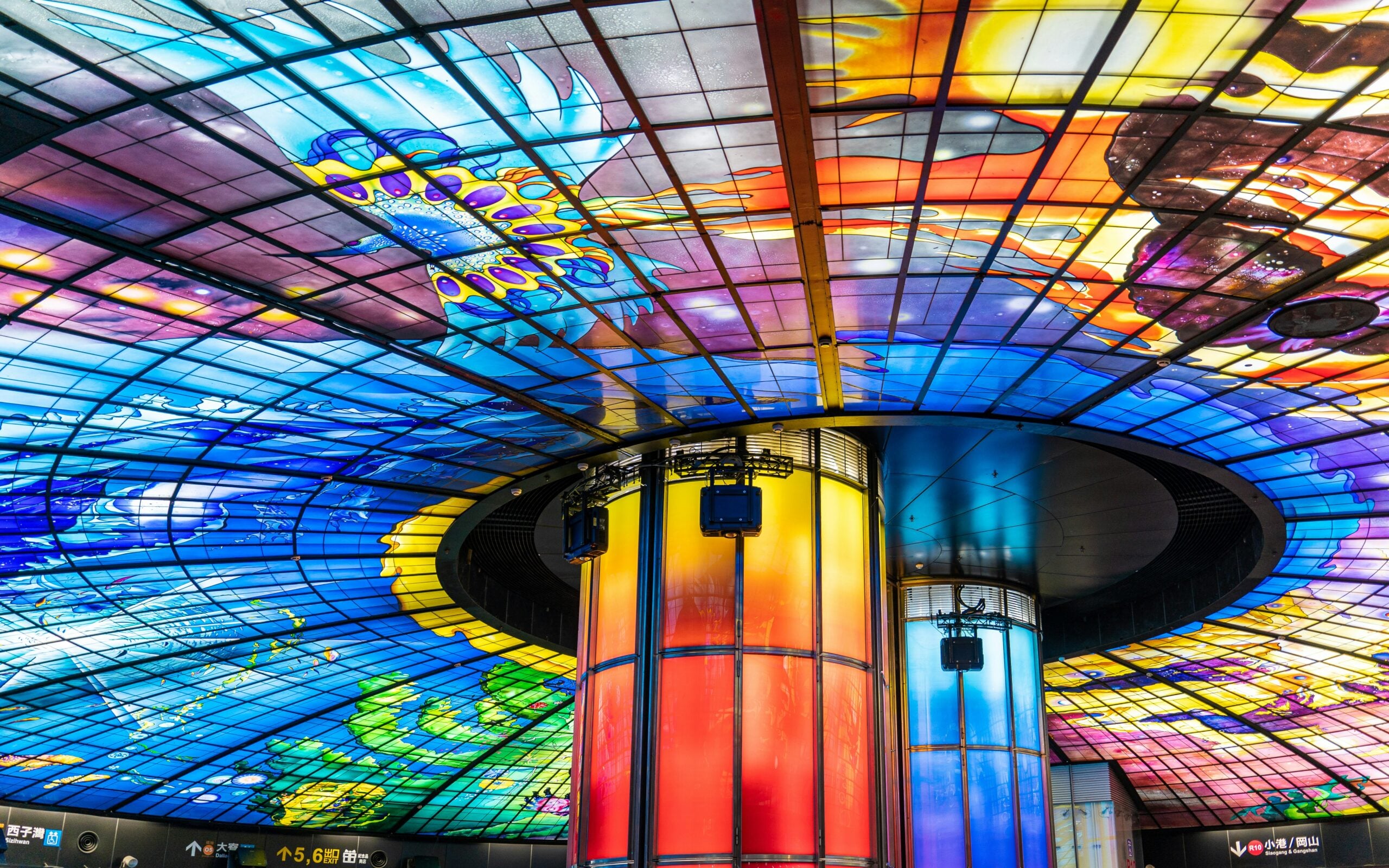
Formosa Boulevard station in Kaohsiung opened in 2008 as an interchange between the Red and Orange lines. What draws crowds has nothing to do with the trains.
The “Dome of Light,” designed by Italian artist Narcissus Quagliata, spans 30 meters in diameter and covers 2,180 square meters. It is made from 4,500 glass panels and depicts four themes: water, earth, light, and fire.
The station is named after the Formosa Incident, a pro-democracy demonstration that occurred nearby in 1979. But most visitors come for the colors, which are vibrant enough that the station has become a popular wedding venue.
CNN ranked it among the most beautiful metro stations in the world.
Why Cities Keep Building These
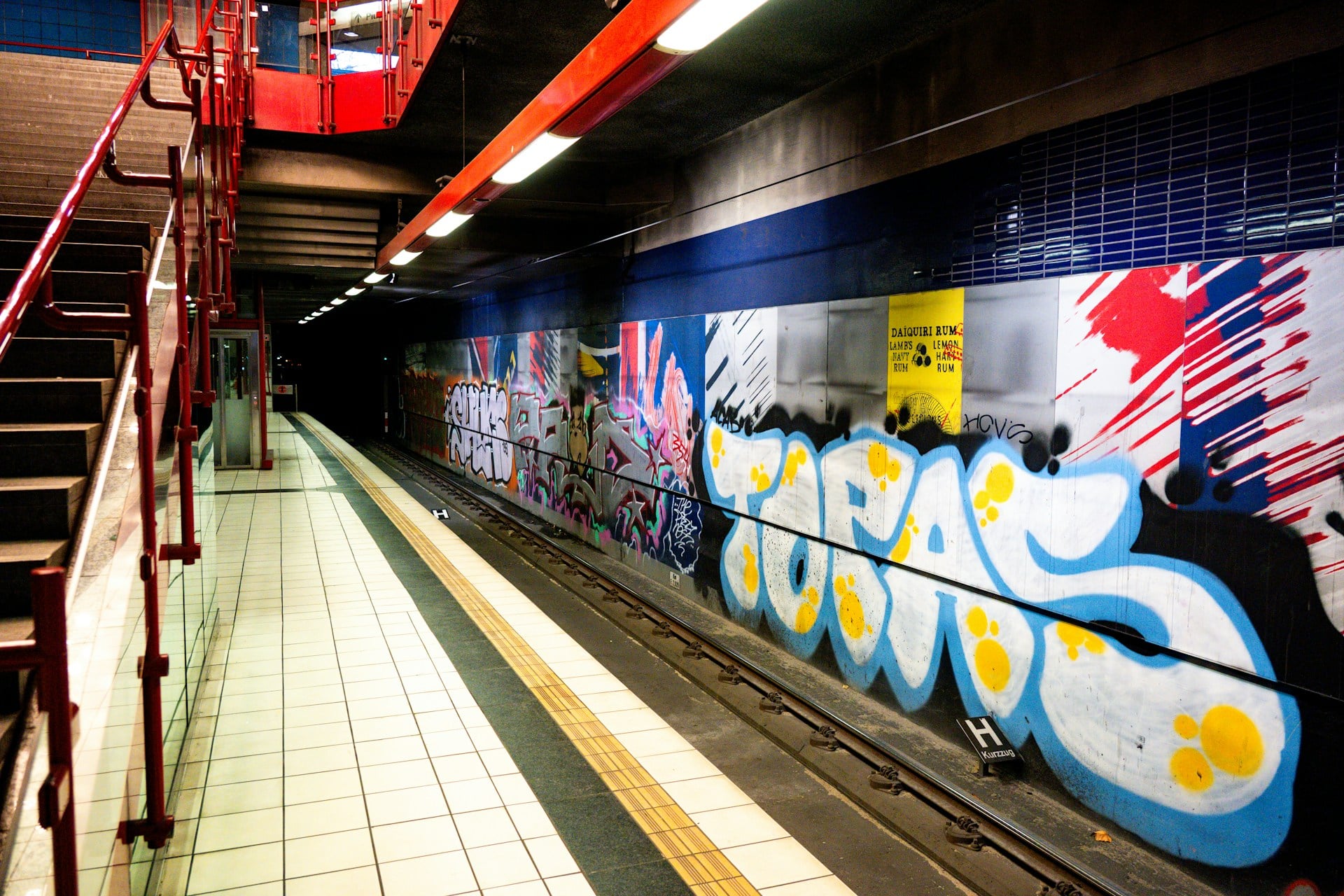
Practically speaking, none of this is necessary. A subway station needs platforms, tunnels, ticket machines, and exits.
Chandeliers and stained glass and ceramic murals add cost and complexity.
But cities keep building beautiful stations because transit is about more than moving bodies. These spaces shape how people experience their city.
A gorgeous station suggests that public life matters, that shared spaces deserve care, that art belongs everywhere and not just behind velvet ropes.
The Daily Miracle
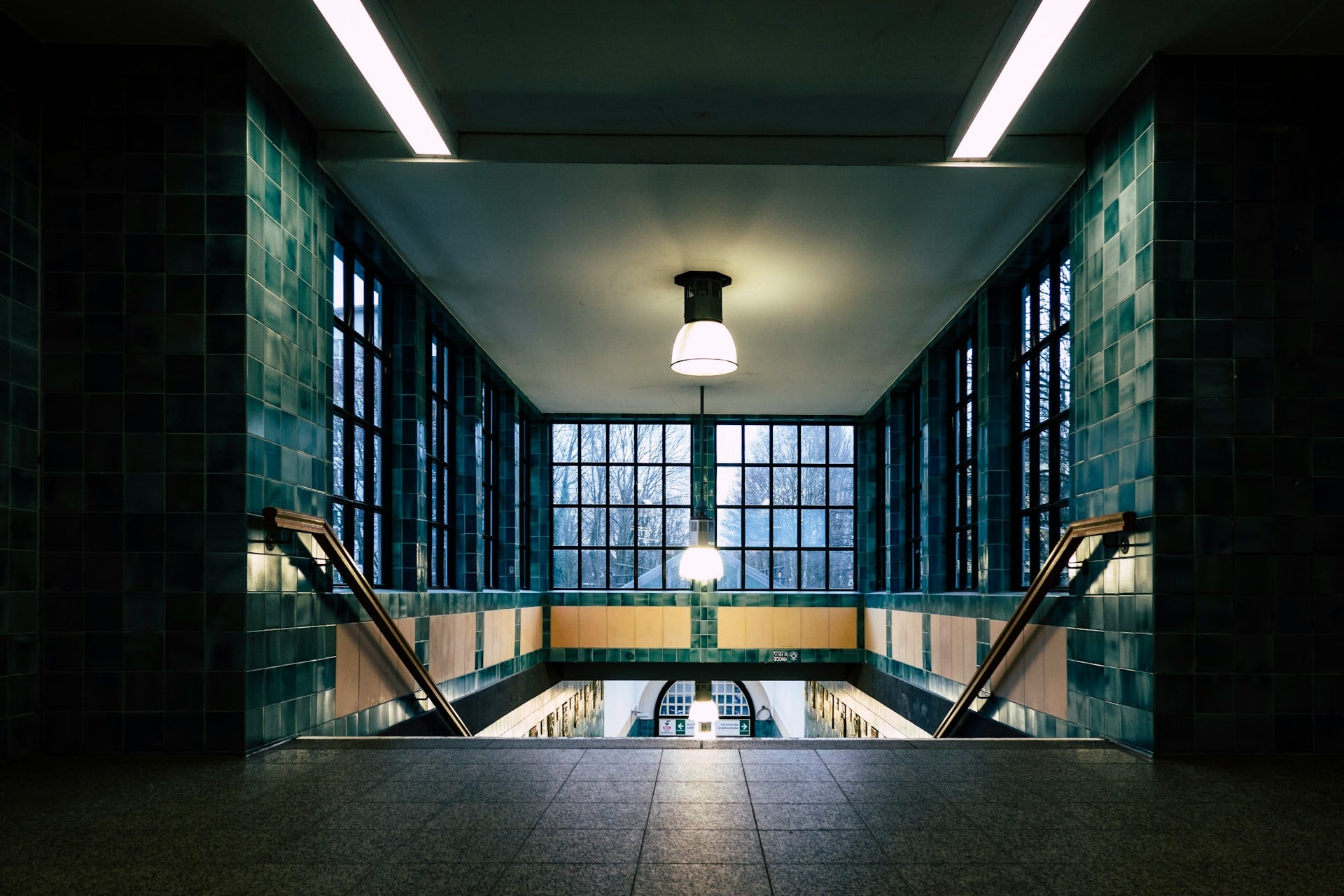
Every day, millions of commuters walk through these stations without looking up. They have jobs to get to, errands to run, lives to live.
The art becomes wallpaper, noticed only by tourists with cameras.
And maybe that’s fine. Maybe the point isn’t that everyone stops to admire every mosaic.
The point is that the art is there, available to anyone with a transit ticket. It belongs to the public in the most literal way possible.
You can spend all morning in the world’s longest art gallery for the price of a metro ride.
More from Go2Tutors!

- The Romanov Crown Jewels and Their Tragic Fate
- 13 Historical Mysteries That Science Still Can’t Solve
- Famous Hoaxes That Fooled the World for Years
- 15 Child Stars with Tragic Adult Lives
- 16 Famous Jewelry Pieces in History
Like Go2Tutors’s content? Follow us on MSN.