Super Bowl Commercials from the Past We Love
There’s a reason people don’t just watch the Super Bowl for the game. The commercials have become an event in their own right.
People gather around the TV specifically to see what brands come up with, and some of those ads have stuck in the collective memory for decades. A handful of them actually changed the way advertising works.
Others just made everyone in the room laugh out loud or go completely quiet. Looking back through the years, certain commercials stand out as the ones people still talk about, still quote, and still remember long after they forgot the final score.
Here are the ones that earned that kind of lasting spot.
Apple’s “1984” — The Ad That Changed Everything
Apple aired “1984” during the Super Bowl that year, and it was unlike anything anyone had seen in a commercial before. Directed by Ridley Scott, the ad depicted a dystopian society in grayscale, with a single woman running through and shattering a giant screen.
It was meant to introduce the Macintosh computer, and it did so without ever showing the product until the very end. The ad ran once during the broadcast and was never repeated as a paid spot.
But it didn’t need to be. It rewrote the rules for what a commercial could look like and feel like, and every ambitious brand ad that followed owed something to it.
Coca-Cola and Mean Joe Greene — A Simple Story Done Perfectly
The Coca-Cola ad featuring Pittsburgh Steelers legend Mean Joe Greene aired in 1979, and it remains one of the most emotionally effective commercials in Super Bowl history. The setup is deceptively simple: a young kid offers a Coke to Greene after a tough game, and Greene — who starts off grumpy and exhausted — ends up smiling and tossing the kid his jersey.
That’s it. No big twist, no elaborate production. Just a genuine human moment wrapped around a single product.
It works because it doesn’t try too hard. The feeling does all the work.
Volkswagen’s “The Force” — Kids in Darth Vader Costumes

When Volkswagen aired “The Force” before Super Bowl XLV in 2011, it instantly became one of the most talked-about ads of the year. A small child dressed as Darth Vader wanders through the house trying to use the Force on everything — the dog, a doll, the refrigerator — and failing every time.
The punchline comes when the kid runs outside and tries to move the family’s Volkswagen. The car’s horn blasts and the headlights flash, startling the kid.
The parents laugh from inside the house. It’s funny, it’s charming, and it made people genuinely happy to watch.
That’s a rare combination for any ad.
Budweiser Clydesdales — The Brand That Built an Emotion

— Photo by wollertz
The Budweiser Clydesdales have appeared in Super Bowl commercials so many times over the decades that they’ve become an institution unto themselves. But certain years stand out more than others.
The 1986 ad where a young man gives the Clydesdales to his father as a gift remains a fan favorite, and the 2013 ad featuring a Clydesdale finding its way home to its trainer after years apart hit people hard enough to make grown adults cry in their living rooms. Budweiser figured out early on that the Clydesdales weren’t just mascots — they were a vehicle for storytelling that could carry real emotional weight every single time.
Always “#LikeAGirl” — The Ad That Sparked a Conversation

Always aired “#LikeAGirl” during Super Bowl XLIX in 2015, and it landed differently than most brand commercials. The ad asked people — men, women, and teenagers — to demonstrate what it meant to “run like a girl” or “throw like a girl.”
The older subjects instinctively performed those actions in an exaggerated, mocking way. The younger girls just… did it. Normally.
The contrast was sharp and the message was clear without ever feeling preachy. It turned a phrase that had been used as an insult for years into something worth examining, and it did so in a way that felt honest rather than forced.
The Doritos Era — When Fans Became the Directors
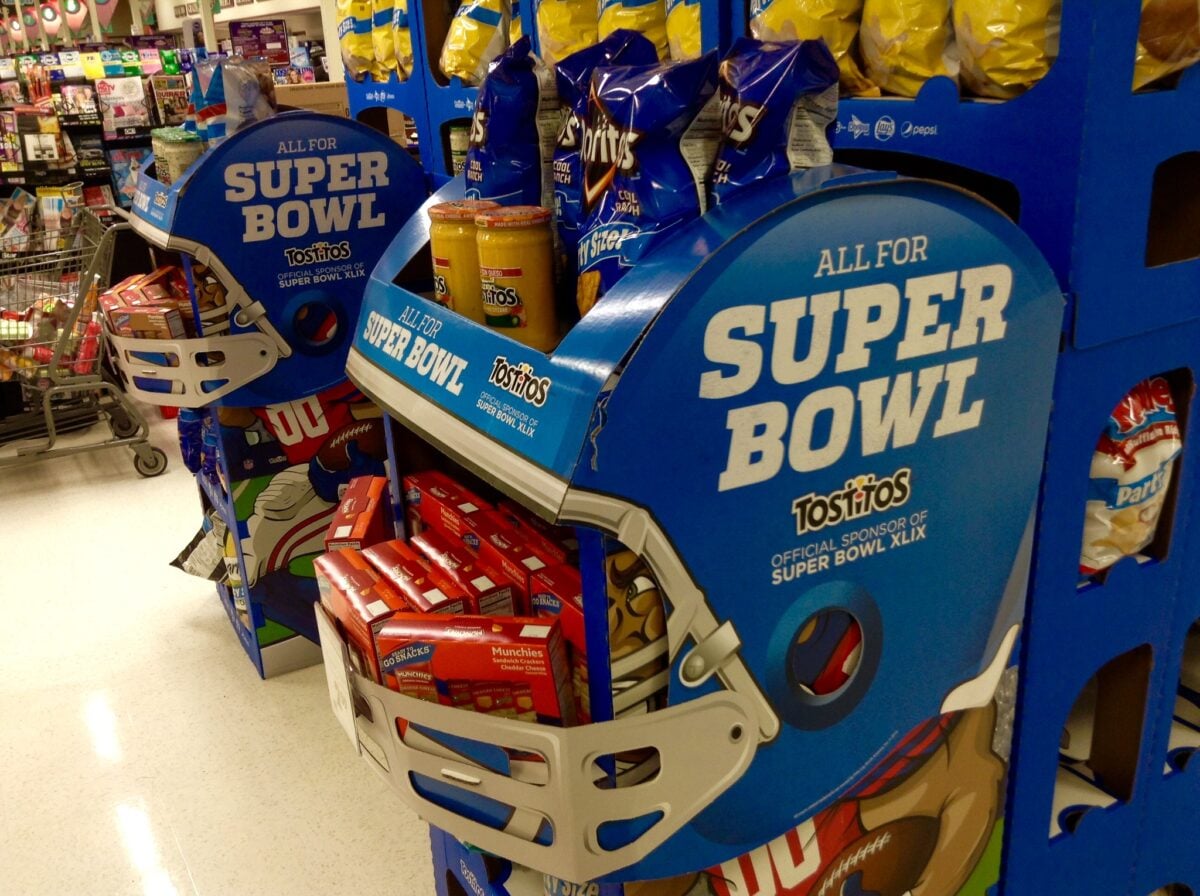
From 2007 to 2016, Doritos ran a campaign called “Crash the Super Bowl” that invited regular people to submit their own commercials for a chance to have them aired during the big game. Some of the fan-made ads were genuinely funny and creative — a guy using a giant Doritos chip as a frisbee, a kid shaking down his grandfather for chips, a woman sneezing and sending her date flying across the room.
The whole concept was unusual for the time, and it worked because it brought a scrappy, unpredictable energy to a broadcast that was otherwise dominated by polished, expensive productions.
Old Spice — “The Man Your Man Could Smell Like”

Old Spice aired “The Man Your Man Could Smell Like” during the 2010 Super Bowl, and Isaiah Mustafa became an overnight sensation. The ad featured him shirtless on a horse, then on a boat, then holding a handful of tickets, all while delivering deadpan lines about smelling incredible.
The humor came from how absurd the whole thing was and how seriously Mustafa played it. It became one of the most quoted commercials of that year, and it completely revitalized the Old Spice brand for a younger audience.
Mustafa showed up in follow-up ads and even started responding to people’s comments on social media in character. The whole thing snowballed in a way that felt almost accidental.
Snickers and Betty White — Short, Sweet, and Perfect
Betty White appeared in a Snickers commercial during Super Bowl XLIV in 2010, and it lasted less than thirty seconds. She played an old woman on a football field, getting tackled and knocked around, prompting her grandson to toss her a Snickers bar.
After eating it, she transforms back into a young man. The tagline was “You’re not you when you’re hungry.”
White delivered her lines with the kind of dry, unflappable timing that only decades of performing can produce. It was quick, it was funny, and it made people genuinely smile.
Sometimes the best ads don’t need much time at all.
E*Trade Baby — A Character People Couldn’t Get Enough Of
ETrade introduced its talking baby in a 2007 Super Bowl commercial, and the character became one of the most recognizable figures in advertising for years. The baby sat in front of a computer, speaking in a calm adult voice about online trading, occasionally burping or doing something ridiculous that reminded you it was actually an infant.
The contrast between the baby’s appearance and its confident, matter-of-fact delivery was the entire joke, and it landed every single time. ETrade brought the baby back repeatedly, and audiences kept showing up for it.
Tide’s “It’s a Tide Ad” — The Meta Trick

During Super Bowl LII in 2018, Tide aired a commercial that looked, at first, like a completely normal Super Bowl ad. A man walked through various scenes — a love story, an action sequence, a horror movie — and each time, the clothes in the scene were suspiciously clean and pristine.
Halfway through, the reveal hit: every single one of those ads was actually a Tide commercial in disguise. It was a clever, self-aware piece of advertising that played with the format itself.
In a broadcast full of ads trying to grab your attention, Tide grabbed it by making you question every other ad you were watching.
Google’s “Parisian Love” — A Love Story in Search Results

Google aired “Parisian Love” during Super Bowl XLIV in 2010, and it told an entire romance using nothing but a series of Google searches. A young man searched for “how to impress a French girl,” then “trip to Paris,” then “how to tell someone you love them,” eventually leading to “wedding venues in Paris.”
The whole story unfolded through a simple white search bar, and it was surprisingly moving. It was one of the first times a tech company used a Super Bowl commercial to tell an actual emotional story rather than just showcasing a product, and it stuck with people long after the game was over.
Pepsi and Cindy Crawford — The Commercial That Stopped the Show

Pepsi aired a commercial featuring Cindy Crawford in 1992 that became one of the most talked-about ads of the decade. Crawford walked into a small-town diner, ordered a Pepsi, and took a long, satisfying sip.
As she did, two young boys watched from the next table, completely starstruck. When Crawford left, one of them turned to the other and said, “Now that’s what I call a Pepsi.”
It was simple, it was stylish, and it made Pepsi look cool in a way that felt effortless. Crawford brought a level of star power to the ad that turned it into a moment, not just a commercial.
Hyundai’s “The Brilliant Kid” — A Quiet Gut Punch
Hyundai aired “The Brilliant Kid” during the 2020 Super Bowl, and it was the ad that caught people off guard that year. The commercial followed a young boy with cancer who wrote a book to raise money for other kids dealing with the same illness.
It told his story simply and directly, without any dramatic music swells or manipulative editing. By the end, when his dad watched him on stage at a school event, the emotion hit without warning.
It wasn’t trying to sell cars. It was just telling a true story, and it did so with enough restraint that the impact felt earned rather than manufactured.
Budweiser’s “Lost Puppy” — The One That Made Everyone Cry

Budweiser aired “Lost Puppy” before Super Bowl XLIX in 2015, and it became the most-watched commercial of that entire broadcast — not because of any big twist, but because of how effectively it made people feel something. A golden retriever puppy keeps escaping from a farm to play with a young girl, and each time it gets farther away before finding its way back.
The final scene shows the puppy caught in a storm, alone on the road, and the farm horses band together to guide it home through the rain. It was a thirty-second story with no dialogue, and it wrecked people.
Pure, simple, and impossible to forget.
The Ads That Outlast the Game

When the Super Bowl wraps up, the game fades fast from memory. Yet some ads stick around. People watch them again, repeat lines, and bring them up long after.
These standouts do more than push an item. A good one shares a tale, sparks laughter, and surprises with honesty.
Years go by, and they’re still talked about. What makes them stay is how they stepped past mere ads into something deeper.
Hitting that mark is what each brand aims for when the spotlight hits, yet only these spots manage it. The moments listed here didn’t just play – they landed.
More from Go2Tutors!

- The Romanov Crown Jewels and Their Tragic Fate
- 13 Historical Mysteries That Science Still Can’t Solve
- Famous Hoaxes That Fooled the World for Years
- 15 Child Stars with Tragic Adult Lives
- 16 Famous Jewelry Pieces in History
Like Go2Tutors’s content? Follow us on MSN.