Surprising Facts About Albert Einstein
Albert Einstein’s wild hair and iconic equation have made him the face of genius itself. Most people know about his groundbreaking theories that changed physics forever, but the man behind the science was far more interesting and complex than textbooks suggest.
His personal life was filled with quirky habits, political controversies, family secrets, and moments of profound humanity that rarely make it into the history books. Beyond the blackboards and laboratories, Einstein lived a life that would surprise even his biggest admirers.
Here is a list of surprising facts about Albert Einstein that reveal the fascinating human being behind the legendary physicist.
He Refused to Wear Socks

Einstein had a peculiar disdain for socks that lasted his entire adult life. His reasoning was actually pretty practical when you think about it—the big toe area always developed pits no matter what, so why bother?
He figured shoes alone should do the job of protecting feet. He even bragged about going sockless during his time at Oxford University, much to the amusement of his colleagues.
His Teachers Thought He Might Be Slow

When Einstein was born in 1879, his parents worried about a possible deformity because his head was unusually large and misshapen. Things didn’t improve much as he grew up—he didn’t speak until he was around three or four years old, leading his family to fear he might be mentally disabled.
According to one story, he finally broke his silence at dinner one night by complaining that the soup was too hot, and when asked why he’d never spoken before, he supposedly replied that up to that point, everything had been in order.
He Failed His First College Entrance Exam

The myth that Einstein flunked math is completely false, but he did fail his first attempt at college entrance exams. At just 15 years old, he was a high school dropout trying to get into the Swiss Federal Institute of Technology without the equivalent of a diploma.
While he aced the math and physics sections, he bombed the French, chemistry, and biology portions because his rigid German education hadn’t prepared him for those subjects. The university was so impressed with his mathematical abilities that they accepted him anyway, on the condition he finish his secondary education first.
He Worked as a Patent Clerk During His ‘Miracle Year’
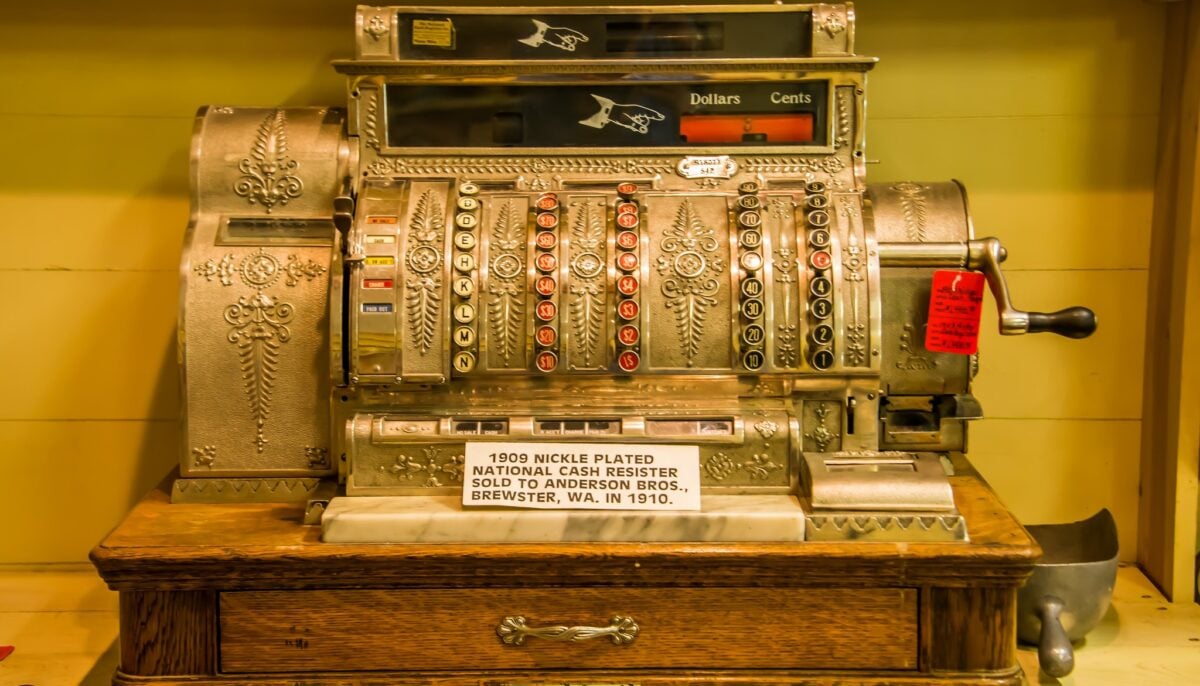
After graduating, Einstein couldn’t land an academic job despite applying to numerous universities—his professors deemed him unsuitable for employment and wouldn’t give him recommendations. He spent two frustrating years searching before finally getting hired at the Swiss Patent Office as a third-class examiner.
It was in this humble office job, while reviewing patents for electrical devices and time synchronization, that he developed his revolutionary theories in 1905. He later called the patent office ‘that worldly cloister where I hatched my most beautiful ideas.’
He Had a Secret Daughter Nobody Knew About

Before marrying his first wife Mileva Marić, Einstein got her pregnant when they were both poor students. They couldn’t afford to marry, so Mileva returned to her family in Serbia and gave birth to a girl named Lieserl in 1902.
Einstein and Mileva kept the child’s existence completely secret, and historians aren’t even sure if Einstein ever met his daughter. Most scholars believe Lieserl either died from scarlet fever as an infant or was given up for adoption.
The world didn’t learn about her existence until 1987, when Einstein’s private letters were finally made public.
Israel Offered Him the Presidency

When Israel’s first president Chaim Weizmann died in 1952, Prime Minister David Ben-Gurion felt duty-bound to offer the position to Einstein, calling him ‘the greatest Jew on Earth.’ The 73-year-old physicist tried to refuse immediately, even declining to meet with Israeli embassy representatives.
In his polite rejection letter, Einstein explained that he lacked ‘both the natural aptitude and the experience to deal properly with people’ and that his advancing age made him unsuitable for the role. He was deeply moved by the offer but knew his world was physics and ideas, not politics and diplomacy.
The FBI Kept a Massive File on Him

From the moment Einstein arrived in the United States in 1933 until his death in 1955, FBI Director J. Edgar Hoover was convinced the scientist was a dangerous radical. The Bureau compiled a 1,427-page dossier on Einstein, tracking his associations with pacifist and socialist organizations.
Hoover even recommended that Einstein be kept out of America using the Alien Exclusion Act, though the State Department overruled him. The FBI tapped Einstein’s phone, opened his mail, searched his trash, and followed his movements—all because of his political activism and criticism of nuclear weapons.
His Brain Was Stolen After His Death
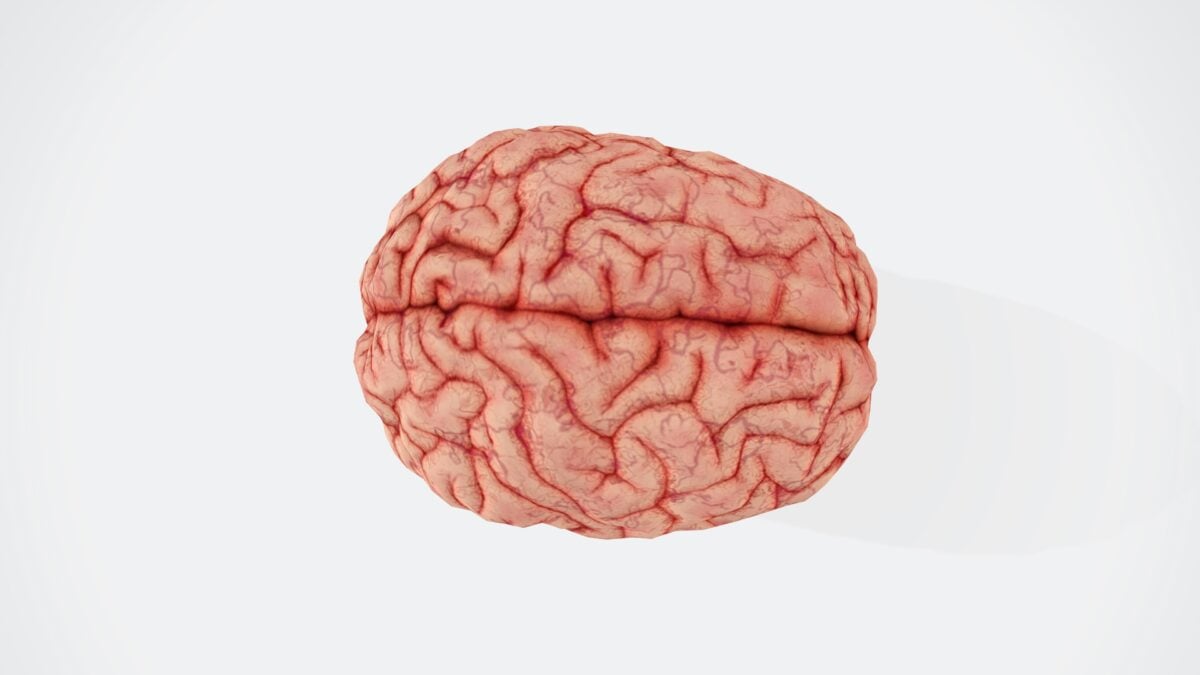
Einstein died in April 1955 and had requested cremation, but Princeton pathologist Thomas Harvey had other plans. During the autopsy, Harvey removed Einstein’s brain without permission, hoping to unlock the secrets of genius.
He eventually got reluctant approval from Einstein’s son and had the brain cut into pieces that were sent to various scientists for research. Most studies conducted on the brain since the 1980s have been dismissed or discredited, though one controversial 1999 paper claimed Einstein had unusual folds in his parietal lobe, the region associated with mathematical and spatial thinking.
He Didn’t Win the Nobel Prize for Relativity

Einstein’s most famous achievement—the theory of relativity—never won him a Nobel Prize. When he was finally awarded the prize in 1921, it was specifically for his work on the photoelectric effect and photons.
The Nobel Committee explicitly stated they were awarding the prize ‘without taking into account the value that will be accorded your relativity and gravitational theories after these are confirmed in the future.’ Even though astrophysicist Arthur Eddington had proven relativity in 1919, the Committee thought the evidence was too unreliable.
Einstein himself felt snubbed by this decision.
He Promised His Wife the Nobel Prize Money

Einstein’s first marriage to Mileva Marić fell apart as his fame grew, and their divorce negotiations took years. As part of their settlement in 1919, Einstein signed away all future Nobel Prize money to Mileva and their two sons—before he’d even won the prize.
He was so confident he’d eventually receive it that he made this guarantee, and when he did win in 1921, he kept his word. The money was placed in a trust where Mileva could use the interest but couldn’t touch the capital itself.
He Was a Passionate but Terrible Sailor

Einstein loved sailing and spent considerable time on the water, especially after moving to America. The problem was that he was absolutely awful at it. His neighbors in Long Island had to regularly rescue him because he kept capsizing his boat.
Despite his complete lack of sailing skill and his frequent mishaps, Einstein never lost his enthusiasm for the hobby—perhaps proving that even geniuses can be stubborn about their hobbies.
The Tongue Photo Was a Political Statement

That famous photograph of Einstein sticking out his tongue wasn’t just a silly moment—it had meaning. Taken on his 72nd birthday in 1951 by photographer Arthur Sasse, the image captured Einstein’s frustration after being asked to smile for cameras all evening.
He loved the photo so much that he requested nine copies and sent it as greeting cards to friends. On one copy, he wrote in German that the gesture was ‘aimed at all of humanity’ and that ‘a civilian can afford to do what no diplomat would dare.’
On another, he noted that the outstretched tongue reflected his political views during the McCarthy era.
He Held Three Different Citizenships

Einstein was German by birth, but he renounced his German citizenship at age 17 to avoid military service and escape the country’s authoritarian education system. He became a Swiss citizen and later, after fleeing Nazi Germany in 1933, became an American citizen.
When asked late in life about what effect his multiple nationalities had on his fame, Einstein joked that if his theories had been proven wrong, Americans would say he was Swiss, the Swiss would say he was German, and the Germans would say he was a Jewish astronomer.
He Personally Helped Refugees Escape Nazi Germany

When Hitler rose to power in 1933, Einstein’s civil liberties as a Jewish German were suspended immediately. After fleeing to the United States, he didn’t just save himself—he took action to help others.
Since there were no refugee agencies at the time, Einstein and his wife personally made visa applications for other German Jews and vouched for refugees fleeing Nazi rule. He used his fame and connections to help dozens of people escape persecution and find safety in America.
His Memory Was Notoriously Poor

Despite his incredible intellect, Einstein couldn’t remember basic information like dates or even his own phone number. One of his teachers claimed he had ‘a memory like a sieve,’ and this problem followed him throughout his life.
There’s a story about Einstein traveling on a train when the conductor came to collect his ticket—Einstein fumbled through his pockets and couldn’t find it. The conductor recognized him and said not to worry, but Einstein insisted he needed to find it so he’d know where he was supposed to get off.
He Called Racism America’s ‘Worst Disease’

Einstein was a vocal advocate against racism in America, shaped by his own experiences with anti-Semitism and his deep belief in equality. He saw clear parallels between the treatment of Black Americans and the persecution of Jews in Nazi Germany.
In 1946, he gave a commencement speech at the historically Black Lincoln University where he declared segregation to be ‘a disease of white people.’ When African-American singer Marian Anderson was denied a hotel room in Princeton in 1937, Einstein and his wife invited her to stay in their home, beginning a lifelong friendship.
He also befriended Paul Robeson despite Robeson being ostracized for his communist sympathies.
A Rebel Who Changed the World
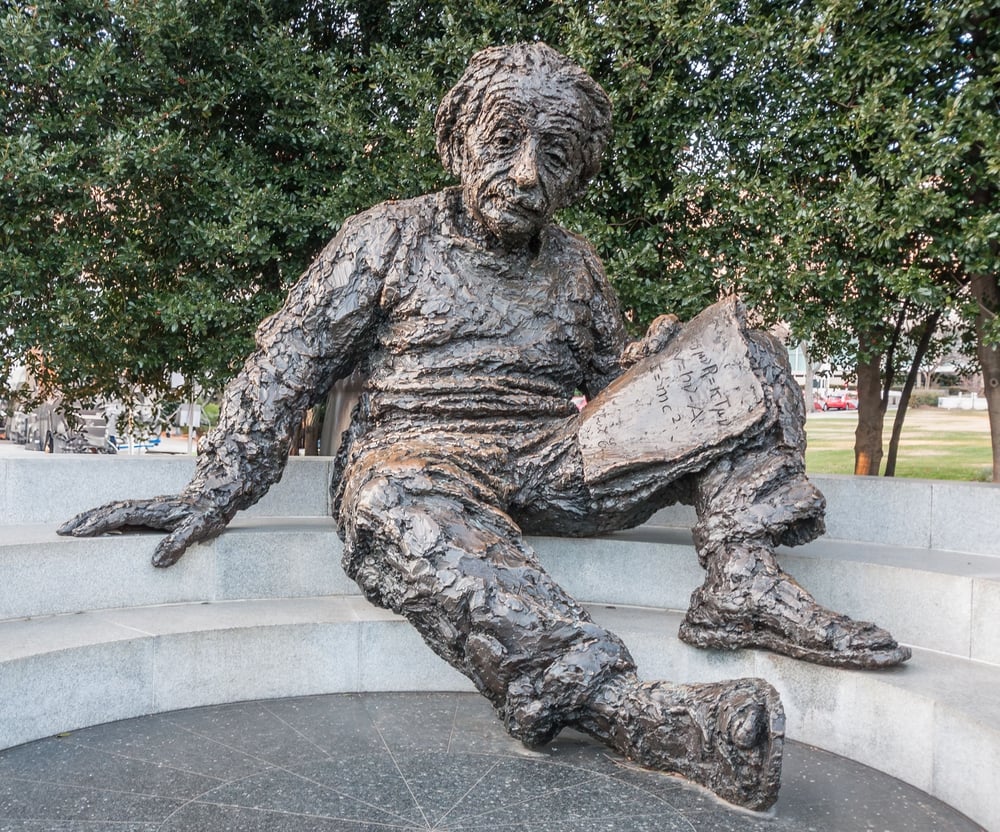
Einstein’s legacy extends far beyond the equations and theories that revolutionized physics. His willingness to speak truth to power, his compassion for the persecuted, and his refusal to conform to social expectations made him as much a cultural icon as a scientific one.
The FBI’s massive surveillance operation, his rejection of political office, and his outspoken activism show a man who understood that silence in the face of injustice was complicity. Today, Einstein’s image adorns everything from t-shirts to corporate logos, but perhaps what we should remember most is his courage to be authentically himself—wild hair, no socks, and all—while never backing down from what he believed was right.
More from Go2Tutors!

- The Romanov Crown Jewels and Their Tragic Fate
- 13 Historical Mysteries That Science Still Can’t Solve
- Famous Hoaxes That Fooled the World for Years
- 15 Child Stars with Tragic Adult Lives
- 16 Famous Jewelry Pieces in History
Like Go2Tutors’s content? Follow us on MSN.