The Most Chilling Urban Legends Born on the Internet
The internet was supposed to democratize information, but it also democratized fear. Before social media and forums, urban legends spread slowly through whispered conversations and campfire stories.
Now they can circle the globe in hours, mutating and growing more terrifying with each retelling.
These aren’t the classic tales about hitchhiking ghosts or alligators in sewers. These are the stories that crawled out of chat rooms, message boards, and social networks — digital campfires where anyone can add fuel to the fire.
The Slender Man
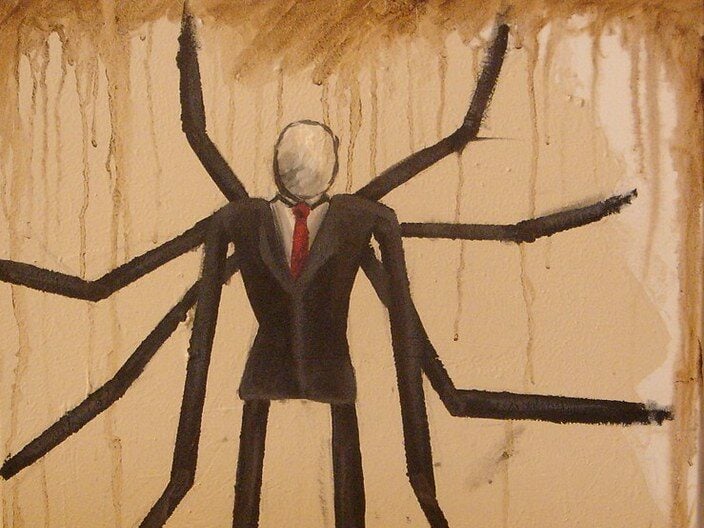
He emerged from a Photoshop contest in 2009. Tall, faceless, dressed in a black suit with tentacle-like appendages.
Eric Knudsen created him for a simple internet horror competition, but the Slender Man refused to stay contained within that original thread.
The character spread across platforms like a virus. Creepypasta wikis, YouTube channels, indie games — each iteration added new rules to his mythology.
He stalks children.
He appears in photographs before disappearing people.
He drives his victims to madness first.
What started as digital art became something that felt genuinely ancient and unknowable.
Then came the stabbing in Wisconsin. Two twelve-year-old girls lured their friend into the woods and attacked her, claiming they needed to prove themselves to the Slender Man.
The fictional entity had crossed into reality with devastating consequences.
Momo Challenge
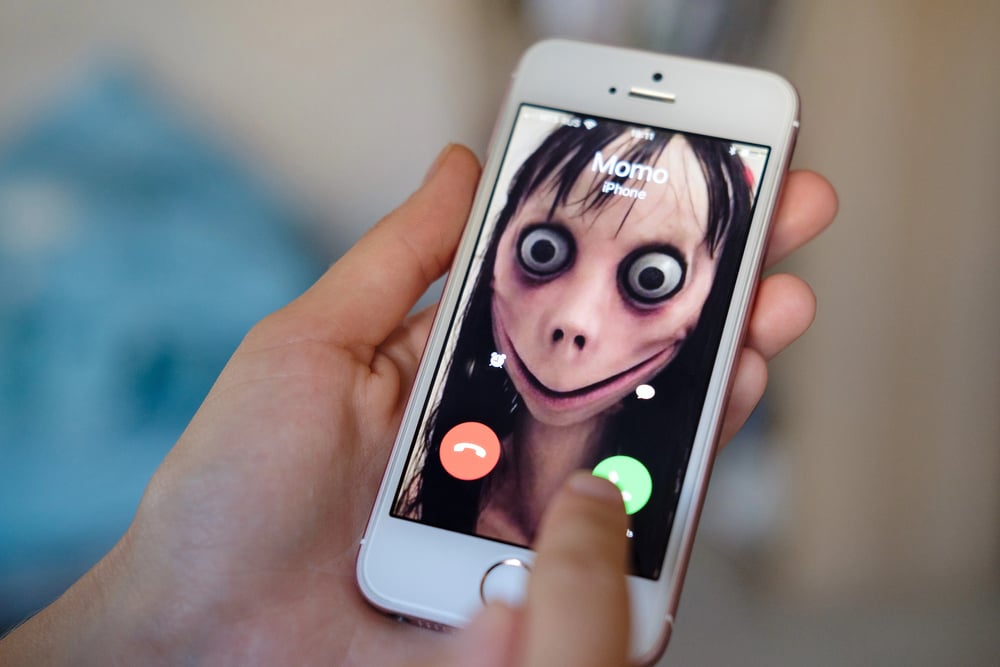
A bird-like sculpture with bulging eyes and a grotesque smile became the face of parental nightmares worldwide. The Momo Challenge supposedly involved a WhatsApp contact who would send increasingly disturbing messages and tasks to children, culminating in self-harm.
News outlets ran breathless warnings about the phenomenon sweeping through schools. Parents checked their children’s phones frantically.
The sculpture — actually a work by Japanese artist Midori Hayashi displayed in a Tokyo gallery — became synonymous with digital danger.
But here’s the thing: there was no coordinated Momo Challenge. No verified cases of the supposed game causing harm.
The legend fed on parental anxiety about technology they didn’t understand, spreading faster than anyone could fact-check it.
The Backrooms

Picture this: you’re walking through a building when something goes wrong — you clip through reality like a glitch in a video game and find yourself somewhere else entirely (somewhere that shouldn’t exist but feels disturbingly familiar). Yellow walls stretch endlessly under fluorescent lighting that hums just loud enough to remind you it’s there.
The carpet is damp and smells like decades of neglect. Every room looks identical, and every corridor leads to more identical rooms.
This is Level 0 of the Backrooms, born from a single unsettling photograph posted on 4chan in 2019. The image showed exactly what the legend describes: an empty office space that felt wrong in ways that couldn’t quite be articulated.
But the internet articulated them anyway. The concept exploded across platforms, spawning an entire mythology of levels, entities, and survival guides for navigating infinite corporate purgatory.
And here’s what makes it particularly unsettling: most people have been in a space that felt exactly like this. The Backrooms tap into something universal about liminal spaces — those in-between places that feel temporarily abandoned by human purpose.
Jeff the Killer
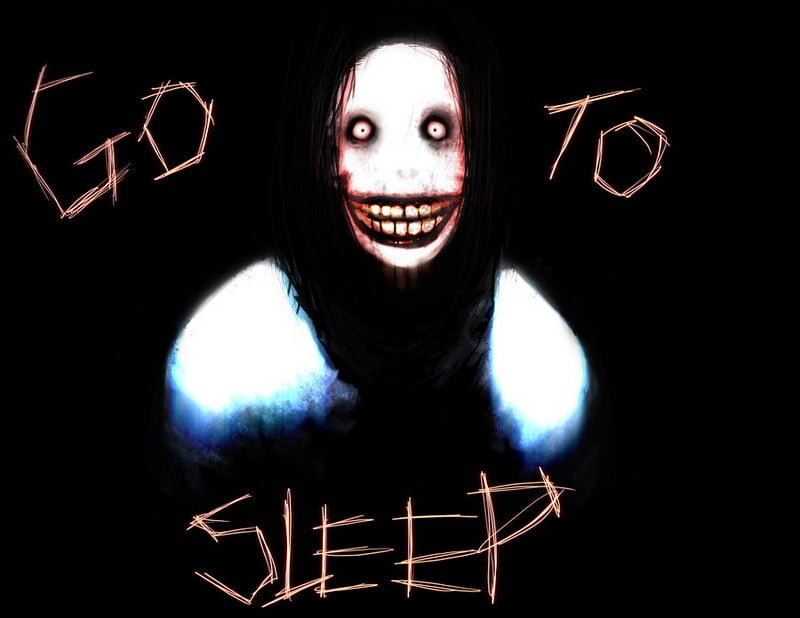
Jeff Henderson was supposedly a normal teenager until a brutal attack left his face burned and his mind shattered. He carved a smile into his cheeks, burned off his eyelids, and began stalking victims with a kitchen knife, whispering “Go to sleep” before striking.
The story first appeared on Creepypasta forums around 2008, accompanied by a heavily edited photograph of a pale face with an unnaturally wide grin. It’s terrible writing by most standards — melodramatic, poorly structured, full of logical gaps.
Yet Jeff became one of the most recognizable horror icons of the internet age.
Kids drew him in school notebooks. Cosplayers recreated his look at conventions.
The image showed up in countless YouTube horror compilations. Sometimes the worst stories are the ones that stick hardest because they operate on pure emotional impact rather than craft.
The Russian Sleep Experiment
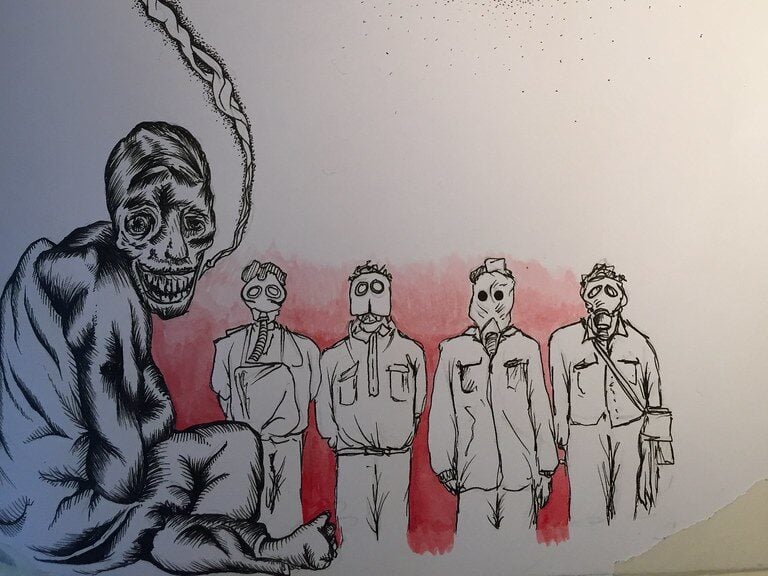
Soviet researchers keep five prisoners awake for fifteen days using an experimental gas.
By day five, the subjects stop talking. By day nine, they’re screaming continuously.
When researchers finally enter the chamber on day fifteen, they find something that no longer qualifies as human.
This creepypasta reads like a clinical report, complete with dates and medical observations. The detached, scientific tone makes the escalating horror feel more credible than it has any right to be.
The story claims to be declassified Soviet documentation, playing into Cold War anxieties about unethical human experimentation.
Of course, it’s complete fiction. But the clinical presentation and historical context give it enough plausibility that people regularly ask if it really happened.
The legend preys on the uncomfortable knowledge that governments have conducted horrific experiments on unwilling subjects throughout history.
Ben Drowned
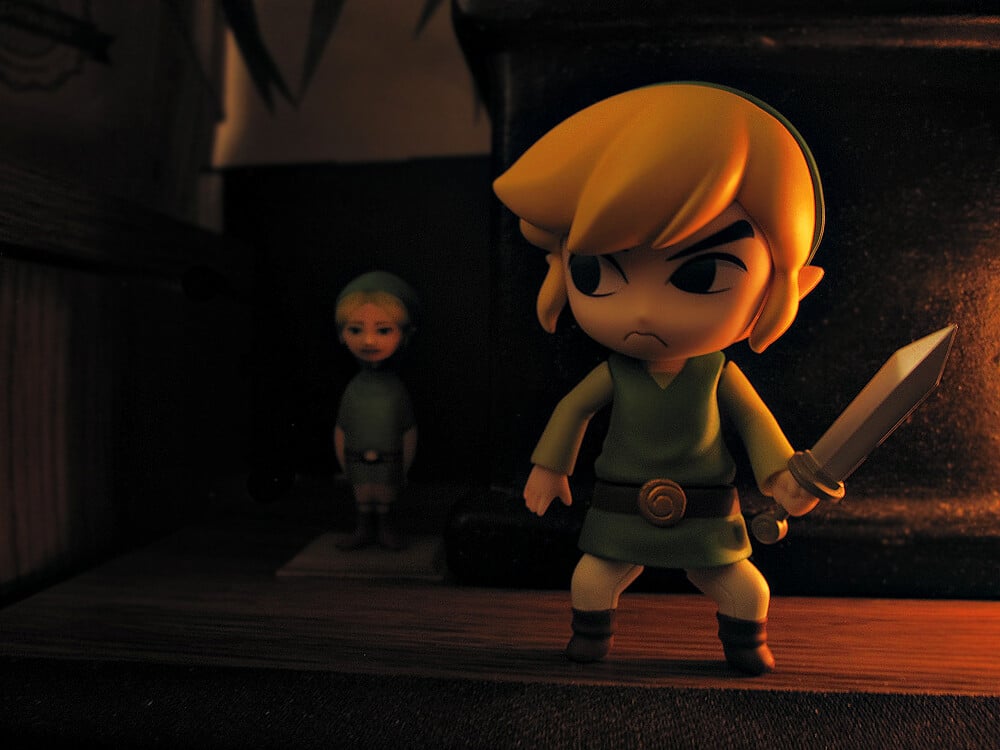
Imagine buying a used copy of The Legend of Zelda: Majora’s Mask at a garage sale, only to discover the previous save file belongs to someone named Ben (and Ben might still be trapped inside the cartridge). The game begins glitching in ways that seem deliberately menacing — Link drowns repeatedly, the music plays backwards, and text appears that shouldn’t exist in the original code.
This story, posted by user Jadusable in 2010, pioneered a new form of digital storytelling. Instead of just describing the haunted game, the author created videos showing the supposed glitches in action.
Viewers could watch Link’s unsettling behavior for themselves, making the fictional haunting feel tangible.
The legend tapped into something specific about retro gaming culture — that sense of mystery surrounding glitches and corrupted files. Every gamer had experienced something unexplainable at some point.
Ben Drowned just suggested those moments might not be accidents.
SCP Foundation
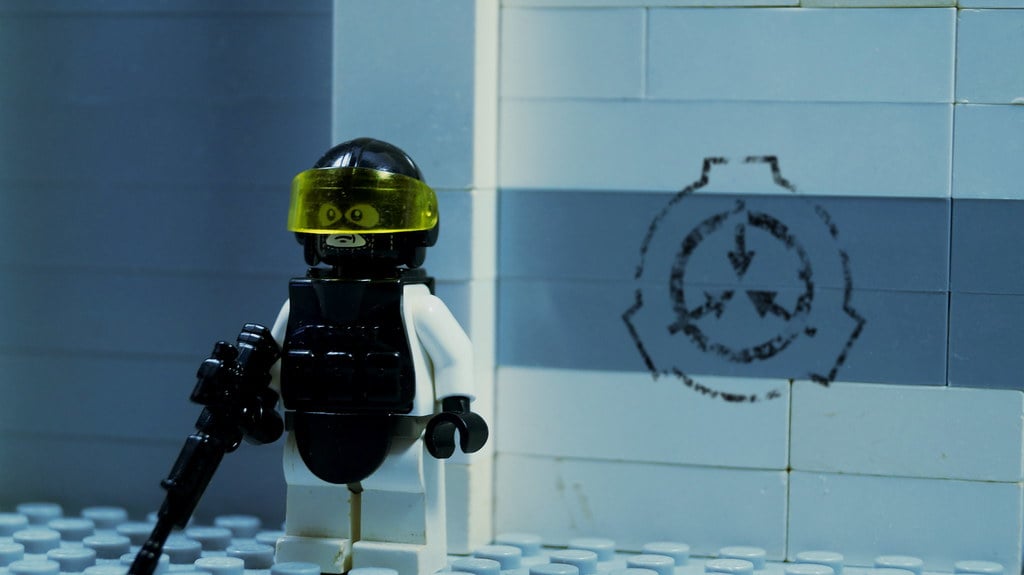
The SCP Foundation presents itself as a secret organization dedicated to containing anomalous objects, entities, and phenomena. Each entry reads like a clinical file: Object Class, Special Containment Procedures, Description.
SCP-173 is a concrete sculpture that moves when unobserved and snaps necks. SCP-096 is a pale, emaciated humanoid that enters an unstoppable rage state when anyone views its face.
What started as a single creepypasta on 4chan became a collaborative writing project spanning thousands of entries. Contributors maintain the clinical tone and bureaucratic format religiously.
The effect is unsettling in its mundanity — these reality-breaking horrors are catalogued with the same dry professionalism as office supplies.
The Foundation’s motto is “Secure, Contain, Protect.” But the scariest implication isn’t that these things exist — it’s that there’s an organization powerful enough to hide them from public knowledge, and they’ve been doing it successfully for decades.
Candle Cove
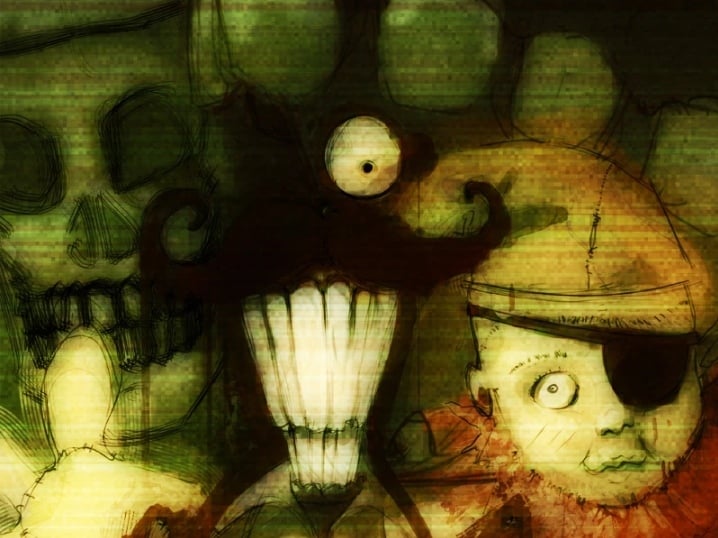
You remember watching a children’s show called Candle Cove when you were young, but nobody else seems to recall it. The characters were unsettling — a girl named Janice, a skeleton in a navy coat, pirates with no mouths.
The theme song was just screaming. In one episode, all the characters stood motionless for the entire runtime while the camera slowly zoomed in on their faces.
This story, written by Kris Straub, unfolds as a forum discussion between adults trying to piece together memories of the show. Some remember different details.
Others insist it never existed. One person’s mother mentions that her child used to sit in front of static, claiming to watch Candle Cove.
The genius lies in how it mimics real conversations about half-remembered media from childhood. Everyone has shows or games they can barely recall but can’t quite verify.
Candle Cove exploits that uncertainty, suggesting that shared false memories might be more sinister than simple nostalgia.
The Rake
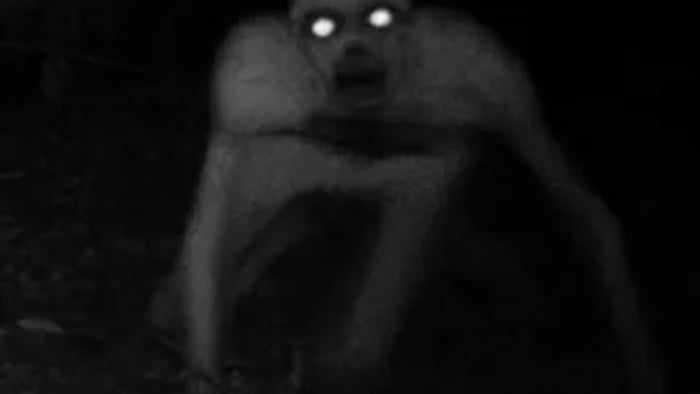
It appears at the foot of beds in rural areas, studying sleepers with pale, sunken eyes. The creature moves on all fours despite its humanoid shape, and witnesses describe an overwhelming sense of dread upon seeing it.
Some accounts mention it speaking in a voice like grinding metal, though the words are never clearly understood.
The Rake supposedly appears in historical accounts dating back centuries, but the modern legend consolidated around 2006 on 4chan. Contributors shared “sightings” and historical documents, building a mythology that felt both ancient and immediate.
The effectiveness comes from its restraint. Many internet monsters are over-designed, loaded with elaborate backstories and specific rules.
The Rake remains largely mysterious — a simple, primal fear of something watching from the darkness that shouldn’t be there.
Dead Bart
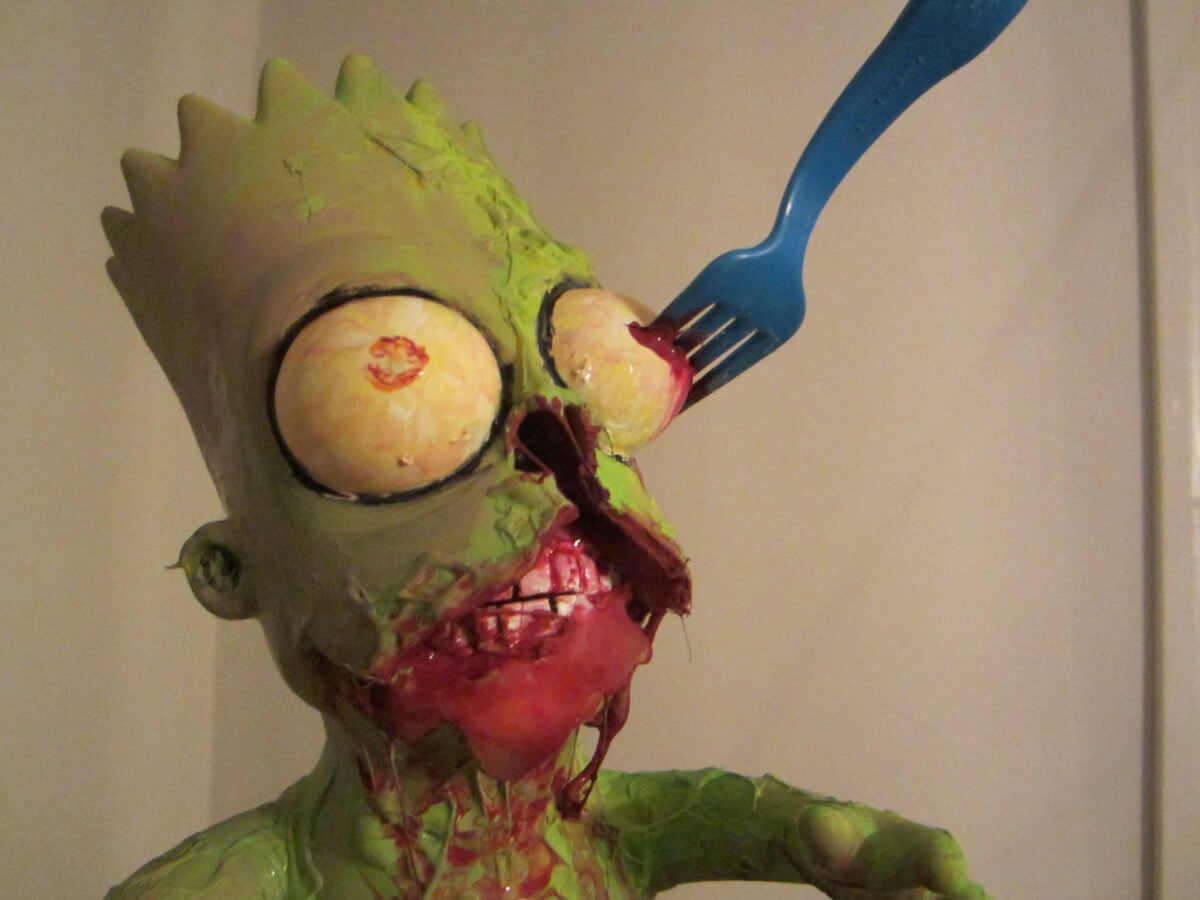
There’s supposedly a lost episode of The Simpsons where Bart dies in a plane crash. The episode shows his funeral in excruciating detail — Marge’s breakdown, Homer’s guilt, Lisa’s silence.
The animation quality is different, more realistic. At the end, the credits roll over footage of real graveyards, and the voice actors are listed with their actual death dates, including ones that haven’t happened yet.
This “lost episode” creepypasta plays on the unsettling nature of seeing beloved characters in genuinely disturbing situations. The Simpsons had been a safe, predictable comfort for millions of viewers.
The idea of a secret episode that violated that safety felt transgressive in a way that generic horror stories couldn’t match.
Similar legends sprouted around other childhood staples — SpongeBob, Mickey Mouse, Teletubbies. The pattern was always the same: familiar characters in unfamiliar, disturbing circumstances, suggesting that innocence was just a mask hiding something darker underneath.
The Holders Series

Before the SCP Foundation, there were the Holders — 2,000 mysterious objects scattered across the world, each guarded by an entity that will test anyone brave enough to seek them. The legends read like quest instructions from a nightmare video game.
Go to any mental hospital. Ask the receptionist to see “The Holder of the End.”
If they look confused, leave immediately.
If they guide you to a room, prepare for questions that will determine whether you retrieve the object or lose your sanity.
Each story follows the same format but describes increasingly bizarre trials. Some require answering riddles posed by tortured patients.
Others involve navigating impossible architecture or surviving psychological torture. The reward is always an innocuous object — a pen, a music box, a photograph — that supposedly holds devastating power.
The series presents itself as a guide for urban explorers willing to risk everything for forbidden knowledge. The consistent format and specific instructions make the fictional quests feel achievable, which is exactly what makes them dangerous to believe.
Smile Dog
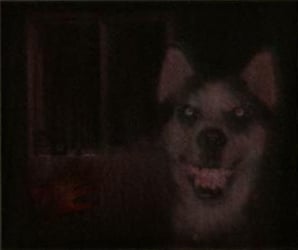
The image shows a Siberian Husky, but the smile is wrong — too wide, too knowing, too human. The legend claims that anyone who views the photograph of “Smile Dog” becomes obsessed with it.
Victims suffer nightmares where the dog appears, demanding they “spread the word” by showing the image to others. The only way to end the torment is to pass the curse along.
This story predates most modern creepypasta, emerging from early 2000s email chains and horror forums. It’s a digital update of cursed object legends — the videotape from The Ring, but adapted for internet culture.
The photograph allegedly exists, hidden in the depths of certain websites, waiting for curious users to stumble across it.
Of course, numerous fake versions of the image circulate online. People create their own disturbing dog photographs and claim they’re the real Smile Dog picture.
The legend becomes self-perpetuating as users share increasingly unsettling images, each claiming to have found the original.
When Digital Folklore Becomes Reality
These stories spread because they exploit fundamental anxieties about technology, childhood, and the unknown spaces between documented reality. They’re not just entertainment — they’re modern folklore, serving the same function as traditional ghost stories but updated for a connected world where information travels instantly and verification becomes increasingly difficult.
The internet didn’t just create new venues for storytelling. It created new kinds of stories that could only exist in digital spaces, stories that blur the line between fiction and reality until the distinction stops mattering.
In a world where deepfakes and misinformation dominate headlines, maybe the most chilling thing about internet urban legends isn’t their content — it’s how easily we’ve learned to live with uncertainty about what’s real.
More from Go2Tutors!

- The Romanov Crown Jewels and Their Tragic Fate
- 13 Historical Mysteries That Science Still Can’t Solve
- Famous Hoaxes That Fooled the World for Years
- 15 Child Stars with Tragic Adult Lives
- 16 Famous Jewelry Pieces in History
Like Go2Tutors’s content? Follow us on MSN.



