The Spiciest Chilies Grown Today
Fire-breathing dragons might be mythical, but spicy peppers that feel like they could scorch your taste buds right off are very real. These little pods of pain have been bred, grown, and perfected by pepper growers who seem determined to push the limits of human tolerance.
From backyard gardens to competitive eating challenges, the world’s hottest chilies have become something of a sport, with new varieties constantly trying to claim the crown of ultimate heat. Let’s take a look at the peppers that are making people sweat, cry, and wonder why they thought eating them was a good idea.
Carolina Reaper

This gnarly-looking pepper held the Guinness World Record for hottest chili from 2013 to 2023, and it’s still terrifying people today. The Carolina Reaper averages around 1.6 million Scoville Heat Units, though some individual peppers have tested at over 2.2 million.
It was created by Ed Currie in South Carolina, who crossed a Pakistani Naga with a Red Habanero to create this beast. The pepper has a distinctive scorpion-like tail and a bumpy, wrinkled surface that looks as menacing as it tastes.
Pepper X

Ed Currie wasn’t satisfied with just the Carolina Reaper, so he spent years developing an even hotter pepper. Pepper X officially took the world record in 2023 with an average heat level of 2.69 million Scoville Heat Units.
Some individual peppers have reportedly hit over 3 million. Currie kept this variety secret for over a decade while perfecting it, and it’s now the main ingredient in his Last Dab hot sauce that appears on the show Hot Ones.
Dragon’s Breath

This pepper was developed in Wales by Mike Smith and reportedly measures around 2.48 million Scoville Heat Units. It was originally created for medical purposes, with the idea that its oils could be used as an anesthetic for people allergic to traditional options.
The pepper is so hot that eating it could potentially cause anaphylactic shock. Smith has been cautious about releasing seeds to the public because of the genuine danger this pepper poses.
Apollo Pepper

Another creation from Ed Currie, the Apollo pepper is said to be even hotter than Pepper X in some tests. This variety hasn’t been officially measured by Guinness yet, but Currie claims it reaches levels that make his other creations seem tame.
The Apollo has a unique fruity flavor that comes right before the intense heat kicks in. It’s currently being used in extremely limited quantities in specialty hot sauces.
Trinidad Moruga Scorpion

Before the Carolina Reaper took the crown, this pepper from Trinidad held the world record. It averages about 1.2 million Scoville Heat Units but can reach up to 2 million in the right conditions.
The pepper gets its name from the Moruga district in Trinidad and its scorpion-like tail. What makes this pepper particularly brutal is that the heat builds slowly, so people often eat more than they should before realizing their mistake.
Trinidad Scorpion Butch T

This variety held the world record from 2011 to 2012 and still packs a serious punch. It was developed by Butch Taylor and measures around 1.46 million Scoville Heat Units on average.
The pepper has a rough, pebbled surface and that characteristic scorpion tail. Growers who handle these peppers regularly wear gloves and even protective eyewear because the oils can cause serious skin and eye irritation.
Naga Viper

This British-bred pepper was a three-way hybrid combining the Naga Morich, Bhut Jolokia, and Trinidad Scorpion. It briefly held the world record in 2011 with a measurement of 1.38 million Scoville Heat Units.
The Naga Viper is unstable genetically, which means peppers grown from its seeds don’t always produce plants with the same heat level. This unpredictability actually adds to its reputation as a wild and dangerous pepper.
7 Pot Douglah

This pepper from Trinidad gets its name from the claim that one pepper could spice seven pots of stew. The Douglah variety is unique because it ripens to a dark brown or chocolate color instead of red.
It measures between 1.2 and 1.8 million Scoville Heat Units. The flavor has a slightly nutty quality that some pepper enthusiasts actually enjoy, assuming they can get past the overwhelming heat.
Ghost Pepper

Also known as Bhut Jolokia, this pepper from India was the first to break the one million Scoville mark in official testing. It held the world record from 2007 to 2011 and remains one of the most well-known super-hot peppers.
The ghost pepper measures around 1 million Scoville Heat Units. It’s used in India not just for cooking but also in smoke grenades by the military and in fence paint to keep wild elephants away from villages.
7 Pot Primo

This pepper was created by horticulturist Troy Primeaux in Louisiana, which is where the ‘Primo’ name comes from. It measures around 1.47 million Scoville Heat Units and has an extremely distinctive long tail that makes it look almost alien.
The 7 Pot Primo has a fruity flavor underneath all that heat. Many hot sauce makers prefer it because the flavor profile adds complexity beyond just pure pain.
Gibraltar
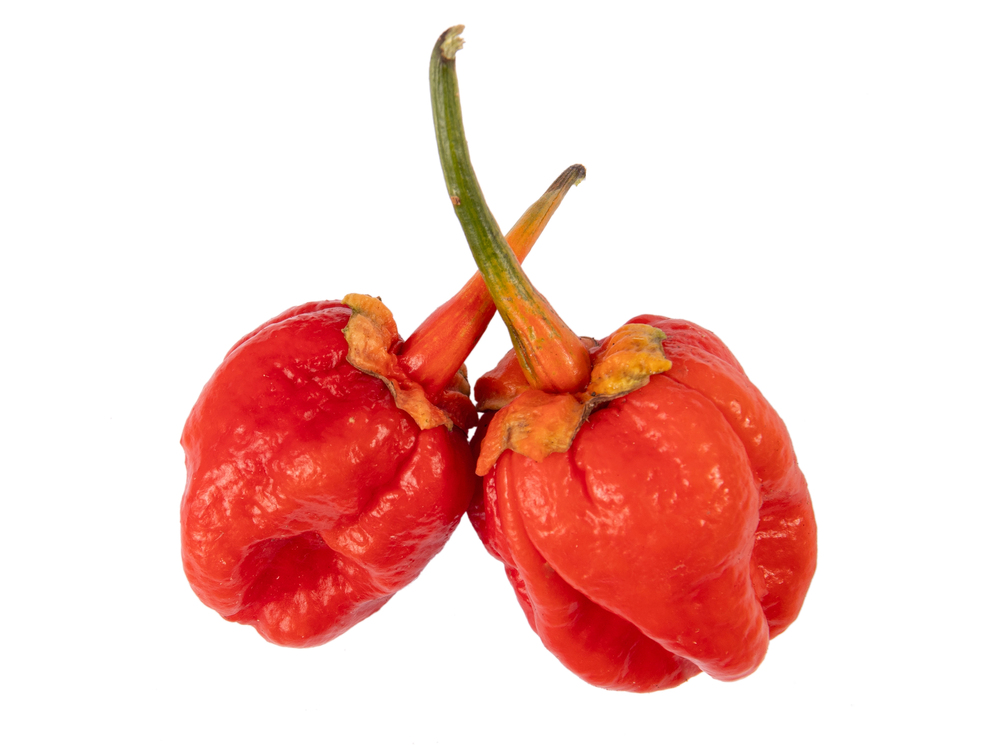
This is one of the newer additions to the super-hot pepper world and comes from the UK. It measures somewhere between 1.2 and 1.3 million Scoville Heat Units.
The Gibraltar has a bright red color and a wrinkled appearance similar to the Carolina Reaper. It’s gaining popularity among competitive eaters and hot sauce enthusiasts who want something intense but slightly more manageable than the absolute record holders.
Chocolate Bhutlah

This pepper is a cross between the Bhut Jolokia and the Trinidad Scorpion and was developed by Chad Soleski. It measures around 2 million Scoville Heat Units, making it one of the hottest peppers ever tested.
The chocolate variety has a dark brown color when ripe and a unique flavor that’s almost smoky. Professional pepper growers consider this one of the most difficult varieties to cultivate successfully.
Jay’s Peach Ghost Scorpion

This pepper combines the genetics of the Ghost Pepper and the Trinidad Scorpion, creating something unique. It ripens to a peachy orange color and measures around 1.2 million Scoville Heat Units.
The flavor is surprisingly fruity and sweet before the heat overwhelms everything. Many people consider it one of the better-tasting super-hot varieties, which makes it popular for making gourmet hot sauces.
Brain Strain

This pepper was developed by David Capiello and gets its name from its extremely bumpy, brain-like appearance. It measures around 1.35 million Scoville Heat Units.
The Brain Strain has a reputation for causing intense sweating and what some people describe as a delayed reaction where the heat seems to get worse several minutes after eating. The pepper has become a favorite in extreme eating challenges because of how unpredictable and long-lasting the effects can be.
Infinity Chili

Created by Nick Woods in England, this pepper briefly held the world record in 2011. It measures around 1.17 million Scoville Heat Units.
The Infinity Chili has a bright red color and a wrinkled texture. Woods initially grew it in a greenhouse before it caught the attention of the wider pepper-growing community.
It’s become somewhat rare now because growers have moved on to even hotter varieties.
Spanish Naga

From Spain it came, though traces of Indian roots show up in its genes. Ranging from 1.1 to 1.3 million Scoville units, heat shifts with how and where it’s grown.
Not quite like other blazing chiles – this one carries a hint of citrus underneath. Grown now by Spanish farmers aiming at Europe’s spicier condiment shelves.
Still Chasing the Heat

Out of nowhere, people keep chasing spicier peppers, testing fresh types each season. Once oddball hobbyists, now entire events celebrate extreme chilis – growers compete hard, year after year.
Not only do records matter; labs study them for medicine, farmers for insect shields, others for safety sprays. From kitchen spice to high-stakes experiments, the little chili’s role shifted fast.
Still burning bright, this trend shows zero signs of slowing.
More from Go2Tutors!

- The Romanov Crown Jewels and Their Tragic Fate
- 13 Historical Mysteries That Science Still Can’t Solve
- Famous Hoaxes That Fooled the World for Years
- 15 Child Stars with Tragic Adult Lives
- 16 Famous Jewelry Pieces in History
Like Go2Tutors’s content? Follow us on MSN.



