The Village Where Sunlight Never Touches the Ground
Picture waking up each morning and watching the sun illuminate the mountaintops around you while your entire town remains draped in shadow. That’s daily life for the residents of Rjukan, Norway, where geography plays a cruel trick on anyone craving vitamin D.
This small industrial town sits at the bottom of a steep valley in Telemark county, wedged between imposing mountains that block direct sunlight for half the year. The residents don’t just live with less sunshine—they live with none at all touching their streets from late September through mid-March.
What makes Rjukan particularly fascinating isn’t just its geographical curse but how the community has adapted to this darkness over the past century. From building cable cars to installing giant mirrors, the town’s solutions are as creative as they are necessary.
Here is a list of 12 fascinating facts about the village where sunlight never touches the ground.
Gaustatoppen Mountain Blocks the Sun

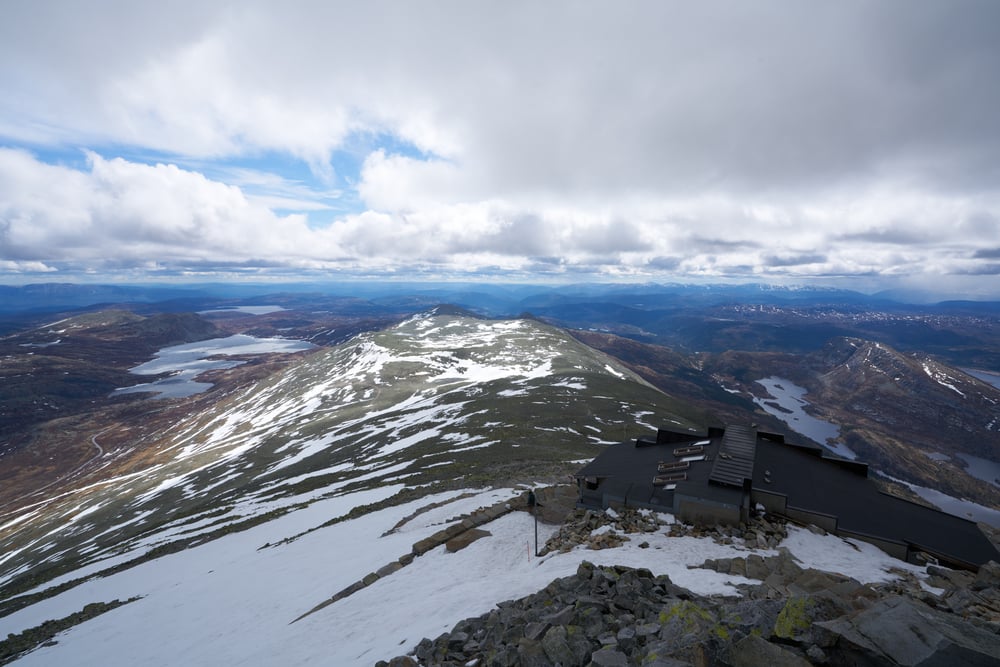
The massive Gaustatoppen mountain, standing at 6,177 feet above sea level, sits directly south of Rjukan and creates the town’s perpetual shadow problem. During winter months, the sun’s low arc across the sky means its rays never clear the peak.
The valley orientation runs east to west, which compounds the issue by limiting the angles from which sunlight could potentially reach the town. Residents can literally watch sunshine creeping down the mountainsides each day, stopping just short of reaching their homes and businesses.
Six Months Without Direct Sunlight

From September through March, Rjukan receives zero direct sunlight. That’s not the same as the polar night experienced in places above the Arctic Circle, where the sun doesn’t rise at all. In Rjukan, the sun does rise—residents can see blue sky overhead—but the mountains completely block the rays from ever touching the valley floor.
It creates an odd situation where people notice when the sun is shining above them but experience darkness in the valley below, similar to a perpetually cloudy day.
Like Go2Tutors’s content? Follow us on MSN.
Built as an Industrial Company Town

The town was essentially built from scratch between 1906 and 1916 when the area consisted of only a few farmsteads. Norwegian industrialist Sam Eyde founded Rjukan to house workers for his Norsk Hydro company, which needed the area’s waterfall to generate massive amounts of electricity for fertilizer production.
Eyde designed everything from the ground up, including the street layout, facilities, architecture, and even the mailboxes and park benches. He knew workers would need housing close to the factories, shadow problem or not.
Population Boomed Then Declined

The town reached a peak population of 8,350 people in 1920. Just ten years earlier in 1910, only 2,200 people lived there. This explosive growth made Rjukan one of the fastest-developing industrial centers in Norwegian history. Today, the population has shrunk to around 3,000 residents.
The decline mirrors the fate of many single-industry towns once their main employer scales back operations or relocates.
The Original Mirror Plan from 1913
Sam Eyde proposed installing a giant sun mirror above Rjukan way back in 1913, recognizing the importance of providing his workers with winter sunlight. He understood that the lack of sunshine wasn’t just uncomfortable—it was affecting productivity and morale.
Unfortunately, the technology to build such a system simply didn’t exist yet. Similar mirrors were used elsewhere for various purposes, but the specific application Eyde envisioned remained beyond the engineering capabilities of his era.
Like Go2Tutors’s content? Follow us on MSN.
Cable Car Solution from 1928

When mirrors proved impossible, Eyde’s successors built a gondola system called Krossobanen in 1928 to transport residents up to where the sunshine was. The cable car rises 2,670 feet up the mountainside.
This became the practical solution for decades—if the sun wouldn’t come to the people, the people would go to the sun. The gondola still operates today and remains popular with both residents and tourists who want spectacular mountain views.
Health Effects Were Significant

Living without sunlight for half the year takes a real toll on the human body and mind. The prolonged absence of direct sunlight caused depressive disorders and vitamin D deficiency among residents. Seasonal Affective Disorder became a common problem during the long, dark winters in similar shadowed communities.
Beyond the medical issues, the psychological weight of constant gloom affected social life, with people staying indoors more during winter months rather than gathering in public spaces.
The Modern Mirror System

Artist and resident Martin Andersen revived the mirror idea in 2005, and by 2013, three giant mirrors were installed on the mountainside—exactly 100 years after Eyde’s original proposal. Each mirror measures 17 square meters, totaling 51 square meters of reflective surface positioned 742 meters above sea level.
The solar-powered system is controlled by computers in Bavaria and adjusts every ten seconds to track the sun’s movement throughout the day. The mirrors reflect sunlight at 80 to 100 percent of its original intensity.
Like Go2Tutors’s content? Follow us on MSN.
Illuminating Just a Small Patch
The reflected light creates an ellipse-shaped patch covering roughly 600 square meters in the town’s market square. That’s about the size of a small parking lot, nowhere near enough to illuminate the entire town.
But that small circle of sunshine has transformed how residents use their public space during winter. Not everyone can bask in the glow simultaneously, but the project has brought residents together in unexpected ways.
People now gather in that sunny spot to drink coffee, chat, and pretend it’s not the middle of winter.
Cost and Controversy

The mirror installation cost five million Norwegian kroner, roughly 445,000 to 778,000 dollars. Many residents initially opposed the project, arguing the money could be better spent on other community needs.
Critics dismissed it as nothing more than an expensive gimmick—a lot of cash for a little slice of sun. The skeptics had a point about the limited coverage, but they underestimated the symbolic and economic value the mirrors would bring.
Tourism Boom Changed Minds
The mirrors have drawn hordes of tourists from around the world, transforming Rjukan into a prominent tourist attraction in Norway and helping mark the town on maps globally. Many critics who initially opposed the mirrors came around when they saw how the international attention sparked new waves of tourism.
Visitors come specifically to stand in the reflected sunlight and witness this unusual engineering solution to a geographical problem. The economic boost from tourism validated the investment in ways that simple resident comfort couldn’t.
Like Go2Tutors’s content? Follow us on MSN.
Annual Sun Festival Celebration

Every April since 1925, Rjukan has celebrated Solfesten—the Sun Festival—marking the return of direct sunlight after six months of shadow. The celebration features processions through the streets with residents in fancy dress and costumes often related to the sun or its absence, brass bands playing music, and the crowning of a Sun Prince or Princess who rules for the day.
The community also names a Sunborn Child—the infant born closest to the day when sunlight first crosses the mountain edge and touches the town again. This tradition transforms what could be depressing geography into a communal celebration of resilience.
From Darkness to Global Recognition

Rjukan’s story evolved from an unfortunate geographical accident into a testament to human ingenuity and adaptation. The town became a UNESCO World Heritage Site in 2015 as part of the Rjukan-Notodden Industrial Heritage Site.
What started as a company town built in a terrible location for sunlight has become a symbol of how communities can creatively overcome natural limitations. The mirrors may only light up a fraction of the town, but they’ve illuminated something larger—the idea that geography doesn’t have to be destiny when people are willing to engineer solutions, no matter how unconventional.
More from Go2Tutors!

- 16 Historical Figures Who Were Nothing Like You Think
- 12 Things Sold in the 80s That Are Now Illegal
- 15 VHS Tapes That Could Be Worth Thousands
- 17 Historical “What Ifs” That Would Have Changed Everything
- 18 TV Shows That Vanished Without a Finale
Like Go2Tutors’s content? Follow us on MSN.