Things About Dial-Up Internet That Today’s Kids Will Never Believe
There was a time when getting online required patience that bordered on spiritual discipline. Not the mild frustration of a buffering video, but a genuine, multi-minute ritual involving screeching modems, occupied phone lines, and the very real possibility that someone picking up the receiver in another room would end your session entirely.
Dial-up internet was the gateway to the digital world for an entire generation — and the experience was so thoroughly strange, so foreign to anything that exists today, that describing it to someone under twenty feels less like explaining old technology and more like recounting a fever dream.
The Modem Sound
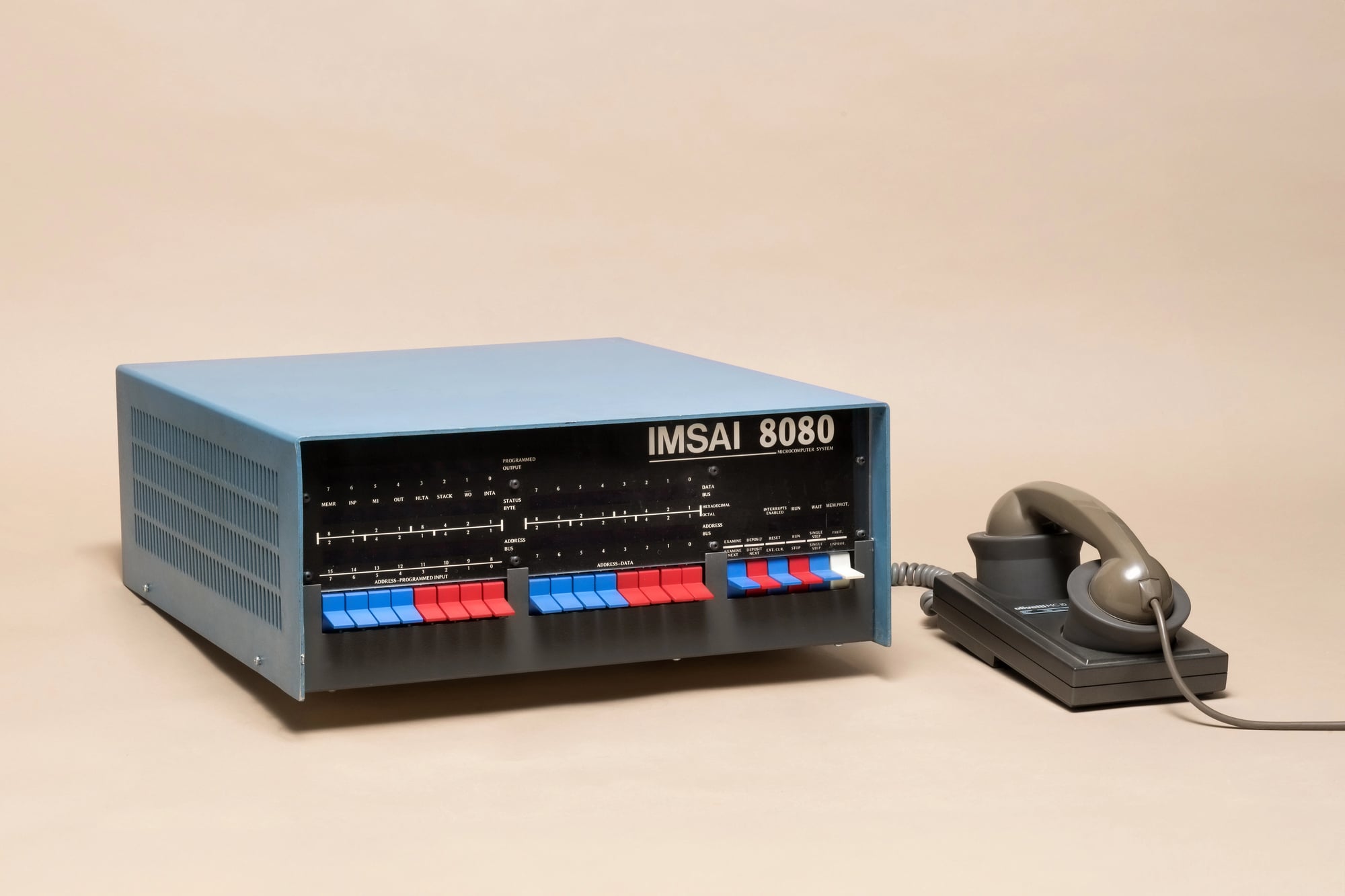
That sound was not optional. Every connection attempt announced itself through a sequence of tones, hisses, and electronic screeching that could generously be described as a robot negotiating with a fax machine — and you had to listen to the whole thing before knowing whether it worked.
Millions of people heard that noise thousands of times and somehow never once skipped it.
Tying Up the Phone Line

Dial-up and your home phone shared the same line, which meant being online and being reachable were mutually exclusive states. Someone calling the house while you were browsing got a busy signal, someone in the house picking up the receiver got disconnected you instantly, and the resulting domestic conflict was entirely routine.
To be fair, it gave teenagers a genuinely useful excuse for missing calls they didn’t want to take.
Paying by the Hour

Getting online wasn’t a flat monthly fee for most people in the early days — it was metered, the way a taxi ride is metered, so every minute spent loading a webpage had a small but real dollar value attached to it. Early AOL plans charged by the hour (somewhere in the range of $2.95 per hour for the basic tier in the mid-1990s), which turned casual browsing into something that felt faintly reckless, the way leaving a faucet running feels reckless.
So you learned to be efficient, or you learned to ignore the mounting anxiety, and neither option was particularly comfortable.
Image Loading One Stripe at a Time

Images didn’t appear on a page the way they do now — they loaded from top to bottom, one horizontal stripe at a time, slowly assembling themselves like a photograph developing in a darkroom. You’d watch the top half of a picture materialize and spend a full minute guessing what the bottom half might turn out to be.
It was suspense, genuinely, built into the act of looking at a JPEG.
56K Being Considered Fast

56 kilobits per second was the ceiling of consumer dial-up performance, and hitting it felt like an achievement. A typical broadband connection today moves data roughly 1,000 times faster, which puts the 56K era in a perspective that’s almost impossible to sit with comfortably.
Go figure.
AOL Discs Arriving in the Mail

AOL mailed installation discs — first floppy disks, later CDs — to what eventually amounted to hundreds of millions of households across the United States, blanketing the country in little plastic circles offering free trial hours with a persistence that no marketing campaign before or since has quite matched. The discs came in cereal boxes, appeared in magazines, arrived unsolicited in mailboxes so often that people started using them as coasters, frisbees, and craft materials.
AOL reportedly spent as much as 35% of its annual budget on this campaign at its peak, which is either brilliant or unhinged depending on how you measure success.
Scheduling Your Internet Time

Dial-up internet was a shared household resource, which meant negotiating when you got to use it the way you’d negotiate a shared car. Families developed informal schedules — no one online after a certain hour in case someone needed the phone, no marathon sessions when others were waiting — and the internet was woven into domestic logistics in a way that home broadband dissolved almost immediately.
And yet there was something almost reasonable about it: the idea that unlimited access to everything, always, on demand, might not be the obvious default.
Websites That Were Mostly Text

The web that dial-up users navigated was, by contemporary standards, almost aggressively minimal — text-heavy, image-sparse, built around the assumption that every byte had weight. A site that loaded ten images was considered ambitious, possibly thoughtless; the truly reliable pages were the ones that kept graphics to a rare minimum and let words carry most of the work.
There’s an argument that those constraints produced clearer writing, but nobody was making that argument at the time.
The Login Ritual

Connecting to the internet was not passive — it required active participation. You opened your dial-up software, clicked connect, entered credentials if they hadn’t been saved, waited through the modem handshake, watched a progress bar fill across a small window, and only then arrived at a browser.
That sequence happened every single time, without exception, and it trained an entire generation to think of the internet as a destination you traveled to rather than a condition you existed in.
Download Times Measured in Hours

Downloading a single MP3 on a 56K connection took roughly three to five minutes under ideal conditions — and conditions were rarely ideal. A full album was a genuine overnight commitment, something you’d start before bed and check on in the morning, the way you’d check on bread dough.
Software files, video clips, anything over a few megabytes was the kind of project that required planning.
Disconnecting Automatically

Most dial-up services included automatic disconnection after a period of inactivity — typically twenty to thirty minutes of idle time — which meant stepping away from your computer mid-session was a small gamble. Walk to the kitchen for a glass of water and come back to find the connection dead, the browser stalled, whatever you’d been doing quietly erased.
It was the internet as something impatient, unwilling to wait for you.
Chat Rooms as a Social Hub

Before social media, before group texts, before any of the infrastructure that now organizes online social life, there were chat rooms — and they were the internet’s gathering place in the dial-up era. AOL chat rooms in particular were sorted by topic, region, age, and interest, which sounds orderly but played out as controlled chaos: dozens of strangers typing simultaneously, conversations overlapping, the screen scrolling faster than anyone could track.
For teenagers in the 1990s, a busy chat room felt genuinely electric in a way that’s now almost impossible to locate anywhere online.
The Busy Signal on First Attempt

ISPs — internet service providers — operated a limited number of dial-up access lines, which meant that during peak evening hours, calling in to connect sometimes produced a busy signal on the provider’s end. Not your phone line.
The ISP’s. You’d initiate a connection, hear the normal opening tones, and then — a flat, mechanical busy signal, the whole attempt aborted.
Some users went through three or four failed attempts before finally getting through, which is the kind of friction that the phrase “user experience” was specifically invented to eliminate.
Netscape Navigator as the Browser
Internet Explorer gets most of the nostalgia, but Netscape Navigator was the browser that shaped the early web for a significant stretch of the dial-up era. Released in 1994, it became the dominant way people experienced the internet through the mid-1990s, until Microsoft bundled Explorer with Windows and effectively ended the competition through sheer distribution weight.
Netscape’s fate — built something genuinely important, then outmaneuvered not on quality but on packaging — is one of the defining tech industry cautionary tales, though nobody framed it that way at the time.
Setting Parental Controls Through AOL

AOL’s parental controls were, for many families, the primary mechanism for managing what children could access online — and they worked through a master account and sub-account structure that gave parents control over specific features, chat rooms, and content categories. This was entirely managed within AOL’s own walled garden; the open web was a separate, mostly unregulated territory that the controls didn’t fully reach.
It was a good-faith system operating at the outer edge of what the technology could actually deliver, which describes most parental control systems before and since.
Waiting for Web Pages That Never Loaded

Some pages just never finished loading. The browser’s progress bar would crawl to somewhere around 80%, and then — nothing.
The page would sit there, partly assembled, frozen in a state of incomplete arrival, while the timer in the corner of the screen kept running. You could wait it out, hit refresh and start over, or accept that whatever that page contained wasn’t meant for you today.
The Cost of Going Over Your Hours

Monthly dial-up plans in the AOL era typically came with a cap on included hours — somewhere around five hours per month on entry-level plans — and exceeding that cap triggered per-hour overage charges billed directly to a credit card. Parents receiving phone bills with unexpected three-digit line items for internet overages was common enough to be a cultural reference point, the kind of thing that got dramatized in sitcoms because it was happening in enough households to need no explanation.
AOL eventually moved to unlimited flat-rate plans in 1996 under competitive pressure, at which point their servers buckled almost immediately from the sudden spike in usage.
Saving Web Pages to Read Offline

Because connection time had real cost and real scarcity, people developed habits around offline reading — saving web pages to the hard drive, opening them later without reconnecting, treating downloaded content as a resource to be used rather than a stream to be consumed. It imposed a kind of intentionality on browsing: you thought about what you actually wanted before you got online, then retrieved it, then disconnected and read at your leisure.
There’s a whole philosophy in there that nobody particularly wanted.
The World of GeoCities

GeoCities was a web hosting service that let anyone build a personal webpage for free, organized around virtual neighborhoods (Silicon Valley for tech, Hollywood for entertainment, Heartland for family content), and it became one of the most visited destinations on the dial-up web. The pages were chaotic, visually overwhelming, often featuring tiled backgrounds, animated GIFs, and MIDI audio files that started playing without warning — and they represented something that the polished internet largely extinguished: the idea that individual people, with no technical training, could build a small piece of the web and make it look exactly like themselves, for better or worse.
Yahoo shut GeoCities down in 2009, deleting what was effectively a folk archive of how ordinary people understood the internet when it was still new.
Disconnecting Before Anyone Could Tell You Were Online
Many early internet users were genuinely anonymous not by design but by default — no persistent usernames across sites, no logged-in states, no cookies tracking behavior across sessions in the way that became standard later. Each dial-up session began from scratch in a way that felt provisional, temporary, uncommitted.
And yet people formed real friendships, found genuine communities, and built lasting habits inside that deliberately forgettable infrastructure, which says something interesting about what actually creates connection.
When Slow Meant Something

Looking back at dial-up internet from the vantage point of gigabit broadband and always-on mobile data, it’s easy to file it under “primitive” and move on. But the friction wasn’t only a bug — it shaped behavior in ways that are now almost entirely gone.
The deliberateness that came from metered time, the patience that came from watching pages load stripe by stripe, the sheer physical presence of the connection process: all of it made the internet feel like something worth arriving at. That feeling disappeared so completely that describing it sounds like nostalgia for inconvenience.
Maybe it is. Or maybe what got lost alongside the loading bars was something harder to name — the sense that getting somewhere required the effort of going.
More from Go2Tutors!

- The Romanov Crown Jewels and Their Tragic Fate
- 13 Historical Mysteries That Science Still Can’t Solve
- Famous Hoaxes That Fooled the World for Years
- 15 Child Stars with Tragic Adult Lives
- 16 Famous Jewelry Pieces in History
Like Go2Tutors’s content? Follow us on MSN.