Things People Learned Incorrectly From Movies
Movies teach us more than filmmakers probably intend. We absorb their version of reality without realizing it, and suddenly we’re walking around with heads full of cinematic fiction masquerading as fact.
The problem isn’t that movies lie deliberately. Most inaccuracies come from dramatic necessity or budget constraints.
But when millions of people watch the same falsehoods, those falsehoods become accepted wisdom. Except the screen got it wrong.
Silencers Don’t Actually Silence Guns

Action movies treat silencers like magic wands that turn gunshots into polite coughs. Heroes screw these devices onto pistols and dispatch enemies with barely a whisper.
The only sound is a soft “pffft” that nobody beyond arm’s reach could hear. Real suppressors reduce gunshot volume significantly but don’t eliminate it.
A gunshot typically measures around 160 decibels. A good suppressor might drop that to 130 decibels—still louder than a jackhammer.
You’d hear it clearly from another room, definitely from down the hall. The movie version persists because silent killings are more dramatic and convenient for plots.
Nobody wants to hear deafening bangs during tense infiltration scenes. But this has created a generation that thinks suppressors are essentially mute buttons for firearms.
Quicksand Doesn’t Swallow People Whole

Old adventure films loved quicksand. Characters would step into innocent-looking sand and suddenly sink chest-deep, thrashing frantically as they disappeared beneath the surface.
The message was clear: quicksand equals certain death. Quicksand is denser than the human body.
You can’t sink completely into it because you’re not heavy enough. Most people sink to about waist or chest depth, then float.
The real danger isn’t drowning in sand but getting stuck and dying from exposure or drowning when the tide comes in. Hollywood used quicksand as a convenient peril because it looked dramatic and created instant tension.
Viewers want to see effort rewarded. The reality—someone stuck and mildly uncomfortable—doesn’t have the same cinematic punch as a person being consumed by the earth.
Chloroform Doesn’t Knock People Out Instantly

Movie kidnappers press chloroform-soaked rags to victims’ faces, and within three seconds, the victim goes limp. It’s the perfect silent abduction tool.
One quick application and your target is unconscious for however long the plot requires. Chloroform takes several minutes of continuous inhalation to cause unconsciousness.
The victim would have plenty of time to struggle, scream, and fight back. Even then, the unconsciousness is brief and unpredictable.
Too much exposure can kill someone. The instant knockout makes movie kidnappings cleaner and faster.
Nobody wants to watch five minutes of someone struggling while breathing chemical fumes. But this has spread the dangerous myth that chloroform is a safe, reliable knockout drug.
People Can’t Actually Outrun Explosions

Action heroes regularly sprint away from fireballs that billow behind them in slow motion. They dive through doorways just as the blast wave passes over them.
They stand up, dust themselves off, and continue their mission with maybe a few photogenic smudges on their face. Explosions expand faster than humans can run.
The pressure wave travels at thousands of feet per second. If you’re close enough to see the flash, you’re close enough to be seriously injured or killed.
The fireball you see is actually the slowest part of the explosion. The dramatic running shot looks incredible on screen and makes heroes seem invincible.
It creates the impression that timing and athleticism can defeat physics. Real explosions don’t cooperate with dramatic timing.
CPR Success Rates Aren’t Nearly That High

Television medical dramas show doctors performing CPR on flatlining patients. After some chest compressions and maybe a dramatic shock from defibrillator paddles, the patient gasps back to life.
The success rate appears to be about 75 percent. Real CPR succeeds in bringing patients back to full recovery in less than 10 percent of cases when performed outside a hospital.
Even in hospitals, survival rates range from 15 to 25 percent. Most people who need CPR don’t make it, and those who do often have lasting damage.
Movies and TV shows inflate success rates because watching someone die despite proper medical care doesn’t fit the narrative structure. But this has created unrealistic expectations about end-of-life care.
Defibrillators Don’t Restart Stopped Hearts

Medical shows use defibrillators on patients whose hearts have completely stopped. The distinctive “clear” warning precedes the shock, the patient convulses, and suddenly the heart monitor shows a regular rhythm again.
Crisis averted. Defibrillators can’t restart a heart that has stopped beating.
They correct dangerous irregular rhythms. When a heart flatlines—shows no electrical activity at all—shocking it does nothing.
That’s when CPR and medications might help, not electricity. The dramatic shock scene is visually compelling and easy for audiences to understand.
Showing the complex reality of cardiac arrest treatments would slow down hospital dramas. But doctors report that families often demand futile defibrillation because that’s what they’ve seen on TV.
Asteroid Fields Aren’t Dense Obstacle Courses

Science fiction movies love asteroid field chase scenes. Spaceships weave frantically between tumbling rocks, narrowly avoiding collisions every few seconds.
Pilots must use exceptional skill to navigate the deadly maze of floating debris. Real asteroid fields have vast distances between objects.
The asteroid belt between Mars and Jupiter contains millions of asteroids spread across billions of cubic miles. You could fly straight through it with virtually zero chance of hitting anything.
The cinematic version creates instant tension and showcases piloting skills. But this has given people completely wrong ideas about what space navigation involves.
Tarzan’s Yell Wouldn’t Work That Way

Every Tarzan movie features his distinctive yell echoing through the jungle. The sound carries for miles, summoning animals and alerting allies.
It’s his signature calling card, an acoustic miracle that penetrates dense rainforest. Sound doesn’t travel well through jungle vegetation.
Dense foliage absorbs and scatters sound waves. A yell in thick jungle might carry a few hundred feet at best, and it certainly wouldn’t sound clear and recognizable at distance.
The jungle is one of the worst environments for long-distance sound transmission. The iconic yell became part of the character’s brand.
Removing it for acoustic accuracy would strip away something audiences expect and enjoy. But it’s taught generations that jungles are somehow acoustically favorable environments.
Laser Beams Aren’t Visible in Space

Star Wars and countless other space operas show colored laser beams streaking across the void. Red and green bolts illuminate space battles, making it easy to track who’s shooting at whom.
The visual spectacle defines the genre. Light beams are only visible when they illuminate particles—dust, moisture, smoke.
Space is a vacuum with almost no particles. Laser beams would be completely invisible until they hit something.
You’d see the impact but not the beam itself. Invisible weapons don’t work for space battles on screen.
Audiences need to see projectiles to follow the action. The compromise creates spectacular visuals but spreads fundamental misunderstandings about how light and vacuums work.
Hacking Doesn’t Look Like That

Movie hackers type furiously while windows of scrolling code flash across their screens. Within seconds or minutes, they’ve breached Pentagon security, disabled alarm systems, or transferred millions of dollars.
The faster they type, the faster they hack. Real hacking involves research, patience, and social engineering.
It’s running scripts, waiting for responses, and analyzing results. Most of the work happens before any code is written.
The actual typing is the least interesting part. The visual shorthand makes hacking scenes exciting and comprehensible to general audiences.
But it’s created the impression that cybersecurity is just about typing speed and knowing the right commands. Real security professionals constantly fight against these misconceptions.
Bullets Don’t Spark When They Hit Things

Action scenes show bullets striking metal surfaces and generating showers of sparks. Gunfights in warehouses and factories become spectacular light shows as rounds ping off pipes and machinery.
The sparks make impacts visible and add to the chaos. Most bullets are made of lead or copper.
Neither material generates sparks when striking steel. You might see sparks from specialized armor-piercing rounds with steel cores hitting hardened steel at the right angle, but it’s rare and inconsistent.
Sparks photograph well and help audiences track where bullets land. Empty space doesn’t photograph well.
Special effects teams add them routinely. But this has convinced people that bullet impacts naturally create visible sparks, which has consequences for everything from crime scene expectations to self-defense training.
Car Doors Don’t Stop Bullets

Police and action movies show characters taking cover behind car doors during shootouts. They crouch behind these thin metal panels as bullets thud into them harmlessly.
The door becomes an effective shield against multiple gunmen. Car doors are sheet metal and plastic.
Standard handgun rounds punch through them easily. Even the door frame offers minimal protection.
The engine block is the only part of a car that reliably stops bullets, and only from certain angles. Using doors as cover looks natural and relatable.
Movies need their heroes to survive shootouts, and cars are convenient props. But police instructors report having to explicitly untrain this habit because people genuinely believe car doors will protect them.
Medieval Sword Fights Weren’t Like That
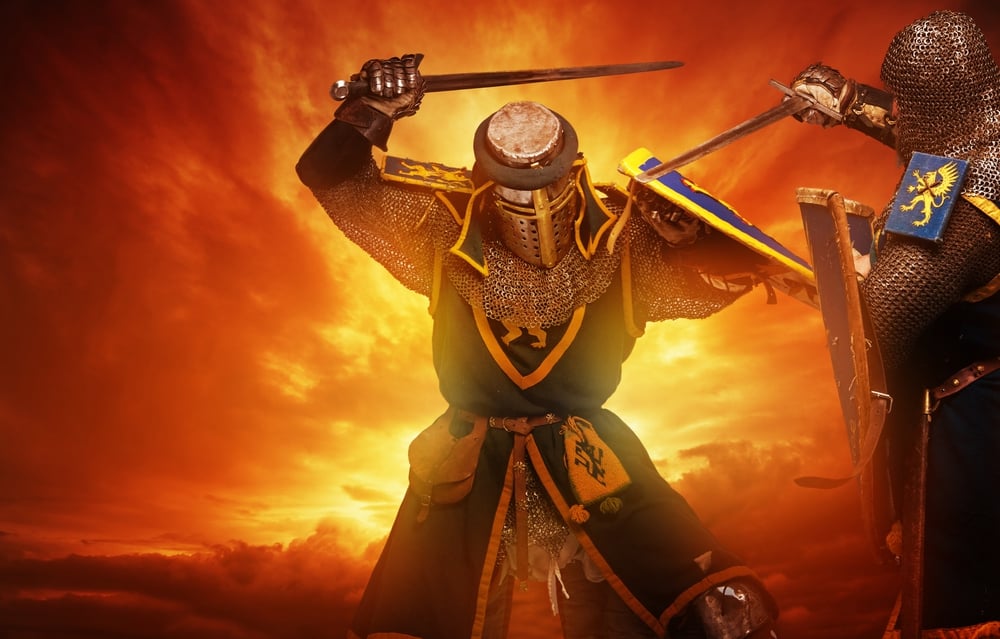
Historical movies show knights engaged in lengthy duels, swords clanging together repeatedly as combatants circle each other. The fights are athletic, balletic, and last several minutes.
Skill and endurance determine the winner. Real medieval sword fights were brief and brutal.
Armor made it nearly impossible to hurt someone with a sword blade. Knights grappled, used their swords like clubs, or stabbed at gaps in armor.
Most fights ended in seconds when someone got knocked down or found an opening. Extended choreographed sword fights look better on film and build tension.
They give heroes time to showcase skills and personality. But medieval combat historians spend considerable effort correcting the misconceptions these scenes create about historical warfare.
Pulling Arrows Out Is a Terrible Idea

Characters in historical dramas routinely get shot with arrows, then immediately yank them out. Sometimes they grimace, sometimes they barely react.
Either way, they’re back in action moments later, usually after someone ties a cloth around the wound. Arrow removal often causes more damage than the initial wound.
Arrowheads have barbs designed to catch on tissue. Pulling them out tears flesh and causes severe damage and rapid loss of vital fluids.
Medieval and ancient warriors sometimes pushed arrows through rather than pulling them back. The dramatic arrow removal is a visual shorthand for toughness.
Leaving the arrow in place doesn’t look heroic. But this has spread dangerous misinformation about treating projectile wounds.
When Fiction Becomes Education

Movies are storytelling tools, not textbooks. But the line between entertainment and education blurs when millions absorb the same inaccuracies.
Someone tells you how something works, and you nod along because you’ve seen it play out on screen a hundred times. The danger isn’t in individual misconceptions.
Nobody’s life depends on understanding quicksand physics. The danger is in learning to trust cinematic reality over actual reality.
When movies become the primary source of information about guns, medicine, technology, or history, those pretty lies replace truth. The solution isn’t demanding that every film prioritize accuracy over drama.
The solution is remembering that movies show us what looks good, not what is real. Spectacular doesn’t mean accurate.
Dramatic doesn’t mean true. And just because you’ve seen something a hundred times on screen doesn’t mean it would work that way in your living room.
More from Go2Tutors!

- The Romanov Crown Jewels and Their Tragic Fate
- 13 Historical Mysteries That Science Still Can’t Solve
- Famous Hoaxes That Fooled the World for Years
- 15 Child Stars with Tragic Adult Lives
- 16 Famous Jewelry Pieces in History
Like Go2Tutors’s content? Follow us on MSN.