Toughest Exams in the World
What makes tests tough isn’t only tricky problems. Some of the hardest ones demand deep understanding, push against tight clocks, see most people fail, carry huge risks.
Success might set a person’s path for decades. A miss could mean delay after delay before trying again.
Often, they’re more than school challenges – they act like traditions, guiding who gets into certain jobs, shifting how society moves.
Not every hard test is hard in the same way. Preparing for some takes many years just to show up on exam day.
A few go on for days without pause, testing how long someone can keep going. Then there are those where being watched closely adds pressure, and errors stand out sharply.
Thinking beyond simple difficulty helps see what’s really demanding. These tests have built their names through challenges.
Each one stands out, but for different reasons.
Gaokao, China

The Gaokao is often described as the most pressure-filled exam on the planet. Taken by millions of Chinese students each year, it determines admission to universities and plays a major role in shaping future opportunities.
For many families, performance on this exam carries social and economic weight that extends far beyond the individual student.
Preparation for the Gaokao typically begins years in advance. Students follow rigid study schedules, often attending school and tutoring sessions late into the evening.
The exam itself spans multiple days and covers a wide range of subjects, with scores ranked nationally rather than graded on a simple pass or fail basis.
What makes the Gaokao especially tough is its finality. For many students, one set of scores defines access to higher education, making the emotional stakes as demanding as the academic content.
Union Public Service Commission Civil Services Exam, India

India’s UPSC Civil Services Examination is widely regarded as one of the most demanding competitive exams in the world. It serves as the gateway to elite government roles, including administrative and diplomatic positions.
The exam unfolds in multiple stages over roughly a year, beginning with preliminary testing, followed by written examinations, and culminating in a personal interview.
Each stage eliminates a significant portion of candidates, with final success rates often well below one percent.
What sets the UPSC exam apart is its breadth. Candidates must demonstrate deep understanding of history, politics, economics, ethics, and current affairs, while also showing clarity of thought and decision-making ability under pressure.
Many aspirants dedicate several years to preparation, often attempting the exam multiple times.
All Souls Prize Fellowship Exam, United Kingdom

The All Souls Prize Fellowship Exam at the University of Oxford has a legendary reputation for difficulty. Unlike most exams, it does not test rote knowledge but raw intellectual ability, originality, and clarity of argument.
Candidates face a series of papers that include essay questions with minimal guidance. Prompts are deliberately open-ended, designed to test how well a person can construct insight under uncertainty.
Success rates are extremely low, with only a handful of fellowships awarded each year.
The difficulty here lies not in volume of material, but in expectation. Candidates must demonstrate exceptional reasoning and writing skill, often under conditions that allow no clear ‘correct’ answer.
Chartered Financial Analyst Program, Global

The Chartered Financial Analyst, or CFA, program is considered one of the most challenging professional certifications in finance. It consists of three sequential levels, each requiring hundreds of hours of study and testing increasingly complex financial concepts.
Pass rates for individual levels are low, and many candidates take years to complete the full program.
The exams emphasize not just memorization, but application of knowledge across ethics, investment analysis, and portfolio management.
What makes the CFA particularly demanding is its endurance requirement. Candidates must balance full-time work with sustained study over long periods, often repeating levels after unsuccessful attempts.
Master Sommelier Diploma Exam, Global

The Master Sommelier Diploma Exam is widely considered one of the toughest assessments in the hospitality world. Fewer than ten percent of candidates who attempt it ever pass, even after years of preparation.
The exam tests theory, service, and blind tasting under intense time pressure. Candidates must identify wines by grape, region, and production method based on aroma and flavor alone, often while performing service tasks simultaneously.
The difficulty here is sensory and psychological. Success requires memory, focus, and calm execution in high-stress conditions, making it as much a test of composure as knowledge.
United States Medical Licensing Examination, United States

The United States Medical Licensing Examination, known as the USMLE, is a multi-step process required for medical licensure in the U.S. Each step tests progressively advanced medical knowledge and clinical reasoning.
Preparation demands years of study and practical training. The exams are long, mentally exhausting, and unforgiving of gaps in understanding.
Performance affects not only licensure but placement in residency programs, influencing the trajectory of a medical career.
What makes the USMLE particularly challenging is cumulative pressure. Each step builds on the last, leaving little room for recovery from earlier missteps.
Mensa Admission Test, Global

The Mensa admission test is designed to measure cognitive ability rather than learned knowledge. While shorter than many professional exams, it is considered difficult because it evaluates pattern recognition, logical reasoning, and problem-solving speed.
There is no effective way to study in the traditional sense. Candidates either perform at the required level or they do not, making preparation largely indirect.
The exam’s difficulty lies in its precision and time constraints, which leave little margin for error.
For many, the challenge is confronting a test that cannot be mastered through repetition alone.
Japanese National Bar Examination, Japan

Japan’s national bar exam is known for its low pass rates and long preparation timelines. Aspiring lawyers often spend years studying, frequently enrolling in specialized programs to improve their chances.
The exam tests legal theory, case analysis, and practical application, requiring deep understanding of complex material.
Even highly prepared candidates may fail multiple times before succeeding.
What makes the exam especially demanding is persistence. Passing is often a test of endurance and resolve as much as intellectual capability.
Graduate Aptitude Test in Engineering, India
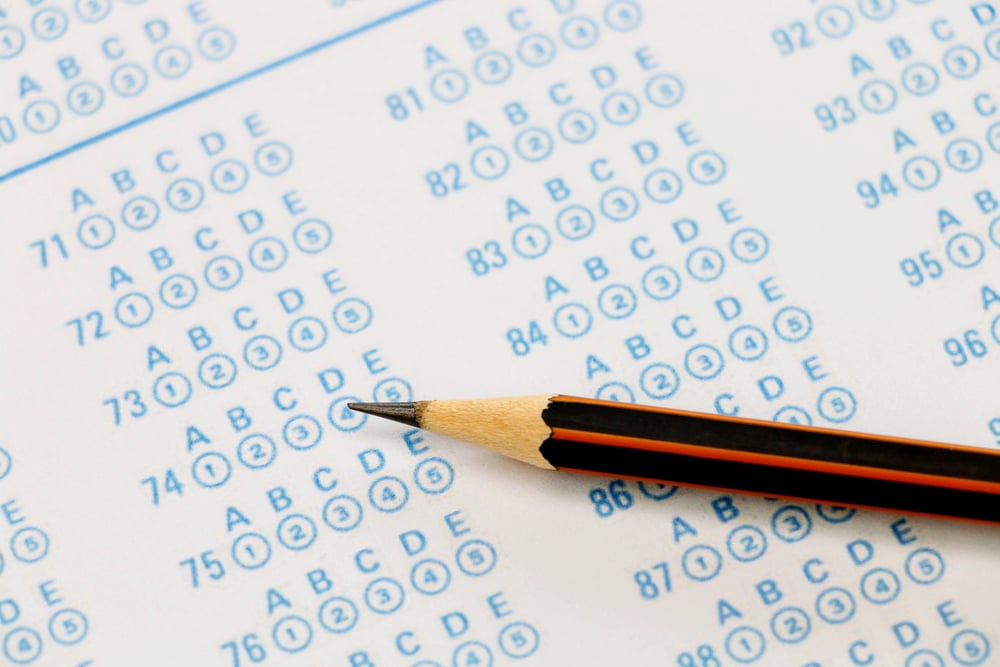
The Graduate Aptitude Test in Engineering, known as GATE, is one of the toughest technical exams in India. It is used for admission to advanced engineering programs and recruitment by major public-sector organizations.
The exam tests deep conceptual understanding rather than surface-level problem solving. Questions often combine multiple topics, requiring flexible thinking and strong fundamentals.
With millions of candidates competing for a limited number of top scores, even small mistakes can significantly impact outcomes, adding intense pressure to performance.
California Bar Examination, United States

The California Bar Exam is widely regarded as one of the most difficult legal exams in the United States. It spans multiple days and tests a broad range of legal subjects through essays and performance tasks.
Pass rates are consistently lower than in many other jurisdictions. Candidates must demonstrate not only legal knowledge but the ability to apply it clearly under strict time limits.
The exam’s difficulty reflects the breadth of law it covers and the precision expected in responses, making preparation both demanding and exhaustive.
Why These Exams Are So Hard

Across cultures and professions, the toughest exams share common traits. They demand sustained preparation, deep understanding, and the ability to perform under pressure.
Many are deliberately designed to filter candidates, ensuring only a small percentage succeed.
High stakes amplify difficulty. When results determine career access, social status, or long-term opportunity, psychological pressure becomes part of the challenge.
Fatigue, doubt, and expectation all play roles alongside intellectual effort.
In many cases, the exams also reflect scarcity. Limited seats, prestigious roles, or regulated professions require strict gatekeeping, and exams become the chosen mechanism.
Preparation as a Way of Life

For candidates facing these exams, preparation often becomes all-consuming. Daily routines revolve around study schedules, mock tests, and revision cycles.
Social lives are narrow, and long-term planning centers on exam dates rather than calendar years.
This intensity can be isolating, but it also builds discipline. Many who attempt these exams describe the process as transformative, regardless of outcome.
The skills developed often extend beyond the exam itself, shaping work habits and resilience.
Are Tough Exams Always Fair?

The difficulty of these exams raises ongoing questions about access and equity. Preparation resources, time availability, and financial support can heavily influence outcomes.
In some systems, success reflects opportunity as much as ability.
That said, exams remain one of the most widely accepted tools for standardized evaluation. While imperfect, they provide a common benchmark in environments where alternatives are limited.
Balancing rigor with fairness remains an ongoing challenge across educational and professional systems.
Why These Exams Continue to Matter

Despite criticism, the toughest exams in the world continue to exist because they serve clear functions. They protect professional standards, manage limited opportunities, and create shared measures of competence.
They also shape identity. Passing a notoriously difficult exam often becomes a defining personal milestone, carrying recognition that extends well beyond the credential itself.
In a rapidly changing world, these exams remain reminders that mastery still requires time, effort, and perseverance.
The Lasting Impact of Extreme Testing

Hard tests aren’t just about what you know. Pushing through shapes how you handle pressure, surprises, even doubt.
Success isn’t guaranteed, yet trying shifts something deep inside. Few reach the finish line unchanged.
What these tests show runs deeper than grades. Not just effort, but a hunger sits behind them – wanting work that matters, being seen, feeling part of something real.
Toughness becomes normal when what comes after feels worth it.
What stays after these tests is what matters. Success isn’t only shaped by hard questions.
It’s built through persistence, choice, because someone refuses to step back. Effort shows up when chances feel distant.
More from Go2Tutors!

- The Romanov Crown Jewels and Their Tragic Fate
- 13 Historical Mysteries That Science Still Can’t Solve
- Famous Hoaxes That Fooled the World for Years
- 15 Child Stars with Tragic Adult Lives
- 16 Famous Jewelry Pieces in History
Like Go2Tutors’s content? Follow us on MSN.