True Origins of Your Favorite Holiday Traditions
Holiday traditions feel timeless, like they’ve always existed in their current form.
Families gather around Christmas trees.
Kids hunt for Easter eggs.
Couples kiss under mistletoe without questioning where these customs came from.
Most beloved holiday practices have origins that would surprise anyone who celebrates them today.
Some started as pagan rituals.
Others were invented by companies selling products.
A few were borrowed from completely different cultures and repurposed along the way.
Here’s a closer look at where your favorite holiday traditions actually came from.
Christmas trees

Decorating evergreen trees indoors started with German pagans who brought branches inside during winter solstice celebrations.
The evergreen symbolized life persisting through the darkest, coldest months when everything else appeared dead.
German Christians eventually adopted the practice, and it spread slowly through Europe.
The tradition exploded in popularity after an illustration of Queen Victoria and Prince Albert standing around a decorated tree appeared in newspapers during the 1840s.
Americans saw the royal family’s tree and suddenly everyone wanted one.
What began as a pagan symbol of survival became the centerpiece of Christian Christmas celebrations.
Santa Claus’ red suit

Most people assume Santa has always worn red and white.
His modern appearance is surprisingly recent.
The original Saint Nicholas wore bishop’s robes, and early American depictions showed him in various colors including green, blue, and brown.
Political cartoonist Thomas Nast standardized many of Santa’s features in the 1800s, but his outfit’s colors remained inconsistent.
Coca-Cola’s 1930s advertising campaign featuring Santa in their brand colors cemented the red and white uniform in public consciousness.
The company didn’t invent red Santa, but their massive marketing push made any other version virtually disappear.
Corporate branding accidentally created what now feels like an ancient, unchangeable tradition.
Trick-or-treating
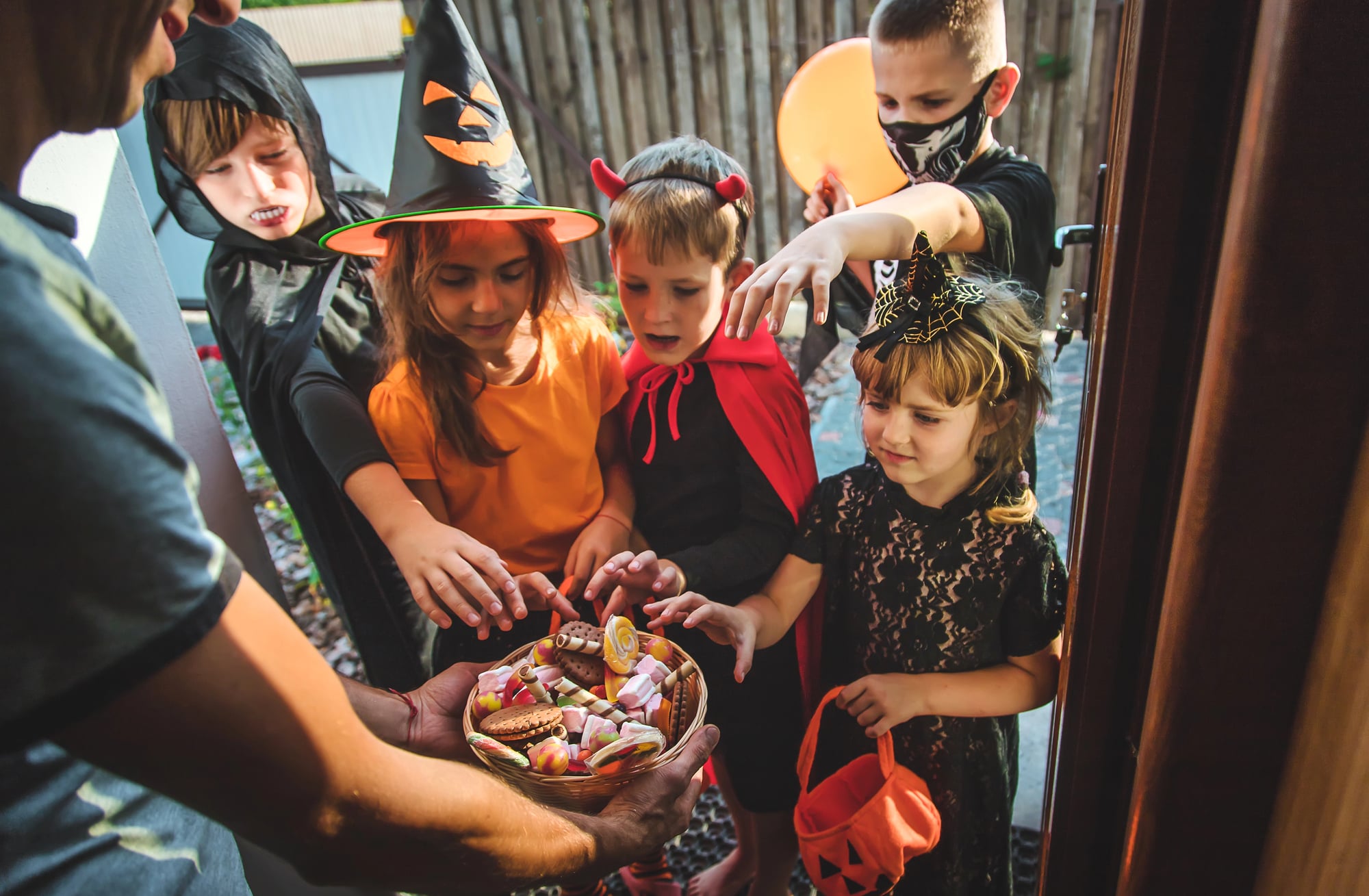
This Halloween staple traces back to medieval Irish and British practices called souling and guising.
Poor people would go door-to-door offering prayers for the dead in exchange for soul cakes.
Kids would dress in costumes and perform songs, jokes, or tricks to earn food and coins.
Irish and Scottish immigrants brought these customs to America in the 1800s.
The practice faded during the Great Depression and World War II due to sugar rationing.
It surged back in the 1950s when candy companies saw a business opportunity.
Modern trick-or-treating owes as much to candy industry marketing as it does to ancient Celtic festivals.
Easter eggs

Decorating eggs for spring celebrations predates Christianity by thousands of years.
Ancient Persians, Egyptians, and Romans all gave decorated eggs as gifts during spring festivals celebrating rebirth and renewal.
Early Christians in Mesopotamia began dying eggs red to symbolize Christ’s resurrection, connecting an existing tradition to their newer religious story.
The practice spread through Europe with various cultures adding their own styles and meanings.
German immigrants brought elaborate egg decorating techniques to America in the 1700s.
What feels like a purely Christian tradition actually started as a pagan spring ritual that got absorbed and reinterpreted.
Thanksgiving turkey

The Pilgrims and Wampanoag people probably didn’t eat turkey at the 1621 harvest celebration everyone calls the first Thanksgiving.
Historical accounts mention wildfowl, which likely meant ducks or geese, along with venison provided by the Native Americans.
Turkey became associated with Thanksgiving much later, partly because they were large enough to feed crowds and partly due to promotion by writers like Sarah Josepha Hale in the 1800s.
Abraham Lincoln declared Thanksgiving a national holiday in 1863.
Turkey became standardized as the centerpiece meal over the following decades.
The tradition is less than 200 years old and based on a bird that probably wasn’t at the original feast.
Valentine’s Day cards

The modern Valentine’s Day card industry started with Esther Howland, a Worcester, Massachusetts woman who began mass-producing elaborate paper valentines in the 1840s.
She didn’t invent the concept.
Medieval and Renaissance Europeans exchanged handwritten love notes, and the practice grew popular in England during the 1700s.
The tradition connected loosely to Saint Valentine, a martyr about whom almost nothing is actually known.
Howland saw imported English valentines and realized she could manufacture them domestically.
Her business took off, and other companies followed.
What began as personal handwritten sentiments became a commercial industry that now generates billions in annual sales.
Birthday cakes with candles

Ancient Greeks baked round honey cakes to honor Artemis, the moon goddess.
They placed candles on top to make the cakes glow like the moon.
The Greeks believed the smoke carried prayers upward to the gods living on Mount Olympus.
Germans later developed Kinderfest, a birthday celebration for children that included a cake with candles.
The candles represented the light of life, and the child would make a wish while blowing them out.
German immigrants brought this tradition to America, where it spread widely in the late 1800s.
The birthday cake ritual most Americans perform comes from a blend of Greek religious offerings and German childhood celebrations.
New Year’s Eve celebrations

The Romans celebrated their new year on January 1st starting in 46 BCE when Julius Caesar reformed the calendar.
They dedicated the day to Janus, the two-faced god who looked backward at the old year and forward to the new one.
Romans exchanged gifts and made promises to Janus about self-improvement.
Early Christians tried to ban these pagan celebrations but eventually gave up and incorporated them into Christian practice.
The Scottish tradition of Hogmanay influenced modern New Year’s Eve parties with its emphasis on first-footing and staying up past midnight.
What feels like a universal human celebration is actually a specific Roman tradition that spread through conquest and cultural influence.
Kissing under mistletoe

Druids considered mistletoe sacred because it stayed green through winter and grew without touching the ground.
They used it in fertility rituals and believed it had powers to heal and protect.
Norse mythology featured a story where the god Baldur was killed by a mistletoe arrow, then brought back to life, leading to the plant being associated with love and reconciliation.
The kissing tradition specifically developed in 18th century England, possibly from older servant class customs during Christmas celebrations.
The practice had clear romantic and fertility connections that proper Victorian society tried to regulate with elaborate rules about berry-picking and permission.
A Druidic sacred plant became an excuse for holiday flirting.
Jack-o’-lanterns

Irish folklore tells of Stingy Jack, a man who tricked the Devil and was doomed to wander Earth with only a hollowed turnip containing a burning coal to light his way.
Irish people carved scary faces into turnips and potatoes to frighten away Jack and other wandering spirits.
Irish immigrants brought this tradition to America in the 1800s and discovered pumpkins were much easier to carve than root vegetables.
The practice evolved from a protective ritual meant to ward off evil into a decorative Halloween craft.
American pumpkins accidentally became the face of an Irish tradition that originally had nothing to do with them.
Wedding rings on the left hand

Ancient Egyptians believed a vein ran directly from the fourth finger of the left hand to the heart.
Romans adopted this belief and called it the ‘vena amoris’ or vein of love.
No such vein exists, but the tradition stuck because it sounded romantic.
Some cultures wear wedding rings on the right hand, and others have used different fingers throughout history.
The modern Western practice of left hand ring finger placement comes from this ancient Egyptian anatomical misunderstanding filtered through Roman culture.
Medicine has known for centuries that the vein theory is false, but the tradition persists anyway.
Fireworks on Independence Day

Chinese inventors developed fireworks over 1,000 years ago, possibly by accidentally mixing saltpeter, sulfur, and charcoal.
Europeans encountered fireworks through trade routes and military conflicts with Asian empires.
Italian pyrotechnicians became particularly skilled at creating elaborate displays for celebrations.
The first Independence Day celebration in 1777 included fireworks in Philadelphia because they were already associated with European victory celebrations and royal events.
John Adams wrote that he hoped future anniversaries would include ‘illuminations’ among other festivities.
Americans adopted an Italian refinement of a Chinese invention to celebrate breaking away from England.
Christmas stockings

Dutch children put wooden shoes by the fireplace on St. Nicholas Eve, hoping Sinterklaas would fill them with treats.
The legend said Nicholas once threw gold coins through a window, and they landed in stockings hanging to dry by the fire.
American Christians blended the Dutch Sinterklaas tradition with English Father Christmas customs.
Stockings replaced wooden shoes because American homes had them readily available.
Clement Clarke Moore’s 1823 poem ‘A Visit from St. Nicholas’ cemented the stocking tradition in American culture.
Easter bunny

German immigrants brought the tradition of an egg-laying hare called Osterhase to Pennsylvania in the 1700s.
Children would build nests for this creature to lay its colored eggs in.
The hare itself is likely connected to ancient spring goddess Eostre, though historical evidence for this goddess is thin.
Rabbits and hares have long symbolized fertility and spring due to their prolific breeding.
Blowing out birthday candles

The wish-making part of the birthday candle tradition has murky origins.
Some trace it to the Greek offerings where smoke carried prayers to gods.
Others suggest it comes from German folk magic where people believed the smoke carried wishes to the spirit realm.
Making wishes on candles might connect to earlier fire worship or candle magic practices.
Wearing green on St. Patrick’s Day

Saint Patrick’s color was actually blue, specifically a light shade called St. Patrick’s blue.
Irish Catholics wore green as a symbol during their fight for independence from Protestant England in the 1700s.
The color connected to Ireland’s nickname as the Emerald Isle and appeared on Irish flags.
Irish Americans embraced green as an ethnic identifier during the 1800s when discrimination against Irish immigrants was severe.
Chicago began dying its river green in 1962, and the tradition exploded from there.
Champagne at midnight on New Year’s

The French have long considered champagne the drink of celebration and luxury.
European aristocrats used it to toast important occasions throughout the 1700s and 1800s.
The tradition of specifically drinking champagne at midnight on New Year’s likely developed in France and spread through upper-class European society.
American high society adopted the practice in the late 1800s as a sign of sophistication and worldliness.
Prohibition nearly killed the tradition in America, but it roared back afterward.
Why origins matter less than meaning

Most people celebrate these traditions without knowing their backstories, and that’s perfectly fine.
The original meanings often bear little resemblance to current practice anyway.
A pagan winter solstice ritual becomes a Christian holiday centerpiece.
A corporate marketing campaign creates an icon.
A protective charm against wandering spirits turns into a decorative craft project.
More from Go2Tutors!

- The Romanov Crown Jewels and Their Tragic Fate
- 17 Halloween Costumes Once Considered Taboo
- Famous Hoaxes That Fooled the World for Years
- 15 Child Stars with Tragic Adult Lives
- 16 Famous Jewelry Pieces in History
Like Go2Tutors’s content? Follow us on MSN.