15 Random Inventions That Made Millions
Innovation often strikes in the most unexpected places. While we celebrate the obvious breakthroughs like electricity and the automobile, some of history’s most profitable inventions came from solving simple, everyday problems that most people barely noticed. These aren’t the products of massive research labs or brilliant scientists—they’re the brainchildren of ordinary people who saw opportunity where others saw annoyance.
The beauty of these inventions lies in their simplicity and timing. Sometimes a million-dollar idea is hiding in plain sight, waiting for someone curious enough to ask ‘Why does it have to be this way?’ Here is a list of 15 random inventions that turned everyday frustrations into extraordinary fortunes.
Pet Rock

Gary Dahl turned a joke into a million-dollar business by selling ordinary rocks as pets in 1975. Each Pet Rock came with a cardboard carrying case, air openings, and a humorous care manual that included instructions for teaching your rock to sit and stay. The absurdity was exactly the point—people bought them as gag gifts and conversation starters. Dahl sold over a million Pet Rocks at four dollars each, proving that sometimes the most ridiculous ideas strike gold.
Slinky

Richard James accidentally created the Slinky in 1943 while working on springs for naval equipment. When he knocked over a spring and watched it ‘walk’ across the floor, he realized he’d stumbled onto something special. His wife Betty suggested the name ‘Slinky,’ and they invested their entire savings of $500 to produce the first batch. The toy became an instant hit at Gimbels department store in Philadelphia, selling 400 units in 90 minutes and eventually generating hundreds of millions in revenue.
Bubble Wrap

Bubble Wrap started as a failed attempt to create textured wallpaper in 1957. Engineers Alfred Fielding and Marc Chavannes were trying to make a decorative wall covering but instead created sheets of plastic with air bubbles trapped inside. Initially marketed as greenhouse insulation, the product didn’t take off until IBM discovered its protective qualities for shipping computers. Today, Bubble Wrap generates over $400 million annually, with most people buying it specifically for the satisfying pop.
Post-it Notes

Art Fry invented Post-it Notes because he was frustrated with bookmarks falling out of his church hymnal. His colleague Spencer Silver had already created a weak adhesive that everyone thought was useless, but Fry realized it was perfect for removable bookmarks. The 3M company initially rejected the idea, thinking nobody would pay for expensive scratch paper. After persistent lobbying and successful test markets, Post-it Notes became a billion-dollar product line.
Velcro
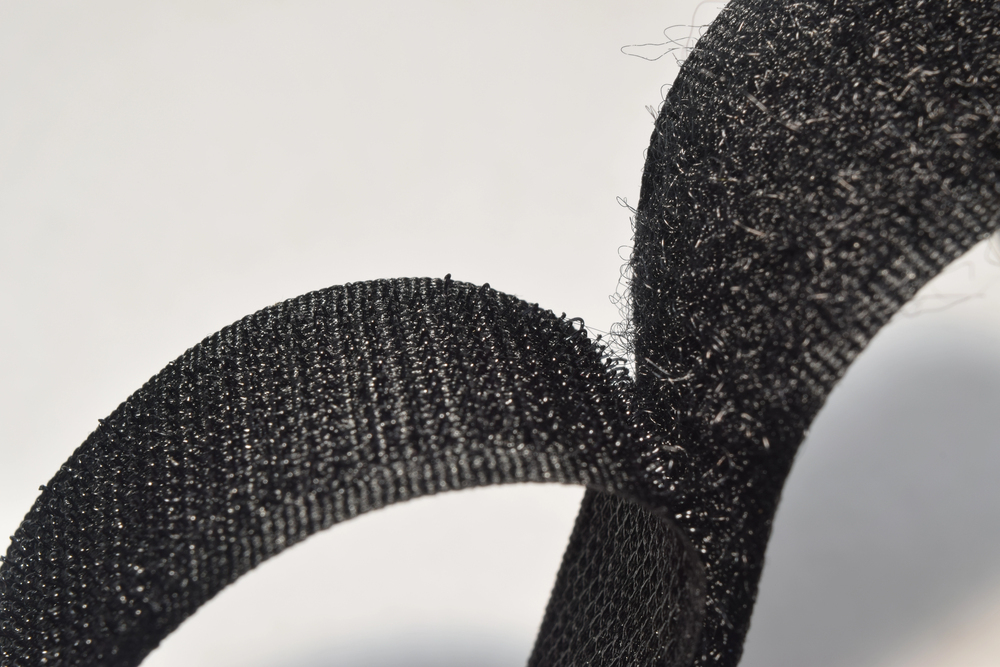
George de Mestral got the idea for Velcro after examining burr seeds that stuck to his dog’s fur during a hunting trip in 1941. He studied the seeds under a microscope and discovered tiny hooks that grabbed onto fabric loops. It took him eight years to develop a synthetic version, and another decade to convince manufacturers to produce it. Velcro now appears in everything from space suits to children’s shoes, generating hundreds of millions in annual sales.
Frisbee

The Frisbee evolved from pie tins that college students threw for fun in the 1940s. Walter Morrison noticed students at Yale University flinging empty pie plates from the Frisbie Pie Company and decided to create a plastic version. He partnered with Wham-O toys in 1957, and the Frisbee became a cultural phenomenon. The simple flying disc has sold over 200 million units worldwide, spawning professional leagues and countless beach games.
Snuggie

The Snuggie solved the eternal problem of blankets sliding off while reading or watching television. Scott Boilen created this wearable blanket with sleeves, essentially turning a bathrobe around backward. Despite initial skepticism and late-night television jokes, the Snuggie became a massive hit through direct marketing. The company sold over 30 million units worldwide, generating more than $500 million in revenue from what critics dismissed as a backwards robe.
Crocs
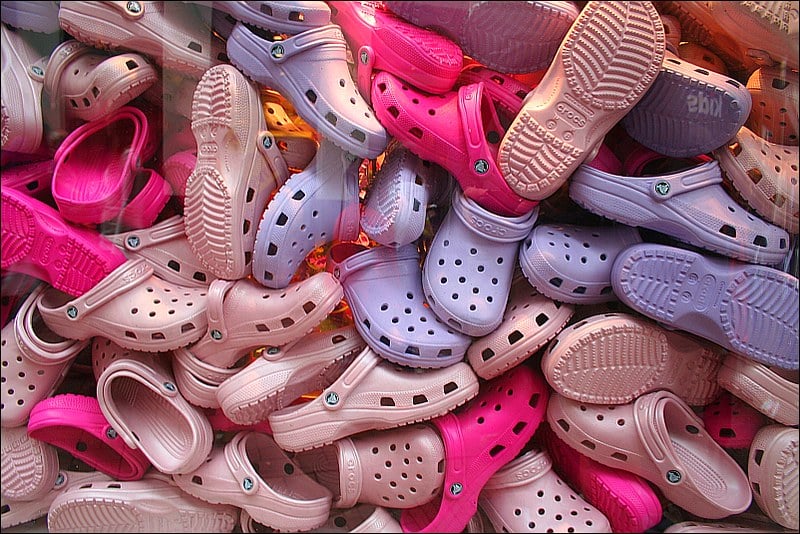
Crocs began as specialty boating shoes designed for comfort and slip-resistance. The distinctive foam clogs with ventilation ports looked unusual but provided incredible comfort for people who spent long hours on their feet. Despite facing fashion criticism and even bans in some schools and workplaces, Crocs found devoted customers in healthcare, food service, and casual wear markets. The company has sold over 720 million pairs worldwide, generating billions in revenue.
Chia Pet

Joe Pedott turned decorative planters into a cultural phenomenon with Chia Pets in the 1980s. These terra cotta figurines, when covered with chia seeds and watered regularly, sprouted green ‘hair’ or ‘fur’ that could be trimmed and styled. The memorable advertising jingle ‘Ch-Ch-Ch-Chia!’ made the product instantly recognizable. Despite their novelty, Chia Pets have sold over 15 million units and remain popular gifts decades later.
Slap Bracelet

Stuart Anders invented the slap bracelet in 1983 using spring steel strips covered with fabric that would curl around wrists when slapped against them. Originally called the ‘Slap Wrap,’ these simple accessories became a schoolyard craze in the late 1980s. Main Street Toy Company licensed the design and sold millions of units before safety concerns and imitators flooded the market. Anders made several million dollars from his spring steel creation before the fad faded.
Beanie Babies
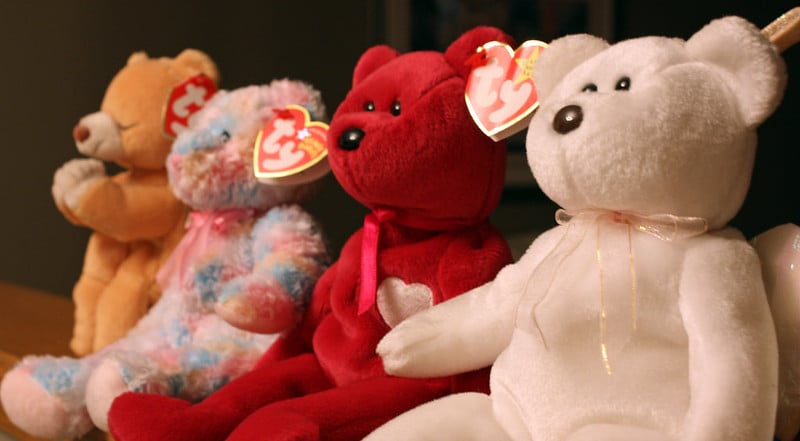
Ty Warner created Beanie Babies as affordable, collectible stuffed animals filled with plastic pellets instead of traditional stuffing. The understuffed design made them more poseable and cuddly than conventional stuffed animals. Warner’s genius marketing strategy included limited production runs and frequent retirements, creating artificial scarcity that drove collectors into frenzies. At the peak of the craze in the late 1990s, some rare Beanie Babies sold for thousands of dollars, and the line generated billions in revenue.
Rubik’s Cube

Ernő Rubik created his famous puzzle in 1974 as a teaching tool to help explain three-dimensional geometry to his architecture students. The Hungarian professor didn’t initially realize he’d created a puzzle—it took him over a month to solve his own creation. After licensing the design internationally, the Rubik’s Cube became the world’s best-selling puzzle toy, with over 450 million units sold and generating hundreds of millions in revenue.
Pool Noodle

Steve Hartman invented the pool noodle in the 1980s as a flotation and exercise device for aquatic therapy. These cylindrical foam tubes provided buoyancy and resistance for water workouts while being safe and versatile enough for recreational use. Pool noodles became standard equipment at swimming pools, water parks, and summer camps worldwide. The simple foam cylinder has generated over $80 million in annual sales across various manufacturers.
Scrub Daddy
— Photo by rokas91
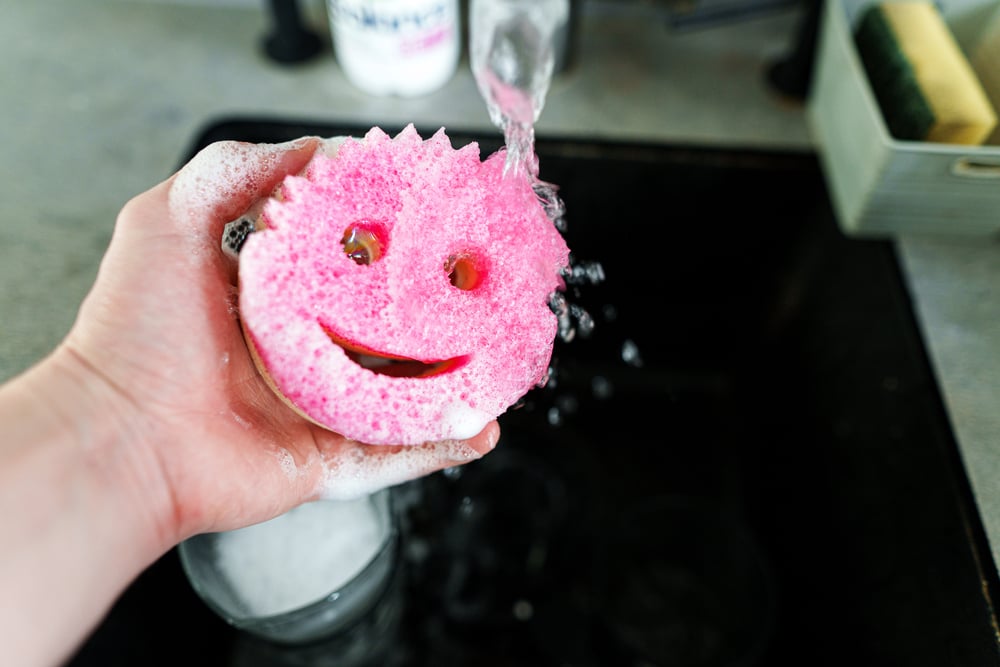
Aaron Krause created the Scrub Daddy sponge with temperature-responsive foam that becomes firm in cold water and soft in warm water. Initially developed for automotive cleaning, the product languished until Krause appeared on ‘Shark Tank’ in 2012. Lori Greiner invested $200,000 for 20% of the company, and aggressive marketing made Scrub Daddy the most successful ‘Shark Tank’ product ever. The company has generated over $670 million in retail sales from what started as a simple sponge innovation.
Fidget Spinner

Catherine Hettinger invented the fidget spinner in the 1990s as a toy to help children with attention disorders, but couldn’t afford to renew her patent. When manufacturers began mass-producing similar devices in 2016, the fidget spinner became a global phenomenon almost overnight. Despite Hettinger receiving no royalties from the craze, fidget spinners generated over $500 million in sales during their peak year, proving that sometimes timing matters more than patents.
The Accidental Goldmine

— Vector by lukpedclub.gmail.com
These inventions prove that million-dollar ideas don’t always come from high-tech laboratories or brilliant scientists. Sometimes they emerge from frustration with wobbly bookmarks, fascination with sticky burrs, or pure accident in a naval workshop. The most successful random inventions share a common thread—they solve problems so simple that most people never bothered to think about them. In a world obsessed with complex technology, these humble creations remind us that the next great fortune might be hiding in the most ordinary moments of daily life.
More from Go2Tutors!

- 16 Historical Figures Who Were Nothing Like You Think
- 12 Things Sold in the 80s That Are Now Illegal
- 15 VHS Tapes That Could Be Worth Thousands
- 17 Historical “What Ifs” That Would Have Changed Everything
- 18 TV Shows That Vanished Without a Finale
Like Go2Tutors’s content? Follow us on MSN.



