Ugly Cars That Are Now Classics
Some cars look weird when they first roll off the assembly line. People mock them.
Critics write harsh reviews. Sales numbers disappoint the manufacturers who took a risk on something different.
Then something changes. Years pass.
The weird design becomes familiar, then interesting, then somehow charming. What once seemed ugly starts to look bold.
The car that nobody wanted becomes the car that collectors chase. Beauty takes time, and these vehicles prove it.
AMC Pacer

The Pacer looked like a fishbowl on wheels. AMC designed it with a passenger cabin that seemed too wide for the car’s length, creating proportions that just felt off.
All that glass made passengers feel exposed, and the asymmetrical doors—different sizes on each side—added to the strangeness. But that bubble design gave occupants more space than most compact cars offered in the 1970s.
The visibility was exceptional because of all that glass. Today, collectors appreciate the Pacer for doing exactly what AMC intended: breaking away from conventional design.
The weirdness was the point.
Pontiac Aztek

Few cars have taken more abuse than the Aztek. When it launched in 2001, automotive journalists competed to see who could write the harshest review.
The cladding, the odd angles, the busy front end—everything about it looked wrong. The Aztek was actually practical. It had a cooler in the center console.
The rear seats folded to create a flat cargo area. You could remove panels and turn the back into a camping setup.
People who owned them often loved them for their functionality, even if they admitted the exterior needed work. Breaking Bad made the Aztek cool again, and now prices have started climbing for good examples.
AMC Gremlin

AMC took a Hornet, chopped off the back end, and called it the Gremlin. The truncated rear gave it a stumpy appearance that many people found unappealing.
It looked unfinished, like the designer forgot to complete the tail section. The short rear end made it light and fun to drive.
The Gremlin handled better than its longer siblings. It was cheap to buy and maintain. Racing enthusiasts discovered they could drop V8 engines into Gremlins and create surprisingly quick machines.
The car’s oddball status makes it a favorite at car shows now.
Fiat Multipla

The Multipla took ugly to new heights. Fiat stacked the windshield above the headlights, creating a two-tier front end that looked like a face with eyes in the wrong place.
The bulbous shape made it resemble an insect. Most people couldn’t look at it without wondering what Fiat was thinking.
Inside, the Multipla offered six seats in three rows, all with proper space. Parents found they could actually fit three car seats across the back.
The interior was remarkably practical and well-designed. The strange exterior made sense when you understood it was driven by interior packaging needs.
Multipla owners defended their cars fiercely, and now designers point to it as an example of function-first design.
Nissan Cube

Nissan built a box and put wheels on it. The Cube looked exactly like its name suggested—a square vehicle with minimal curves.
The asymmetrical rear window added a bizarre touch. The rippled headliner inside made passengers feel like they were sitting under water.
Young buyers liked how different it looked. The interior space exceeded what the exterior dimensions suggested.
The quirky design elements, like the shag dashboard, gave it character. The Cube represented Japanese design at its most playful, and that’s exactly why certain collectors want them now.
Citroën 2CV

The 2CV looked like a shed on wheels when Citroën introduced it in 1948. The corrugated body panels, tiny engine, and basic construction made it seem almost comically simple. Critics called it ugly.
Wealthy buyers ignored it entirely. Farmers and rural families embraced it.
The 2CV went anywhere, required minimal maintenance, and cost almost nothing to run. The suspension soaked up rough roads.
You could drive it across a plowed field without spilling a basket of eggs. That simplicity now commands respect.
Clean examples sell for strong money, and the 2CV has earned its place as a design icon.
AMC Matador Coupe

The Matador Coupe tried to look futuristic but ended up looking awkward. The long hood, short deck, and strange proportions didn’t work together.
The formal roofline clashed with the sporty intentions. Most buyers passed on it.
But the Matador Coupe was roomy inside and comfortable on long trips. The V8 options gave it decent power.
It represented an interesting moment when American manufacturers tried to blend luxury with performance but couldn’t quite figure out the styling. That transitional quality makes it fascinating now.
Collectors who want something truly different from the 1970s often end up with a Matador.
Subaru Baja
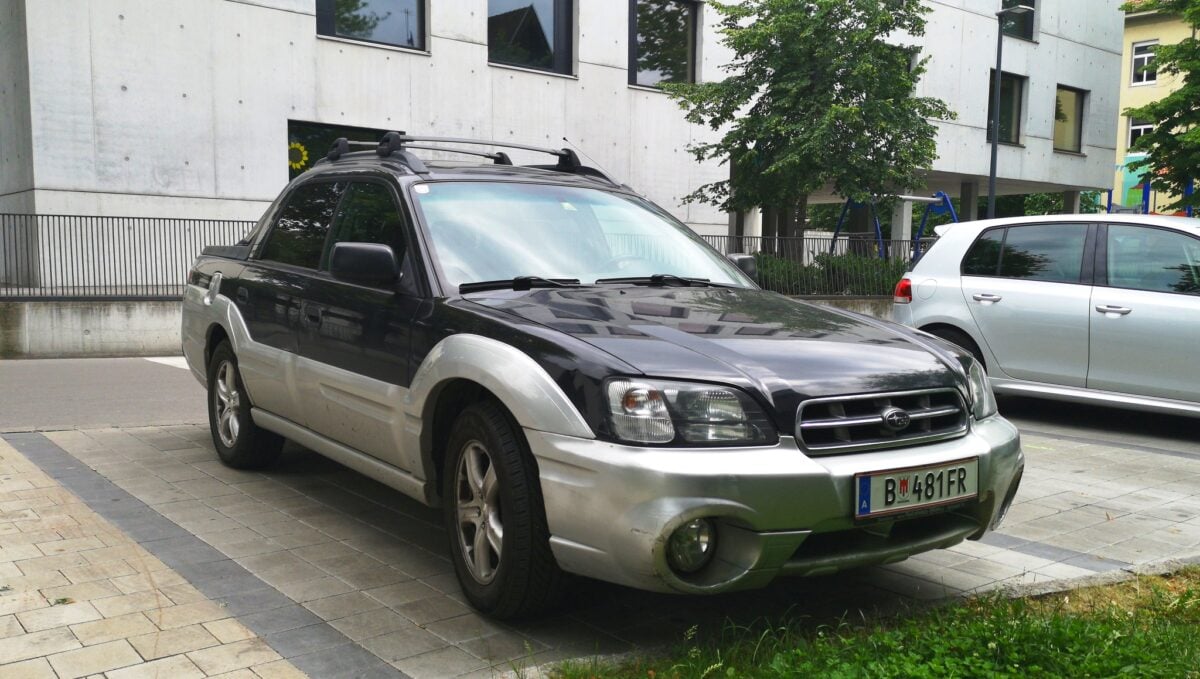
Subaru took an Outback wagon and turned it into a pickup truck. Sort of.
The Baja had a tiny bed with an extended cab that made it look confused about its purpose. It wasn’t quite a truck and wasn’t quite a car.
The styling tried to be rugged but ended up looking awkward. The Baja combined Subaru’s all-wheel-drive capability with car-like handling.
You could haul stuff in the bed but still park in a regular parking space. It worked well in the snow.
Subaru dealers struggled to sell them, but owners who understood the compromise appreciated having a vehicle that did a bit of everything. Prices have gone up as people recognize the Baja’s usefulness.
Chrysler PT Cruiser

The PT Cruiser attempted retro styling but landed somewhere between charming and cartoonish. The exaggerated curves and bulbous proportions made it look like a toy.
Critics called it gimmicky. Sales started strong but faded quickly as the novelty wore off.
The interior space impressed buyers. The rear seats folded flat to create a surprisingly large cargo area.
It drove like a regular car, not a hot rod, despite the retro appearance. The PT Cruiser’s attempt to blend 1930s styling with modern practicality was genuine, even if the execution didn’t please everyone.
As ’90s and early 2000s cars gain classic status, the PT Cruiser comes along for the ride.
Volkswagen Type 181 (Thing)

Volkswagen made a military vehicle available to civilians and called it the Thing. The name fits. It looked utilitarian to the point of being ugly.
The slab sides, flat surfaces, and basic construction made it seem unfinished. The folding windshield and removable doors suggested it was meant for beaches and farms, not regular roads.
The Thing was essentially an off-road toy that happened to be street legal. The air-cooled engine was bulletproof and easy to fix.
You could hose out the interior. It represented pure function without any attempt at style. That honesty appeals to collectors now.
The Thing has become a beach town icon and prices reflect its cult status.
Suzuki X-90

The X-90 looked like someone cut a sports car in half and added an SUV’s ride height. The tiny two-seater body sat on tall suspension.
The removable T-top seemed out of place. Nobody knew what to make of it.
Sales were terrible. Suzuki built the X-90 for fun, not practicality.
The small size made it easy to park. The four-wheel drive worked well in snow.
It was weird, but it was genuinely different. The X-90 represented automotive designers taking a chance on something truly odd.
That willingness to experiment makes it interesting now.
Honda Element

Honda designed the Element for young buyers who needed to haul gear. The boxy shape maximized interior space.
The doors and flat floor made loading easy. The rubber-like interior materials meant you could clean it with a hose.
It looked industrial and unrefined. Dog owners loved it.
Surfers loved it. Anyone who needed to carry dirty equipment appreciated the practical design.
The Element worked extremely well for its intended purpose, even if that purpose didn’t require good looks. Honda discontinued it in 2011, and owners have held onto them.
The Element’s practical design has earned it a following.
Saab Sonett III

Saab’s stab at a sports car felt off no matter how you saw it. On top of a tight frame went a plastic shell.
Those flip-up lights? They came across a rush. Nothing balanced out right.
Aimed for sleek speedster vibes yet landed closer to a garage-built oddity. The Sonett ran on Saab’s trusted engine setup.
Thanks to its light frame, it was pretty swift. Even with a strange look, it drove smoothly.
Only around 8,000 were ever made – because they’re so scarce today, prices have gone up. In Saab’s story, this car stands out – it shows what happened when a brand famous for family cars tried making something fun and unusual.
When Ugly Becomes Beautiful

Cars don’t grow old like most think. That wild look? It slowly feels normal.
Strange shapes begin to fit – once you see why they’re there. Stuff that felt unattractive turns out daring, real, or simply cool in its own way.
These cars show us beauty changes over time. Back then, critics laughed at them – yet they missed how opinions shift.
Ugly might simply mean too early. Designs that flop today can shape tomorrow’s trends. Keep that in mind when an odd-looking vehicle hits the road.
More from Go2Tutors!

- The Romanov Crown Jewels and Their Tragic Fate
- 13 Historical Mysteries That Science Still Can’t Solve
- Famous Hoaxes That Fooled the World for Years
- 15 Child Stars with Tragic Adult Lives
- 16 Famous Jewelry Pieces in History
Like Go2Tutors’s content? Follow us on MSN.



