Unbelievable Stories of Wartime Heroism
War has a way of stripping everything down to the essentials.
When the shooting starts and the world narrows to survival and duty, some people find depths of courage they never knew existed.
These aren’t the superhero moments Hollywood dreams up.
They’re messier, stranger, and somehow more powerful because they actually happened.
The soldiers in these stories didn’t wake up planning to become legends.
They were scared, wounded, and facing impossible odds.
Yet something inside them said ‘not today’ to death and defeat.
Let’s look at some moments when ordinary soldiers did things that still seem impossible decades later.
Alvin York

A Tennessee farm boy who didn’t want to fight ended up capturing more enemy soldiers in a single day than most battalions manage in a month.
Alvin York grew up hunting squirrels in the Cumberland Mountains, developing a marksman’s eye that could pick off targets most people couldn’t even see.
When America entered World War I in 1917, York tried to avoid service.
His Christian beliefs made him think war was wrong, and he filed for conscientious objector status.
The government denied his request, so off to war he went.
On October 8, 1918, in France’s Argonne Forest near Chatel-Chehery, York found himself in a situation that would have broken most men.
His patrol of seventeen soldiers stumbled into a German machine gun nest.
Nine men went down immediately, including York’s superior officer.
That left York in charge of seven terrified soldiers and facing somewhere around thirty-five German machine guns spitting fire from a hillside above.
Using the hunting skills he’d learned back home, York started picking off German gunners one by one.
He killed more than two dozen enemy soldiers with aimed shots while bullets chewed up the ground around him.
When a group of Germans charged with fixed bayonets, he shot them in reverse order starting from the back, just like he’d learned to shoot a line of turkeys so the front ones wouldn’t scatter.
The German officer finally surrendered his entire unit rather than watch more of them die.
York marched 132 prisoners back to American lines and silenced 35 machine guns.
General Pershing called him ‘the greatest civilian soldier’ of World War I.
Desmond Doss

Here’s a man who went to war without a weapon and saved more lives than many soldiers armed to the teeth.
Desmond Doss was a Seventh-day Adventist who took the commandment ‘thou shalt not kill’ seriously enough to refuse even touching a gun.
When Pearl Harbor happened, Doss volunteered anyway as a combat medic.
The Army didn’t know what to do with him.
His fellow soldiers in basic training despised him at first.
They thought he was a coward hiding behind religion.
The commanding officers tried everything to get rid of him, from grueling extra duties to attempting psychiatric discharge.
One night, other soldiers beat him up.
Doss refused to identify his attackers, which somehow earned their grudging respect.
Eventually, the Army gave up trying to make him quit and sent him to the Pacific with the 77th Infantry Division.
On May 5, 1945, Doss proved every doubter wrong on a cliff in Okinawa called Hacksaw Ridge.
His company climbed 400 feet up using cargo nets, only to get hammered by Japanese forces dug into caves at the top.
The fighting was brutal.
When the order came to retreat, Doss refused to leave.
Seventy-five wounded men lay scattered across the ridge, too injured to move on their own.
Doss spent the next twelve hours crawling through gunfire and explosions, dragging wounded soldiers to the cliff edge one by one.
He’d tie a rope around each man and lower him down to safety, praying the whole time.
‘Lord, please help me get one more,’ he kept repeating.
He saved 75 men that day, including his own captain.
Days later, a grenade landed at his feet.
He tried to kick it away and took shrapnel throughout his body.
While waiting for evacuation, he gave up his stretcher to another wounded soldier and walked instead.
A sniper then shot him, shattering his arm.
Doss made himself a splint from a rifle stock, the closest he ever came to holding a weapon.
On October 12, 1945, President Truman presented Doss with the Medal of Honor.
Doss became the first conscientious objector to receive the award.
Truman told him, ‘I consider this a greater honor than being president.’
Audie Murphy

Sometimes the smallest package contains the biggest fight.
Audie Murphy stood five-foot-five and weighed barely 110 pounds when he tried to enlist after Pearl Harbor.
The Marines, Navy, and Army all rejected him for being too small.
Murphy got his sister to help him falsify documents.
Finally, the Army took him.
The decision to let in this scrawny Texas farm boy turned out to be one for the history books.
Murphy grew up dirt poor, one of twelve children in a sharecropper family.
His father abandoned them during the Depression.
His mother died when Murphy was sixteen.
He’d spent his childhood hunting to put food on the table, which made him a natural marksman.
By the time the war ended, Murphy had earned every single military combat award for valor available from the United States.
He became America’s most decorated soldier of World War II.
The moment that earned him the Medal of Honor happened on January 26, 1945, near the French village of Holtzwihr.
Murphy’s company faced an attack from six German tanks and several hundred infantry.
Murphy ordered his men to fall back while he stayed behind, calling in artillery coordinates.
A German shell hit an American M10 tank destroyer nearby, setting it on fire.
The burning vehicle could explode at any moment.
Murphy climbed on top of it anyway and took over the machine gun mounted there.
For more than an hour, standing exposed on a burning tank destroyer while wounded in the leg, Murphy held off the German advance alone.
He killed over twenty enemy soldiers and directed artillery fire that killed or wounded fifty more.
He was nineteen years old.
Mary Walker

The only woman ever awarded the Medal of Honor spent the Civil War walking straight into danger while the men around her refused to follow.
Dr. Mary Walker volunteered as a field surgeon for the Union Army in 1861.
At a time when women doctors were rare enough to be scandalous, Walker insisted on serving right at the front lines.
The male soldiers she served with repeatedly refused to accompany her on trips to treat civilians and Confederate wounded.
Walker went anyway, over and over, with complete disregard for her own safety.
She crossed battle lines regularly to provide medical care to whoever needed it, Union or Confederate.
Walker believed suffering didn’t have a side.
This philosophy eventually got her captured.
In April 1864, near Chattanooga, Tennessee, after staying behind to treat civilians when others fled, Confederate forces arrested her as a spy.
They held her as a prisoner of war for more than four months.
President Andrew Johnson presented her with the Medal of Honor in 1865.
Walker’s story took an ugly turn decades later.
In 1917, Congress revised the Medal of Honor standards to require ‘actual combat with an enemy.’
Since Walker had served as a surgeon rather than a combatant, the government rescinded her medal.
Walker refused to give hers back.
She wore it every day until her death in 1919.
In 1977, President Jimmy Carter finally reinstated her Medal of Honor.
She remains the only woman to have received it.
David Gonzales
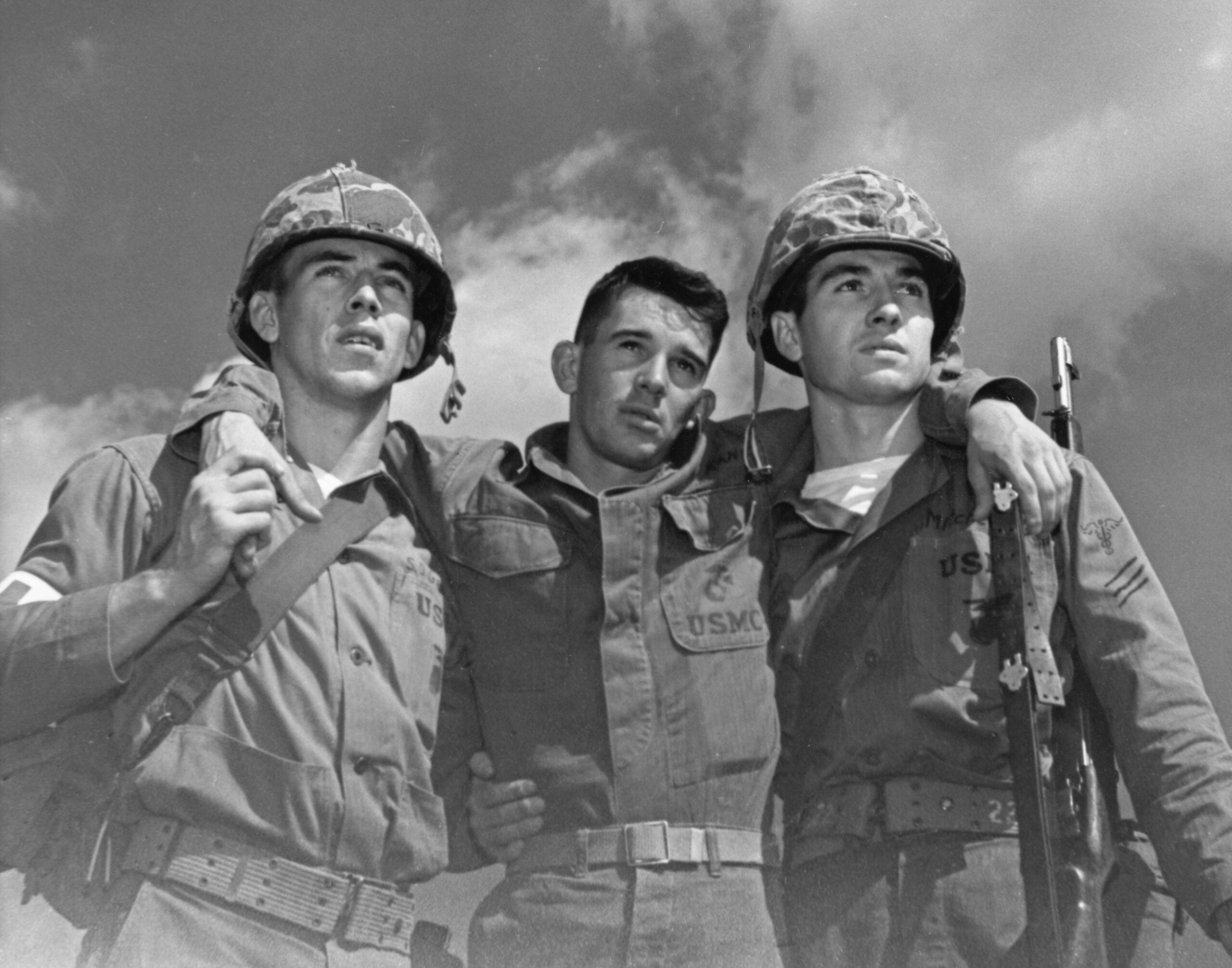
Some acts of heroism last only minutes but define entire lives.
Private First Class David Gonzales was fighting in the Philippines on April 25, 1945, when a bomb explosion buried five of his fellow soldiers alive near Luzon.
The enemy kept firing at the position, which meant anyone trying to dig out the buried men was a target.
Gonzales didn’t hesitate.
He crawled 15 yards through devastating fire to reach the site.
The enemy saw him and concentrated their fire on his position.
Rather than take cover, Gonzales stood up fully exposed and started digging with his hands and an entrenching tool.
He managed to free three of the entombed men before enemy fire killed him.
Those three soldiers lived because Gonzales chose to die digging.
President Truman posthumously awarded him the Medal of Honor in 1945.
He left behind a young son who grew up knowing his father had been a hero but never knowing his father.
What Courage Really Costs
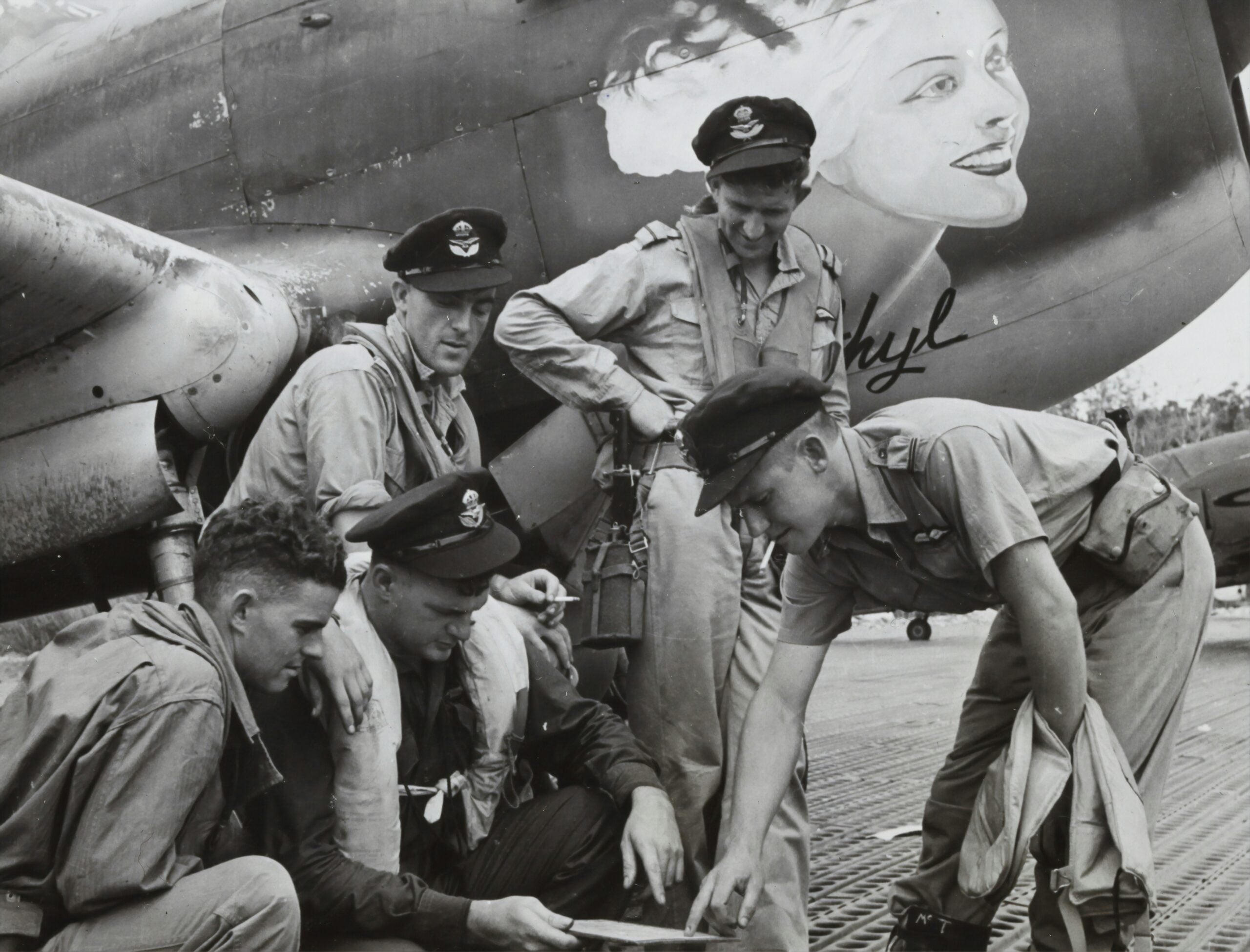
These stories share common threads that reveal something true about wartime heroism.
None of these soldiers sought glory.
York didn’t want to fight at all.
Doss refused to carry a weapon.
Murphy got rejected multiple times before the Army would take him.
They found themselves in situations where the easy choice was to save themselves, and something inside them refused that option.
Courage wasn’t something they had.
It was something they did, moment by terrifying moment, while their bodies screamed at them to run.
The word ‘hero’ gets thrown around so casually now that it’s lost its weight.
These soldiers would probably reject it.
They’d tell you they just did what needed doing, that anyone else would have done the same.
That’s what real heroes say because they genuinely believe it.
The rest of us know better.
Most people, faced with those same choices, would choose to live.
These soldiers chose differently, and their choices echo through generations.
That’s not about being fearless.
That’s about being more afraid of failing your brothers than dying yourself.
It’s a terrible, beautiful thing.
More from Go2Tutors!

- The Romanov Crown Jewels and Their Tragic Fate
- 17 Halloween Costumes Once Considered Taboo
- Famous Hoaxes That Fooled the World for Years
- 15 Child Stars with Tragic Adult Lives
- 16 Famous Jewelry Pieces in History
Like Go2Tutors’s content? Follow us on MSN.



