Unsolved Heists That Baffle Investigators
Some crimes become legends not because they were solved but because they never were.
These heists stand out not just for what was stolen but for how the thieves managed to vanish without a trace, leaving investigators scratching their heads for decades.
From priceless art to mountains of cash, these robberies remain mysteries that continue to puzzle even the sharpest minds in law enforcement.
So let’s dive into some of the most puzzling robberies that still have no answers.
Each one leaves behind more questions than clues.
The Isabella Stewart Gardner Museum theft

On a quiet night in March 1990, two men dressed as Boston police officers knocked on the museum’s door and talked their way inside.
Once in, they tied up the guards and spent 81 minutes carefully selecting and removing 13 pieces of art worth over $500 million.
The stolen works included paintings by Rembrandt, Vermeer, and Degas.
Despite one of the largest investigations in FBI history and a $10 million reward, not a single piece has been recovered.
The empty frames still hang on the museum walls as reminders of what was lost.
Theories range from organized crime involvement to international art dealers.
Nobody knows for sure who pulled it off or where the masterpieces ended up.
The Antwerp Diamond Center heist

In 2003, a group led by Leonardo Notarbartolo pulled off what many consider the perfect diamond robbery in Belgium.
They spent years planning and preparing, renting an office in the building to study its security systems up close.
Over one weekend, they bypassed countless security measures including infrared heat detectors, a magnetic field, and a seismic sensor to access the vault.
The thieves made off with diamonds, gold, and jewelry worth an estimated $100 million.
While Notarbartolo was eventually caught thanks to a sandwich wrapper with his DNA, most of the loot was never found.
He served time but kept quiet about his accomplices and where the gems went.
This left major gaps in the story.
The Brink’s-Mat gold bullion robbery

At a warehouse near London’s Heathrow Airport in 1983, six robbers expected to find a few million in cash.
Instead, they stumbled upon three tons of gold bullion worth £26 million along with diamonds and cash.
The gang included an inside man who provided security details and access codes.
Most of the gold was melted down and sold through legitimate channels, making it nearly impossible to trace.
While several people were convicted over the years, only a tiny fraction of the stolen gold was ever recovered.
The case spawned decades of investigations, murders, and connected crimes that continue even today.
D.B. Cooper’s airplane ransom

On Thanksgiving eve in 1971, a man calling himself Dan Cooper hijacked a Boeing 727 flying from Portland to Seattle.
He passed a note to a flight attendant claiming he had a bomb and demanded $200,000 along with four parachutes.
After the plane landed and his demands were met, he released all passengers and ordered the crew to fly toward Mexico.
Somewhere over the wilderness of Washington state, Cooper jumped from the rear stairs of the plane with the money strapped to his body and disappeared into the night.
Despite finding some of the ransom money years later along a riverbank, Cooper himself was never found.
The FBI officially closed the case in 2016.
Amateur investigators still chase leads.
The Securitas depot robbery

In February 2006, criminals in England executed one of the largest cash robberies in history by targeting the people, not just the systems.
They kidnapped the manager of a cash depot in Kent along with his family, using threats to force him to cooperate.
Once inside the facility, the gang tied up 14 staff members and loaded £53 million in cash into a seven-ton truck.
The elaborate plan involved multiple vehicles, disguises, and safe houses.
Police eventually caught most of the gang, but only about half of the stolen money was recovered.
The rest remains missing, likely hidden or laundered through complex channels that investigators couldn’t fully untangle.
The Gardaí headquarters burglary

Someone managed to break into the Irish police headquarters in Dublin’s Phoenix Park in 1987 and steal police files.
That wasn’t all, as the burglar also made off with around $140,000 in cash that had been seized in drug raids.
What makes this heist remarkable is the sheer audacity of robbing the police at their own headquarters.
The building was supposed to be one of the most secure locations in Ireland.
No arrests were ever made, and the identity of the thief remains unknown.
Some people suspect it was an inside job.
Others think it was a professional with intimate knowledge of police procedures.
The Lufthansa heist

At New York’s JFK Airport in December 1978, a crew of criminals made off with $5 million in cash and nearly $1 million in jewelry.
The robbery was orchestrated by Jimmy Burke and his associates, who got a tip from an airport worker about a large shipment arriving from Germany.
The thieves knew exactly when and where to strike and executed the plan with military precision.
Most of the crew met violent ends as Burke allegedly killed them to eliminate witnesses and avoid splitting the money.
Despite being the largest cash robbery in American history at the time, none of the stolen money was ever recovered.
The heist inspired key scenes in the movie Goodfellas, but the truth remains more mysterious than the film suggested.
The Hatton Garden safe deposit burglary

Over Easter weekend in 2015, a group of aging thieves in London pulled off a robbery that seemed straight out of a caper film.
The crew, with a combined age of over 400 years, drilled through a concrete wall two feet thick to access the Hatton Garden Safe Deposit vault.
They ransacked 73 safe deposit boxes, taking jewelry, gold, and cash worth an estimated £14 million.
Surveillance footage showed them struggling with heavy bags and taking breaks during the multi-day operation.
While most of the gang was caught and convicted, about a third of the stolen goods were never found.
The thieves apparently stashed the best items somewhere before their arrest.
They haven’t revealed those hiding spots.
The Great Train Robbery

In August 1963, a gang of 15 criminals stopped a Royal Mail train in rural England and made off with £2.6 million in banknotes.
They tampered with trackside signals to force the train to stop, then overwhelmed the crew and uncoupled the cars containing the money.
The robbery took just 45 minutes, but the planning had gone on for months with inside information from railway workers.
Most of the gang was eventually caught, though one of them, Ronnie Biggs, escaped prison and fled to Brazil for decades.
Despite recovering some of the money and convicting the robbers, about half of the cash was never found.
The case became legendary in British criminal history, spawning books, films, and endless fascination.
The Fortaleza Bank heist

In Brazil during 2005, a group of thieves rented a small business and spent three months digging a tunnel under the city of Fortaleza.
The tunnel stretched about 650 feet and ended right beneath the Banco Central branch.
Over a weekend, they broke through the floor and cleared out five containers holding 164 million reais, roughly $70 million at the time.
By Monday morning, the thieves and the money had vanished.
Police eventually arrested several suspects and recovered some of the cash.
The mastermind and a large portion of the money remain missing.
The tunnel itself was an engineering feat, complete with lighting and air circulation.
The Dunbar Armored robbery

In September 1997, Allen Pace used his position as a regional safety inspector for Dunbar Armored to rob the company’s Los Angeles facility.
He recruited five childhood friends and used his intimate knowledge of security procedures and schedules to plan the perfect strike.
The crew overpowered the guards, took their keys, and loaded $18.9 million into a moving truck.
The theft went undetected until the next morning, giving them plenty of time to escape.
Pace was eventually caught after one of his accomplices tried to deposit suspicious amounts of money.
Investigators never recovered all the cash.
Several million dollars remain unaccounted for to this day.
The theft of The Concert

In 1990, the same night the Gardner Museum was robbed in Boston, a different Johannes Vermeer painting called The Concert was among the stolen works.
This particular painting is considered one of only 34 known Vermeer works in existence, making it irreplaceable.
Art experts value it at over $200 million, making it the most valuable stolen painting that’s still missing.
The thieves seemed to know exactly what they wanted, bypassing other valuable works to grab specific pieces.
Some investigators believe the paintings were stolen to order for a private collector.
Others think they might have been used as collateral in criminal dealings.
The Northern Bank robbery

Right before Christmas in 2004, armed men in Belfast took two bank officials and their families hostage to force cooperation.
They held the families overnight while making the officials act normally at work the next day.
Once inside the Northern Bank headquarters, the gang loaded £26.5 million in cash, most of it in new, traceable notes.
The robbery was suspected to have connections to paramilitary groups, though no one was ever convicted of the actual theft.
Some of the money turned up in raids and investigations, but millions remained missing.
The incident led to the bank eventually changing its entire currency design to make the stolen notes worthless.
The Millennium Dome raid
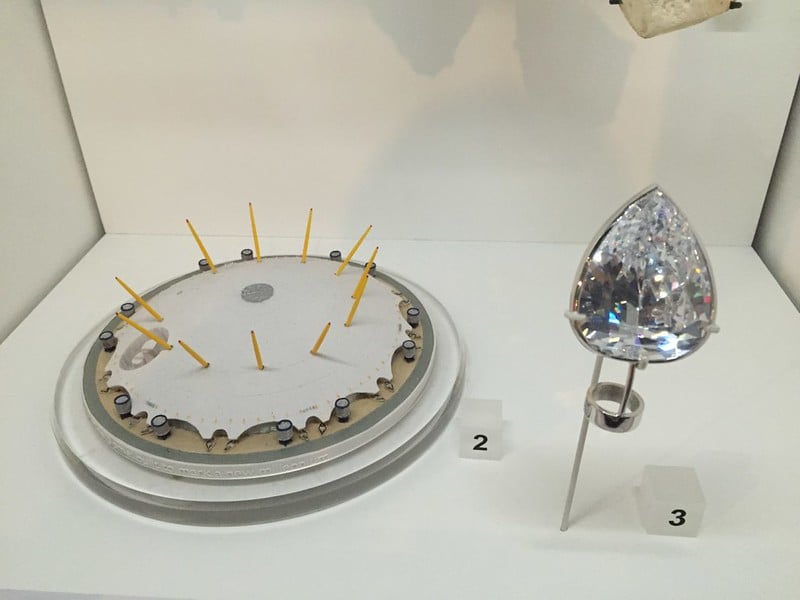
In November 2000, a gang attempted to steal the Millennium Star diamond and other gems worth £350 million from an exhibit in London.
The thieves smashed through the dome on a stolen excavator while accomplices on speedboats waited on the nearby Thames River.
What they didn’t know was that police had been watching them for months and replaced the real diamonds with fakes.
The gang was arrested at the scene in a dramatic takedown, but not before they’d revealed an audacious plan that almost worked.
The question that lingers is how they planned to sell such recognizable gems.
Whether they had buyers already lined up remains a mystery.
The Pierre Hotel robbery

On January 2, 1972, a group of robbers entered New York’s luxury Pierre Hotel and held guests and staff at gunpoint for hours.
They systematically went through safe deposit boxes in the vault and guests’ rooms, collecting jewelry, cash, and valuables.
The take was estimated at around $10 million, though the exact amount was never confirmed since some wealthy guests didn’t report everything they lost.
The robbery was perfectly timed during a holiday weekend when the hotel was full of wealthy visitors.
While police later arrested several suspects with mob connections, most of the stolen property was never recovered.
Key details about who planned the operation remain murky.
Where the mysteries lead us

These unsolved heists share common threads of careful planning, insider knowledge, and criminals who understood how to disappear.
Some involved years of preparation, while others relied on split-second timing and nerve.
What makes them truly baffling isn’t just the missing money or art.
It is how the thieves managed to evade capture or keep their secrets even after arrest.
More from Go2Tutors!

- The Romanov Crown Jewels and Their Tragic Fate
- 13 Historical Mysteries That Science Still Can’t Solve
- Famous Hoaxes That Fooled the World for Years
- 15 Child Stars with Tragic Adult Lives
- 16 Famous Jewelry Pieces in History
Like Go2Tutors’s content? Follow us on MSN.



