Unusual Sports That Thrived in the Early 1900s US
At the dawn of the 20th century, America’s appetite for sport went far beyond baseball diamonds and football fields. With shorter workweeks, urbanization, and a growing fascination with fitness, people were eager for entertainment that mixed spectacle, risk, and just enough absurdity to keep crowds hooked.
What followed was a wave of unusual competitions—some dangerous, some quirky—that had their moment in the spotlight before fading into history.
Here are 16 unusual sports that had Americans cheering in the early 1900s.
Pushball

Picture a leather orb taller than most men and weighing as much as a large dog. That was pushball—dreamed up in 1894 by Moses Crane, an engineer who thought football lacked visibility.
Teams of eleven would hurl themselves at a six-foot, 50-pound orb, trying to shove it over the opponent’s goal line. The game exploded on college campuses, and even Wall Street brokers adopted it—pushing around an orb nicknamed Amalgamated Copper after the markets closed.
Because why head to the bar when you could wrestle a giant orb in your suit?
Horse Pushball

As if wrangling a six-foot orb on foot wasn’t chaotic enough, someone decided to add horses. By the early 1900s, mounted pushball became a crowd favorite at military exhibitions and horse shows.
Riders used their mounts’ knees and chests to nudge the orb, while praying they didn’t end up trampled. Equal parts skill, guts, and chaos, it eventually gave way to tamer versions like horse soccer.
But make no mistake—the original was closer to controlled mayhem than sport.
Like Go2Tutors’s content? Follow us on MSN.
Pedestrianism

Before ultramarathons, America’s obsession was pedestrianism—essentially competitive walking. From the 1830s through the 1880s, thousands packed arenas to watch athletes circle indoor tracks for six days straight.
Contestants slept only a few hours on cots by the track, surviving on grit and determination. Frank Hart, a Haitian immigrant, covered 540 miles in a single Madison Square Garden contest in 1880, earning more than $21,000 (roughly $480,000 today).
Bands played, bets flew, and vendors sold snacks to spectators who couldn’t get enough of watching people walk. It eventually lost ground to baseball, but for decades it was America’s premier endurance sport.
Board Track Motorcycle Racing

If NASCAR seems risky, it’s tame compared to the wooden motordromes of the 1910s. Riders raced motorcycles on steeply banked wooden tracks—sometimes tilted up to 60 degrees—hitting 100 mph with no helmets.
The tracks were so lethal they were dubbed murderdromes. A single crash in Newark in 1912 killed six people, including spectators.
Still, crowds loved the danger, and top riders pocketed big money. For a brief moment, it was the hottest ticket in American sports, splinters and all.
Automobile Polo
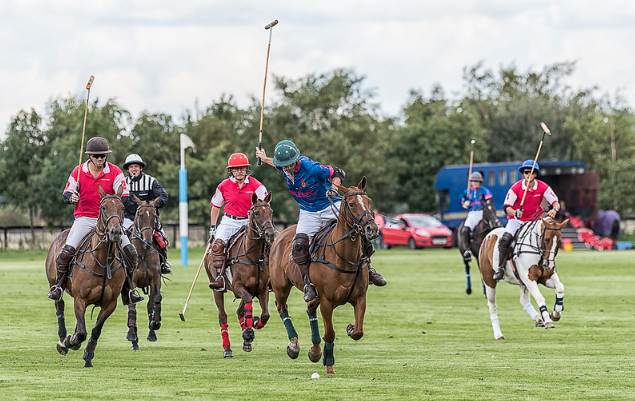
Swap horses for early automobiles and you get automobile polo—arguably one of the most reckless sports ever invented. First appearing in 1911, the game saw drivers swinging mallets from open cars while swerving to strike an orb.
Wrecks, fires, and flipped vehicles were common, and even spectators weren’t always safe. Unsurprisingly, rising insurance premiums and the obvious risks eventually ended its run, but not before it drew gasps and gawks from fascinated crowds.
Like Go2Tutors’s content? Follow us on MSN.
Six-Day Bicycle Races

Cycling also had its endurance craze. Beginning in the 1890s, velodromes hosted six-day races where riders pedaled almost nonstop for 144 hours.
Solo riders downed champagne or chewed coca leaves to stay awake, while audiences roared from the stands. The format later evolved into two-man teams so competitors could rest, but the original solo events were brutal tests of willpower.
By the 1920s, six-day races leaned more toward spectacle than sport, but the crowds didn’t seem to mind.
Bicycle Polo
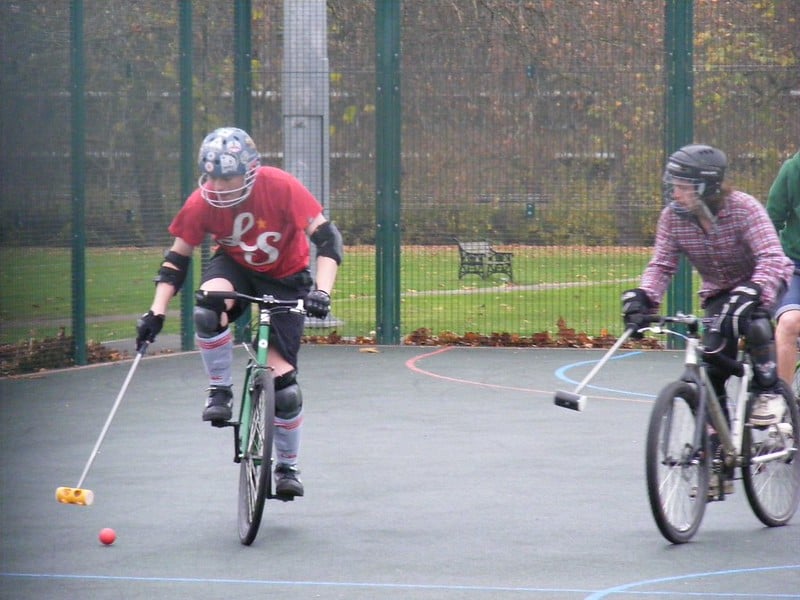
While polo on horseback is an elite tradition, bicycle polo was its scrappy cousin. Emerging in the late 1800s, it involved cyclists with mallets chasing an orb across grass fields.
It gained enough traction to appear as a demonstration sport at the 1908 Olympics. Though popular in places like India, the U.S. never fully embraced it.
Today, the game survives in urban “hardcourt” versions, but its early grass-field matches are largely forgotten.
Tug of War
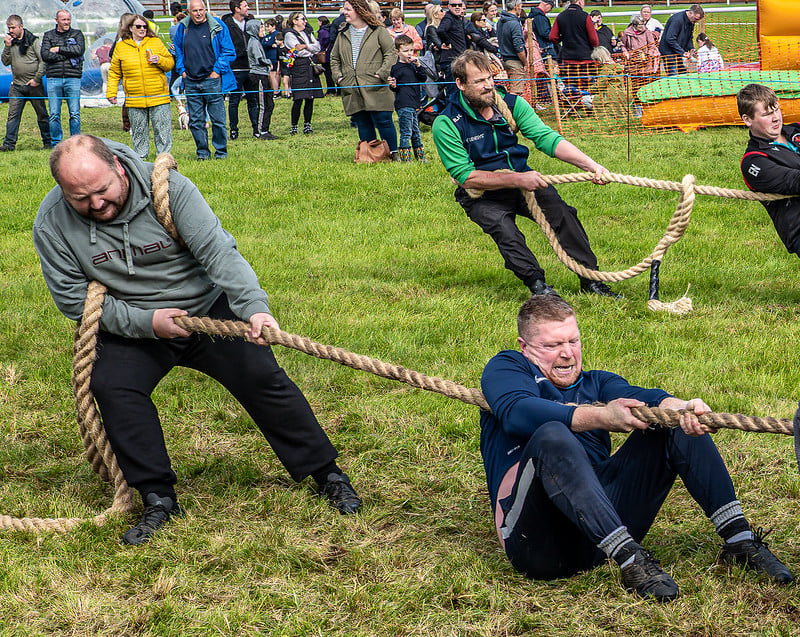
Yes, tug of war was once Olympic-worthy. From 1900 to 1920, teams of eight battled by pulling a rope until the other side budged six feet.
At the 1908 Games, controversy struck when Liverpool police officers wore heavy-soled boots, prompting American competitors to protest. Still, the sport produced repeat medalists like John Shepherd before it was dropped in 1920. Sometimes the simplest games are the toughest.
Like Go2Tutors’s content? Follow us on MSN.
Roque

Croquet’s American spin-off, Roque, used hard sand courts surrounded by boundary walls, allowing bank shots like billiards. Dubbed the “Game of the Century” by enthusiasts, it reached its peak at the 1904 St. Louis Olympics—where only Americans competed.
Despite its initial hype, it never found a global audience and eventually drifted into obscurity.
Barrel Jumping
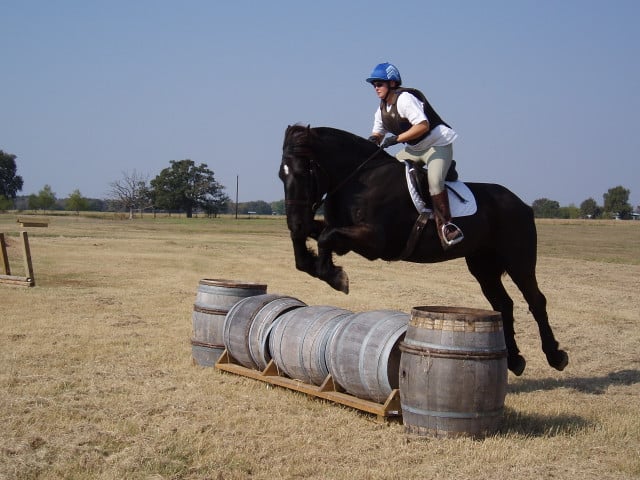
Think Evel Knievel on ice skates. Barrel jumpers built up speed before vaulting over rows of barrels, landing on hard ice. The sport, which took off in the 1920s, became a resort attraction.
The record stands at 18 barrels, cleared by Canadian Yvon Jolin in 1981. Crashes were bone-rattling, and even boxing champ Barney Ross admitted he’d rather face 15 rounds in the ring than try it.
Roller Skating Races
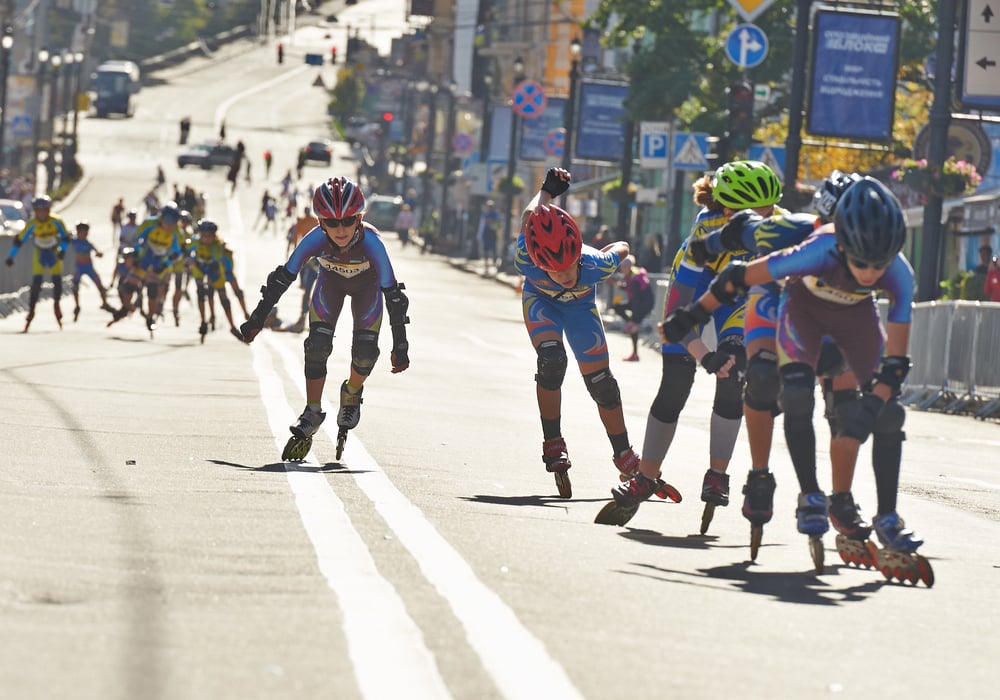
Roller skating boomed in the early 1900s, and competitive races quickly followed. Skaters zipped around indoor tracks to roaring crowds, turning what began as a novelty into a serious athletic pursuit.
Professional leagues formed, and the craze helped set the stage for roller derby in the 1930s.
Like Go2Tutors’s content? Follow us on MSN.
Velodrome Track Cycling

Velodromes weren’t just for six-day marathons—they also hosted fast-paced sprint races. Riders on brakeless fixed-gear bikes leaned into steep banks, sometimes wiping out in spectacular fashion.
Many competitors came from working-class immigrant communities, and they often became local stars. Though the sport was dangerous and tracks costly to maintain, it was a major urban attraction in its heyday.
Automobile Hill Climbing

One of the earliest auto-racing formats, hill climbing challenged drivers to race up steep inclines on rough, unpaved roads. The most famous event was Pikes Peak, where cars clawed their way up 18 miles to the summit at over 14,000 feet.
With no guardrails, accidents were frequent and deadly. The sport was as much about mechanical innovation as driver skill, and while many hill climbs disappeared, Pikes Peak endures today.
Glove-less Boxing
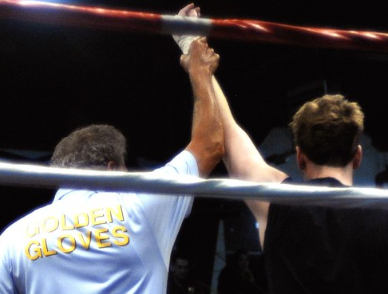
Before boxing became regulated, bare-knuckle and glove-less fights were brutal marathons. Matches dragged on for dozens of rounds, often leaving fighters bloodied or worse. Despite being banned in many states, the sport had passionate fans.
The early 1900s saw a transition period, with Jack Johnson becoming the first Black heavyweight champion in 1908—a historic moment that also fueled racial tensions. Gloves and standardized rules eventually took over, but the savage era left its mark.
Like Go2Tutors’s content? Follow us on MSN.
Roller Skating Baseball

Only in the early 1900s would someone think of playing baseball on roller skates. The result was pure chaos, with players stumbling after fly orbs and colliding at bases.
These novelty games, often pitting unusual matchups like one-armed men versus one-legged men, were more spectacle than sport. Still, they drew crowds looking for a laugh—and for a time, that was enough.
Motor-Paced Cycling

In motor-paced cycling, riders drafted behind motorcycles or cars, rocketing to speeds over 60 mph. The cyclist rode inches from the pacer’s rear wheel, relying on absolute precision.
A slip meant disaster. Popular in both Europe and the U.S., it remains in modern track cycling, albeit with far better safety gear.
The early days, however, were raw adrenaline mixed with high risk.
From Spectacle to Memory

These oddball sports thrived during a period when America was hungry for thrills, and mass entertainment options were limited. Some vanished because they were too dangerous, others because they were impractical or expensive.
But for a few decades, they captured the spirit of experimentation—a willingness to turn just about anything into competition. Looking back, they remind us how far people will go for excitement, community, and a good story.
More from Go2Tutors!

- 16 Historical Figures Who Were Nothing Like You Think
- 12 Things Sold in the 80s That Are Now Illegal
- 15 VHS Tapes That Could Be Worth Thousands
- 17 Historical “What Ifs” That Would Have Changed Everything
- 18 TV Shows That Vanished Without a Finale
Like Go2Tutors’s content? Follow us on MSN.



