Useless Gadgets From The 1990s Era
The 1990s was the peak of unnecessary technology. Companies convinced people they needed gadgets to solve problems that didn’t really exist.
Some of these devices promised to make life easier but ended up cluttering drawers and closets instead. Others worked exactly as advertised—the problem was that what they advertised was pointless.
These gadgets defined an era when electronics were becoming affordable enough for impulse purchases but weren’t yet smart enough to be genuinely useful. The result was a decade of devices that seemed brilliant in concept and baffling in execution.
The Sony Discman That Skipped With Every Step

Portable CD players promised music on the go, but physics had other plans. CDs spin at high speeds, and any bump or jolt interrupts that spin.
Walking with a Discman meant your music cut out every few seconds unless you walked with the smoothness of a tightrope performer. Sony and other manufacturers added “anti-skip” technology that used buffering to compensate.
This helped somewhat, but it never fully solved the fundamental problem: CDs weren’t designed for movement. You could listen while sitting still or maybe while lying down.
Anything more active meant constant interruptions. People bought Discmans anyway because the alternative was carrying a Walkman with limited tape selection.
But everyone who owned one remembers the frustration of trying to run or even walk briskly while their music stuttered. The device worked perfectly as long as you didn’t actually move, which defeated the entire purpose of portable music.
Virtual Pets That Died From Neglect
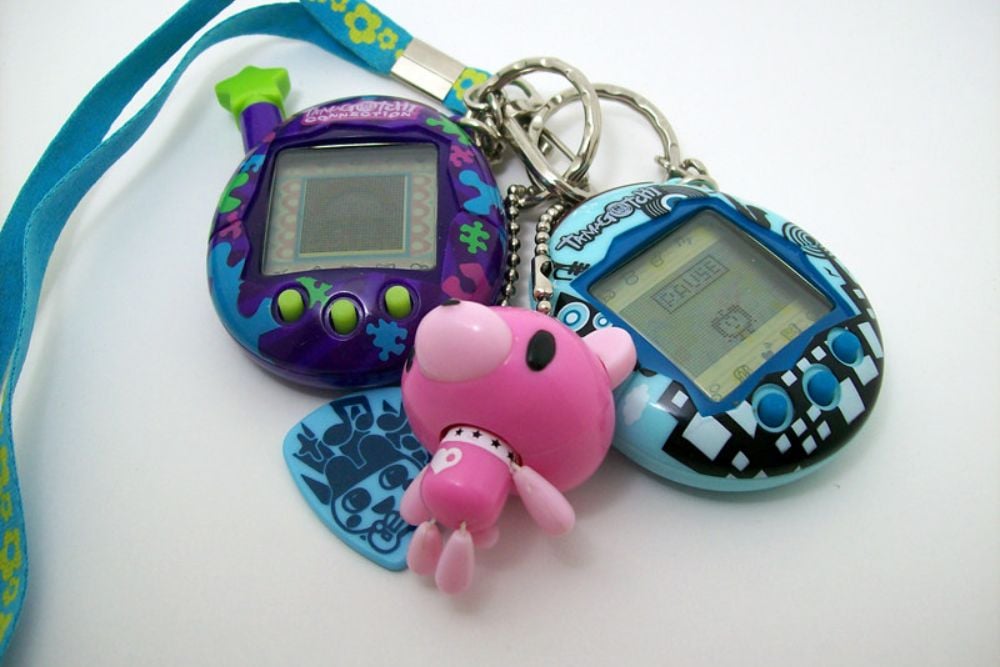
Tamagotchis and similar virtual pets turned caring for a fake creature into a job. The digital pet needed feeding, cleaning, and attention multiple times per day.
Ignore it and it died, often while you were at school or sleeping. The death wasn’t temporary.
Your virtual pet actually died, and you felt guilty about it even though it was just pixels on a tiny screen. Children cried over dead Tamagotchis.
Adults felt ridiculous for feeling bad about failing a device. The worst part was that Tamagotchis demanded attention at random intervals.
You couldn’t schedule care around your day. The pet beeped when it needed something, which meant it often beeped during class or meetings.
Teachers banned them. Employers frowned at employees checking their virtual pets during work.
The device created stress rather than relieving it.
CueCat Barcode Scanners for Your Computer

The CueCat was a barcode scanner shaped like a cat that plugged into your computer. The idea was that you’d scan barcodes in magazines or newspapers to visit websites related to the ads.
Companies distributed millions of CueCats for free, convinced this was the future of advertising. Nobody wanted this.
Typing a URL took less time than finding the CueCat, plugging it in, and scanning a barcode. The device solved a problem that didn’t exist—accessing websites was already easy.
The CueCat made it more complicated while requiring you to keep a weird cat-shaped scanner near your computer. The privacy concerns made it worse. CueCats tracked what you scanned and reported back to the company.
Users discovered this quickly and hacked the devices to disable tracking. Within months, CueCats were appearing in thrift stores and trash bins.
The company distributed around 30 million units. Almost none of them got regular use.
Portable TVs With Terrible Reception

Handheld TVs existed before the 1990s, but the decade saw dozens of models promising better reception and clearer pictures. None delivered.
The physics of broadcast television meant small antennas got poor signals, especially indoors or while moving. These devices offered tiny screens showing fuzzy, static-filled images of whatever channels you could pick up.
The picture quality was so bad that watching for more than a few minutes gave you a headache. The battery life was terrible because the devices consumed significant power trying to process weak signals.
People bought portable TVs thinking they’d watch television during commutes or in waiting rooms. The reality was that the experience was so unpleasant that the devices got used maybe twice before being abandoned.
When you could barely tell what was happening on screen and the static overpowered the audio, portability didn’t matter.
Digital Organizers That Took Longer Than Paper

Personal Digital Assistants promised to replace paper planners but required extensive setup and awkward stylus input. You’d spend five minutes entering an appointment that would take ten seconds to write in a physical planner.
The learning curve was steep, the interface was clunky, and most PDAs had terrible handwriting recognition. The Palm Pilot became popular despite these problems, but it required learning a special alphabet called Graffiti to input text reliably.
Regular handwriting didn’t work well enough. So you had to memorize new ways to write letters just to use a device that was supposed to make life simpler.
Battery life was another issue. PDAs needed charging, while paper planners worked indefinitely.
Forgetting to charge your PDA meant losing access to all your appointments and contacts. A paper planner never dies at inconvenient moments.
For most people, the digital version offered no actual advantages over the analog one.
Scented Computer Mice That Made Offices Smell Weird

Someone decided computer mice should have scent cartridges that released odors during use. The idea was that smelling strawberries or pine while working would be pleasant. The execution was that your mouse smelled like a cheap air freshener, and the scent made your hand smell after prolonged use.
These mice didn’t solve any problem. Nobody complained about unscented mice.
The feature added cost without adding value. Worse, many people found the scents unpleasant or even triggered allergies.
Office environments with multiple scented mice created competing smell profiles that combined into something awful. The scent cartridges needed replacing regularly, creating an ongoing expense for a feature nobody wanted in the first place.
Most users removed the cartridges or switched back to regular mice within weeks. The scented mouse represented gadget innovation for its own sake, without any consideration of whether the innovation improved anything.
One-Hit Wonder MP3 Players

Before iPods dominated, dozens of companies released MP3 players with terrible interfaces and limited storage. These devices held maybe 32MB or 64MB of music—about 10 to 20 songs.
Transferring music required specific software that barely worked. The controls were confusing, with cryptic button combinations needed for basic functions.
The worst players used AA batteries that drained in a few hours. You’d carry spare batteries and a collection of music that fit on one side of a mixtape.
The sound quality was often worse than that of CD players because early MP3 encoding created noticeable artifacts at the low bitrates needed to fit songs in limited storage. Companies marketed these devices as revolutionary, but users recognized them as half-baked.
The technology wasn’t ready yet, but manufacturers rushed products to market anyway. Most of these early MP3 players ended up in landfills after a few frustrating months of use.
Kitchen Gadgets That Did One Thing Poorly

The 1990s brought a wave of single-purpose kitchen gadgets that took up drawer space without being useful. Banana slicers, egg separators, and strawberry hullers—devices that performed tasks a knife could do faster and better.
These gadgets appeared in infomercials and gift catalogs, convincing people they needed specialized tools for simple jobs. The problem wasn’t that these gadgets didn’t work.
Many did exactly what they promised. The problem was that what they promised was pointless.
Slicing a banana with a knife takes five seconds. Using a banana slicer required getting the gadget out, positioning the banana correctly, cleaning the gadget afterward, and finding storage space.
The tool added steps rather than removing them. People bought these gadgets as gifts or on impulse, used them once or twice out of obligation, then forgot about them.
Drawers filled with plastic devices that accomplished nothing a basic knife couldn’t do better. The gadgets represented the triumph of marketing over utility.
Hands-Free Telephone Headsets for Landlines

Before Bluetooth headsets for mobile phones, there were wired headsets for landline telephones. These promised freedom from holding the phone receiver, allowing you to take notes or multitask during calls.
The reality was a tangled wire, uncomfortable earpieces, and looking ridiculous while using a device attached to a phone that was itself tethered to a wall. The range was limited to the length of the headset cord, usually about six feet.
You could move around slightly more than holding the receiver, but not enough to make a meaningful difference. The audio quality was often worse than the handset because the microphone picked up ambient noise more easily.
Corporate offices bought these headsets for employees who spent hours on calls. Most of those employees used them briefly and then went back to holding the phone normally.
The headsets were uncomfortable for extended wear, and the wires got in the way. The device solved a minor annoyance while creating several new ones.
Miniature Keyboards for PDAs

Palm Pilots and other PDAs inspired accessories including fold-out keyboards. These tiny keyboards were supposed to make typing on PDAs easier than using a stylus.
They folded to pocket size and connected to the PDA through a proprietary port. Typing on these keyboards was torture.
The keys were too small for adult fingers. The layout crammed letters together to fit the size constraints.
The keyboards flexed and moved while typing because they were so light and compact. Most people could type faster with a stylus or even with the Graffiti system than with these miniature keyboards.
The keyboards also eliminated the main advantage of PDAs: portability. A PDA fits in a pocket.
A PDA plus keyboard and carrying case became a package nearly as large as a small laptop. At that point, why not just carry the laptop that had a proper keyboard and more functionality?
Voice-Activated Remote Controls
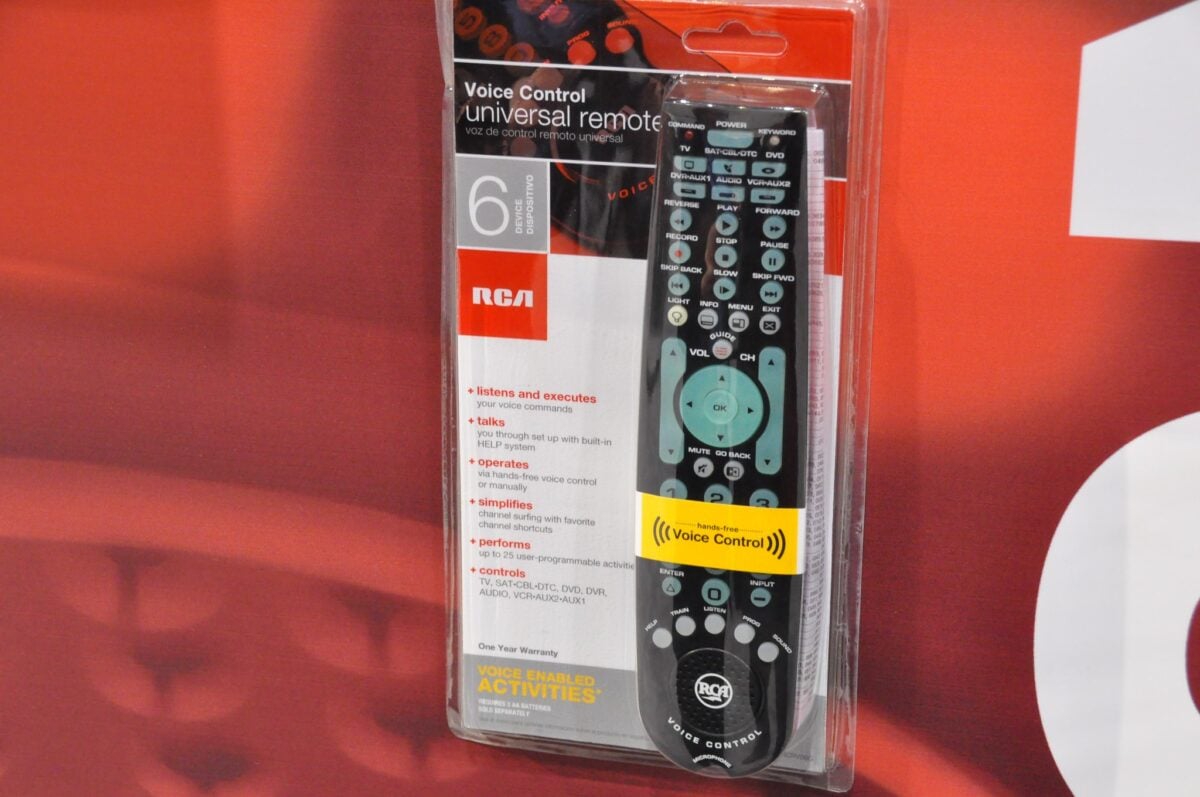
Universal remote controls seemed useful, but adding voice activation made them worse. These remotes promised you could say “channel 24” or “volume up” instead of pressing buttons.
The voice recognition was terrible. The remote misunderstood commands constantly.
You’d say “channel five” and get channel nine or an error beep. The remote needed training to recognize your voice, which took significant setup time.
Even after training, accuracy remained mediocre. Background noise interfered with recognition.
Multiple people in the household couldn’t use the same remote without confusing it. The device that was supposed to make TV watching easier made it frustrating instead.
Regular remote controls already worked fine. The voice activation added complexity, cost, and battery drain without meaningful benefits.
Most users tried the voice features once, found them unreliable, and went back to pressing buttons like normal. The technology wasn’t ready, but that didn’t stop companies from selling it.
Digital Pets in Keychains

Following Tamagotchi’s success, companies released cheaper virtual pets that were even more limited. These keychain-sized devices had minimal screens and basic gameplay.
The pet didn’t evolve or grow—it just existed in a few states while making annoying beeps. Unlike Tamagotchis, these knockoff virtual pets had no real gameplay.
You pressed buttons and watched a crude animation loop. The appeal lasted maybe an hour before the novelty wore off.
But the keychain kept beeping to remind you it existed, demanding attention even though interacting with it provided no satisfaction. These devices were small enough that people lost them constantly.
Given how little value they provided, losing one was often a relief. The gadgets represented the worst of 1990s trends: taking an already questionable idea and making a cheaper, worse version that still expected people to pay money for it.
CD-ROM Encyclopedias on 20+ Discs
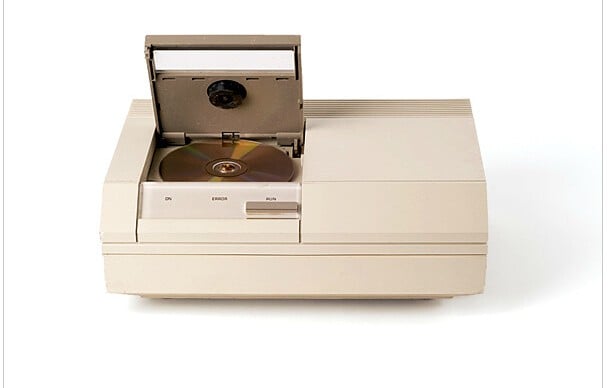
Microsoft Encarta and similar digital encyclopedias came on multiple CD-ROMs that required swapping discs to access different articles. The promise was that digital encyclopedias would be more convenient than physical books.
The reality was that finding information required navigating clunky interfaces and waiting for CD drives to spin up. The multimedia features—video clips, sound effects, interactive maps—were the main selling point.
But these features took up so much space that the encyclopedias needed multiple discs. Want to go from an article on one disc to a related article on another?
Eject, swap discs, wait for the drive, then navigate to the new article. A physical encyclopedia lets you flip pages instantly.
The search functions should have been better than book indexes, but they were poorly implemented. Searches returned too many results or missed obvious connections.
The interface was confusing enough that many users found physical encyclopedias easier to navigate despite the weight and storage requirements.
Fitness Trackers That Counted Steps Poorly

Before modern smartwatches, there were pedometers. These simple devices clipped to your belt and counted steps by detecting motion.
The problem was that they counted any motion as steps. Sitting and tapping your foot? The pedometer counted steps.
Riding in a car on a bumpy road? More steps. The data was essentially useless.
The devices also had no memory or connectivity. They displayed a step count that reset when you turned them off.
You had to manually record your steps if you wanted to track progress over time. Most people forgot to check the count, so the data was lost.
The motivation factor was minimal because the devices provided no context. Is 5,000 steps good? Should you aim for more?
The pedometer couldn’t tell you. It just counted and displayed a number that might or might not be accurate.
Modern fitness trackers solved these problems, but 1990s versions were barely functional.
When Innovation Means Nothing

Futuristic-looking gadgets filled store shelves back then, yet most failed to fit into real routines. Just because something was new did not mean it mattered.
Creations popped up simply because builders had the tools, not because people asked for them. Life didn’t get better – often it got more cluttered.
Storage limits sank early MP3 players. Processing power held voice tools back.
Crude screens made PDAs hard to use. These flaws didn’t stop launches – just piled up letdowns.
Bad timing bred wasted effort. A few odd devices flopped by fixing issues that did not exist.
Take a whiffable mouse, for instance – nobody needed it. Scanners meant to read magazine codes showed up with no purpose.
Tiny digital creatures dangled on keys, forgotten fast. What firms believed users desired missed reality entirely.
That pile of forgotten gizmos taught something quiet. When a tool makes life harder instead of easier, its purpose vanishes fast.
Picture a small television you carry around – weak signal, constant glitches – not fun on the go, just irritation in your backpack. Think about a gadget meant to replace notebooks but needs ten steps where one would do – slower, heavier, powered by disappointment more than electricity.
Back then, those machines showed just how much things have changed. Today’s phones do jobs that needed ten different tools in the nineties.
Yet each breakthrough didn’t always lead somewhere meaningful. Loads of odd inventions from that decade made clear: just because you can build it, doesn’t make it right.
More from Go2Tutors!

- The Romanov Crown Jewels and Their Tragic Fate
- 13 Historical Mysteries That Science Still Can’t Solve
- Famous Hoaxes That Fooled the World for Years
- 15 Child Stars with Tragic Adult Lives
- 16 Famous Jewelry Pieces in History
Like Go2Tutors’s content? Follow us on MSN.