Video Games With the Largest Maps
Open a map in most modern games and you’ll see a decent chunk of terrain to explore. Then there are the games that take that concept and stretch it until the numbers stop making sense.
These aren’t just big playable areas. These are worlds that take real-world hours to cross on foot, where fast travel stops being a convenience and starts being a necessity.
The Elder Scrolls II: Daggerfall

Daggerfall came out in 1996 with a map covering 62,394 square miles. That’s roughly the size of Florida.
The game generated most of this procedurally, filling the space with thousands of towns, dungeons, and wilderness areas. You could walk for hours in a straight line and still be nowhere near the edge.
Most of that space was empty terrain, but the sheer scale changed how you approached the game. Fast travel wasn’t optional.
It was the only practical way to get anywhere. The procedural generation meant many locations looked similar, but finding hidden dungeons or stumbling across remote villages gave the world a sense of mystery that denser games couldn’t match.
Minecraft’s Theoretical Infinity

Minecraft generates worlds that extend 60 million blocks in each direction from the spawn point. In practical terms, that creates a playable area of about 1.5 billion square miles.
The game keeps building terrain as you walk, so you could theoretically keep going until your computer runs out of memory or you get bored.
The catch is that past a certain point, the terrain generation starts breaking down. Physics gets weird.
Blocks don’t behave normally. But before you hit those boundaries, you have more space than you could explore in multiple lifetimes.
People have spent years building in Minecraft worlds and never come close to filling them.
No Man’s Sky and Its 18 Quintillion Planets

No Man’s Sky launched with a procedurally generated universe containing 18 quintillion planets. That’s 18 followed by 18 zeros.
Each planet has its own terrain, weather, flora, and fauna. If you spent one second on each planet, it would take you 585 billion years to see them all.
The game uses mathematical algorithms to generate everything on the fly, which means the entire universe exists as a seed value and some clever code. You can visit a planet, leave, come back years later, and find it exactly as you left it.
The scale is absurd, but it works because the game doesn’t try to hand-craft anything.
Fuel Takes Racing to Extremes

Fuel holds the Guinness World Record for largest playable area in a racing game at 5,560 square miles. The entire map represents a post-apocalyptic version of the northwestern United States, filled with deserts, forests, mountains, and abandoned towns.
Crossing the map from one corner to the opposite takes over two hours at high speed. The game doesn’t have traditional tracks.
Instead, it drops you into this massive world and lets you create your own routes. Getting lost is easy.
Finding your way back is harder. The emptiness works in the game’s favor, creating a sense of isolation that fits the setting.
Guild Wars Nightfall Expands the MMO Space

Guild Wars Nightfall and its expansions created a combined map of roughly 15,440 square miles when you account for all regions and instances. The game divided its world into separate zones rather than one continuous space, but added together, the explorable area was massive for its time.
Each zone felt hand-crafted rather than procedurally generated, which made the total size even more impressive. The developers filled the space with quests, enemies, and environmental storytelling.
You could spend hundreds of hours in the game and still find areas you’d never visited.
True Crime: Streets of LA Recreates a Real City

True Crime: Streets of LA mapped out 240 square miles of Los Angeles with remarkable accuracy for 2003. The game included actual street names, neighborhoods, and landmarks.
Driving from Santa Monica to downtown took real time and followed real routes.
The map wasn’t perfect. Lots of buildings were simplified or generic.
But the overall layout matched reality close enough that people who knew LA could navigate by memory. The size served the gameplay too, giving you room to chase suspects through traffic or lose pursuers in back alleys across a realistic urban sprawl.
Lord of the Rings Online Brings Middle-earth to Life

Lord of the Rings Online has expanded its map over years of updates to cover roughly 30,000 square miles of Middle-earth. The game recreates locations from the books with attention to detail that Tolkien fans appreciate.
You can walk from the Shire to Mordor, and the journey feels as long as it should.
The developers keep adding new regions with each expansion, gradually filling in more of Tolkien’s world. Some areas are dense with quests and content.
Others are mostly empty wilderness that exists to maintain the right sense of scale and distance between major locations.
Test Drive Unlimited 2 Maps Real Islands

Test Drive Unlimited 2 recreated Ibiza and Oahu at roughly 1:1.5 scale, giving players about 1,000 square miles of roads to drive. The game captured the feel of both islands, from Ibiza’s beaches and nightlife to Oahu’s volcanic landscapes and highways.
Racing across an entire island took commitment. The roads followed real geography, which meant lots of curves, elevation changes, and scenic routes.
The scale made finding hidden car wrecks and bonus challenges feel like actual exploration rather than just checking boxes on a map.
Just Cause 3 Gives You Room to Explode Things

Just Cause 3 set you loose on Medici, a fictional Mediterranean island nation covering 400 square miles. The entire map was explorable from the start, filled with military bases to destroy, towns to liberate, and mountains to wingsuit down.
The game’s movement mechanics made the size feel right. You could grapple, parachute, and wingsuit across the terrain fast enough that traveling never got tedious.
The density of things to blow up meant you rarely went more than a minute without finding something that needed a rocket launcher.
The Crew Spans the United States

The Crew compressed the entire United States into a drivable map of about 1,900 square miles. You could drive from New York to Los Angeles in roughly 45 minutes at highway speeds.
The game captured the feel of different regions—southern swamps, midwest plains, western deserts, mountain ranges—without trying to recreate everything accurately.
This scaled-down America worked better than a realistic one would have. You got the sense of a cross-country road trip without the boring parts.
Each region had enough personality to feel distinct, and the roads connecting them gave you time to enjoy the scenery between events.
Xenoblade Chronicles X Builds Alien Worlds

Xenoblade Chronicles X created the planet Mira with five massive continents totaling about 154 square miles. For a JRPG, that size was enormous.
The game filled the space with unique creatures, hidden treasures, and environmental puzzles that rewarded exploration.
The scale served the story’s themes about humanity colonizing a new world. You felt small in this alien landscape, which fit perfectly with the narrative.
Getting a flying mech later in the game changed how you experienced the map, opening up vertical exploration and making previously unreachable areas accessible.
Ghost Recon Breakpoint Offers Tactical Space
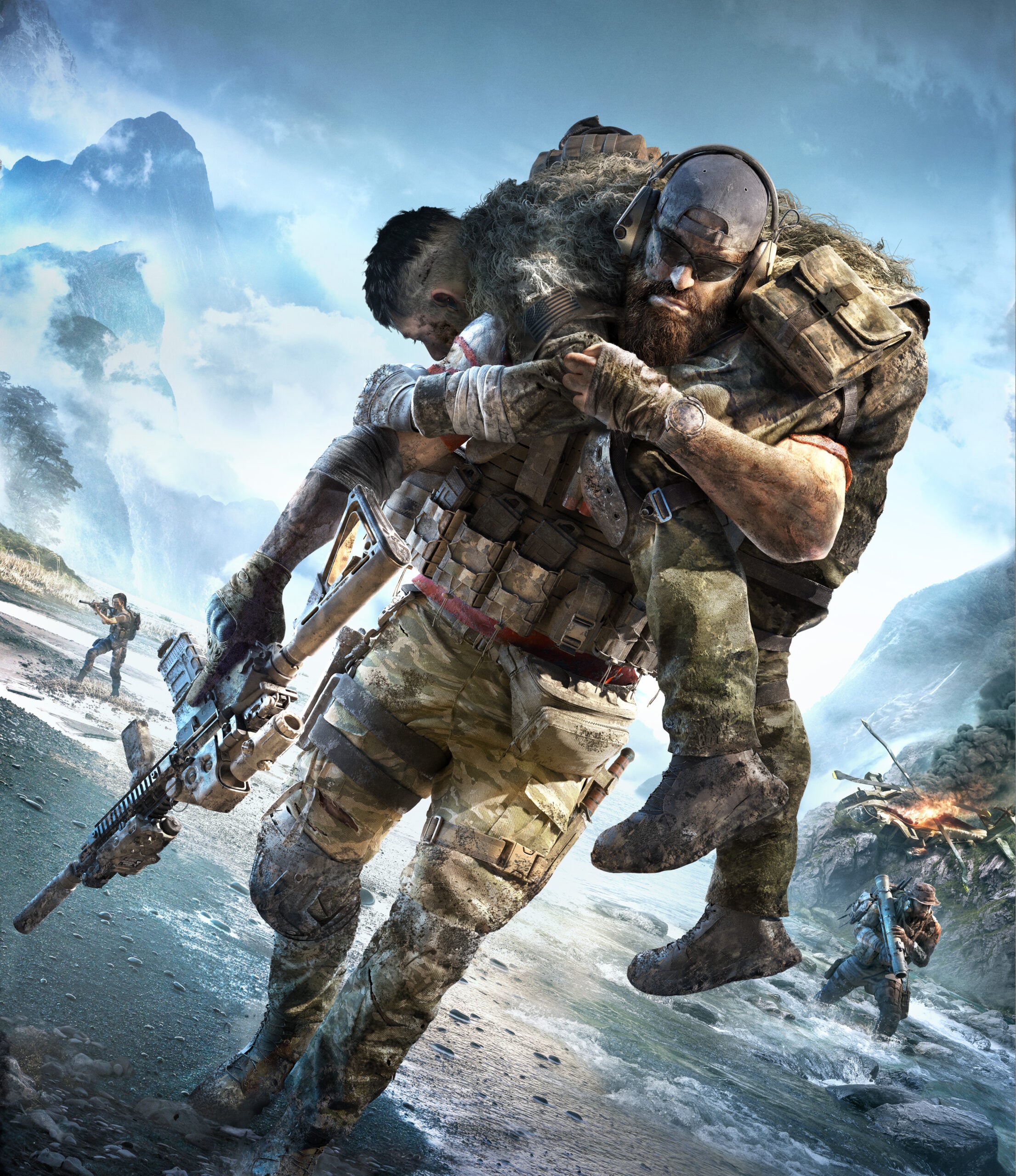
Ghost Recon Breakpoint set players loose on Auroa, a fictional archipelago covering roughly 780 square miles. The islands featured diverse biomes—snowy mountains, dense jungles, arid deserts, swamps—all packed into one location that didn’t quite make geographic sense but offered tactical variety.
The size gave you room to approach missions from multiple angles. You could spend an hour planning and executing a single base infiltration, using the terrain to stay hidden.
Fast travel existed, but sneaking through wilderness to reach your objective felt more satisfying.
Death Stranding Makes Empty Space Matter

Death Stranding built its post-apocalyptic America across roughly 230 square miles of rugged terrain. The game made traversal the main mechanic, so every mountain, river, and rocky slope mattered.
Walking from one location to another was the gameplay, not just the space between gameplay.
The emptiness was the point. You spent hours hauling cargo across hostile wilderness, planning routes, building infrastructure to make future trips easier.
The map felt larger than it actually was because crossing it took real effort and concentration. Getting from point A to point B was never automatic.
Why Size Stops Mattering After a While

Big game worlds often stumble on one core issue. Once past a threshold, extra size adds nothing useful.
Instead, it stretches out trips without purpose. Top-tier expansive maps offer incentives to move across them – or include ways to keep moving fun.
Weak examples? Just blank gaps separating key spots.
What made Daggerfall’s huge map feel right was how you could zip anywhere, anytime. Because traveling took no effort, the size never dragged.
Minecraft stretches endlessly, yet it holds meaning since each spot invites creation or collection. Every patch of land matters when digging or crafting pulls you in.
In No Man’s Sky, trillions upon trillions of worlds exist simply because wandering through them is the point. The thrill lies in stumbling on something new, not checking off a list.
Other games falter by spreading thin across massive areas, stuffing them with copy-paste tasks. They stretch minutes into hours while leaving players empty.
A space feels right only if walking across it means something. When scale shapes how you experience each step, size stops being empty stats on a page.
Without purpose, big numbers are noise. Distance should pull you forward, not stretch boredom.
More from Go2Tutors!

- The Romanov Crown Jewels and Their Tragic Fate
- 13 Historical Mysteries That Science Still Can’t Solve
- Famous Hoaxes That Fooled the World for Years
- 15 Child Stars with Tragic Adult Lives
- 16 Famous Jewelry Pieces in History
Like Go2Tutors’s content? Follow us on MSN.



