16 Tallest Skyscrapers You Can Tour in the US
Standing at street level, craning your neck up at glass and steel that disappears into the clouds, there’s something humbling about America’s tallest buildings. These aren’t just architectural achievements—they’re vertical cities with their own weather patterns, communities, and stories. The best part? Many of these giants welcome visitors, offering observation decks, guided tours, and views that transform your understanding of scale and distance.
One World Trade Center

The western hemisphere’s tallest building doesn’t just reach 1,776 feet by coincidence. That number carries weight beyond its physical measurement, and standing on the observation deck makes the symbolism feel both intentional and earned.
The elevator ride takes 47 seconds to cover 102 floors. The views stretch across five states on clear days, but it’s the view straight down that stops most people cold—the memorial plaza far below, precise and geometric, where absence becomes presence.
Central Park Tower
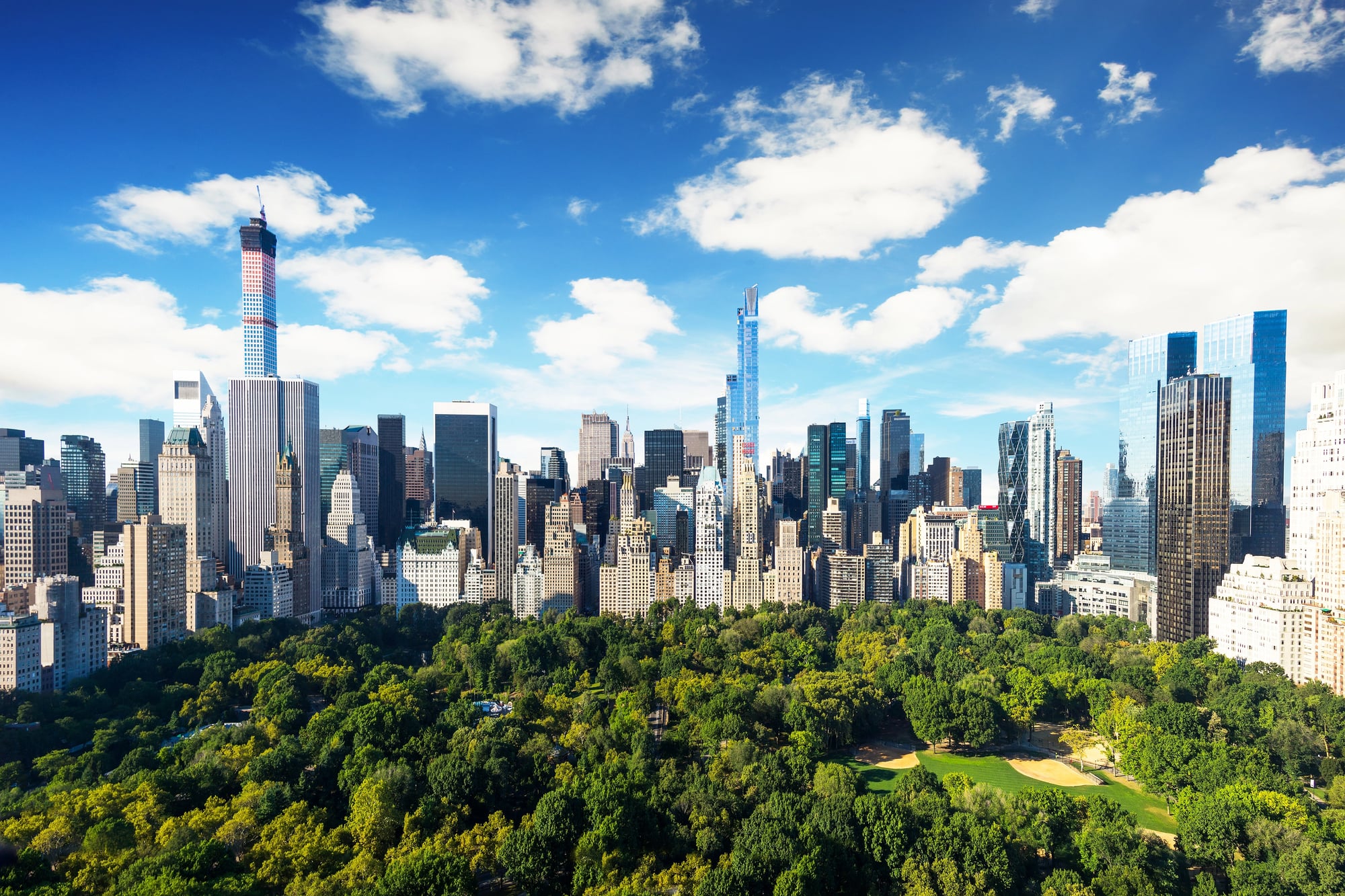
Money built this tower, and money shows. At 1,550 feet, it’s the world’s tallest residential building, though calling it residential feels like calling a Bugatti transportation. The observation experience here feels different—more exclusive, less democratic than its downtown counterpart.
The views north over Central Park reveal the city’s one great lung of green, a rectangle of relief carved deliberately into Manhattan’s relentless grid. From this height, the park looks smaller than expected, which says something about how big everything else has become.
Willis Tower
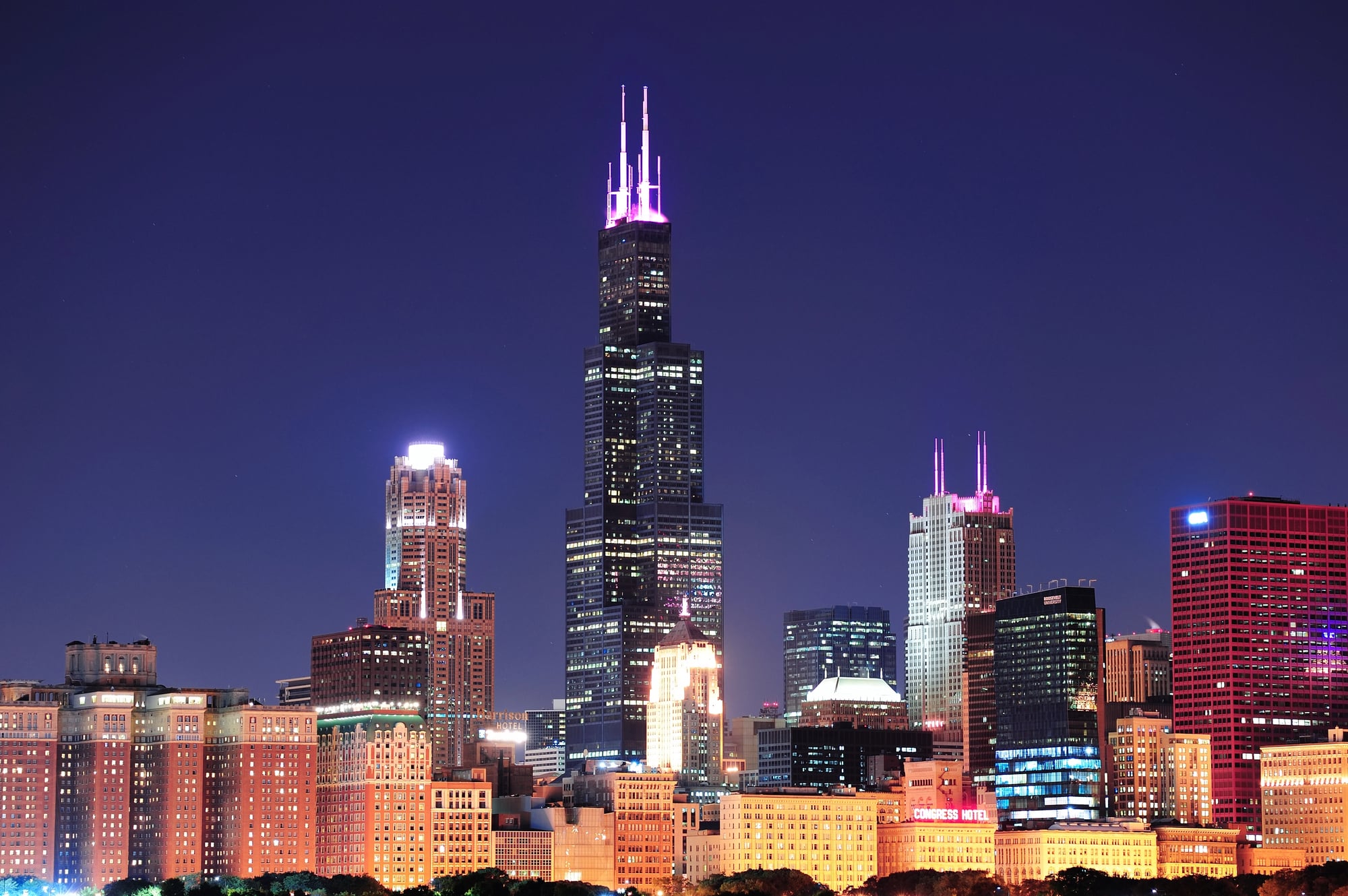
Chicago’s former Sears Tower doesn’t apologize for anything, least of all its 1,450-foot height that held the world record for 25 years (and the mood here suggests it still should). The Skydeck’s glass boxes extend four feet beyond the building’s frame, suspending visitors over Wacker Drive like a trust exercise with physics.
The city spreads below in all directions—not hemmed in by water like Manhattan, but rolling endlessly toward horizons that seem theoretical rather than real. And yet there’s something about Chicago’s grid system that makes sense from up here, the way the streets run straight and true toward vanishing points that actually vanish. So the city teaches you geometry without meaning to, the way powerful things often teach lessons they never intended to give.
Lake Michigan stretches east like a freshwater sea (because that’s essentially what it is), and on certain days the far shore disappears entirely, leaving you suspended between earth and water and sky in a way that feels more like flying than standing still.
One Vanderbilt
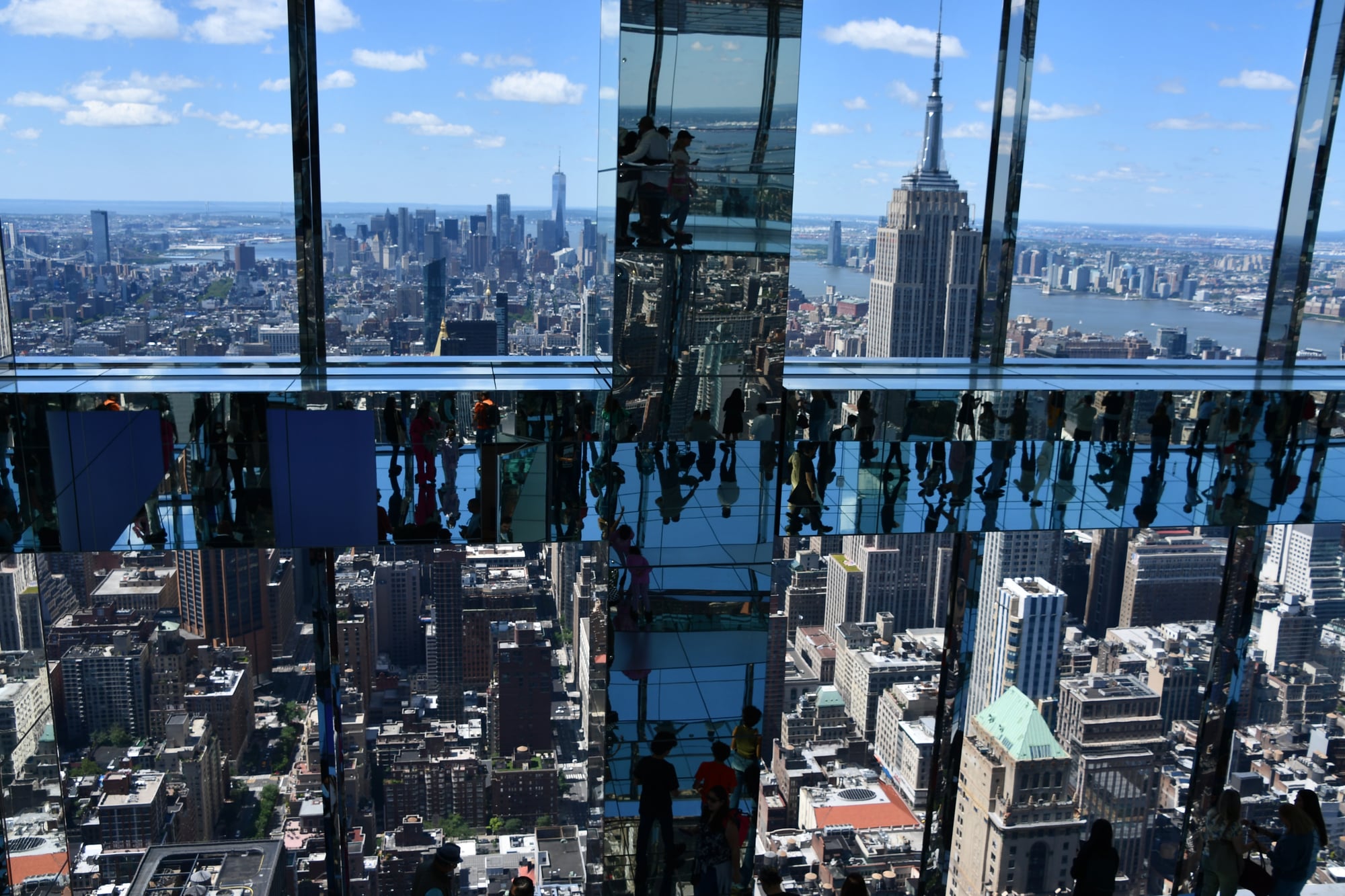
This newcomer treats height like a performance art piece rather than simple elevation. At 1,401 feet, it’s tall enough to matter, but the real achievement happens inside—mirrors and light installations that make the experience feel less like observation and more like participation in something larger.
The building sits directly above Grand Central, so the sound of trains occasionally drifts up through the structure. There’s something oddly comforting about hearing that distant rumble while suspended so far above street level—a reminder that all this height still connects to the ground.
432 Park Avenue
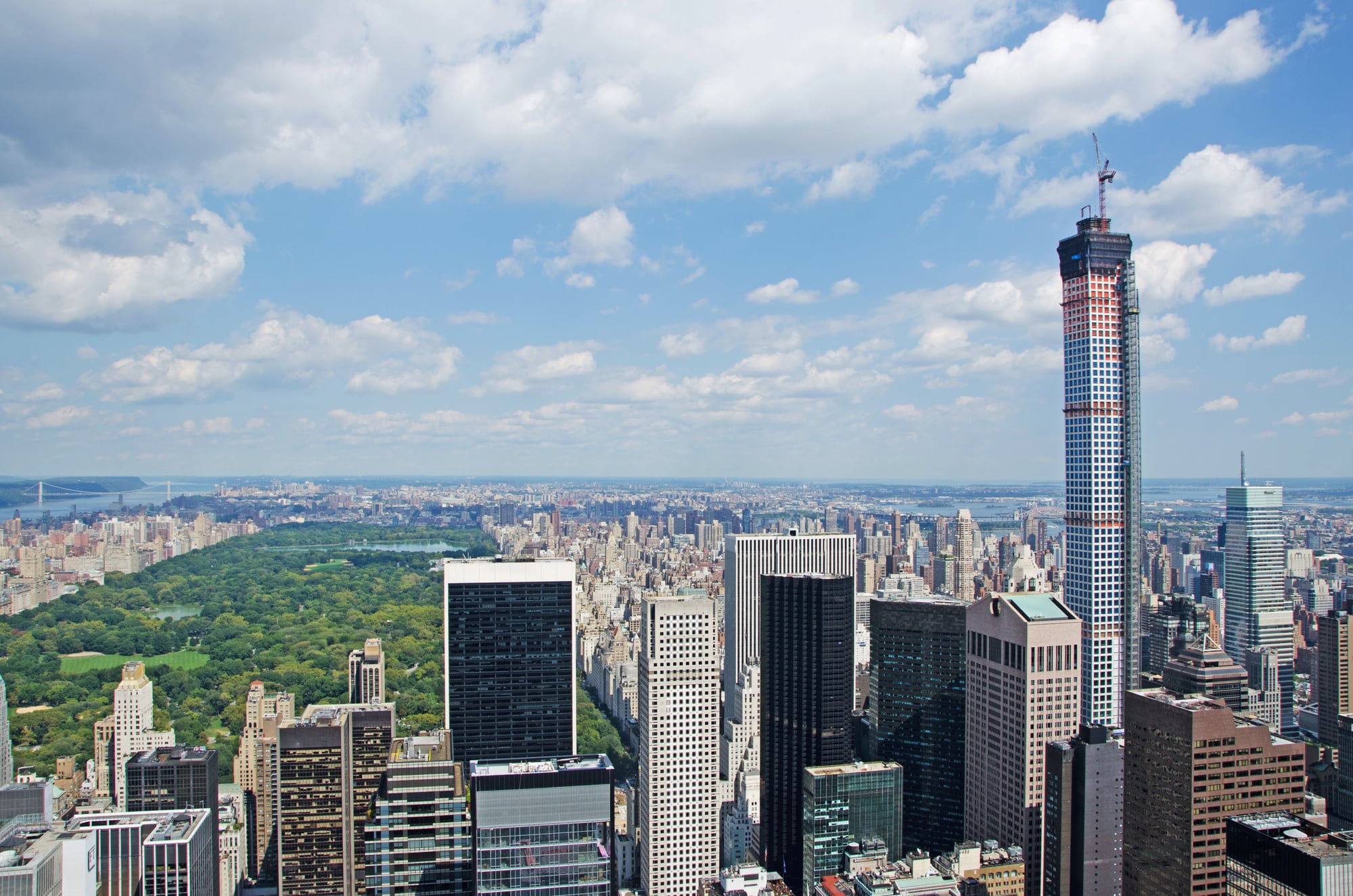
A grid of windows stretched toward the sky like graph paper made architectural. At 1,396 feet, it’s impossible to miss and impossible to love, which might be exactly the point.
The building divides people instantly—some see elegant minimalism, others see a missed opportunity wrapped in expensive materials. From the observation areas, the view south toward the older generation of skyscrapers creates an interesting conversation between eras, between different ideas of what reaching skyward should look like.
30 Hudson Yards

The observation deck here calls itself Edge, which feels both accurate and understated. The triangular platform extends 80 feet from the building at the 100th floor, creating what amounts to the highest outdoor sky deck in the western hemisphere.
Standing on that platform, with glass barriers the only thing between you and a 1,100-foot drop, the city spreads below like a detailed model of itself. The Hudson River curves around Manhattan’s western edge, and the view encompasses not just the city but the idea of the city—the way human ambition reshapes geography.
Empire State Building
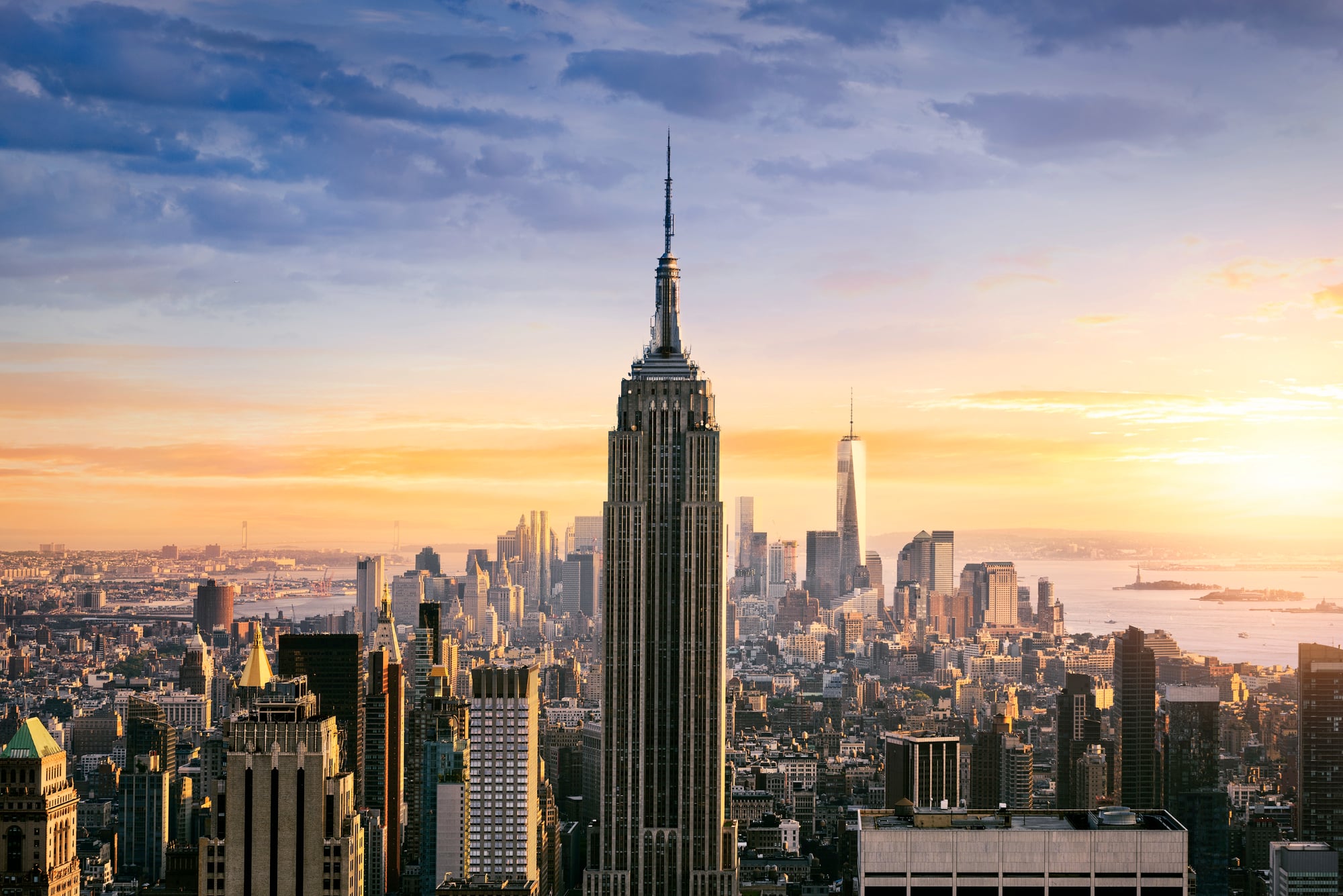
The 102nd floor observatory sits at 1,250 feet, but this building carries weight that can’t be measured in elevation alone. Built in 410 days during the Depression, it remains the most famous skyscraper in America despite being surpassed in height decades ago.
The art deco details that seemed like flourishes from street level reveal themselves as integral to the building’s character up close (and character matters more than most architects admit). Night visits offer a different experience entirely—the city transforms into a circuit board of lights, with traffic flowing along predetermined paths like electricity through carefully designed channels. The building’s own lighting system changes to mark holidays, events, and causes, turning the structure into a 1,250-foot tall mood ring for the city’s collective consciousness.
Bank of America Tower
At 1,200 feet, this building takes sustainability seriously in ways that most supertall structures ignore. The first skyscraper to achieve LEED Platinum certification, it generates some of its own power and captures rainwater for cooling systems.
The building feels different because of these choices—quieter somehow, more considered in its relationship to the environment around it. The observation areas offer views that include other green buildings throughout the city, creating an unintentional map of where architecture and environmental responsibility intersect.
3 World Trade Center
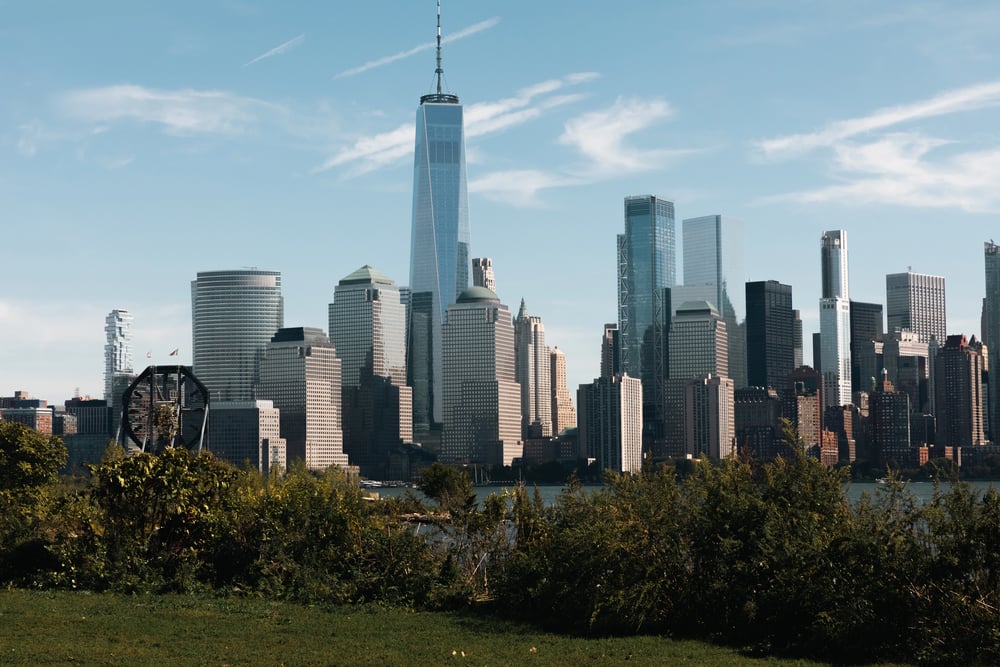
The newest addition to the rebuilt World Trade Center site, this 1,079-foot tower completes the architectural conversation that began with tragedy and continues with determination. The building’s angular design creates interesting shadows throughout the day, casting geometric patterns on the streets below.
From the upper floors, the entire memorial site becomes visible as a planned whole rather than individual elements. The museum, the memorial pools, the transportation hub, and the surrounding towers form a composition that speaks to both memory and forward momentum.
JPMorgan Chase Tower (Houston)
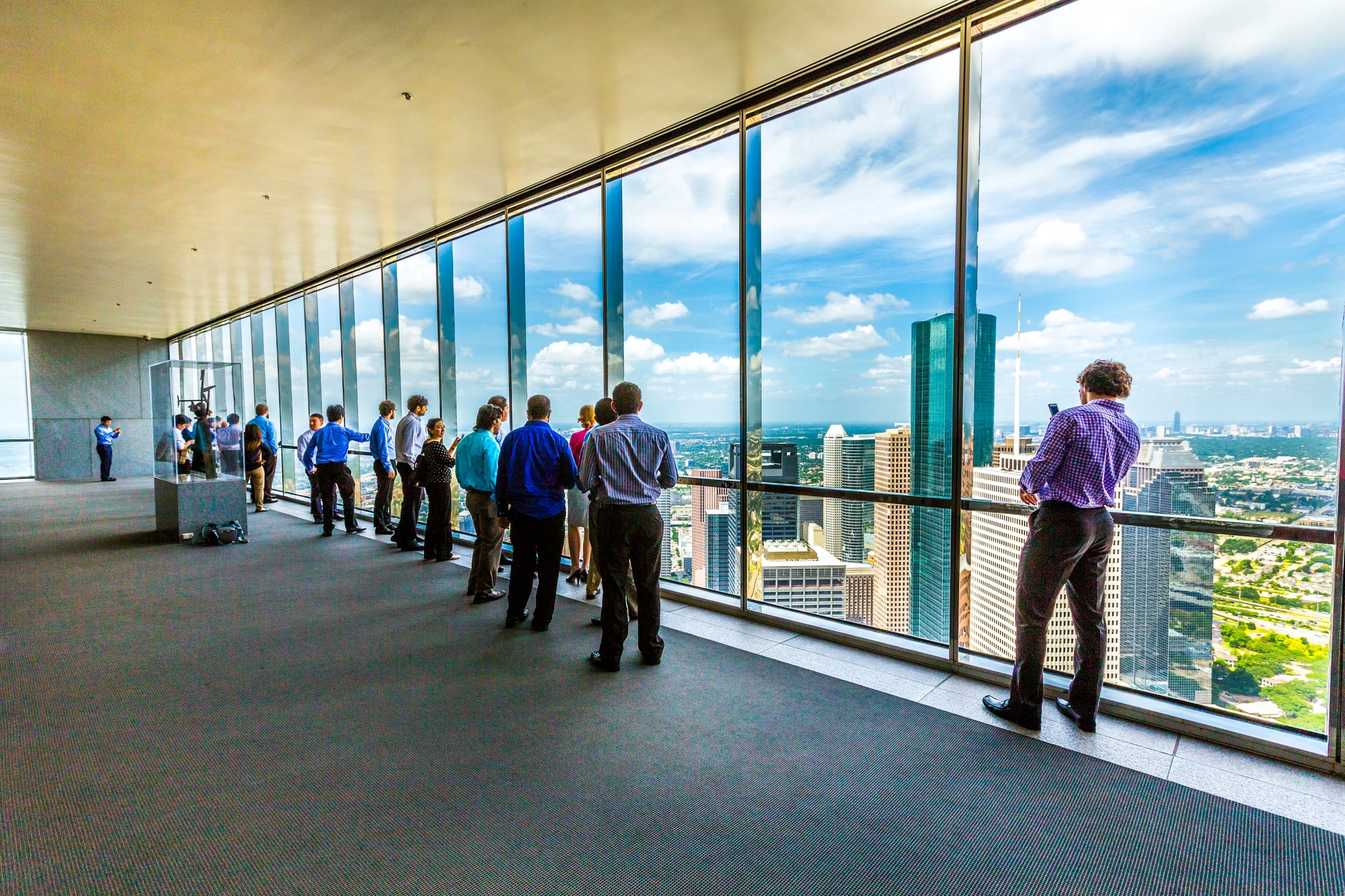
Houston’s tallest building stands at 1,002 feet, proving that height ambition extends well beyond the coasts. The observation deck offers views across a city that sprawls in every direction without the geographic constraints that force other cities upward.
The building’s granite and glass exterior reflects the Texas sun in ways that create constantly changing patterns of light and shadow. From the top floors, Houston’s famous lack of zoning becomes visible as a feature rather than a flaw—the city grows organically, following economic logic rather than planning restrictions.
Columbia Center
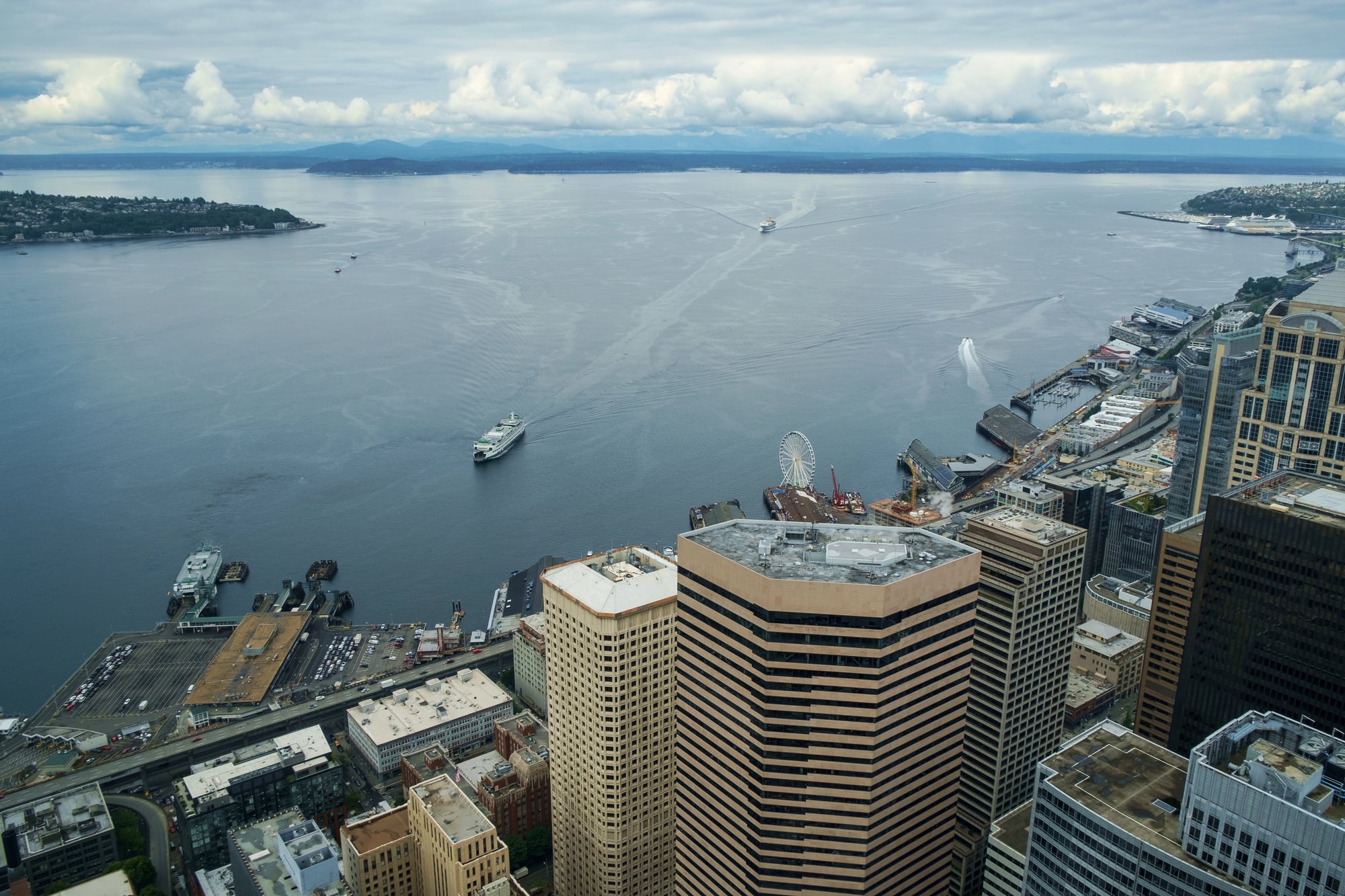
Seattle’s tallest building reaches 967 feet into air that’s often thick with clouds and mist, creating observation experiences that change dramatically based on weather conditions. On clear days, Mount Rainier dominates the southern horizon like a snow-covered monument to geological time.
The building’s design reflects Seattle’s relationship with both technology and nature—clean lines and modern materials, but positioned to frame views of mountains, water, and forests. Elliott Bay stretches west toward the Olympic Mountains, creating a composition of urban achievement set against wilderness that remains genuinely wild.
JPMorgan Chase Tower (Dallas)
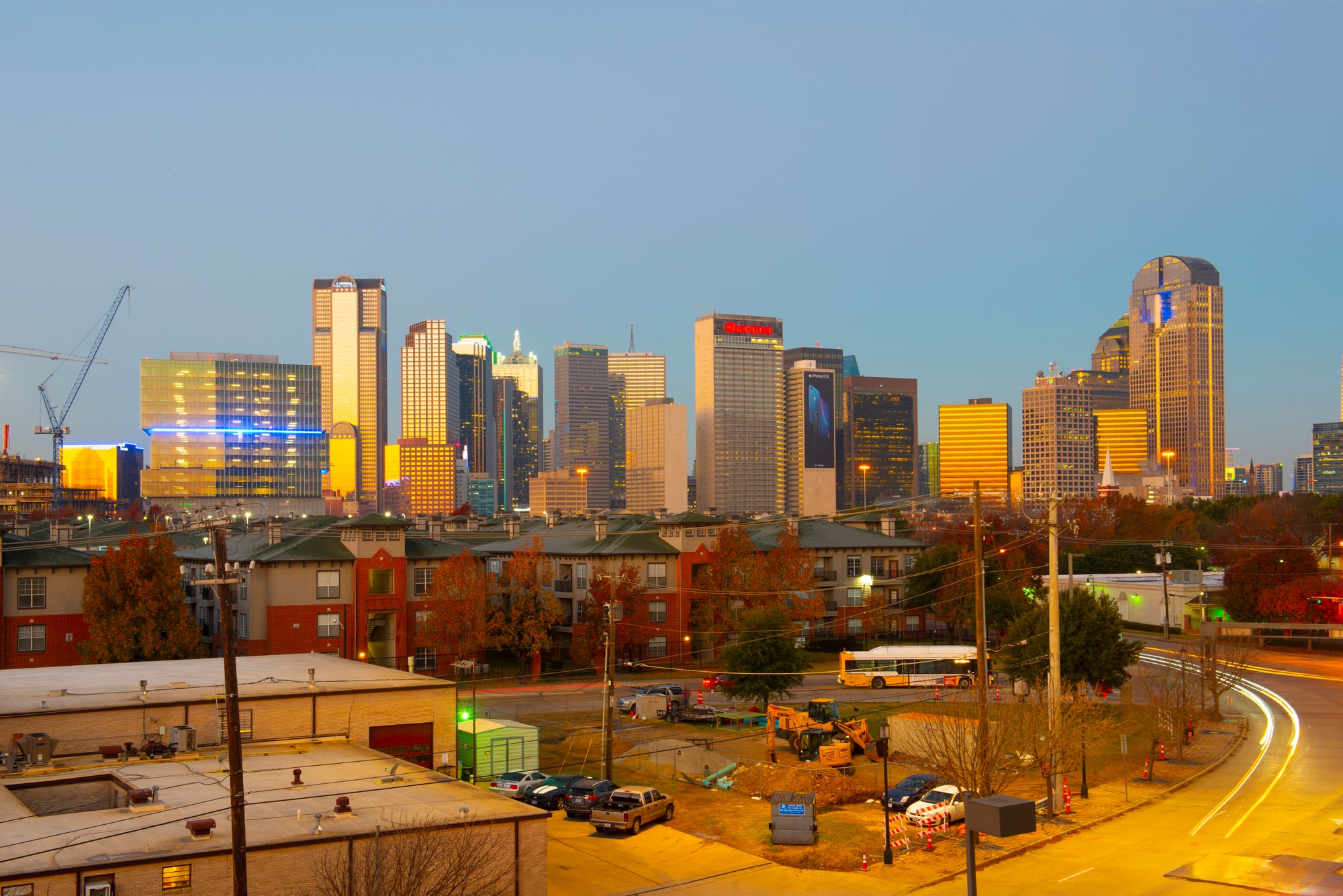
Dallas pushes its tallest building to 921 feet, creating a focal point for a skyline that spreads across the prairie like a metallic garden. The views from the top encompass not just the city but the idea of Texas scale—everything extends farther than seems reasonable or necessary.
The building’s reflective surface catches and redirects sunlight throughout the day, creating a beacon visible from miles away. From the observation areas, the city’s highway system becomes visible as an intricate web connecting distant suburbs to the urban core, revealing the infrastructure that makes sprawling Sun Belt cities possible.
US Bank Tower

Los Angeles reaches 1,018 feet with this cylindrical tower that has survived earthquakes, economic downturns, and countless movie destructions (Hollywood loves destroying this building in particular, which says something about its iconic status). The views encompass a city that refuses to be contained by traditional urban logic.
From this height, LA’s famous sprawl reveals its own patterns—the way neighborhoods cluster around commercial strips, how mountains and ocean create natural boundaries, and why the freeway system curves and branches like a river delta designed for cars instead of water. The building sways slightly in strong winds, a reminder that all tall structures exist in constant negotiation with natural forces.
Salesforce Tower
San Francisco’s newest giant stands 1,070 feet tall and changes the city’s skyline in ways that locals are still processing. The LED art installation at the top creates a beacon visible throughout the Bay Area, broadcasting abstract patterns that respond to everything from weather conditions to social media activity.
The views from the observation areas include the entire San Francisco Bay, from the Golden Gate Bridge to the Bay Bridge, revealing the city as part of a larger geographic system rather than an isolated urban island. Fog often sits at middle elevations, creating the surreal experience of looking down on clouds while the city peaks emerge like islands in a white sea.
Key Tower
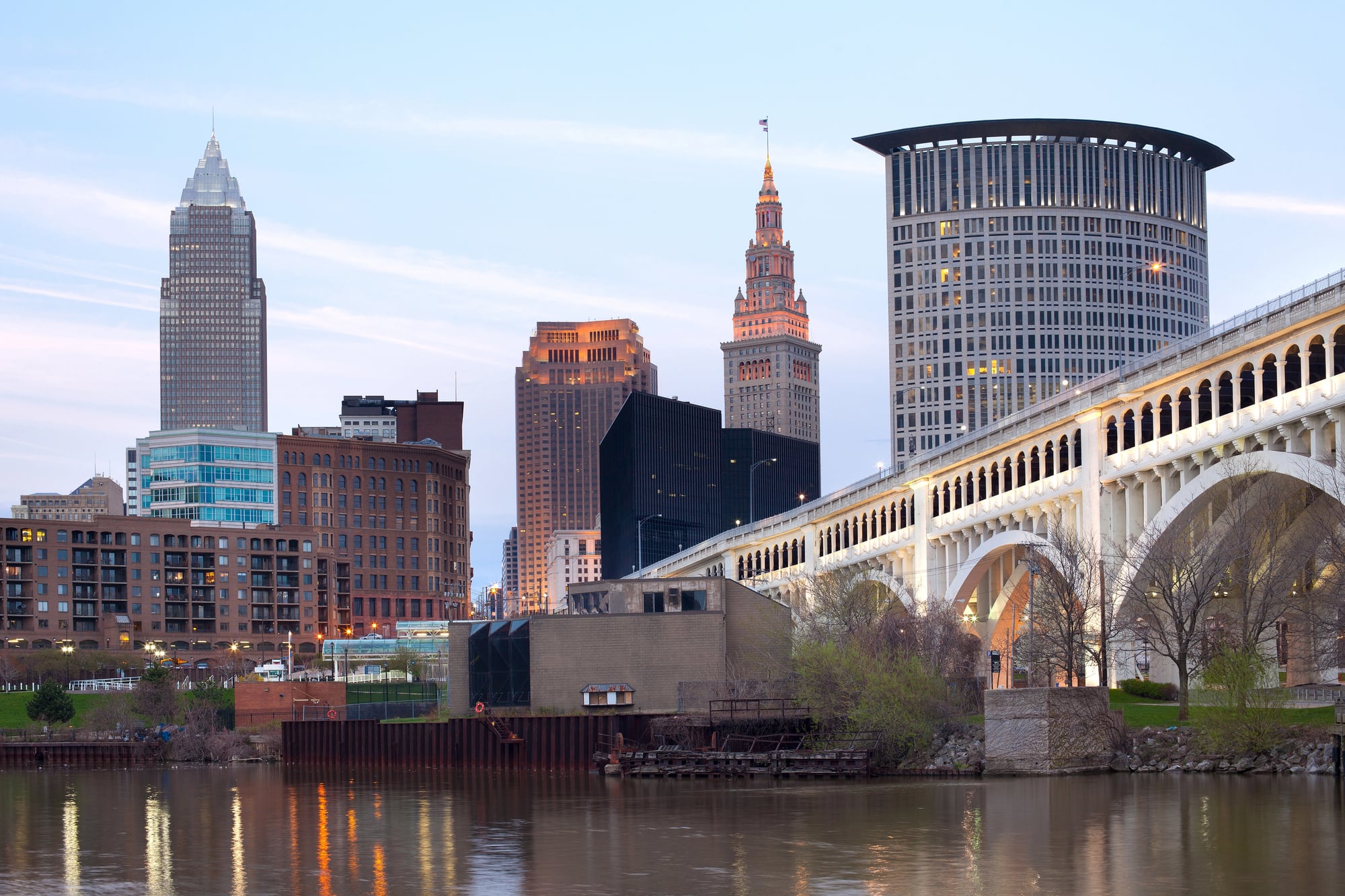
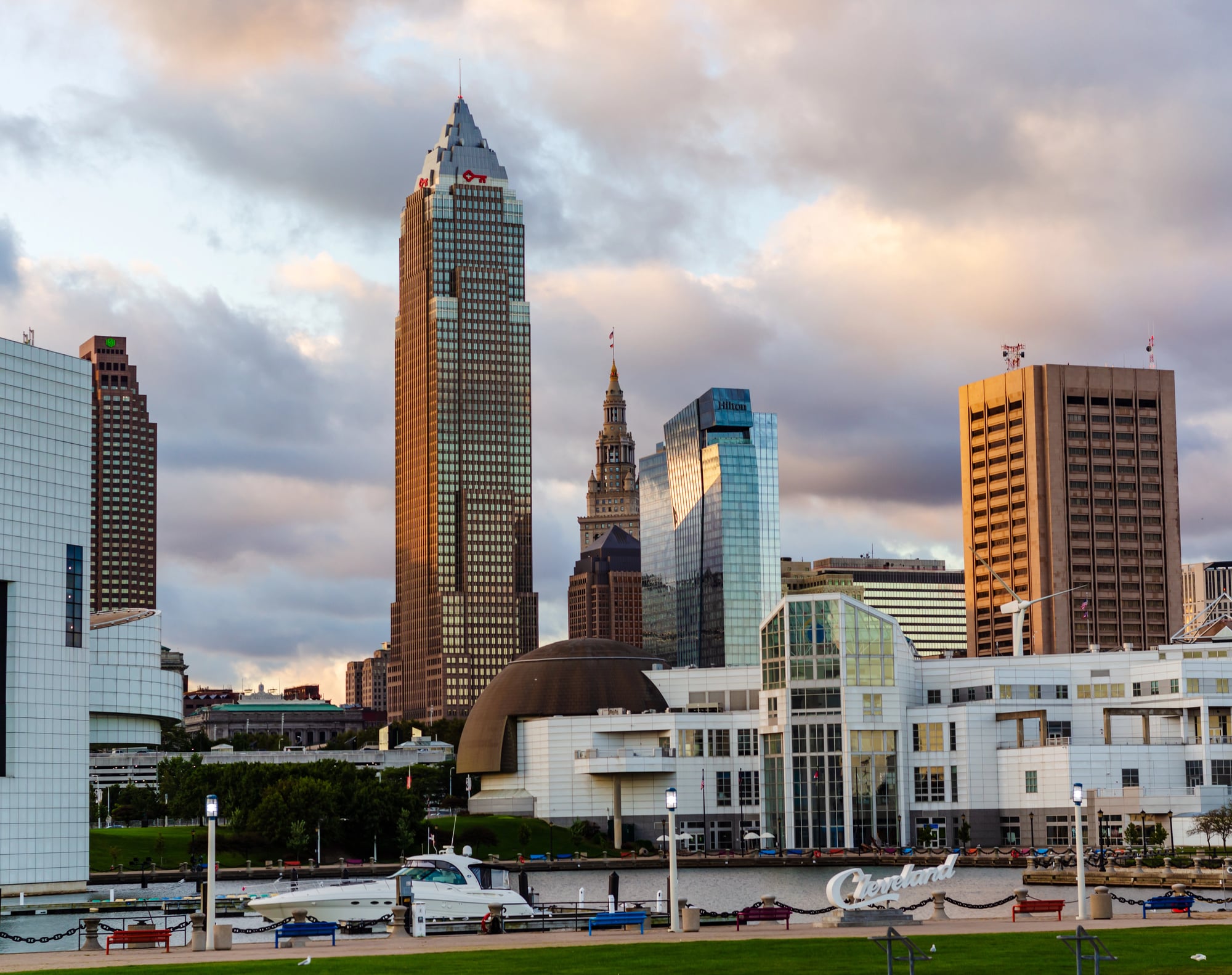
Cleveland’s tallest reaches 947 feet above Lake Erie, offering views that include both urban decay and urban renewal in the same frame. The building serves as a testament to Midwestern persistence—built during the 1990s when many cities were writing Cleveland off entirely.
From the upper floors, Lake Erie stretches north toward Canada like an inland sea, and the city’s industrial heritage becomes visible in the form of steel mills, shipping channels, and rail yards that still connect this region to global commerce. The building’s crown lights up at night, serving as a lighthouse for a city that refuses to disappear.
Renaissance Center
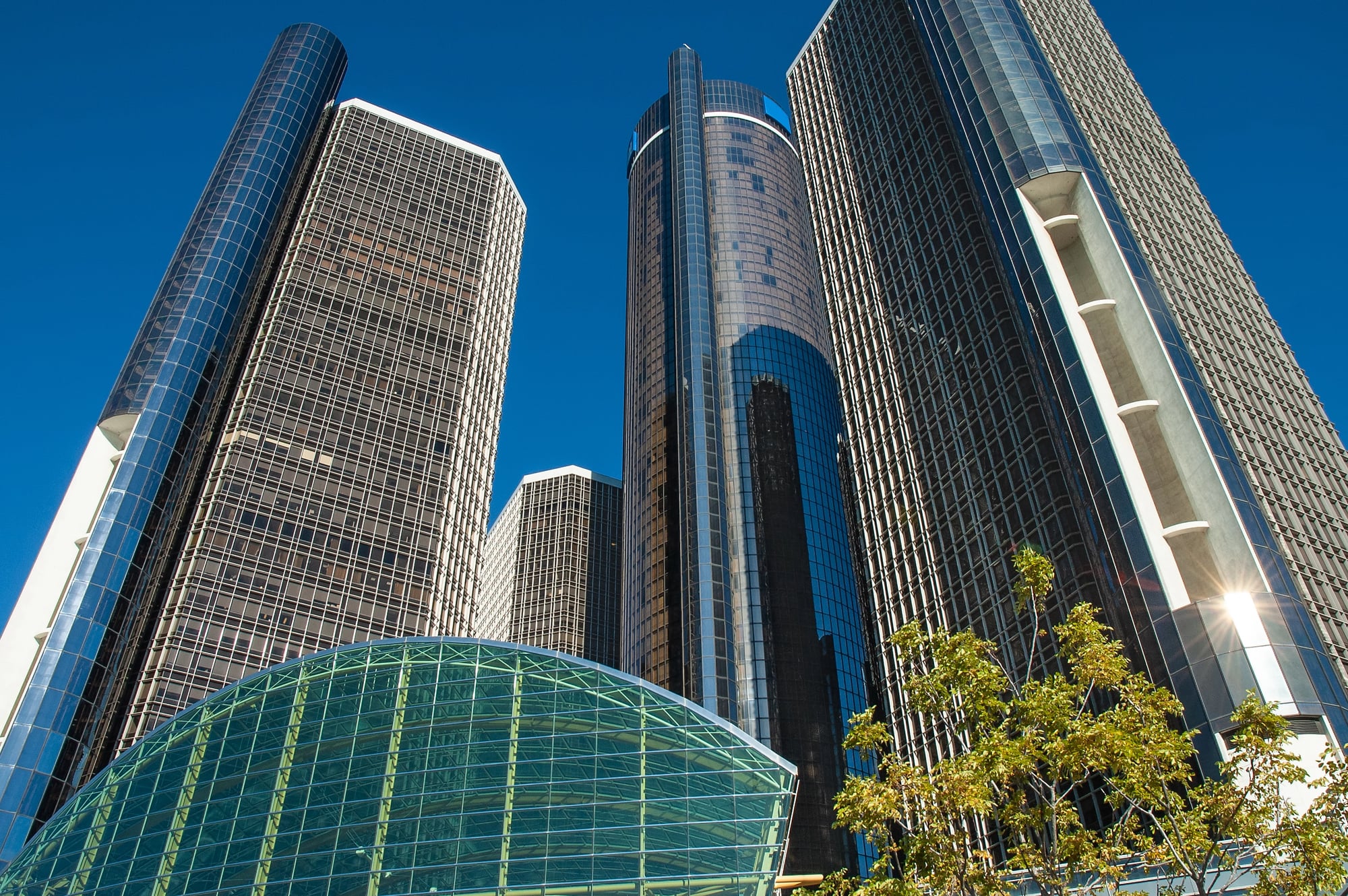
Detroit’s distinctive cluster of cylindrical towers reaches 727 feet, creating a skyline element unlike anything else in America. The complex includes hotels, offices, and retail space, making it a vertical city within a city that has seen both devastating decline and tentative recovery.
The views from the observation areas encompass the Detroit River and the Canadian city of Windsor directly across, creating one of the few places in America where you look south to see Canada. The river traffic includes massive Great Lakes freighters carrying raw materials to and from the industrial heartland, a reminder that some forms of commerce operate on scales and timelines that make daily life seem temporary.
Above It All
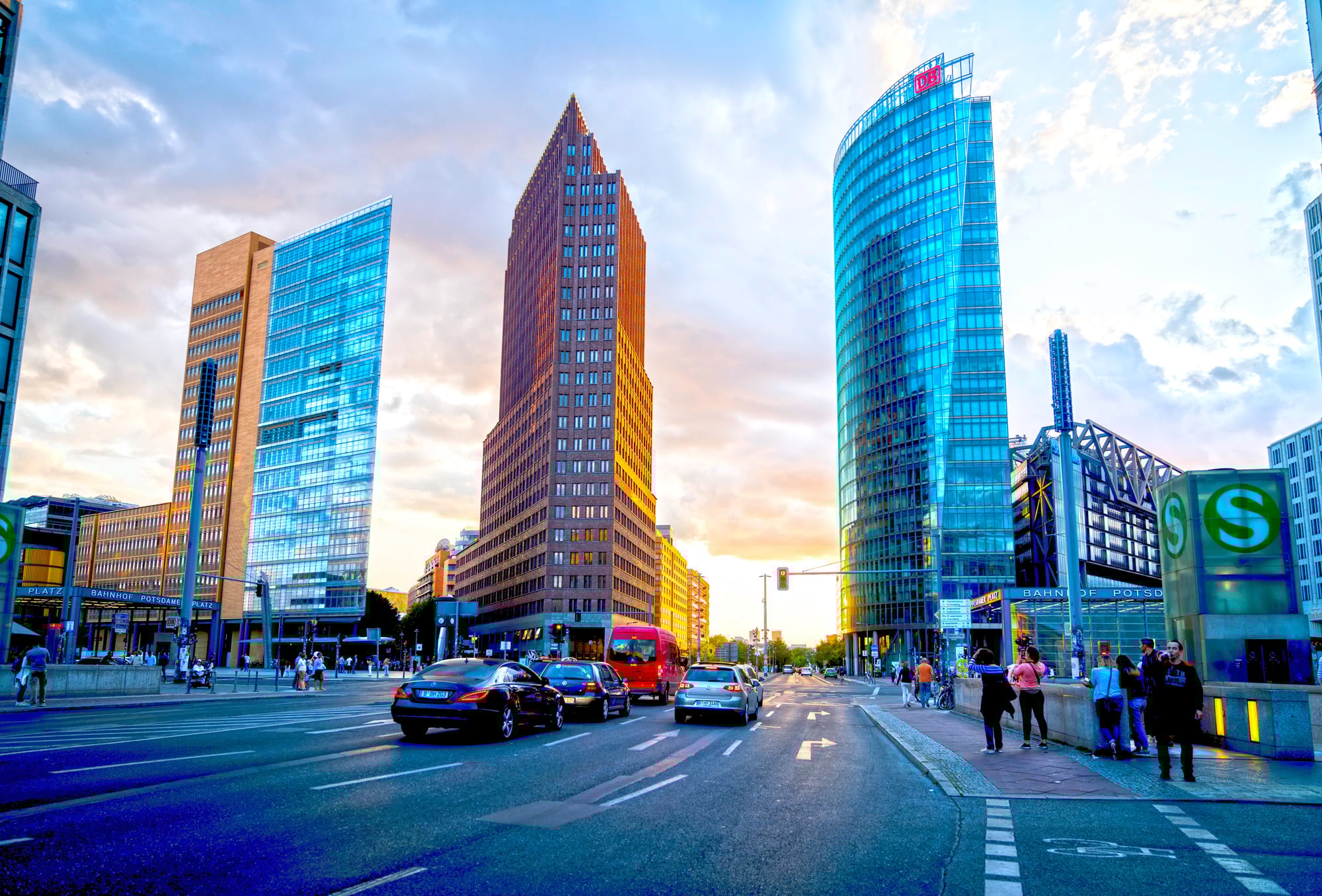
Height changes perspective in ways that persist long after the elevator ride back down. These towers offer more than views—they provide a temporary shift in scale that makes both the city and your place in it feel different. The experience of standing 1,000 feet above familiar streets creates a kind of visual vertigo that has nothing to do with fear of falling and everything to do with suddenly understanding how small and large things can be simultaneously.
More from Go2Tutors!

- The Romanov Crown Jewels and Their Tragic Fate
- 13 Historical Mysteries That Science Still Can’t Solve
- Famous Hoaxes That Fooled the World for Years
- 15 Child Stars with Tragic Adult Lives
- 16 Famous Jewelry Pieces in History
Like Go2Tutors’s content? Follow us on MSN.