Wealthy Dynasties Destroyed by Scandal
Money can build empires that span generations, but it takes only one scandal to bring them crashing down.
Throughout history, some of the world’s wealthiest families have watched their fortunes, reputations, and legacies evaporate in the harsh glare of public disgrace.
These aren’t just stories of financial losses—they’re cautionary tales about how privilege, greed, and deception can unravel even the most carefully constructed dynasties.
Here’s a closer look at the families whose names once commanded respect but now serve as warnings about how quickly wealth can turn to ruin.
The Maxwells

Robert Maxwell built a media empire that included Britain’s Daily Mirror and the New York Daily News, escaping Nazi-occupied Czechoslovakia to become one of the most powerful publishers in the world.
He lived lavishly, flying by helicopter from his Oxford estate and sailing on his luxury yacht, the Lady Ghislaine, named after his youngest daughter.
When Maxwell’s body was discovered floating near his yacht off the Canary Islands in November 1991, the mystery of his death was quickly overshadowed by an even bigger revelation.
Investigators uncovered that he had illegally siphoned more than £400 million (around $800 million) from his companies’ employee pension funds to prop up his failing businesses.
The scandal shocked the UK and left 32,000 people with devastated retirement savings.
Two of Maxwell’s sons, Ian and Kevin, who worked closely with their father, were arrested and charged with fraud related to the pension scandal, though they were acquitted after a lengthy trial.
Kevin Maxwell was declared bankrupt by a London court for a record £406 million and was forced to sell his upscale Chelsea home.
The family had to leave their grand estate, and the Maxwell name became synonymous with corporate theft.
Decades later, the family returned to infamy when Ghislaine Maxwell was convicted in 2021 of recruiting and grooming underage girls for financier Jeffrey Epstein.
The daughter who once enjoyed the privileges of extreme wealth now serves a prison sentence, cementing the Maxwell family’s place in history as a dynasty destroyed by scandal upon scandal.
The Madoffs
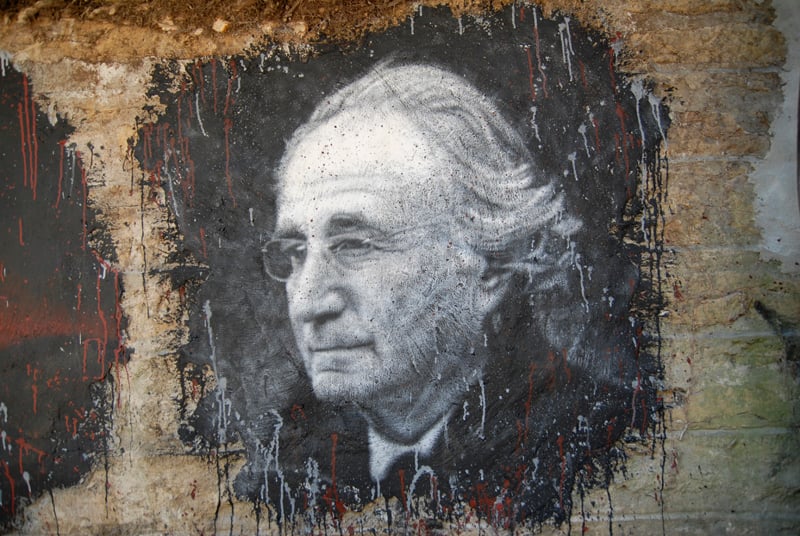
Bernard Madoff ran what appeared to be an exclusive, wildly successful investment firm that attracted wealthy individuals, charities, and institutions seeking steady returns.
For decades, investors believed they had entered the inner circle of a money-making genius, and some were wary of removing their funds in case they couldn’t get back in.
In December 2008, when the financial crisis forced panicked investors to withdraw hundreds of millions of dollars, the scheme collapsed—Madoff had been running a massive Ponzi scheme, and the money simply didn’t exist.
The fraud totaled nearly $65 billion in fabricated gains, with actual direct losses to investors reaching $18 billion.
The aftermath destroyed not just Madoff’s victims but his own family.
Madoff was sentenced to 150 years in prison, where he died in 2021.
His son Mark, who had turned his father in along with his brother Andrew, hanged himself in his Manhattan apartment on the second anniversary of his father’s arrest.
Mark left behind a wife and young children, having been pursued by lawsuits that even targeted his children’s trust funds.
Andrew Madoff died of cancer in 2014, and both brothers died without ever paying back the money investigators claimed they had squandered.
Their estates were eventually forced to surrender more than $23 million in assets, leaving Mark’s family with just $1.75 million and Andrew’s with $2 million.
The Madoff name, once associated with Wall Street success, became shorthand for devastating financial fraud.
The Stanfords

Allen Stanford styled himself as an international man of mystery, holding dual citizenship in Antigua and the United States and even receiving a knighthood from the Caribbean nation, after which he insisted on being called ‘Sir’ Allen.
He built his empire around Stanford International Bank, which he established in the 1980s and moved to Antigua, selling certificates of deposit that offered unusually high interest rates.
In February 2009, just two months after the Madoff scandal broke, federal agents raided Stanford’s Houston headquarters and shut down his worldwide operations, charging him with orchestrating a $7 billion to $8 billion Ponzi scheme.
The bank claimed to invest in conservative, highly liquid securities, but Stanford had actually misappropriated the money to finance his personal businesses and lavish lifestyle.
Stanford was convicted in 2012 on 13 counts including conspiracy, wire fraud, and mail fraud, and was sentenced to 110 years in federal prison.
The company was bound by a web of personal and family ties—Stanford’s chief financial officer was his college roommate, and many top officials were related to each other.
When the fraud collapsed, it took down not just Stanford but the entire network of family and associates who had helped build his empire.
Unlike Madoff victims, who eventually recovered a significant portion of their losses, Stanford’s 28,000 investors—many of them retirees who had been promised safe returns—recovered practically nothing.
The Stanford dynasty, built on promises of exclusive access and Caribbean mystique, vanished almost overnight.
The DuPonts
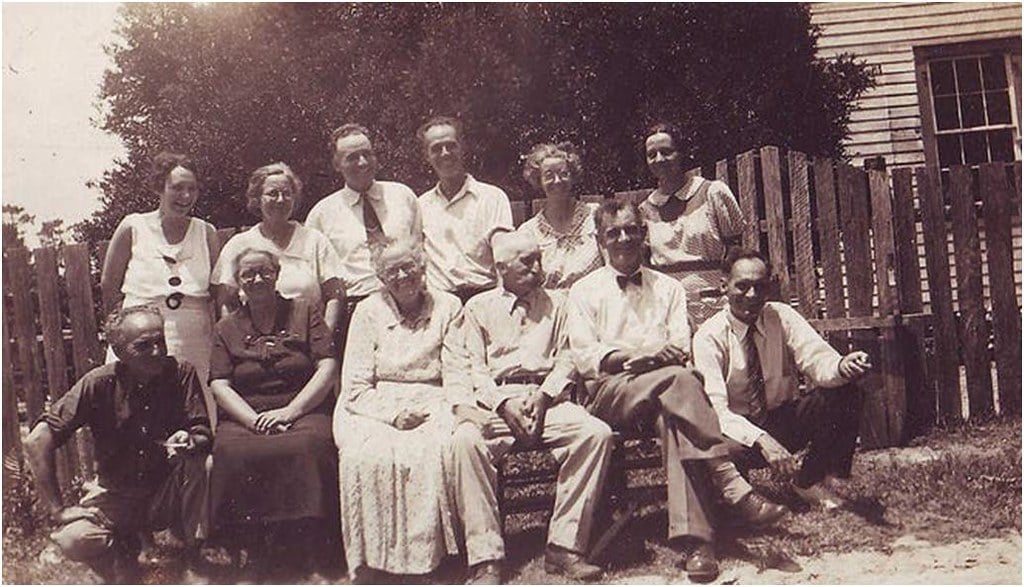
The DuPont family, one of America’s oldest and most influential industrial dynasties, has seen its reputation repeatedly tarnished by scandal.
While the family fortune remained largely intact, individual members brought shame that contradicted the family’s image of refinement and social responsibility.
In 2009, heir Robert H. Richards IV was convicted of assaulting his young daughter but received only probation despite the severity of his crime.
The lenient sentence sparked public outrage and accusations that his wealth and connections had bought him unwarranted leniency from the justice system.
The case became a symbol of how the privileged can sometimes escape consequences that ordinary citizens would face.
These incidents revealed a darker side to one of America’s most storied families, proving that even centuries-old fortunes can’t protect a family name from the damage caused by individual actions.
The Vanderbilts

Cornelius ‘Commodore’ Vanderbilt borrowed $100 from his mother in 1810 and built it into a steamship and railway empire worth $100 million by the end of his life, making the Vanderbilts the wealthiest family in America.
But over subsequent generations, the family spent wildly on expensive luxuries including classical art, sprawling mansions, and heavy spending on indulgences.
By the 1970s, the family held a reunion with 120 members in attendance, and not a single one held the rank of millionaire.
The Vanderbilt story isn’t one of fraud or criminal scandal, but rather of dynastic decline through excess.
Today, the family’s former wealth lives on primarily through its contributions to American institutions and Vanderbilt University in Nashville.
The fortune that once dominated American industry evaporated within a few generations, proof that wealth requires stewardship, not just inheritance.
Why It Still Matters

These fallen dynasties share common threads that make them more than just historical footnotes.
Each family believed their wealth insulated them from consequences, whether through fraud, excess, or the assumption that money could solve any problem.
The Maxwells thought they were untouchable across generations.
The Madoffs and Stanfords believed their schemes would last forever.
The Vanderbilts assumed their fortune was infinite.
But scandal has a way of cutting through privilege with surgical precision.
The higher the pedestal, the more spectacular the fall—and the more people watch.
These families learned that reputation, once destroyed, can’t be rebuilt with money. The Maxwell name now evokes pension theft and criminal conviction.
Madoff became synonymous with the most devastating fraud in American history.
Stanford’s knighthood couldn’t save him from a century in prison.
The real lesson isn’t about avoiding scandal—it’s about understanding that wealth without integrity is just a house of cards waiting for the wind to blow.
These dynasties had everything money could buy except the wisdom to use it responsibly, and in the end, that made all the difference.
More from Go2Tutors!

- The Romanov Crown Jewels and Their Tragic Fate
- 13 Historical Mysteries That Science Still Can’t Solve
- Famous Hoaxes That Fooled the World for Years
- 15 Child Stars with Tragic Adult Lives
- 16 Famous Jewelry Pieces in History
Like Go2Tutors’s content? Follow us on MSN.