Why Specific Misprinted Stamps Sell for More Than the Correct Ones
There’s a reason serious stamp collectors don’t just look for the rarest stamps — they look for the wrong ones. A misprint, a color gone sideways, an image printed upside down: these aren’t failures the post office would celebrate, but in the philatelic world, they’ve become the stuff of legend.
Some of the most valuable stamps ever sold weren’t celebrated for being perfect. They were celebrated for being profoundly, spectacularly incorrect.
Understanding why that is tells you something interesting about rarity, human psychology, and what people are actually willing to pay for.
Rarity Is the Engine

Misprinted stamps exist in small numbers almost by definition. When a printing error slips through — an inverted center, a missing color, a double impression — production stops the moment someone notices, and most of the affected run gets destroyed.
What survives is a fraction of a fraction. So the rarity isn’t manufactured or artificially limited; it’s a direct result of the mistake itself being caught and corrected.
The Inverted Jenny Changes Everything
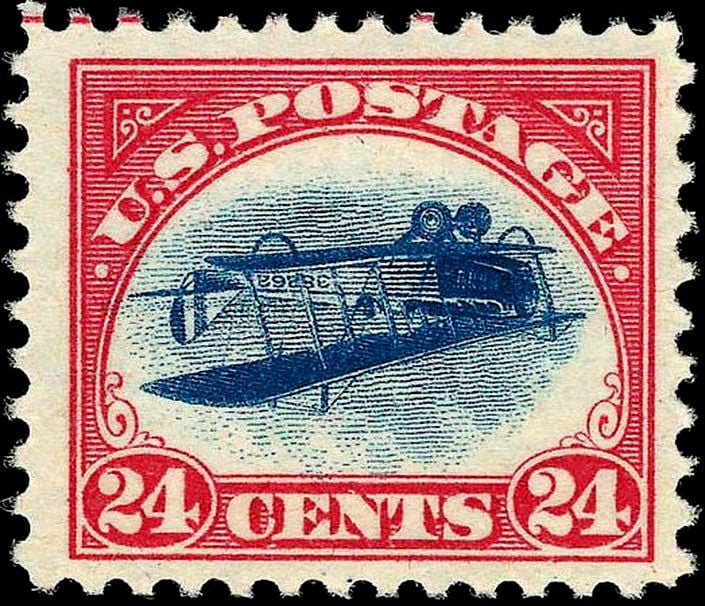
The 1918 Inverted Jenny is probably the most famous stamp in American philatelic history, and it earned that title by being wrong. A sheet of 100 airmail stamps made it through the printing process with the Curtiss JN-4 biplane printed upside down — and that sheet was purchased by a stamp dealer named William Robey for $24 before the error was discovered.
A single example from that original sheet sold at auction in 2016 for $1.35 million. The correct version of the same stamp is worth considerably less than a cup of coffee by comparison.
Errors Are Unplanned
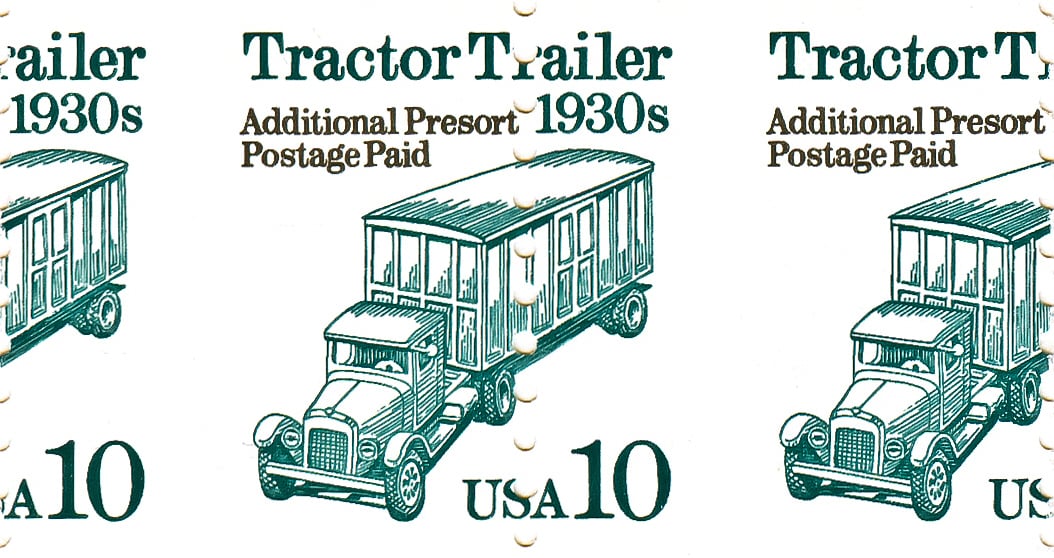
Correct stamps are produced by the millions. Errors, by contrast, are accidents — and accidents don’t follow a schedule or arrive on demand.
There’s something almost philosophical about that distinction: a correctly printed stamp represents human intention working exactly as designed, while a misprinted one represents the brief, unrepeatable moment when the system broke down and nobody stopped it in time.
Collectors Prize What Cannot Be Reproduced
The mint condition of a correct stamp can theoretically be replicated — the design is the design, and the press can run again. A specific printing error, on the other hand, is a one-time event.
Even if the same kind of error somehow occurred again on a future print run, it would be a different error, from a different era, carrying a different provenance. So the unreproducibility of the mistake is baked into the object itself in a way that no perfect stamp can claim.
The British Guiana 1c Magenta
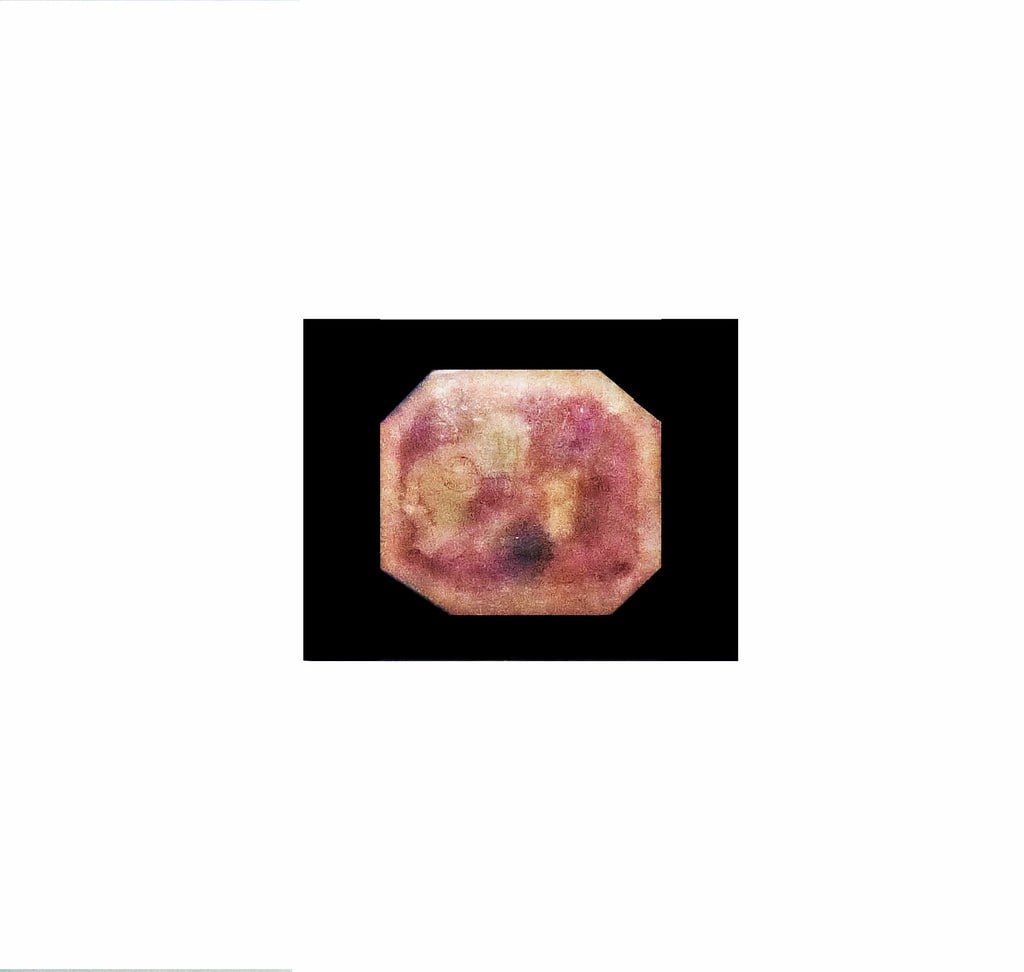
One stamp — just one known example — exists from British Guiana’s 1856 printing, a roughly octagonal scrap of magenta paper with a ship printed in black ink. It’s not even pretty by conventional standards, frankly.
And yet it sold at Sotheby’s in 2014 for $9.5 million, making it the most expensive stamp ever sold at that point, a title it held for years. Its value lives entirely in its singularity: there is no correct version to compare it to, and there is certainly no second copy to dilute what it means to own the only one.
Provenance Amplifies Value
A misprinted stamp with a documented history — auction records, prior famous owners, exhibition appearances — carries a story that correct stamps almost never accumulate in the same way. The Inverted Jenny stamps have been tracked, named, and catalogued individually since 1918; some are known by nicknames, and their movements through collections over the decades are documented.
That kind of paper trail transforms a physical object into something closer to a historical artifact.
The Psychology of the Forbidden Object

There’s a stubborn human tendency to want the thing that wasn’t supposed to exist. A misprint has the quality of something that slipped through a gate that should have been closed — and owning it feels like holding evidence of a system’s failure, sealed in gum and perforations.
Collectors aren’t immune to that pull. If anything, the philatelic world has institutionalized it, building grading systems, price guides, and auction categories entirely around errors that were never meant to reach anyone’s mailbox.
Color Errors Carry Their Own Category
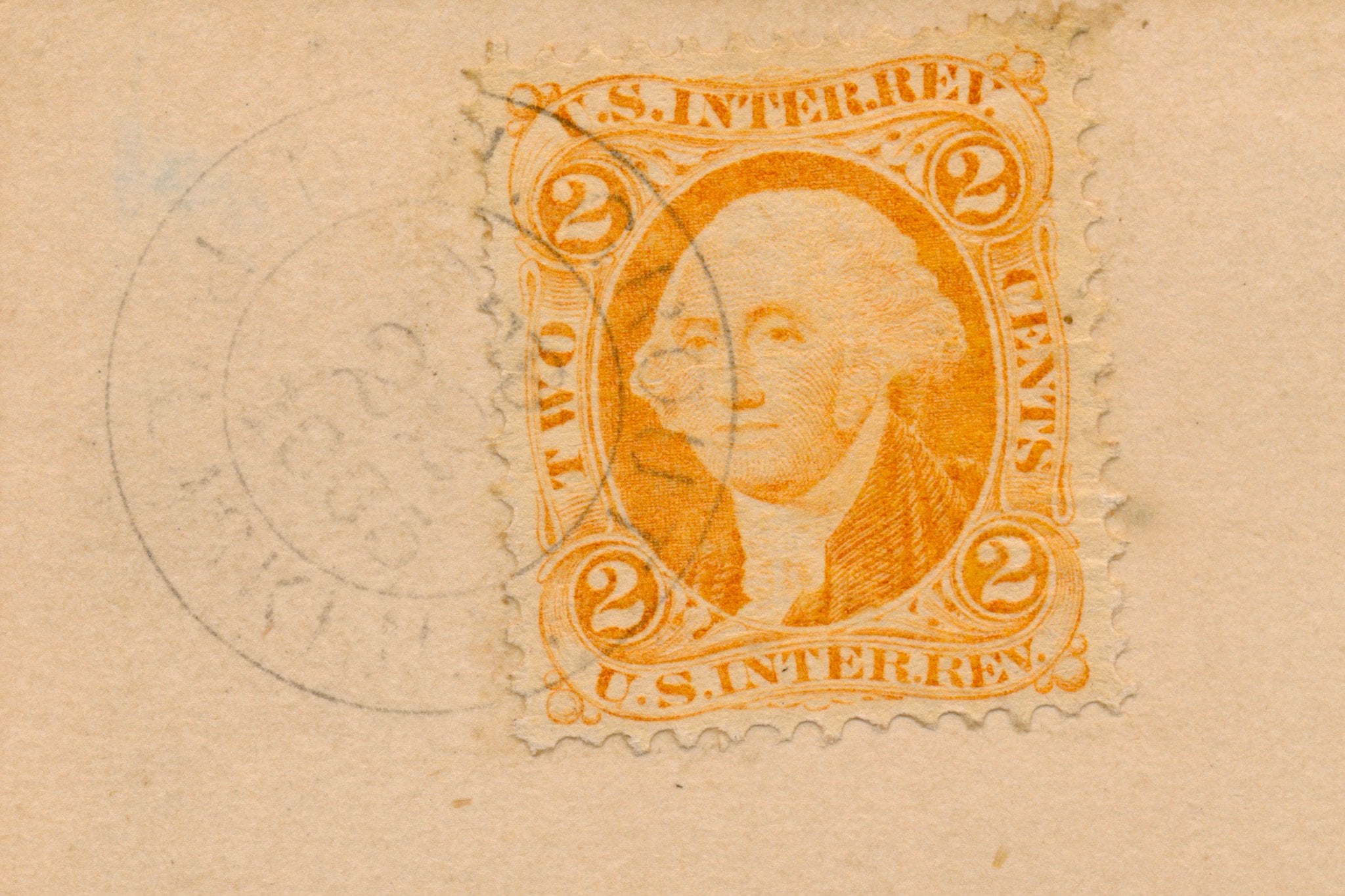
Some of the most compelling errors aren’t structural — they’re chromatic. The 1851 3¢ George Washington stamp printed in orange-brown rather than the intended dull red, or the 1869 U.S. pictorial series with inverted centers — these color errors can be subtle enough that only a trained eye catches them, which makes the discovery feel almost like finding a hidden passage in a familiar building.
And that subtlety, paradoxically, makes them more desirable to serious collectors rather than less.
Condition Still Matters

Even within the world of error stamps, not all copies are equal — a misprinted stamp in poor condition loses a meaningful portion of its value against one that has never been hinged, creased, or stuck to an envelope. The error creates the floor of interest, but condition determines how high the ceiling goes.
It’s a strange double standard: the stamp is celebrated for being wrong, but it still has to be perfectly preserved.
Certification Changes the Market
The philatelic expertizing services — the Philatelic Foundation and the American Philatelic Expertizing Service among them — have made the error stamp market considerably more legible and considerably safer for buyers. Before formal certification became standard, fakes and altered stamps circulated with uncomfortable frequency.
A certified genuine error stamp now commands a premium not just for the error itself but for the documented assurance that the error is real, which is perhaps the most specific kind of value that a piece of paper can carry.
Errors Create Subcommunities

Within philately — already a niche pursuit by any measure — error collectors form their own distinct circle. They attend specialized exhibitions, correspond with each other about newly discovered varieties, and track auction results with the focus of people who understand exactly what they’re looking at.
That subcommunity generates its own demand, its own price pressure, and its own standards of what constitutes a meaningful error versus a trivial printing variation.
The Swedish Treskilling Yellow
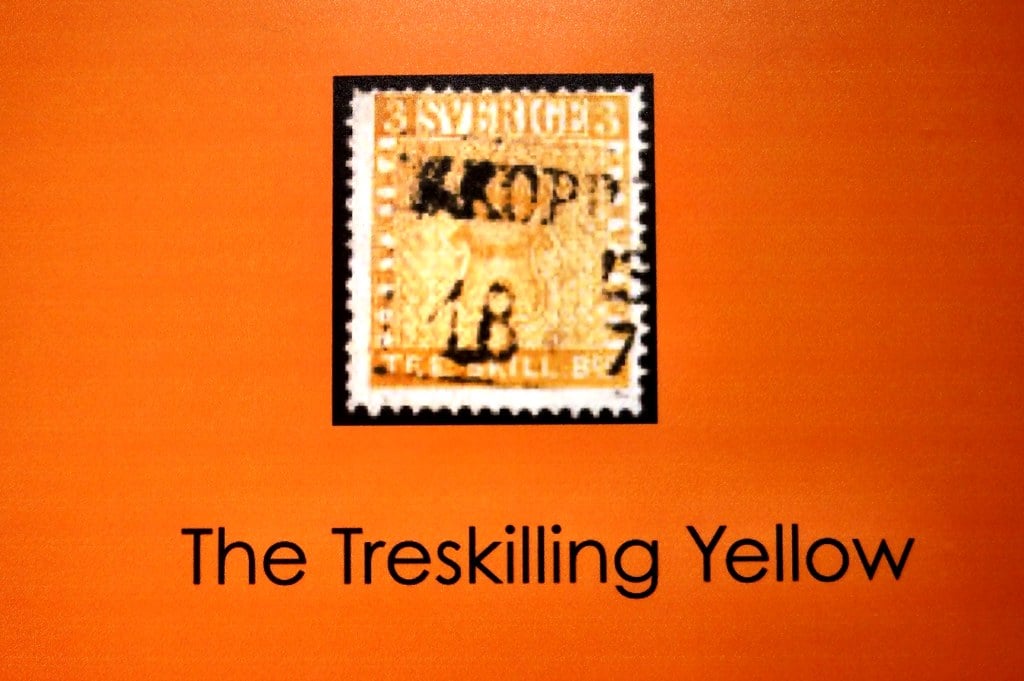
In 1855, Sweden issued a 3-skilling stamp printed in blue-green. One copy — somehow, inexplicably — was printed in yellow instead, a color intended for a different denomination entirely.
That single stamp has sold multiple times, with its 1996 sale reportedly reaching around $2.3 million. What makes it particularly arresting is that no one has ever found a second example, and no entirely satisfying explanation for how it happened has been established with certainty.
Imperforate Errors
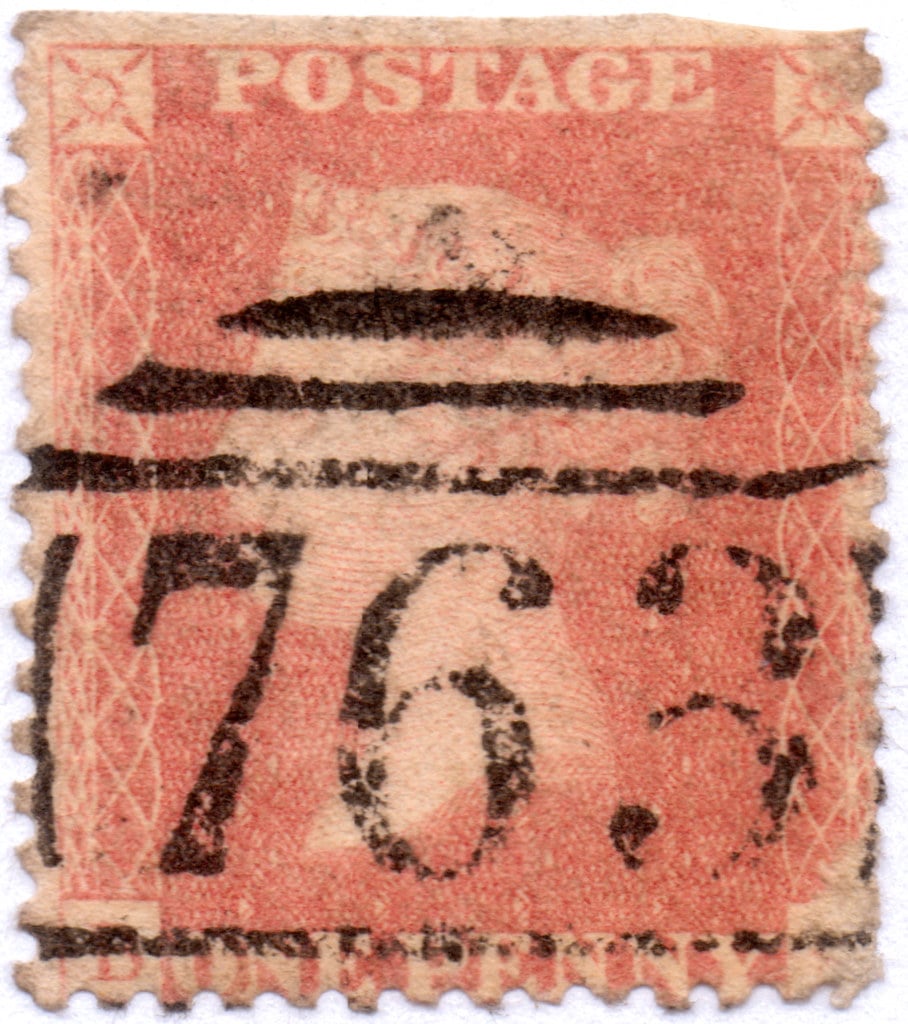
Stamps that should have been perforated but were cut from the sheet before the perforation stage made it through — imperforate pairs, as they’re catalogued — represent a different category of error entirely. They’re flat-edged where there should be teeth, and that absence reads as conspicuous to anyone who knows what they’re looking at.
Imperforate errors from the early U.S. airmail issues are among the most actively traded error varieties in American philately, and a fine pair in original gum can fetch prices that would look comfortable on a used car lot.
Inverted Centers Beyond the Jenny
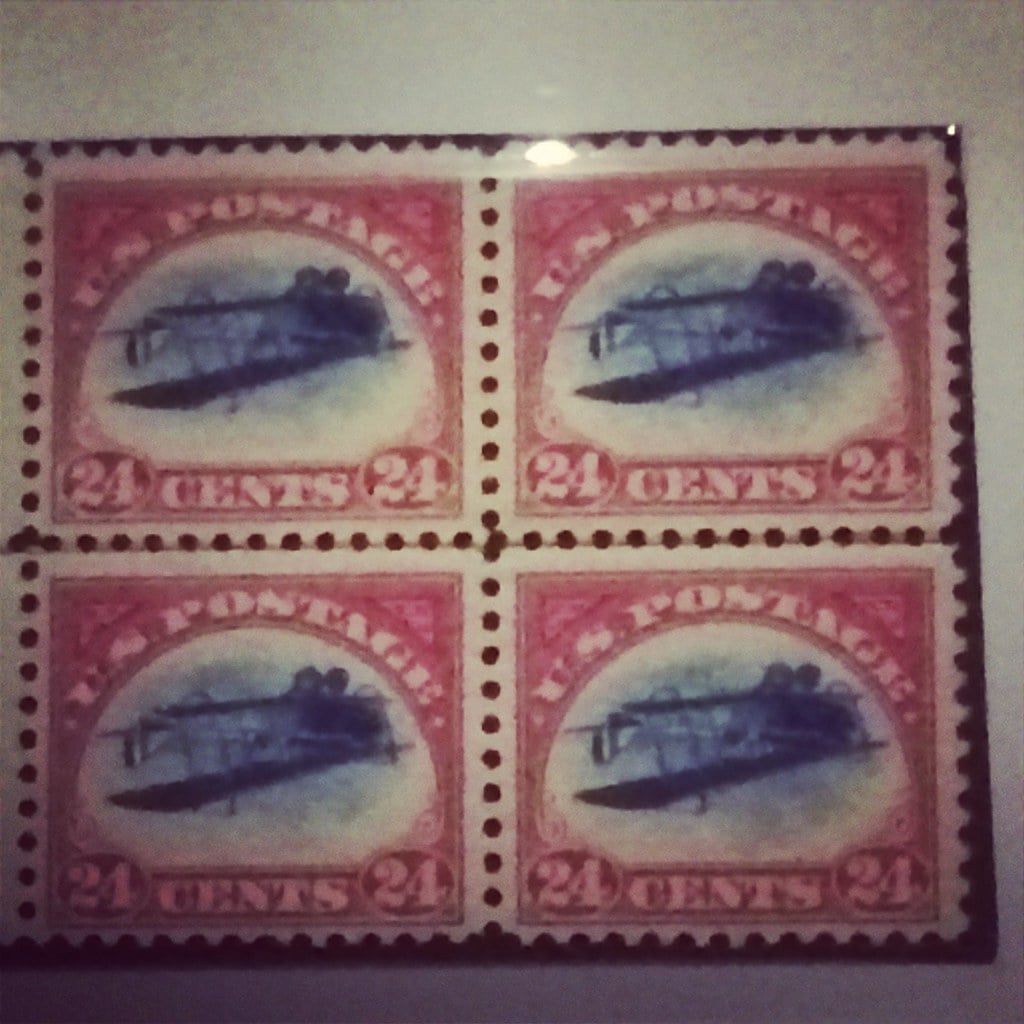
The Inverted Jenny gets the attention, but it isn’t the only example of an inverted center error in American stamp history. The 1869 pictorial series produced several inverted center varieties — the 15¢ landing of Columbus, the 24¢ Declaration of Independence, the 30¢ shield and eagle — and each has its own collector following, its own auction history, and its own pricing logic.
These are stamps where the central image was printed separately from the frame, and the sheet was fed through the press a second time facing the wrong direction, which — given how many steps that requires going wrong simultaneously — is a remarkably specific kind of failure.
Forgeries Exist Because the Value Is Real

The fact that sophisticated forgeries of famous error stamps exist is itself a testament to how much money is at stake. Forgers don’t spend time faking objects that aren’t worth the effort, and the existence of a cottage industry around faked inverted centers, fake imperforate pairs, and chemically altered colors tells you everything you need to know about where the real market pressure sits.
The genuine errors are worth forging. The correct stamps, generally, are not.
The Market Rewards Stories

A stamp with a clean, documented chain of custody — sold at this auction in this year, held by this named collection, exhibited at this international show — sells above its baseline value in ways that are hard to fully rationalize through rarity alone. The error stamp market rewards narrative as much as it rewards scarcity, and the two tend to compound each other.
The rarer the error, the more the story gets told, and the more the story gets told, the more the next buyer is paying for something that has already meant something to a long line of people before them.
Why the Post Office Doesn’t Benefit

There’s a mild irony in the fact that the postal services responsible for these errors — the U.S. Postal Service, the British GPO, Sweden’s postal authority — received face value for stamps that would eventually sell for millions. The USPS has periodically tried to manufacture collectibility through limited editions and commemorative issues, but none of those efforts have produced anything approaching the market value of a genuine error.
Turns out, controlled scarcity doesn’t carry the same weight as accidental scarcity. The market knows the difference.
Where the Prices Are Now

The most significant error stamps — the Inverted Jenny, the British Guiana 1c Magenta, the Treskilling Yellow — have appreciated at rates that would not embarrass a serious investment portfolio. The British Guiana 1c Magenta sold again in 2021 for $8.3 million, slightly below its 2014 peak but still in a range that makes serious collectors take the market seriously as a store of value.
Error stamps at the top of the market have, somewhat stubbornly, refused to behave like decorative collectibles and have instead performed like blue-chip assets.
What Correct Stamps Can’t Offer
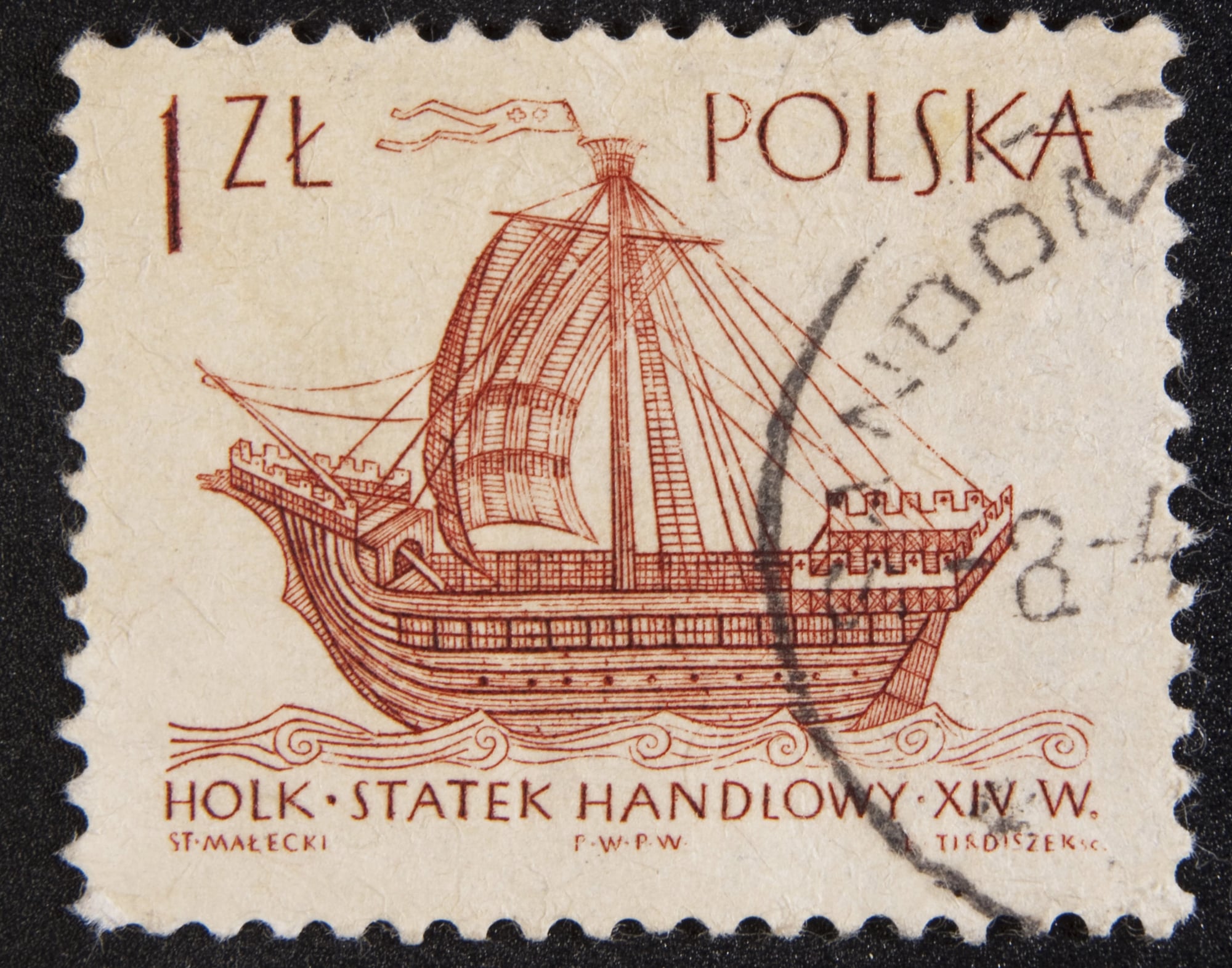
A correctly printed stamp is, at its core, the fulfillment of an intention. It did what it was supposed to do, looked the way it was supposed to look, and reached the person who was supposed to receive it.
That reliability is exactly what makes it ordinary. The error stamp refused to cooperate — the ink landed wrong, the paper fed backward, the color came out of a different can — and that refusal, frozen in time and sealed behind archival glass, is worth more than correctness ever managed to be.
The Permanence of the Mistake

Some errors correct themselves. A misaddressed letter gets redirected. A miscalculation gets revised. A typo gets an errata slip.
But a misprinted stamp, once it leaves the press and survives the culling process, is permanently, irreversibly wrong — and that permanence is the whole point. It can’t be un-printed, un-inverted, or un-yellowed.
The stamp you hold, if you’re lucky enough to hold one, is the mistake itself, intact, as it happened, on the day the machine did something it wasn’t supposed to do. And that’s worth considerably more than getting it right.
More from Go2Tutors!

- The Romanov Crown Jewels and Their Tragic Fate
- 13 Historical Mysteries That Science Still Can’t Solve
- Famous Hoaxes That Fooled the World for Years
- 15 Child Stars with Tragic Adult Lives
- 16 Famous Jewelry Pieces in History
Like Go2Tutors’s content? Follow us on MSN.



